Answer 48 questions, check each correct answer and work through the explanations at your own pace.
Question 1 of 480 correct answers
Question 1 of 48
How can drinking alcohol affect your ability to drive?
Explanation
Alcohol will severely reduce your ability to drive or ride safely and there are serious consequences if you're caught over the drink-drive limit. It's known that alcohol can
Question 2 of 48
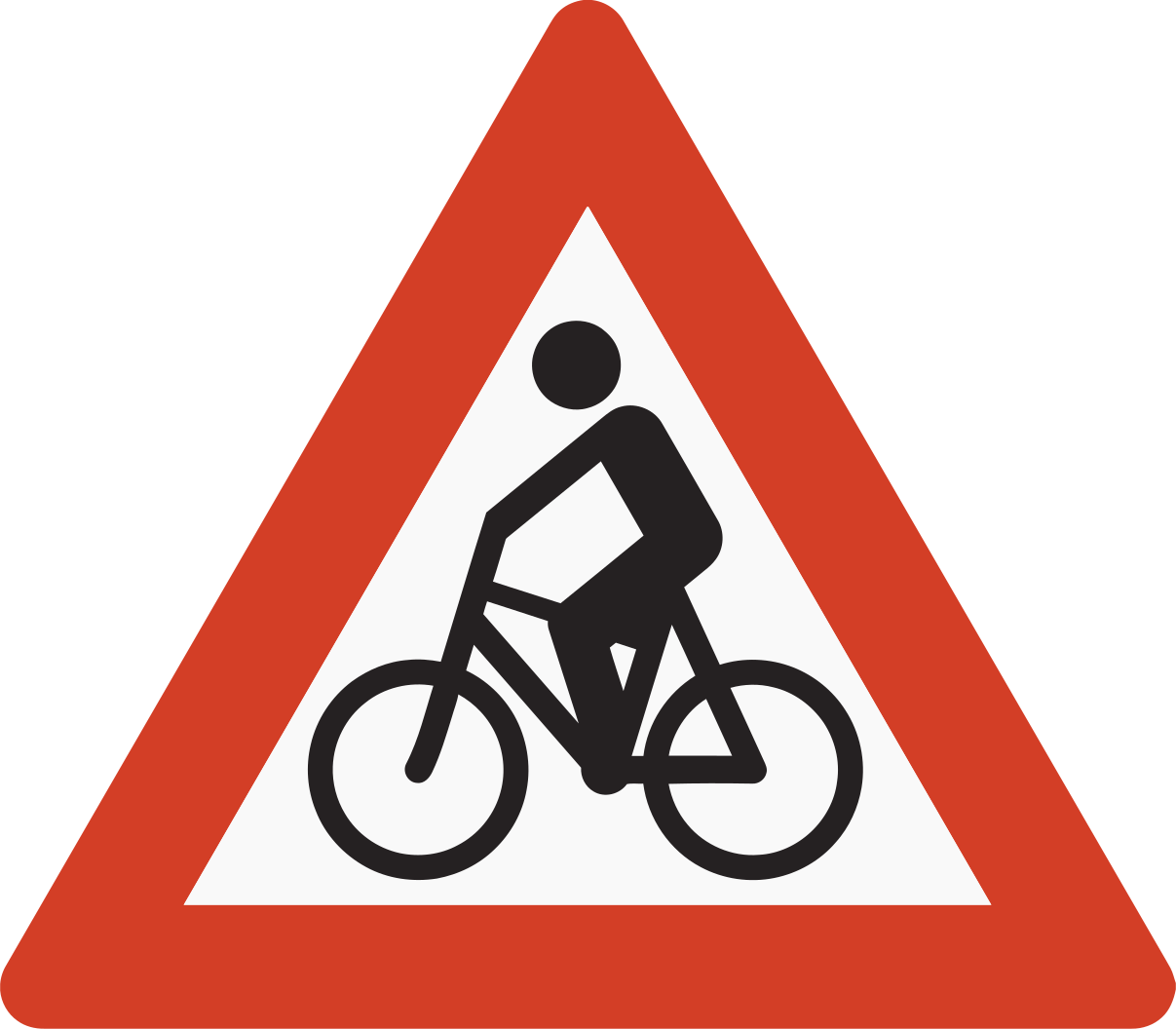
What's the purpose of triangular shaped signs?
Explanation
Triangular signs warns you of hazards ahead. Make sure you look at each sign that you pass on the road, so that you don't miss any vital instructions or information.
Question 3 of 48
Which lights should you switch on when daytime visibility is poor but not seriously reduced?
Explanation
Only use your fog lights when visibility is seriously reduced. Use dipped headlights in poor conditions because this helps other road users to see you without the risk of causing dazzle.
Question 4 of 48
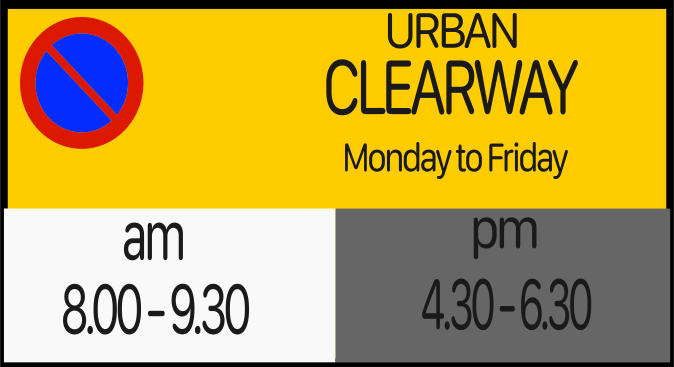
What does this sign mean?
Explanation
Urban clearways are provided to keep traffic flowing at busy times. You may stop only briefly to set down or pick up passengers. Times of operation will vary from place to place, so always check the signs.
Question 5 of 48
When may front fog lights be used?
Explanation
Your fog lights must only be used when visibility is reduced to 100 metres (328 feet) or less. You need to be familiar with the layout of your dashboard so you're aware if your fog lights have been switched on in error, or you've forgotten to switch them off.
Question 6 of 48
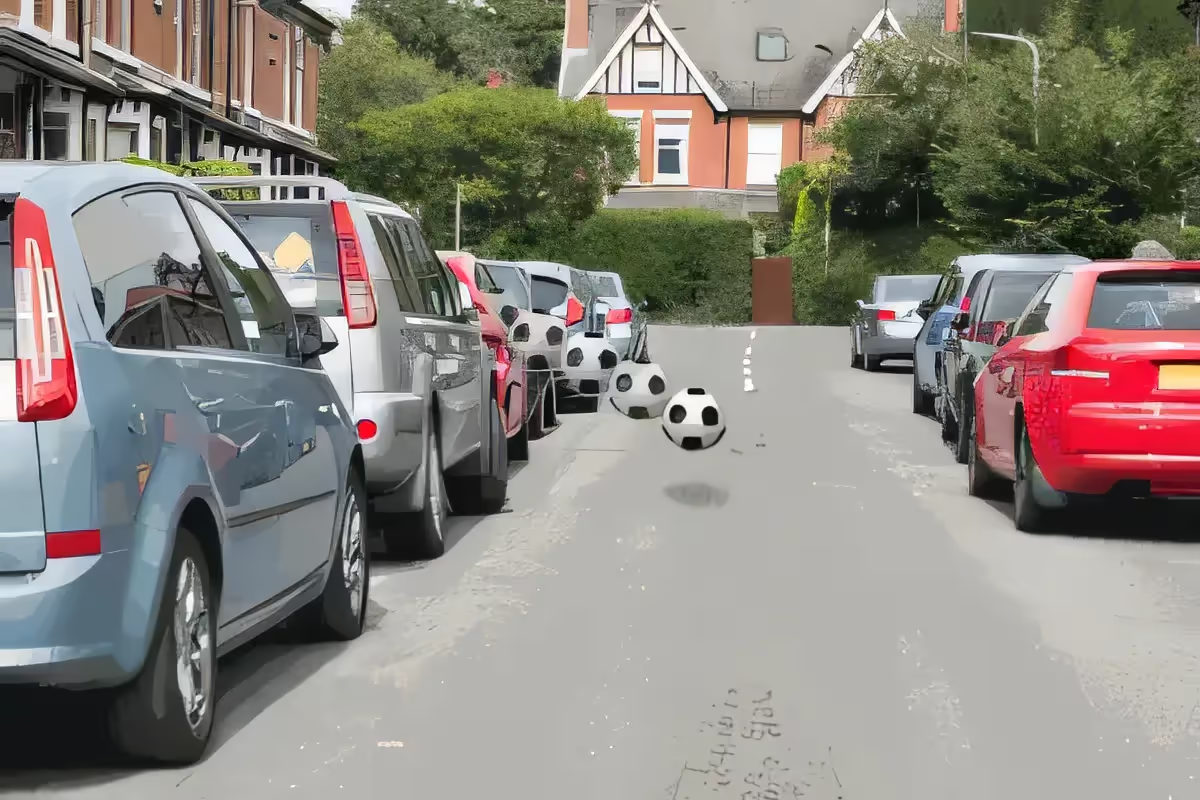
You're driving past a line of parked cars. What should you do if a ball bounces out into the road ahead?
Explanation
Beware of children playing in the street and running out into the road. If a ball bounces out from the pavement, slow down and be prepared to stop. Don't encourage anyone to retrieve it. Other road users may not see your signal and you might lead a child into a dangerous situation.
Question 7 of 48
You're at the front of a queue of traffic waiting to turn right into a side road. Why is it important to check your right mirror just before turning?
Explanation
A motorcyclist could be riding along the outside of the queue. Always check your mirror before turning, as situations behind you can change while you've been waiting to turn.
Question 8 of 48
When would you use an emergency refuge area on a smart motorway?
Explanation
On smart motorways, emergency refuge areas are built at the side of the hard shoulder. If you break down, try to get your vehicle into the refuge, where there's an emergency telephone. The phone connects directly to a control centre. Remember to take care when rejoining the motorway, especially if the hard shoulder is being used as a running lane.
Question 9 of 48
When are you not allowed to sound your vehicle's horn?
Explanation
Every effort must be made to prevent excessive noise, especially in built-up areas at night. Don't rev your engine or sound the horn unnecessarily. It's illegal to sound your horn in a built-up area between 11.30 pm and 7.00 am, except when another road user poses a danger.
Question 10 of 48
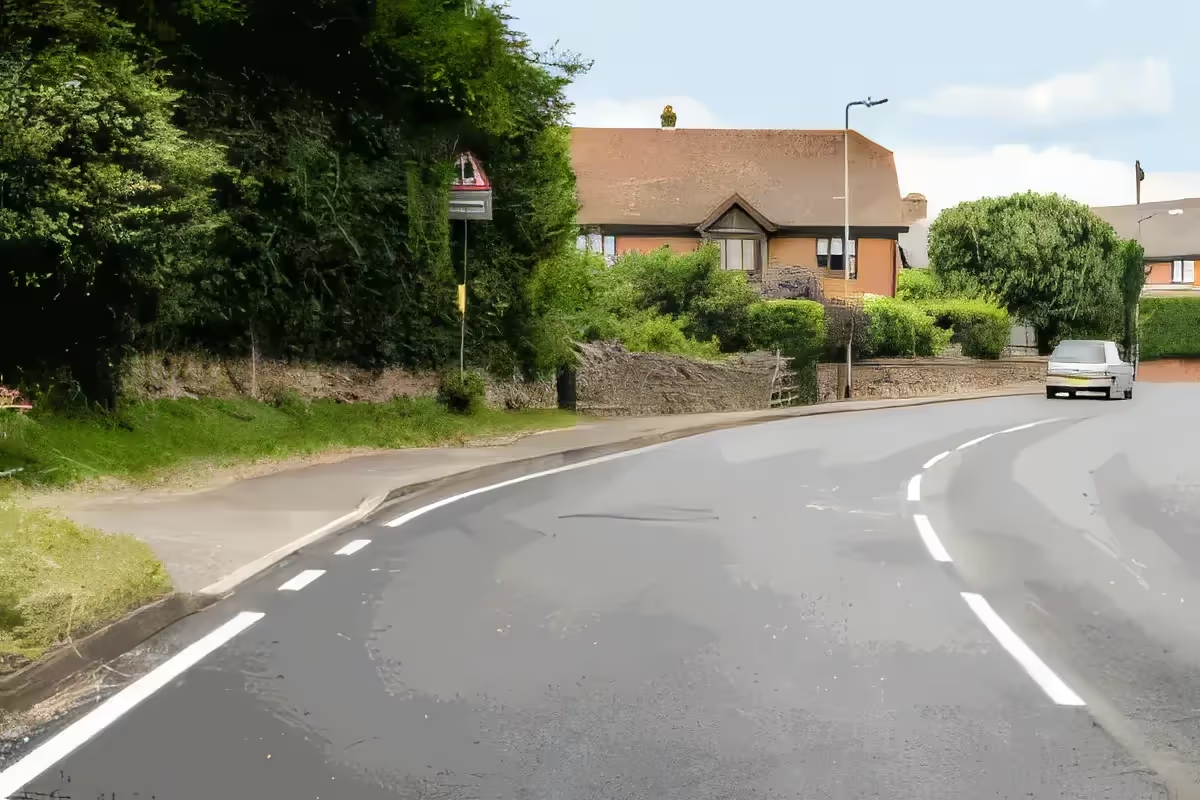
What does the white line along the side of the road indicate?
Explanation
A continuous white line is used on many roads to indicate the edge of the carriageway. This can be useful when visibility is restricted. The line is discontinued at junctions, lay-bys, and entrances to or exits from private drives.
Question 11 of 48
You're driving in town. Why should you be careful if there's a bus at a bus stop on the other side of the road?
Explanation
If you see a bus ahead, watch out for pedestrians. They might not be able to see you if they're behind the bus.
Question 12 of 48
What will happen if you use rear fog lights in good conditions?
Explanation
Rear fog lights shine more brightly than normal rear lights, so that they show up in reduced visibility. When the visibility improves, you must switch them off; this stops them dazzling the driver behind.
Question 13 of 48
You want to reverse into a side road. What should you do if you aren't sure that the area behind your car is clear?
Explanation
If you can't tell whether there's anything behind you, it's always safest to check before reversing. There may be a small child or a low obstruction close behind your car.
Question 14 of 48
What lights should you use when you're driving on a wet motorway and vehicles are throwing up surface spray?
Explanation
When surface spray reduces visibility, switch on your headlights on dipped beam. This will help other road users to see you.
Question 15 of 48
What should you do when you're following a learner driver who stalls at a junction?
Explanation
Learning to drive is a process of practice and experience. Try to understand this and tolerate those who make mistakes while they're learning.
Question 16 of 48
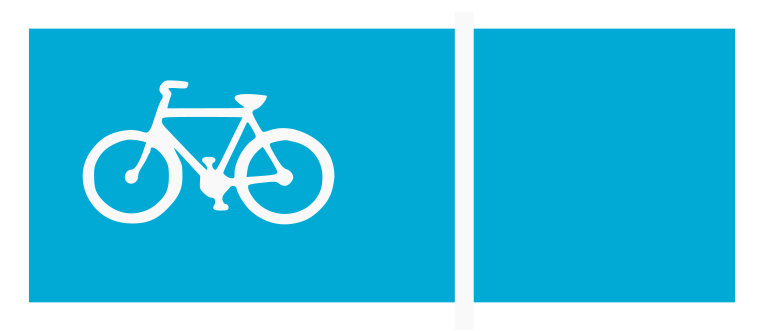
What does this sign mean?
Explanation
Usually, a picture of a cycle will also be painted on the road, and sometimes the lane will have a different coloured surface. Leave these areas clear for cyclists and don't pass too closely when you overtake.
Question 17 of 48
What's most likely to distract you while you're driving?
Explanation
Except for emergencies, it's illegal to use a hand-held mobile phone while you're driving. Even using a hands-free kit can severely distract your attention.
Question 18 of 48
On a road where trams operate, which vehicles will be most at risk from the tram rails?
Explanation
The narrow wheels of a bicycle can become stuck in the tram rails, causing the cyclist to stop suddenly, wobble or even lose balance altogether. The tramlines are also slippery, which could cause a cyclist to slide or fall off.
Question 19 of 48
You're approaching an unmarked crossroads. How should you deal with the junction?
Explanation
Be cautious, especially when your view is restricted by hedges, bushes, walls, large vehicles, etc. In the summer months, these junctions can become more difficult to deal with, because growing foliage may further obscure your view.
Question 20 of 48
What should you do if you're towing a trailer and it starts to swing from side to side?
Explanation
Strong winds or buffeting from large vehicles can cause a trailer or caravan to swing from side to side ('snake'). If this happens, ease off the accelerator. Don't brake harshly, steer sharply or increase your speed.
Question 21 of 48
What does this sign mean?
Explanation
More people are cycling today and cycle routes are being extended in our towns and cities to provide safe cycling routes. Respect the presence of cyclists on the road and give them plenty of room if you need to pass.
Question 22 of 48
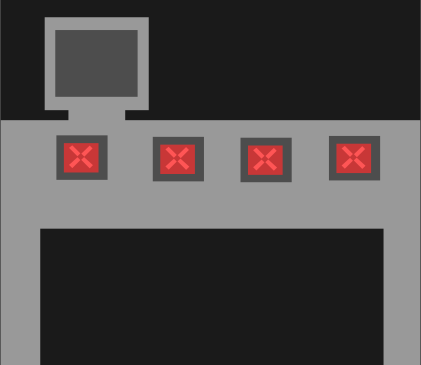
You're on a motorway. What must you do if there's a red cross showing above every lane?
Explanation
A red cross signal above all lanes mean you must stop and wait. Don't change lanes and don't try to continue any further along the motorway.
Question 23 of 48
What should you do when you park a car facing downhill?
Explanation
Turning the wheels towards the kerb will allow them to act as a chock, preventing any forward movement of the vehicle. It will also help to leave your car in gear, or select 'Park' if you have an automatic.
Question 24 of 48
You arrive at the scene of a motorcycle crash. The rider is injured. When should their helmet be removed?
Explanation
Don't remove a motorcyclist's helmet unless it's essential. Remember they may be suffering from shock. Don't give them anything to eat or drink, but do reassure them confidently.
Question 25 of 48
Following a collision, a person has been injured. What would be a warning sign for shock?
Explanation
The effects of shock may not be immediately obvious. Warning signs to look for include
Question 26 of 48
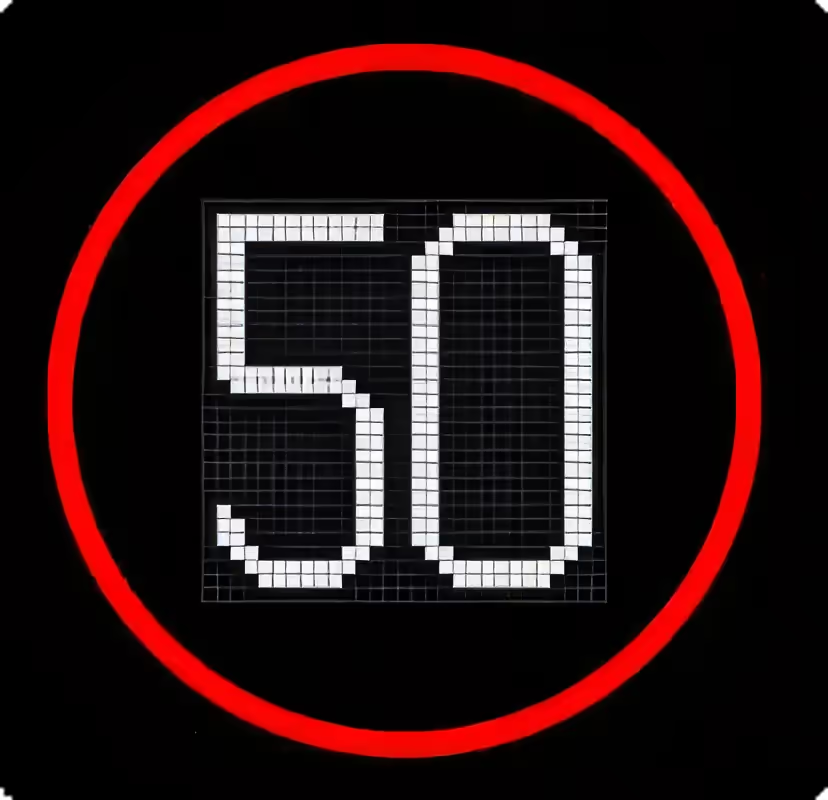
You're on a smart motorway. What does it mean when a mandatory speed limit is displayed above the hard shoulder?
Explanation
A mandatory speed-limit sign above the hard shoulder shows that this part of the road can be used as a running lane between junctions. You must stay within the speed limit. Look out for vehicles that may have broken down and could be blocking the hard shoulder.
Question 27 of 48
How much more fuel will you use by driving at 70 mph, compared with driving at 50 mph?
Explanation
Your vehicle will use less fuel if you avoid heavy acceleration. The higher the engine revs, the more fuel you'll use. Using the same gear, and covering the same distance, a vehicle travelling at 70 mph will use about 15% more fuel than it would at 50 mph. However, don't travel so slowly that you inconvenience or endanger other road users.
Question 28 of 48
What will be a serious distraction while you're driving?
Explanation
Looking at road maps while driving is very dangerous. If you aren't sure of your route, stop in a safe place and check the map. You must not allow anything to take your attention away from the road while you're driving.
Question 29 of 48
When are you allowed to stop on a motorway?
Explanation
You must stop if overhead gantry signs show a red cross above every lane on the motorway. If any of the other lanes doesn't show a red cross, you may move into that lane and continue if it's safe to do so.
Question 30 of 48
What can be damaged if you turn the steering wheel when the car isn't moving?
Explanation
Turning the steering wheel when the car isn't moving is known as dry steering. It can cause unnecessary wear to the tyres and steering mechanism.
Question 31 of 48
Why is a toucan crossing different from other crossings?
Explanation
Toucan crossings are shared by pedestrians and cyclists, who are permitted to cycle across. They're shown the green light together. The signals are push-button-operated and there's no flashing amber phase.
Question 32 of 48
When should you check the engine oil level?
Explanation
An engine can use more oil during long journeys than on shorter trips. Insufficient engine oil is potentially dangerous: it can lead to excessive wear, mechanical breakdown and expensive repairs. Most cars have a dipstick to allow the oil level to be checked. If not, you should refer to the vehicle handbook.
Question 33 of 48
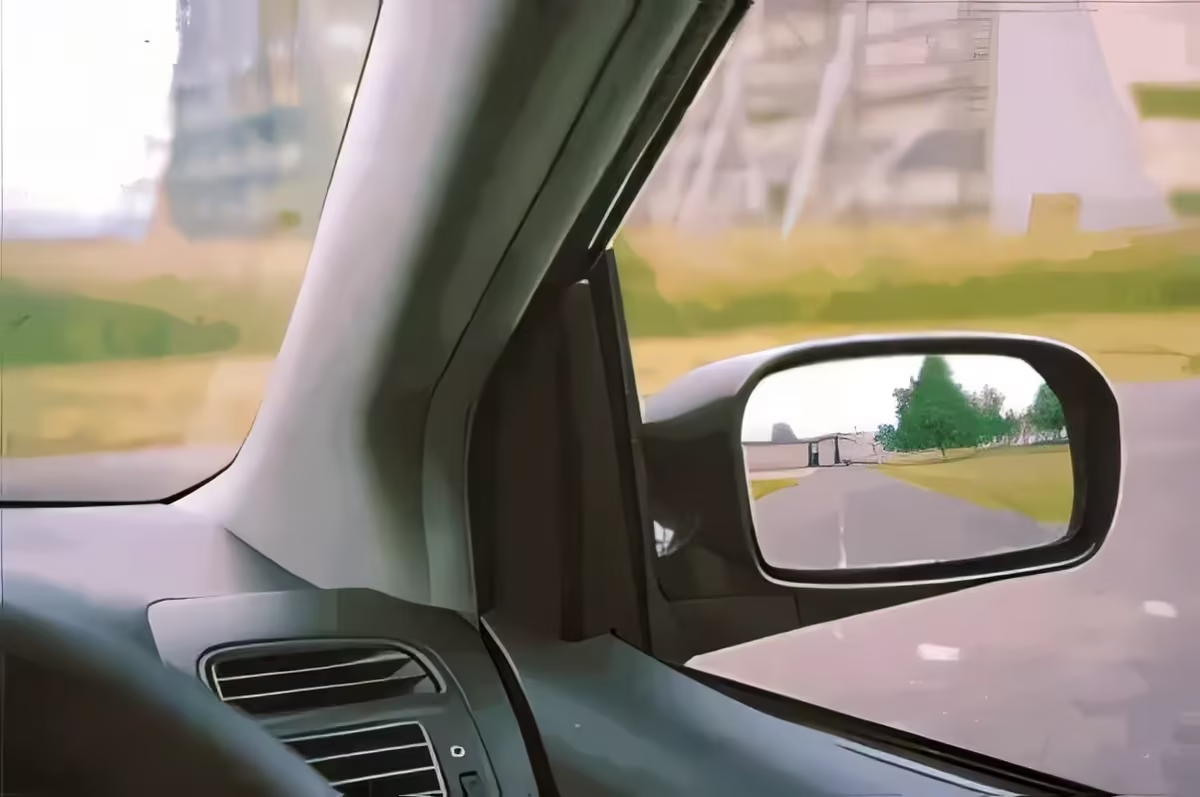
You're waiting to emerge from a junction. The windscreen pillar is restricting your view. What should you be particularly aware of?
Explanation
Windscreen pillars can completely block your view of pedestrians, motorcyclists and cyclists. You should make a particular effort to look for these road users; don't just rely on a quick glance.
Question 34 of 48
What should you do when you're overtaking a horse and rider?
Explanation
Horses can be startled by the sound of a car engine or the rush of air caused by a vehicle passing too closely. Keep well back and only pass when it's safe. Leave them plenty of room; you may have to use the other side of the road to go past safely.
Question 35 of 48
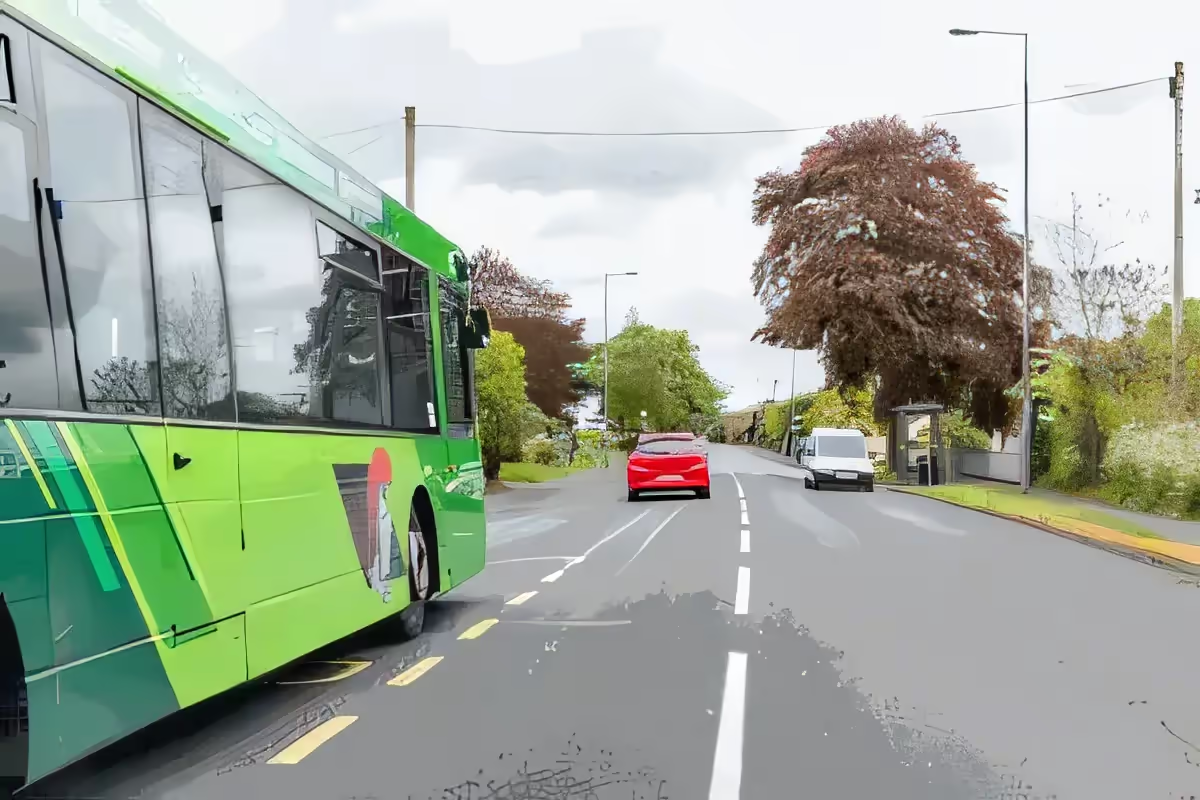
Why should you be cautious when going past this bus waiting at a bus stop?
Explanation
A bus at a bus stop can hide pedestrians who might try to cross the road just in front of it. Drive at a speed that will enable you to respond safely if you have to.
Question 36 of 48
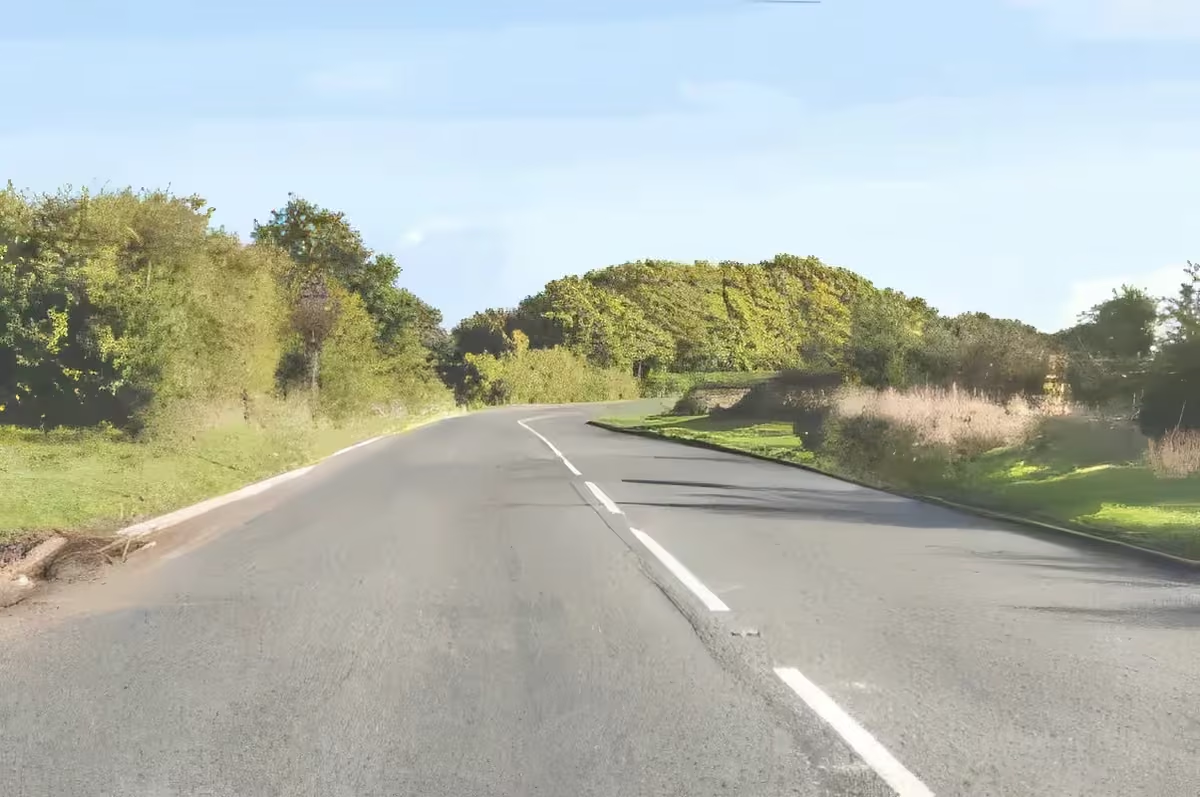
What do the long white lines along the centre of the road mean?
Explanation
The centre of the road is usually marked by a broken white line, with lines that are shorter than the gaps. When the lines become longer than the gaps, this is a hazard warning line. Look well ahead for these, especially when you're planning to overtake or turn off.
Question 37 of 48
There are no speed-limit signs on the road. How is a 30 mph limit generally indicated?
Explanation
There's a 30 mph speed limit where there are street lights unless signs show another limit.
Question 38 of 48
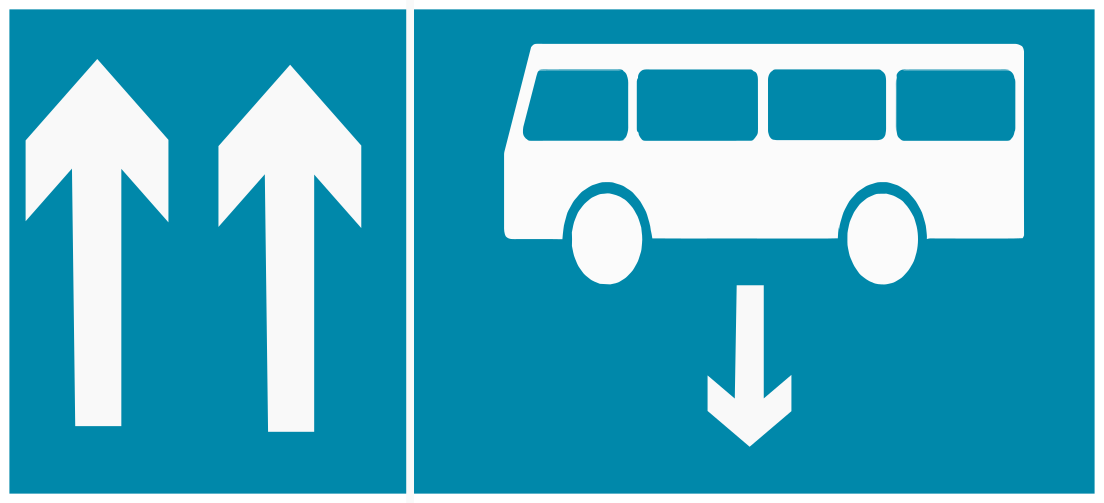
What does this sign mean?
Explanation
There will also be markings on the road surface to indicate the bus lane. You mustn't use this lane for parking or overtaking.
Question 39 of 48
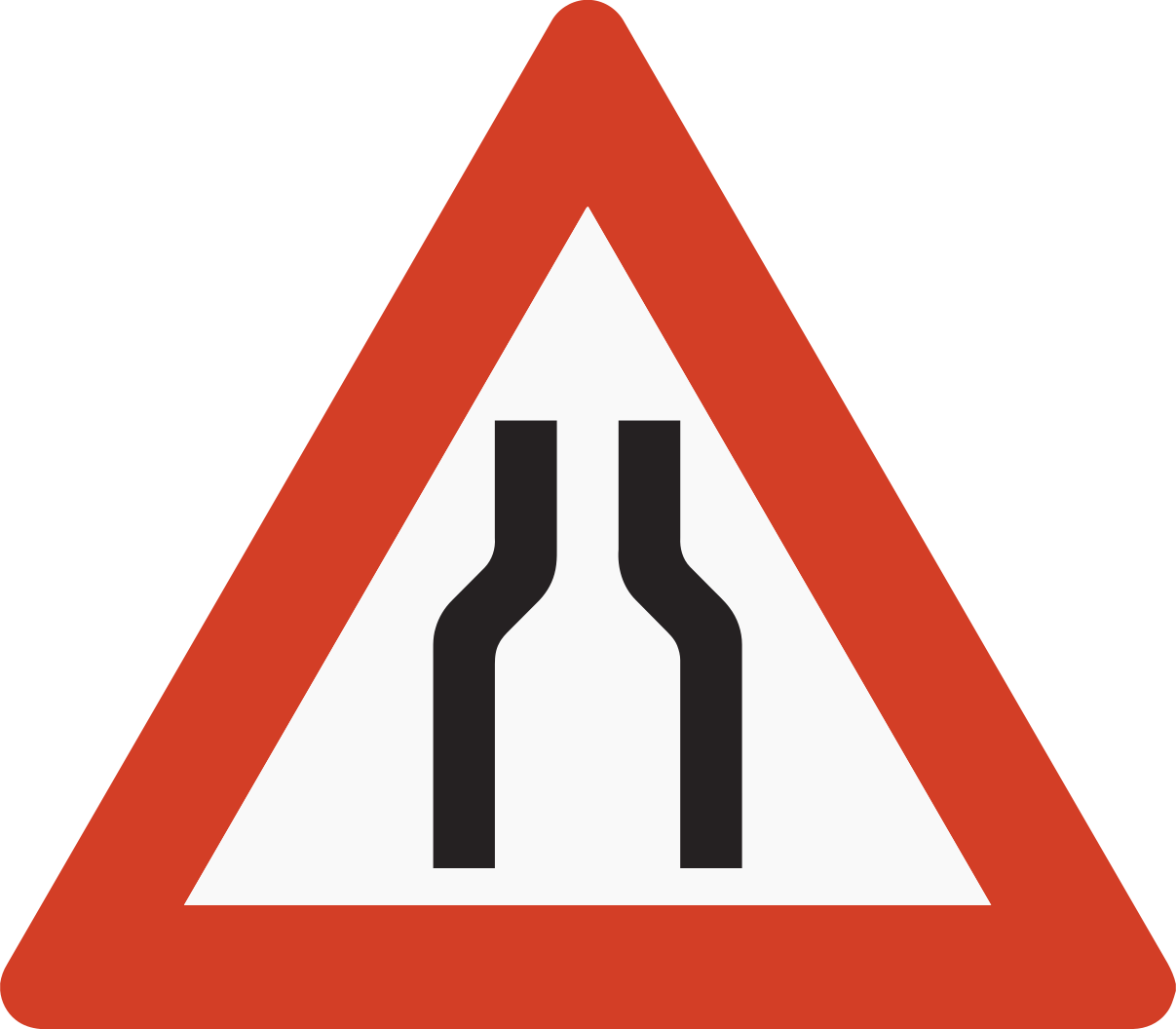
What does this sign mean?
Explanation
Don't wait until the last moment before moving into the left-hand lane. Plan ahead and don't rely on other traffic letting you in.
Question 40 of 48
Which colour follows the green signal at a puffin crossing?
Explanation
Puffin crossings have infra-red sensors that detect when pedestrians are crossing and hold the red traffic signal until the crossing is clear. The use of a sensor means there's no flashing amber phase as there is with a pelican crossing.
Question 41 of 48
What's the national speed limit for cars and motorcycles on a dual carriageway?
Explanation
Make sure that you know the speed limit for the road that you're on. The speed limit on a dual carriageway or motorway is 70 mph for cars and motorcycles, unless signs indicate otherwise. The speed limits for different types of vehicle are listed in The Highway Code.
Question 42 of 48
You're leaving a safe gap as you follow a large vehicle. What should you do if a car moves into this gap?
Explanation
Sometimes your separation distance is shortened by a driver moving into the gap you've allowed. When this happens, react positively, stay calm and drop further back to re-establish a safe following distance.
Question 43 of 48
What does this sign mean?
Explanation
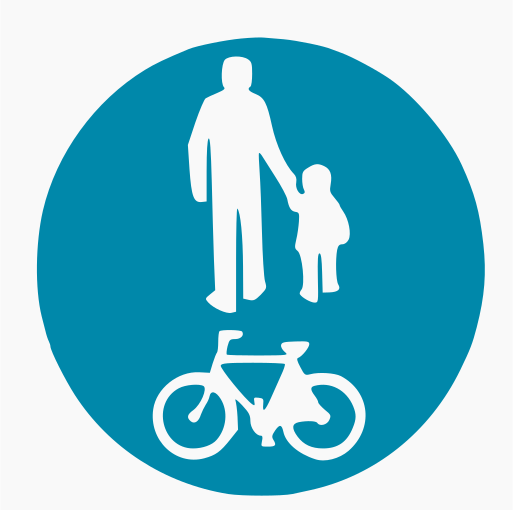
This sign shows a shared route for pedestrians and cyclists: when it ends, the cyclists will be rejoining the main road.
Question 44 of 48
What should you do when you see an older person about to cross the road ahead?
Explanation
Older people may have impaired hearing, vision, concentration and judgement. They may also walk slowly and so could take a long time to cross the road.
Question 45 of 48
What should you do if you can't see clearly behind when you're reversing?
Explanation
If you want to turn your car around, try to find a place where you have good all-round vision. If this isn't possible, and you're unable to see clearly, then get someone to guide you.
Question 46 of 48
How should you overtake horse riders?
Explanation
When you decide to overtake a horse rider, make sure you can do so safely before you move out. Leave them plenty of room and pass slowly. Passing too close could startle the horse and unseat the rider.
Question 47 of 48
How can you identify traffic signs that give orders?
Explanation
There are three basic types of traffic sign: those that warn, those that inform and those that give orders. Generally, triangular signs warn, rectangular signs give information or directions and circular signs give orders. An exception is the eight-sided 'stop' sign.
Question 48 of 48
What should you do when you meet an oncoming vehicle on a single-track road?
Explanation
Take care when using single-track roads. It can be difficult to see around bends, because of hedges or fences, so expect to meet oncoming vehicles. Drive carefully and be ready to pull into or stop opposite a passing place, where you can pass each other safely.