Answer 47 questions, check each correct answer and work through the explanations at your own pace.
Question 1 of 470 correct answers
Question 1 of 47
An injured person has been placed in the recovery position. They're unconscious but breathing normally. What else should be done?
Explanation
After a casualty has been placed in the recovery position, make sure their airway remains open and monitor their condition until medical help arrives. Where possible, don't move a casualty unless there's further danger.
Question 2 of 47
Why have 'red routes' been introduced in major cities?
Explanation
Inconsiderate parking can obstruct the flow of traffic and so make traffic congestion worse. Red routes are designed to prevent this by enforcing strict parking restrictions. Driving slowly in traffic increases fuel consumption and causes a build-up of exhaust fumes.
Question 3 of 47
Which vehicle should you allow extra room as you overtake them?
Explanation
Don't pass cyclists too closely, as they may
Question 4 of 47
You're following a long vehicle as it approaches a crossroads. What should you do if it signals left but moves out to the right?
Explanation
A long vehicle may need to swing out in the opposite direction as it approaches a turn, to allow the rear wheels to clear the kerb. Don't try to filter through if you see a gap; as the lorry turns, the gap will close.
Question 5 of 47
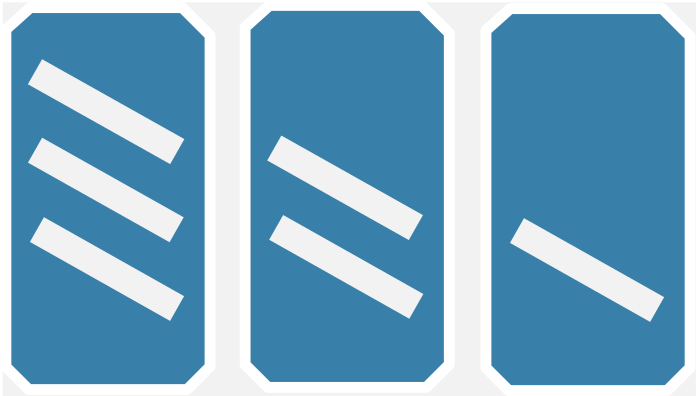
What do these motorway signs mean?
Explanation
The exit from a motorway is indicated by countdown markers. These are positioned 90 metres (100 yards) apart, the first being 270 metres (300 yards) from the start of the slip road. Move into the left-hand lane well before you reach the start of the slip road.
Question 6 of 47
You're waiting at a pelican crossing. What does it mean when the red light changes to flashing amber?
Explanation
This light allows pedestrians already on the crossing to get to the other side in their own time, without being rushed. Don't rev your engine or start to move off while they're still crossing.
Question 7 of 47
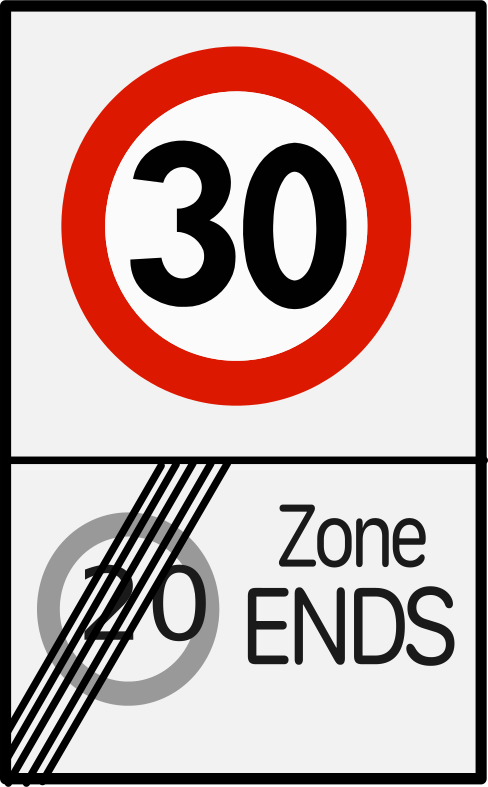
What does this sign mean?
Explanation
Where you see this sign, the 20 mph restriction ends and a 30 mph restriction starts. Check all around for possible hazards and only increase your speed if it's safe to do so.
Question 8 of 47
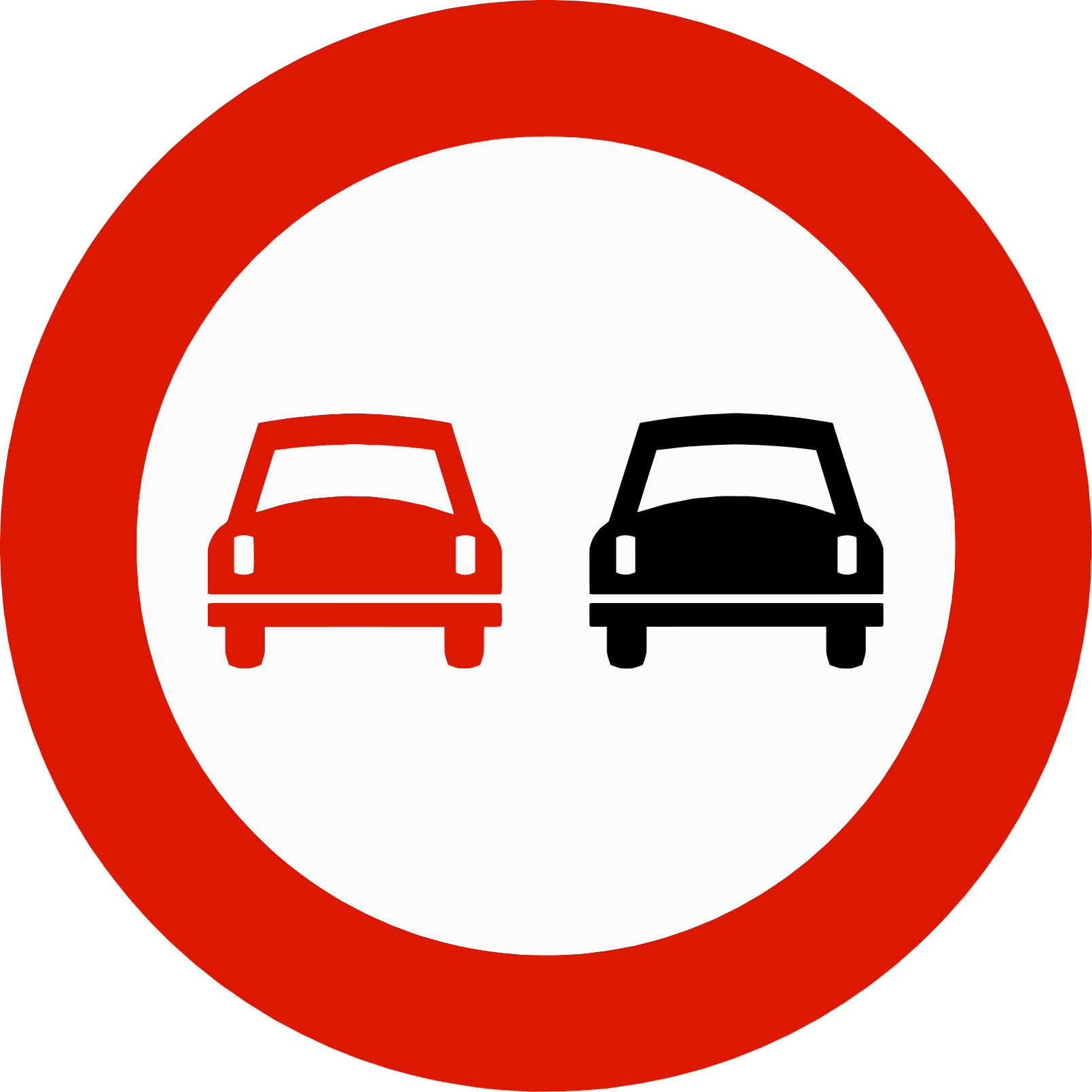
What does this sign mean?
Explanation
Road signs that prohibit overtaking are placed in locations where passing the vehicle in front is dangerous. If you see this sign, don't attempt to overtake. The sign is there for a reason; you must obey it.
Question 9 of 47
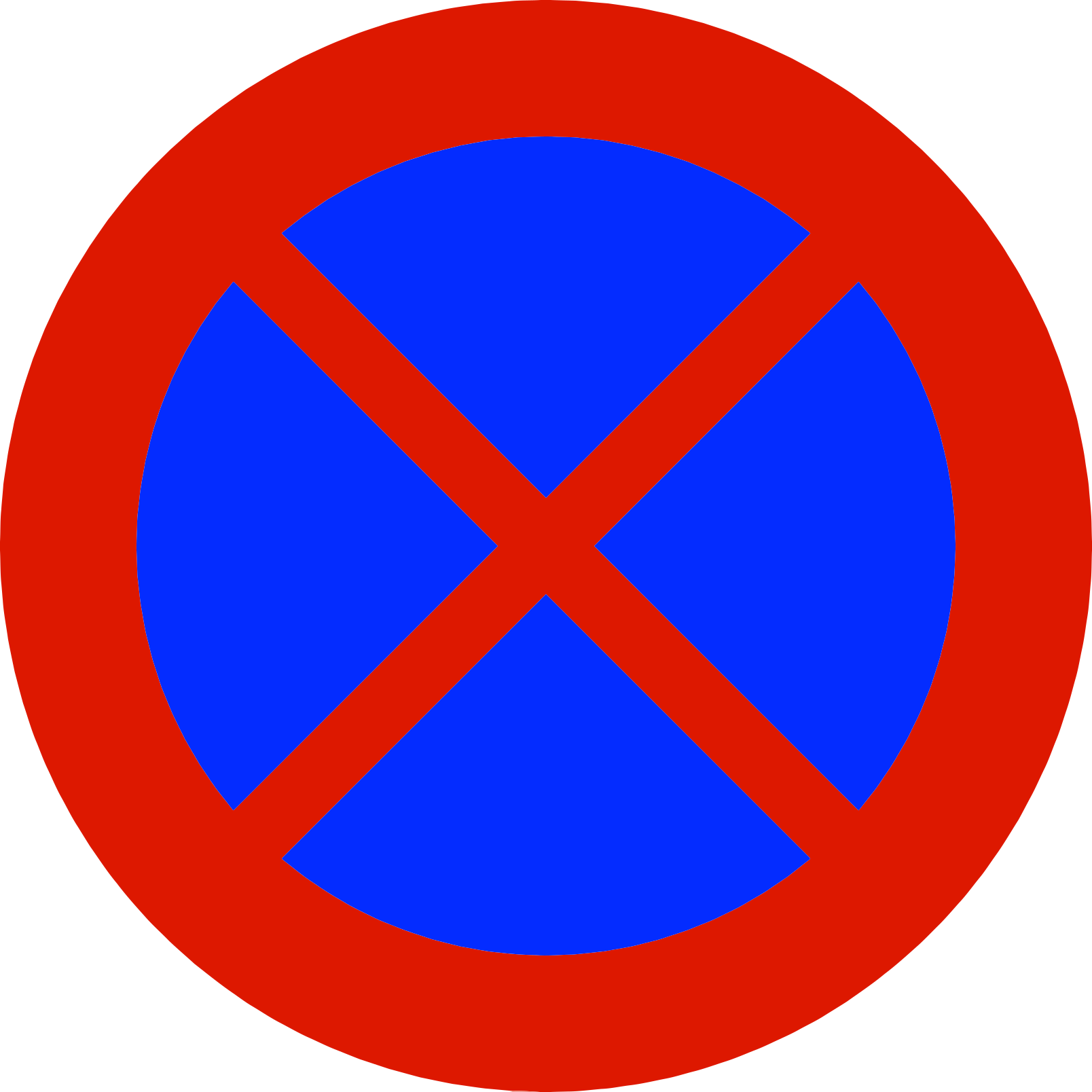
What does this sign mean?
Explanation
This is the sign for a clearway. Clearways are stretches of road where you aren't allowed to stop unless it's an emergency. Stopping where these restrictions apply may be dangerous and is likely to cause an obstruction. Restrictions might apply for several miles and this may be indicated on the sign.
Question 10 of 47
When may you cross a double solid white line in the middle of the road?
Explanation
You may cross the solid white line to pass a stationary vehicle or to pass a pedal cycle, horse or road maintenance vehicle if it's travelling at 10 mph or less. You may also cross the solid white line to enter a side road or access a property.
Question 11 of 47
Where would you find green reflective studs on a motorway?
Explanation
Knowing the colours of the reflective studs on the road will help you judge your position, especially at night, in foggy conditions or when visibility is poor.
Question 12 of 47
Why should these road markings be kept clear?
Explanation
The markings are there to show that the area should be kept clear. This is to allow an unrestricted view for
Question 13 of 47
What should you do when you see this sign at a crossroads?
Explanation
When traffic lights are out of order, treat the junction as an unmarked crossroads. Be very careful and be prepared to stop; no-one has priority.
Question 14 of 47
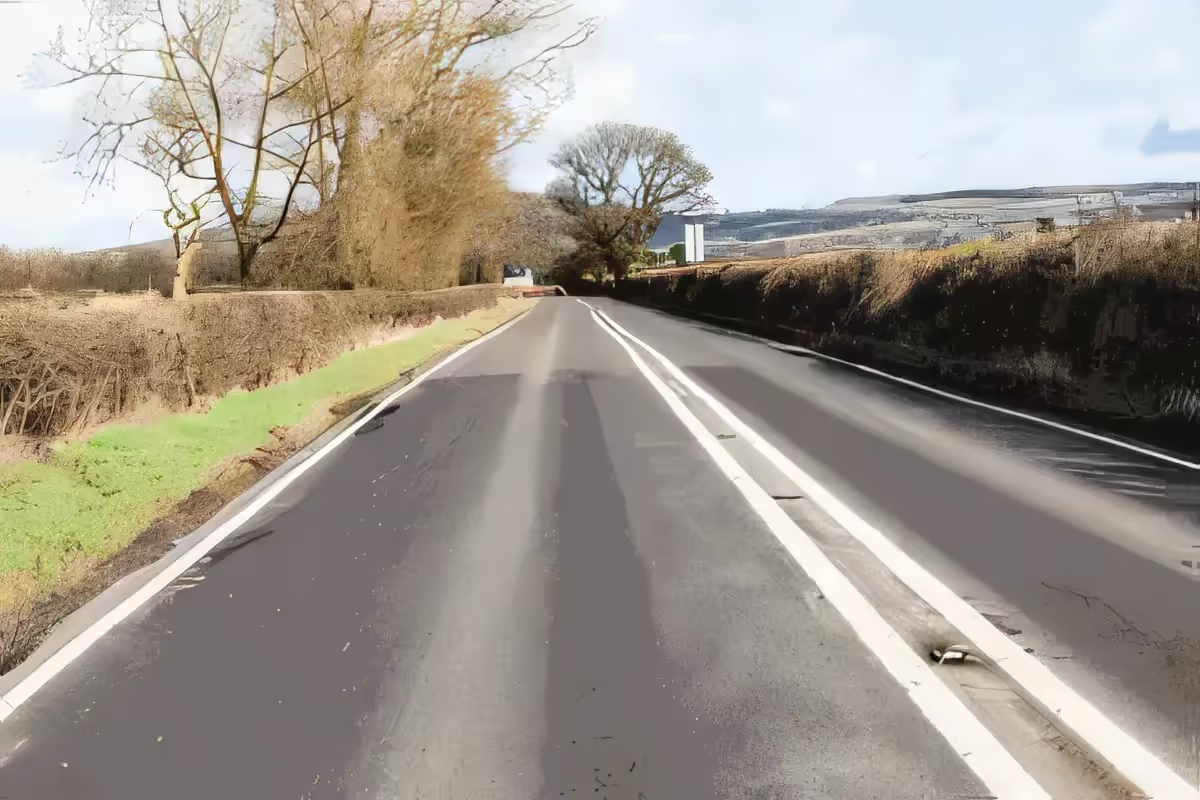
You're driving on a country road that has no pavement. What should you anticipate finding on your side of the road?
Explanation
On a quiet country road, always be aware that there may be a hazard just around the next bend, such as a slow-moving vehicle or pedestrians. Pedestrians are advised to walk on the right-hand side of the road if there's no pavement, so they may be walking towards you on your side of the road.
Question 15 of 47
What's the nearest you may park to a junction?
Explanation
Don't park within 10 metres (32 feet) of a junction (unless in an authorised parking place). This is to allow drivers emerging from, or turning into, the junction a clear view of the road they're joining. It also allows them to see hazards such as pedestrians or cyclists at the junction.
Question 16 of 47
What should you do if you have to stop while you're going through a congested tunnel?
Explanation
It's important to keep a safe distance from the vehicle in front at all times. This still applies in congested tunnels, even if you're moving very slowly or have stopped. If the vehicle in front breaks down, you may need room to manoeuvre past it.
Question 17 of 47
What does it mean when a moving vehicle is showing a flashing amber beacon?
Explanation
Different coloured beacons warn of different types of vehicle needing special attention. Blue beacons are used on emergency vehicles that need priority. Green beacons are found on doctors' cars. Amber beacons generally denote slower moving vehicles, which are often large. These vehicles are usually involved in road maintenance or local amenities and make frequent stops.
Question 18 of 47
How can you reduce the environmental harm caused by your motor vehicle?
Explanation
Engines that burn fossil fuels produce exhaust emissions that are harmful to health. The harder you make the engine work, the more emissions it will produce. Engines also use more fuel and produce higher levels of emissions when they're cold. Anything you can do to reduce your use of fossil fuels will help the environment.
Question 19 of 47
Some two-way roads are divided into three lanes. Why are they particularly dangerous?
Explanation
If you intend to overtake, you must consider that approaching traffic could be planning the same manoeuvre. When you've considered the situation and decided it's safe, indicate your intentions early. This will show the approaching traffic that you intend to pull out.
Question 20 of 47
On a smart motorway, what does this sign mean?
Explanation
You must obey mandatory speed-limit signs above motorway lanes, including the hard shoulder. In this case, you can use the hard shoulder as a running lane but you should look for any vehicles that may have broken down and may be blocking the hard shoulder.
Question 21 of 47
Your insurer will issue you with an insurance certificate. When must you produce this document for inspection?
Explanation
You must produce a valid insurance certificate when requested by a police officer. If you can't do this immediately, you may be asked to take it to a police station. Other documents you may be asked to produce are your driving licence and the vehicle's MOT certificate.
Question 22 of 47
Where should you stop to rest if you feel tired while you're travelling along a motorway?
Explanation
If you feel tired, stop at the nearest service area. If that's too far away, leave the motorway at the next exit and find a safe place to stop. You mustn't stop on the carriageway or hard shoulder of a motorway except in an emergency, when in a traffic queue, or when signalled to do so by a police officer, a traffic officer or traffic signals. Plan your journey so that you have regular rest stops.
Question 23 of 47
At an incident, it's important to look after any casualties. What should you do with them when the area is safe?
Explanation
When the area is safe and there's no danger from other traffic or fire, it's better not to move casualties. Moving them may cause further injury.
Question 24 of 47
You're on a motorway. When can you use hazard warning lights?
Explanation
Briefly using your hazard warning lights will warn the traffic behind you that there's a hazard ahead. Turn them off again when following drivers have seen and responded to your signal.
Question 25 of 47
You're driving on a clear night. Which lights should you use if the national speed limit applies and there's a steady stream of oncoming traffic?
Explanation
Use the full-beam headlights only when you can be sure that you won't dazzle other road users.
Question 26 of 47
What should you do when a person herding sheep asks you to stop?
Explanation
If someone in charge of animals asks you to stop, you should do so and switch off your engine. Animals are unpredictable and startle easily; they could turn and run into your path or into the path of another moving vehicle.
Question 27 of 47
If you're involved in a collision, what will reduce the risk of neck injury?
Explanation
If you're involved in a collision, head restraints will reduce the risk of neck injury. They must be properly adjusted. Make sure they aren't positioned too low: in a crash, this could cause damage to the neck.
Question 28 of 47
What's the main cause of skidding?
Explanation
Skidding is usually caused by driver error. You should always adjust your driving to take account of the road and weather conditions.
Question 29 of 47
You're driving in freezing conditions. What should you do as you approach a sharp bend?
Explanation
Harsh use of the accelerator, brakes or steering is likely to lead to skidding, especially on slippery surfaces. Avoid steering and braking at the same time. In icy conditions, it's very important that you constantly assess what's ahead so that you can take appropriate action in plenty of time.
Question 30 of 47
You're about to drive home. What should you do if you feel very tired and have a severe headache?
Explanation
All of your concentration should be on your driving. Any pain you feel will distract you, and you should avoid driving when drowsy. The safest course of action is to wait until you've rested and are feeling better before starting your journey.
Question 31 of 47
What will happen to your car when you drive up a steep hill?
Explanation
The engine will need more power to pull the vehicle up the hill. When approaching a steep hill you should select a lower gear to help maintain your speed. You should do this without hesitation, so that you don't lose too much speed before engaging the lower gear.
Question 32 of 47
What's the speed limit for a car towing a trailer on a motorway?
Explanation
If you're towing a small, light trailer, it won't reduce your vehicle's performance by very much and it may not be visible in your mirrors. However, strong winds or buffeting from large vehicles might cause the trailer to snake from side to side. Be aware of your speed and don't exceed the reduced speed limit imposed on vehicles towing trailers.
Question 33 of 47
You're driving on a motorway and have to slow down suddenly due to a hazard ahead. How can you warn drivers behind of the hazard?
Explanation
Using your hazard warning lights, as well as your brake lights, will give the traffic behind an extra warning of the problem ahead. Only use them for long enough for your warning to be seen.
Question 34 of 47
When may you use hazard warning lights while you're driving?
Explanation
When there's queuing traffic ahead and you have to slow down or even stop, briefly showing your hazard warning lights will help alert the traffic behind to the hazard.
Question 35 of 47
On what type of road surface may anti-lock brakes be ineffective?
Explanation
Poor contact with the road surface could cause one or more of the tyres to lose grip on the road. This is more likely to happen when braking in poor weather conditions and when the road has a loose, slippery or uneven surface.
Question 36 of 47
How will a heavy load on your roof rack affect your vehicle's handling?
Explanation
A heavy load on your roof rack will reduce the stability of the vehicle because it moves the centre of gravity away from that designed by the manufacturer. Be aware of this when you drive round bends and corners. If you change direction at speed, your vehicle and/or load could become unstable and you could lose control.
Question 37 of 47
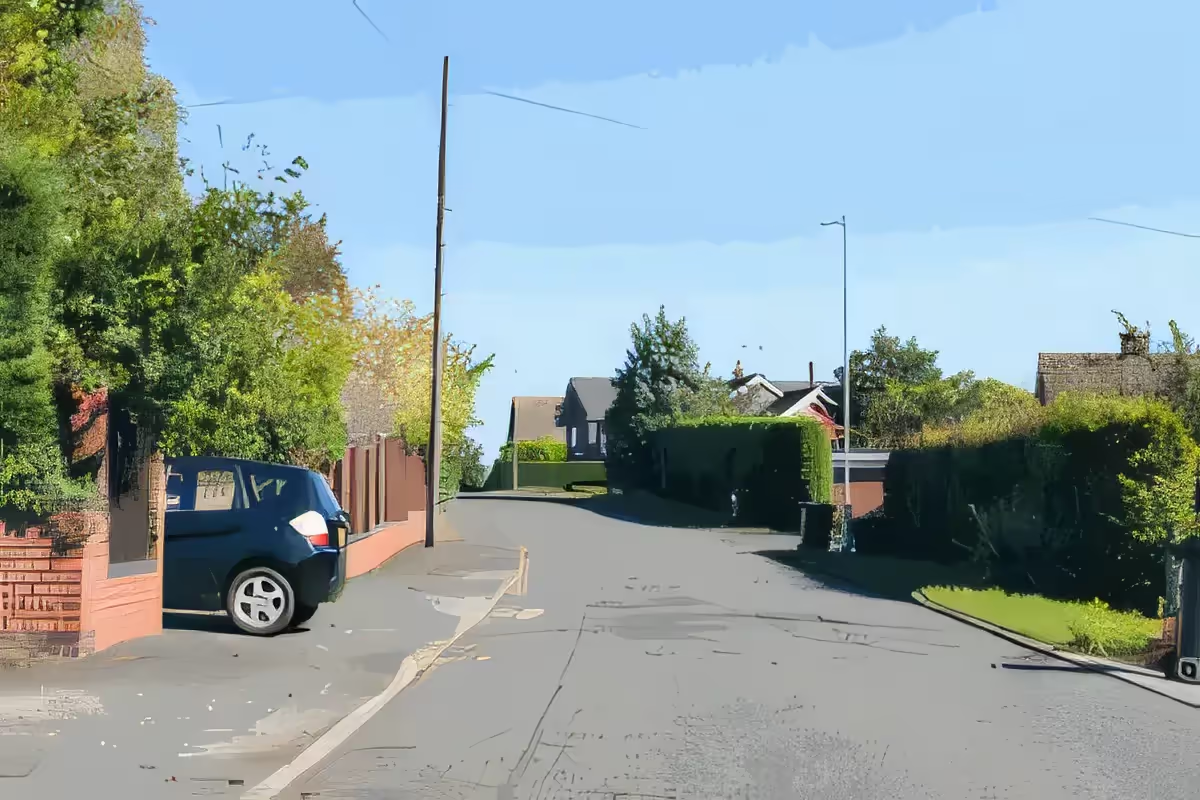
What should you do if the vehicle starts reversing off the driveway?
Explanation
White lights at the rear of a car show that the driver has selected reverse gear. The driver is hidden from view so can't see you approaching. Sound your horn to warn of your presence, and be ready to stop if the car reverses into your path.
Question 38 of 47
What should you remove from your car before leaving it unattended?
Explanation
Never leave the vehicle registration document inside your car. This document would help a thief to dispose of your car more easily.
Question 39 of 47
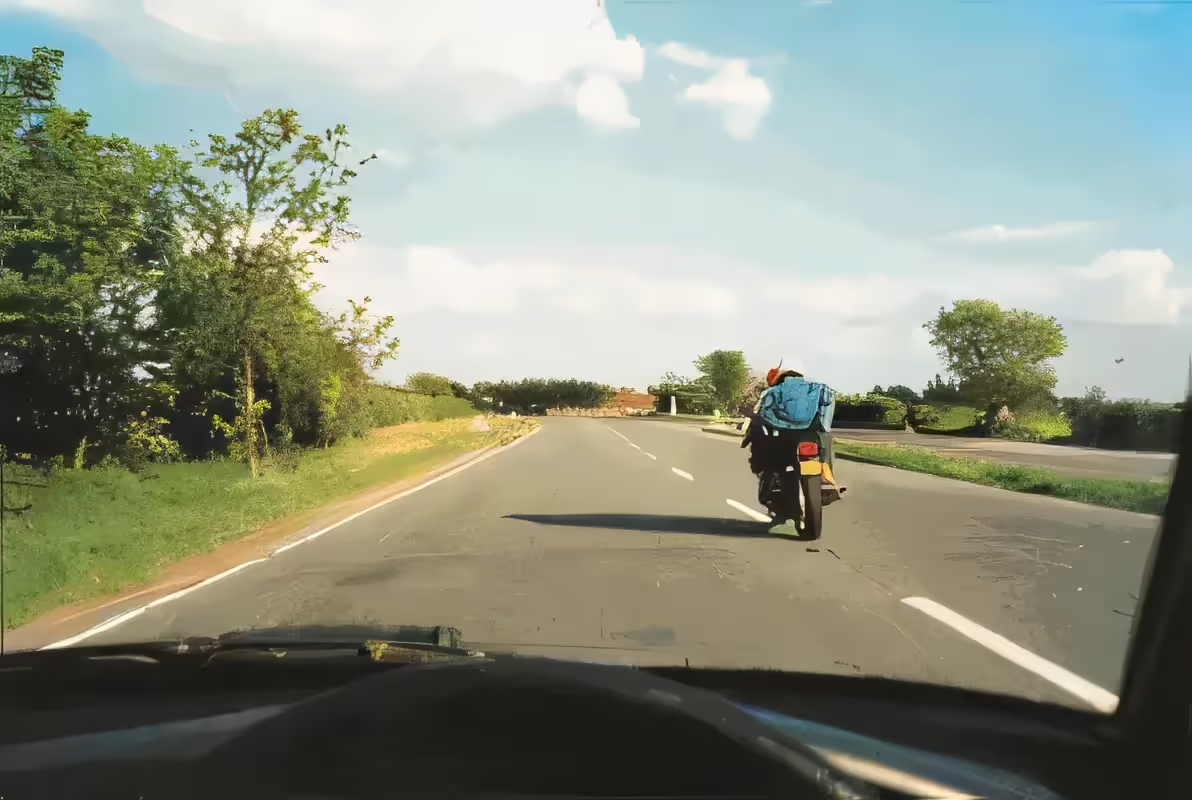
You've just been overtaken by this motorcyclist. What should you do if the rider cuts in sharply?
Explanation
If another vehicle cuts in sharply, ease off the accelerator and drop back to allow a safe separation distance. Try not to overreact by braking sharply or swerving, as you could lose control. If vehicles behind you are too close or unprepared, it could lead to a crash.
Question 40 of 47
What information is found on a vehicle registration document?
Explanation
Every vehicle used on the road has a registration document. This shows the vehicle's details, including date of first registration, registration number, registered keeper, previous keeper, make of vehicle, engine size, chassis number, year of manufacture and colour.
Question 41 of 47
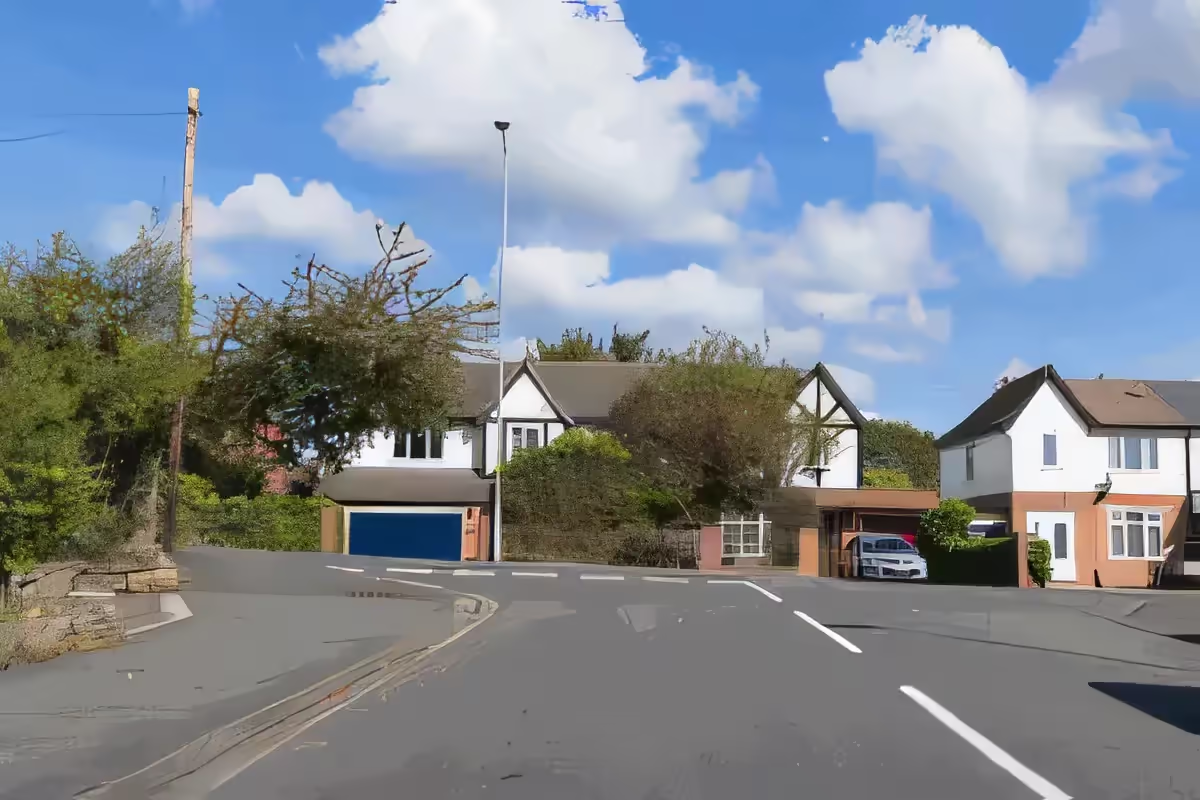
You want to turn left at this junction. What should you do if your view of the main road is restricted?
Explanation
You should slow right down, and stop if necessary, at any junction where your view is restricted. Edge forward until you can see properly. Only then can you decide whether it's safe to go.
Question 42 of 47
You're driving a car fitted with automatic transmission. When would you use 'kick down'?
Explanation
Kick down' selects a lower gear, enabling the vehicle to accelerate faster.
Question 43 of 47
You're driving at night on an unlit road. What should you do if you're following another vehicle?
Explanation
If you follow another vehicle with your headlights on full beam, they could dazzle the driver. Leave a safe distance and make sure that the light from your dipped beam falls short of the vehicle in front.
Question 44 of 47
What's the most important reason for having a properly adjusted head restraint?
Explanation
In a collision, rapid deceleration will violently throw vehicle occupants forward and then backwards as the vehicle stops. Seat belts and airbags protect occupants against the forward movement. Head restraints should be adjusted so they give maximum protection to the head and neck during the backward movement.
Question 45 of 47
You're driving on the motorway. What should you do if luggage falls from your vehicle?
Explanation
If any object falls onto the motorway carriageway from your vehicle, pull onto the hard shoulder near an emergency telephone and call for assistance. Don't stop on the carriageway or attempt to retrieve anything.
Question 46 of 47
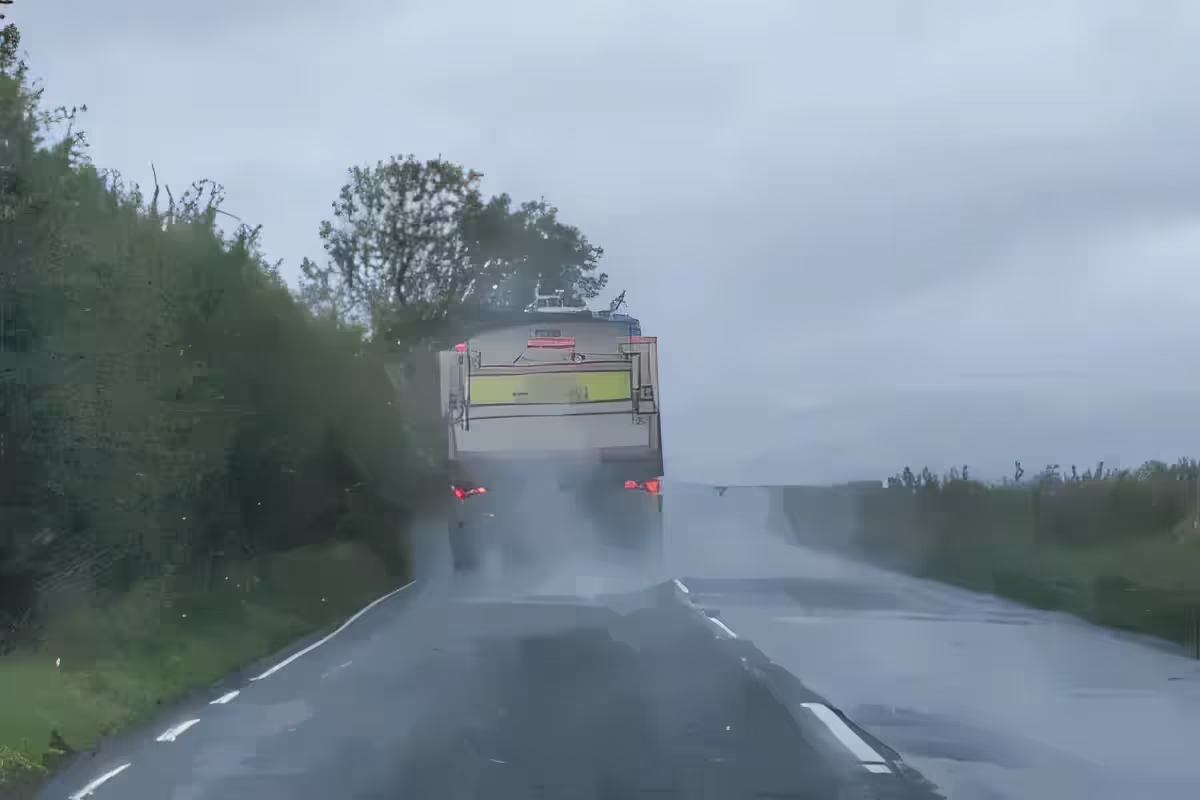
What should you do if it's raining and you're following this lorry on a motorway?
Explanation
The usual two-second time gap increases to four seconds when the roads are wet. If you stay well back, you’ll
Question 47 of 47
What should you check before you start a journey in foggy weather?
Explanation
If you have to drive in fog, switch your dipped headlights on and keep all your windows clear. You should always be able to pull up within the distance you can see ahead.