Answer 47 questions, check each correct answer and work through the explanations at your own pace.
Question 1 of 470 correct answers
Question 1 of 47
You've been driving in fog. What must you do when the visibility improves?
Explanation
You must turn off your fog lights if visibility is more than 100 metres (328 feet). Be prepared for the fact that the fog may be patchy and you may need to turn them on again if the fog returns.
Question 2 of 47
What will happen if you hold the clutch pedal down or roll in neutral for too long?
Explanation
Holding the clutch down or staying in neutral for too long will cause your vehicle to freewheel. This is known as 'coasting' and it's dangerous because it reduces your control of the vehicle.
Question 3 of 47
What should you do if an instrument panel warning light comes on while you're driving?
Explanation
Make sure you know what the different warning lights mean. An illuminated warning light could mean that your car is unsafe to drive. If you aren't sure about the problem, get a qualified mechanic to check it.
Question 4 of 47
What information should you share if you're involved in a collision that causes damage to another vehicle?
Explanation
Try to keep calm and don't rush. Make sure that you've shared all the relevant details with the other driver before you leave the scene. If possible, take pictures and note the positions of all the vehicles involved.
Question 5 of 47
What should you do if your mobile phone rings while you're driving or riding?
Explanation
It's illegal to use a hand-held mobile or similar device when driving or riding, except in a genuine emergency. The safest option is to switch off your mobile phone before you set off, and use a message service. If you've forgotten to switch your phone off and it rings, you should leave it. When you've stopped in a safe place, you can see who called and return the call if necessary.
Question 6 of 47
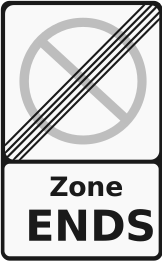
What does this sign mean?
Explanation
This sign shows that you're leaving a controlled parking zone and those restrictions no longer apply.
Question 7 of 47
Where should you avoid overtaking?
Explanation
Oncoming vehicles or other hazards can be hidden from view by dips in the road. If you can't see into the dip, wait until you have a clear view and can see that it's safe before starting to overtake.
Question 8 of 47
What's covered by third-party insurance?
Explanation
Third-party insurance doesn't cover damage to your own vehicle or injury to yourself. If you have a crash and your vehicle is damaged, you might have to carry out the repairs at your own expense.
Question 9 of 47
What does this sign mean?
Explanation
These signs are often seen in one-way streets that have more than one lane. When you see this sign, use the route that's the most convenient and doesn't require a late change of direction.
Question 10 of 47
What does this motorway sign mean?
Explanation
On the motorway, signs sometimes show temporary warnings due to traffic or weather conditions. They may be used to indicate
Question 11 of 47
When may you use hazard warning lights?
Explanation
Hazard warning lights are an important safety feature. Use them when driving on a motorway to warn traffic behind you of danger ahead. You should also use them if your vehicle has broken down and is causing an obstruction.
Question 12 of 47
What type of vehicle uses an amber flashing beacon on a dual carriageway?
Explanation
An amber flashing beacon on a vehicle indicates that it's moving slowly or stopped and a possible hazard. Look well ahead on a dual carriageway and you should be able to see and respond to these vehicles in good time.
Question 13 of 47
Why should you look carefully for motorcyclists and cyclists at junctions?
Explanation
Cyclists and motorcyclists are smaller than other vehicles and so are more difficult to see. They can easily be hidden from your view by cars parked near a junction.
Question 14 of 47
You're at a junction controlled by traffic lights. When should you wait at a green light?
Explanation
As you approach the traffic lights, look into the road you wish to take. Only proceed if your exit road is clear. If the road is blocked, hold back, even if you have to wait for the next green signal.
Question 15 of 47
What should you do when you park at night on a road that has a 40 mph speed limit?
Explanation
You must use parking lights when parking at night on a road or in a lay-by on a road with a speed limit greater than 30 mph. You must also park in the direction of the traffic flow and not close to a junction.
Question 16 of 47
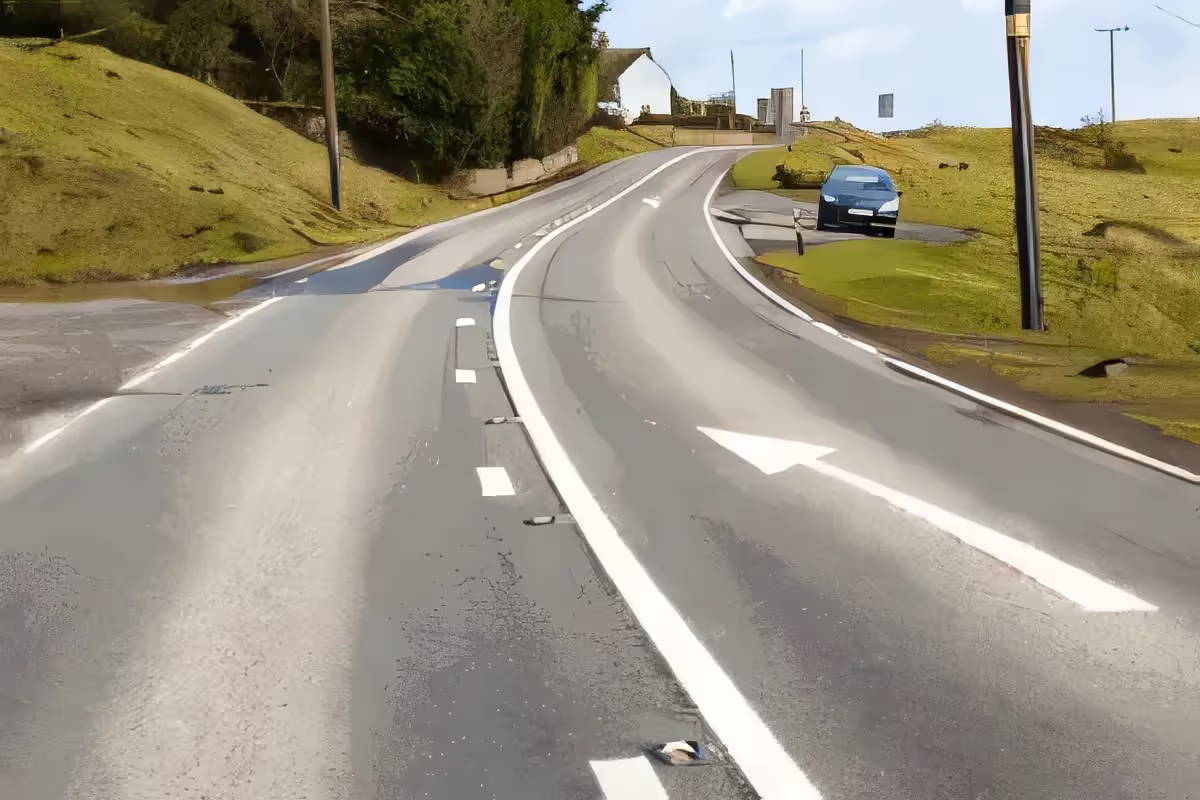
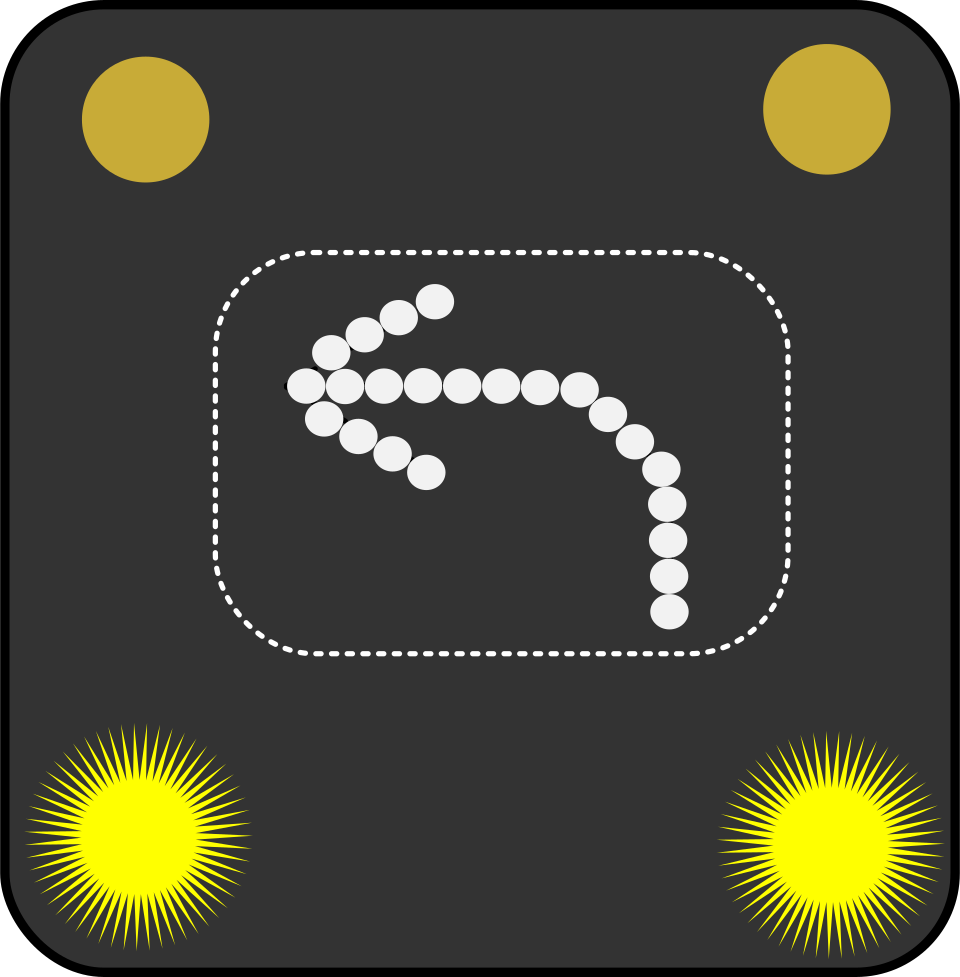
What does this curved arrow road marking mean?
Explanation
In this picture, the road marking shows that overtaking drivers or riders need to return to the left. These markings show the direction drivers must pass hatch markings or solid double white lines. They're also used to show the route that high vehicles should take under a low arched bridge.
Question 17 of 47
What should you do before starting a journey in foggy weather?
Explanation
Don't venture out if your journey isn't necessary. If you have to travel and someone is expecting you at the other end, let them know that you'll be taking longer than usual for your journey. This will stop them worrying if you don't turn up on time and will also take the pressure off you, so you don't feel you have to rush.
Question 18 of 47
You're driving on the motorway. How can you lower the risk of a collision when the vehicle behind is following too closely?
Explanation
On busy roads, traffic may still travel at high speeds. Don't follow the vehicle in front too closely. If a driver behind seems to be 'pushing' you, gradually increase your distance from the vehicle in front by slowing down gently. This will give you more space in front if you have to brake, and will reduce the risk of a collision involving several vehicles.
Question 19 of 47
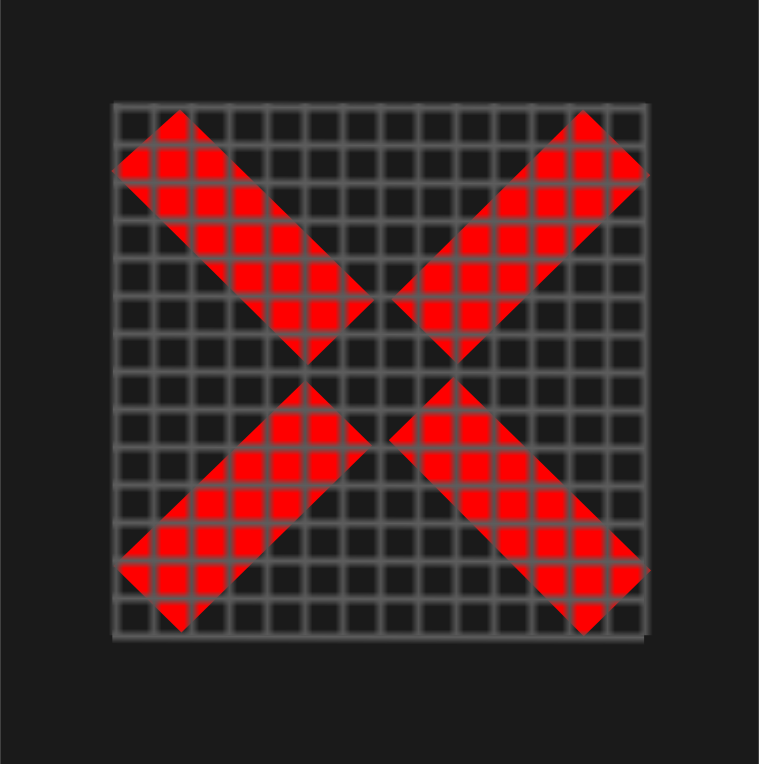
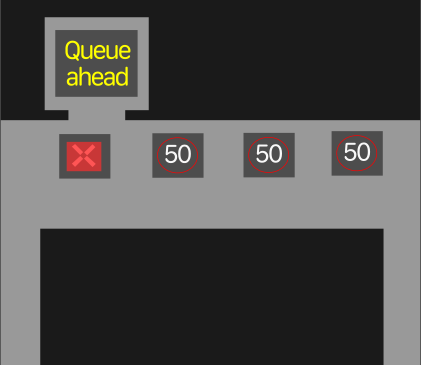
You're on a smart motorway. What does it mean when a red cross is displayed above the hard shoulder?
Explanation
Some motorways have been redesigned as smart motorways. At certain times, the hard shoulder will be open as a running lane. However, a red cross above the hard shoulder shows that it isn't open as a running lane and should only be used for emergencies and breakdowns.
Question 20 of 47
You're following a large vehicle. Why should you stay a safe distance behind it?
Explanation
If you're following a large vehicle but are so close to it that you can't see its exterior mirrors, the driver won't be able to see you. Keeping well back will also allow you to see the road ahead by looking past the large vehicle.
Question 21 of 47
What should you do when you see this sign as you travel along a motorway?
Explanation
You'll see this sign if the motorway is closed ahead. Pull into the left-hand lane as soon as it's safe to do so. Don't wait until the last moment before you move across, because the lane may be busy and you'll have to rely on another driver making room for you.
Question 22 of 47
You lose control of your car and damage a garden wall. What must you do if the property owner isn't available?
Explanation
If the property owner isn't available at the time, you must inform the police about the incident. This should be done as soon as possible, and in any case within 24 hours.
Question 23 of 47
You're having difficulty finding a parking space in a busy town. Can you park on the zigzag lines of a zebra crossing?
Explanation
It's an offence to park on the zigzag lines of a zebra crossing. You'll be causing an obstruction by obscuring the view of both pedestrians and drivers.
Question 24 of 47
Your vehicle has stalled in the middle of a level crossing. What should you do if the warning bells start to ring while you're trying to restart the engine?
Explanation
If the warning bells ring, leave the vehicle and get any passengers well clear of the crossing immediately.
Question 25 of 47
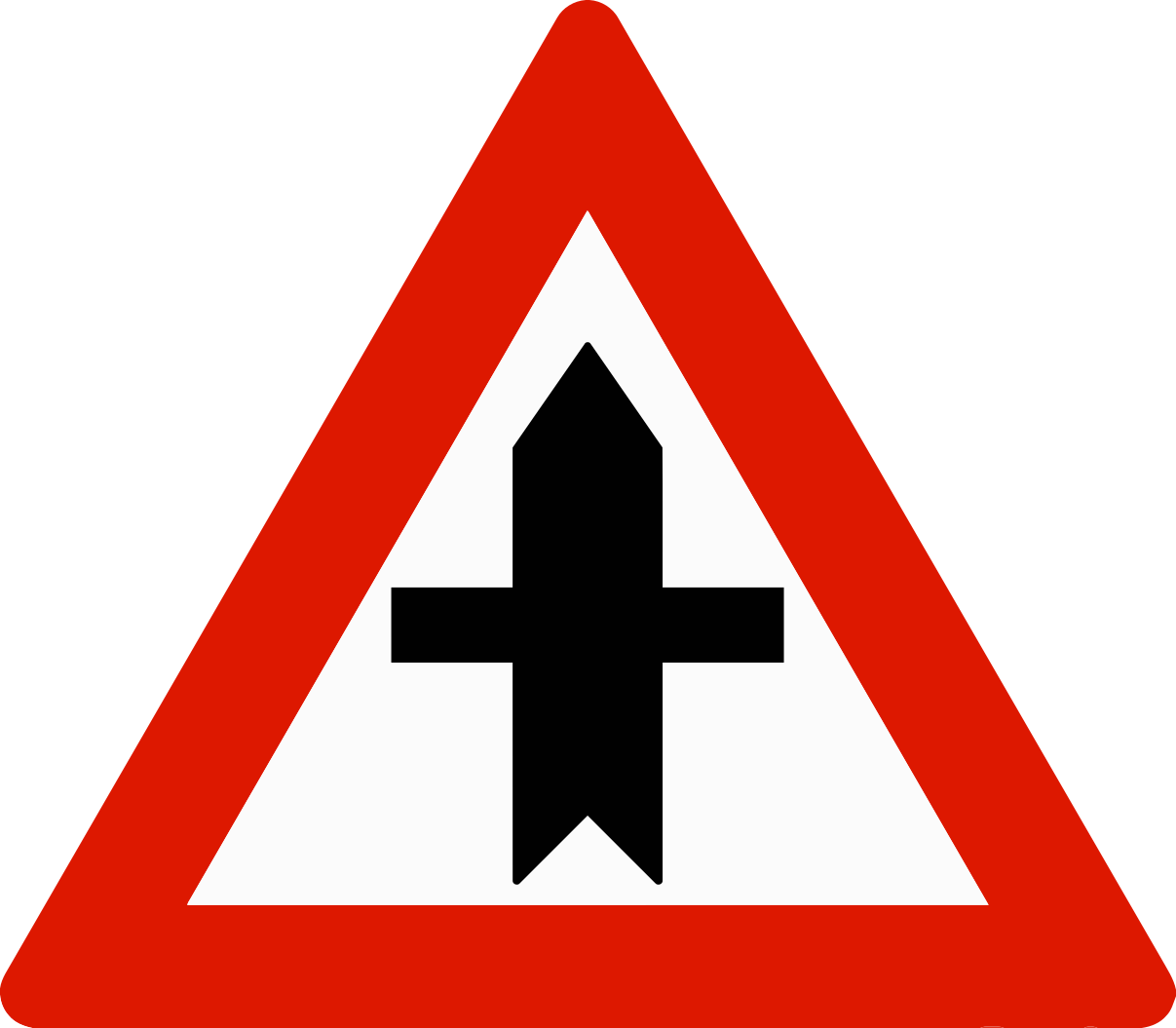
What does this sign mean?
Explanation
The priority through the junction is shown by the broader line. You need to be aware of the hazard posed by traffic crossing or pulling out onto a major road.
Question 26 of 47
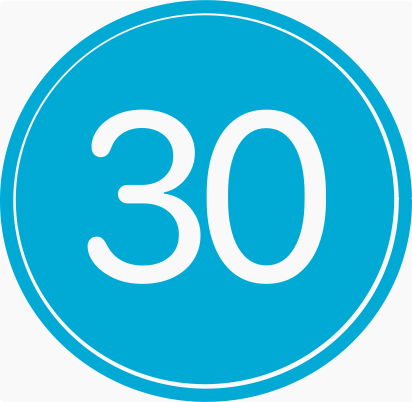
What does this sign mean?
Explanation
This sign is shown where slow-moving vehicles would impede the flow of traffic; for example, in tunnels. However, if you need to slow down or even stop to avoid an incident or potential collision, you should do so.
Question 27 of 47
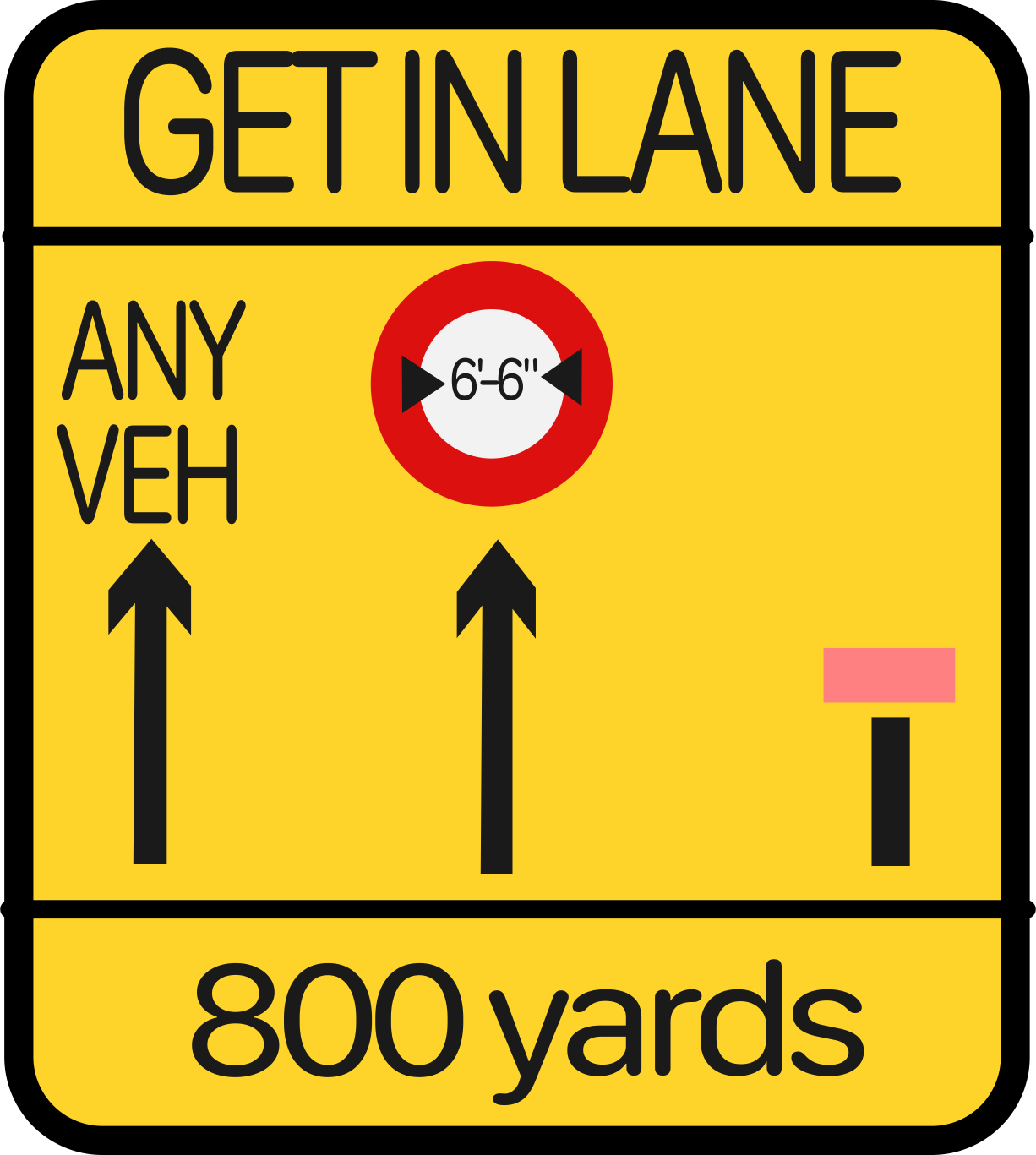
You're driving in the right-hand lane of a dual carriageway. What should you do if you see a sign showing that the right-hand lane is closed 800 yards ahead?
Explanation
Keep a lookout for traffic signs. If you’re directed to change lanes, do so in good time. Don’t
Question 28 of 47
Who has priority at an unmarked crossroads?
Explanation
Practise good observation in all directions before you emerge or make a turn. Proceed only when you're sure it's safe to do so.
Question 29 of 47
You're turning right onto a dual carriageway. What should you do if the central reservation is too narrow to contain your vehicle?
Explanation
When the central reservation is narrow, it may not be able to contain your vehicle. In this case, you should treat a dual carriageway as one road. Wait until the road is clear in both directions before emerging to turn right. If you try to treat it as two separate roads and wait in the middle, your vehicle will stick out and cause an obstruction that may lead to a collision.
Question 30 of 47
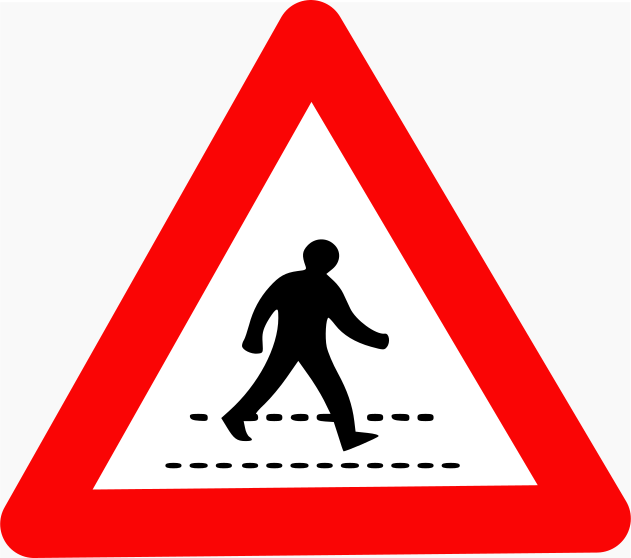
What does this sign mean?
Explanation
Look well ahead and be ready to stop for any pedestrians crossing, or about to cross, the road. Also check the pavements for anyone who looks like they might step or run into the road.
Question 31 of 47
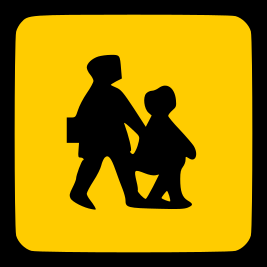
Where would you see this sign?
Explanation
School buses can stop to pick up or drop off schoolchildren at places that aren't designated bus stops. Watch out for children crossing the road to catch the bus or from the far side of the bus if they've just been dropped off.
Question 32 of 47
You're approaching a red light at a puffin crossing. Pedestrians are on the crossing. When will the red light change?
Explanation
A sensor will automatically detect that the pedestrians have reached a safe position. Don't drive on until the green light shows and it's safe for you to do so.
Question 33 of 47
What should you do if a tyre bursts while you're driving?
Explanation
A tyre bursting can lead to a loss of control, especially if you're travelling at high speed. Using the correct procedure should help you to stop the vehicle safely.
Question 34 of 47
You're towing a caravan. Which is the safest type of rear-view mirror to use?
Explanation
Towing a large trailer or caravan can greatly reduce your view of the road behind. You may need to fit extended-arm side mirrors so that you can see clearly behind and down both sides of the caravan or trailer.
Question 35 of 47
When may you overtake another vehicle on their left?
Explanation
You may pass slower vehicles on their left while travelling along a one-way street. Be aware of drivers who may need to change lanes and may not expect faster traffic passing on their left.
Question 36 of 47
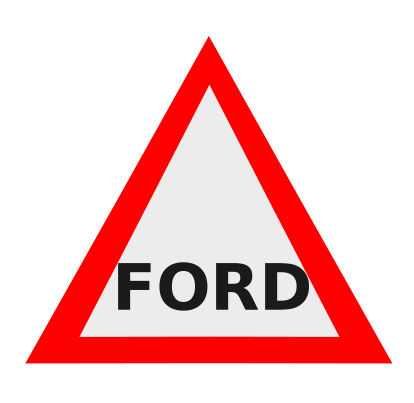
What does this sign mean?
Explanation
This sign is found where a shallow stream crosses the road. Heavy rainfall could increase the flow of water. If the water looks too deep or the stream has spread over a large distance, stop and find another route.
Question 37 of 47
In winter, road signs can become covered by snow. What does this sign mean?
Explanation
The 'stop' sign is the only road sign that's octagonal. This is so that it can be recognised and obeyed even if it's obscured (for example, by snow).
Question 38 of 47
You're carrying a child under three years old in your car. Which restraint is suitable for a child of this age?
Explanation
It's your responsibility to ensure that all children in your car are secure. Suitable restraints include a child seat, baby seat, booster seat or booster cushion. It's essential that any restraint used is suitable for the child's size and weight, and fitted according to the manufacturer's instructions.
Question 39 of 47
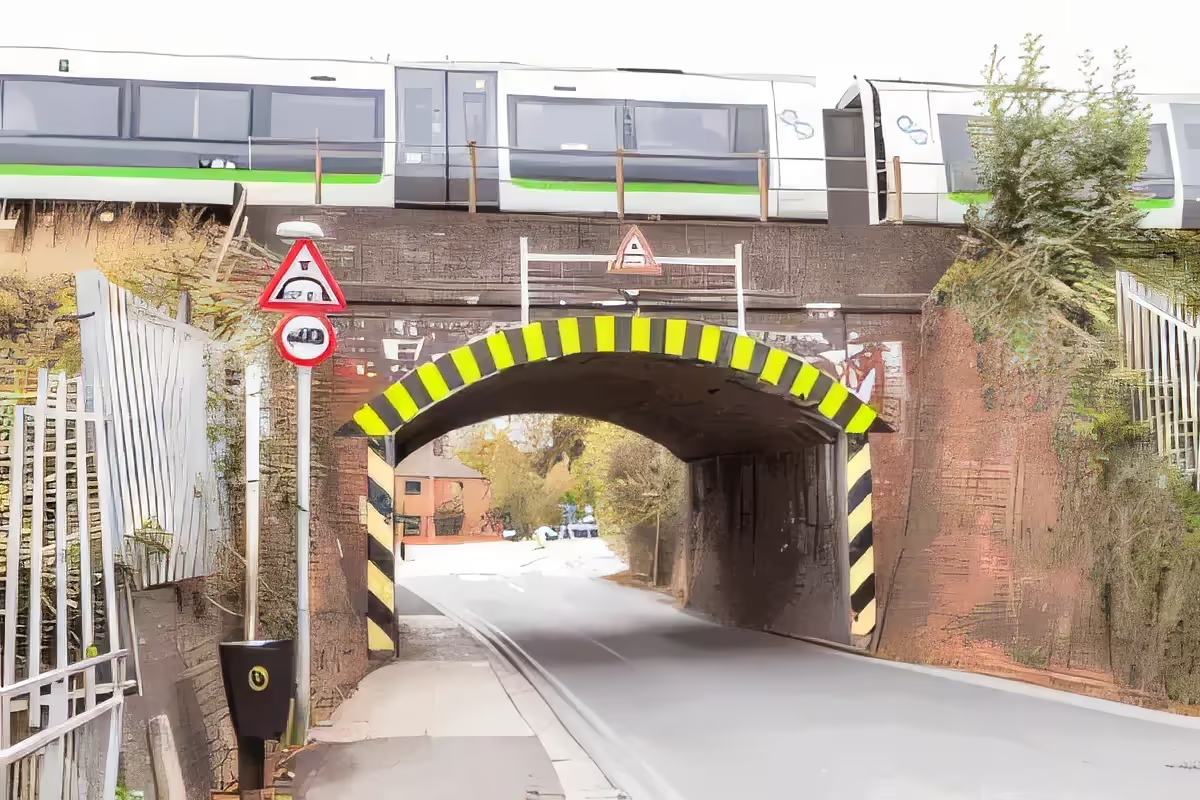
Which type of vehicle should you be ready to give way to as you approach this bridge?
Explanation
A bus or high-sided lorry will have to take a position in the centre of the road to clear the bridge. There's normally a sign to show this. Look well ahead, past the bridge and be ready to stop and give way to large oncoming vehicles.
Question 40 of 47
What's the reason for traffic-calming measures?
Explanation
Traffic-calming measures make the roads safer for vulnerable road users, such as cyclists, pedestrians and children. These can be designed as chicanes, road humps or other obstacles that encourage drivers and riders to slow down.
Question 41 of 47
How does drinking alcohol affect your driving behaviour?
Explanation
Alcohol can increase confidence to a point where your driving behaviour might become 'out of character'. Sensible behaviour might change to risk-taking behaviour. Never let yourself or your friends get into this situation.
Question 42 of 47
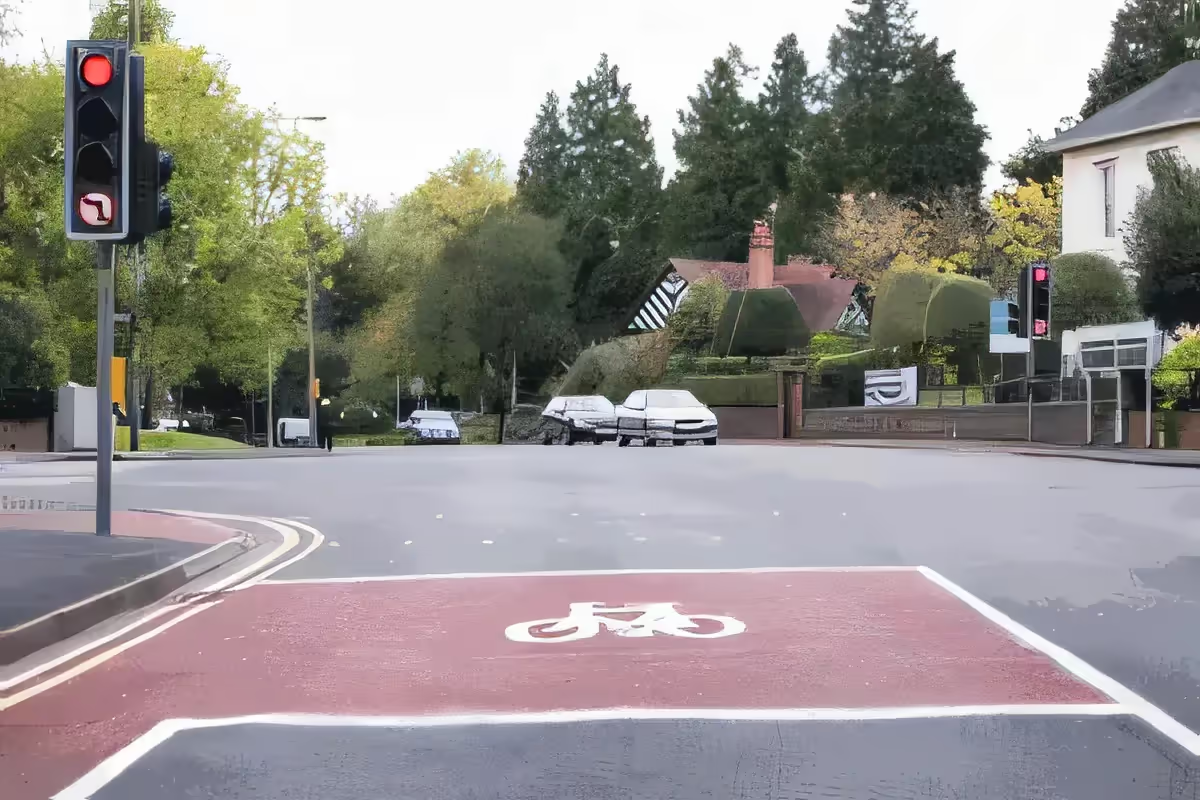
This junction, controlled by traffic lights, has a marked area between two stop lines. What's this for?
Explanation
These are known as advanced stop lines. When the lights are red (or about to become red), you should stop at the first white line. However, if you've crossed that line as the lights change, you must stop at the second line even if it means you're in the area reserved for cyclists.
Question 43 of 47
What must you check before you drive someone else's vehicle?
Explanation
Driving a vehicle without insurance cover is illegal, so be sure that, whoever's car you drive, you're insured - whether on their policy or on your own. If you need to take out insurance, it's worth comparing several quotes before you decide which insurance provider best meets your needs.
Question 44 of 47
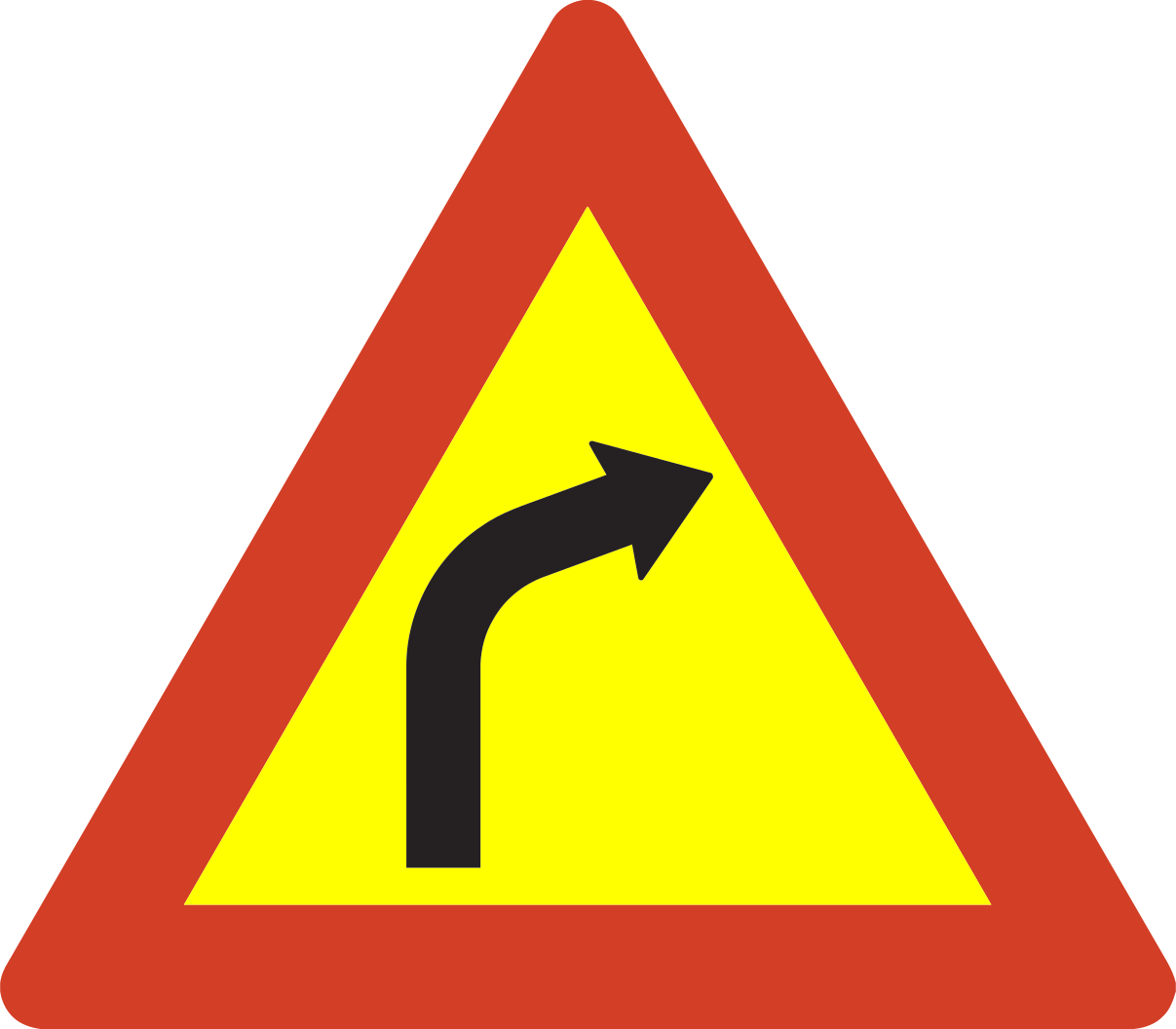
Why should you keep well to the left as you approach a right-hand bend?
Explanation
Keeping to the left as you approach right-hand bends will give you an earlier view around the bend and enable you to see any hazards sooner. It also reduces the risk of collision with any oncoming vehicle that may have drifted over the centre line while taking the bend.
Question 45 of 47
What should you do if you think the driver of the vehicle in front has forgotten to cancel their right indicator?
Explanation
Be cautious and don't attempt to overtake. The driver may be unsure of the location of a junction and may turn suddenly.
Question 46 of 47
You're on a smart motorway. What does it mean if a red cross is showing above the hard shoulder and mandatory speed limits above all other lanes?
Explanation
A red cross above the hard shoulder shows that it's closed as a running lane and should only be used for emergencies or breakdowns. On a smart motorway, the hard shoulder may be used as a running lane at busy times. This will be shown by a mandatory speed limit on the gantry above the hard shoulder.
Question 47 of 47
What should you do if you begin to feel drowsy while you're driving?
Explanation
You'll be putting other road users at risk if you continue to drive when you're drowsy. Pull over and stop in a safe place for a rest. Caffeinated drinks and a short nap can temporarily help counter sleepiness. If you're driving a long distance, think about finding some accommodation so you can rest for longer before continuing your journey.