Answer 47 questions, check each correct answer and work through the explanations at your own pace.
Question 1 of 470 correct answers
Question 1 of 47
Your car requires an MOT certificate. When is it legal to drive it without an MOT certificate?
Explanation
When a car is three years old (four years old in Northern Ireland), it must pass an MOT test and have a valid MOT certificate before it can be used on the road. Exceptionally, you may
Question 2 of 47
You take some cough medicine given to you by a friend. What should you do before driving your car?
Explanation
If you've taken medicine, never drive without first checking what the side effects might be; they might affect your judgement and perception, and therefore endanger lives.
Question 3 of 47
What should you do if your vehicle pulls to one side when you use the brakes?
Explanation
The brakes on your vehicle must be effective and properly adjusted. If your vehicle pulls to one side when braking, take it to be checked by a qualified mechanic as soon as you can.
Question 4 of 47
Where would you find these flashing red light signals?
Explanation
These signals are found at level crossings, swing or lifting bridges, some airfields and emergency access sites. The flashing red lights mean stop whether or not the way seems to be clear.
Question 5 of 47
What must you do when the amber light is flashing at a pelican crossing?
Explanation
Pelican crossings are signal-controlled crossings operated by pedestrians. Push-button controls change the signals. Pelican crossings have no red-and-amber stage before green; instead, they have a flashing amber light. This means you must give way to pedestrians who are on the crossing but if the crossing is clear you can continue.
Question 6 of 47
What will reduce fuel consumption?
Explanation
Harsh braking, frequent gear changes and harsh acceleration increase fuel consumption. A car uses less fuel when travelling at a constant low speed in an appropriate high gear. You need to look well ahead so you're able to anticipate hazards early. Easing off the accelerator and timing your approach at junctions, for example, can reduce the fuel consumption of your vehicle.
Question 7 of 47
You're going to turn left from a main road into a minor road. What should you do as you approach the junction?
Explanation
Your road position can help other road users to anticipate your actions. Keep to the left as you approach a left turn and don't swing out into the centre of the road in order to make the turn easier. This could endanger oncoming traffic and may cause other road users to misunderstand your intentions.
Question 8 of 47
When may you drive over a pavement?
Explanation
It's illegal to drive on or over a pavement, except to gain access to a property. If you need to cross a pavement, give priority to pedestrians.
Question 9 of 47
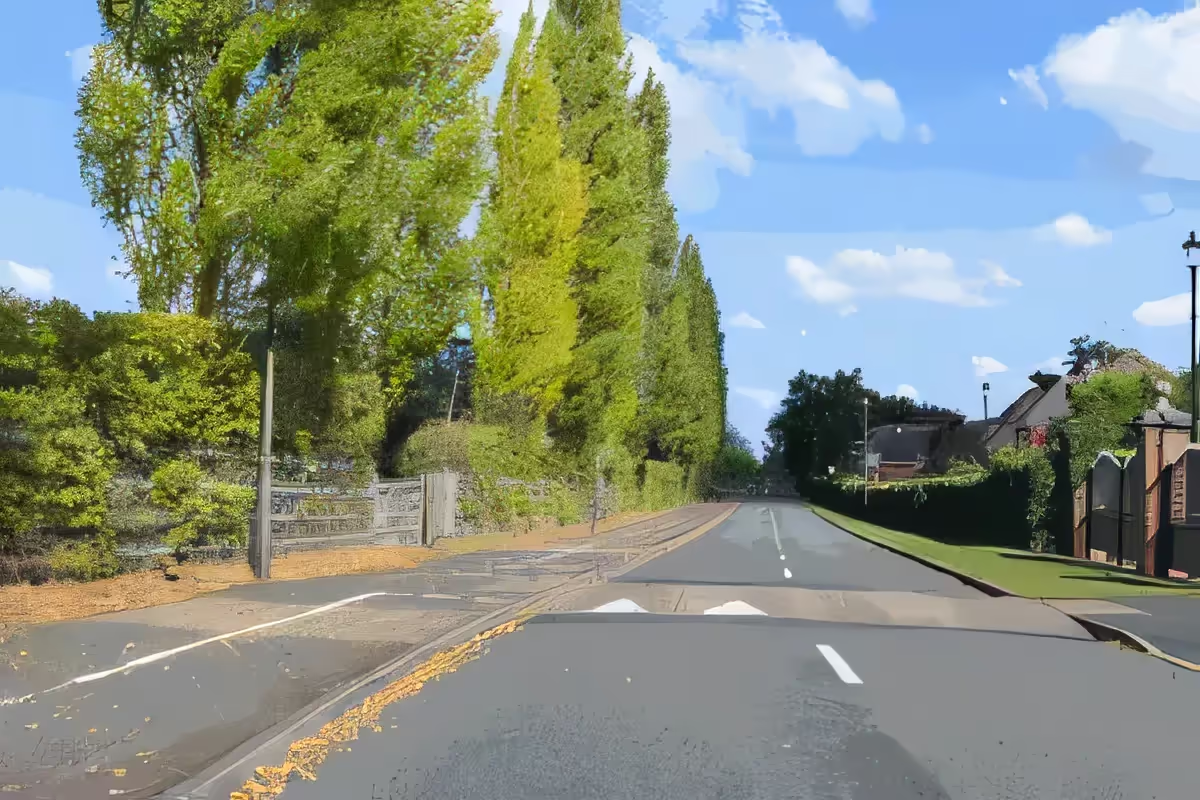
How should you drive when you're driving along a road that has road humps?
Explanation
Road humps are there for a reason - to protect vulnerable road users by reducing the speed of traffic. Don't accelerate harshly between the humps. Put the safety of others first and maintain a reduced speed throughout the zone.
Question 10 of 47
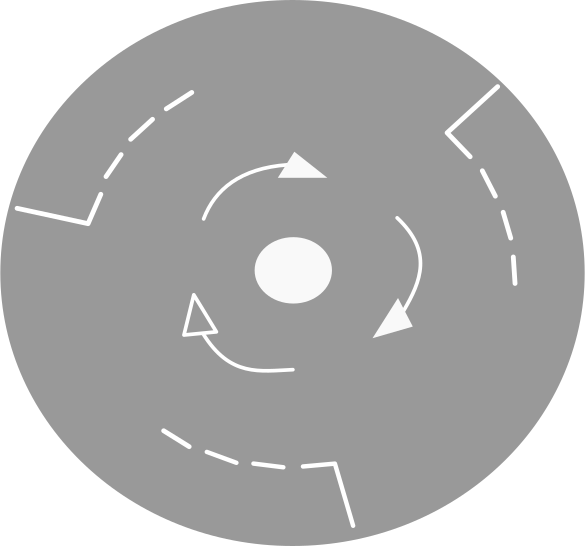
Where would you find these road markings?
Explanation
These markings show the direction in which the traffic should go at a mini-roundabout.
Question 11 of 47
How can you plan your route before starting a long journey?
Explanation
Various route planners are available on the internet. Most of them give you several options, allowing you to choose between the most direct route and quieter roads. They may also identify rest and fuel stops. Print off the directions and take them with you.
Question 12 of 47
Why should you check the information leaflet before taking any medicine?
Explanation
Always check the label or information leaflet for any medication you take. The medicine might affect your driving. If you aren't sure, ask your doctor or pharmacist.
Question 13 of 47
What must you have when you apply to renew your vehicle tax?
Explanation
You can renew your vehicle tax online, at post offices and by phone using the DVLA vehicle tax service. When applying, make sure you have all the relevant valid documents, including a valid MOT test certificate where applicable.
Question 14 of 47
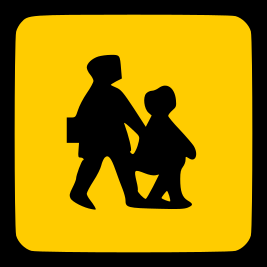
What type of vehicle displays this yellow sign?
Explanation
Buses which carry children to and from school may stop at places other than scheduled bus stops. Be aware that they might pull over at any time to allow children to get on or off. This will normally be when traffic is heavy during rush hour.
Question 15 of 47
A police car is following you. What should you do if the police officer flashes the headlights and points to the left?
Explanation
You must pull up on the left as soon as it's safe to do so and switch off your engine.
Question 16 of 47
You're travelling along a residential street. There are parked vehicles on the left-hand side. Why should you keep your speed down?
Explanation
Travel slowly and carefully near parked vehicles. Beware of
Question 17 of 47
What will affect your vehicle's stopping distance?
Explanation
Having tyres correctly inflated and in good condition will ensure they have maximum grip on the road; how well your tyres grip the road has a significant effect on your car's stopping distance.
Question 18 of 47
When will you feel the effects of engine braking?
Explanation
When you take your foot off the accelerator, engines have a natural resistance to turn, caused mainly by the cylinder compression. Changing to a lower gear requires the engine to turn faster and so it will have greater resistance than when it's made to turn more slowly. When going downhill, changing to a lower gear will therefore help to keep the vehicle's speed in check.
Question 19 of 47
You're driving on an icy road. What distance from the car in front should you drive?
Explanation
Don't travel in icy or snowy weather unless your journey is essential. Drive extremely carefully when roads are or may be icy. Stopping distances can be ten times greater than on dry roads.
Question 20 of 47
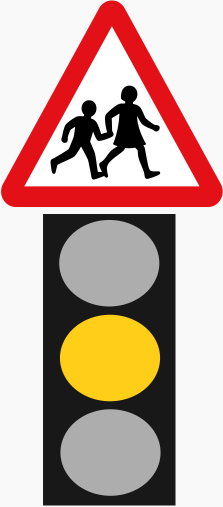
What action should you take when you see flashing amber lights under a school warning sign?
Explanation
The flashing amber lights are switched on to warn you that children may be crossing near a school. Slow down and take extra care, as you may have to stop.
Question 21 of 47
Why should you make sure that your indicators are cancelled after turning at a junction?
Explanation
Leaving your indicators on could confuse other road users and may even lead to a crash. Be aware that if you haven't turned sharply, your indicators may not self-cancel and you'll need to turn them off manually.
Question 22 of 47
On a three-lane motorway, which lane should you use if there's no traffic ahead?
Explanation
On a three-lane motorway, you should travel in the left-hand lane unless you're overtaking. This applies regardless of the speed at which you're travelling.
Question 23 of 47
What should you do when you're unsure whether it's safe to reverse your vehicle?
Explanation
A small child could be hidden directly behind you, so, if you can't see all around your vehicle, get out and have a look. You could also ask someone reliable outside the vehicle to guide you.
Question 24 of 47
Why are vehicle mirrors often slightly curved (convex)?
Explanation
Although a convex mirror gives a wide view of the scene behind, you should be aware that it won't show you everything behind or to the side of your vehicle. Before you move off, you'll need to look over your shoulder to check for anything not visible in the mirrors.
Question 25 of 47
For how long is an MOT certificate normally valid?
Explanation
Some garages will remind you that your vehicle is due for its annual MOT test, but not all do. To ensure continuous cover, you may take your vehicle for its MOT up to one month before its existing MOT certificate expires. The expiry date on the new certificate will be 12 months after the expiry date on the old certificate.
Question 26 of 47
When is fuel consumption at its highest?
Explanation
Accelerating uses a lot of fuel, so always try to use the accelerator smoothly. Taking your foot off the accelerator allows the momentum of the car to take you forward, especially when going downhill. This can save a considerable amount of fuel without any loss of control over the vehicle.
Question 27 of 47
What restrictions apply if you're towing a trailer on a three-lane motorway?
Explanation
The motorway regulations for towing a trailer state that you mustn't
Question 28 of 47
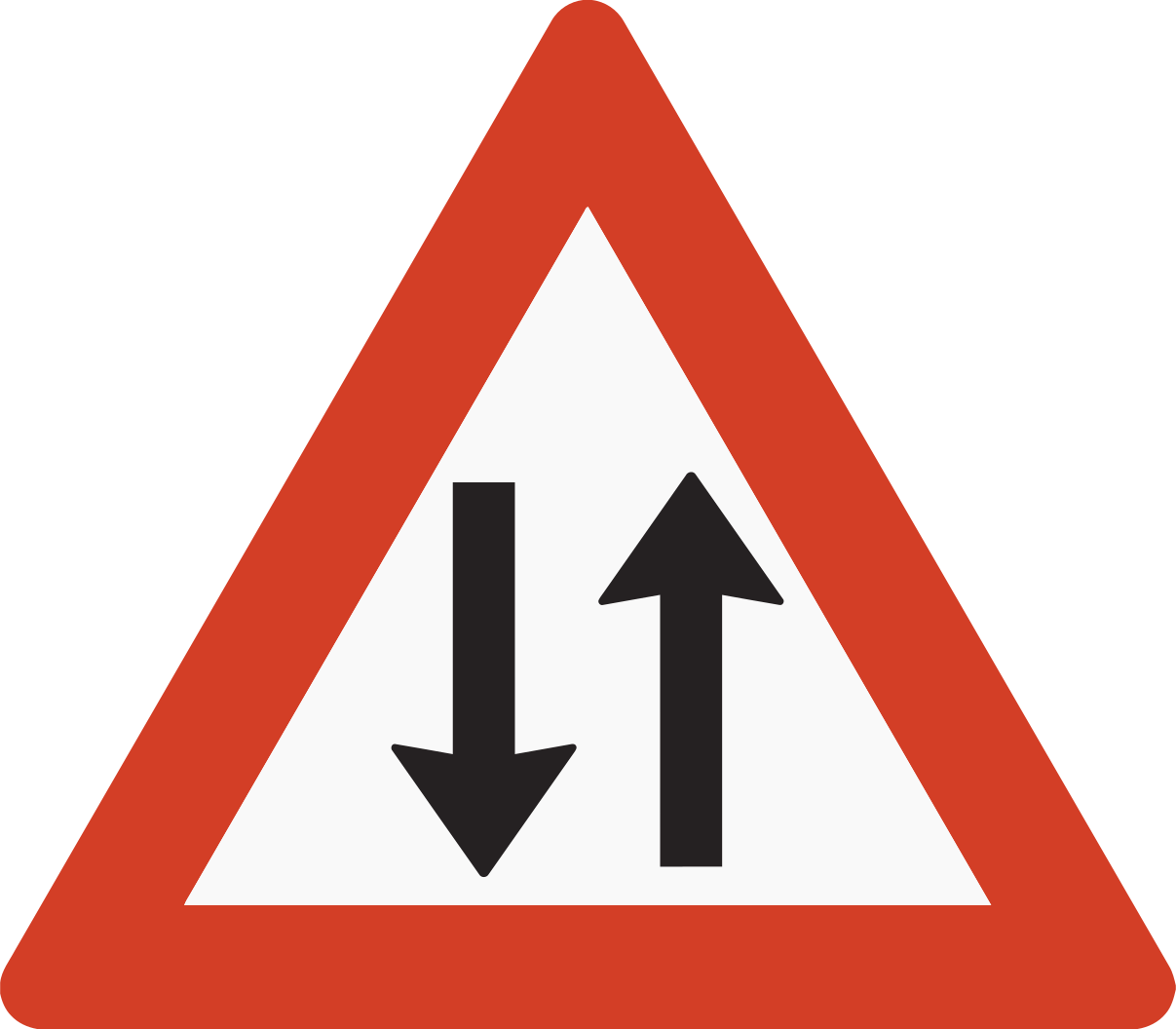
What does this sign mean?
Explanation
This sign may be at the end of a dual carriageway or a one-way street. It's there to warn you of oncoming traffic.
Question 29 of 47
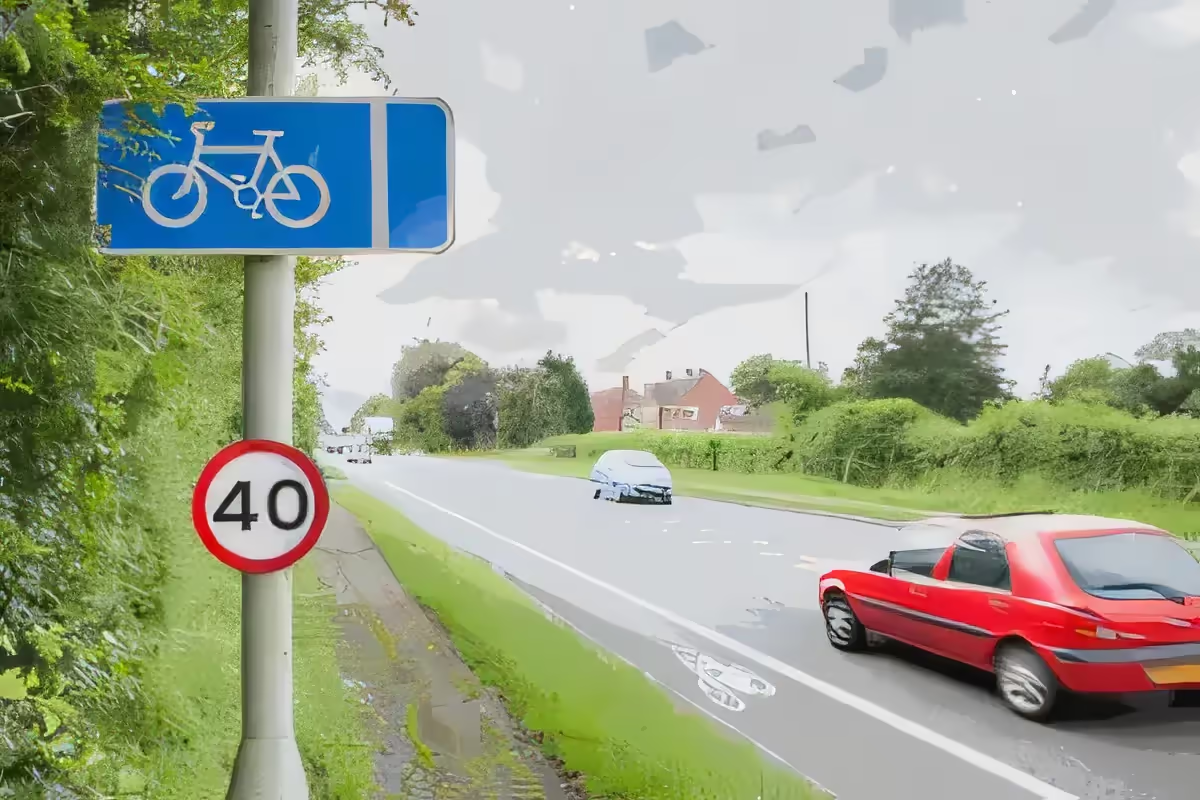
A cycle lane, marked by a solid white line, is in operation. What does this mean for car drivers?
Explanation
While it's in operation, other vehicles must not use this part of the carriageway except to pick up or set down passengers. At other times, when the lane isn't in operation, you should still be aware that there may be cyclists using the lane. Give them plenty of room as you pass and allow for their movement from side to side, especially in windy weather or on a bumpy road.
Question 30 of 47
Where is your vehicle most likely to be affected by side winds?
Explanation
In windy conditions, care must be taken on exposed roads. A strong gust of wind can blow you off course. Watch out for other road users who are particularly likely to be affected, such as cyclists, motorcyclists, high-sided lorries and vehicles towing trailers.
Question 31 of 47
Why would you fit chains to your wheels?
Explanation
Chains can be fitted to your wheels in snowy conditions. They can help you to move off without wheelspin, or to keep moving in deep snow. You'll still need to adjust your driving to suit these conditions.
Question 32 of 47
How can driving in a fuel-efficient manner help protect the environment?
Explanation
Fuel-efficient driving is all about looking and planning further ahead. This helps raise your hazard awareness and reduces the need for late and heavy braking. This will make your journeys more comfortable, as well as considerably reducing your fuel bills and reducing emissions that can damage the environment.
Question 33 of 47
In winter, road signs can become covered by snow. What does this sign mean?
Explanation
The 'stop' sign is the only road sign that's octagonal. This is so that it can be recognised and obeyed even if it's obscured (for example, by snow).
Question 34 of 47
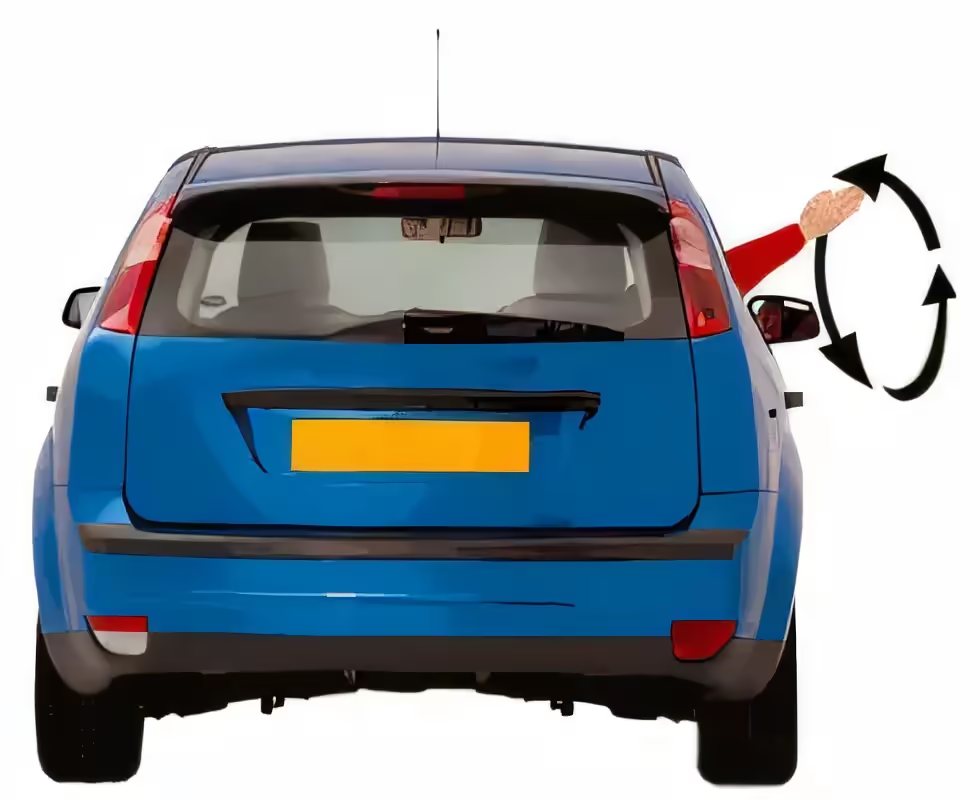
What does this arm signal mean?
Explanation
There might be an occasion where another driver uses an arm signal. This may be because the vehicle's indicators are obscured by other traffic. In order for such signals to be effective, all drivers should know their meaning. Be aware that the 'left turn' signal might look similar to the 'slowing down' signal.
Question 35 of 47
The fluid level in your battery is low. What fluid should you use to top it up?
Explanation
Some modern batteries are maintenance free. Check your vehicle handbook and, if necessary, make sure that the plates in each battery cell are covered with fluid.
Question 36 of 47
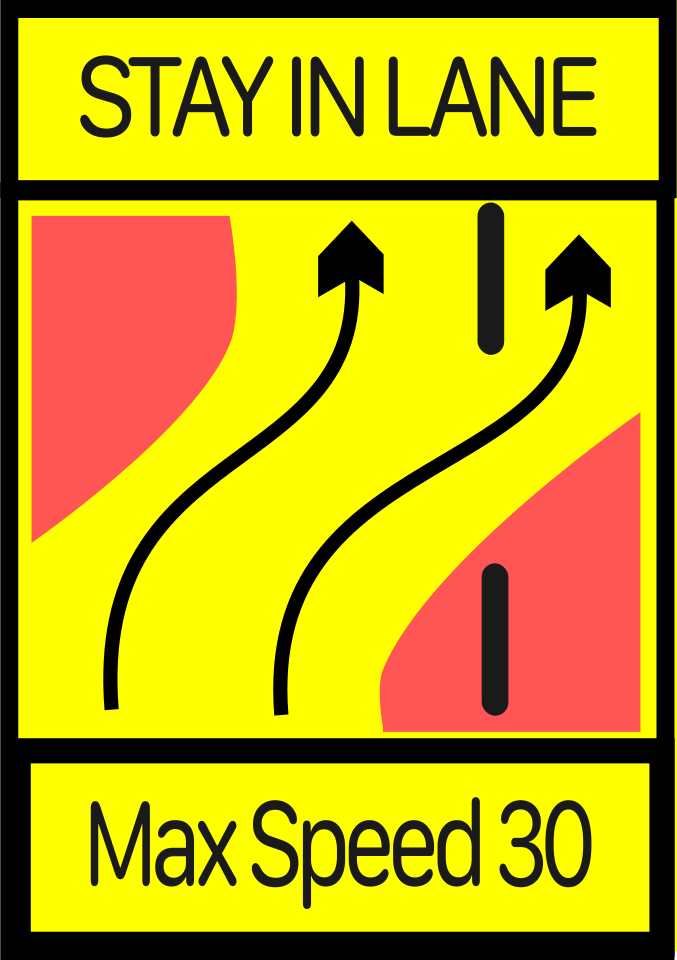
What should you do when going through a contraflow system on a motorway?
Explanation
At roadworks, and especially where a contraflow system is operating, a speed restriction is likely to be in place. Keep to the lower speed limit and don't
Question 37 of 47
How can you reduce the environmental harm caused by your motor vehicle?
Explanation
Engines that burn fossil fuels produce exhaust emissions that are harmful to health. The harder you make the engine work, the more emissions it will produce. Engines also use more fuel and produce higher levels of emissions when they're cold. Anything you can do to reduce your use of fossil fuels will help the environment.
Question 38 of 47
When would you use the right-hand lane on a three-lane motorway?
Explanation
The right-hand lane of the motorway is for overtaking. Sometimes you may be directed into a right-hand lane as a result of roadworks or a traffic incident. This will be indicated by signs or officers directing the traffic.
Question 39 of 47
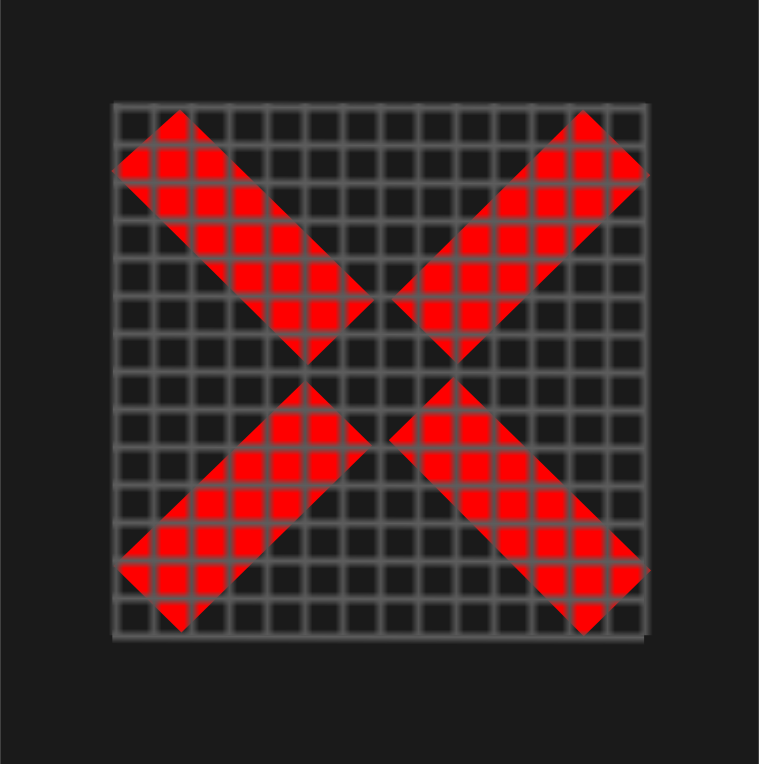
You're on a smart motorway. What does it mean when a red cross is displayed above the hard shoulder?
Explanation
Some motorways have been redesigned as smart motorways. At certain times, the hard shoulder will be open as a running lane. However, a red cross above the hard shoulder shows that it isn't open as a running lane and should only be used for emergencies and breakdowns.
Question 40 of 47
Where would it be unsafe to overtake?
Explanation
You should overtake only when it's really necessary and you can see it's clear ahead. Look out for road signs and markings that show it's illegal or would be unsafe to overtake; for example, approaching junctions or bends. In many cases, overtaking is unlikely to significantly improve your journey time.
Question 41 of 47
What's the speed limit for a car towing a caravan on a dual carriageway?
Explanation
The speed limit for cars towing caravans or trailers on dual carriageways or motorways is 60 mph. Due to the increased weight and size of the combination, you should plan further ahead. Take care in windy weather, as a strong side wind can make a caravan or large trailer unstable.
Question 42 of 47
You're driving along a country road. You see this sign. What should you do after dealing safely with the hazard?
Explanation
If your brakes have been thoroughly soaked, you should check that they're working properly before you build up speed again. Before you do this, remember to check your mirrors and consider what's behind you.
Question 43 of 47
What should you do if your vehicle pulls to one side when you use the brakes?
Explanation
The brakes on your vehicle must be effective and properly adjusted. If your vehicle pulls to one side when braking, take it to be checked by a qualified mechanic as soon as you can.
Question 44 of 47
You're driving along a wet road. How can you tell if your vehicle's tyres are losing their grip on the surface?
Explanation
If you drive at speed in very wet conditions, your steering may suddenly feel lighter than usual. This means that the tyres have lifted off the surface of the road and are floating on the surface of the water. This is known as aquaplaning. Reduce speed but don't brake until your steering returns to normal.
Question 45 of 47
How does drinking alcohol affect your driving behaviour?
Explanation
Alcohol can increase confidence to a point where your driving behaviour might become 'out of character'. Sensible behaviour might change to risk-taking behaviour. Never let yourself or your friends get into this situation.
Question 46 of 47
What should you do when you're approaching traffic lights that have been green for some time?
Explanation
The longer traffic lights have been green, the sooner they'll change. Allow for this as you approach traffic lights that you know have been green for a while. They're likely to change soon, so you should be prepared to stop.
Question 47 of 47
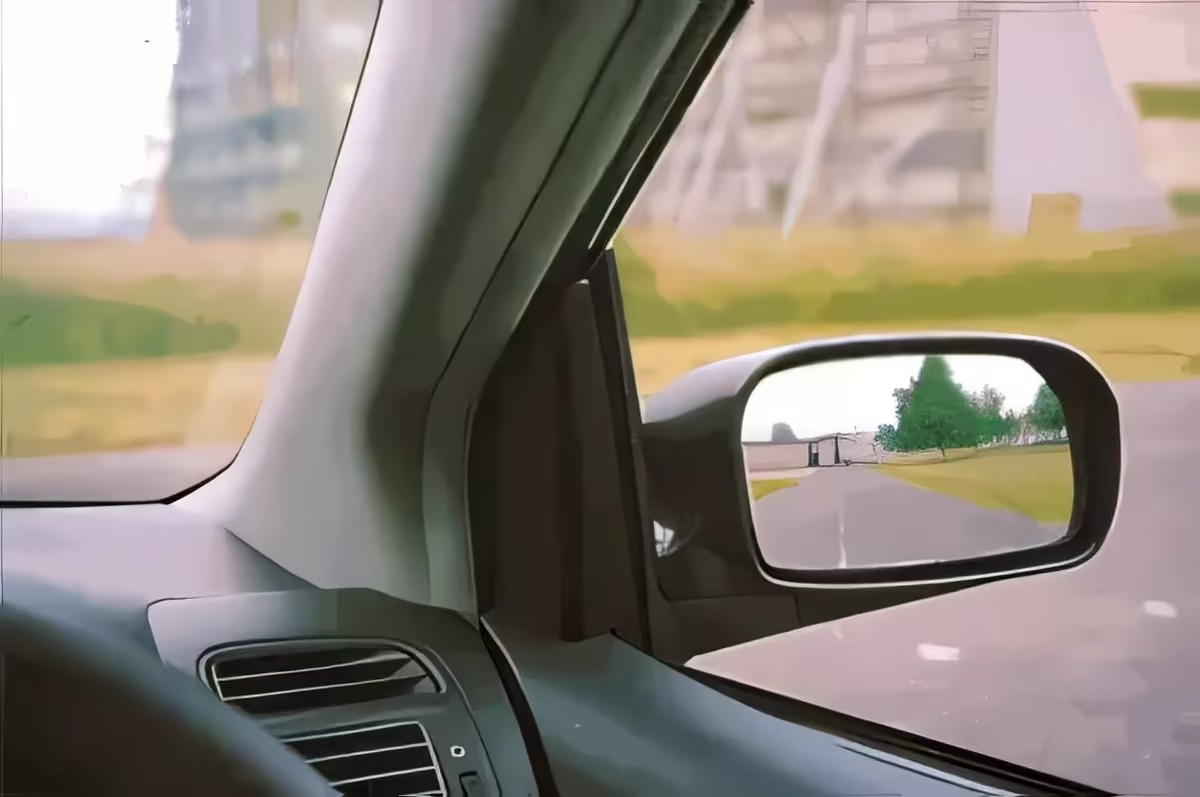
You're waiting to emerge from a junction. The windscreen pillar is restricting your view. What should you be particularly aware of?
Explanation
Windscreen pillars can completely block your view of pedestrians, motorcyclists and cyclists. You should make a particular effort to look for these road users; don't just rely on a quick glance.