Answer 48 questions, check each correct answer and work through the explanations at your own pace.
Question 1 of 480 correct answers
Question 1 of 48
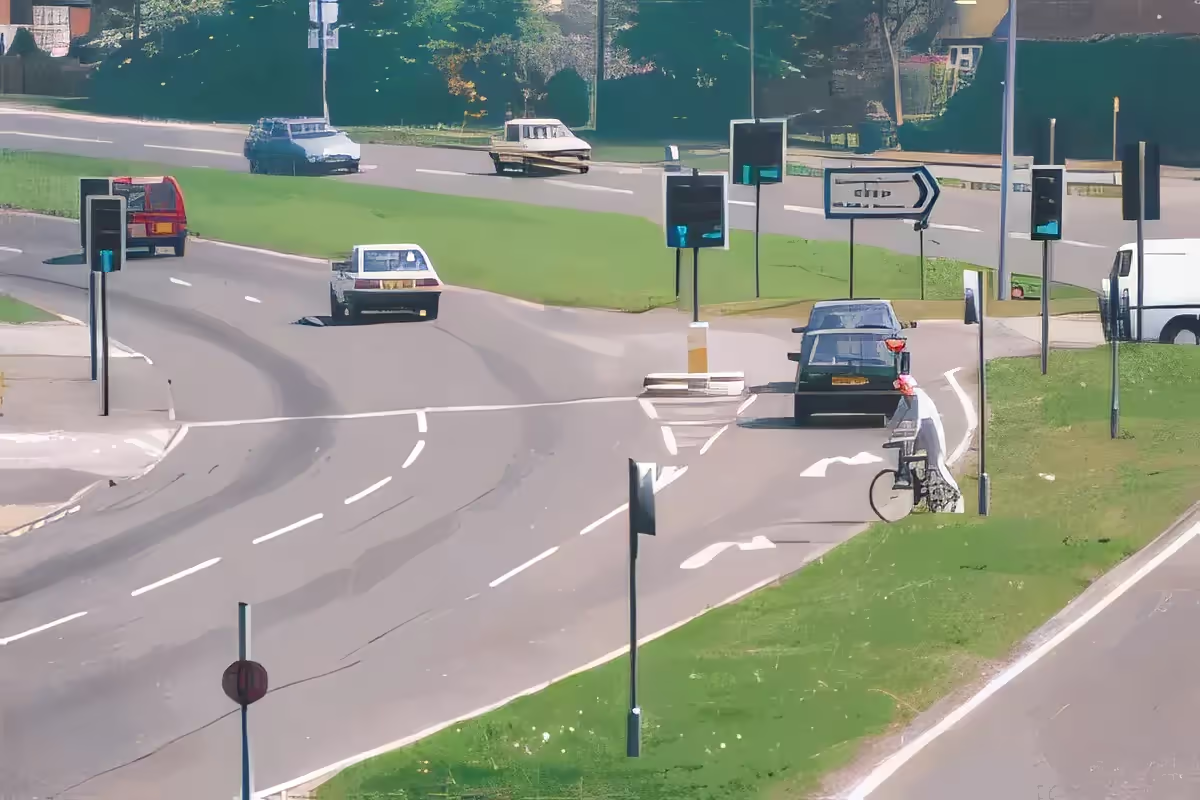
What's the main hazard shown in this picture?
Explanation
Look at the picture carefully and try to imagine you're there. The cyclist in this picture appears to be trying to cross the road. You must be able to deal with the unexpected, especially when you're approaching a hazardous junction. Look well ahead to give yourself time to deal with any hazards.
Question 2 of 48
What should you do if a driver pulls out of a side road in front of you, causing you to brake hard?
Explanation
Be tolerant if a vehicle emerges and you have to brake quickly. Anyone can make a mistake, so don't react aggressively. Be alert where there are side roads and be especially careful where there are parked vehicles, because these can make it difficult for emerging drivers to see you.
Question 3 of 48
You're waiting to turn right out of a minor road. It's clear to the left but a lorry is coming from the right. Why should you wait, even if you have enough time to turn?
Explanation
Large vehicles can hide other vehicles that are overtaking - especially motorcycles. You need to be aware of the possibility of hidden vehicles and not assume that it's safe to turn.
Question 4 of 48
What's the national speed limit on motorways for cars and motorcycles?
Explanation
Travelling at the national speed limit doesn't allow you to hog the right-hand lane. Always use the left-hand lane whenever possible. When leaving a motorway, get into the left-hand lane well before your exit. Reduce your speed on the slip road and look out for sharp bends or curves and traffic queuing at roundabouts.
Question 5 of 48
Which vehicles aren't allowed to use the right-hand lane of a three-lane motorway?
Explanation
On the motorway, any vehicle towing a trailer is restricted to 60 mph. It isn't allowed in the right-hand lane, as it might hold up faster-moving traffic that wishes to overtake in that lane.
Question 6 of 48
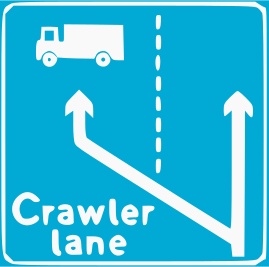
You're travelling along a motorway. Where would you find a crawler or climbing lane?
Explanation
Large, slow-moving vehicles can hinder the progress of other traffic. On a steep gradient, an extra crawler lane may be provided for slow-moving vehicles to allow faster-moving traffic to flow more easily.
Question 7 of 48
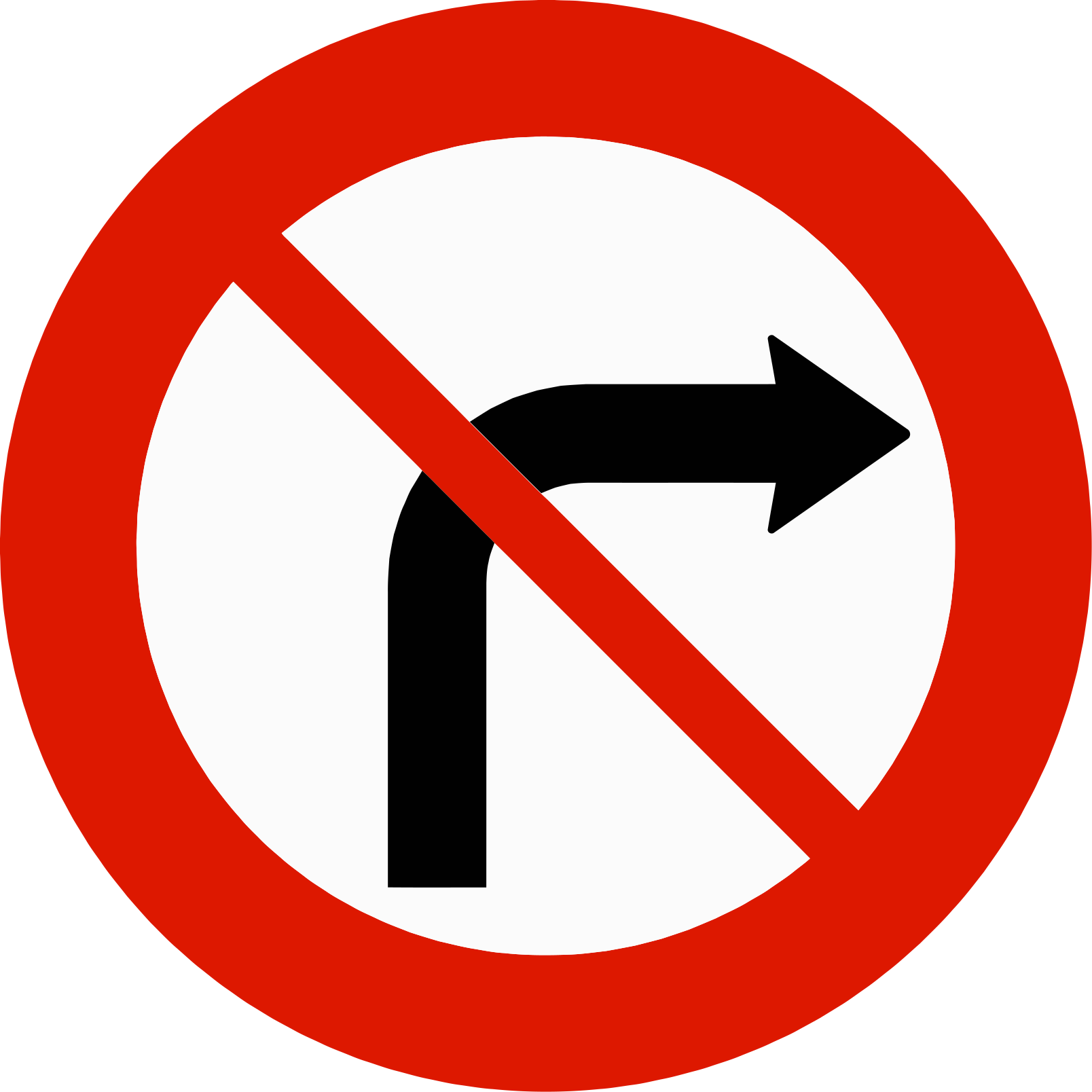
What does this sign mean?
Explanation
The 'no right turn' sign may be used to warn road users that there's a 'no entry' prohibition on a road to the right ahead.
Question 8 of 48
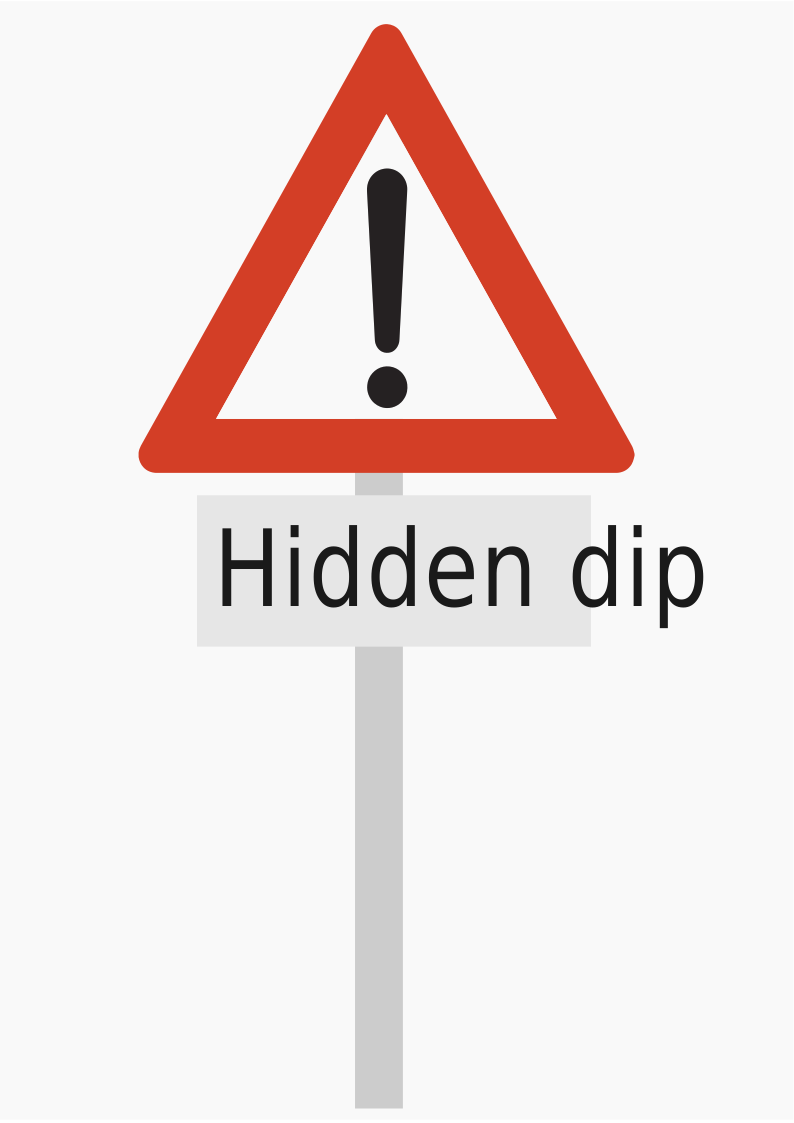
You're about to overtake. What should you do when you see this sign?
Explanation
You won't be able to see any hazards that might be hidden in the dip. As well as oncoming traffic, the dip may conceal
Question 9 of 48
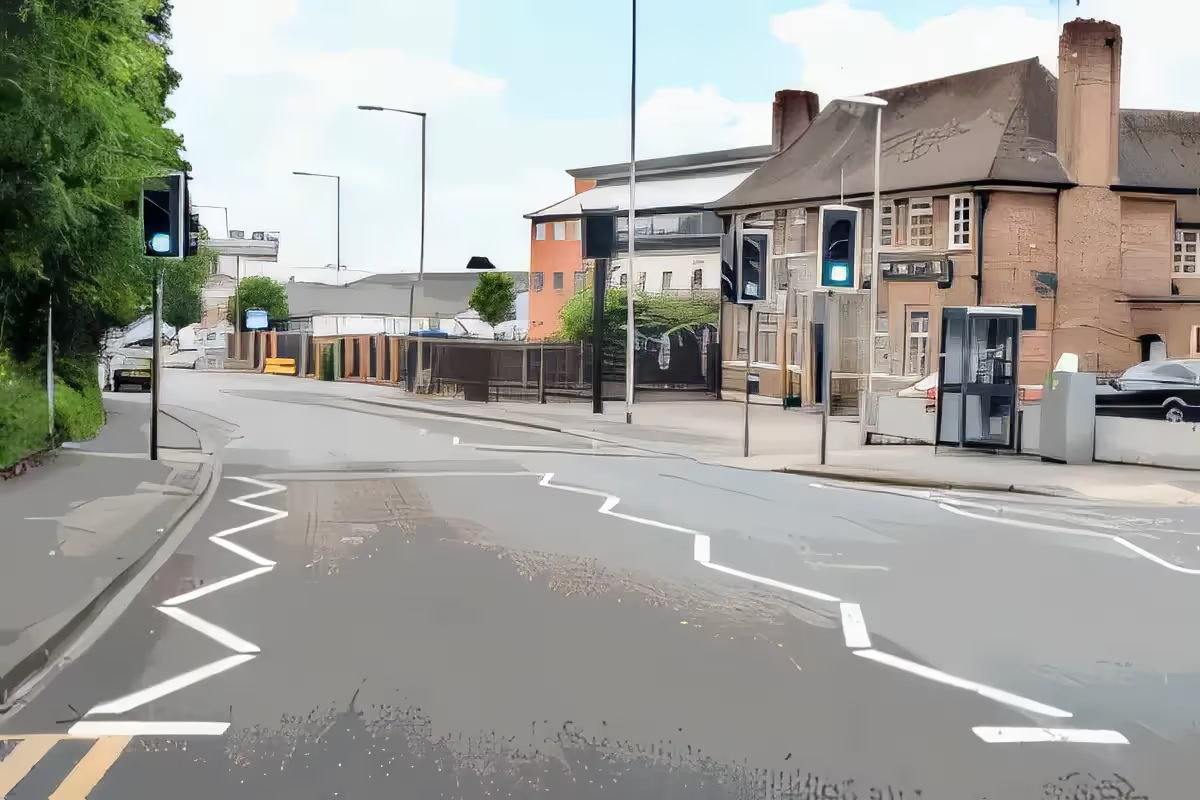
What do these zigzag white lines mean?
Explanation
The approach to, and exit from, a pedestrian crossing is marked with zigzag lines. You mustn't park on them or overtake the leading vehicle when approaching the crossing. Parking here would block the view for pedestrians and approaching traffic.
Question 10 of 48
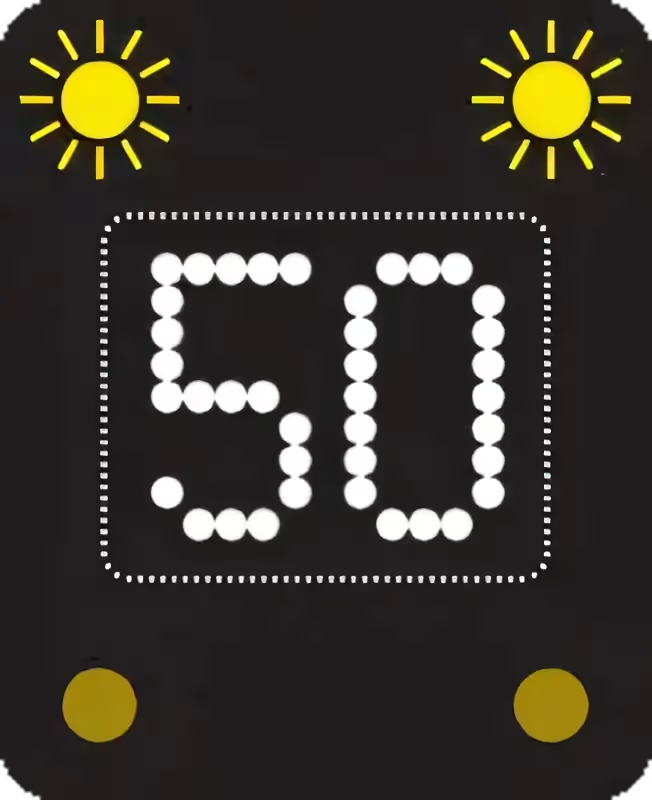
What does this motorway sign mean?
Explanation
Look out for signs above your lane or on the central reservation. These will give you important information or warnings about the road ahead. To allow for the high speed of motorway traffic, these signs may light up some distance from any hazard. Don't ignore the signs just because the road looks clear to you.
Question 11 of 48
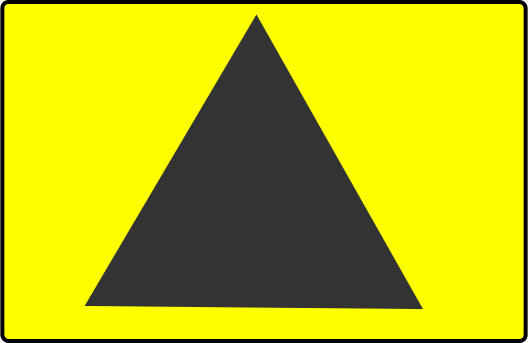
What does this sign indicate?
Explanation
When a diversion route has been put in place, drivers are advised to follow a symbol, which may be a black triangle, square, circle or diamond shape on a yellow background.
Question 12 of 48
What colour are the reflective studs between the hard shoulder and the left-hand lane of a motorway?
Explanation
Red studs are placed between the edge of the carriageway and the hard shoulder. Where slip roads leave or join the motorway, the studs are green.
Question 13 of 48
You're on a three-lane motorway. Which lane are you in if there are red reflective studs on your left and white ones to your right?
Explanation
The colours of the reflective studs on the motorway and their locations are
Question 14 of 48
You're looking for somewhere to safely park your vehicle. Where would you choose to park?
Explanation
It may be tempting to park where you shouldn't while you run a quick errand. Careless parking is a selfish act and could endanger other road users.
Question 15 of 48
When may you sound your vehicle's horn?
Explanation
Never sound your vehicle's horn aggressively. You mustn't sound it when driving in a built-up area between 11.30 pm and 7.00 am, or when you're stationary, unless another road user poses a danger. Don't scare animals by sounding your horn.
Question 16 of 48
Why are place names painted on the road surface?
Explanation
The names of towns and cities may be painted on the road at busy junctions and complex road systems. They guide you into the correct lane in good time, allowing traffic to flow more freely.
Question 17 of 48
What should you do when you're following a motorcyclist along a road that has a poor surface?
Explanation
To avoid being unbalanced, a motorcyclist might swerve to avoid potholes and bumps in the road. Be prepared for this and allow them extra space.
Question 18 of 48
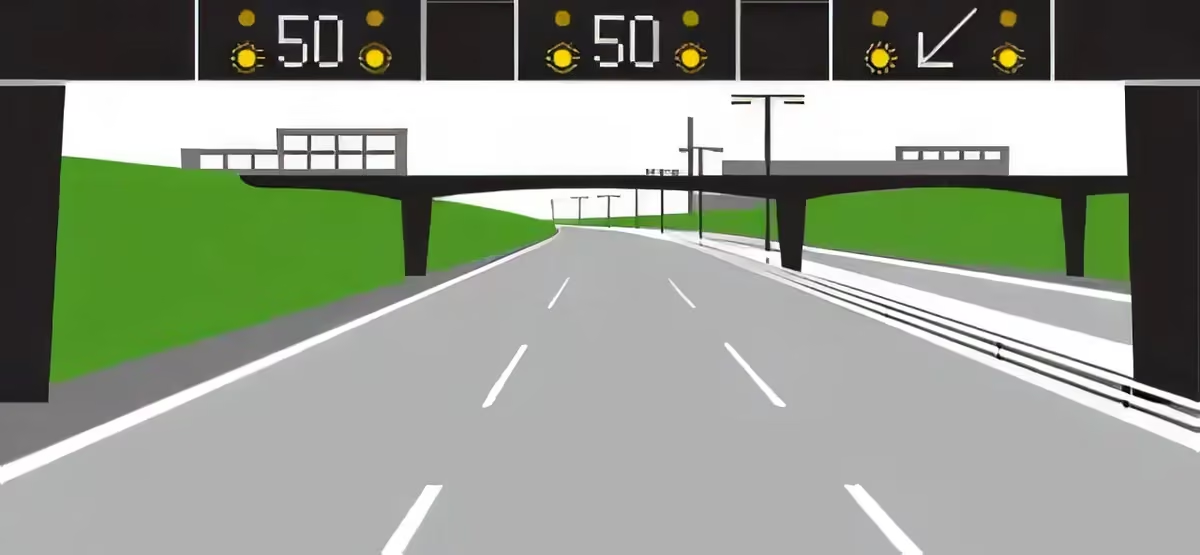
You're in the right-hand lane of a three-lane motorway. What do these overhead signs mean?
Explanation
You must obey these signs even if there appear to be no problems ahead. There could be queuing traffic or another hazard that you can't see yet.
Question 19 of 48
You're travelling along a motorway. When are you allowed to overtake on the left?
Explanation
Never overtake on the left, unless the traffic is moving in queues and the queue on your right is moving more slowly than the one you're in.
Question 20 of 48
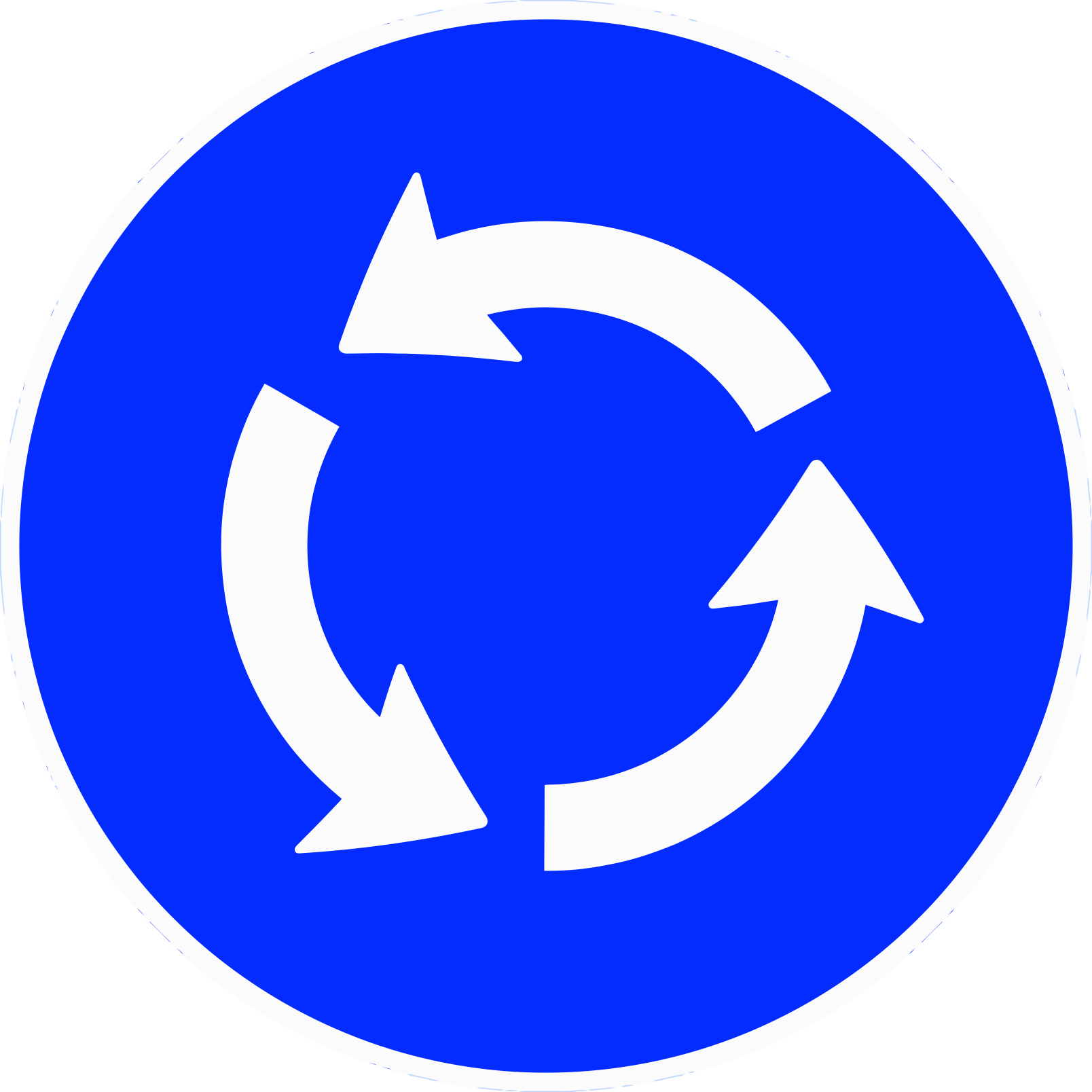
What does this sign mean?
Explanation
When you see this sign, look out for any direction signs and judge whether you need to signal your intentions. Do this in good time so that other road users approaching the roundabout know what you're planning to do.
Question 21 of 48
What's a Statutory Off-Road Notification (SORN)?
Explanation
If you want to keep a vehicle untaxed and off the public road, you must make a SORN. It's an offence not to do so. Your SORN is valid until your vehicle is taxed, sold or scrapped.
Question 22 of 48
What can you expect if you drive using rapid acceleration and heavy braking?
Explanation
Using the controls smoothly can reduce fuel consumption by about 15%, as well as reducing wear and tear on your vehicle. Plan ahead and anticipate changes of speed well in advance. This will reduce the need to accelerate rapidly or brake sharply.
Question 23 of 48
You stop on the hard shoulder of a motorway and use the emergency telephone. Where's the best place to wait for help to arrive?
Explanation
When you're on the hard shoulder, you're at risk of being injured by motorway traffic. The safest place to wait is away from the carriageway, but near enough to see the emergency services arriving.
Question 24 of 48
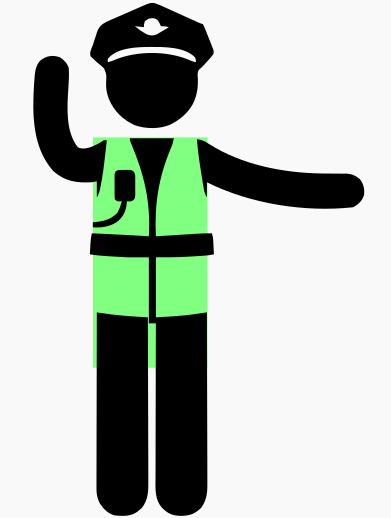
What does this signal from a police officer mean to oncoming traffic?
Explanation
Police officers may need to direct traffic; for example, at a junction where the traffic lights have broken down. Check your copy of The Highway Code for the signals that they use.
Question 25 of 48
You arrive at the scene of a crash where someone is bleeding heavily from a wound in their arm. Nothing is embedded in the wound. What could you do to help?
Explanation
If possible, lay the casualty down. Protect yourself from exposure to blood and, when you're sure there's nothing in the wound, apply firm pressure using clean material.
Question 26 of 48
A casualty isn't breathing normally and needs CPR. At what rate should you press down and release on the centre of their chest?
Explanation
If a casualty isn't breathing normally, cardiopulmonary resuscitation (CPR) may be needed to maintain circulation. Place two hands on the centre of the chest and press down hard and fast - around 5-6 centimetres and about twice a second.
Question 27 of 48
When must your vehicle have valid insurance cover?
Explanation
Your vehicle must have valid insurance cover before you can tax it. If required, it will also need to have a valid MOT certificate. You can tax your vehicle online, by phone or at certain post offices.
Question 28 of 48
What do you need before you can legally use a motor vehicle on the road?
Explanation
Using a motor vehicle on the road illegally carries a heavy fine and can lead to penalty points on your driving licence. You must
Question 29 of 48
How should you signal if you're going straight ahead at a roundabout?
Explanation
To go straight ahead at a roundabout, you should normally approach in the left-hand lane, but check the road markings. At some roundabouts, the left lane on approach is marked 'left turn only', so make sure you use the correct lane to go ahead. You won't normally need to signal as you approach, but signal before you leave the roundabout, as other road users need to know your intentions.
Question 30 of 48
A police officer asks to see your documents. You don't have them with you. How many days do you have to produce them at a police station?
Explanation
You don't have to carry your vehicle's documents wherever you go. If a police officer asks to see them and you don't have them with you, you may be asked to produce them at a police station within 7 days.
Question 31 of 48
An adult casualty isn't breathing. To maintain circulation, CPR should be given. What's the correct depth to press down on their chest?
Explanation
An adult casualty isn't breathing normally. To maintain circulation, place two hands on the centre of the chest. Then press down hard and fast - around 5-6 centimetres and about twice a second.
Question 32 of 48
What could cause you to crash if the level is allowed to get too low?
Explanation
You should carry out frequent checks on all fluid levels but particularly brake fluid. As the brake pads or shoes wear down, the brake-fluid level will drop. If it drops below the minimum mark on the fluid reservoir, air could enter the hydraulic system and lead to a loss of braking efficiency or even complete brake failure.
Question 33 of 48
You're following other vehicles in fog. You have your headlights on dipped beam. What else can you do to reduce the chances of being in a collision?
Explanation
When it's foggy, use your headlights on dipped beam. This will help you see and be seen by other road users. If visibility is seriously reduced, consider using front and rear fog lights if you have them. Keep to a sensible speed and don't follow the vehicle in front too closely. If the road is wet and slippery, you'll need to allow twice the normal stopping distance.
Question 34 of 48
A collision has just happened. An injured person is lying in a busy road. What's the first thing you should do?
Explanation
The most immediate danger is further collisions and fire. You could warn other traffic by switching on hazard warning lights, displaying an advance warning triangle or sign (but not on a motorway), or by any other means that doesn't put you or others at risk.
Question 35 of 48
What's the main benefit of driving a four-wheel-drive vehicle?
Explanation
By driving all four wheels, the vehicle has maximum grip on the road. This grip is especially helpful when travelling on slippery or uneven surfaces. However, having four-wheel drive doesn't replace the skills you need to drive safely.
Question 36 of 48
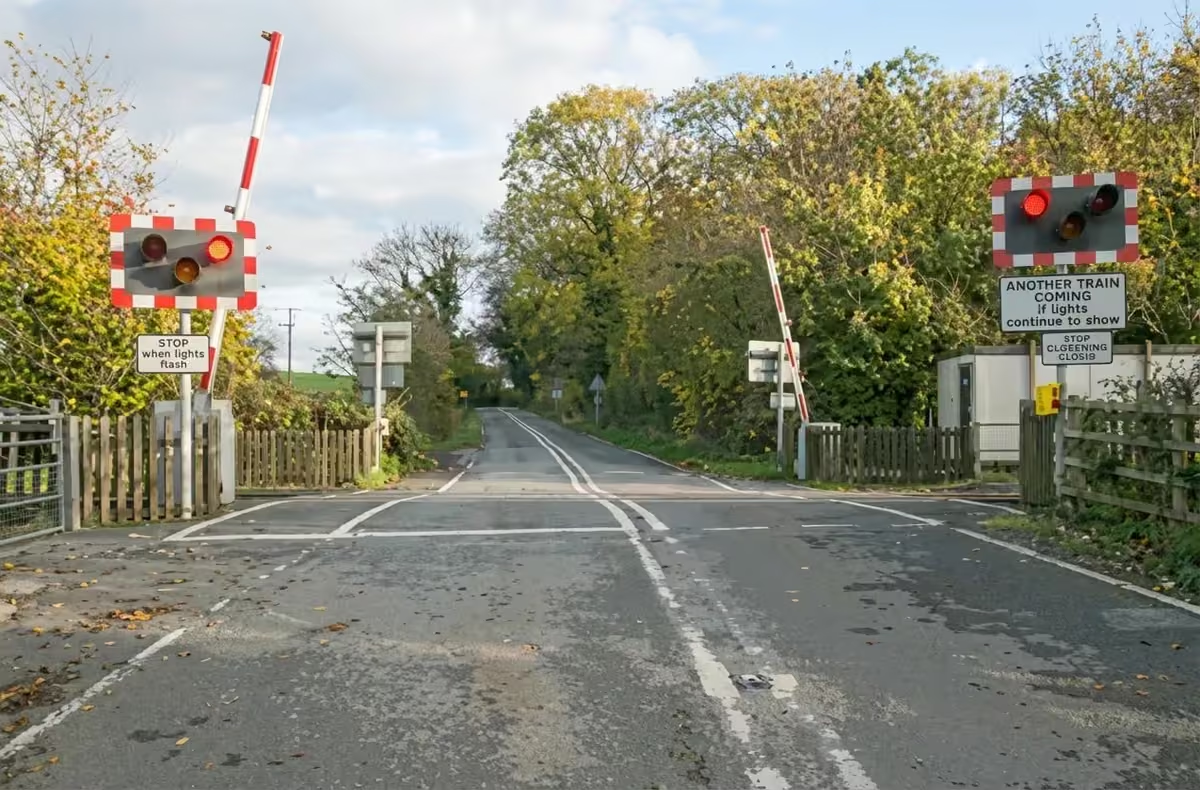
You're driving towards this level crossing. What would be the first warning of an approaching train?
Explanation
The steady amber light will be followed by twin flashing red lights that mean you must stop. An alarm will also sound to alert you to the fact that a train is approaching.
Question 37 of 48
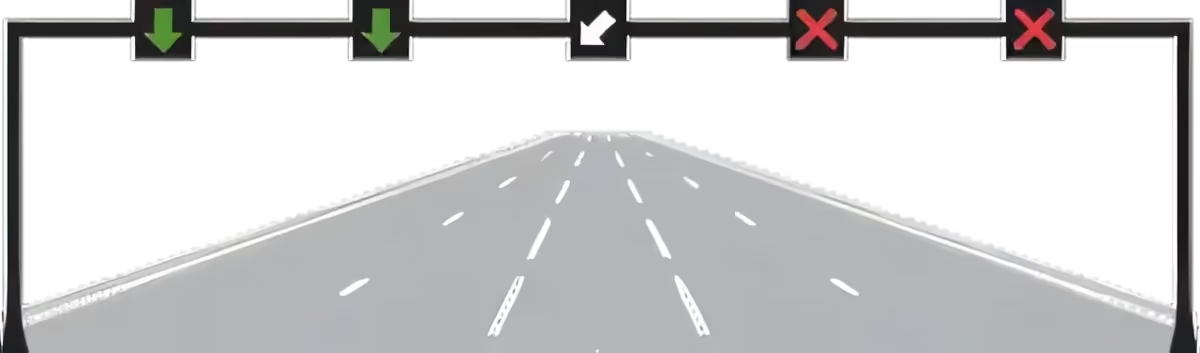
You're driving on a road with several lanes. What do these signs above the lanes mean?
Explanation
On some busy roads, lane control signals are used to vary the number of lanes available to give priority to the main traffic flow. A green arrow indicates that the lane is available to traffic facing the signal. A white diagonal arrow means that the lane is closed ahead and traffic should move to the next lane on the left. A red cross means that the lane is closed to traffic facing the signal.
Question 38 of 48
What advice should you give to a driver who has had a few alcoholic drinks at a party?
Explanation
Drinking black coffee or waiting a few hours won't make any difference. Alcohol takes time to leave the body. A driver who has been drinking should go home by public transport or taxi. They might even be unfit to drive the following morning.
Question 39 of 48
You're about to reverse into a side road. What should you do if a pedestrian is waiting to cross behind your car?
Explanation
If you need to reverse into a side road, try to find a place that's free from traffic and pedestrians. Look all around before and during the manoeuvre. Stop and give way to any pedestrians who want to cross behind you. Avoid waving them across, sounding the horn, flashing your lights or giving any signals that could mislead them and create a dangerous situation.
Question 40 of 48
You're waiting at a level crossing. What should you do if the red warning lights continue to flash after a train has passed by?
Explanation
At a level crossing, flashing red lights mean you must stop. If the train passes but the lights keep flashing, wait. Another train may be coming.
Question 41 of 48
What's most likely to waste fuel?
Explanation
Wasting fuel costs you money and also causes unnecessary pollution. Ensuring your tyres are correctly inflated, avoiding carrying unnecessary weight and removing a roof rack that's not in use will all help to reduce your fuel consumption.
Question 42 of 48
How can you reduce the damage your vehicle causes to the environment?
Explanation
By looking well ahead and recognising hazards in good time, you can avoid late and heavy braking. Watch the traffic flow and look well ahead for potential hazards so you can control your speed in good time. Avoid over-revving the engine and accelerating harshly, as this increases wear to the engine and uses more fuel.
Question 43 of 48
Why should you allow extra room while overtaking a motorcyclist on a windy day?
Explanation
If you're driving in high winds, be aware that the conditions might make a motorcyclist (or cyclist) swerve or wobble. Take this into consideration if you're following or wish to overtake a two-wheeled vehicle.
Question 44 of 48
What can seriously reduce your ability to concentrate?
Explanation
Both recreational drugs and prescribed medicine can affect your concentration. It's also an offence to drive with certain drugs in your body and a positive test could lead to a conviction.
Question 45 of 48
Why is it bad technique to coast when you're driving downhill?
Explanation
Coasting is when you allow the vehicle to freewheel in neutral or with the clutch pedal depressed. When travelling downhill, this will cause the vehicle to gain speed more quickly as you lose the benefits of engine braking; it may even lead to a loss of control. You shouldn't coast, especially when approaching hazards such as junctions or bends and when travelling downhill.
Question 46 of 48
When may a passenger travel in a car without wearing a seat belt?
Explanation
If you have adult passengers, it's their responsibility to wear a seat belt, but you should still remind them to use one as they get in the car. It's your responsibility to make sure that all children in your car are secured with an appropriate restraint. Exemptions are allowed for those with a medical exemption certificate.
Question 47 of 48
What should you do if you start to feel drowsy while you're driving on a motorway?
Explanation
Never stop on the hard shoulder to rest. If there's no service area for several miles, leave the motorway at the next exit and find somewhere safe and legal to pull over.
Question 48 of 48
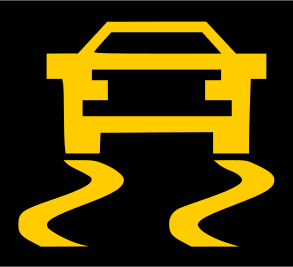
What does it mean if the Electronic Stability Control (ESC) indicator lamp lights up while you're driving?
Explanation
ESC is a computer controlled technology that detects reduced traction and automatically makes corrective adjustments to prevent loss of control. The ESC lamp comes on to alert the driver that the system has activated and the car is approaching its handling limits. It's a powerful driver aid but it cannot save a car once its traction limits have been exceeded.