Answer 48 questions, check each correct answer and work through the explanations at your own pace.
Question 1 of 480 correct answers
Question 1 of 48
What should you do before making a U-turn?
Explanation
If you have to make a U-turn, slow down and ensure that the road is clear in both directions. Make sure that the road is wide enough for you to carry out the manoeuvre safely. Use your mirrors and look round to check it's safe before turning across the road.
Question 2 of 48
Why is it dangerous to drive too close to the vehicle ahead?
Explanation
Tailgating' is the term used when a driver or rider follows the vehicle in front too closely. It's dangerous because it restricts your view of the road ahead and leaves no safety margin if the vehicle in front needs to slow down or stop suddenly. Tailgating is often the underlying cause of rear-end collisions or multiple pile-ups.
Question 3 of 48
What should you do if you're being followed by an ambulance showing flashing blue lights?
Explanation
Pull over in a place where the ambulance can pass safely. Check that there are no bollards or obstructions in the road that will prevent it from passing.
Question 4 of 48
What type of emergency vehicle is fitted with a green flashing beacon?
Explanation
A green flashing beacon on a vehicle means the driver or passenger is a doctor on an emergency call. Give way to them if it's safe to do so. Be aware that the vehicle may be travelling quickly or may stop in a hurry.
Question 5 of 48
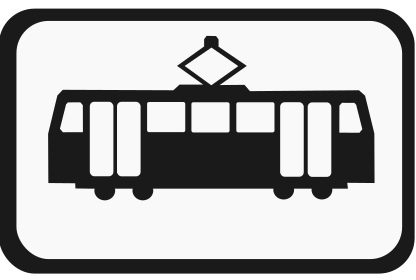
What makes the vehicle in the picture 'environmentally friendly'?
Explanation
Trams are powered by electricity and therefore don't emit exhaust fumes. They ease traffic congestion by offering drivers an alternative to using their car, particularly in busy cities and towns.
Question 6 of 48
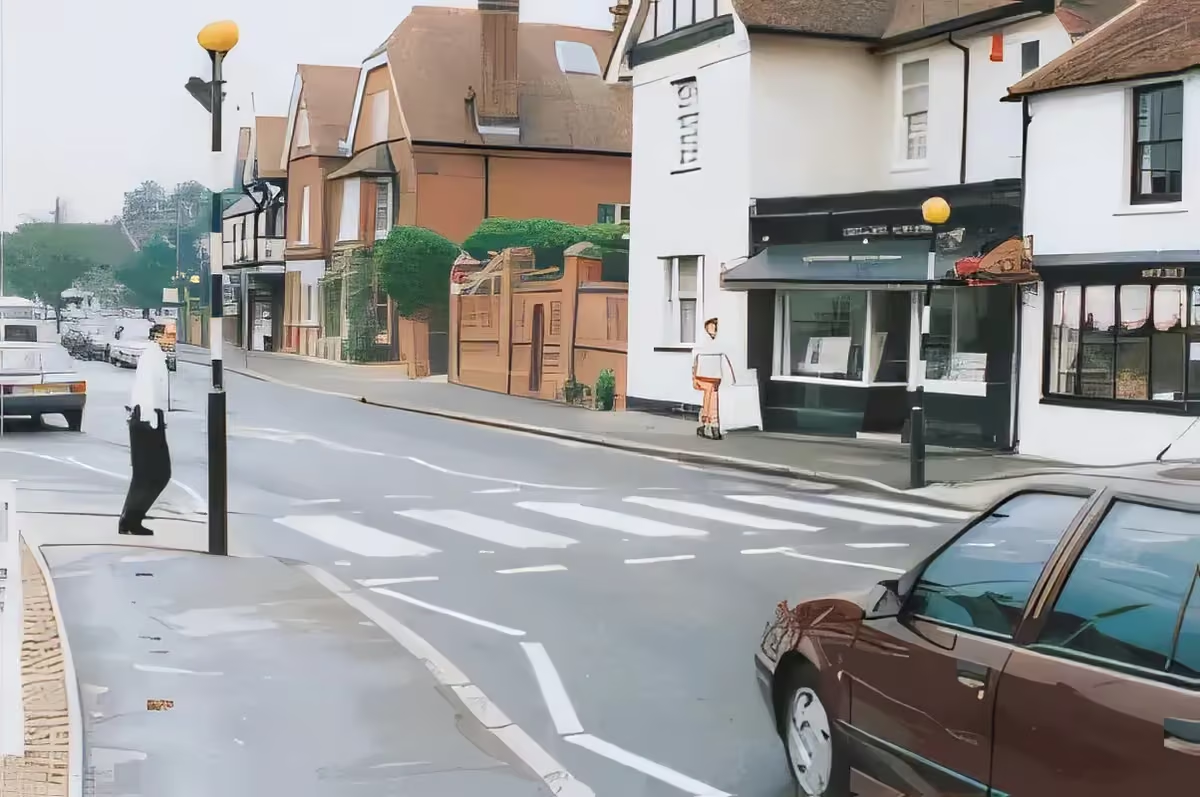
What should the driver of the car approaching the crossing do?
Explanation
Look well ahead to see whether any hazards are developing. This will give you more time to deal with them in the correct way. The man in the picture is clearly intending to cross the road. You should be travelling at a speed that allows you to check your mirror, slow down and stop in good time. You shouldn't have to brake harshly.
Question 7 of 48
Why do motorcyclists often look round over their right shoulder just before turning right?
Explanation
When you see a motorcyclist take a glance over their shoulder, they're probably about to change direction. Recognising a clue like this helps you to anticipate their next action. This can improve road safety for you and others.
Question 8 of 48
You're approaching a mini-roundabout. What should you do if a long vehicle in front signals left but positions over to the right?
Explanation
At mini-roundabouts, there isn't much room for a long vehicle to manoeuvre. It will have to swing out wide so that it can complete the turn safely. Keep well back and don't try to move up alongside it.
Question 9 of 48
You're driving on a single carriageway road. Why should you keep well back while you're following a large vehicle?
Explanation
When following a large vehicle, keep well back. If you're too close, you won't be able to see the road ahead and the driver of the long vehicle might not be able to see you in their mirrors.
Question 10 of 48
Which road users benefit from toucan crossings?
Explanation
Toucan crossings are similar to pelican crossings but there's no flashing amber phase. Cyclists share the crossing with pedestrians and are allowed to cycle across when the green cycle symbol is shown.
Question 11 of 48
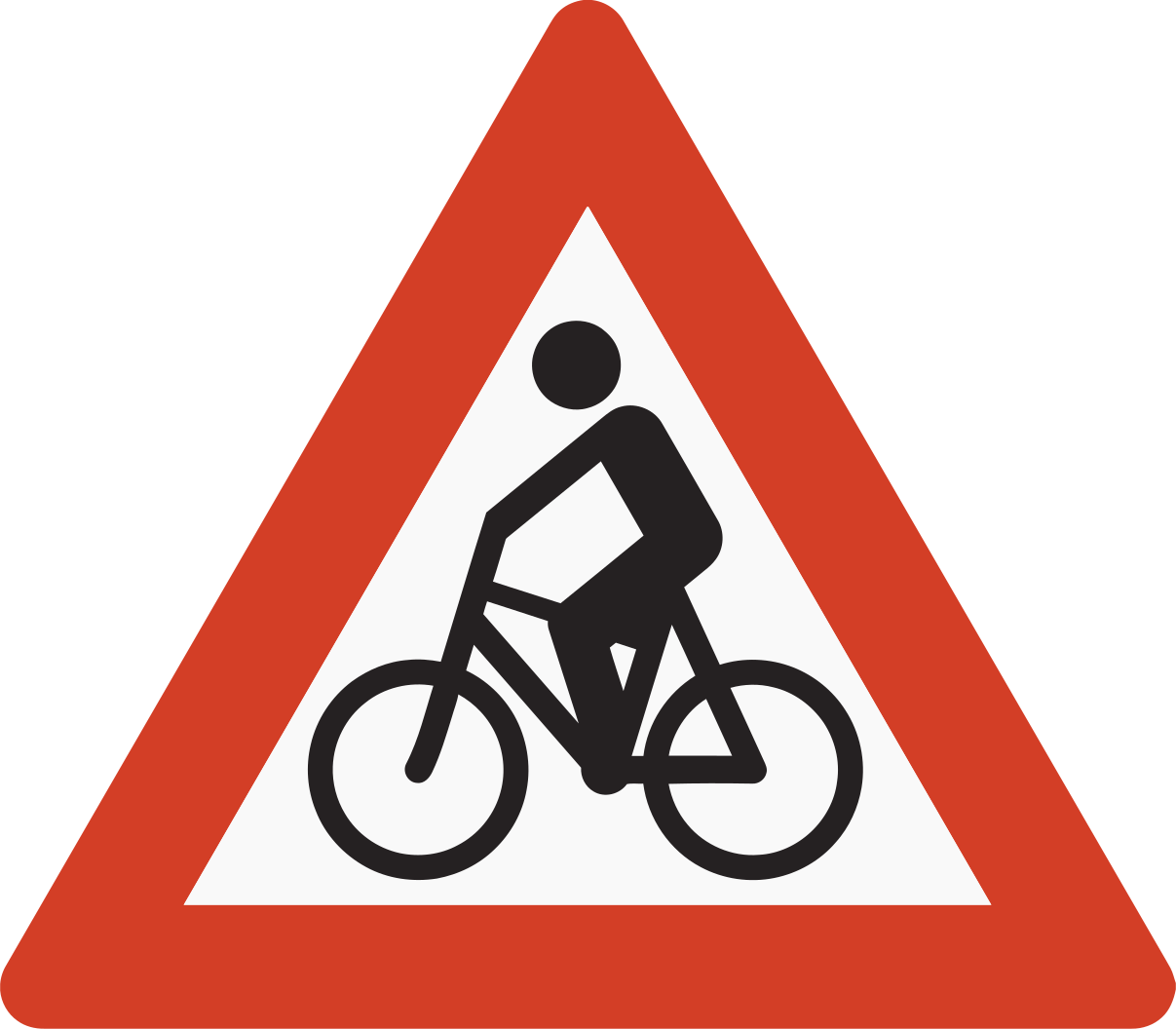
What does this sign mean?
Explanation
Where there's a cycle route ahead, a sign will show a bicycle in a red warning triangle. Watch out for children on bicycles and cyclists rejoining the main road.
Question 12 of 48
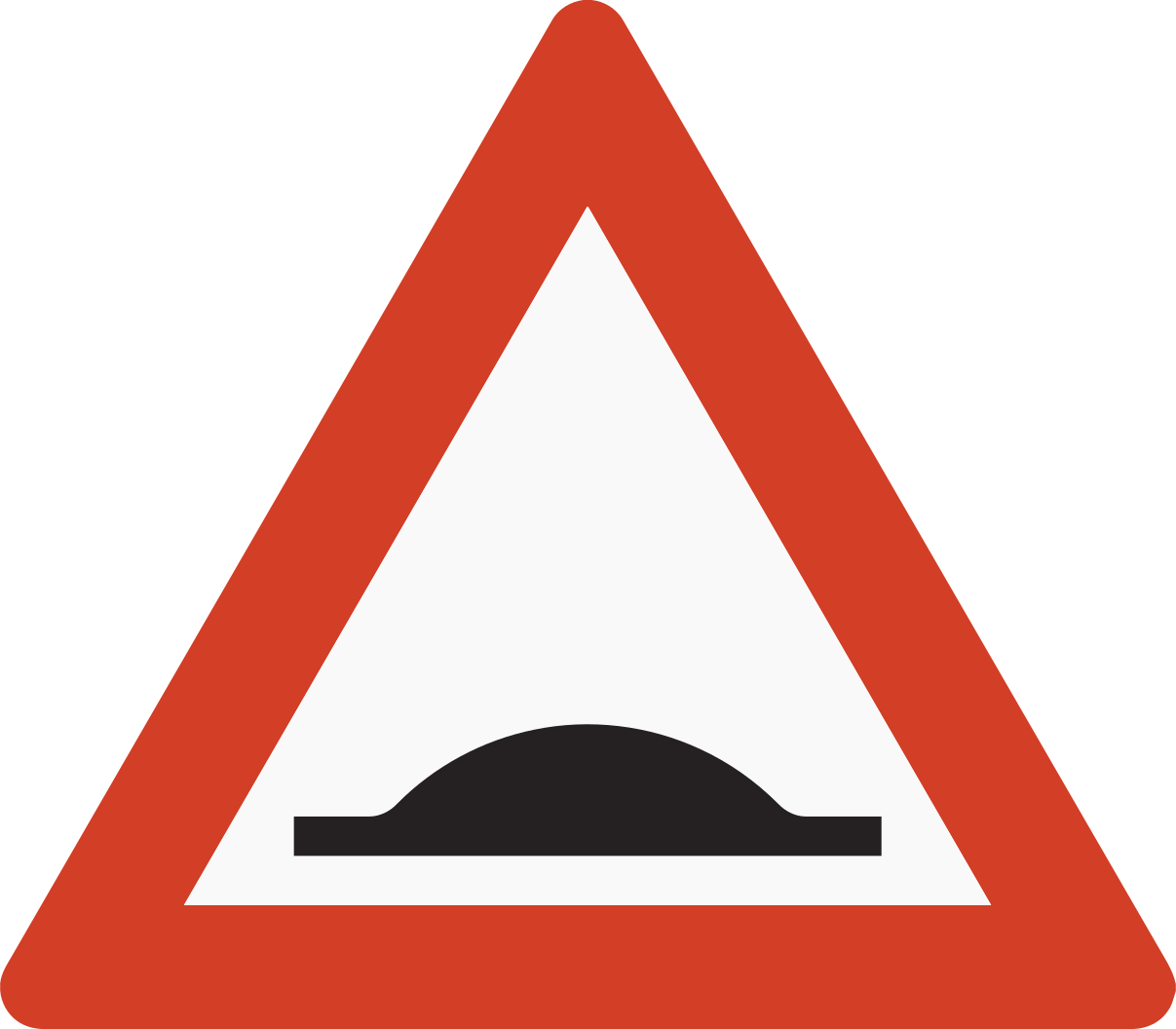
What does this sign mean?
Explanation
These humps have been put in place to slow the traffic down. They're usually found in residential areas. Slow down to an appropriate speed.
Question 13 of 48
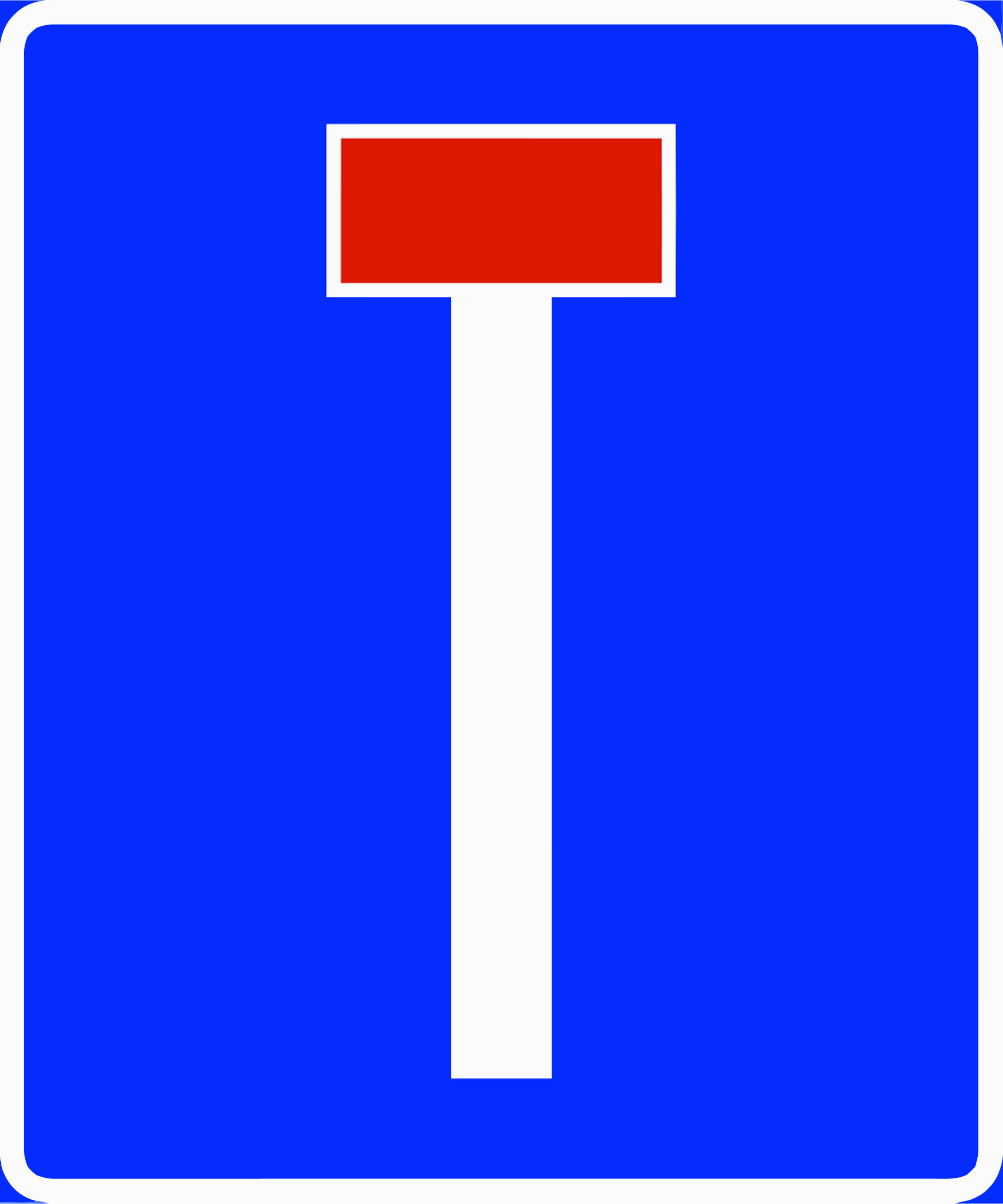
What does this sign mean?
Explanation
You won't be able to find a through route to another road. Use this road only for access.
Question 14 of 48
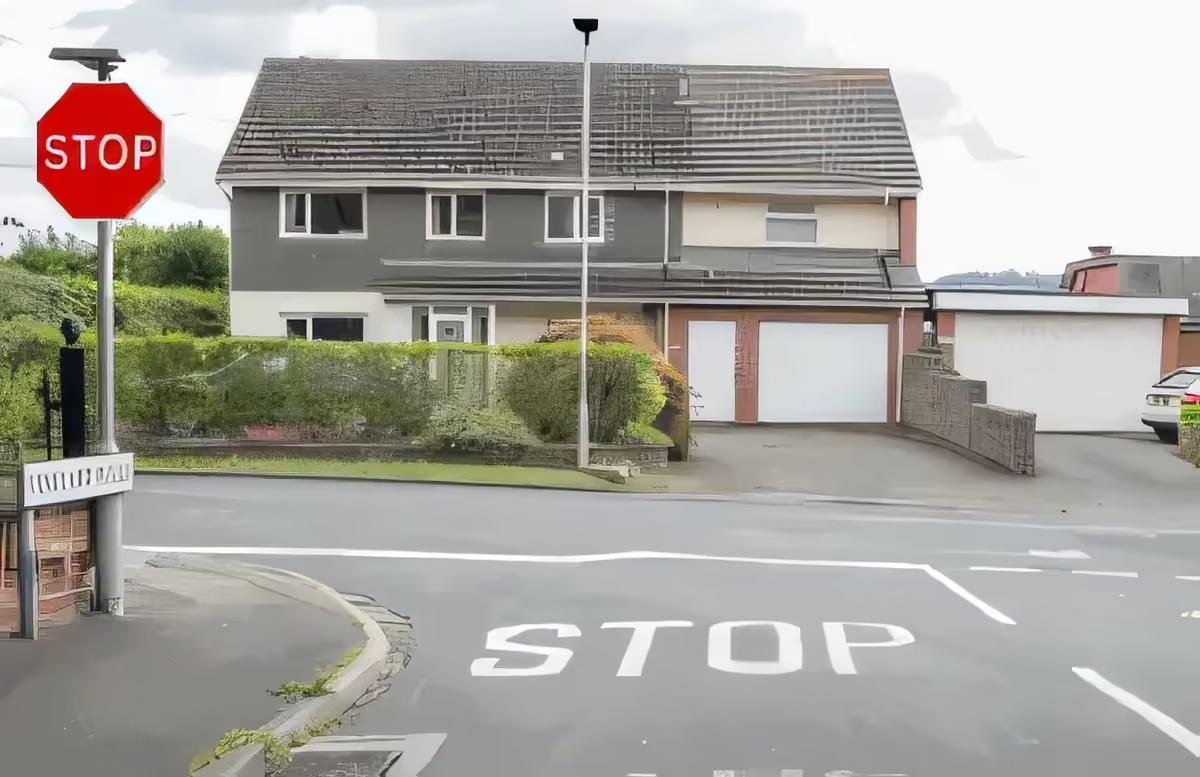
Why does this junction have a 'stop' sign and a stop line on the road?
Explanation
Where emerging traffic has a very restricted view of the main road, you may find a 'stop' sign and a solid white stop line. You must stop at the line and then check carefully before you emerge.
Question 15 of 48
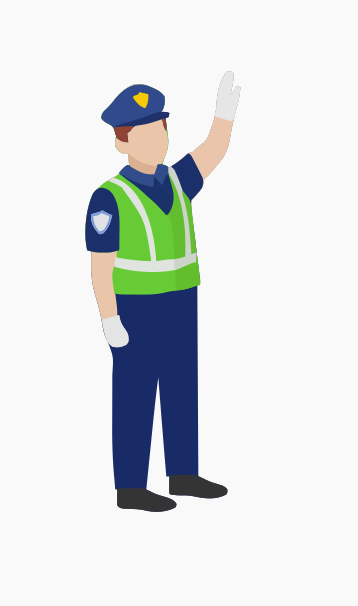
You're approaching a junction where the traffic lights aren't working. What should you do when a police officer gives this signal?
Explanation
When a police officer or traffic warden is directing traffic, you must obey them. They'll use the arm signals shown in The Highway Code. Learn what these signals mean and obey them.
Question 16 of 48
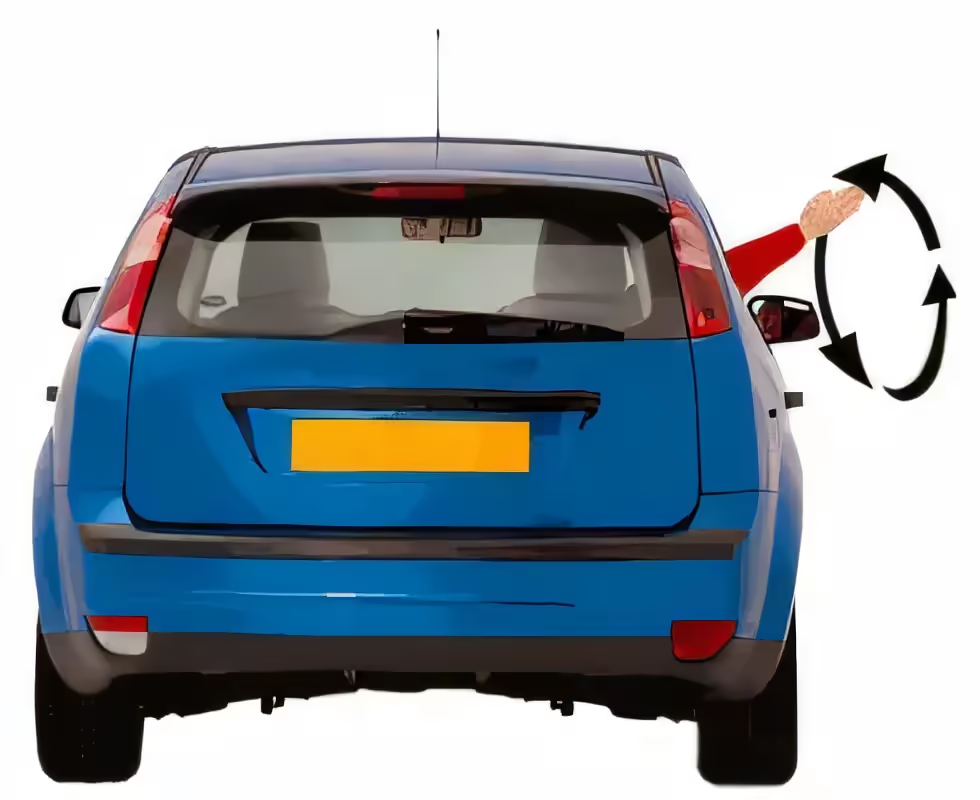
What does this arm signal mean?
Explanation
There might be an occasion where another driver uses an arm signal. This may be because the vehicle's indicators are obscured by other traffic. In order for such signals to be effective, all drivers should know their meaning. Be aware that the 'left turn' signal might look similar to the 'slowing down' signal.
Question 17 of 48
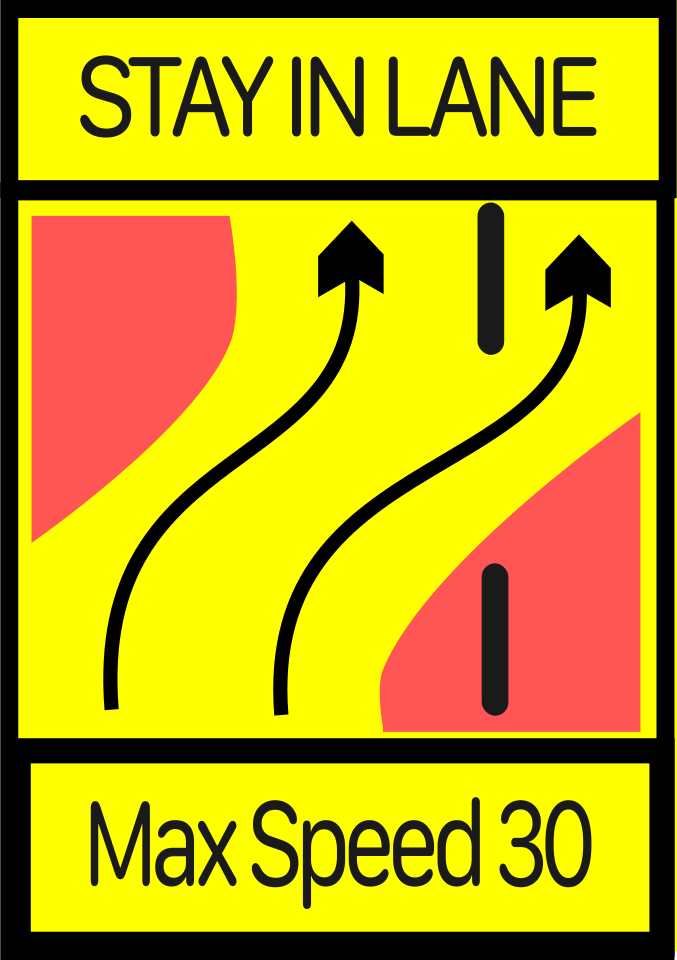
What should you do when going through a contraflow system on a motorway?
Explanation
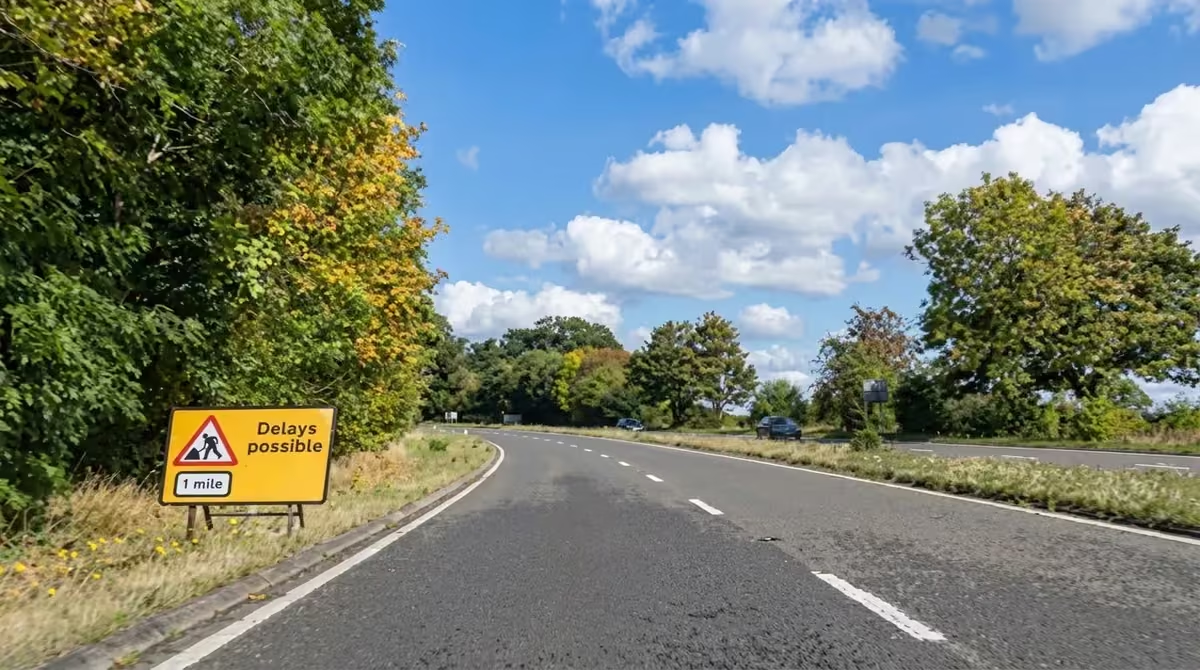
At roadworks, and especially where a contraflow system is operating, a speed restriction is likely to be in place. Keep to the lower speed limit and don't
Question 18 of 48
What should you do before slowing down or stopping your vehicle?
Explanation
Before slowing down or stopping, check the mirrors to see what's happening behind you. Also assess what's ahead and make sure you give the correct signal if it will help other road users.
Question 19 of 48
What's the reason for the hatched area along the centre of this road?
Explanation
Areas of 'hatched markings' such as these separate traffic streams that could be a danger to each other. They're often seen on bends or where the road becomes narrow. If the area is bordered by a solid white line, you mustn't enter it except in an emergency.
Question 20 of 48
The conditions are good and dry. When should you use the 'two-second rule'?
Explanation
In good conditions, the 'two-second rule' can be used to check the distance between your vehicle and the one in front. This technique works on roads carrying faster traffic. Choose a fixed object, such as a bridge, sign or tree. When the vehicle ahead passes this object, say to yourself 'Only a fool breaks the two-second rule.' If you reach the object before you finish saying this, you're too close.
Question 21 of 48
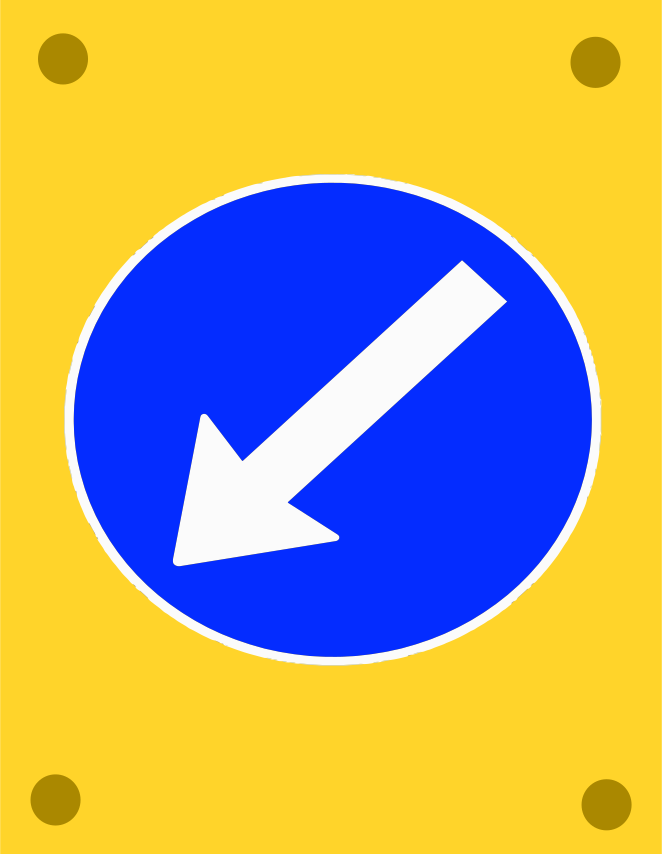
You're driving on a three-lane motorway. How should you overtake a slow-moving lorry in the middle lane if it's showing this sign?
Explanation
This sign is found on slow-moving or stationary works vehicles. If you wish to overtake it, do so on the left, as indicated. Be aware that there might be workmen in the area.
Question 22 of 48
A driver's behaviour has upset you. How can you get over this incident safely?
Explanation
If you feel yourself becoming tense or upset, stop in a safe place and take a break. Tiredness can make things worse and may cause a different reaction to upsetting situations.
Question 23 of 48
What should you do if you want to overtake a long, slow-moving vehicle on a busy road?
Explanation
When you're following a long vehicle, stay well back so that you can get a better view of the road ahead. The closer you get, the less you'll be able to see of the road. Be patient and don't take a gamble. Only overtake when you're certain that you can complete the manoeuvre safely.
Question 24 of 48
What must you do when you see this sign?
Explanation
'Stop' signs are situated at junctions where visibility is restricted or where there's heavy traffic. They must be obeyed: you must stop. Look carefully before moving off.
Question 25 of 48
You've stopped at a railway level crossing. What should you do if the red lights continue to flash after a train has gone by?
Explanation
You must always obey red flashing stop lights. If a train passes but the lights continue to flash, another train will be passing soon. Cross only when the lights go off and the barriers open.
Question 26 of 48
You're at an incident. What could you do to help an unconscious casualty?
Explanation
If a casualty is unconscious, you need to check that they're breathing normally. Look for chest movements, look and listen for breathing, and feel for breath on your cheek.
Question 27 of 48
You arrive at an incident. There's no danger from fire or further collisions and the emergency services have been called. What's your first priority when attending to an unconscious motorcyclist?
Explanation
At the scene of an incident, always be aware of danger from further collisions or fire. The first priority when dealing with an unconscious person is to ensure they can breathe. This may involve clearing their airway if you can see an obstruction or if they're having difficulty breathing.
Question 28 of 48
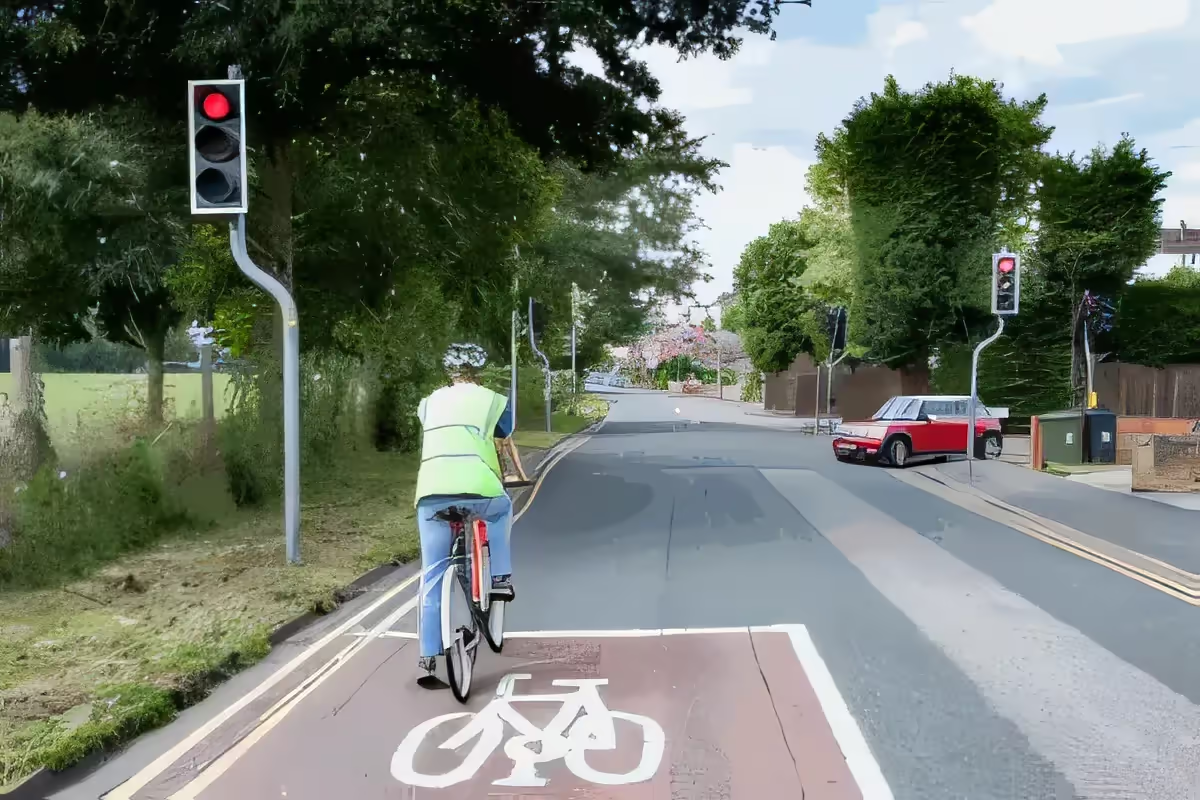
You're behind this cyclist. When the traffic lights change, what should you do?
Explanation
Hold back and allow the cyclist to move off. Some junctions have special areas marked across the front of the traffic lane. These allow cyclists to wait for the lights to change and move off ahead of other traffic.
Question 29 of 48
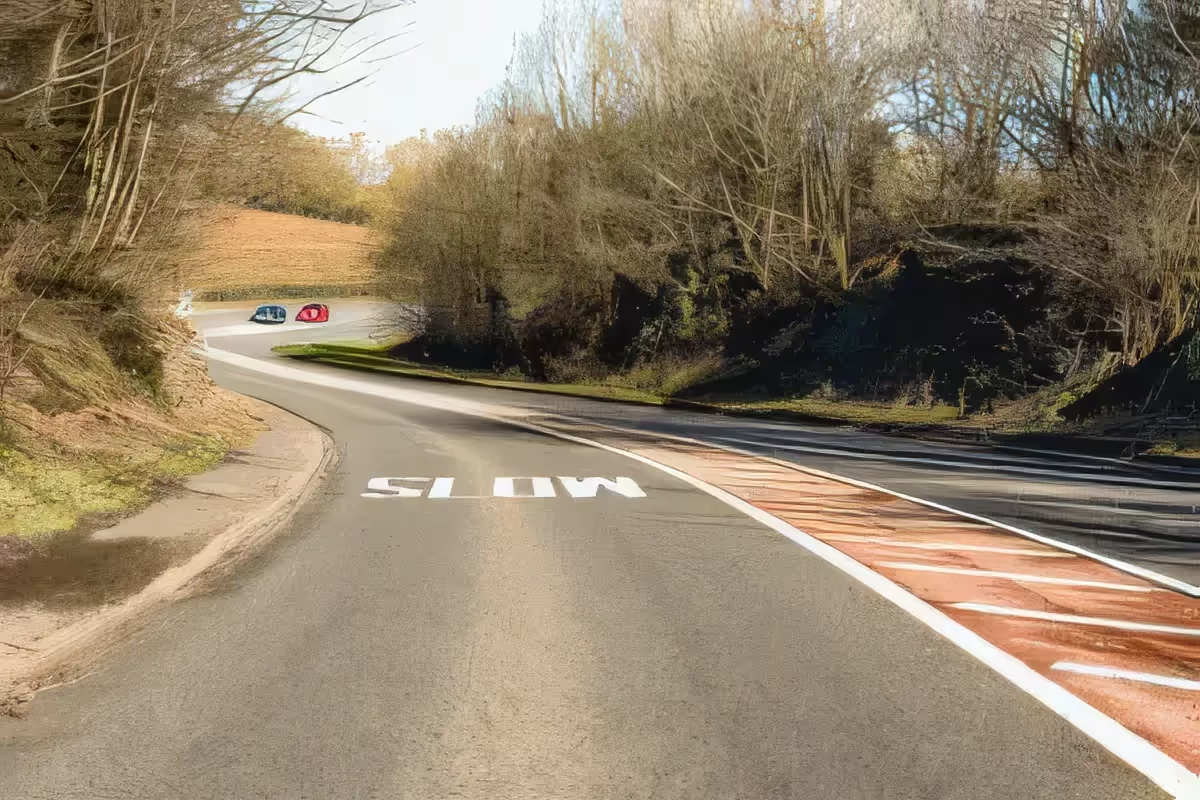
Why should you reduce your speed here?
Explanation
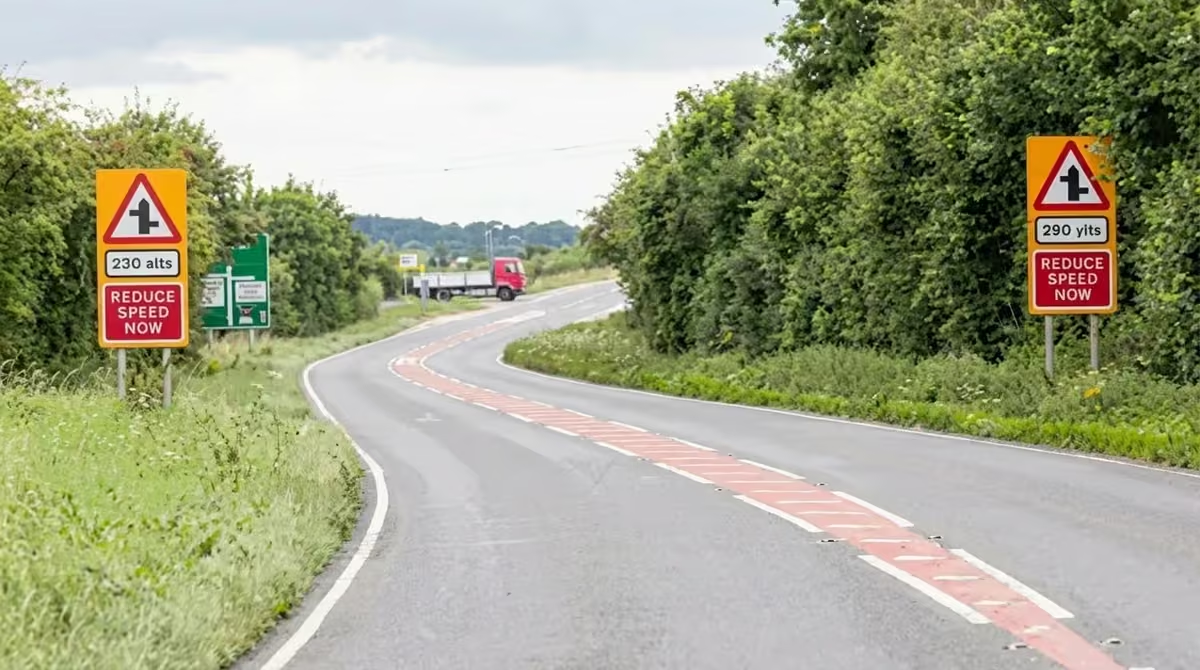
Traffic could be turning off or pulling out ahead of you, to the left or right. Vehicles turning left will be slowing down before the junction, and any vehicles turning right may have to stop to allow oncoming traffic to clear. Be prepared for this, as you might have to slow down or stop behind them.
Question 30 of 48
What must you do if your ability to drive is impaired during a period of illness?
Explanation
Only drive if you're fit to do so. Driving when you're ill or taking some medicines can affect your concentration and judgement. It may also cause you to become drowsy or even fall asleep.
Question 31 of 48
Which road users are most difficult to see when you're reversing your car?
Explanation
It may not be possible to see a small child through the rear windscreen of your vehicle. Be aware of this before you reverse. If there are children about, get out and check that it's clear before reversing.
Question 32 of 48
You want to turn right from a junction. What should you do if your view is restricted by parked vehicles?
Explanation
If you want to turn right from a junction and your view is restricted, stop. Ease forward until you can see - something might be approaching. If you don't know, don't go.
Question 33 of 48
A single carriageway road has this sign. What's the maximum permitted speed for a car towing a trailer?
Explanation
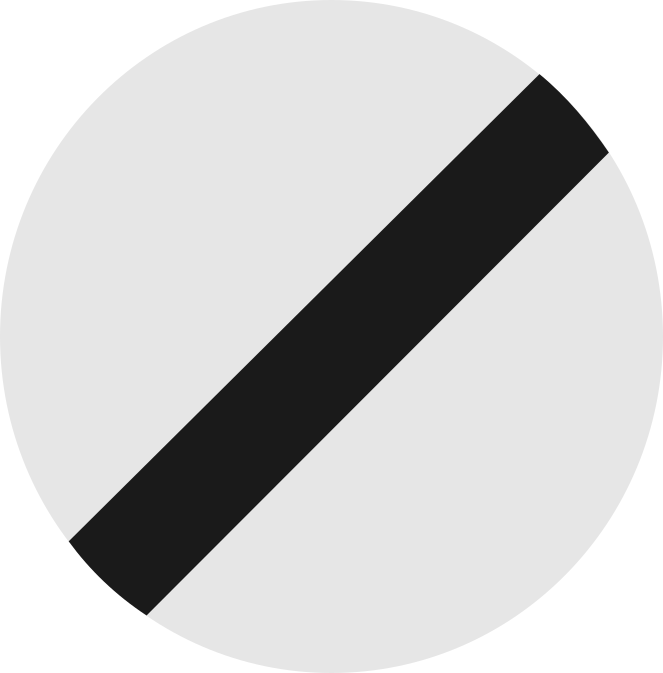
When you're towing a trailer, a reduced speed limit also applies on dual carriageways and motorways. These lower speed limits apply to vehicles pulling all sorts of trailers, including caravans and horse boxes.
Question 34 of 48
You're driving with your front fog lights switched on. What should you do if the fog has cleared?
Explanation
Switch off your fog lights if the weather improves, but be prepared to use them again if visibility reduces to less than 100 metres (328 feet).
Question 35 of 48
You're driving along a wet road. How can you tell if your vehicle's tyres are losing their grip on the surface?
Explanation
If you drive at speed in very wet conditions, your steering may suddenly feel lighter than usual. This means that the tyres have lifted off the surface of the road and are floating on the surface of the water. This is known as aquaplaning. Reduce speed but don't brake until your steering returns to normal.
Question 36 of 48
You're driving on this dual carriageway. Why may you need to slow down?
Explanation
Look well ahead and read any road signs as you drive. They're there to inform you of what's ahead. In this case, you may need to slow down and change direction. Check your mirrors so you know what's happening around you before you change speed or direction.
Question 37 of 48
Which lights must you use if you're driving on a well-lit motorway at night?
Explanation
If you're driving on a motorway at night or in poor visibility, you must always use your headlights, even if the road is well lit. Other road users must be able to see you, but you should avoid causing dazzle.
Question 38 of 48
You're driving at night with your headlights on main beam. A vehicle is overtaking you. When should you dip your headlights?
Explanation
On main beam, your lights could dazzle the driver in front. Dip your headlights as soon as the driver passes you and drop back so that the dipped beam falls short of the vehicle in front.
Question 39 of 48
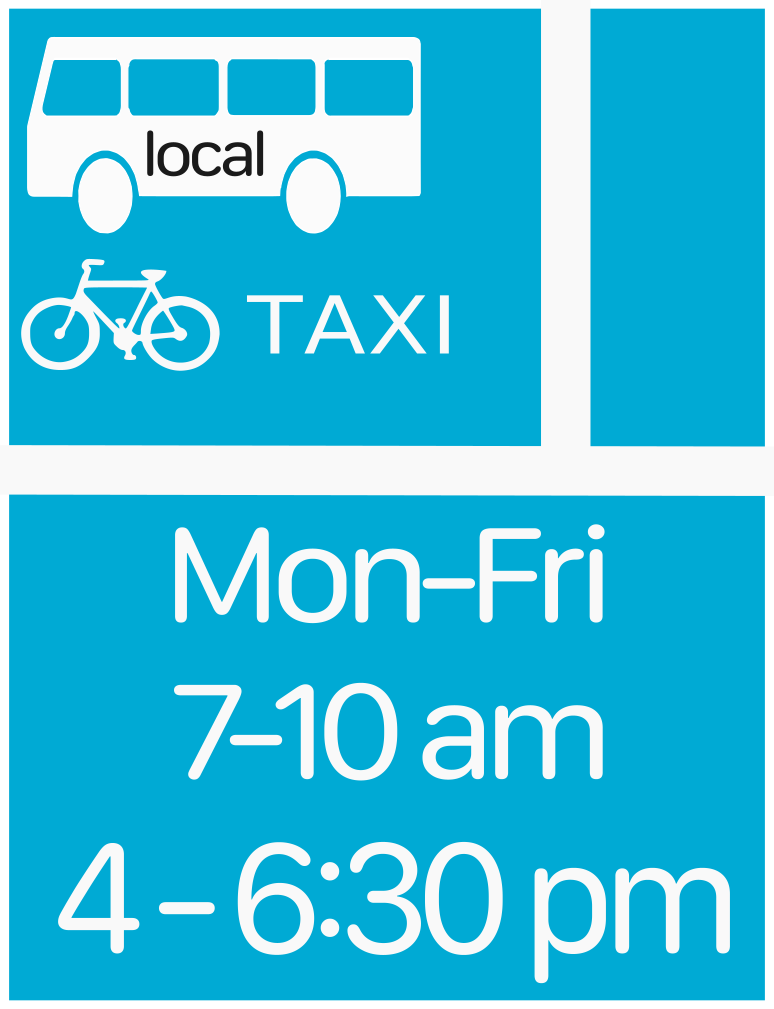
When may you drive a car in this bus lane?
Explanation
Some bus lanes operate only during peak hours and other vehicles may use them outside these hours. Make sure you check the sign for the hours of operation before driving in a bus lane.
Question 40 of 48
What's likely to happen if you use a hands-free phone while you're driving?
Explanation
Talking to someone while you're driving can distract you and, unlike when someone is in the car with you, the person on the other end of a mobile phone is unable to see the traffic situations you're dealing with. They won't stop speaking to you even if you're approaching a hazardous situation. You need to concentrate on your driving at all times.
Question 41 of 48
How can you reduce the chances of your car being broken into when leaving it unattended?
Explanation
When leaving your car, take all valuables with you if you can. Otherwise, lock them out of sight.
Question 42 of 48
Your vehicle breaks down on a motorway and you manage to stop on the hard shoulder. What should you do if you use your mobile phone to call for help?
Explanation
You should use an emergency telephone when you break down on the motorway; only use your mobile if this isn't possible. The emergency services need to know your exact location so they can reach you as quickly as possible. Look for a number on the nearest marker post beside the hard shoulder. Give this number when you call the emergency services.
Question 43 of 48
You're parked in a busy high street. What's the safest way to turn your vehicle around so you can drive in the opposite direction?
Explanation
Make sure you carry out the manoeuvre without causing a hazard to other vehicles. Choose a place to turn that's safe and considers other road users.
Question 44 of 48
How can you make sure that a satellite navigation (satnav) system doesn't distract you when you're driving?
Explanation
Satnavs can be useful when driving on unfamiliar routes. However, they can also distract you and cause you to lose control if you look at or adjust them while you're driving. Set the satnav before starting your journey, or pull up in a safe place before making any changes to it.
Question 45 of 48
What's the legal minimum tread depth for tyres on your trailer or caravan?
Explanation
Trailers and caravans may be left in storage over the winter months, and tyres can deteriorate. It's important to check their tread depth and also their pressures and general condition. The legal tread depth of 1.6 mm applies to the central three-quarters of a tyre's breadth, over its entire circumference.
Question 46 of 48
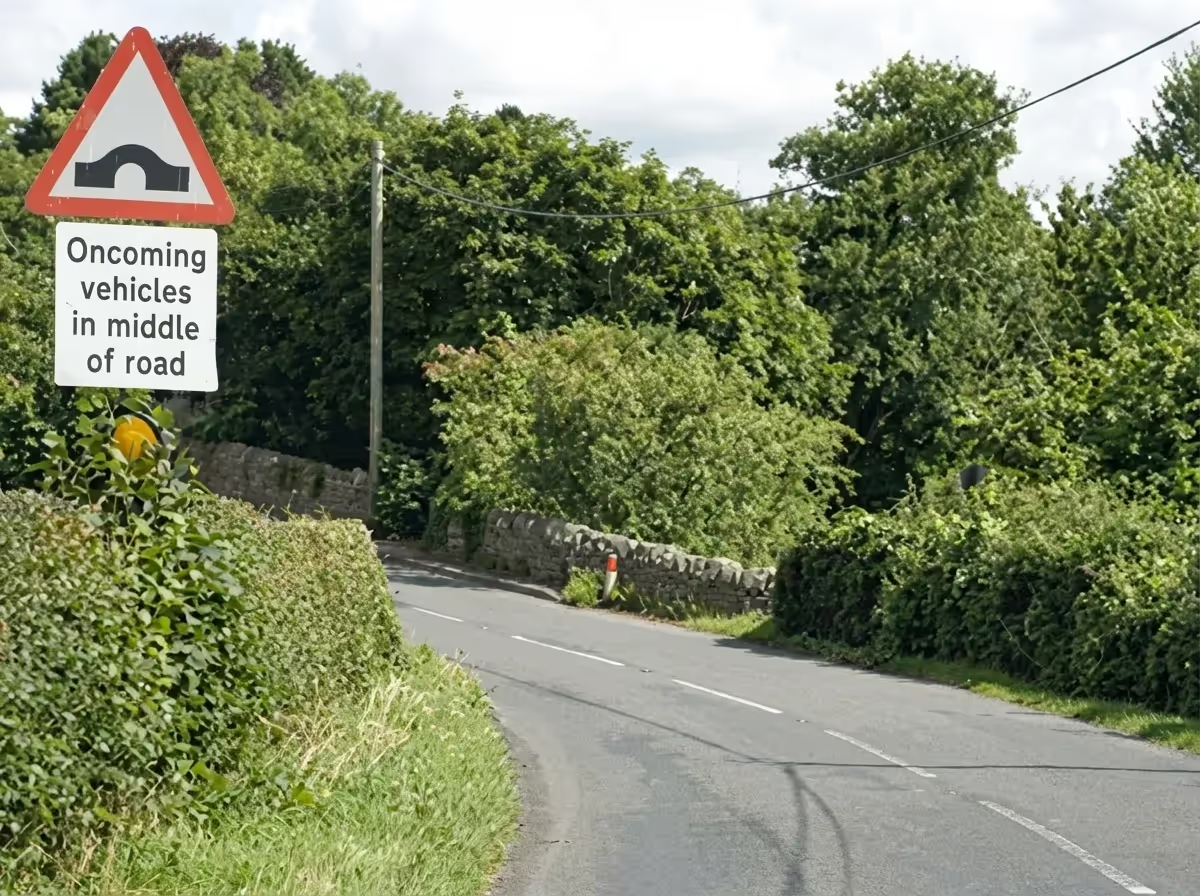
What should you do as you approach this bridge?
Explanation
You should slow down and be cautious. Hump bridges are often narrow and there may not be enough room for you to pass an oncoming vehicle at this point. Also, there's no footpath, so be aware of pedestrians in the road.
Question 47 of 48
You're being overtaken by a long, heavily laden lorry. What should you do if it's taking a long time for it to overtake?
Explanation
A long lorry with a heavy load will need more time to pass you than a car, especially on an uphill stretch of road. Slow down and allow the lorry to pass.
Question 48 of 48
You wish to turn right ahead. Why should you take up the correct position in good time?
Explanation
If you wish to turn right into a side road, take up your position in good time. Move to the centre of the road when it's safe to do so. This will allow vehicles to pass you on the left. Early planning will show other traffic what you intend to do.