Answer 48 questions, check each correct answer and work through the explanations at your own pace.
Question 1 of 480 correct answers
Question 1 of 48
What should you do when you're overtaking at night?
Explanation
Don't overtake if there's a possibility of a road junction, bend or brow of a bridge or hill ahead. There are many hazards that are difficult to see in the dark. Only overtake if you're certain that the road ahead is clear. Don't take a chance.
Question 2 of 48
What's the meaning of this sign?
Explanation
This sign doesn't tell you the speed limit in figures. You should know the speed limit for the type of road that you're on and the type of vehicle that you're driving. Study your copy of The Highway Code.
Question 3 of 48
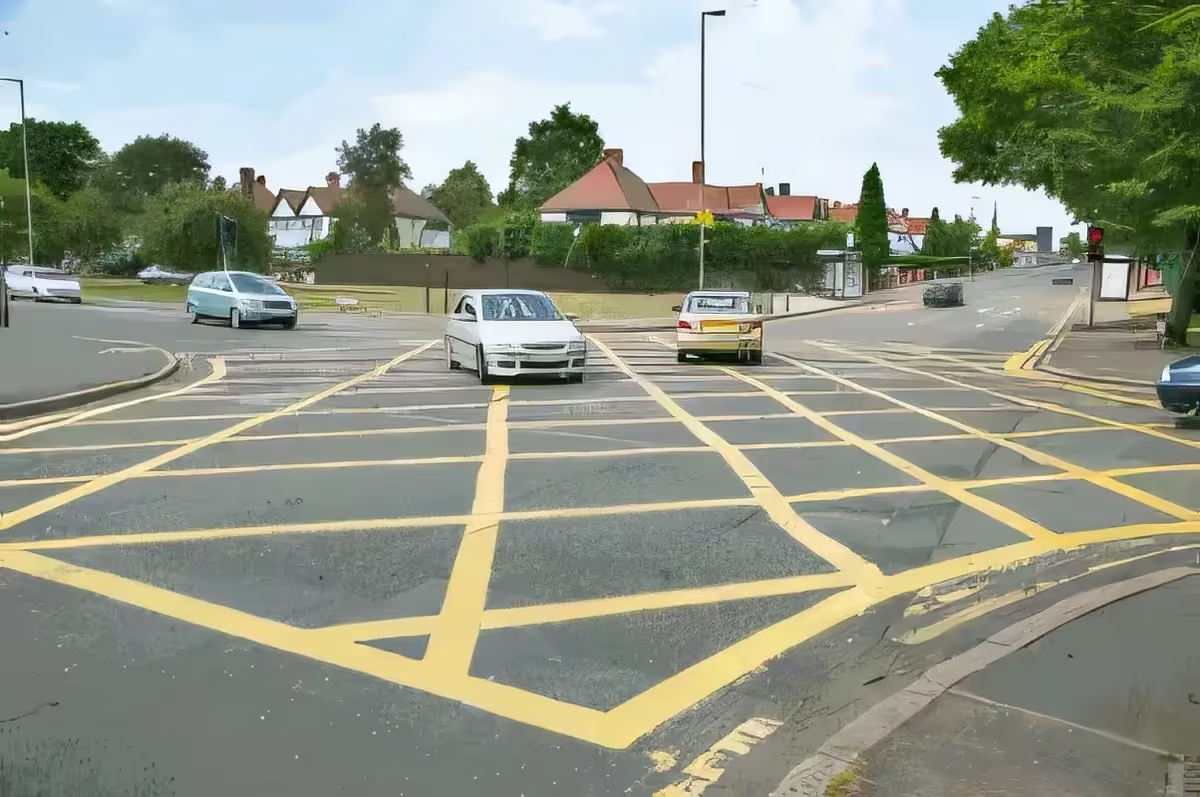
When may you enter a box junction?
Explanation
Yellow box junctions are marked on the road to prevent the road becoming blocked. Don't enter the box unless your exit road is clear. You may wait in the box if you want to turn right and your exit road is clear but oncoming traffic or other vehicles waiting to turn right are preventing you from making the turn.
Question 4 of 48
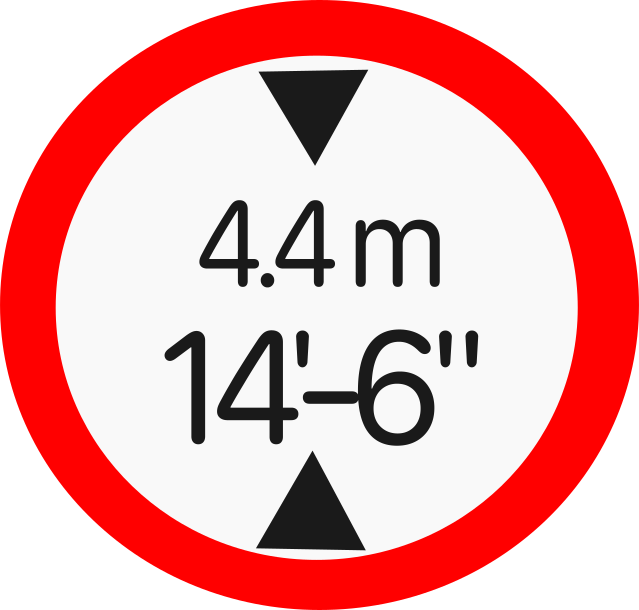
Which type of vehicle does this sign apply to?
Explanation
The triangular shapes above and below the dimensions indicate a height restriction that applies to the road ahead.
Question 5 of 48
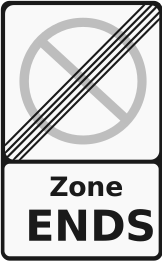
What does this sign mean?
Explanation
Even though you've left the restricted area, make sure that you park where you won't endanger other road users or cause an obstruction.
Question 6 of 48
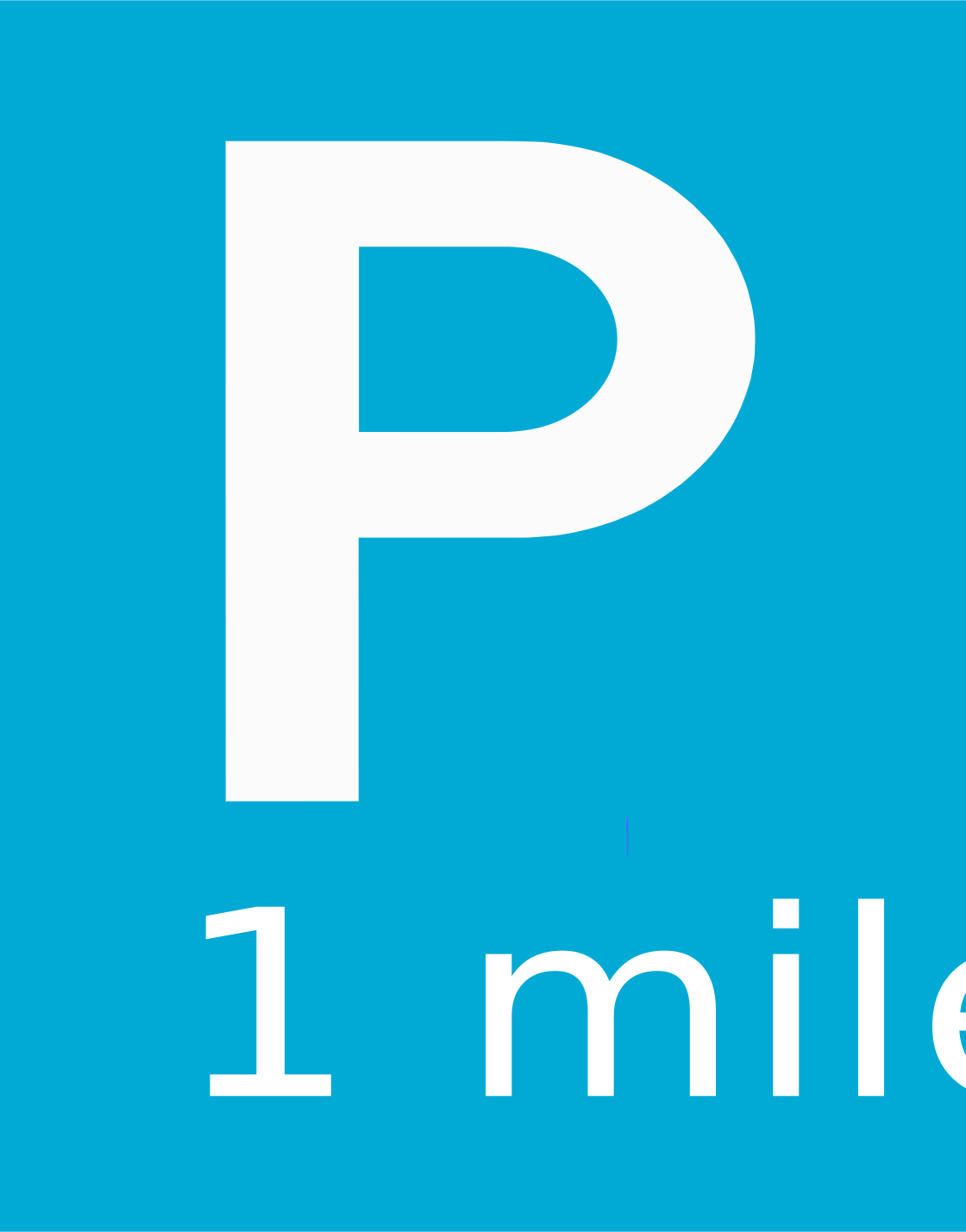
What does this sign mean?
Explanation
If you intend to stop and rest, this sign allows you time to reduce speed and pull over safely.
Question 7 of 48
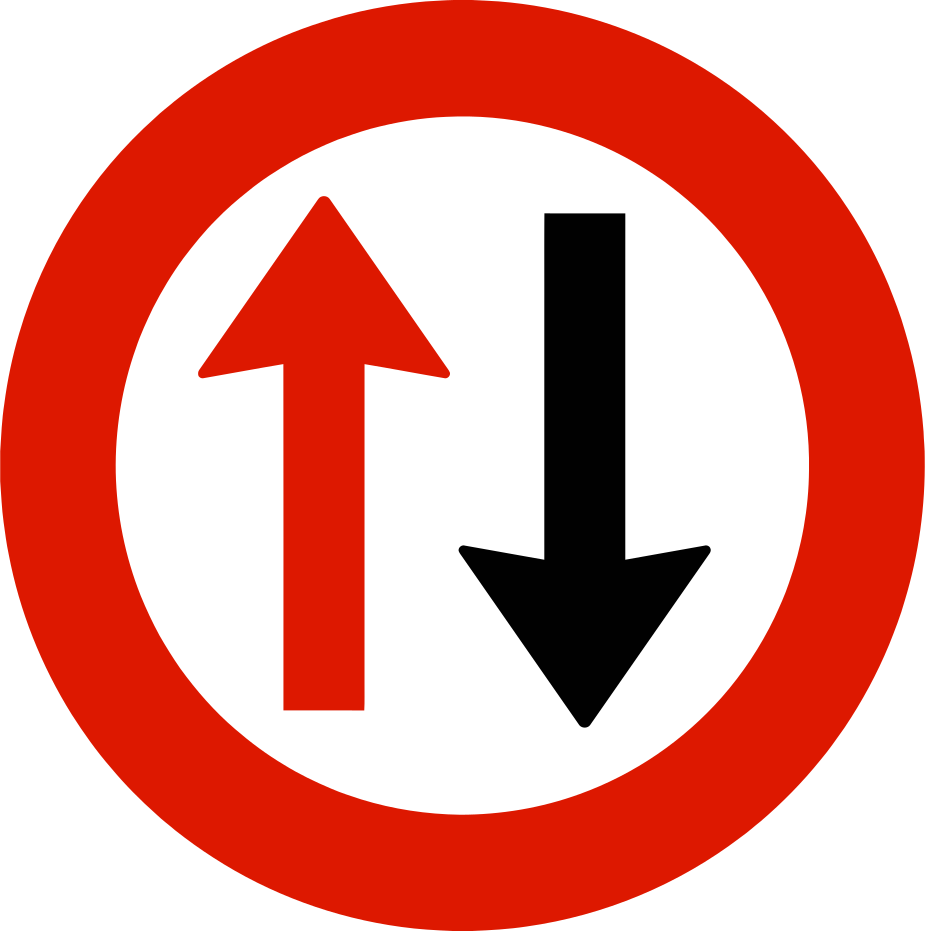
What does this traffic sign mean?
Explanation
Priority signs are normally shown where the road is narrow and there isn't enough room for two vehicles to pass. Examples are narrow bridges, roadworks and where there's a width restriction. Make sure you know who has priority; don't force your way through. Show courtesy and consideration to other road users.
Question 8 of 48
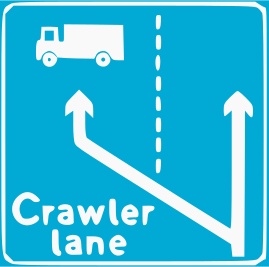
What does this sign mean?
Explanation
Where there's a long, steep, uphill gradient on a motorway, a crawler lane may be provided. This helps the traffic to flow by diverting the slower heavy vehicles into a dedicated lane on the left.
Question 9 of 48
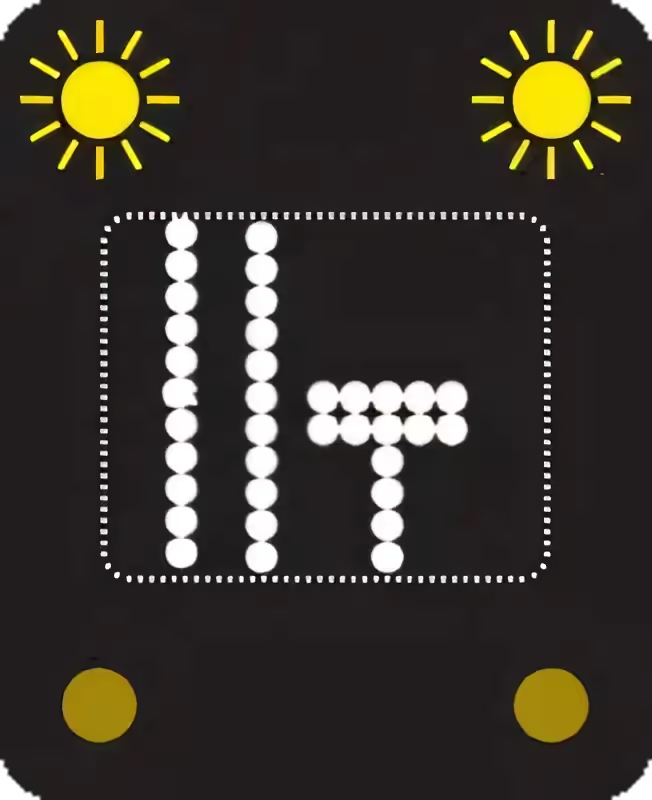
What does this sign mean?
Explanation
You should change lanes as directed by the sign. Here, the right-hand lane is closed but the left-hand and centre lanes are available. Merging in turn is recommended when it's safe and traffic is going slowly; for example, at roadworks or a road traffic incident. When vehicles are travelling at speed, this isn't advisable and you should move into the appropriate lane in good time.
Question 10 of 48
How should the right-hand lane of a three-lane motorway be used?
Explanation
You should stay in the left-hand lane of a motorway unless you're overtaking another vehicle. The right-hand lane of a motorway is an overtaking lane; it isn't the 'fast lane'. After overtaking, move back to the left when it's safe to do so.
Question 11 of 48
What's the national speed limit on a single carriageway road?
Explanation
If you're travelling on a dual carriageway that becomes a single carriageway road, reduce your speed gradually so that you aren't exceeding the limit as you enter. There might not be a sign to remind you of the limit, so make sure you know the speed limits for different types of road and vehicle.
Question 12 of 48
What's a rumble device designed to do?
Explanation
A rumble device consists of raised markings or strips, designed to give drivers an audible, visual and tactile warning. These devices are used in various locations, including in the line separating the hard shoulder and the left-hand lane on the motorway and on the approach to some hazards, to alert drivers to the need to slow down.
Question 13 of 48
Why is it important to make full use of the slip road as you join a motorway?
Explanation
Try to join the motorway without affecting the progress of the traffic in the left-hand lane and always give way to traffic already on the motorway. At busy times, you may have to slow down to merge into slow-moving traffic.
Question 14 of 48
What should you do if you have to make a journey in foggy conditions?
Explanation
If you're planning to make a journey when it's foggy, listen to the weather reports. If visibility is very poor, avoid making unnecessary journeys. If you do travel, leave plenty of time - and if someone is waiting for you to arrive, let them know that your journey will take longer than normal. This will also take off any pressure you may feel to rush.
Question 15 of 48
You're driving at the legal speed limit. What should you do if the vehicle behind approaches quickly, flashing its headlights?
Explanation
Don't enforce the speed limit by blocking another vehicle's progress. This will only lead to the other driver becoming more frustrated. Allow the other vehicle to pass when you can do so safely.
Question 16 of 48
You're waiting at a level crossing. What must you do if a train passes but the lights keep flashing?
Explanation
If the lights at a level crossing keep flashing after a train has passed, you should continue to wait, because another train might be coming. Time seems to pass slowly when you're held up in a queue. Be patient and wait until the lights stop flashing.
Question 17 of 48
Your vehicle is stationary. When may you use its horn?
Explanation
When your vehicle is stationary, only sound the horn if you think there's a risk of danger from another road user. Don't use it just to attract someone's attention. This causes unnecessary noise and could be misleading.
Question 18 of 48
When will your vehicle use more fuel?
Explanation
Check your tyre pressures frequently - normally once a week. If they're lower than those recommended by the manufacturer, there will be more 'rolling resistance'. The engine will have to work harder to overcome this, leading to increased fuel consumption.
Question 19 of 48
Powered vehicles used by disabled people are small and can be hard to see. What must they display if they're travelling on a dual carriageway?
Explanation
Powered vehicles used by disabled people are small and low making them hard to see on the road. They also travel very slowly. On an unrestricted dual carriageway, they must display a flashing amber beacon to warn other road users of their presence.
Question 20 of 48
What should you do while you're driving or riding along a motorway?
Explanation
Traffic on motorways usually travels faster than on other roads. You need to be looking further ahead to give yourself more time to react to any hazard that may develop.
Question 21 of 48
You plan your route before starting a journey. Why should you also plan an alternative route?
Explanation
It can be frustrating and worrying to find your planned route is blocked by roadworks or diversions. If you've planned an alternative, you'll feel less stressed and more able to concentrate fully on your driving or riding. If your original route is mostly on motorways, it's a good idea to plan an alternative using non-motorway roads. Always carry a map with you just in case you need to refer to it.
Question 22 of 48
What's the maximum fine for driving without insurance?
Explanation
Driving without insurance is a serious offence. As well as an unlimited fine, you may be disqualified or incur penalty points.
Question 23 of 48
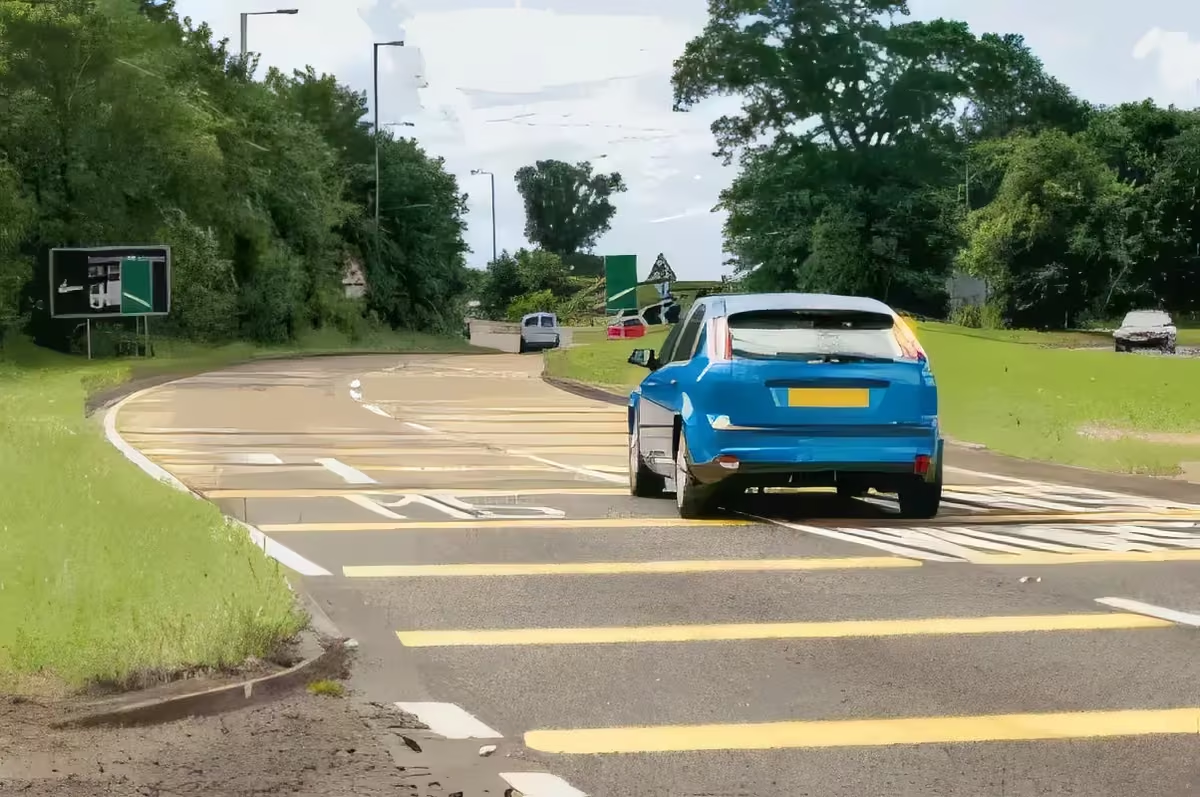
Where would it be unsafe to overtake?
Explanation
You should overtake only when it's really necessary and you can see it's clear ahead. Look out for road signs and markings that show it's illegal or would be unsafe to overtake; for example, approaching junctions or bends. In many cases, overtaking is unlikely to significantly improve your journey time.
Question 24 of 48
At an incident, someone is unconscious and you want to help. What would be the first thing to check?
Explanation
Remember this procedure by saying DR ABC. This stands for Danger, Response, Airway, Breathing, Circulation. Give whatever first aid you can and stay with the injured person until a medical professional takes over.
Question 25 of 48
After a collision, someone is unconscious in their vehicle. When should you call the emergency services?
Explanation
It's important to make sure that the emergency services arrive as soon as possible. When a person is unconscious, they could have serious injuries that aren't immediately obvious.
Question 26 of 48
At an incident, how could you help a casualty who has stopped breathing?
Explanation
The DR ABC code has been devised by medical experts to give the best outcome until the emergency services arrive and take care of casualties.
Question 27 of 48
You're driving behind a large goods vehicle. What should you do if it signals left but steers to the right?
Explanation
Large, long vehicles need extra room when making turns at junctions. They may move out to the right in order to make a left turn. Keep well back and don't attempt to pass them on their left.
Question 28 of 48
Why is it important to wear suitable shoes when you're driving?
Explanation
When you're going to drive, make sure that you're wearing suitable clothing. Comfortable shoes will ensure that you have proper control of the foot pedals.
Question 29 of 48
You've driven up to a pelican crossing. What must you do while the amber light is flashing?
Explanation
The flashing amber light allows pedestrians already on the crossing to get to the other side before a green light shows to the traffic. Be aware that some pedestrians, such as older people and young children, need longer to cross. Let them do this at their own pace.
Question 30 of 48
Why could it be dangerous to reverse from a side road into a main road?
Explanation
Don't reverse into a main road from a side road because your view will be restricted. The main road is likely to be busy and the traffic on it moving quickly.
Question 31 of 48
What does this white arrow on the road mean?
Explanation
The arrow indicates the direction in which to pass hatch markings or double white lines. If you're overtaking, you must return to the left-hand side of the road.
Question 32 of 48
You're driving your car. When may you use a hand-held mobile phone?
Explanation
It's illegal to use a hand-held mobile phone while you're driving, except in a genuine emergency. Even using a hands-free kit can distract your attention. Park in a safe and convenient place before receiving or making a call or using text messaging. Then you'll also be free to take notes or refer to papers.
Question 33 of 48
What part of the car does the law require you to keep in good condition?
Explanation
Unless exempt, you and your passengers must wear a seat belt (or suitable child restraint). The seat belts in your car must be in good condition and working properly; they'll be checked during its MOT test.
Question 34 of 48
You want to turn right at a box junction. What should you do if there's oncoming traffic?
Explanation
You can wait in the box junction as long as your exit is clear. At some point there'll be a gap in the oncoming traffic, or the traffic lights will change, allowing you to proceed.
Question 35 of 48
Why could it be dangerous to keep the clutch down, or select neutral, for long periods of time while you're driving?
Explanation
Letting your vehicle roll or coast in neutral reduces your control over steering and braking. This can be dangerous on downhill slopes, where your vehicle could pick up speed very quickly.
Question 36 of 48
Why do MOT tests include an exhaust emission test?
Explanation
Emission tests are carried out to make sure your vehicle's engine is operating efficiently. This ensures the pollution produced by the engine is kept to a minimum. If your vehicle isn't serviced regularly, it may fail the MOT emissions test.
Question 37 of 48
Which type of glasses would make driving at night more difficult?
Explanation
If you're driving at night or in poor visibility, tinted lenses will reduce the efficiency of your vision by reducing the amount of light reaching your eyes.
Question 38 of 48
You're driving in busy traffic. You want to pull up just after a junction on the left. When should you signal?
Explanation
You need to signal to let other drivers know your intentions. However, if you indicate too early, they may think you're turning left into the junction. Correct timing of the signal is very important to avoid misleading others.
Question 39 of 48
Where would parking your vehicle cause an obstruction?
Explanation
Don't park your vehicle where it may obstruct access to a business or property. Think carefully before you slow down and stop. Look at road markings and signs to ensure that you aren't parking illegally.
Question 40 of 48
There's been a heavy fall of snow. What should you consider before driving in these conditions?
Explanation
Consider whether the increased risk is worth it. If the weather conditions are bad and your journey isn't essential, then don't drive. If you have to drive, make sure you're well prepared in case you get stuck.
Question 41 of 48
What should you do if you're driving a slow-moving vehicle on a narrow winding road?
Explanation
If you're driving a slow-moving vehicle along a narrow road, try not to hold up faster traffic. If you see vehicles following behind, pull over in a safe place and let the traffic pass before continuing. Don't wave other traffic past - this could be dangerous if you or they haven't noticed a hazard ahead.
Question 42 of 48
What will help you to keep your car secure?
Explanation
The Vehicle Watch scheme helps to reduce the risk of your car being stolen. By displaying high-visibility Vehicle Watch stickers in your car, you're inviting the police to stop your vehicle if it's seen in use between midnight and 5 am.
Question 43 of 48
What does third-party insurance cover?
Explanation
Third-party insurance cover is usually cheaper than comprehensive cover. However, it doesn't cover any damage caused to your own vehicle or property. It only covers damage and injury you cause to others.
Question 44 of 48
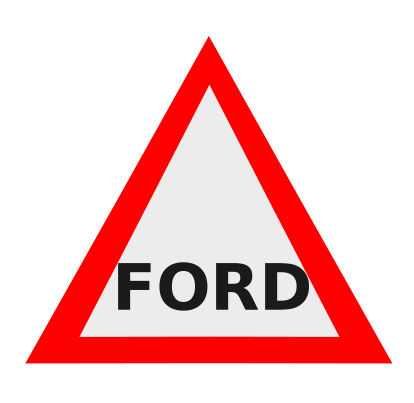
What should you do when dealing with this hazard?
Explanation
In normal conditions, a ford can be crossed quite safely by driving through it slowly. The water may affect your brakes, so when you're clear of the ford, test them before you resume normal driving.
Question 45 of 48
What should you do if you overtake a cyclist when it's very windy?
Explanation
Cyclists, and motorcyclists, are very vulnerable in high winds. They can easily be blown well off course and veer into your path. Always allow plenty of room when overtaking them. Passing too close could cause a draught and unbalance the rider.
Question 46 of 48
What's the first thing you must do if you have a collision while you're driving your car?
Explanation
If you're in a collision that causes damage or injury to any other person, vehicle, animal or property, by law you must stop. Give your name, the vehicle owner's name and address, and the vehicle's registration number to anyone who has reasonable grounds for requesting them.
Question 47 of 48
How would under-inflated tyres affect your vehicle?
Explanation
Your tyres are your only contact with the road. To prevent problems with braking and steering, keep your tyres free from defects; they must have sufficient tread depth and be correctly inflated. Correct tyre pressures help reduce the risk of skidding and provide a safer and more comfortable drive or ride.
Question 48 of 48
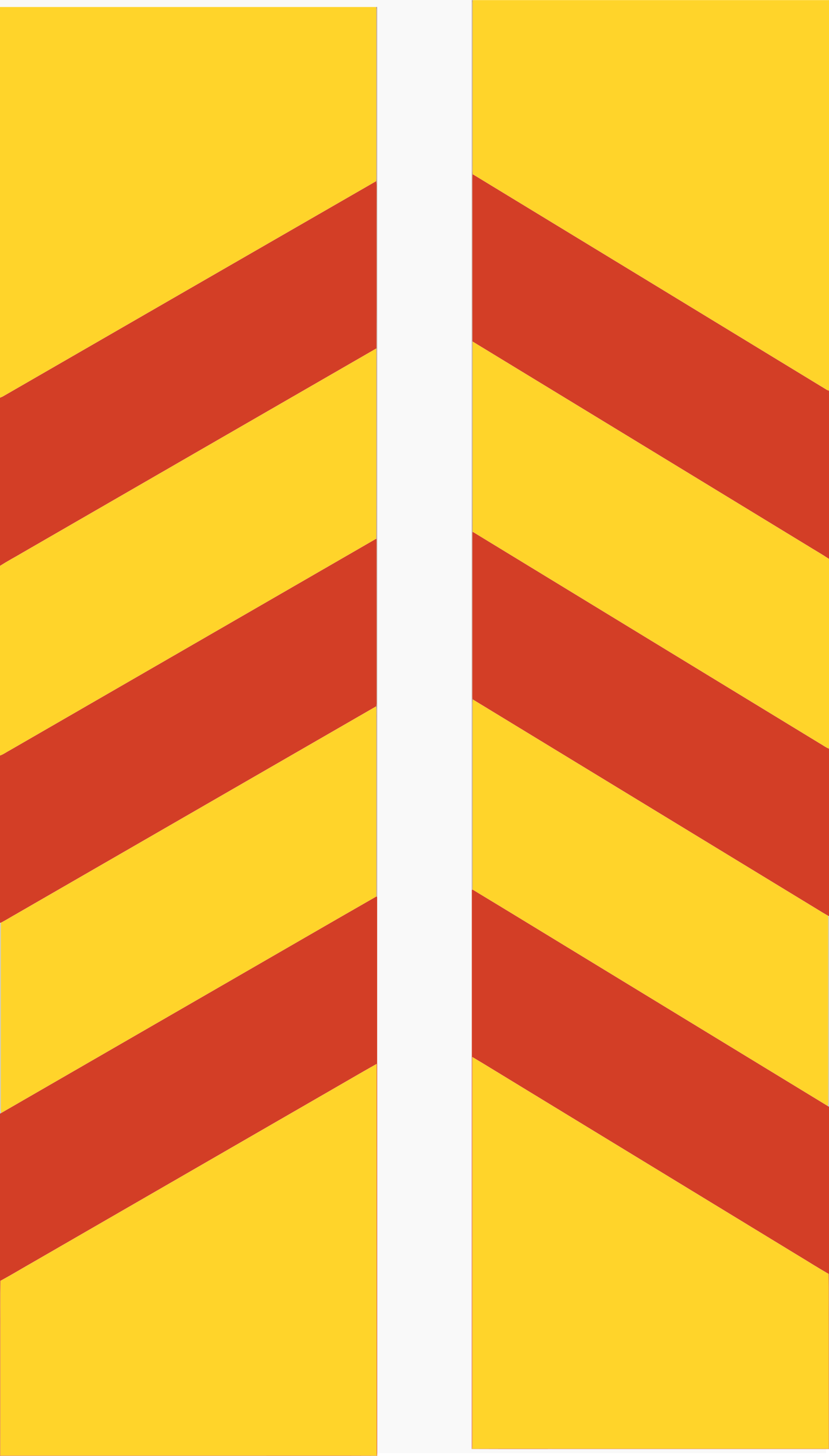
Where would you expect to see these markers?
Explanation
These markers must be fitted to vehicles over 13 metres long, large goods vehicles, and rubbish skips placed in the road. They're reflective to make them easier to see in the dark.