Answer 48 questions, check each correct answer and work through the explanations at your own pace.
Question 1 of 480 correct answers
Question 1 of 48
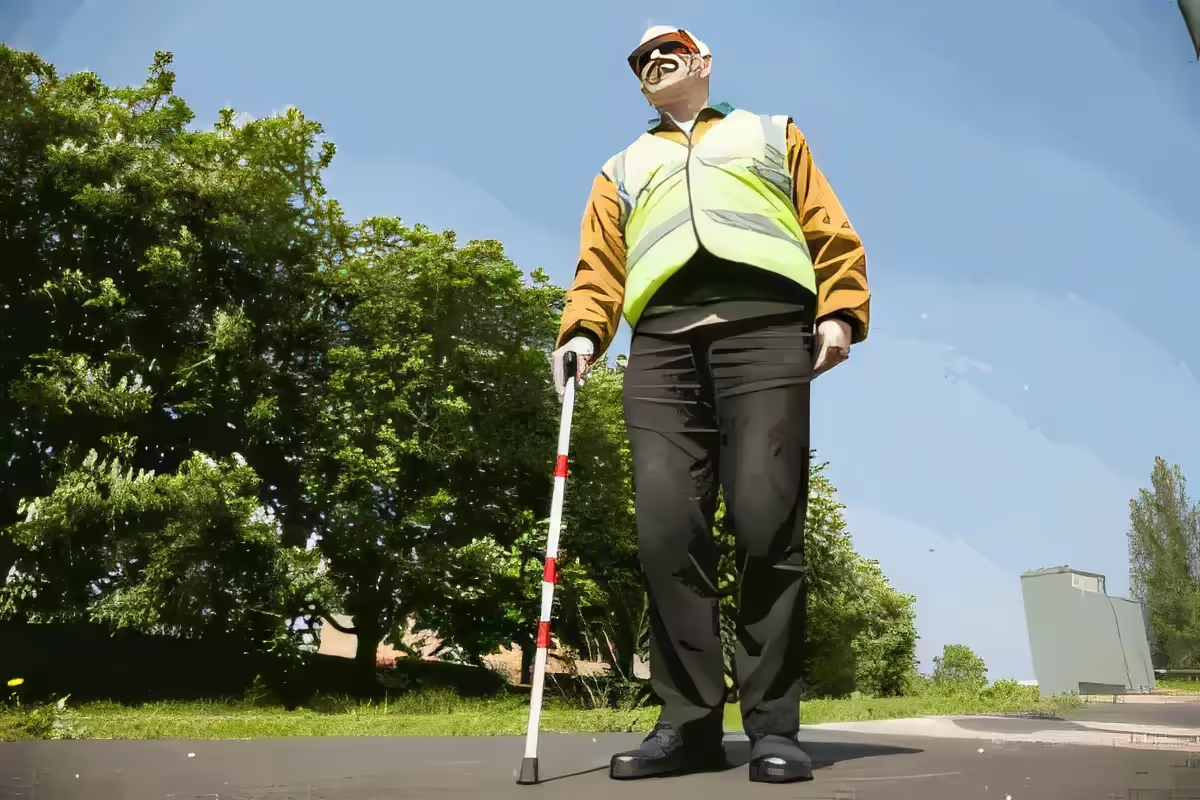
You see a pedestrian carrying a white stick that also has a red band. What does this mean?
Explanation
When someone is deaf as well as blind, they may carry a white stick with a red reflective band or bands. They may not be aware that you're approaching and they may not be able to hear anything; so, for example, your horn would be ineffective as a warning to them.
Question 2 of 48
Why do motorcyclists use dipped headlights in daylight?
Explanation
A motorcycle can be lost from sight behind another vehicle. The use of headlights helps to make it more conspicuous and therefore more easily seen.
Question 3 of 48
You're travelling behind a bus. What should you do if it pulls up at a bus stop?
Explanation
People may be running to catch the bus or passengers leaving the bus might wish to cross the road in front of the bus. Look out for them if you intend to go past it. Consider how many people are waiting to get on the bus - check the queue if you can. The bus might move off straight away if no-one is waiting to get on. If a bus is signalling to pull out, give it priority if it's safe to do so.
Question 4 of 48
Your vehicle broke down on the hard shoulder of a motorway, but has now been repaired. How should you rejoin the main carriageway?
Explanation
Signal your intention and build up sufficient speed on the hard shoulder so that you can filter into a safe gap in the traffic. Don't push your way into a small gap or cause other traffic to alter speed or direction.
Question 5 of 48
What colour are the reflective studs between a motorway and a slip road?
Explanation
The studs between the carriageway and the hard shoulder are normally red. These change to green where there's a slip road, helping you to identify slip roads when visibility is poor or when it's dark.
Question 6 of 48
What signal should you give when you're going straight ahead at a roundabout?
Explanation
When going straight ahead at a roundabout, don't signal as you approach it. Signal left just after passing the exit before the one you wish to take.
Question 7 of 48
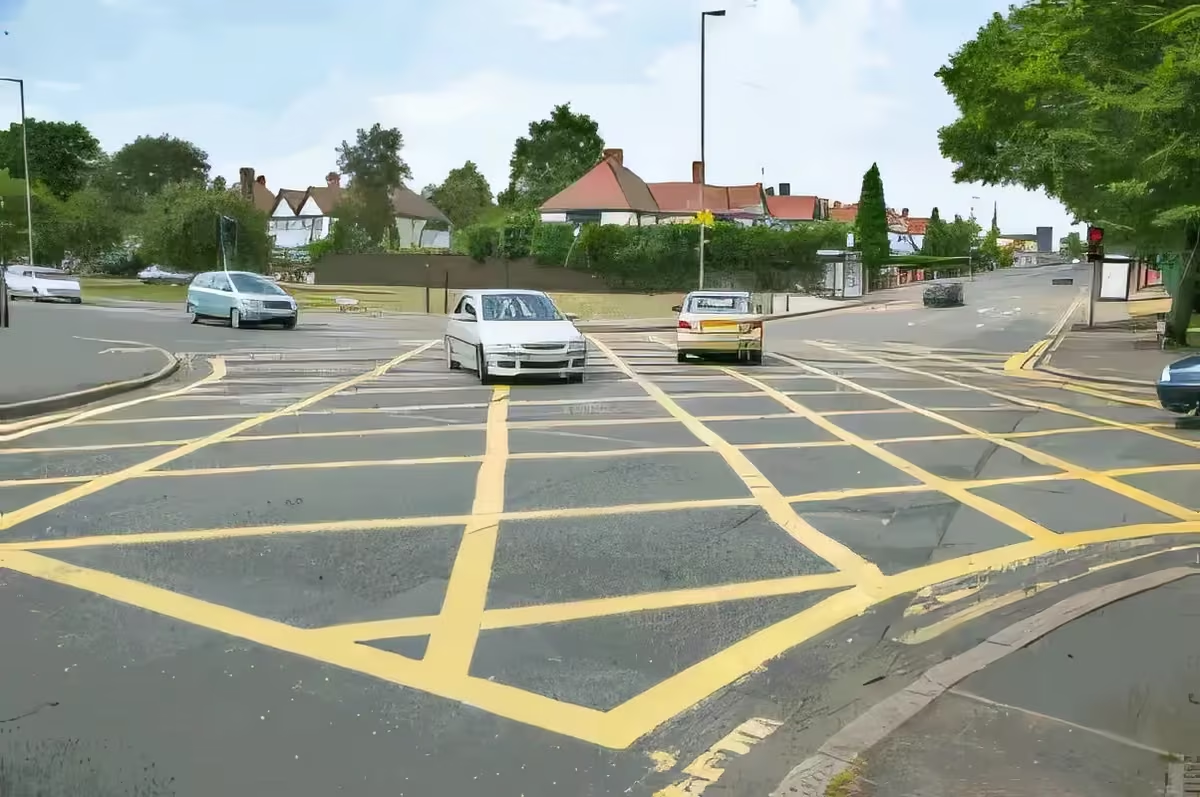
When may you stop and wait in a box junction?
Explanation
The purpose of yellow box markings is to keep junctions clear of queuing traffic. You may only wait in the marked area when you're turning right and your exit lane is clear but you can't complete the turn because of oncoming traffic or other traffic waiting to turn right.
Question 8 of 48
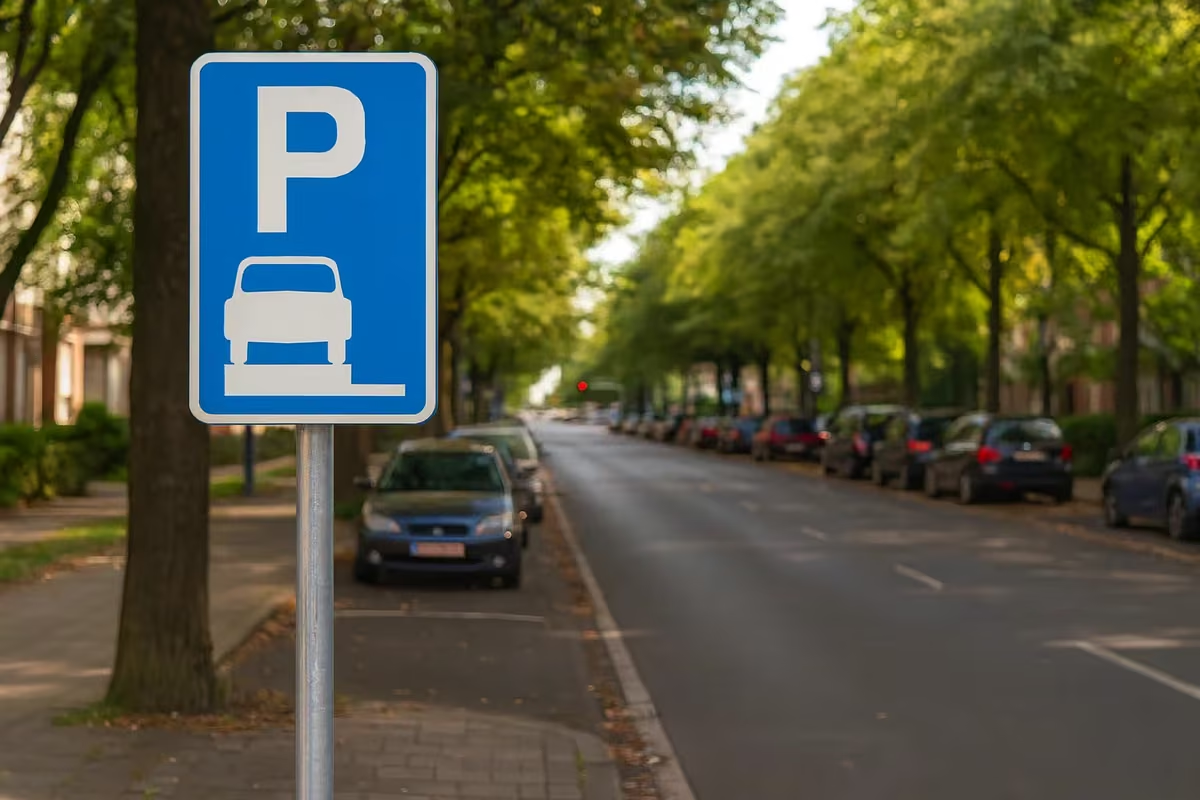
What does this sign mean?
Explanation
In order to keep roads free from parked cars, there are some areas where you're allowed to park on the verge. Only do this where you see the sign. Parking on verges or footways anywhere else could lead to a fine.
Question 9 of 48
Who has priority when traffic lights are out of order?
Explanation
When traffic lights are out of order, you should treat the junction as an unmarked crossroads. Be cautious, as you may need to give way or stop. Look for traffic attempting to cross the junction, unaware that it doesn't have priority.
Question 10 of 48
How should you react to inexperienced drivers?
Explanation
Learners might not have confidence when they first start to drive. Allow them plenty of room and don't react adversely to their hesitation. We all learn from experience, but new drivers will have had less practice in dealing with all the situations that might occur.
Question 11 of 48
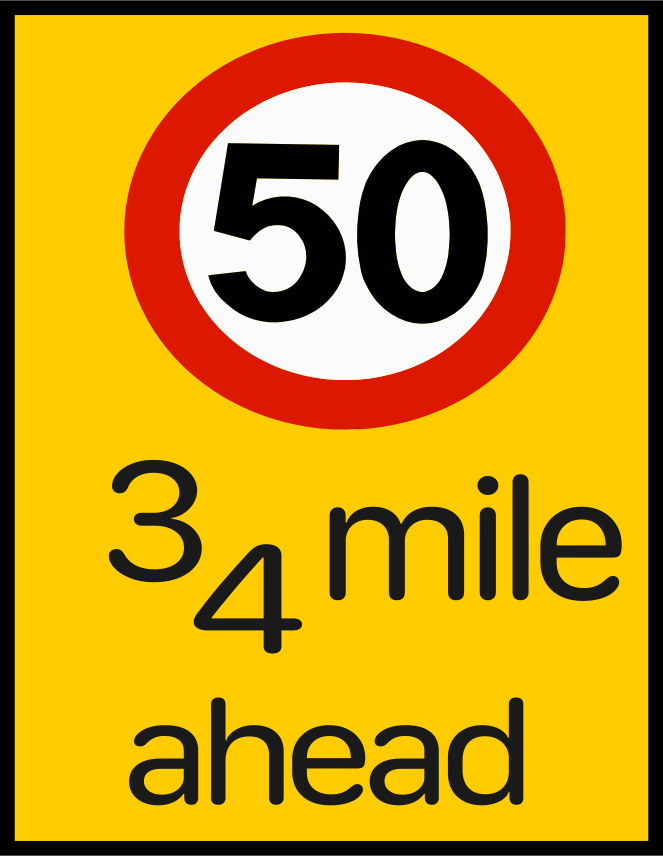
What does this traffic sign mean?
Explanation
The sign gives you an early warning of a speed restriction. If you're travelling at a higher speed, slow down in good time. You could come across queuing traffic due to roadworks or a temporary obstruction.
Question 12 of 48
A horse rider is in the left-hand lane approaching a roundabout. Where should you expect the rider to go?
Explanation
Horses and their riders move more slowly than other road users. They might not have time to cut across heavy traffic to take up a position in the right-hand lane. For this reason, a horse and rider may approach a roundabout in the left-hand lane even though they're turning right.
Question 13 of 48
What should you do when there's an obstruction on your side of the road?
Explanation
Take care if you have to pass an obstruction, such as a parked vehicle, on your side of the road. Give way to oncoming traffic if there isn't enough room for you both to continue safely.
Question 14 of 48
What should you do when you're approaching a bus that's signalling to move away from a bus stop?
Explanation
Try to give way to buses if you can do so safely, especially when the driver signals to pull away from a bus stop. Look out for people getting off the bus or running to catch it, because they may cross the road without looking. Don't accelerate to get past the bus, and don't flash your lights, as this could mislead other road users.
Question 15 of 48
You're following a large vehicle as it approaches a crossroads. What should you do if the driver signals to turn left?
Explanation
Hold back and wait until the vehicle has turned before proceeding. Don't overtake, because the vehicle turning left could hide another vehicle emerging from the same junction.
Question 16 of 48
When would you use the right-hand lane on a three-lane motorway?
Explanation
The right-hand lane of the motorway is for overtaking. Sometimes you may be directed into a right-hand lane as a result of roadworks or a traffic incident. This will be indicated by signs or officers directing the traffic.
Question 17 of 48
What's the national speed limit on a single carriageway road for cars and motorcycles?
Explanation
Exceeding the speed limit is dangerous and can result in you receiving penalty points on your licence. It isn't worth it. You should know the speed limit for the road that you're on by observing the road signs. Different speed limits apply if you're towing a trailer.
Question 18 of 48
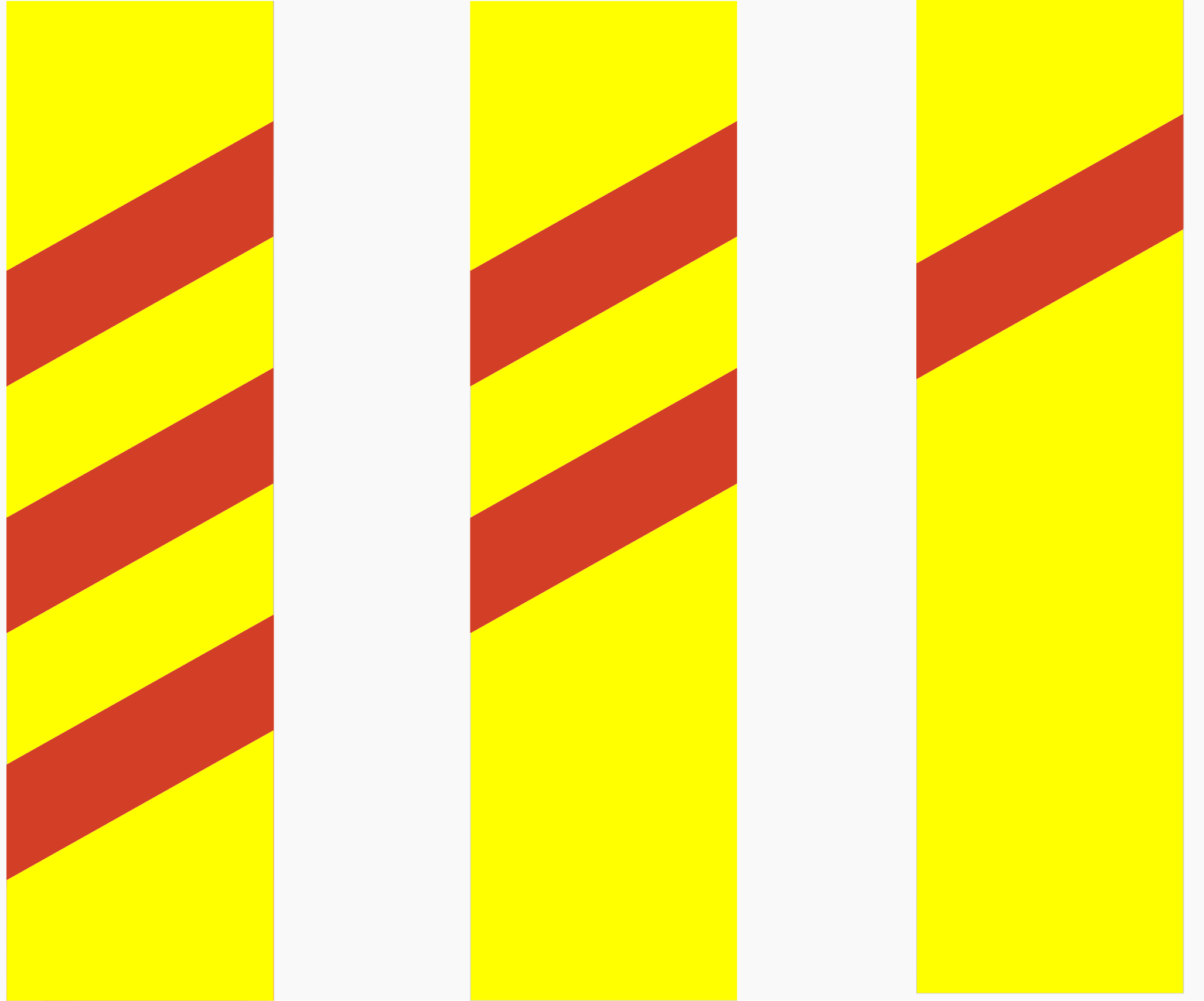
Where will you see these red and white markers?
Explanation
If there's a bend just before a level crossing, you may not be able to see the level-crossing barriers or waiting traffic. These signs give you an early warning that you may find these hazards just around the bend.
Question 19 of 48
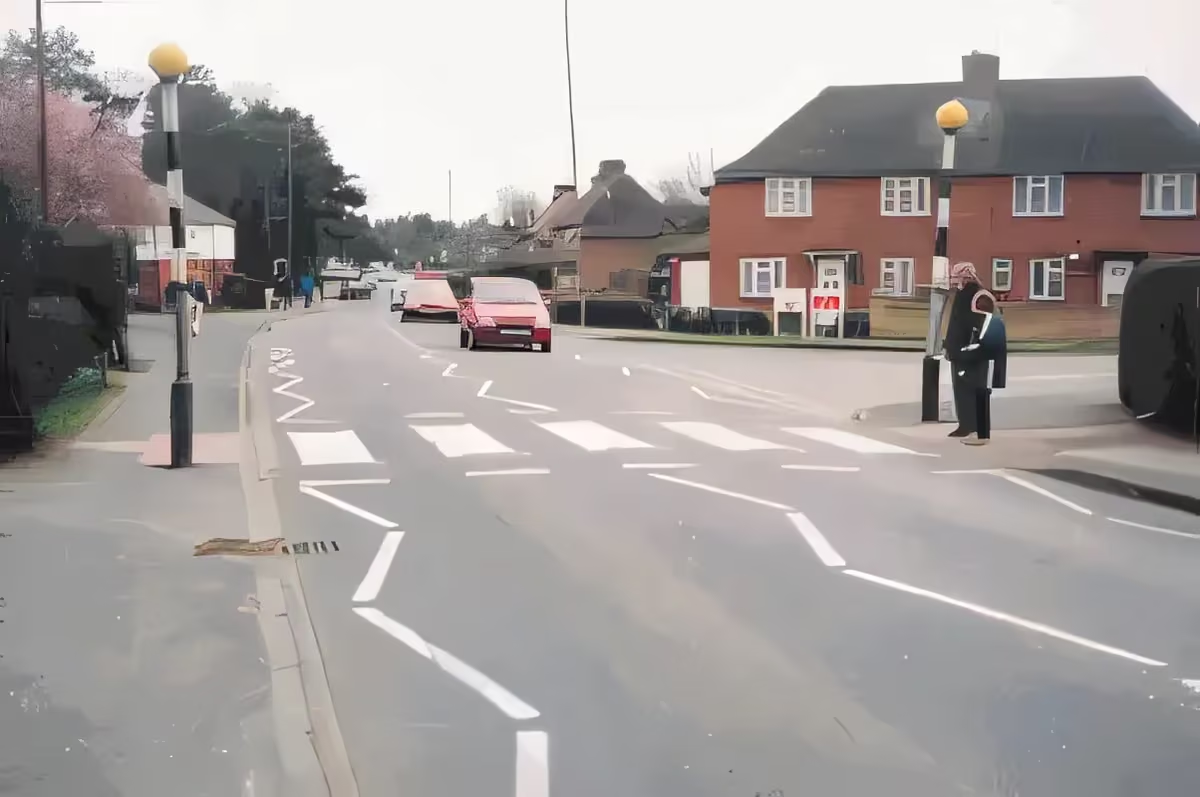
What should you do when you're approaching this crossing?
Explanation
Be courteous and prepare to stop. Don't wave people across, because this could be dangerous if another vehicle is approaching the crossing.
Question 20 of 48
Why is it more difficult to overtake a large vehicle than a car?
Explanation
Depending on relative speed, it will usually take you longer to pass a lorry than other vehicles. Hazards to watch for include oncoming traffic, junctions ahead, bends or dips that could restrict your view, and signs or road markings that prohibit overtaking. Make sure you can see that it's safe to complete the manoeuvre before you start to overtake.
Question 21 of 48
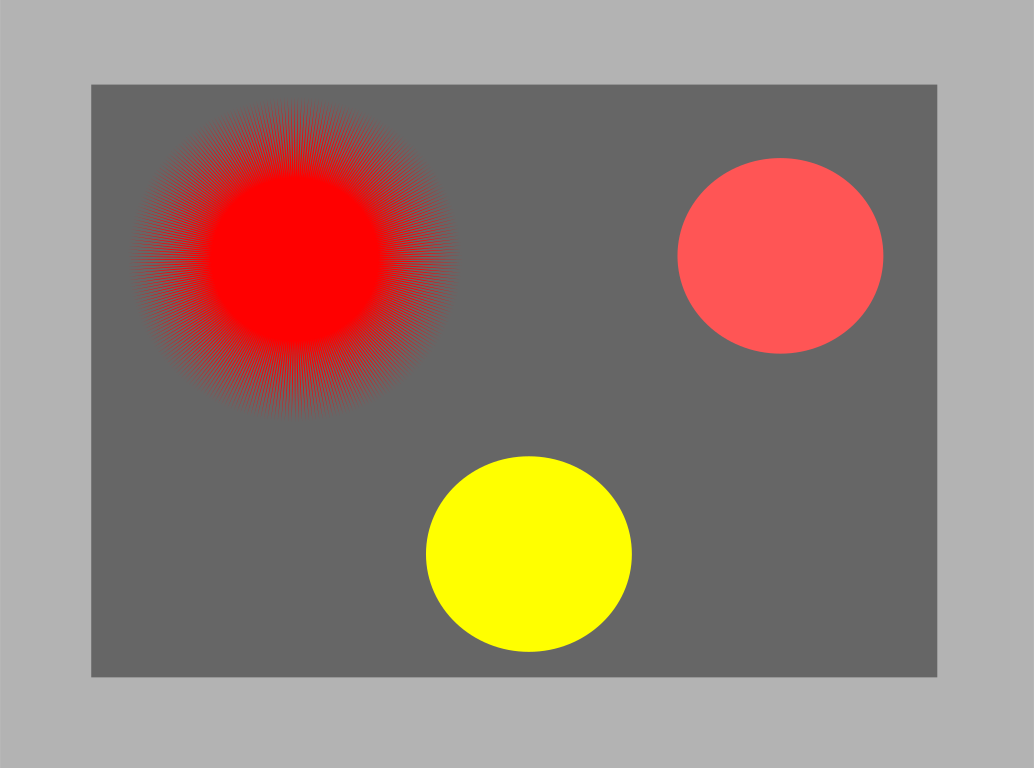
You're approaching traffic lights and the red light is showing. What signal will show next?
Explanation
If you know which light is going to show next, you can plan your approach accordingly. This can help prevent excessive braking or hesitation at the junction.
Question 22 of 48
There's been a collision. How can you help a driver who's suffering from shock?
Explanation
A casualty suffering from shock may have injuries that aren't immediately obvious. Call the emergency services, then stay with the person in shock, offering reassurance until the experts arrive.
Question 23 of 48
What should you do when you're using a contraflow system?
Explanation
In a contraflow system, you'll be travelling close to oncoming traffic and sometimes in narrow lanes. You should get into the correct lane in good time, obey any temporary speed-limit signs and keep a safe separation distance from the vehicle ahead.
Question 24 of 48
What could cause you to crash if the level is allowed to get too low?
Explanation
You should carry out frequent checks on all fluid levels but particularly brake fluid. As the brake pads or shoes wear down, the brake-fluid level will drop. If it drops below the minimum mark on the fluid reservoir, air could enter the hydraulic system and lead to a loss of braking efficiency or even complete brake failure.
Question 25 of 48
What should you do if your anti-lock brakes (ABS) warning light stays on?
Explanation
Consult the vehicle handbook or a garage before driving the vehicle any further. Only drive to a garage if it's safe to do so. If you aren't sure, get expert help.
Question 26 of 48
What does it mean if your vehicle keeps bouncing after you sharply press down and release on the bodywork over a wheel?
Explanation
If you find that your vehicle bounces as you drive around a corner or bend in the road, the shock absorbers might be worn. To test your shock absorbers, sharply press down and release above each wheel. If the vehicle continues to bounce, take it to be checked by a qualified mechanic.
Question 27 of 48
What should you do when you're driving in snowy conditions?
Explanation
In snowy conditions, be careful with the steering, accelerator and brakes. Braking sharply while you're driving on snow is likely to make your car skid.
Question 28 of 48
What will become more expensive after you've been convicted of driving while unfit through drink or drugs?
Explanation
You've shown that you're a risk to yourself and others on the road. For this reason, insurance companies may charge you a higher premium.
Question 29 of 48
You want to turn right from a main road into a side road. What should you do just before turning?
Explanation
In some circumstances, your indicators may be difficult to see and another road user may not realise you're about to turn. A final check in your mirror and blind spot can help you to see an overtaking vehicle, so that you can avoid turning across their path.
Question 30 of 48
What should you do if there's a bus at a bus stop ahead of you?
Explanation
As you approach, look out for any signal the driver might make. If you pass the vehicle, watch out for pedestrians attempting to cross the road from behind the bus. They'll be hidden from view until the last moment.
Question 31 of 48
Your car gets a puncture while you're driving on the motorway. What should you do when you've stopped on the hard shoulder?
Explanation
Park as far to the left as you can and leave the vehicle by the nearside door. Don't attempt even simple repairs. Instead, walk to an emergency telephone on your side of the road and phone for help. While waiting for help to arrive, stay by your car, keeping well away from the carriageway and hard shoulder.
Question 32 of 48
What should you do if the amber lights come on and a warning sounds while you're driving over a level crossing?
Explanation
Keep going; don't stop on the crossing. If the warning sounds and the amber lights come on as you're approaching the crossing, you must stop unless it's unsafe to do so. Red flashing lights together with the audible warning mean you must stop.
Question 33 of 48
Your car needs to pass an MOT test. What may be invalidated if you drive the car without a current MOT certificate?
Explanation
If your vehicle requires an MOT certificate, it's illegal to drive it without one and your insurance may be invalid if you do so. The only exceptions are that you may drive to a pre-arranged MOT test appointment, or to a garage for repairs required for the test.
Question 34 of 48
What's the legal minimum depth of tread for car tyres?
Explanation
Car tyres must have sufficient depth of tread to give them a good grip on the road surface. The legal minimum for cars is 1.6 mm. This depth should be across the central three-quarters of the breadth of the tyre and around the entire circumference.
Question 35 of 48
How can drivers help the environment?
Explanation
Rapid acceleration and heavy braking lead to increased
Question 36 of 48
You're reversing into a side road. When would your vehicle be the greatest hazard to passing traffic?
Explanation
Always check in all directions before reversing. Keep a good lookout throughout the manoeuvre and remember that the front will swing out as you reverse into the side road. Act on what you see and wait if necessary.
Question 37 of 48
What should you do when you move off from behind a parked car?
Explanation
Before moving off, you should use both the interior and exterior mirrors to check that the road is clear. Look around to check the blind spots and, if necessary, give a signal to warn other road users of your intentions. Also look well ahead as you'll have to steer out into the road to pass the parked car.
Question 38 of 48
What would be affected if you carry a very heavy load on your vehicle?
Explanation
Any load will have an effect on the handling of your vehicle, and this becomes worse as you increase the load. You need to be aware of this when carrying passengers or heavy loads, fitting a roof rack or towing a trailer.
Question 39 of 48
You're towing a trailer along a three-lane motorway. When may you use the right-hand lane?
Explanation
If you're towing a caravan or trailer, you mustn't use the right-hand lane of a motorway with three or more lanes except in certain specified circumstances, such as when lanes are closed.
Question 40 of 48
You're planning to tow a caravan. What will help the handling of the combination?
Explanation
Towing a caravan or trailer affects the way the towing vehicle handles. A stabiliser device isn't designed to overcome instability caused by incorrect loading but it can give added security in side winds and from buffeting caused by large vehicles.
Question 41 of 48
Why is travelling in neutral for long distances (known as coasting) bad driving technique?
Explanation
Try to look and plan well ahead. Plan your approach to hazards and select the correct gear in good time. This will help give you the control you need to deal with anything unexpected that may occur.
Question 42 of 48
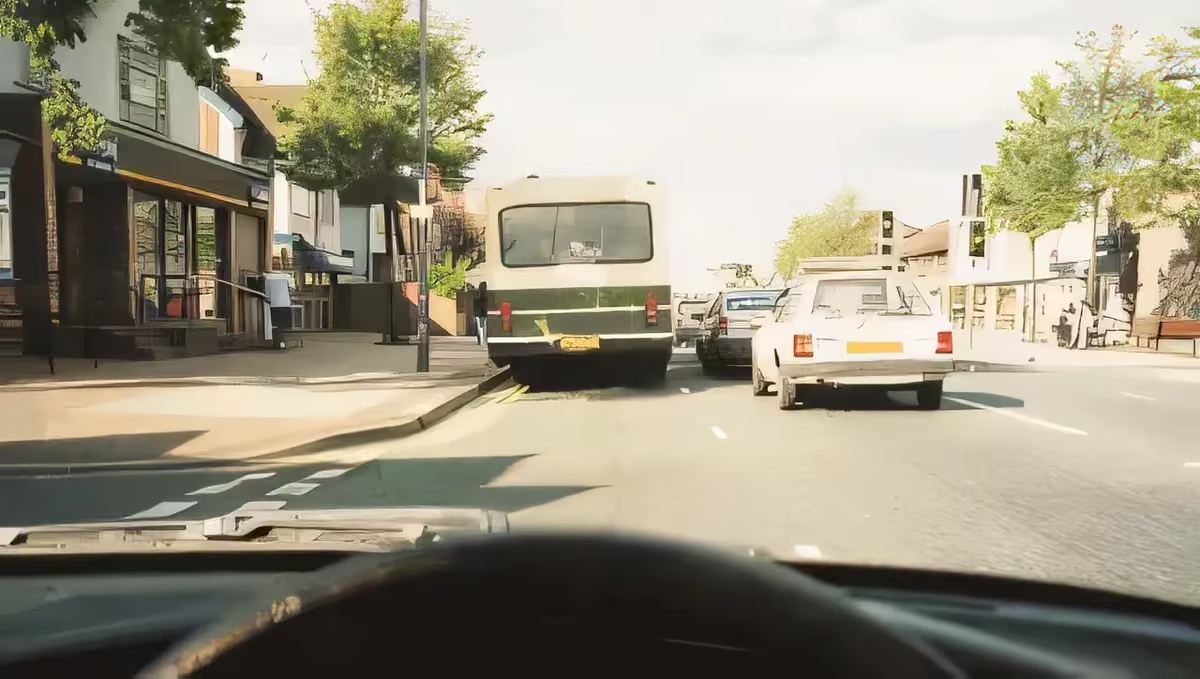
Why should the junction on the left be kept clear?
Explanation
You should always try to keep junctions clear. If you're in queuing traffic, make sure that when you stop you leave enough space for traffic to flow in and out of the junction.
Question 43 of 48
When must you use dipped headlights during the day?
Explanation
You must use dipped headlights when daytime visibility is seriously reduced, generally to 100 metres (328 feet) or less. You may also use front or rear fog lights, but they must be switched off when visibility improves.
Question 44 of 48
You're driving a friend's children home from school. They're both under 14 years old. Who's responsible for making sure they wear a seat belt or approved child restraint where required?
Explanation
Passengers should always be secured and safe. Children should be encouraged to fasten their seat belts or approved restraints themselves from an early age, so that it becomes a matter of routine. As the driver, you must check that they're fastened securely. It's your responsibility.
Question 45 of 48
What's likely to happen if you put too much oil in your engine?
Explanation
Too much oil will lead to increased pressure in the engine. This could damage oil seals and lead to oil leaks. Any excess oil should be drained off.
Question 46 of 48
You have to make an unexpected journey. You're carrying a five-year-old child on the back seat of your car. They're under 1.35 metres (4 feet 5 inches) tall. How should you seat them if a correct child restraint isn't available?
Explanation
In journeys of unexpected necessity, and when a correct child restraint isn't available, the child must sit on the rear seat and use an adult seat belt. In a collision, unrestrained objects and people can cause serious injury or even death.
Question 47 of 48
You're carrying an 11-year-old child on the front seat of your car. They're under 1.35 metres (4 feet 5 inches) tall. What seat belt security must be in place?
Explanation
As the driver, it's your responsibility to make sure that children are secure and safe in your vehicle. Make yourself familiar with the rules. When children are carried on the back seat, there are a few very exceptional cases when an adult seat belt can be used instead of a correct child restraint.
Question 48 of 48
When must you stop your vehicle?
Explanation
You must stop your vehicle when signalled to do so by a