Answer 48 questions, check each correct answer and work through the explanations at your own pace.
Question 1 of 480 correct answers
Question 1 of 48
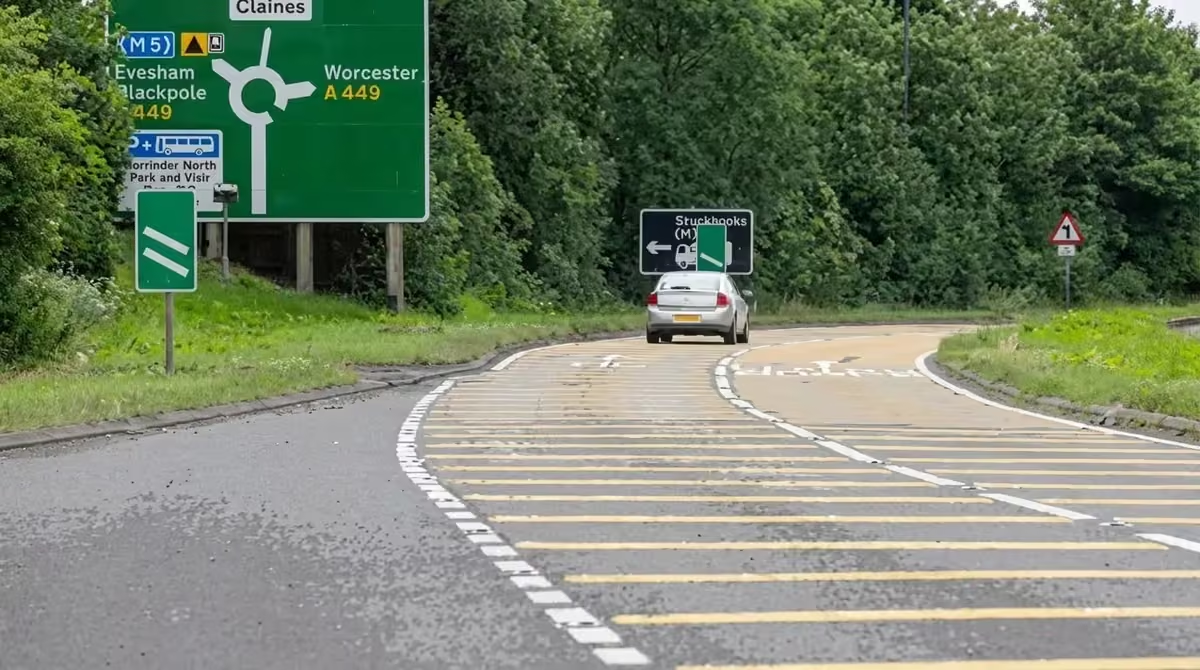
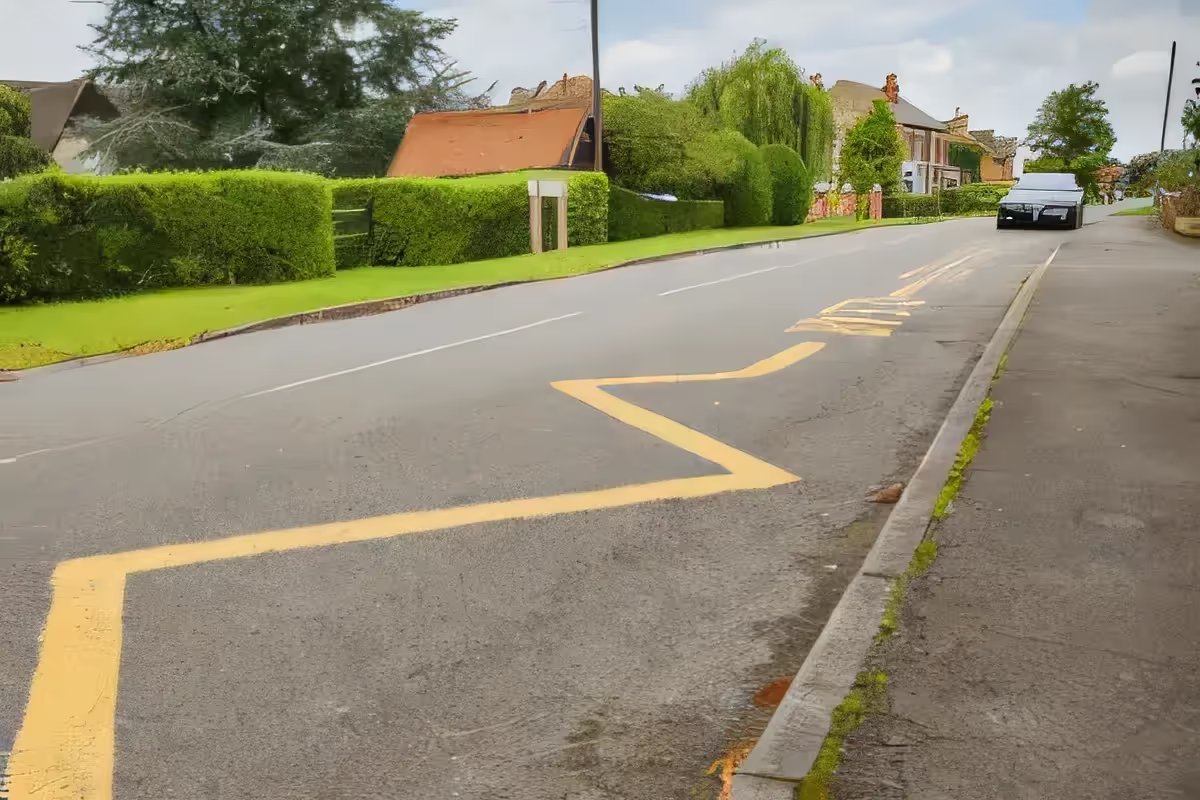
Why are these yellow lines painted across the road?
Explanation
These lines are often found on the approach to a roundabout or a dangerous junction. They give you extra warning to adjust your speed. Look well ahead and do this in good time.
Question 2 of 48
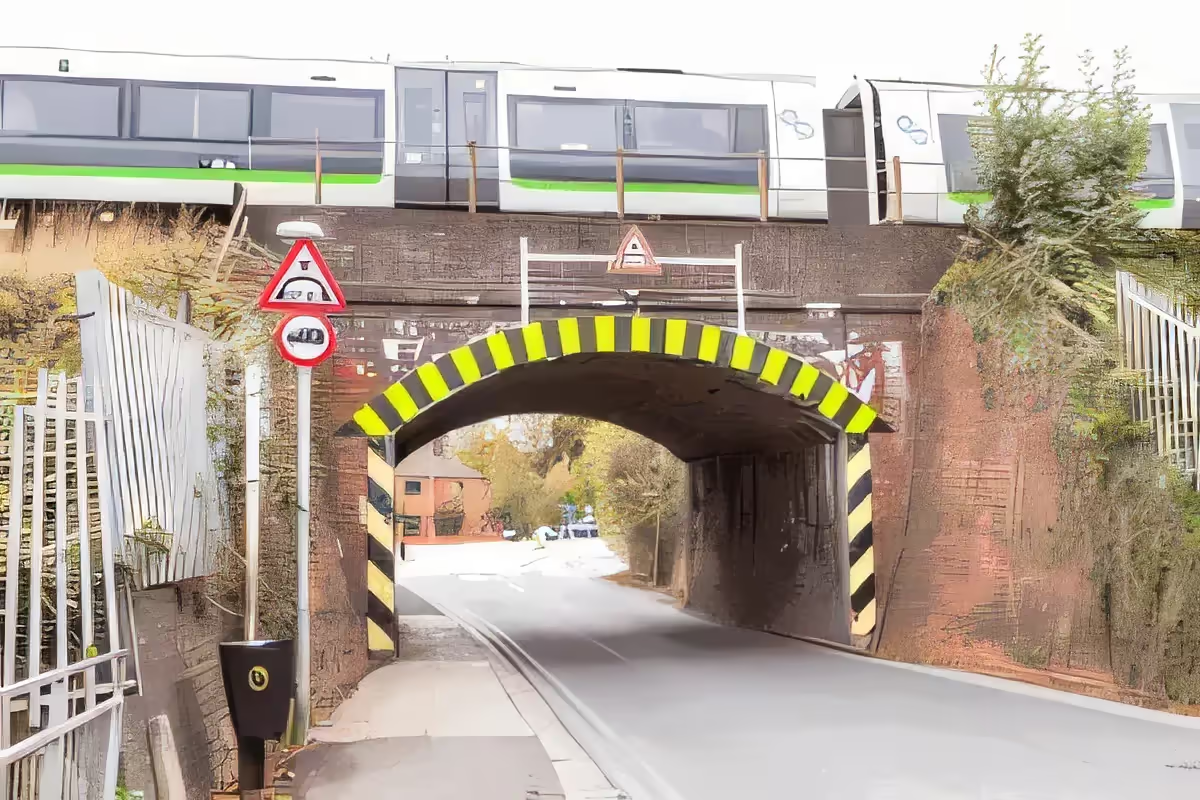
What type of vehicle could you expect to meet in the middle of the road?
Explanation
The highest point of the bridge is in the centre, so a large vehicle might have to move to the centre of the road to have enough room to pass safely under the bridge.
Question 3 of 48
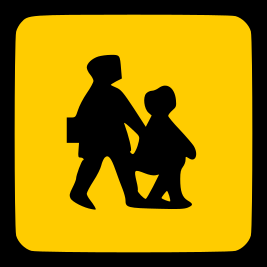
Where would you see this sign?
Explanation
Vehicles that are used to carry children to and from school will be travelling at busy times of the day. If you're following a vehicle with this sign, be prepared for it to make frequent stops. It might pick up or set down passengers in places other than normal bus stops.
Question 4 of 48
Which vehicles should use the left-hand lane on a three-lane motorway?
Explanation
On a motorway, all traffic should use the left-hand lane unless overtaking. When overtaking a number of slower vehicles, move back to the left-hand lane when you're safely past. Check your mirrors frequently and don't stay in the middle or right-hand lane if the left-hand lane is free.
Question 5 of 48
Your vehicle breaks down on a motorway and you need to call for help. Why might it be better to use an emergency roadside telephone rather than a mobile phone?
Explanation
On a motorway, it's best to use a roadside emergency telephone so that the emergency services are able to find you easily. The location of the nearest telephone is shown by an arrow on marker posts at the edge of the hard shoulder. If you use a mobile, find out the number on the nearest marker post before you call. This number will let the operator know where you are and in which direction you're travelling.
Question 6 of 48
When should you use the right-hand lane of a three-lane dual carriageway?
Explanation
You should normally use the left-hand lane on any dual carriageway unless you're overtaking or turning right. When overtaking on a dual carriageway, look for vehicles ahead that are turning right. They may be slowing or stopped. You need to see them in good time so that you can take appropriate action.
Question 7 of 48
Where may you overtake on a one-way street?
Explanation
You can overtake other traffic on either side when travelling in a one-way street. Make full use of your mirrors and ensure it's clear all around before you attempt to overtake. Look for signs and road markings, and use the most suitable lane for your destination.
Question 8 of 48
Who is authorised to signal you to stop?
Explanation
You must obey signals to stop given by police and traffic officers, traffic wardens and school crossing patrols. Failure to do so is an offence and could lead to prosecution.
Question 9 of 48
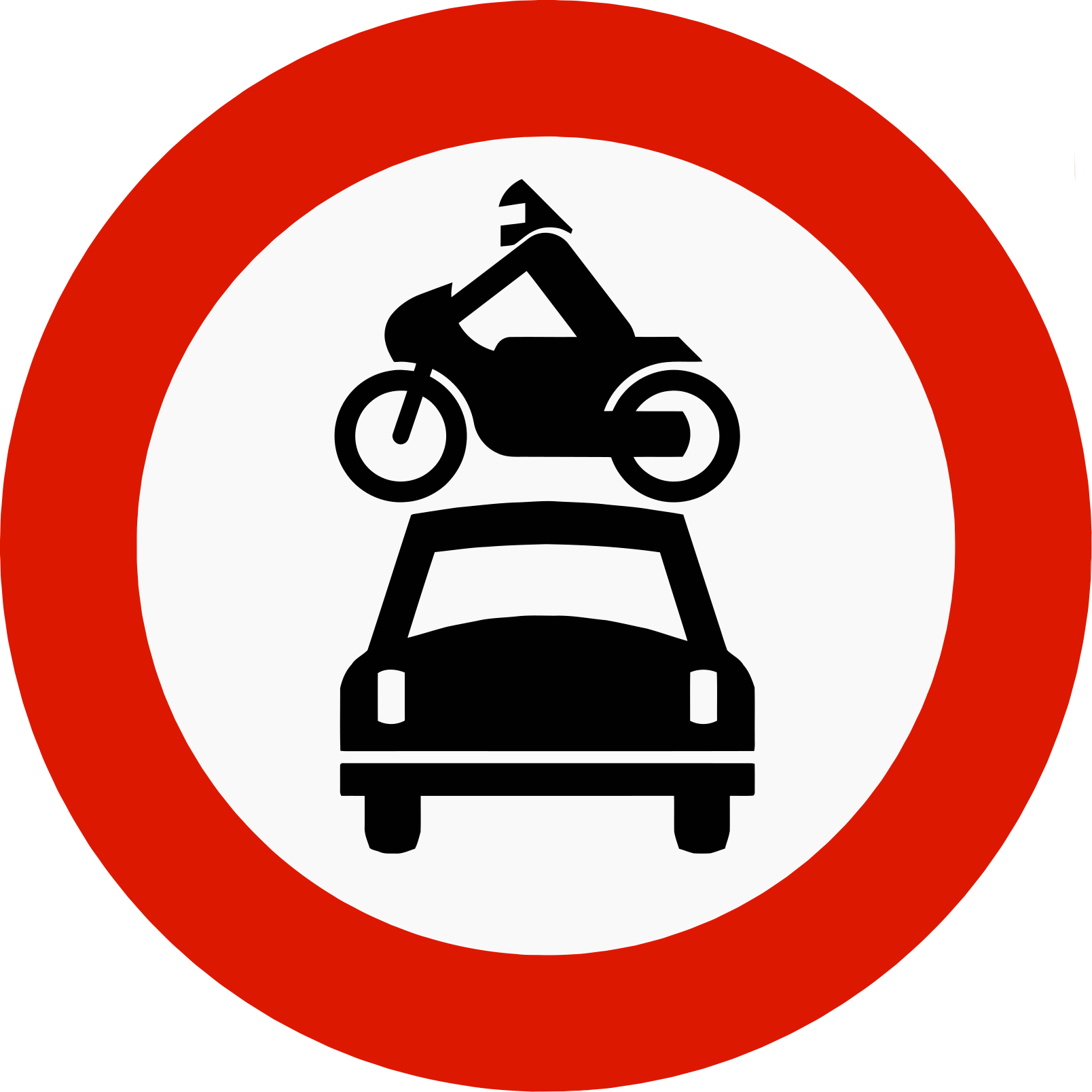
What does this sign mean?
Explanation
A sign will indicate which types of vehicles are prohibited from certain roads. Make sure that you know which signs apply to the vehicle you're using.
Question 10 of 48
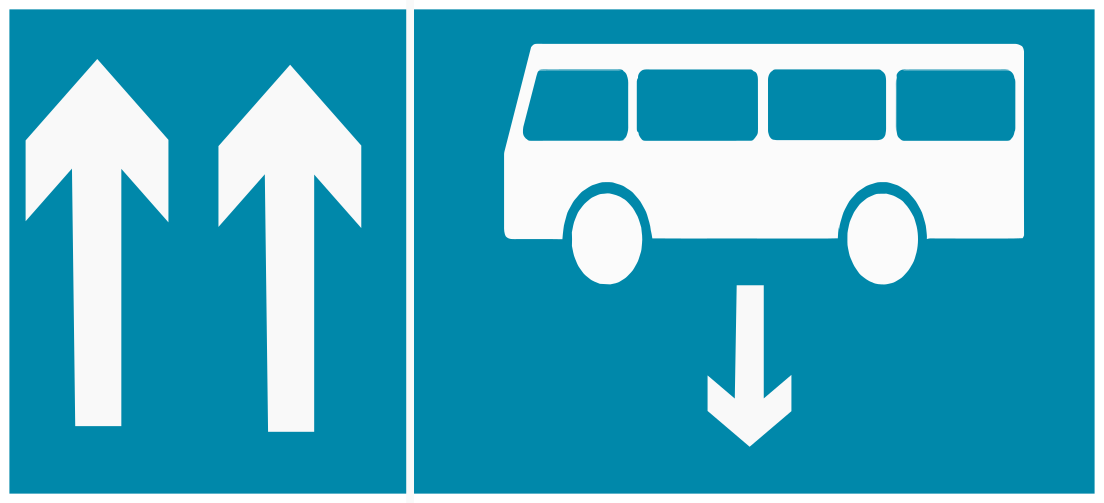
Where would you see a contraflow bus lane?
Explanation
The traffic permitted to use a contraflow lane travels in the opposite direction to traffic in the other lanes on the road.
Question 11 of 48
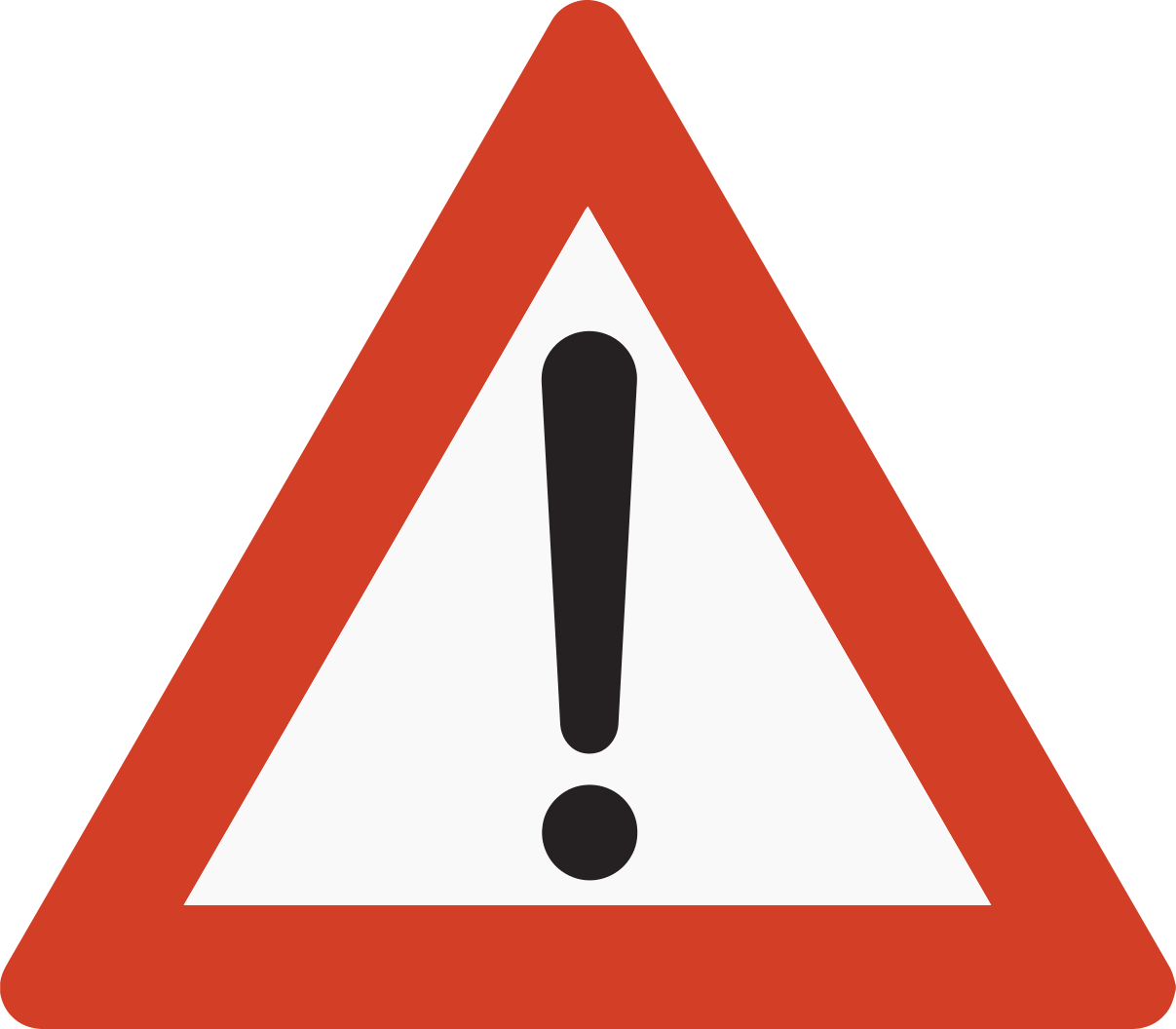
What does this traffic sign mean?
Explanation
This sign is there to alert you to the likelihood of danger ahead. It may be accompanied by a plate indicating the type of hazard. Be ready to reduce your speed and take avoiding action.
Question 12 of 48
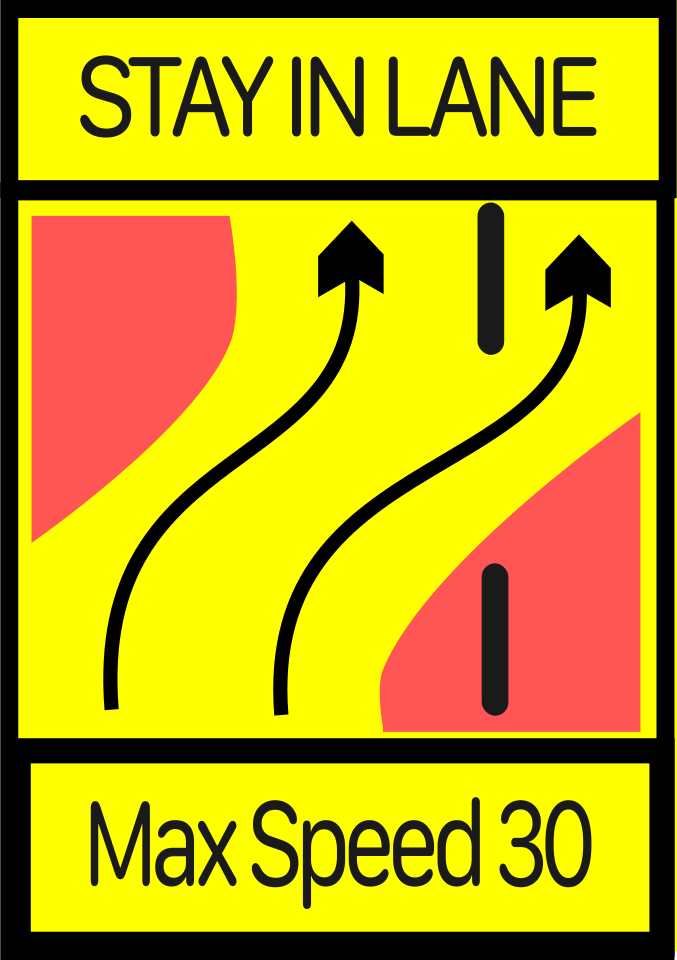
What does this sign mean?
Explanation
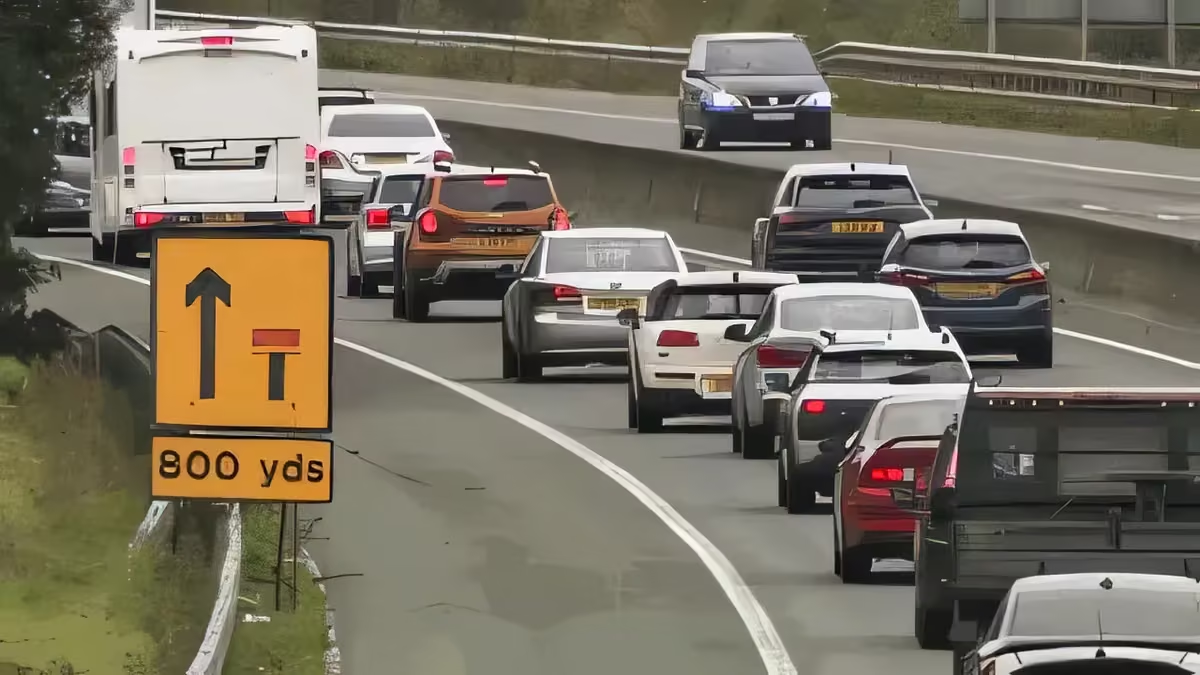
If you use the right-hand lane in a contraflow system, you'll be travelling with no permanent barrier between you and the oncoming traffic. Observe speed limits and keep a good distance from the vehicle ahead.
Question 13 of 48
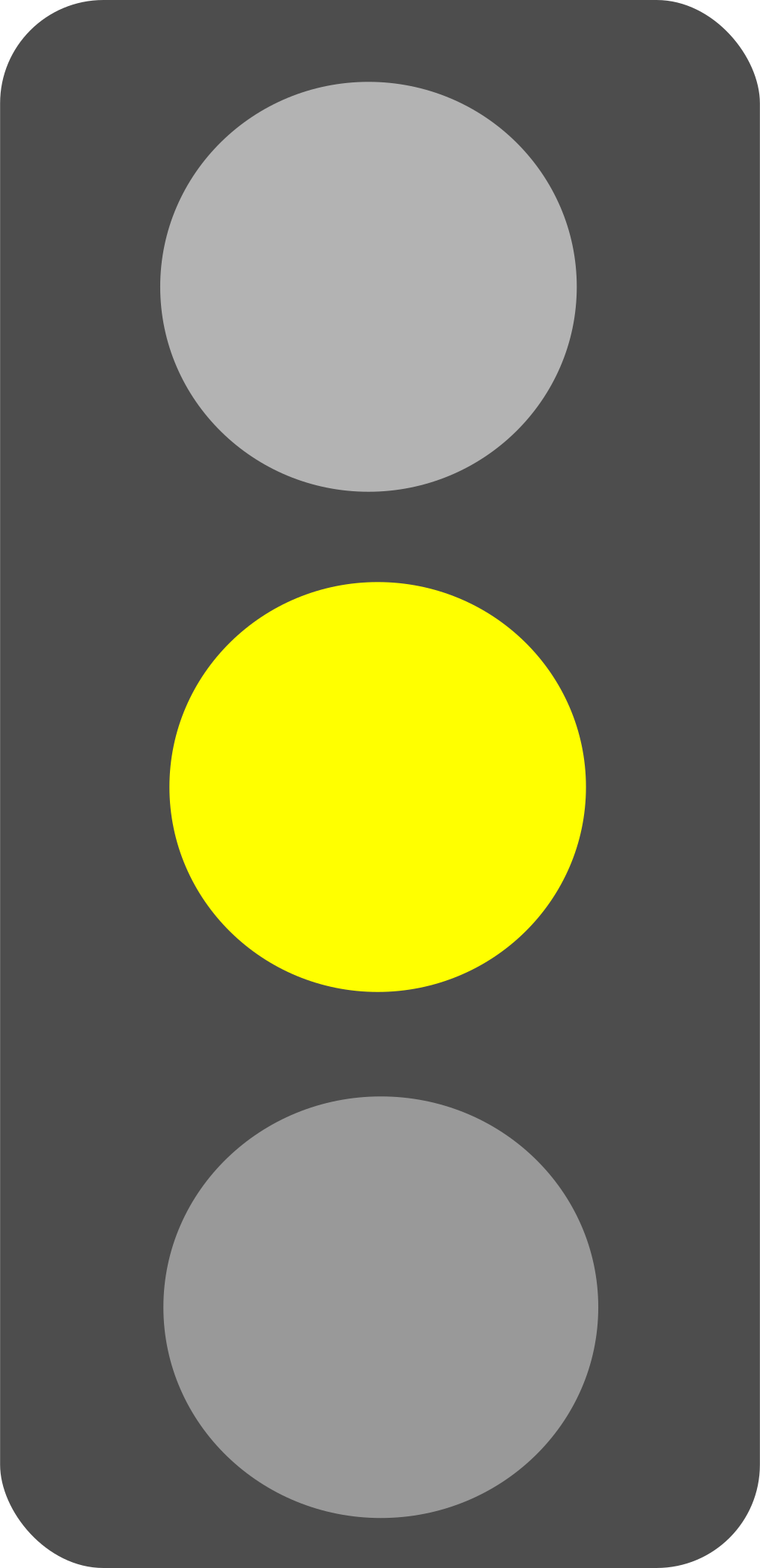
At traffic lights, what does it mean when the amber light shows on its own?
Explanation
When the amber light is showing on its own, the red light will follow next. The amber light means stop, unless you've already crossed the stop line or you're so close to it that stopping may cause a collision.
Question 14 of 48
What does this road marking mean?
Explanation
A single broken line along the centre of the road, with long markings and short gaps, is a hazard warning line. Don't cross it unless you can see that the road is clear well ahead.
Question 15 of 48
How will a police officer in a patrol vehicle signal for you to stop?
Explanation
You must obey signals given by the police. If a police officer in a patrol vehicle wants you to pull over, they'll indicate this without causing danger to you or other traffic.
Question 16 of 48
Where can you find reflective amber studs on a motorway?
Explanation
At night or in poor visibility, reflective studs on the road help you to judge your position on the carriageway.
Question 17 of 48
What does this sign mean?
Explanation
Temporary restrictions on motorways are shown on signs that have flashing amber lights. At the end of the restriction, you'll see this sign without any flashing lights.
Question 18 of 48
When should tyre pressures be checked?
Explanation
Check the tyre pressures when the tyres are cold. This will give you a more accurate reading. The heat generated on a long journey will raise the pressure inside the tyre.
Question 19 of 48
How should you dispose of a used vehicle battery?
Explanation
Batteries contain acid, which is hazardous, and they must be disposed of safely. This means taking them to an appropriate disposal site.
Question 20 of 48
What's most likely to increase fuel consumption?
Explanation
Accelerating and braking gently and smoothly will help to save fuel and reduce wear on your vehicle. This makes it better for the environment too.
Question 21 of 48
You're approaching a crossroads. What should you do if the traffic lights have failed?
Explanation
When approaching a junction where the traffic lights have failed, you should proceed with caution. Treat the situation as an unmarked junction and be prepared to stop.
Question 22 of 48
You're in a line of traffic. What action should you take if the driver behind is following very closely?
Explanation
If the driver behind is following too closely, there's a danger they'll collide with the back of your vehicle if you stop suddenly. You can reduce this risk by slowing down and increasing the safety margin in front of you. This reduces the chance that you'll have to stop suddenly and allows you to spread your braking over a greater distance. This is an example of defensive driving.
Question 23 of 48
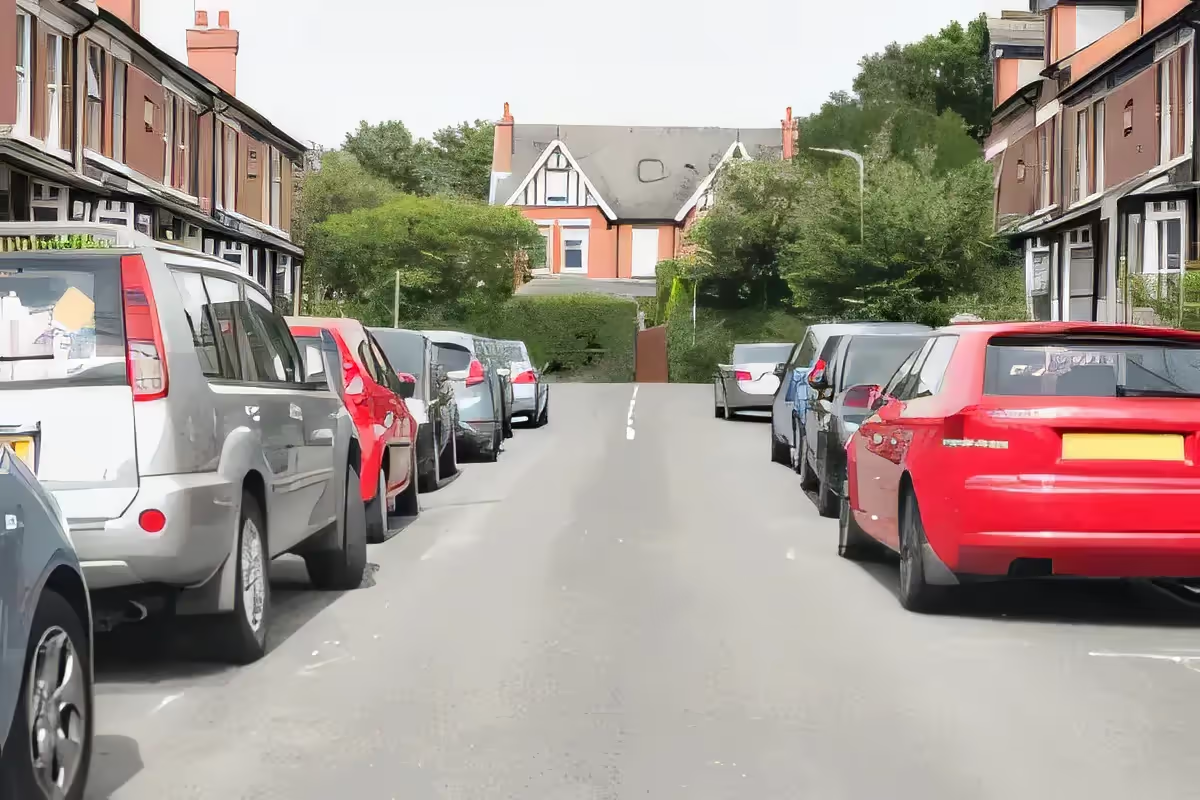
What hazard should you be aware of when travelling along this street?
Explanation
On roads where there are many parked vehicles, you might not be able to see children between parked cars and they may run out into the road without looking.
Question 24 of 48
Which vehicles are prohibited from using the motorway?
Explanation
Motorways mustn't be used by pedestrians, cyclists, motorcycles under 50 cc, certain slow-moving vehicles without permission, and powered wheelchairs/mobility scooters.
Question 25 of 48
You see this amber traffic light ahead. Which light, or lights, will come on next?
Explanation
At junctions controlled by traffic lights, you must stop behind the white line until the lights change to green. A red light, an amber light, and red and amber lights showing together all mean stop. You may proceed when the light is green unless your exit road is blocked or pedestrians are crossing in front of you. If you're approaching traffic lights that are visible from a distance and the light has been green for some time, be ready to slow down and stop, because the lights are likely to change.
Question 26 of 48
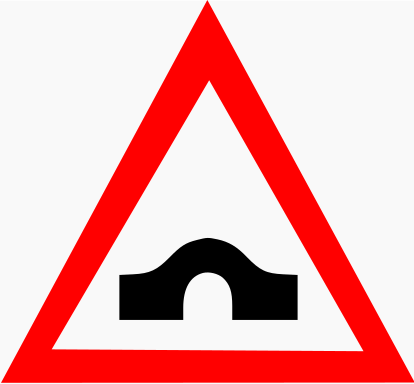
What does this sign mean?
Explanation
You'll need to slow down. At hump bridges, your view ahead will be restricted and the road will often be narrow. If the bridge is very steep, sound your horn to warn others of your approach. Going over the bridge too fast is highly dangerous to other road users and could even cause your wheels to leave the road, with a resulting loss of control.
Question 27 of 48
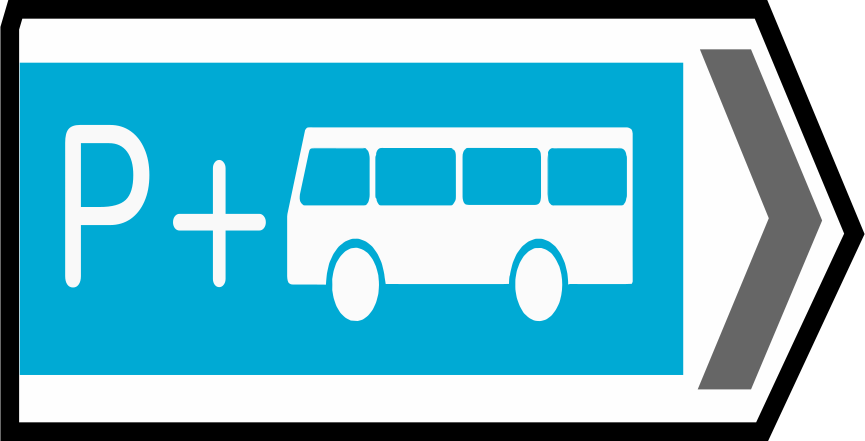
What does this sign mean?
Explanation
To ease the congestion in town centres, some cities and towns provide park-and-ride schemes. These allow you to park in a designated area and ride by bus into the centre. Park-and-ride schemes are usually cheaper and easier than car parking in the town centre.
Question 28 of 48
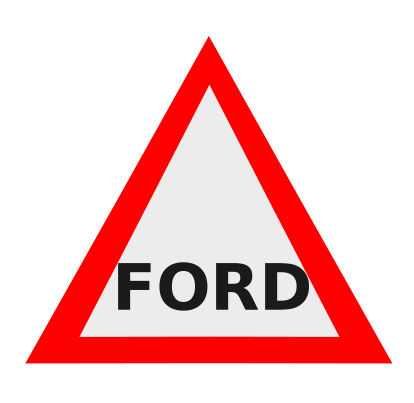
Why should you test your brakes after this hazard?
Explanation
A ford is a crossing over a stream that's shallow enough to drive or ride through. After you've gone through a ford or deep puddle, your brakes will be wet and they won't work as well as usual. To dry them out, apply a light brake pressure while moving slowly. Don't travel at normal speeds until you're sure your brakes are working properly again.
Question 29 of 48
You're travelling on a motorway in England. When must you stop your vehicle?
Explanation
You'll find traffic officers on motorways and some primary routes in England and Wales. They work in partnership with the police, helping to keep traffic moving and helping to make your journey as safe as possible. It's an offence not to comply with the directions given by a traffic officer.
Question 30 of 48
Who may use toucan crossings?
Explanation
There are some crossings where cycle routes lead cyclists to cross at the same place as pedestrians. These are called toucan crossings. Always look out for cyclists, as they're likely to be approaching faster than pedestrians.
Question 31 of 48
At an incident, a casualty is unconscious but breathing. When should you move them?
Explanation
Don't move a casualty unless there's further danger; for example, from other traffic or fire. They may have unseen or internal injuries. Moving them unnecessarily could cause further injury. Don't remove a motorcyclist's helmet unless it's essential.
Question 32 of 48
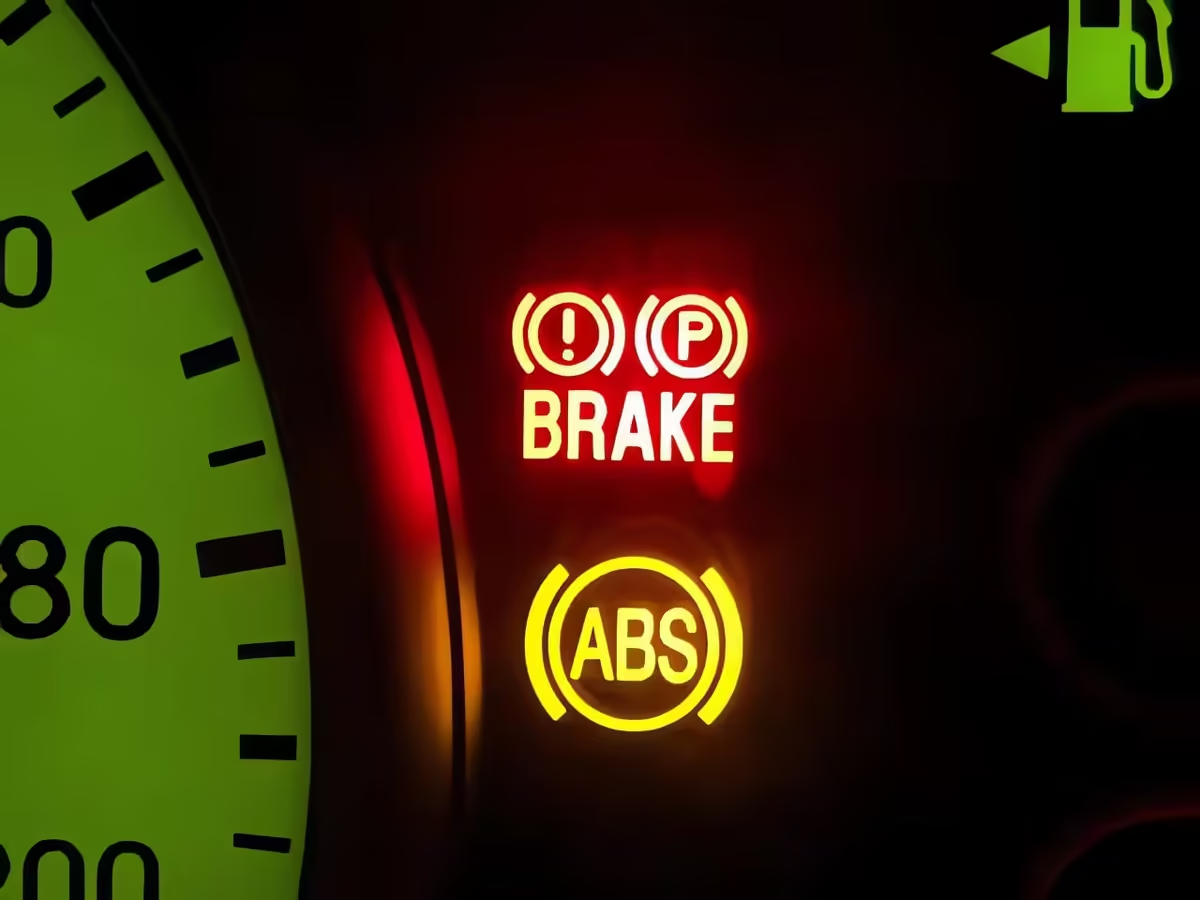
What does it mean if this light comes on while you're driving?
Explanation
If this light comes on, you should have the brake system checked immediately. A faulty braking system could have dangerous consequences.
Question 33 of 48
You're about to start a journey in freezing weather. What part of your vehicle should you clear of ice and snow?
Explanation
Driving in bad weather increases your risk of having a collision. If you absolutely have to travel, clear your lights, mirrors, number plates and windows of any snow or ice, so that you can see and be seen.
Question 34 of 48
You're driving in fog. Why should you keep well back from the vehicle in front?
Explanation
If you're following another road user in fog, stay well back. The driver in front won't be able to see hazards until they're close and might need to brake suddenly. Also, the road surface is likely to be wet and could be slippery.
Question 35 of 48
When should you use the left-hand lane of a motorway?
Explanation
You should drive in the left-hand lane whenever possible. Only use the other lanes for overtaking or when directed to do so by signals. Using other lanes when the left-hand lane is empty can frustrate drivers behind you.
Question 36 of 48
You're driving a vehicle that has anti-lock brakes. How should you apply the footbrake when you need to stop in an emergency?
Explanation
You may have to stop in an emergency due to a misjudgement by another driver or a hazard arising suddenly, such as a child running out into the road. If your vehicle has anti-lock brakes, you should apply the brakes immediately and keep them firmly applied until you stop.
Question 37 of 48
Why should you switch off your rear fog lights when the fog has cleared?
Explanation
Don't forget to switch off your fog lights when the weather improves. You could be prosecuted for driving with them on in good visibility. The high intensity of rear fog lights can dazzle drivers behind and make your brake lights difficult to notice.
Question 38 of 48
You're driving on a wet road. What should you do if you have to stop your vehicle in an emergency?
Explanation
As you drive, look well ahead and all around so that you're ready for any hazards that might develop. If you have to stop in an emergency, react as soon as you can while keeping control of the vehicle. Keep both hands on the steering wheel so you can control the vehicle's direction of travel.
Question 39 of 48
What's the safest thing to do if you have to leave valuables in your car?
Explanation
If you have to leave valuables in your car, lock them out of sight. This is the best way to deter an opportunist thief.
Question 40 of 48
You're approaching a zebra crossing. What should you do if pedestrians are waiting to cross?
Explanation
As you approach a zebra crossing, look for pedestrians waiting to cross. Where you can see them, slow down and prepare to stop. Be especially careful of children and older people, who may have difficulty judging when it's safe to cross.
Question 41 of 48
You need glasses to read a vehicle number plate at the required distance. When must you wear them?
Explanation
Have your eyesight tested before you start your practical training. Then, throughout your driving life, have checks periodically, as your vision may change.
Question 42 of 48
When may you stop on an urban clearway?
Explanation
Urban clearways have their times of operation clearly signed. You may only stop to pick up or set down passengers.
Question 43 of 48
When do windscreen pillars cause a serious obstruction to your view?
Explanation
Windscreen pillars can obstruct your view, particularly at bends and junctions. Look out for other road users - especially cyclists, motorcyclists and pedestrians who can easily be overlooked.
Question 44 of 48
The road outside this school is marked with yellow zigzag lines. What do these lines mean?
Explanation
Parking here would block other road users' view of the school entrance and would endanger the lives of children on their way to and from school.
Question 45 of 48
Which lights should you use when you're driving in a tunnel?
Explanation
Before entering a tunnel, you should switch on your dipped headlights, as this will allow you to see and be seen. In many tunnels, it's a legal requirement. Don't wear sunglasses while you're driving in a tunnel.
Question 46 of 48
What should you do if the traffic in the left-hand lane is slowing?
Explanation
Allow the traffic to merge into the left-hand lane. Leave enough room so that you can maintain a safe separation distance, even if vehicles pull in ahead of you.
Question 47 of 48
What does it mean if your insurance policy has an excess of £500?
Explanation
Having an excess on your policy will help to keep the premium down. However, if you make a claim, you'll have to pay the excess yourself - in this case, £500.
Question 48 of 48
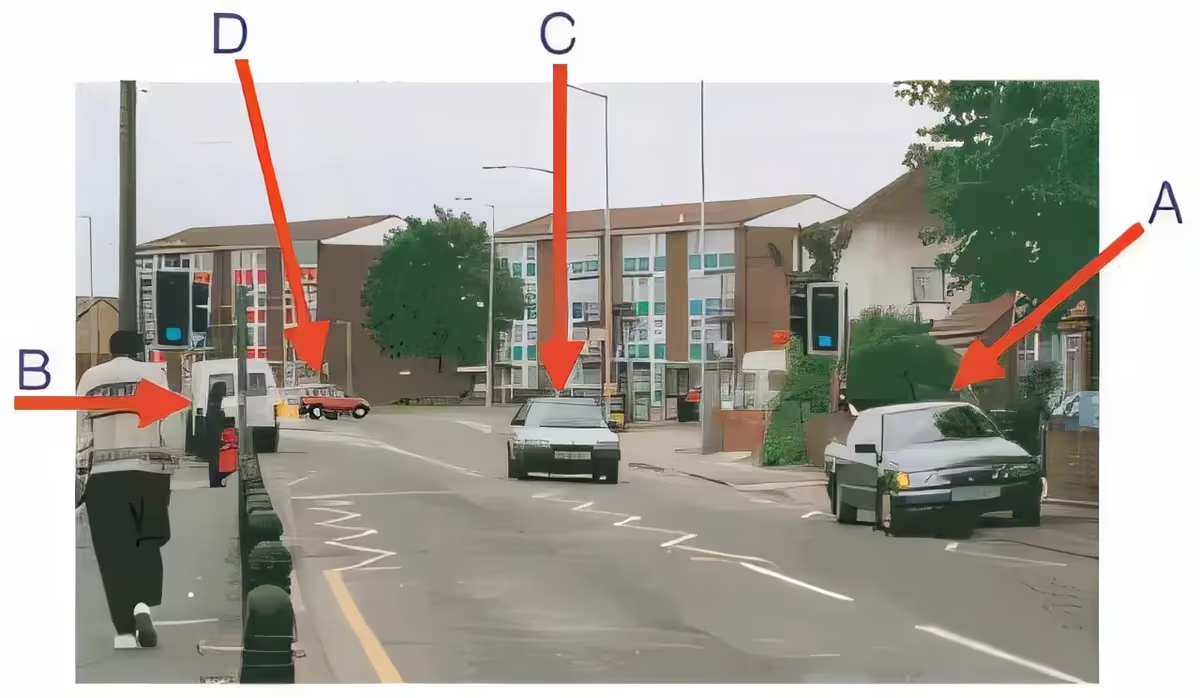
Which road user has caused a hazard?
Explanation
The car arrowed A is parked within the area marked by zigzag lines at the pedestrian crossing. Parking here is illegal. It also