Answer 50 questions, check each correct answer and work through the explanations at your own pace.
Question 1 of 500 correct answers
Question 1 of 50
You're riding in heavy rain. Your rear wheel skids as you accelerate. What must you do to regain control?
Explanation
If you feel your back wheel beginning to skid as you accelerate, ease off the throttle. This will give your rear tyre the chance to grip the road and stop the skid.
Question 2 of 50
What may you need to adjust when you're carrying a heavy load on your motorcycle?
Explanation
Carrying extra weight, such as luggage or a pillion passenger, can affect the feel and handling of your motorcycle. If possible, some items may need to be adjusted to help overcome this. These adjustments include the aim of the headlights, the suspension settings, the tyre pressures and the mirrors.
Question 3 of 50
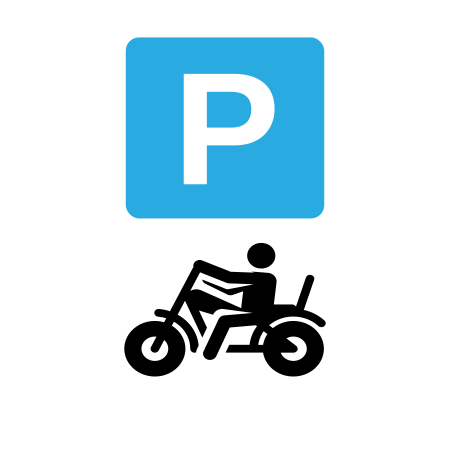
What does this sign mean?
Explanation
In some towns and cities there are special areas reserved for parking motorcycles. Look out for these signs.
Question 4 of 50
What information is found on a vehicle registration document?
Explanation
Every vehicle should have a registration document showing the registered keeper. It's your legal responsibility to make sure all the information is correct. This includes make, model and engine size. If you buy a new vehicle, the dealer will register it with DVLA, who will send the registration document to you.
Question 5 of 50
Which method of fastening your helmet is unsafe?
Explanation
Some helmet straps have a velcro tab in addition to the main fastening, which is intended to secure the strap so that it doesn't flap in the wind. It shouldn't be used on its own to fasten the helmet.
Question 6 of 50
You're riding on a motorway. The car in front switches on its hazard warning lights while it's moving. What does this mean?
Explanation
Drivers and riders may switch on their hazard warning lights to warn following traffic of an obstruction or danger ahead. This only applies on motorways and dual carriageways that are subject to the national speed limit. The hazard warning lights should be turned off again when it's clear the warning has been seen.
Question 7 of 50
What information can be found on a motorcycle's registration document?
Explanation
Every vehicle on the road has a registration document. This records any change of ownership and gives specific information relating to the vehicle and owner. This includes the date of first registration, the registration number, the make and colour of the vehicle, and the registered keeper's name.
Question 8 of 50
Your indicators are difficult to see due to bright sunshine. What should you do to let other road users know your intentions?
Explanation
Arm signals should be used to confirm your intentions when you aren't sure that your indicators can be seen by other road users. Use the signals shown in The Highway Code and return your hand to the handlebars before you turn.
Question 9 of 50
You're riding on an exposed stretch of motorway and there's a strong side wind. When should you take extra care?
Explanation
Beware of side winds when riding on exposed stretches of road. Take extra care when overtaking large vehicles. As you pass them, you may emerge from their shelter into a gust of wind that can suddenly blow you off course. Bear in mind that strong winds can affect the stability of other road users too.
Question 10 of 50
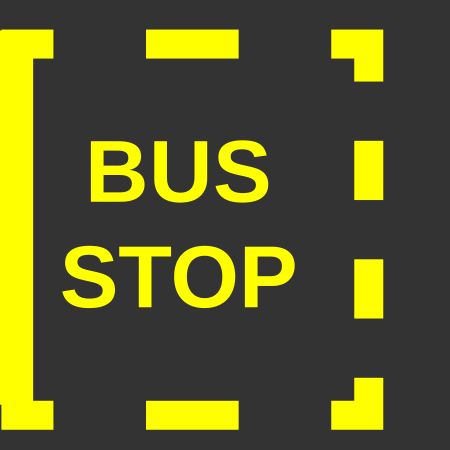
Why should you try to avoid riding over this marked area?
Explanation
Try to anticipate slippery road surfaces. Watch out for oil patches at places where vehicles stop for some time, such as bus stops, lay-bys and busy junctions.
Question 11 of 50
You're turning right at a large roundabout. What should you do before you cross a lane to reach your exit?
Explanation
On busy roundabouts, traffic may be moving very quickly and changing lanes suddenly. You need to be aware of what's happening all around you. Before crossing lanes to the left, make sure you take a lifesaver glance to the left. This gives you time to react if it isn't safe to make the manoeuvre.
Question 12 of 50
What does 'tailgating' mean?
Explanation
'Tailgating' is the term used when a driver or rider follows the vehicle in front too closely. It's dangerous because it restricts their view of the road ahead and leaves no safety margin if the vehicle in front needs to slow down or stop suddenly. Tailgating is often the underlying cause of rear-end collisions or multiple pile-ups.
Question 13 of 50
Why have 'red routes' been introduced in major cities?
Explanation
Inconsiderate parking can obstruct the flow of traffic and so make traffic congestion worse. Red routes are designed to prevent this by enforcing strict parking restrictions. Driving slowly in traffic increases fuel consumption and causes a build-up of exhaust fumes.
Question 14 of 50
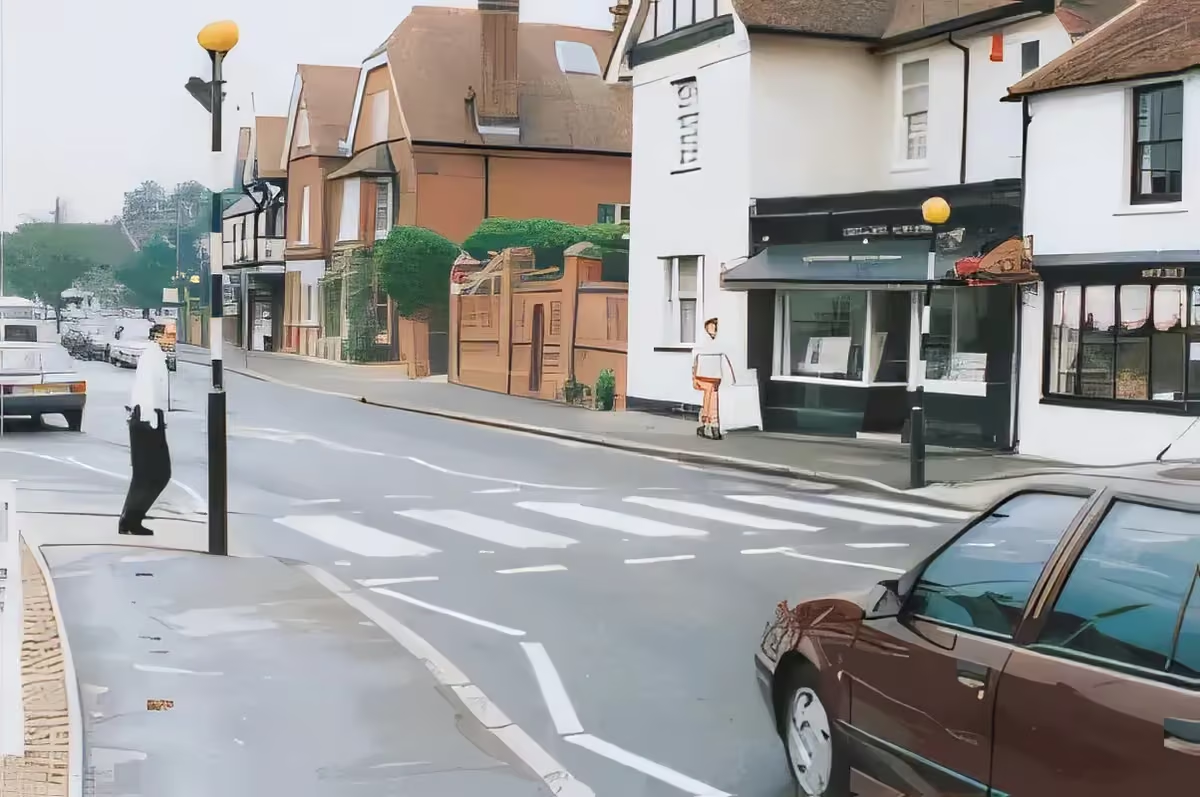
What should the driver of the car approaching the crossing do?
Explanation
Look well ahead to see whether any hazards are developing. This will give you more time to deal with them in the correct way. The man in the picture is clearly intending to cross the road. You should be travelling at a speed that allows you to check your mirror, slow down and stop in good time. You shouldn't have to brake harshly.
Question 15 of 50
How will a school crossing patrol signal you to stop?
Explanation
If a school crossing patrol steps out into the road with a 'stop' sign, you must stop. Don't wave anyone across the road and don't get impatient or rev your engine.
Question 16 of 50
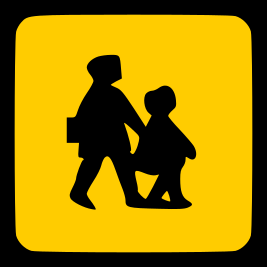
Where would you see this sign?
Explanation
Vehicles that are used to carry children to and from school will be travelling at busy times of the day. If you're following a vehicle with this sign, be prepared for it to make frequent stops. It might pick up or set down passengers in places other than normal bus stops.
Question 17 of 50
You're waiting to emerge left from a minor road. A large vehicle is approaching from the right. You have time to turn, but you should wait. Why?
Explanation
Large vehicles can hide other vehicles that are overtaking, especially motorcycles that may be filtering past queuing traffic. You need to be aware of the possibility of hidden vehicles and not assume that it's safe to emerge.
Question 18 of 50
You see street lights but no speed-limit signs. What will the speed limit usually be?
Explanation
The presence of street lights generally indicates that there's a 30 mph speed limit, unless signs tell you otherwise.
Question 19 of 50
Who can use a toucan crossing?
Explanation
Toucan crossings are similar to pelican crossings but there's no flashing amber phase. Cyclists share the crossing with pedestrians and are allowed to cycle across when the green cycle symbol is shown.
Question 20 of 50
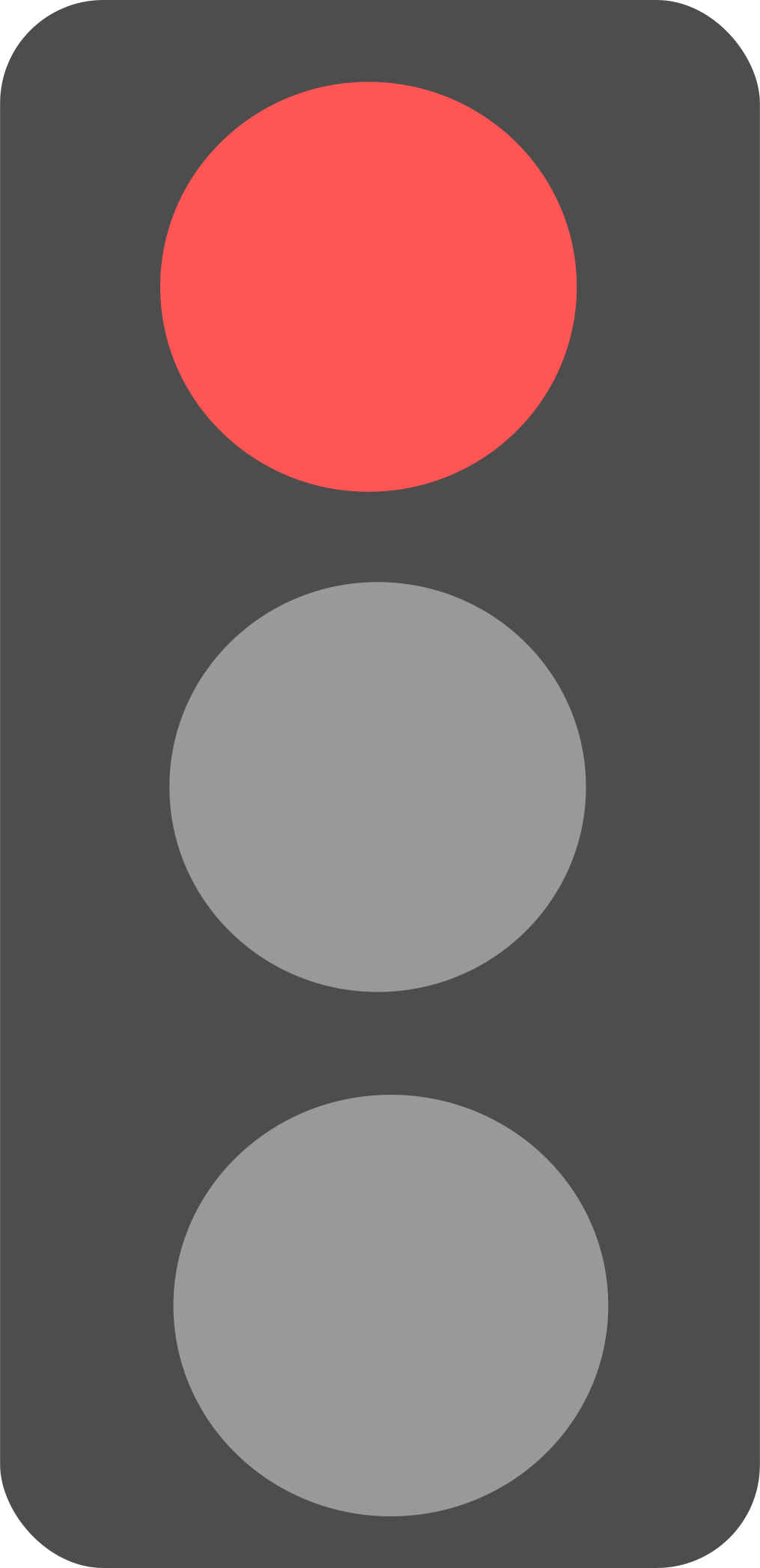
What does a red traffic light mean?
Explanation
Whatever light is showing, you should know which light is going to appear next and be able to take appropriate action. For example, when amber is showing on its own, you'll know that red will appear next. This should give you ample time to anticipate and respond safely.
Question 21 of 50
It's essential that tyre pressures are checked regularly. When should this be done?
Explanation
Check the tyre pressures when the tyres are cold. This will give you a more accurate reading. The heat generated on a long journey will raise the pressure inside the tyre.
Question 22 of 50
You're following two cyclists. They approach a roundabout in the left-hand lane. In which direction should you expect the cyclists to go?
Explanation
Cyclists approaching a roundabout in the left-hand lane may be turning right but may not have been able to get into the correct lane due to heavy traffic. They may also feel safer keeping to the left all the way around the roundabout. Be aware of them and give them plenty of room.
Question 23 of 50
What should you do when you see this sign at a crossroads?
Explanation
When traffic lights are out of order, treat the junction as an unmarked crossroads. Be very careful and be prepared to stop; no-one has priority.
Question 24 of 50
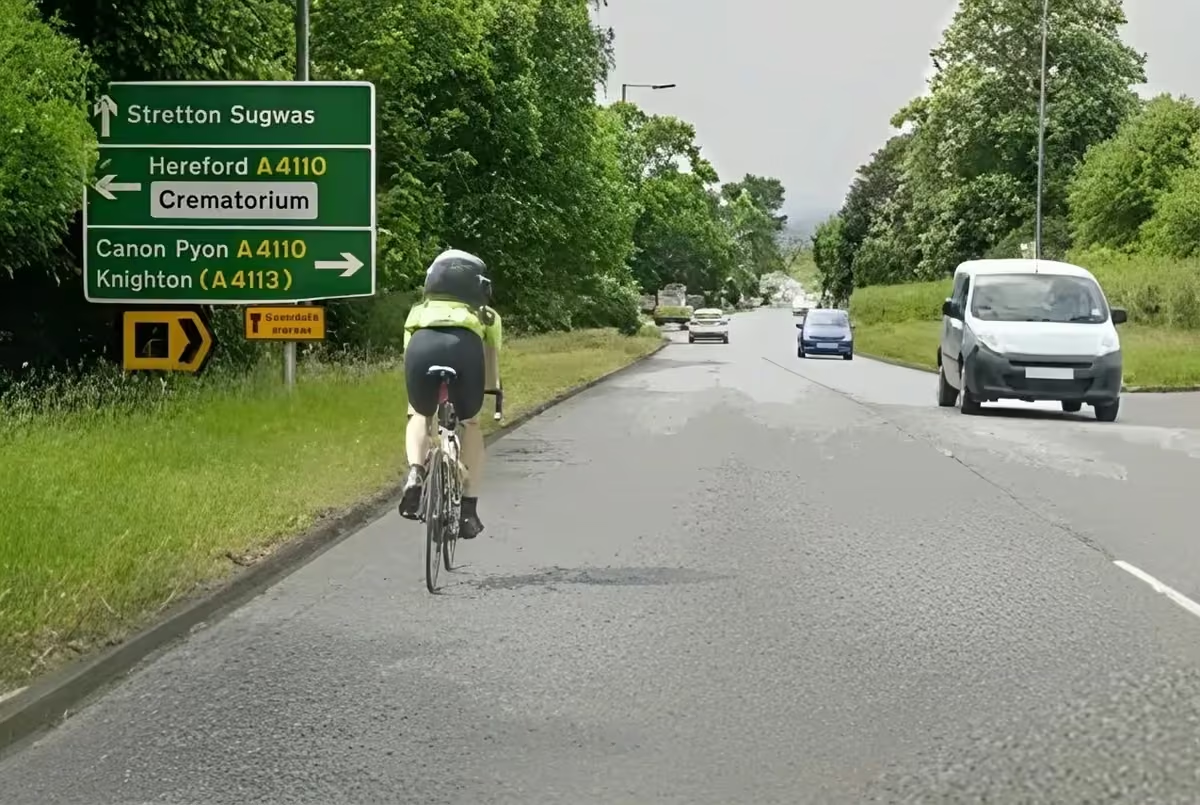
You're following a cyclist. What should you do when you wish to turn left just ahead?
Explanation
Make allowances for cyclists and give them plenty of room. Don't overtake and then immediately turn left. Be patient and turn behind them when they've passed the junction.
Question 25 of 50
You're on a two-lane dual carriageway. Why would you use the right-hand lane?
Explanation
Normally you should travel in the left-hand lane and only use the right-hand lane for overtaking or turning right. Move back into the left lane as soon as it's safe, but don't cut in across the path of the vehicle you've just passed.
Question 26 of 50
At a puffin crossing, which colour follows the green signal?
Explanation
Puffin crossings have infra-red sensors that detect when pedestrians are crossing and hold the red traffic signal until the crossing is clear. The use of a sensor means there's no flashing amber phase as there is with a pelican crossing.
Question 27 of 50
What type of vehicle displays this yellow sign?
Explanation
Buses that carry children to and from school may stop at places other than scheduled bus stops. Be aware that they might pull over at any time to allow children to get on or off. This will normally be when traffic is heavy during rush hour.
Question 28 of 50
You're travelling along a motorway. When are you allowed to overtake on the left?
Explanation
Never overtake on the left unless the traffic is moving in queues and the queue on your right is moving more slowly than the one you're in.
Question 29 of 50
Unless signs show otherwise, what's the national speed limit for a car or motorcycle on a motorway?
Explanation
The national speed limit for a car or motorcycle on a motorway is 70 mph. Lower speed limits may be in force; for example, at roadworks. Variable speed limits also operate in some areas when the motorway is very busy. Cars or motorcycles towing trailers are subject to a lower speed limit.
Question 30 of 50
Who may use toucan crossings?
Explanation
There are some crossings where cycle routes lead cyclists to cross at the same place as pedestrians. These are called toucan crossings. Always look out for cyclists, as they're likely to be approaching faster than pedestrians.
Question 31 of 50
Your vehicle needs a current MOT certificate. What will the MOT certificate enable you to do?
Explanation
If your vehicle is required to have an MOT certificate, you'll need to make sure this is current before you're able to tax your vehicle. You can do this online, by phone or at certain post offices.
Question 32 of 50
There's been a collision. A driver is suffering from shock. What should you do?
Explanation
A casualty suffering from shock may have injuries that aren't immediately obvious. Call the emergency services, then stay with the person in shock, offering reassurance until the experts arrive.
Question 33 of 50
You arrive at the scene of a motorcycle crash. No other vehicle is involved. The rider is unconscious and lying in the middle of the road. What's the first thing you should do at the scene?
Explanation
The motorcyclist is in an extremely vulnerable position, exposed to further danger from traffic. Approaching vehicles need advance warning in order to slow down and safely take avoiding action or stop. Don't put yourself or anyone else at risk. Use the hazard warning lights on your vehicle to alert other road users to the danger.
Question 34 of 50
How should you move off safely from a parked position?
Explanation
Before you move off from the side of the road, you should take a final look over your shoulder to check your blind spot. This will help you to see any road user who isn't visible in your mirrors.
Question 35 of 50
What can you do to prevent a cable-operated clutch from becoming stiff?
Explanation
Keeping the clutch cable oiled will help it to move smoothly through its outer casing. This will extend the life of the cable and help prevent the clutch's operation from becoming stiff.
Question 36 of 50
What can cause your tyres to lose their grip on the road surface and skid?
Explanation
You can cause your motorcycle to skid by heavy braking, as well as excessive acceleration, swerving or changing direction too sharply, and leaning over too far.
Question 37 of 50
Why is it vital for a rider to make a lifesaver check before turning right?
Explanation
The lifesaver glance makes you aware of what's happening behind and alongside you before you alter your course. This glance must be timed so that you still have time to react if it isn't safe to carry out your manoeuvre.
Question 38 of 50
Traction control systems (TCS) are fitted to some motorcycles. What do they help to prevent?
Explanation
TCS helps to prevent the rear wheel from spinning, especially when accelerating on a slippery surface.
Question 39 of 50
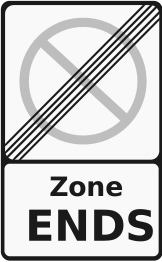
What does this sign mean?
Explanation
Even though you've left the restricted area, make sure that you park where you won't endanger other road users or cause an obstruction.
Question 40 of 50
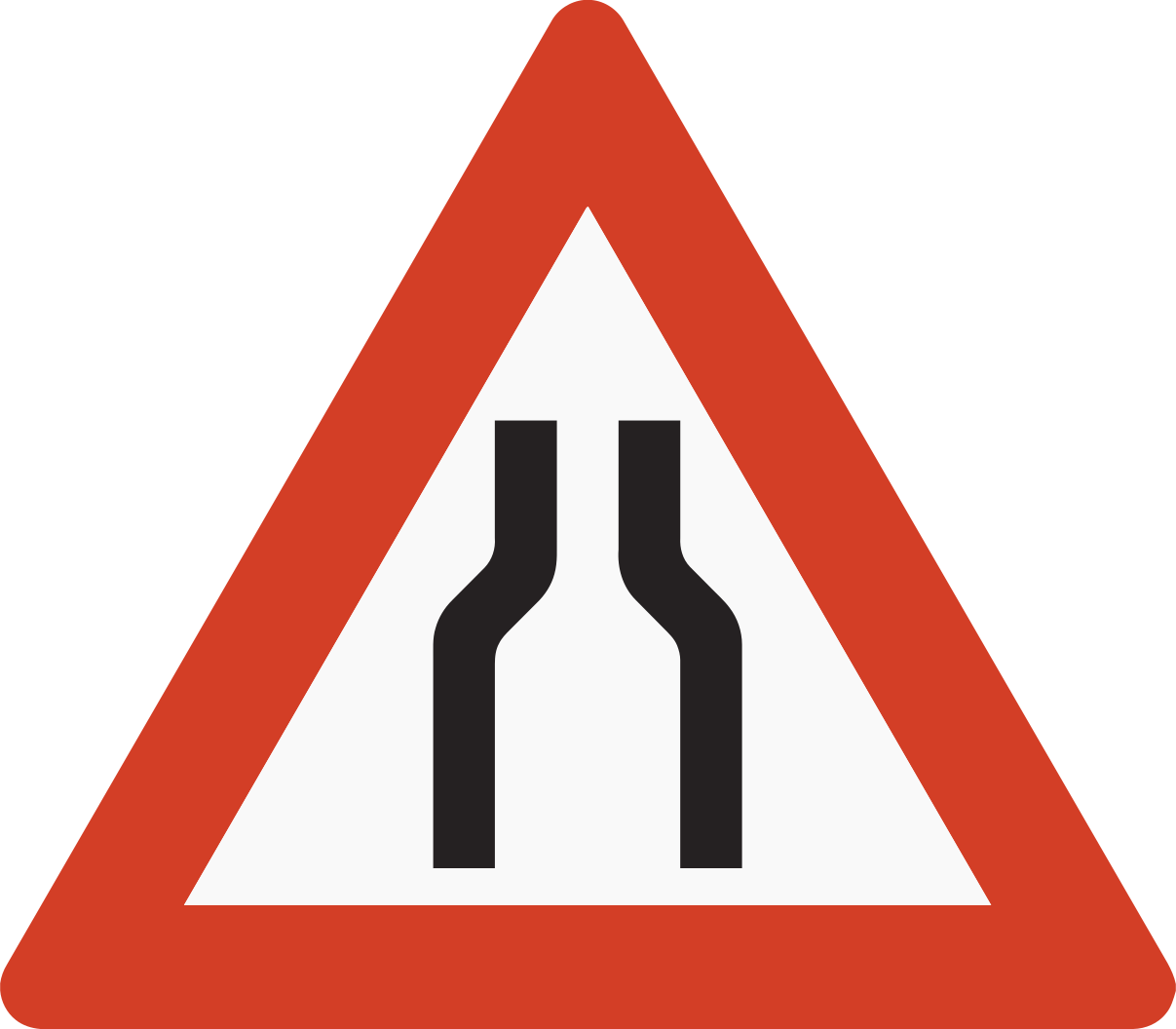
What does this sign mean?
Explanation
Don't wait until the last moment before moving into the left-hand lane. Plan ahead and don't rely on other traffic letting you in.
Question 41 of 50
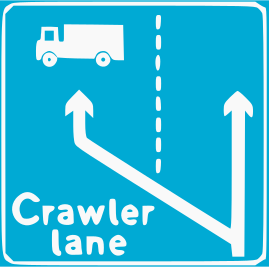
What does this sign mean?
Explanation
Where there's a long, steep, uphill gradient on a motorway, a crawler lane may be provided. This helps the traffic to flow by diverting the slower heavy vehicles into a dedicated lane on the left.
Question 42 of 50
What does this sign mean?
Explanation
You might see this sign where traffic lights are out of order. Proceed with caution, as nobody has priority at the junction.
Question 43 of 50
You're following two cyclists. They approach a roundabout in the left-hand lane. In which direction should you expect the cyclists to go?
Explanation
Cyclists approaching a roundabout in the left-hand lane may be turning right but may not have been able to get into the correct lane due to heavy traffic. They may also feel safer keeping to the left all the way around the roundabout. Be aware of them and give them plenty of room.
Question 44 of 50
You're turning right at a crossroads. An oncoming driver is also turning right. How should you normally deal with this?
Explanation
At crossroads, traffic normally turns offside to offside. This is the safest way to turn, but sometimes the layout or road markings indicate drivers should pass nearside to nearside. Take extra care at these crossroads because, as you turn, your view ahead will be obscured by the oncoming vehicle crossing in front of you.
Question 45 of 50
You've just passed your practical test. You don't hold a full licence in another category. Within two years you get six penalty points on your licence. What will you have to do?
Explanation
If you accumulate six or more penalty points within two years of gaining your first full licence, it will be revoked. The six or more points include any gained due to offences you committed before passing your test. If this happens, you may only drive as a learner until you pass both the theory and practical tests again.
Question 46 of 50
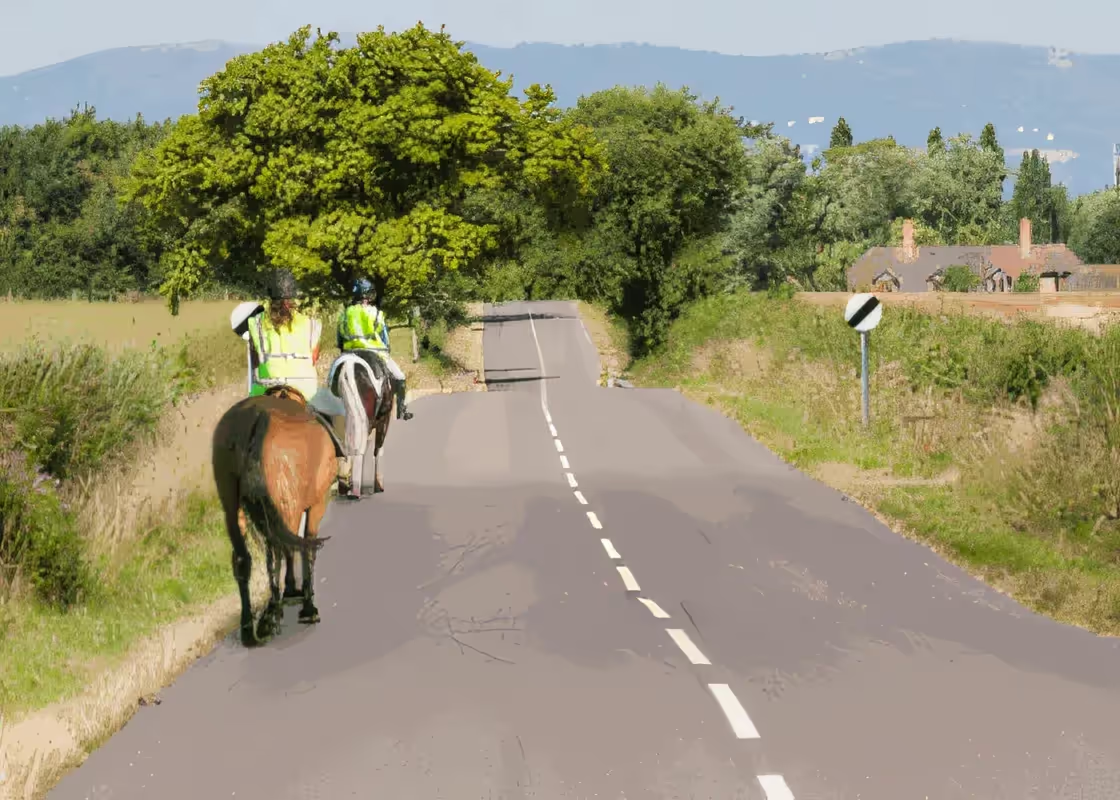
You notice horse riders in front. What should you do first?
Explanation
Be particularly careful when approaching horse riders: slow down and be prepared to stop. Always pass wide and slowly, and look out for signals given by the riders. Horses are unpredictable; always treat them as potential hazards and take great care when passing them.
Question 47 of 50
It can be helpful to plan your route before starting a journey. Why should you also plan an alternative route?
Explanation
It can be frustrating and worrying to find your planned route is blocked by roadworks or diversions. If you've planned an alternative, you'll feel less stressed and more able to concentrate fully on your driving or riding. If your original route is mostly on motorways, it's a good idea to plan an alternative using non-motorway roads. Always carry a map with you just in case you need to refer to it.
Question 48 of 50
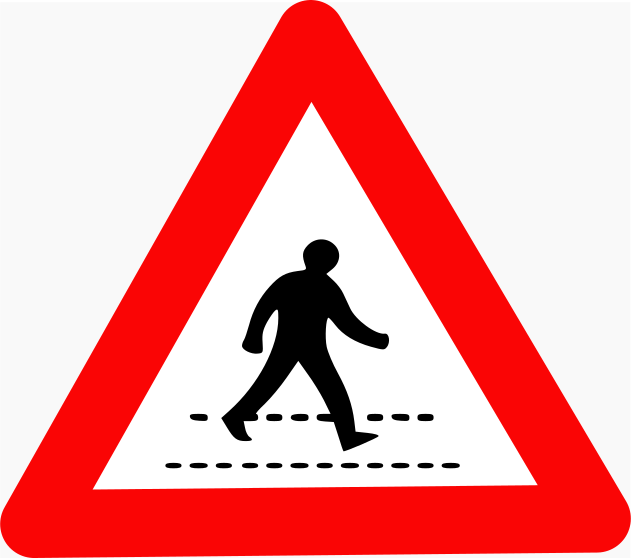
What does this sign mean?
Explanation
Look well ahead and be ready to stop for any pedestrians crossing, or about to cross, the road. Also check the pavements for anyone who looks like they might step or run into the road.
Question 49 of 50
What's the most important reason why you should keep your motorcycle regularly maintained?
Explanation
Whenever you use any motorcycle on the road, it must be in a roadworthy condition. Regular maintenance should identify any faults at an early stage and help prevent more serious problems.
Question 50 of 50
You're riding on a country lane. What should you do if you come across cattle on the road?
Explanation
Try not to startle the animals. They can be easily frightened by noise or by traffic passing too closely. Slow down, give them plenty of room and be prepared to stop if necessary. Obey any directions given by people in charge of the animals.