Answer 50 questions, check each correct answer and work through the explanations at your own pace.
Question 1 of 500 correct answers
Question 1 of 50
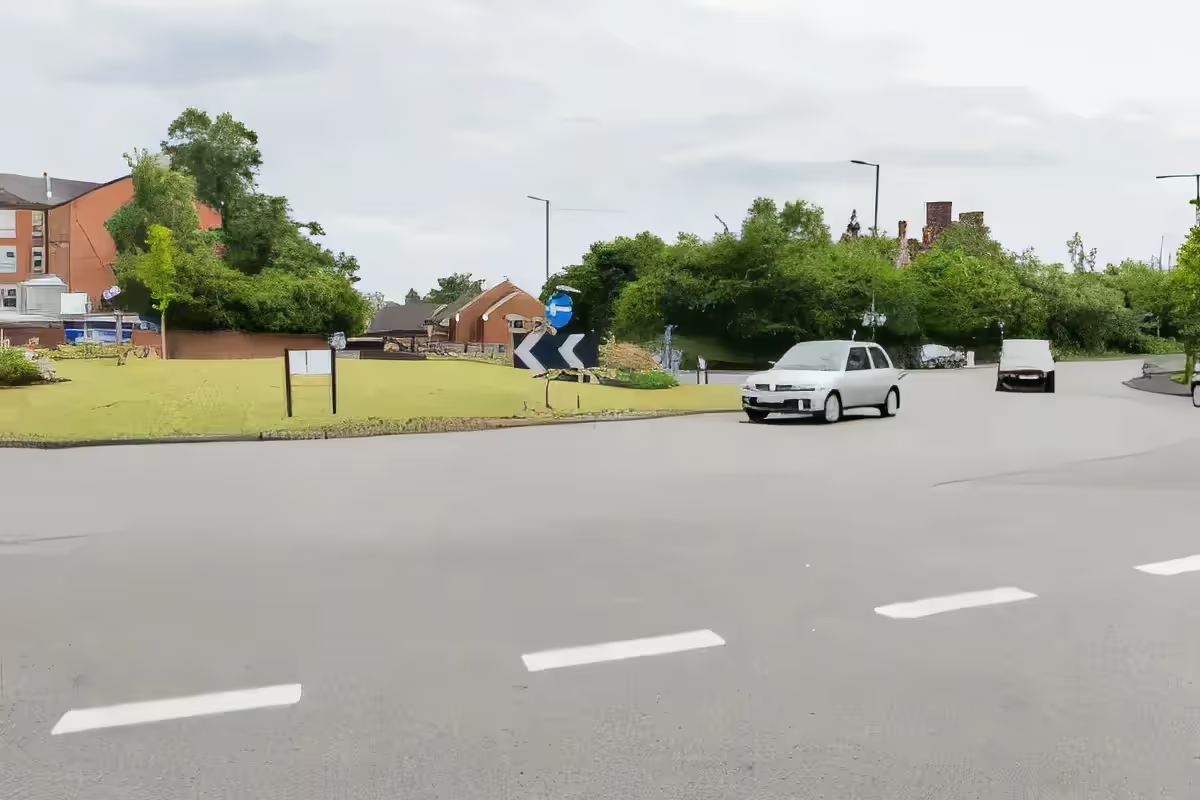
You see this line across the road at the entrance to a roundabout. What does it mean?
Explanation
Slow down as you approach the roundabout and check for traffic from the right. If you need to stop and give way, stay behind the broken line until it's safe to emerge onto the roundabout.
Question 2 of 50
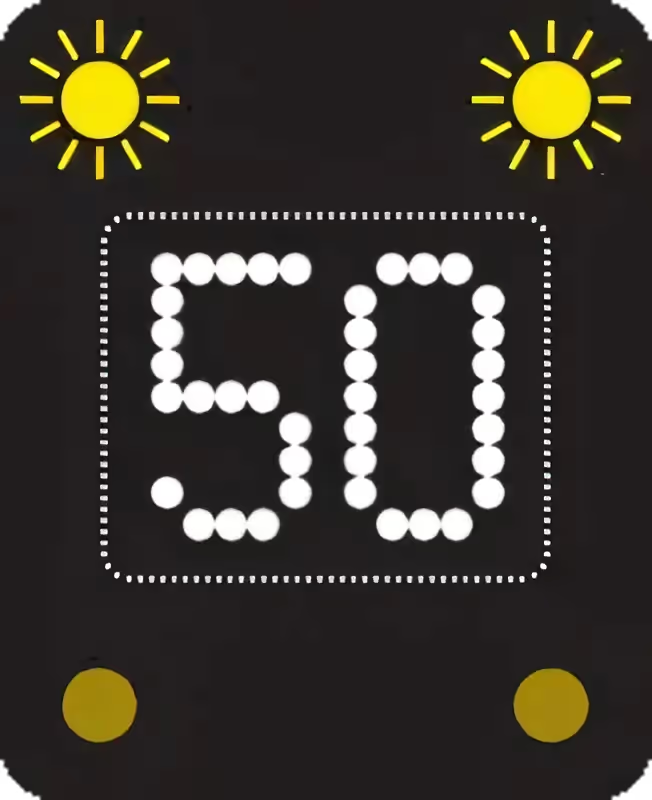
What does this motorway sign mean?
Explanation
Look out for signs above your lane or on the central reservation. These will give you important information or warnings about the road ahead. To allow for the high speed of motorway traffic, these signs may light up some distance from any hazard. Don't ignore the signs just because the road looks clear to you.
Question 3 of 50
You're towing a small trailer on a busy three-lane motorway. What must you do if all the lanes are open?
Explanation
The motorway regulations for towing a trailer state that you mustn't use the right-hand lane of a motorway with three or more lanes.
Question 4 of 50
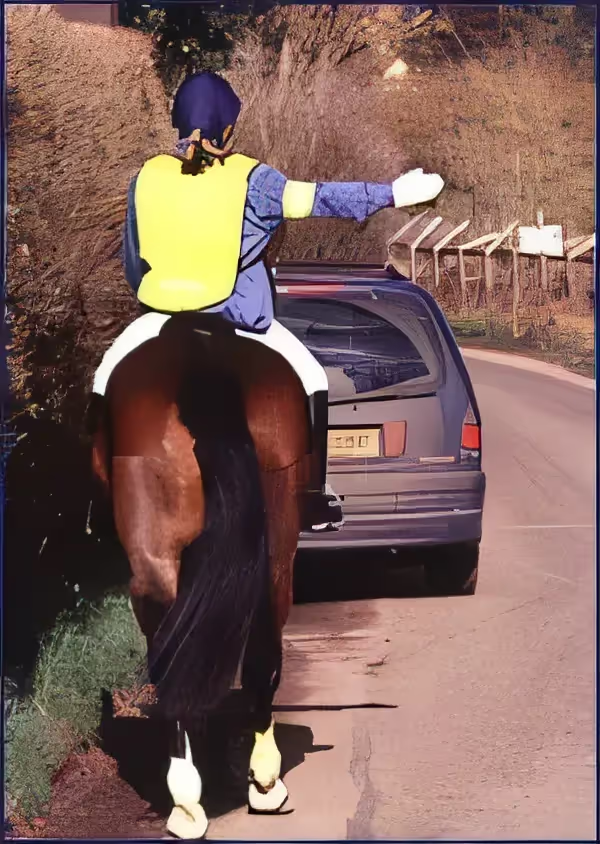
You see a horse rider as you approach a roundabout. What should you do if they're signalling right but keeping well to the left?
Explanation
Allow the horse rider to enter and exit the roundabout in their own time. They may feel safer keeping to the left all the way around the roundabout. Don't get up close behind or alongside them, because that would probably upset the horse and create a dangerous situation.
Question 5 of 50
You're joining a motorway. Why is it important to make full use of the slip road?
Explanation
Try to join the motorway without affecting the progress of the traffic already travelling on it. Always give way to traffic already on the motorway. At busy times you may have to slow down to merge into slow-moving traffic.
Question 6 of 50
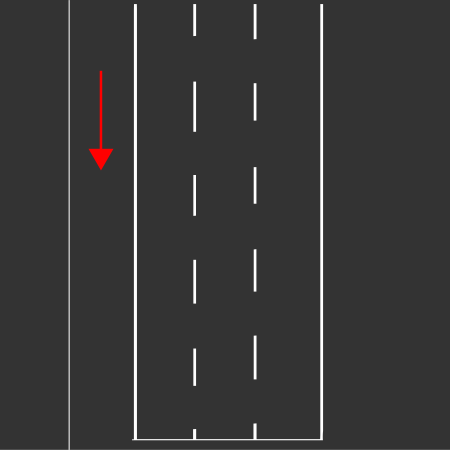
On a three-lane motorway, which lane should you normally use?
Explanation
On a three-lane motorway, you should travel in the left-hand lane unless you're overtaking. This applies regardless of the speed at which you're travelling.
Question 7 of 50
You're on a motorway. Red flashing lights appear above your lane only. What should you do?
Explanation
Flashing red lights above your lane show that your lane is closed. You should move into another lane as soon as you can do so safely.
Question 8 of 50
When will your vehicle use more fuel?
Explanation
Check your tyre pressures frequently - normally once a week. If they're lower than those recommended by the manufacturer, there will be more 'rolling resistance'. The engine will have to work harder to overcome this, leading to increased fuel consumption.
Question 9 of 50
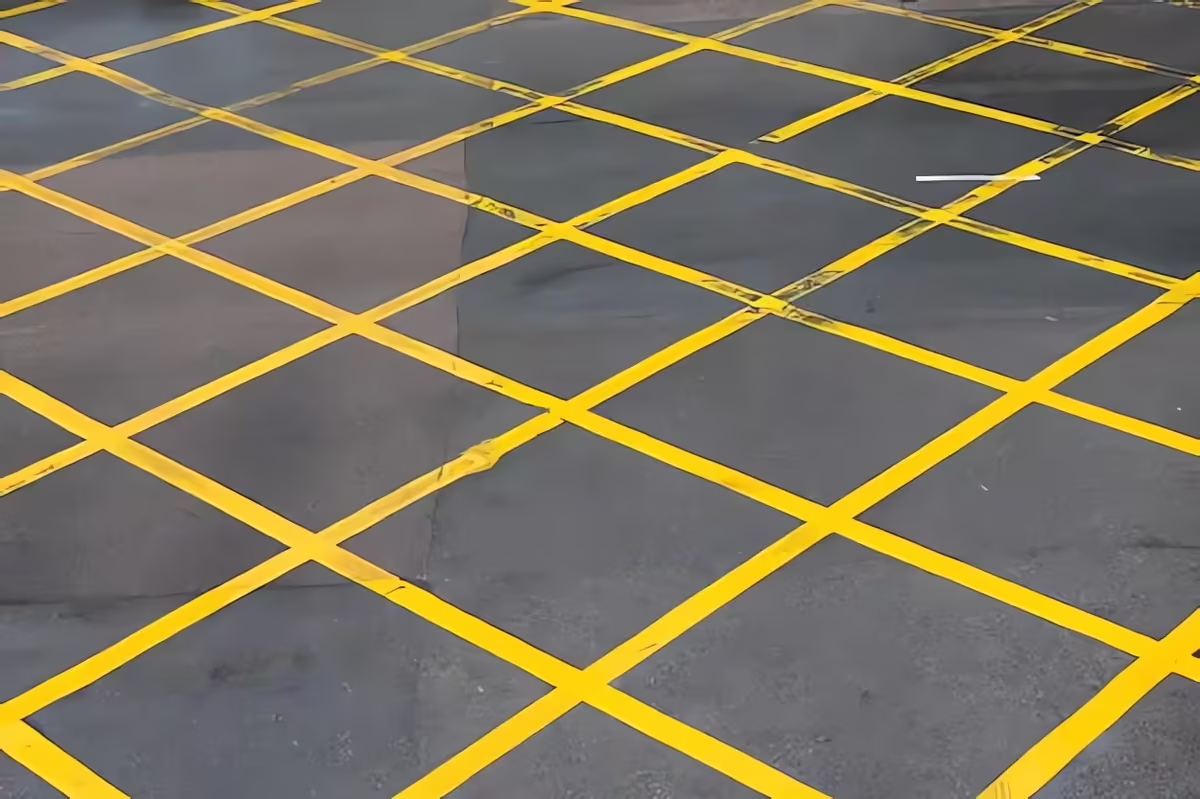
What's the reason for the yellow crisscross lines painted on the road here?
Explanation
Yellow 'box junctions' like this are often used where it's busy. Their purpose is to keep the junction clear for crossing traffic. Don't enter the painted area unless your exit is clear. The one exception is when you're turning right and are only prevented from doing so by oncoming traffic or by other vehicles waiting to turn right.
Question 10 of 50
You've just passed your practical test. You don't hold a full licence in another category. Within two years you get six penalty points on your licence. What will you have to do?
Explanation
If you accumulate six or more penalty points within two years of gaining your first full licence, it will be revoked. The six or more points include any gained due to offences you committed before passing your test. If this happens, you may only drive as a learner until you pass both the theory and practical tests again.
Question 11 of 50
You're going through a congested tunnel and have to stop. What should you do?
Explanation
It's important to keep a safe distance from the vehicle in front at all times. This still applies in congested tunnels, even if you're moving very slowly or have stopped. If the vehicle in front breaks down, you may need room to manoeuvre past it.
Question 12 of 50
How can you reduce the environmental harm caused by your motor vehicle?
Explanation
Engines that burn fossil fuels produce exhaust emissions that are harmful to health. The harder you make the engine work, the more emissions it will produce. Engines also use more fuel and produce higher levels of emissions when they're cold. Anything you can do to reduce your use of fossil fuels will help the environment.
Question 13 of 50
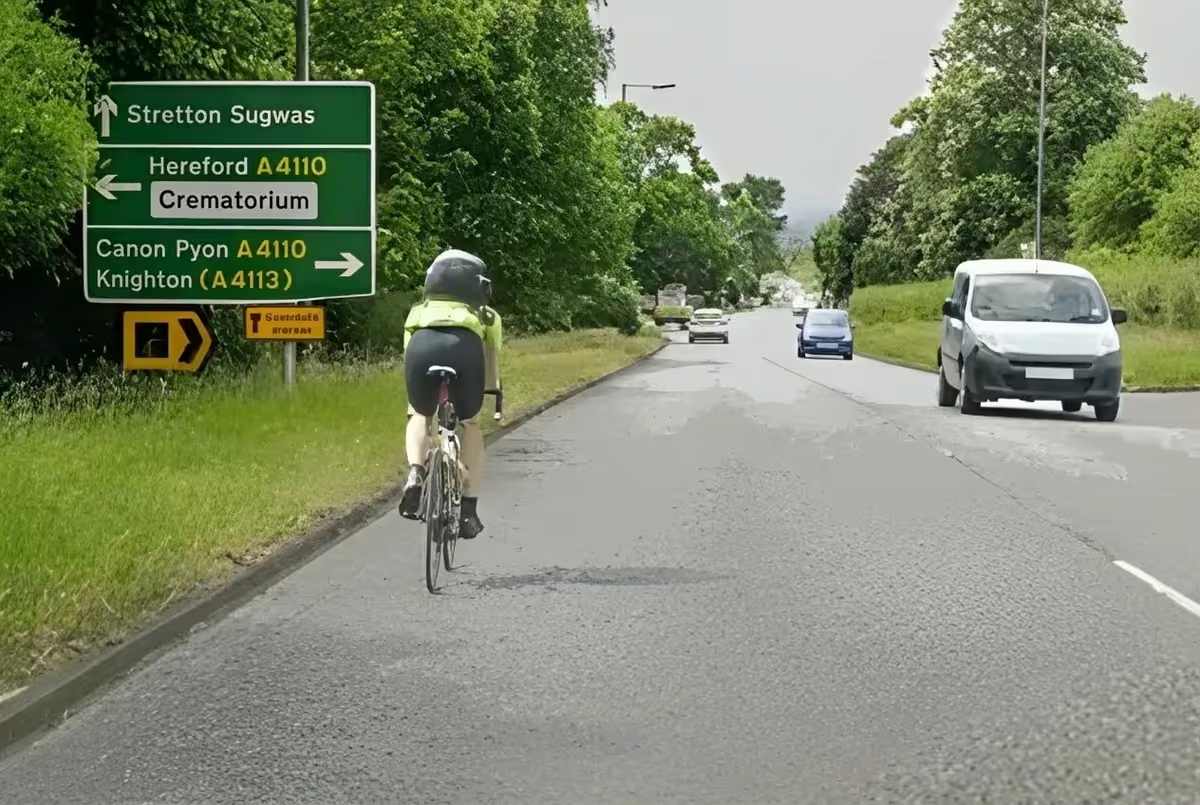
What's the main hazard you should be aware of when following this cyclist?
Explanation
When following a cyclist, be aware that they have to deal with the hazards around them. They may wobble or swerve to avoid a pothole in the road or see a potential hazard and change direction suddenly. Don't follow them too closely or rev your engine impatiently.
Question 14 of 50
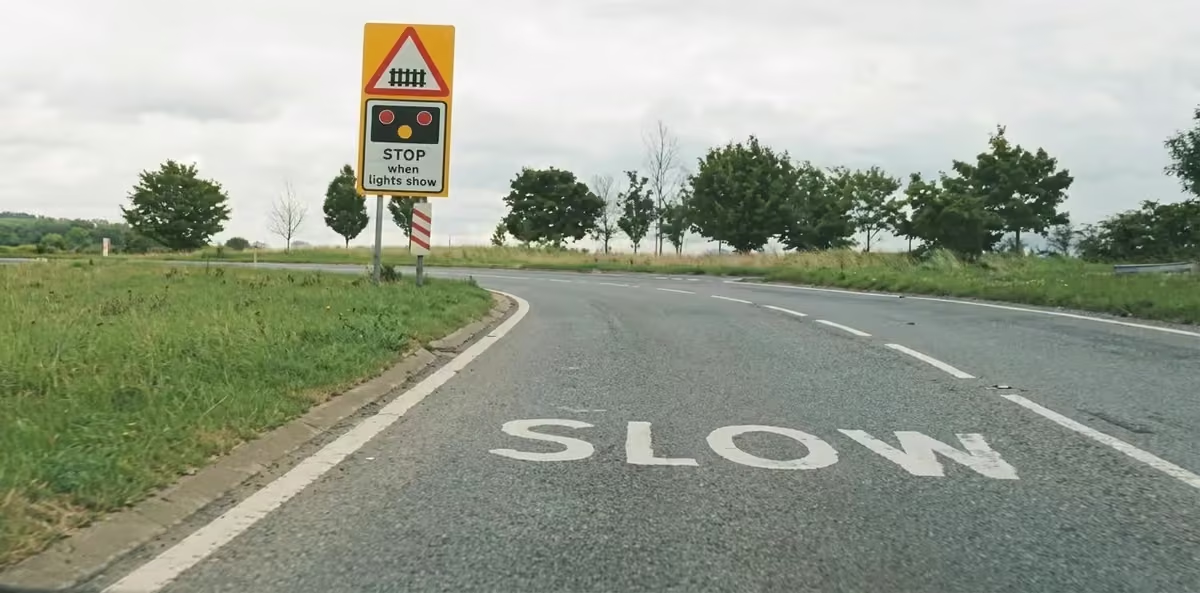
When approaching this hazard, why should you slow down?
Explanation
You should be slowing down and selecting the correct gear in case you have to stop at the level crossing. Look for the signals and be prepared to stop if necessary.
Question 15 of 50
Which of these is least likely to be affected by side winds?
Explanation
Although cars are the least likely to be affected, side winds can take anyone by surprise. This is most likely to happen after overtaking a large vehicle, when passing gaps between hedges or buildings, and on exposed sections of road.
Question 16 of 50
What should you use the hard shoulder of a motorway for?
Explanation
Don't use the hard shoulder for stopping unless it's an emergency. If you want to stop for any other reason, go to the next exit or service station.
Question 17 of 50
At a railway level crossing, the red lights continue to flash after a train has gone by. What should you do?
Explanation
You must always obey red flashing stop lights. If a train passes but the lights continue to flash, another train will be passing soon. Cross only when the lights go off and the barriers open.
Question 18 of 50
The road is wet. Why might a motorcyclist steer round drain covers on a bend?
Explanation
Other drivers or riders may have to change course due to the size or characteristics of their vehicle. Understanding this will help you to anticipate their actions. Motorcyclists and cyclists will be checking the road ahead for uneven or slippery surfaces, especially in wet weather. They may need to move across their lane to avoid surface hazards such as potholes and drain covers.
Question 19 of 50
You're travelling on a motorway in England. You must stop when signalled to do so by which of these?
Explanation
You'll find traffic officers on England's motorways. They work in partnership with the police, helping to keep traffic moving and helping to make your journey as safe as possible. It's an offence not to comply with the directions given by a traffic officer.
Question 20 of 50
You stop on the hard shoulder of a motorway and use the emergency telephone. Where's the best place to wait for help to arrive?
Explanation
When you're on the hard shoulder, you're at risk of being injured by motorway traffic. The safest place to wait is away from the carriageway, but near enough to see the emergency services arriving.
Question 21 of 50
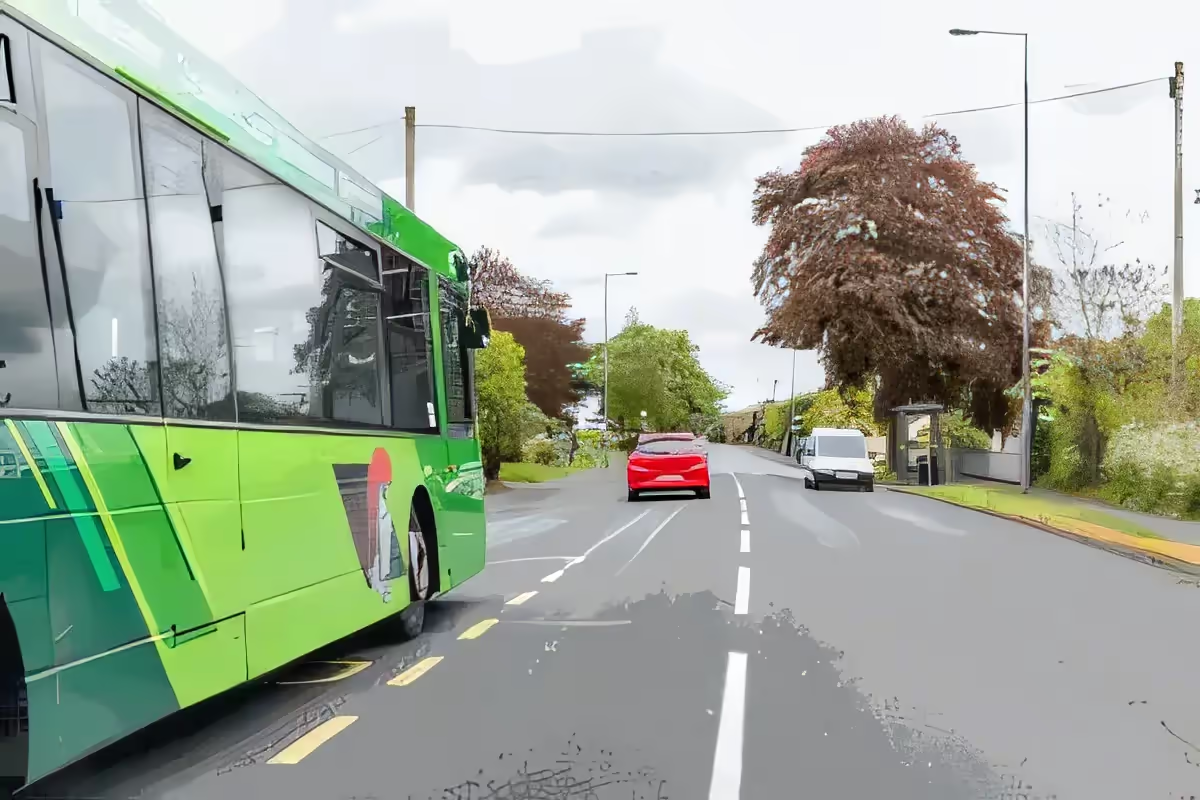
Why should you be cautious when going past this stationary bus?
Explanation
A stationary bus at a bus stop can hide pedestrians who might try to cross the road just in front of it. Drive at a speed that will enable you to respond safely if you have to.
Question 22 of 50
Some junctions controlled by traffic lights have a marked area between two stop lines. What's this for?
Explanation
These are known as advanced stop lines. When the lights are red (or about to become red), you should stop at the first white line. However, if you've crossed that line as the lights change, you must stop at the second line even if it means you're in the area reserved for cyclists.
Question 23 of 50
You're the first to arrive at the scene of a crash. What should you do?
Explanation
At a crash scene you can help in practical ways, even if you aren't trained in first aid. Call the emergency services and make sure you don't put yourself or anyone else in danger. The safest way to warn other traffic is by switching on your hazard warning lights.
Question 24 of 50
You arrive at the scene of a motorcycle crash. The rider is injured. When should their helmet be removed?
Explanation
Don't remove a motorcyclist's helmet unless it's essential. Remember they may be suffering from shock. Don't give them anything to eat or drink, but do reassure them confidently.
Question 25 of 50
At an incident, a casualty is unconscious but breathing. When should you move them?
Explanation
Don't move a casualty unless there's further danger; for example, from other traffic or fire. They may have unseen or internal injuries. Moving them unnecessarily could cause further injury. Don't remove a motorcyclist's helmet unless it's essential.
Question 26 of 50
After a collision, someone is unconscious in their vehicle. When should you call the emergency services?
Explanation
It's important to make sure that the emergency services arrive as soon as possible. When a person is unconscious, they could have serious injuries that aren't immediately obvious.
Question 27 of 50
At night, you see a pedestrian wearing reflective clothing and carrying a bright red light. What does this mean?
Explanation
The people on the walk should be keeping to the left, but don't assume this. Pass carefully, making sure you have time to do so safely. Be aware that the pedestrians have their backs to you and may not know that you're there.
Question 28 of 50
You're following other vehicles in fog. You have your lights on. What else can you do to reduce the chances of being in a collision?
Explanation
When it's foggy, use dipped headlights. This will help you see and be seen by other road users. If visibility is seriously reduced, consider using front and rear fog lights if you have them. Keep to a sensible speed and don't follow the vehicle in front too closely. If the road is wet and slippery, you'll need to allow twice the normal stopping distance.
Question 29 of 50
What will be the effect of wearing brightly coloured clothing while you're riding?
Explanation
For your own safety, you need other road users to see you easily. Wearing brightly coloured or fluorescent clothing will help you to achieve this during daylight. At night, wearing clothing that includes reflective material is the best way of helping others to see you.
Question 30 of 50
What should you do before you start a journey in foggy conditions?
Explanation
It's best to avoid riding in foggy weather. However, if you have to, there are some precautions you can take before setting off to help make your journey as safe as possible. These include checking that all your lights are clean and working, and that your visor is clean.
Question 31 of 50
When should you check the blind spots?
Explanation
The areas that aren't covered by your mirrors are called blind spots. Other vehicles may be hidden in these areas. Before changing lanes, you should make sure it's safe by checking the blind spot on the side you intend to move. This is called a lifesaver check.
Question 32 of 50
You're riding in hot weather. What's the safest type of footwear?
Explanation
It's important to wear good boots when you ride a motorcycle. Boots protect your feet and shins from knocks, and give some protection in a crash. They also help keep you warm and dry in cold or wet weather.
Question 33 of 50
What should you do when riding at night?
Explanation
You need to make yourself as visible as possible - from the front and back, and also from the side. Don't just rely on your headlight and tail light. Wear clothing with reflective material, as this stands out in other vehicles' headlights.
Question 34 of 50
When will your overall stopping distance increase?
Explanation
Extra care should be taken in wet weather. Wet roads will affect the time it takes you to stop: your stopping distance could be as much as doubled.
Question 35 of 50
What should you be sure of before riding anyone else's motorcycle?
Explanation
If you borrow a motorcycle, you must make sure that you're insured to ride it. It's better to find this out for yourself, rather than taking somebody else's word for it.
Question 36 of 50
You're approaching a red light at a puffin crossing. Pedestrians are on the crossing. When will your red light change?
Explanation
An electronic device will automatically detect when the pedestrians have reached a safe position. Don't move forward until the green light shows and you've checked that it's safe to proceed.
Question 37 of 50
Your motorcycle is insured third-party only. What does this cover?
Explanation
Third-party insurance is usually cheaper than comprehensive insurance. It covers injuries to other people and damage to their property, but it doesn't cover any damage to your own motorcycle or property. Nor does it provide cover if your motorcycle is stolen.
Question 38 of 50
What's the purpose of an MOT test?
Explanation
It's your responsibility to make sure that any motorcycle you ride is in a roadworthy condition. Any faults that develop should be corrected promptly. If your motorcycle fails an MOT test, it shouldn't be used on the road unless you're taking it to have the faults repaired or for a previously arranged retest.
Question 39 of 50
What should you check when you fit a sidecar to your motorcycle?
Explanation
If the sidecar isn't correctly aligned with the mounting points, the outfit will be difficult to control and could be dangerous. Riding with a sidecar attached requires a different technique from riding a solo motorcycle. You should keep your speed down while learning this skill.
Question 40 of 50
When should you especially check the engine oil level?
Explanation
As well as the oil, you'll need to check other items. These include fuel, water and tyres.
Question 41 of 50
You have a sidecar fitted to your motorcycle. What effect will it have?
Explanation
A sidecar will alter the handling considerably. Give yourself time to adjust to the different characteristics and allow a greater stopping distance.
Question 42 of 50
The road is wet. You're passing a line of queuing traffic and riding on the painted road markings. What should you take particular care in doing?
Explanation
When they're wet, painted road markings can be more slippery than the normal road surface. Other road-surface hazards that become slippery when wet include drain covers, leaves and mud. Take extra care when braking or cornering on these wet surfaces.
Question 43 of 50
You're about to overtake a group of horse riders. What's most likely to scare the horses?
Explanation
When passing horses, allow them plenty of space and slow down. Animals can be frightened by sudden or loud noises, so don't sound your horn or rev your engine.
Question 44 of 50
What must you have to legally carry a pillion passenger on your motorcycle?
Explanation
As a learner motorcyclist, you aren't allowed to carry a pillion passenger, even if they hold a full motorcycle licence. You mustn't carry a passenger, or tow a trailer, until you've passed your test.
Question 45 of 50
You see an incident on the other side of the motorway. What should you do?
Explanation
Always concentrate on the road ahead. Try not to be distracted by an incident on the other side of the road. Many motorway collisions occur due to traffic slowing down because drivers are looking at something on the other side of the road.
Question 46 of 50
Which vehicle will use a blue flashing beacon?
Explanation
Emergency vehicles use blue flashing lights. If you see or hear one, move out of its way as soon as it's safe and legal to do so.
Question 47 of 50
Why will a motorcyclist look round over their right shoulder just before turning right?
Explanation
When you see a motorcyclist take a glance over their shoulder, they're probably about to change direction. Recognising a clue like this helps you to anticipate their next action. This can improve road safety for you and others.
Question 48 of 50
When may you overtake another vehicle on the left?
Explanation
You may pass slower vehicles on their left while travelling along a one-way street. Be aware of drivers who may need to change lanes and may not expect faster traffic passing on their left.
Question 49 of 50
What should you do when you're overtaking at night?
Explanation
Don't overtake if there's a possibility of a road junction, bend or brow of a bridge or hill ahead. There are many hazards that are difficult to see in the dark. Only overtake if you're certain that the road ahead is clear. Don't take a chance.
Question 50 of 50
What's the meaning of this sign?
Explanation
This sign doesn't tell you the speed limit in figures. You should know the speed limit for the type of road that you're on and the type of vehicle that you're driving. Study your copy of The Highway Code.