Question 1 of 50
Which person's signal to stop must you obey?
Explanation
You must obey signals to stop given by police and traffic officers, traffic wardens and school crossing patrols. Failure to do so is an offence and could lead to prosecution.
Free practice test
Answer 50 questions, check each correct answer and work through the explanations at your own pace.
Question 1 of 50
Explanation
You must obey signals to stop given by police and traffic officers, traffic wardens and school crossing patrols. Failure to do so is an offence and could lead to prosecution.
Question 2 of 50
Explanation
By standing on the pavement, the pedestrian is showing an intention to cross. By looking well ahead, you'll give yourself time to see the pedestrian, check your mirrors and respond safely.
Question 3 of 50
Explanation
This light allows pedestrians already on the crossing to get to the other side in their own time, without being rushed. Don't rev your engine or start to move off while they're still crossing.
Question 4 of 50
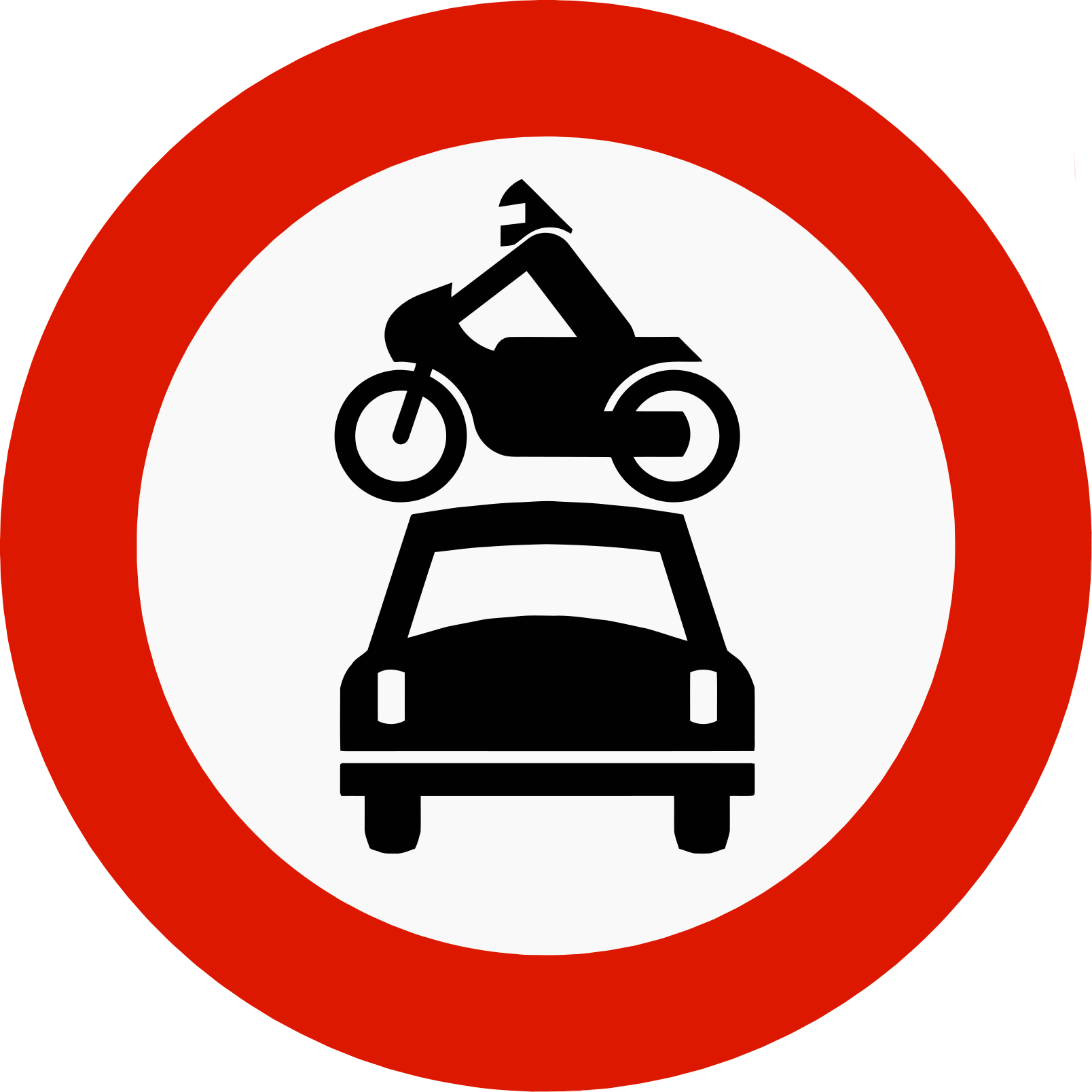
Explanation
A sign will indicate which types of vehicles are prohibited from certain roads. Make sure that you know which signs apply to the vehicle you're using.
Question 5 of 50
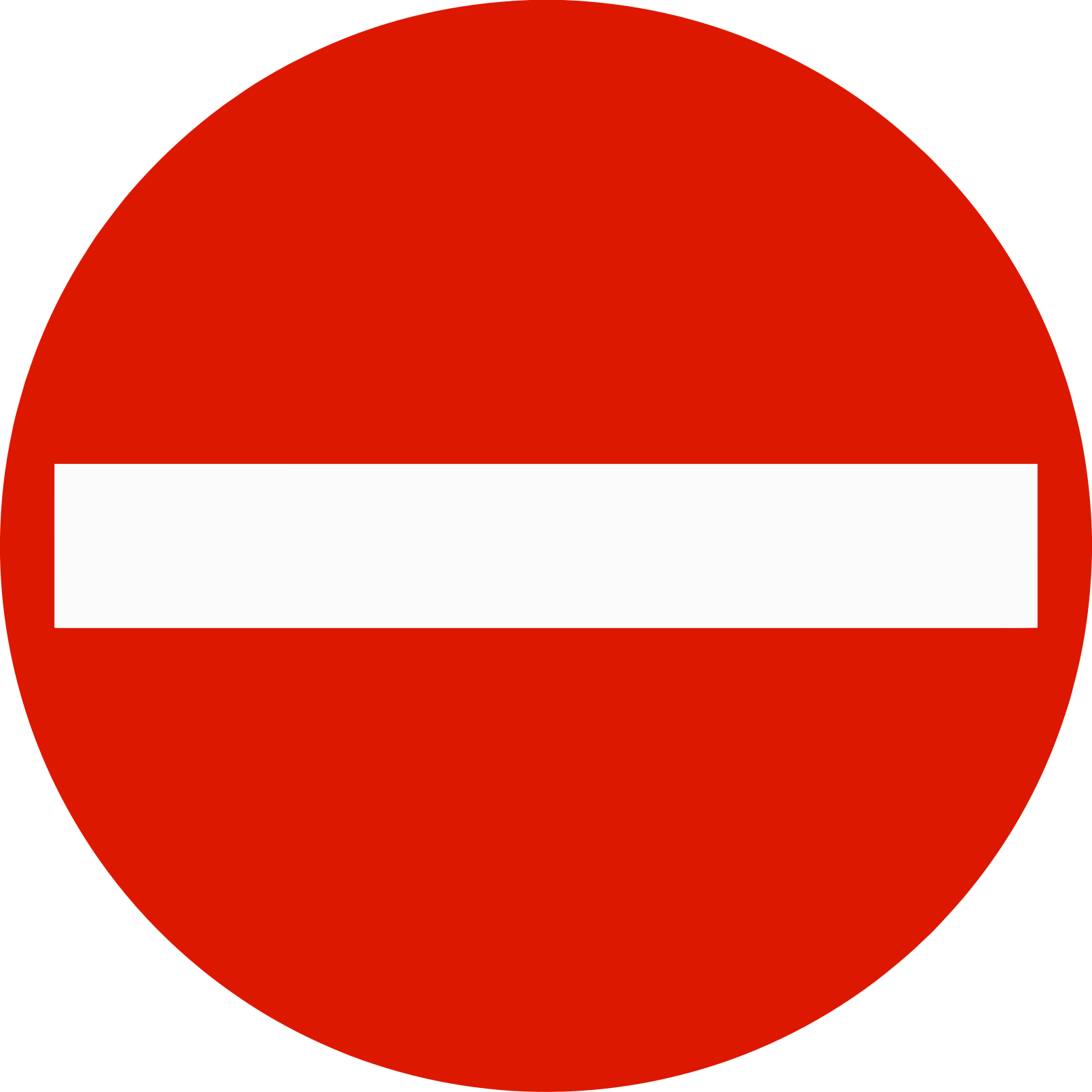
Explanation
No entry' signs are used in places such as one-way streets to prevent vehicles driving against the traffic. To ignore one would be dangerous, both for yourself and for other road users, as well as being against the law.
Question 6 of 50
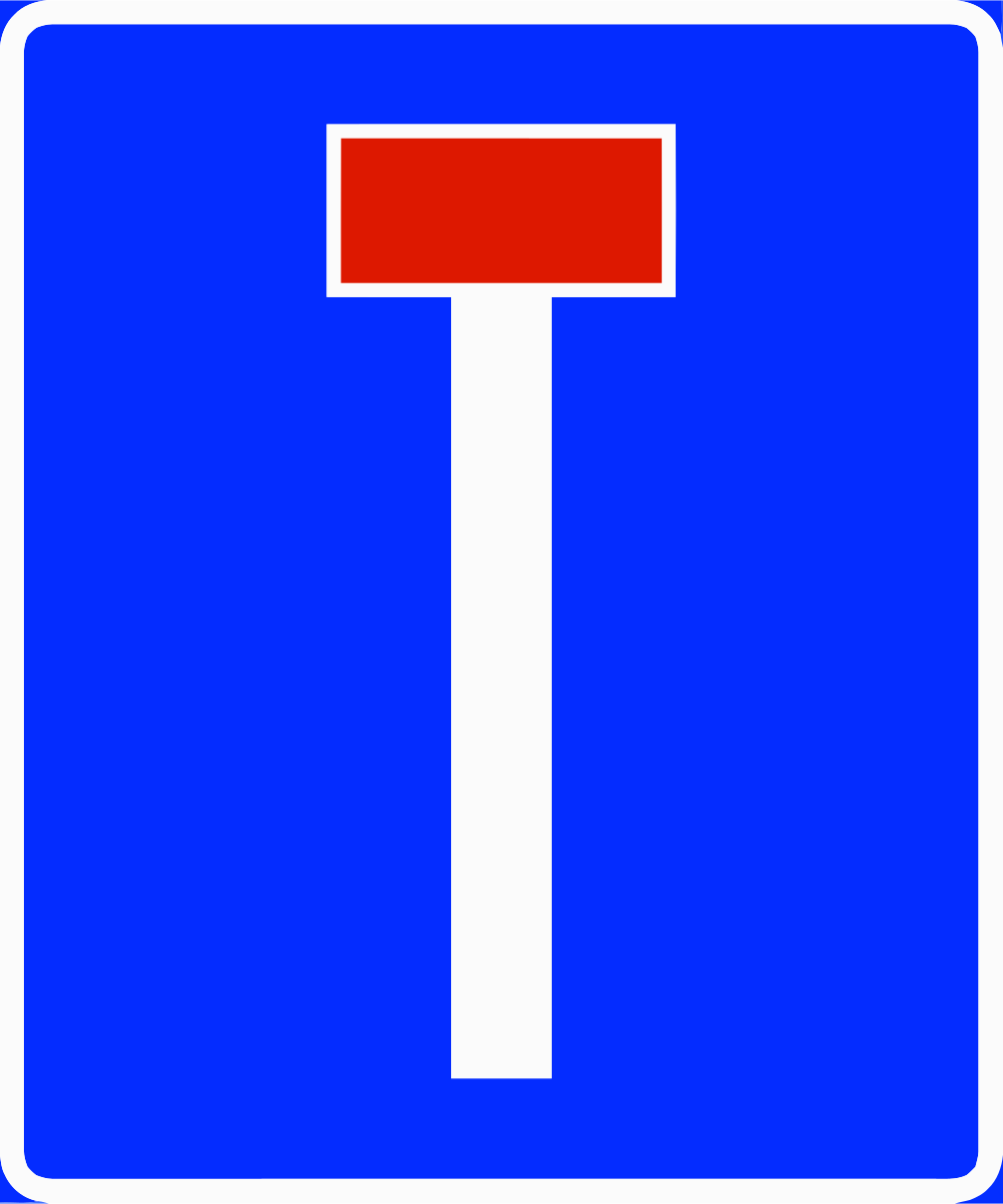
Explanation
You won't be able to find a through route to another road. Use this road only for access.
Question 7 of 50
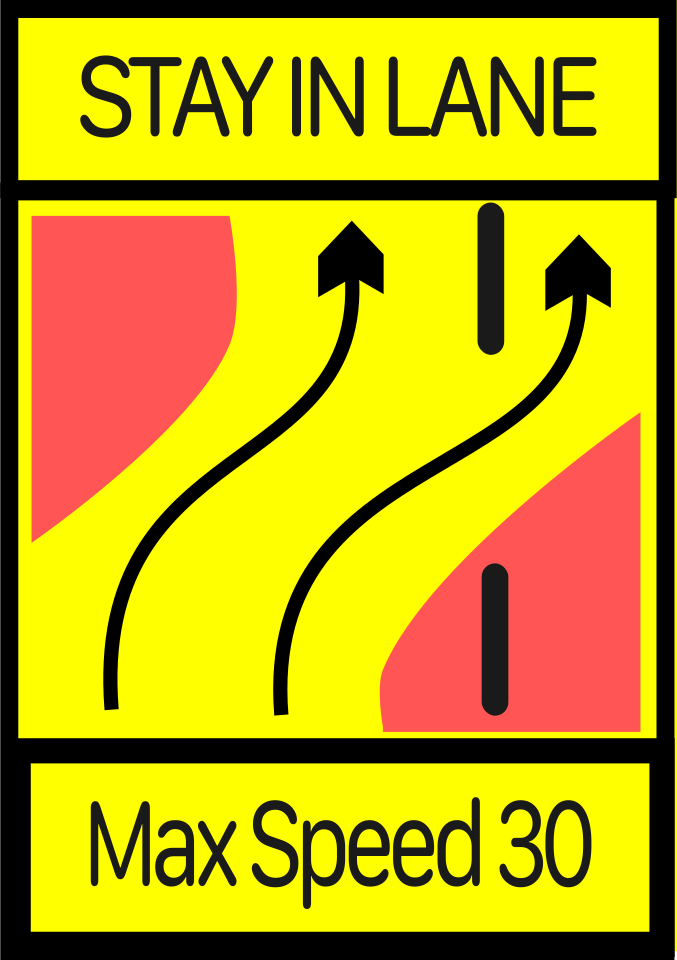
Explanation
If you use the right-hand lane in a contraflow system, you'll be travelling with no permanent barrier between you and the oncoming traffic. Observe speed limits and keep a good distance from the vehicle ahead.
Question 8 of 50
Explanation
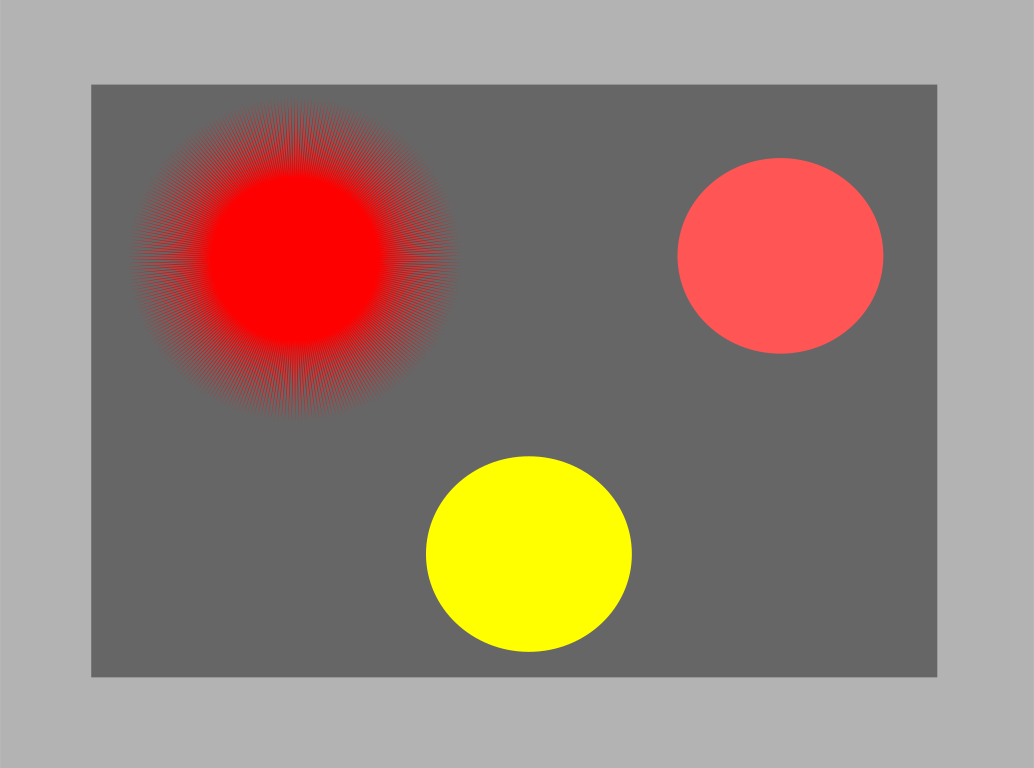
These signals are found at level crossings, swing or lifting bridges, some airfields and emergency access sites. The flashing red lights mean stop whether or not the way seems to be clear.
Question 9 of 50
Explanation
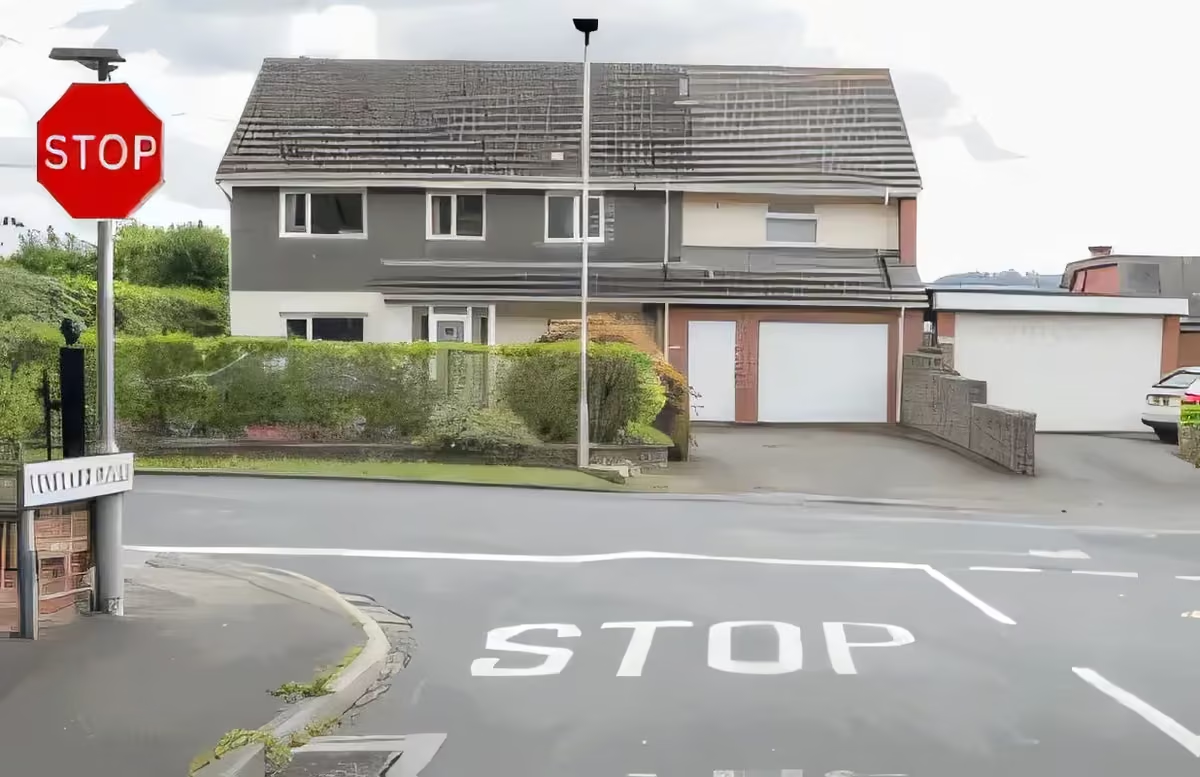
If your view at a road junction is restricted, you must stop. There may also be a 'stop' sign. Don't emerge until you're sure no traffic is approaching. If you don't know, don't go.
Question 10 of 50

Explanation
Temporary restrictions on motorways are shown on signs that have flashing amber lights. At the end of the restriction, you'll see this sign without any flashing lights.
Question 11 of 50
Explanation
On a quiet country road, always be aware that there may be a hazard just around the next bend, such as a slow-moving vehicle or pedestrians. Pedestrians are advised to walk on the right-hand side of the road if there's no pavement, so they may be walking towards you on your side of the road.
Question 12 of 50
Explanation
Practise good observation in all directions before you emerge or make a turn. Proceed only when you're sure it's safe to do so.
Question 13 of 50
Explanation
You mustn't use hazard warning lights while moving, except to warn traffic behind when you slow suddenly on a motorway or unrestricted dual carriageway. Never use hazard warning lights to excuse dangerous or illegal parking.
Question 14 of 50
Explanation
It may be tempting to park where you shouldn't while you run a quick errand. Careless parking is a selfish act and could endanger other road users. It's important not to park at or near a bus stop, as this could inconvenience passengers and may put them at risk as they get on or off the bus.
Question 15 of 50
Explanation
Be cautious, especially when your view is restricted by hedges, bushes, walls, large vehicles, etc. In the summer months, these junctions can become more difficult to deal with, because growing foliage may further obscure your view.
Question 16 of 50
Explanation
You should never overtake as you approach a junction. If a vehicle emerged from the junction while you were overtaking, a dangerous situation could develop very quickly.
Question 17 of 50
Explanation
Collisions often happen at roadworks. Be aware of the speed limits, slow down in good time and keep your distance from the vehicle in front.
Question 18 of 50
Explanation
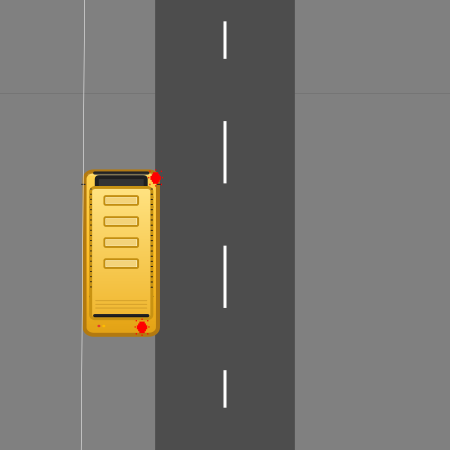
Try to give way to buses if you can do so safely, especially when the driver signals to pull away from a bus stop. Look out for people getting off the bus or running to catch it, because they may cross the road without looking. Don't accelerate to get past the bus, and don't flash your lights, as this could mislead other road users.
Question 19 of 50
Explanation
Various route planners are available on the internet. Most of them give you several options, allowing you to choose between the most direct route and quieter roads. They may also identify rest and fuel stops. Print off the directions and take them with you.
Question 20 of 50
Explanation
It can be frustrating and worrying to find your planned route is blocked by roadworks or diversions. If you've planned an alternative, you'll feel less stressed and more able to concentrate fully on your driving or riding. If your original route is mostly on motorways, it's a good idea to plan an alternative using non-motorway roads. Always carry a map with you just in case you need to refer to it.
Question 21 of 50
Explanation
Always allow plenty of time for your journey in case of unforeseen problems. Anything can happen; for example, punctures, breakdowns, road closures, diversions and delays. You'll feel less stressed and less inclined to take risks if you aren't 'pushed for time'.
Question 22 of 50
Explanation
Using the controls smoothly can reduce fuel consumption by about 15%, as well as reducing wear and tear on your vehicle. Plan ahead and anticipate changes of speed well in advance. This will reduce the need to accelerate rapidly or brake sharply.
Question 23 of 50
Explanation
Some powered wheelchairs and mobility scooters are designed for use on the pavement only and cannot exceed 4 mph (6 km/h). Others can go on the road as well, and this category cannot exceed 8 mph (12 km/h). Take great care around these vehicles. They're extremely vulnerable because of their low speed and small size.
Question 24 of 50
Explanation
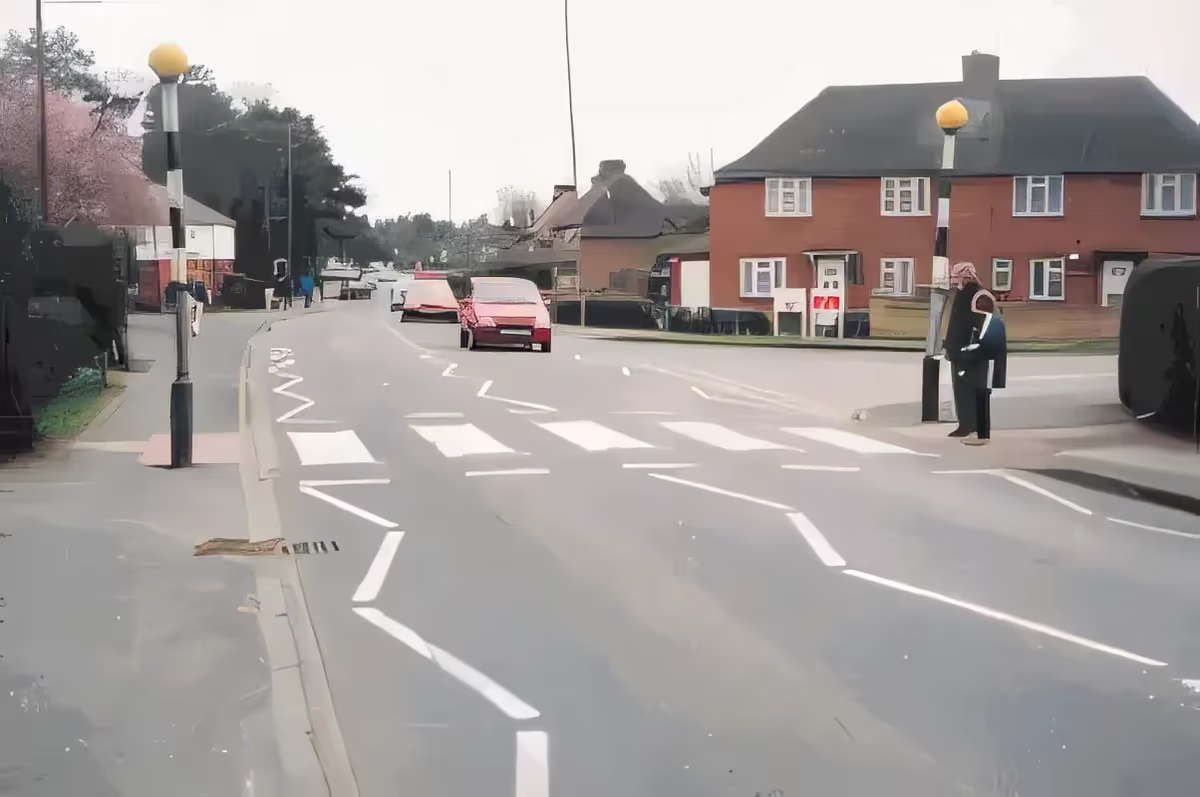
Be courteous and prepare to stop. Don't wave people across, because this could be dangerous if another vehicle is approaching the crossing.
Question 25 of 50
Explanation
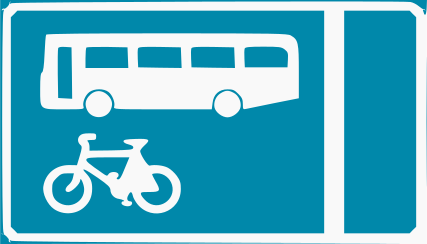
Buses and cycles can travel in this lane. In this example, they'll flow in the same direction as other traffic. If it's busy, they may be passing you on the left, so watch out for them. Times on the sign will show the lane's hours of operation; if no times are shown, or there's no sign at all, this means the lane is in operation 24 hours a day. In some areas, other vehicles, such as taxis and motorcycles, are allowed to use bus lanes. The sign will show if this is the case.
Question 26 of 50

Explanation
In a one-way system, traffic may pass you on either side. Always be aware of all traffic signs and understand their meaning. Look well ahead and react to them in good time.
Question 27 of 50
Explanation
As you approach a zebra crossing, look out for people waiting to cross and be ready to stop. Some pedestrians may be a little slow to understand that it's safe to cross, so give them time. Be patient and don't rev your engine or surge forward before the crossing is clear.
Question 28 of 50
Explanation
Don't ride in snowy or icy conditions unless your journey is essential. If you must go out, try to keep to main roads, which are more likely to be treated and clear.
Question 29 of 50
Explanation
If you follow a large vehicle too closely, your view beyond it will be restricted. Drop back. This will help you to see more of the road ahead. It will also help the driver of the large vehicle to see you in their mirrors and will give you a safe separation distance if the lorry needs to stop suddenly.
Question 30 of 50
Explanation
To keep control of your motorcycle and prevent skidding, you should plan well ahead and avoid late, harsh braking. Try to avoid braking while changing direction, as the tyres may not have enough grip to cope with both together. Always consider how the road and weather conditions may affect your tyres' grip.
Question 31 of 50
Explanation
When you're riding a motorcycle, it's very important to ride where other road users can see you. In normal weather, you should ride in the centre of your lane. This will help you avoid uneven road surfaces in the gutter, and allow others to overtake on the right if they wish.
Question 32 of 50
Explanation
If the oil-pressure warning light comes on when the engine is running, pull over as soon as you can, stop the engine and investigate the cause; if you don't, you risk serious engine damage.
Question 33 of 50
Explanation
If there's other traffic on the road at night, use your headlights on dipped beam. Only switch to main beam when you won't dazzle other road users. At night, don't wear tinted glasses or contact lenses, or use a tinted visor, because these make it more difficult to see the road ahead.
Question 34 of 50
Explanation
A badly maintained engine will emit more exhaust fumes than one that's correctly serviced. This is damaging to the environment. The engine will also use more fuel.
Question 35 of 50
Explanation
You'll see the first advance direction sign one mile from a motorway exit. If you're travelling at 60 mph, you'll only have about 50 seconds before you reach the countdown markers. There'll be another sign at the half-mile point. Move to the left-hand lane in good time. Don't cut across traffic at the last moment and don't risk missing your exit.
Question 36 of 50
Explanation
Have information about your motorcycle and the number of the phone you're using ready before you call from an emergency telephone. For your own safety, face the traffic during the call.
Question 37 of 50
Explanation
As well as making your motorcycle difficult to control, the leaking oil could find its way onto your tyres and brakes. This could result in a loss of control, putting you and other road users in danger.
Question 38 of 50
Explanation
A cut in the sidewall can be very dangerous. The tyre is in danger of blowing out if you ride the motorcycle in this condition.
Question 39 of 50
Explanation
Riding while under the influence of drink or drugs can invalidate your insurance. It also endangers yourself and others. The risk isn't worth taking.
Question 40 of 50
Explanation
Always check that you've cancelled your indicators after turning. Failing to cancel your indicators could lead to a serious or even fatal collision. Other road users might pull out in front of you if they think you're going to turn off before you reach them.
Question 41 of 50
Explanation
Take care if you're carrying a heavy load on your motorcycle. Try to carry the weight as low down as possible - ideally in panniers, with the weight evenly spread on each side. You may need to adjust your tyre pressures, your headlight aim and your rear shock-absorber preload setting.
Question 42 of 50
Explanation
There are areas behind and to either side of you that aren't visible in your mirrors. These are known as blind spots. Just before turning or changing direction, you should look around to check that there's nothing hazardous in the blind spot. This check is known as a 'lifesaver'.
Question 43 of 50
Explanation
Check your mirrors before slowing down or stopping, as there could be vehicles close behind you. If necessary, turn and look behind before stopping.
Question 44 of 50
Explanation
Braking too hard will cause a skid. Release the brakes immediately to allow the wheels to turn, then reapply them as firmly as the road surface and conditions will allow.
Question 45 of 50
Explanation
Riders of motorcycles with an engine smaller than 50 cc aren't allowed to use motorways, due to their restricted speed. They may cause a hazard - both for the rider and for drivers of other vehicles.
Question 46 of 50
Explanation
Carrying a heavy weight high up and at the very back of the motorcycle can cause problems in maintaining control, particularly when riding at speed. If you have heavy items to carry, it's better to carry them in panniers and keep the weight roughly the same on either side.
Question 47 of 50
Explanation
At night, you should wear clothing with reflective material to help other road users to see you. If your jacket doesn't have reflective patches, you could wear garments that do, such as a reflective vest or armbands.
Question 48 of 50
Explanation
If people are waiting to use a pedestrian crossing, slow down and be prepared to stop. Don't wave them across the road, because another driver may not have seen them, may not have seen your signal, and may not be able to stop safely.
Question 49 of 50
Explanation
Pull over in a place where the ambulance can pass safely. Check that there are no bollards or obstructions in the road that will prevent it from passing.
Question 50 of 50
Explanation
Your horn mustn't be used between 11.30 pm and 7 am in a built-up area or when you're stationary, unless a moving vehicle poses a danger. Its function is to alert other road users to your presence.
Practice test complete
This practice score is not an official DVSA theory-test result.