Answer 50 questions, check each correct answer and work through the explanations at your own pace.
Question 1 of 500 correct answers
Question 1 of 50
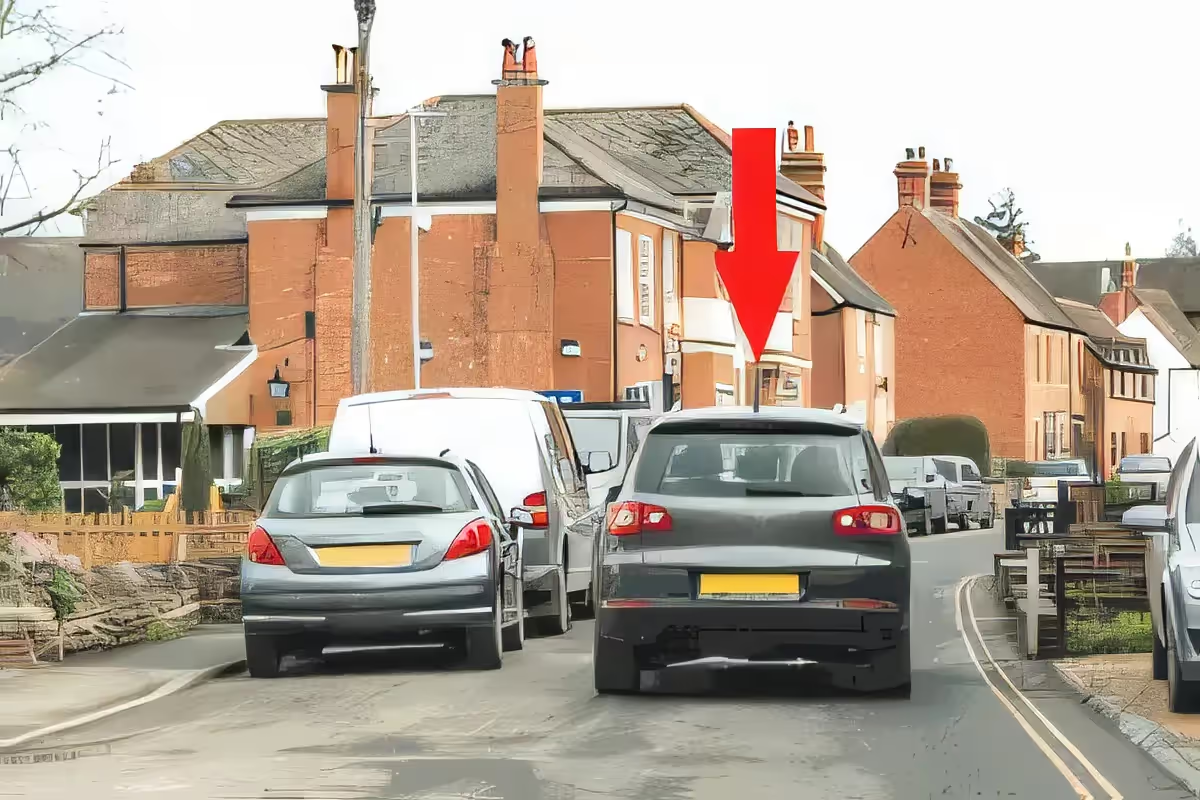
What should the driver of the grey car (arrowed) be especially aware of?
Explanation
When passing parked cars, there's a risk that a driver or passenger may not check before opening the door into the road. A defensive driver will drive slowly and be looking for people who may be about to get out of their car.
Question 2 of 50
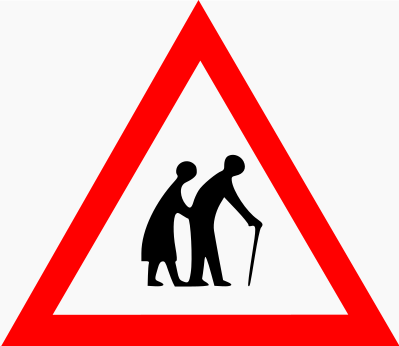
What action would you take when elderly people are crossing the road?
Explanation
Be aware that older people might take a long time to cross the road. They might also be hard of hearing and not hear you approaching. Don't hurry older people across the road by getting too close to them or revving your engine.
Question 3 of 50
Before overtaking a large vehicle, you should keep well back. Why is this?
Explanation
When following a large vehicle, keep well back. If you're too close, you won't be able to see the road ahead and the driver of the long vehicle might not be able to see you in their mirrors.
Question 4 of 50
What's the national speed limit for cars and motorcycles on a dual carriageway?
Explanation
Make sure that you know the speed limit for the road that you're on. The speed limit on a dual carriageway or motorway is 70 mph for cars and motorcycles, unless signs indicate otherwise. The speed limits for different types of vehicle are listed in The Highway Code.
Question 5 of 50
When can you park on the right-hand side of a road at night?
Explanation
Red rear reflectors show up when headlights shine on them. These are useful when you're parked at night, but they'll only reflect if you park in the same direction as the traffic flow. Normally you should park on the left, but in a one-way street you may also park on the right-hand side.
Question 6 of 50
Which vehicle might have to take a different course from normal at roundabouts?
Explanation
A long vehicle may have to straddle lanes either on or approaching a roundabout so that the rear wheels don't hit the kerb. If you're following a long vehicle, stay well back and give it plenty of room.
Question 7 of 50
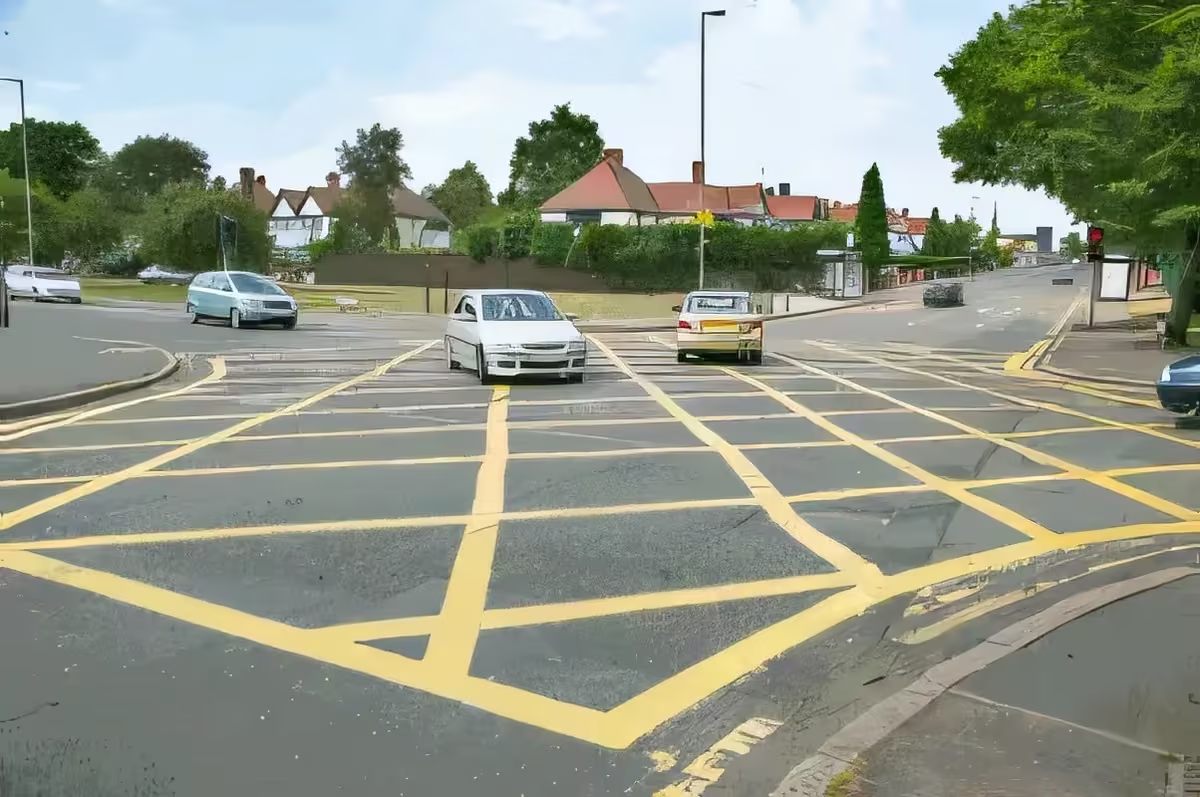
On which occasion may you enter a box junction?
Explanation
Yellow box junctions are marked on the road to prevent the road becoming blocked. Don't enter the box unless your exit road is clear. You may wait in the box if you want to turn right and your exit road is clear but oncoming traffic or other vehicles waiting to turn right are preventing you from making the turn.
Question 8 of 50
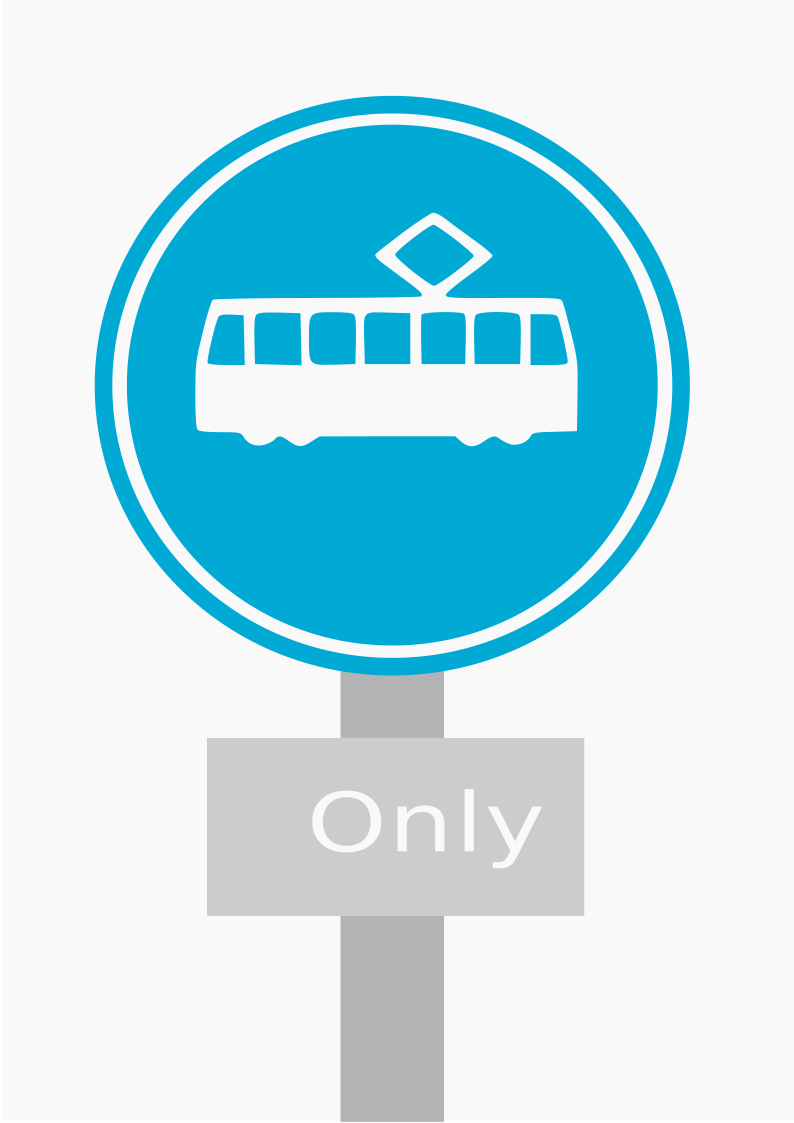
What does this sign mean?
Explanation
Avoid blocking tram routes. Trams are fixed on their route and can't manoeuvre around other vehicles or pedestrians. Modern trams travel quickly and are quiet, so you might not hear them approaching.
Question 9 of 50
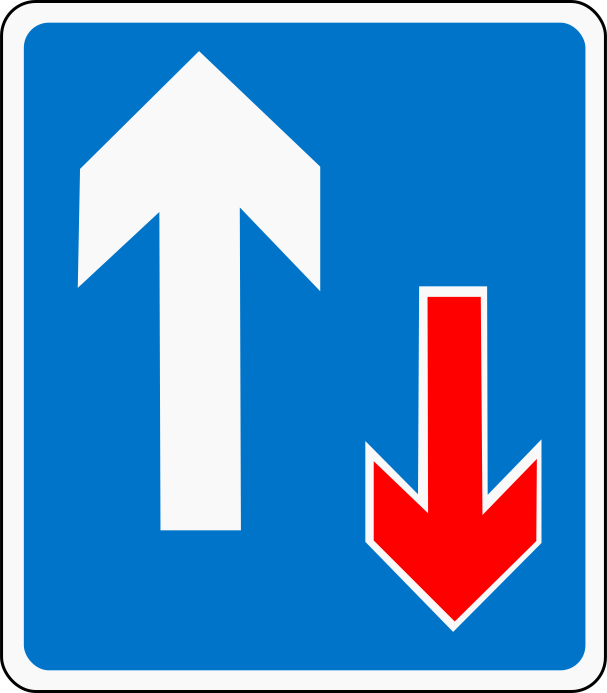
What does this traffic sign mean?
Explanation
Don't force your way through. Show courtesy and consideration to other road users. Although you have priority, make sure oncoming traffic is going to give way before you continue.
Question 10 of 50
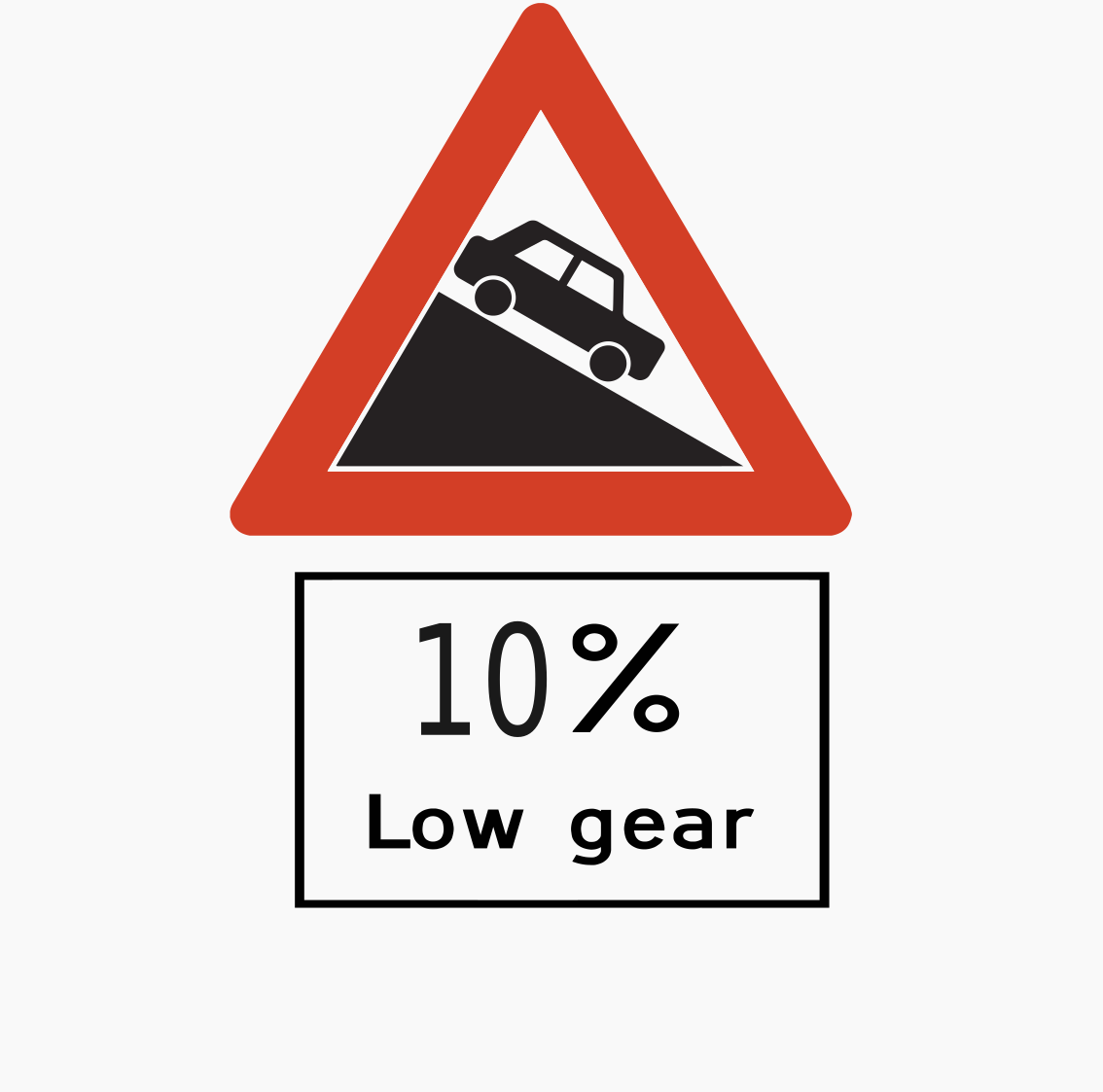
What does this sign mean?
Explanation
This sign gives you an early warning that the road ahead will slope downhill. Prepare to alter your speed and gear. Looking at the sign from left to right will show you whether the road slopes uphill or downhill.
Question 11 of 50
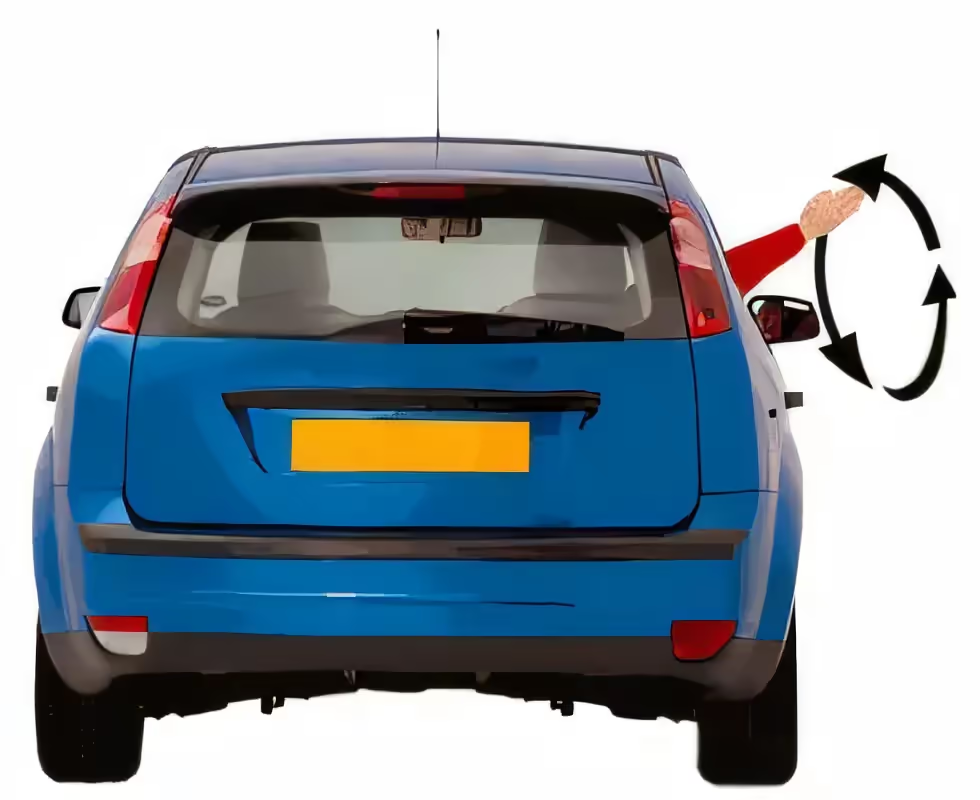
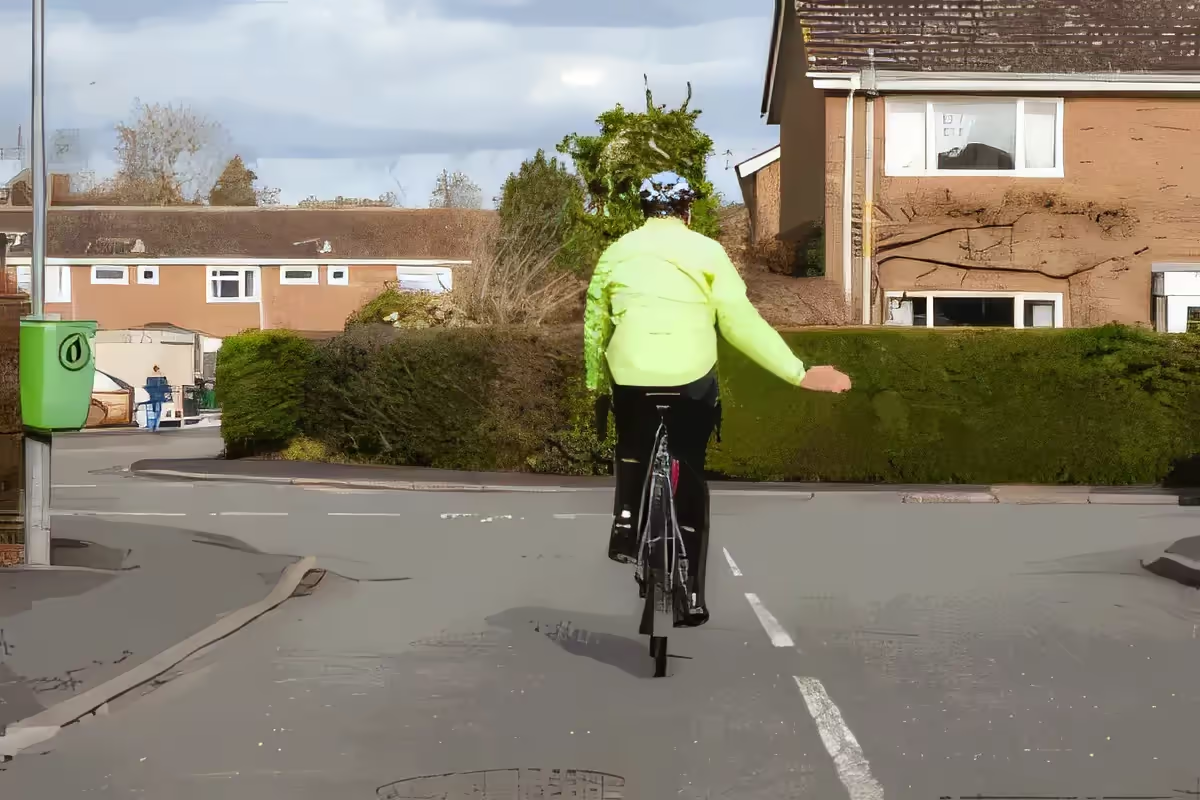
The driver of the car in front is giving this arm signal. What does it mean?
Explanation
There might be an occasion where another driver uses an arm signal. This may be because the vehicle's indicators are obscured by other traffic. In order for such signals to be effective, all drivers should know their meaning. Be aware that the 'left turn' signal might look similar to the 'slowing down' signal.
Question 12 of 50
There are flashing amber lights under a school warning sign. What action should you take?
Explanation
The flashing amber lights are switched on to warn you that children may be crossing near a school. Slow down and take extra care, as you may have to stop.
Question 13 of 50
You're on a motorway in fog. The left-hand edge of the motorway can be identified by reflective studs. What colour are they?
Explanation
Be especially careful if you're on a motorway in fog. Reflective studs are there to help you in poor visibility. Different colours are used so that you'll know which lane you're in. These are red at the left edge, white between lanes and amber at the central reservation.
Question 14 of 50
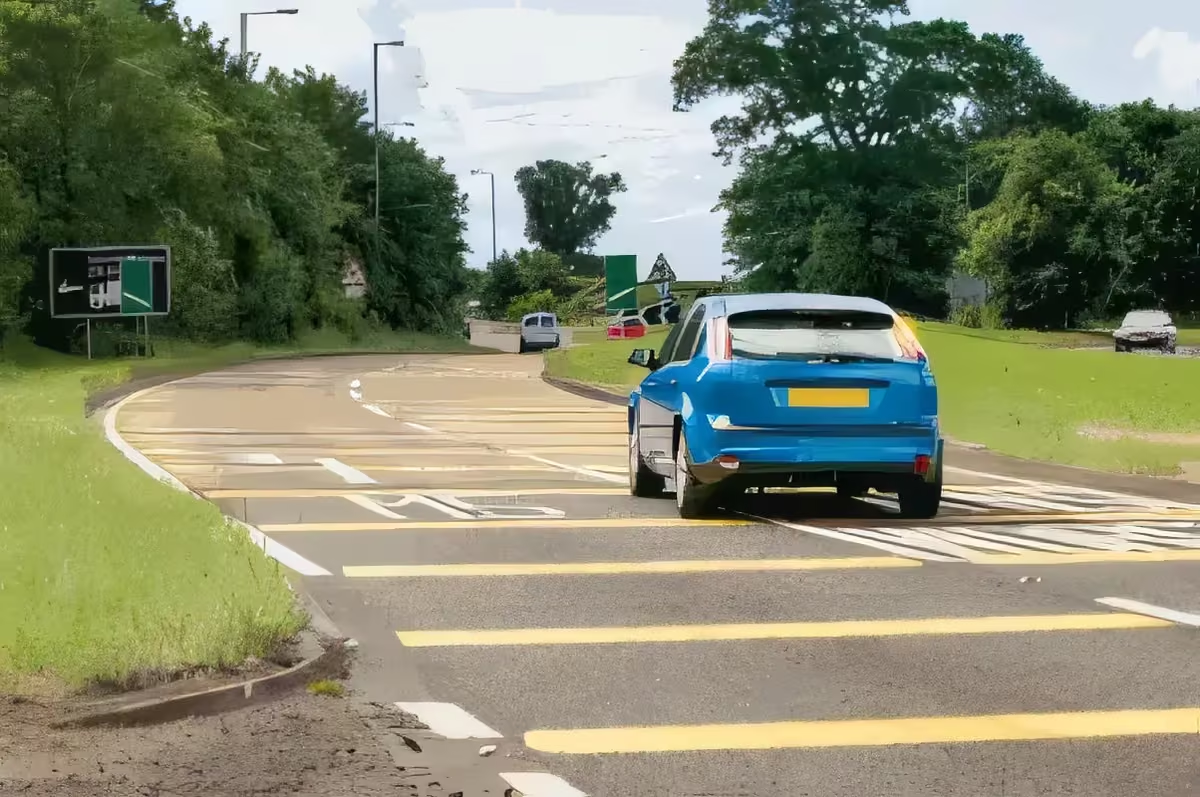
What's a rumble device designed to do?
Explanation
A rumble device consists of raised markings or strips across the road, designed to give drivers an audible, visual and tactile warning. These devices are used in various locations, including in the line separating the hard shoulder and the left-hand lane on the motorway and on the approach to some hazards, to alert drivers to the need to slow down.
Question 15 of 50
Your vehicle is stationary. When may you use its horn?
Explanation
When your vehicle is stationary, only sound the horn if you think there's a risk of danger from another road user. Don't use it just to attract someone's attention. This causes unnecessary noise and could be misleading.
Question 16 of 50
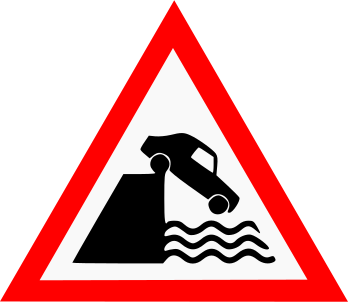
What does this sign mean?
Explanation
You should be careful in these locations, as the road surface is likely to be wet and slippery. There may be a steep drop to the water, and there may not be a barrier along the edge of the road.
Question 17 of 50
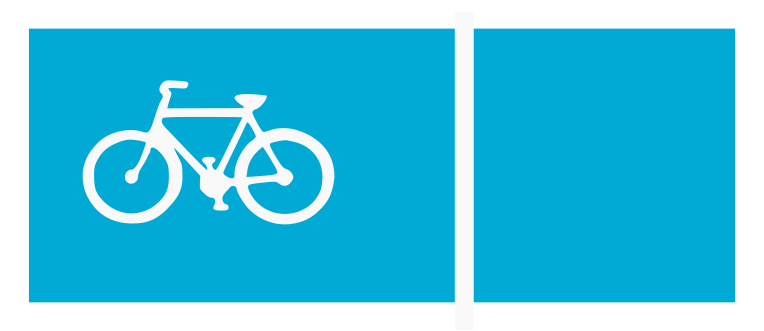
What does this sign mean?
Explanation
Usually, a picture of a cycle will also be painted on the road, and sometimes the lane will have a different coloured surface. Leave these areas clear for cyclists and don't pass too closely when you overtake.
Question 18 of 50
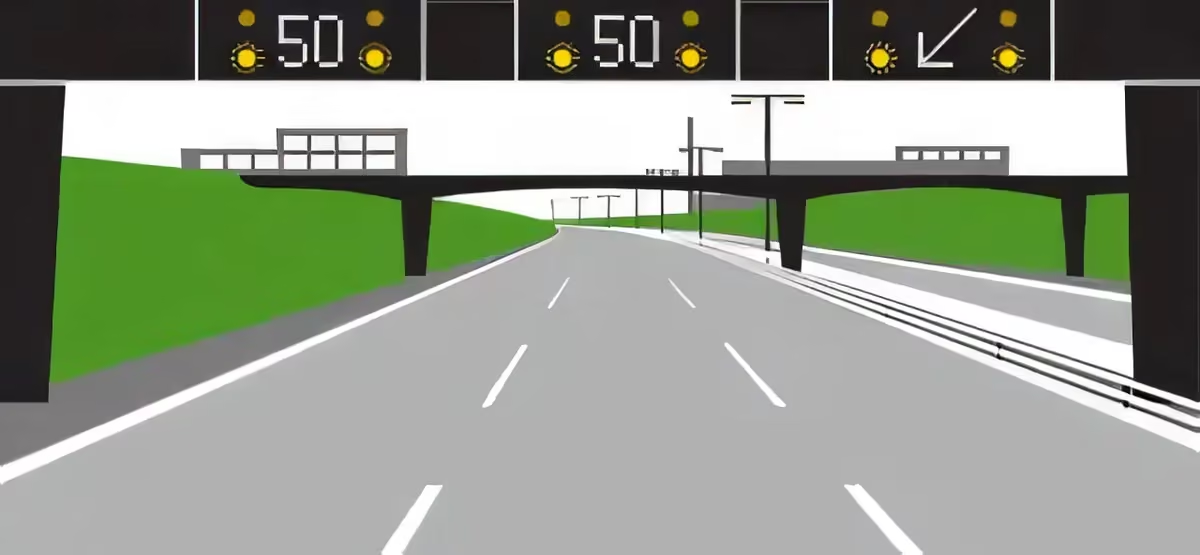
You're in the right-hand lane of a three-lane motorway. What do these overhead signs mean?
Explanation
You must obey these signs even if there appear to be no problems ahead. There could be queuing traffic or another hazard which you can't yet see.
Question 19 of 50
You avoid busy times when travelling. How will this affect your journey?
Explanation
If possible, avoid the early morning, late afternoon and early evening 'rush hour'. Doing this should allow you to travel in a more relaxed frame of mind, concentrate solely on what you're doing and arrive at your destination feeling less stressed.
Question 20 of 50
You're on a motorway and there are red flashing lights above every lane. What must you do?
Explanation
Red flashing lights above all lanes mean you must stop and wait. You'll also see a red cross lit up. Don't change lanes, don't continue and don't pull onto the hard shoulder (unless in an emergency).
Question 21 of 50
What should you do if you see a large box fall from a lorry onto the motorway?
Explanation
Lorry drivers can be unaware of objects falling from their vehicles. If you see something fall onto a motorway, look to see if the driver pulls over. If they don't stop, don't attempt to retrieve the object yourself. Pull onto the hard shoulder near an emergency telephone and report the hazard.
Question 22 of 50
Which fairing would give you the best weather protection?
Explanation
Fairings give protection to the hands, legs and feet. They also make riding more comfortable by keeping you out of the wind.
Question 23 of 50
What should you be aware of when you ride a sidecar outfit for the first time?
Explanation
A motorcycle with a sidecar, or a trike, will feel very different to ride than a solo motorcycle. It requires a specific technique, especially when cornering, with different methods used for right and left turns. Keep your speed down until you get used to the outfit, especially when negotiating bends and junctions.
Question 24 of 50
When should you use the engine cut-out switch?
Explanation
Most motorcycles are fitted with an engine cut-out switch. This is designed to stop the engine in an emergency and so reduce the risk of electrical sparks starting a fire.
Question 25 of 50
What should a pillion passenger do while being carried on a motorcycle?
Explanation
When you ride with a pillion passenger, your motorcycle may feel unbalanced and its acceleration and braking distance may also be affected. Make sure your passenger knows they must lean with you while cornering. If they don't, they could cause the motorcycle to become unstable and difficult to control.
Question 26 of 50
You're riding up to a zebra crossing. You intend to stop for waiting pedestrians. How could you let them know you're stopping?
Explanation
Giving the correct arm signal would indicate to approaching vehicles, as well as pedestrians, that you're stopping at the pedestrian crossing.
Question 27 of 50
Who can carry out compulsory basic training (CBT)?
Explanation
CBT courses can only be given by training bodies that are approved by DVSA. The standard of training is monitored by DVSA examiners. The course is designed to give you basic skills before riding on the road.
Question 28 of 50
How are you likely to be affected by drinking alcohol?
Explanation
Never drink if you're going to drive or ride. Your judgement can be seriously affected, even if you aren't over the drink-drive limit. Don't take risks; it isn't worth it.
Question 29 of 50
Who's responsible for making sure that a motorcycle isn't overloaded?
Explanation
Correct loading is the responsibility of the rider. Overloading a motorcycle can seriously affect the control and handling. It could result in a crash, with serious or even fatal consequences.
Question 30 of 50
You're on a road with passing places. It's only wide enough for one vehicle. A car is coming towards you. What should you do?
Explanation
If you meet another vehicle on a narrow road and the passing place is on your left, pull into it. If the passing place is on your right, wait opposite it.
Question 31 of 50
After riding through deep water, you notice your scooter brakes aren't working properly. What would be the best way to dry them out?
Explanation
You can help to dry out brakes by riding slowly and applying light pressure to the brake pedal/lever. Don't ride at normal speeds until they're working normally again.
Question 32 of 50
You've just passed your practical motorcycle test. This is your first full licence. What will you have to do if you gather six or more penalty points within the next two years?
Explanation
If the number of points on your licence reaches six or more during your first two years of holding a full licence, your licence will be revoked. This includes offences you committed before you passed your test. You may ride only as a learner until you pass both the theory and practical tests again.
Question 33 of 50
What should you do if you have to ride in foggy weather?
Explanation
Only travel in fog if your journey is absolutely necessary. Fog is often patchy and visibility can reduce suddenly, without warning, so use your dipped headlights to help others to see you in these difficult conditions.
Question 34 of 50
What should your motorcycle have if you want to carry a pillion passenger?
Explanation
When carrying a pillion passenger, you should explain to them that they must keep their feet on the footrests. Tell them not to give hand signals, lean away from the rider when cornering, fidget or move around. Also check that they aren't wearing anything long or loose that could get caught in the rear wheel or drive chain.
Question 35 of 50
You're sitting on a stationary motorcycle and checking your riding position. What should you be able to do?
Explanation
When sitting astride a stationary motorcycle, you should be able to place both feet on the ground. This should enable you to keep your balance while using one foot to operate the foot controls.
Question 36 of 50
You're turning right on a multi-lane roundabout. When should you take a lifesaver glance over your left shoulder?
Explanation
The 'lifesaver' is essential to motorcyclists and does exactly what it says: it could save your life. Its purpose is to check the blind spot that isn't covered by your mirrors. Learn and understand how and when you should use it.
Question 37 of 50
A friend asks you to give them a lift on your motorcycle. What conditions apply?
Explanation
By law, you can only carry a pillion passenger after you've gained a full motorcycle licence. It makes no difference if the passenger holds a full licence. As a learner, you're also prohibited from towing a trailer or riding on motorways.
Question 38 of 50
What should you do before making a U-turn?
Explanation
If you have to make a U-turn, slow down and ensure that the road is clear in both directions. Make sure that the road is wide enough for you to carry out the manoeuvre safely.
Question 39 of 50
In which of these situations should you avoid overtaking?
Explanation
As you begin to think about overtaking, ask yourself whether it's really necessary. If you can't see well ahead, stay back and wait for a safer place to pull out.
Question 40 of 50
When mustn't you sound your vehicle's horn?
Explanation
Every effort must be made to prevent excessive noise, especially in built-up areas at night. Don't rev your engine or sound the horn unnecessarily. It's illegal to sound your horn in a built-up area between 11.30 pm and 7.00 am, except when another road user poses a danger.
Question 41 of 50
You see this sign ahead. What should you expect?
Explanation
This sign indicates that the road will bend sharply to the left. Slow down in plenty of time and select the correct gear before you start to turn. Braking hard and late, while also sharply changing direction, is likely to cause a skid.
Question 42 of 50
You're approaching this cyclist. What should you do?
Explanation
Keep well back and give the cyclist time and room to turn safely. Don't intimidate them by getting too close or trying to squeeze past.
Question 43 of 50
You see a pedestrian carrying a white stick with a red band. What does this tell you?
Explanation
When someone is deaf as well as blind, they may carry a white stick with a red reflective band. They may not be aware that you're approaching and they may not be able to hear anything; so, for example, your horn would be ineffective as a warning to them.
Question 44 of 50
What should you do when you're joining a motorway?
Explanation
You should give way to traffic already on the motorway. Where possible, traffic may move over to let you in, but don't force your way into the traffic stream. Traffic could be travelling at high speed, so try to match your speed to filter in without affecting the traffic flow.
Question 45 of 50
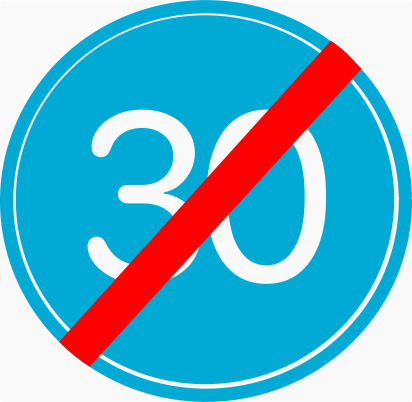
What does this sign mean?
Explanation
The red slash through the sign indicates that the restriction has ended. In this case, the restriction was a minimum speed limit of 30 mph.
Question 46 of 50
Which vehicle is most likely to take an unusual course at a roundabout?
Explanation
Long vehicles might have to take a slightly different position when approaching the roundabout or going around it. This is to stop the rear of the vehicle cutting in and mounting the kerb.
Question 47 of 50
Where may you overtake on a one-way street?
Explanation
You can overtake other traffic on either side when travelling in a one-way street. Make full use of your mirrors and ensure it's clear all around before you attempt to overtake. Look for signs and road markings, and use the most suitable lane for your destination.
Question 48 of 50
What does a circular traffic sign with a blue background do?
Explanation
Signs with blue circles mostly give a positive instruction. These are often found in urban areas and include signs for mini-roundabouts and directional arrows.
Question 49 of 50
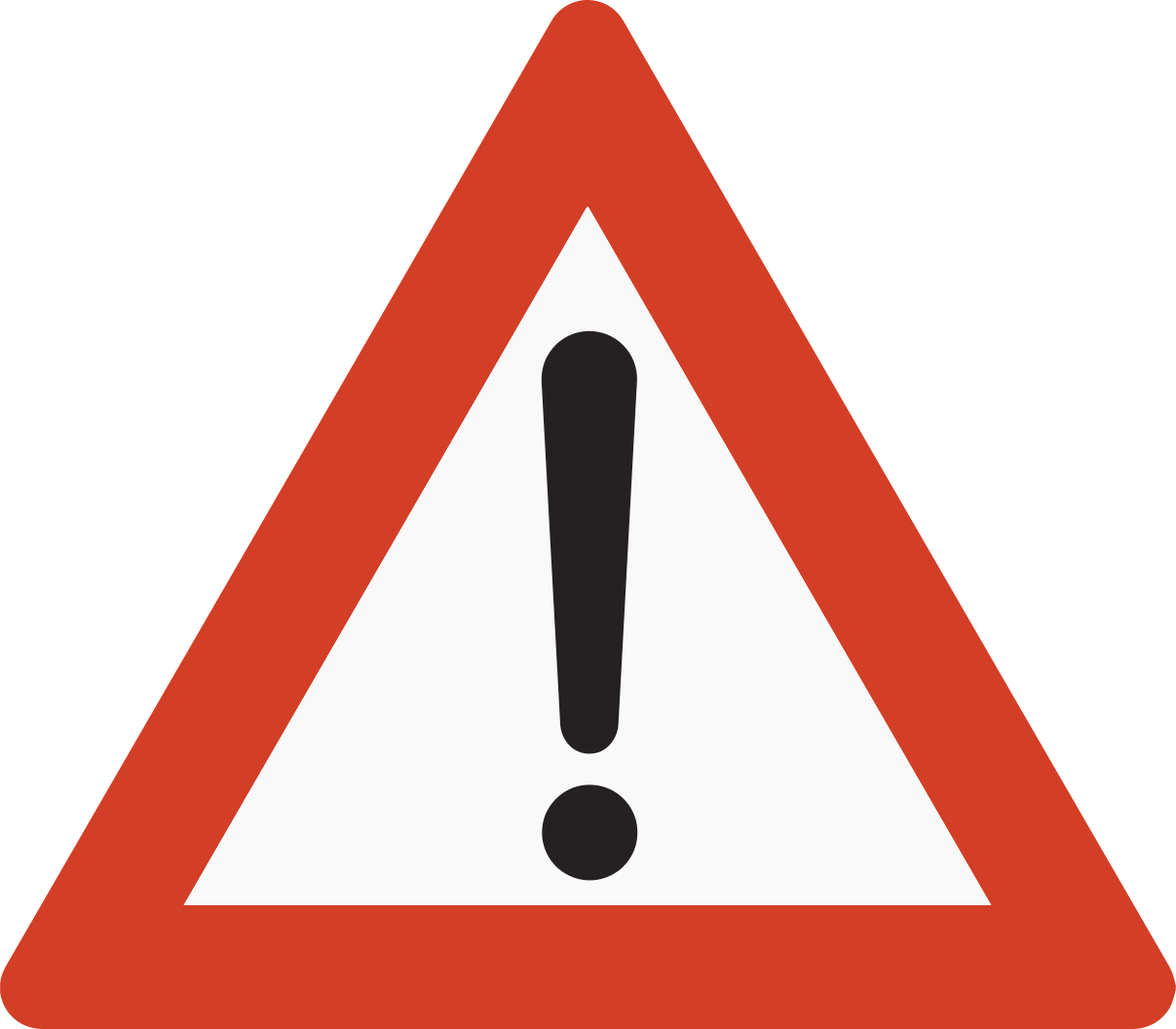
What does this traffic sign mean?
Explanation
This sign is there to alert you to the likelihood of danger ahead. It may be accompanied by a plate indicating the type of hazard. Be ready to reduce your speed and take avoiding action.
Question 50 of 50
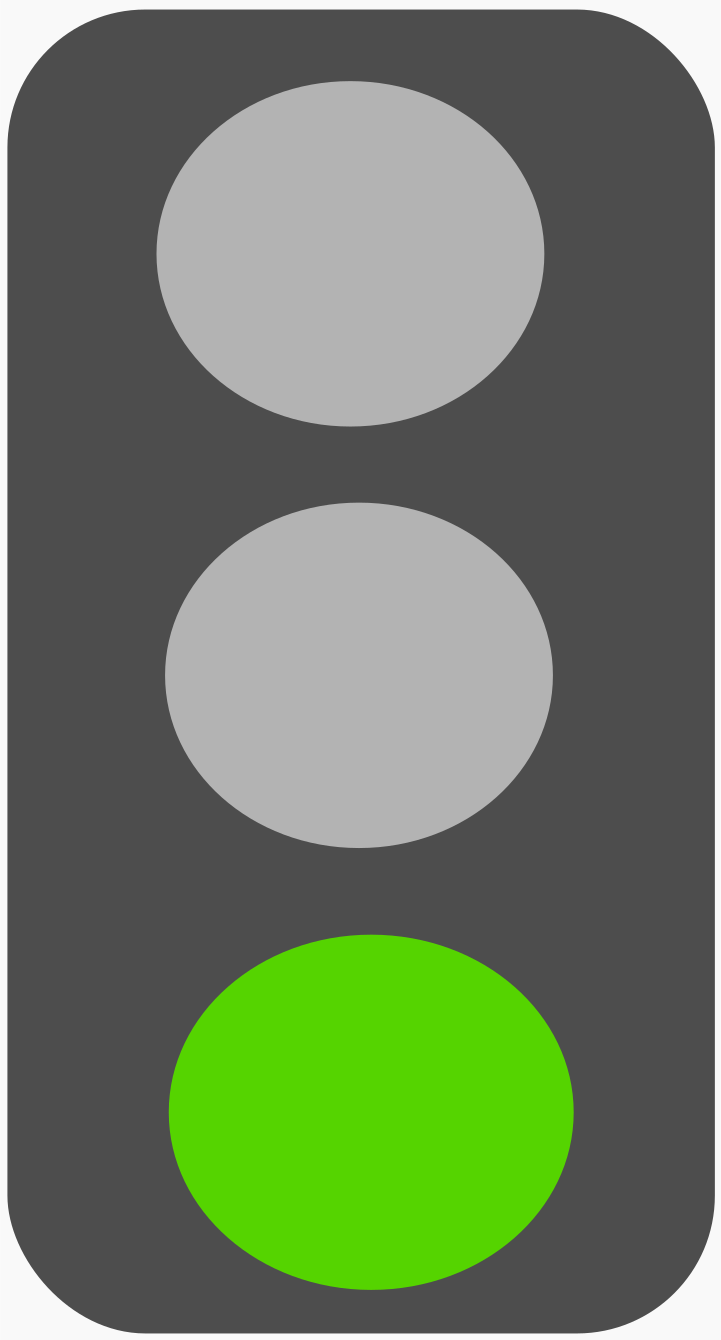
You're at a junction controlled by traffic lights. When shouldn't you proceed at green?
Explanation
As you approach the lights, look into the road you wish to take. Only proceed if your exit road is clear. If the road is blocked, hold back, even if you have to wait for the next green signal.