Question 1 of 50
What does this sign mean?

Explanation
You might see this sign where traffic lights are out of order. Proceed with caution, as nobody has priority at the junction.
Free practice test
Answer 50 questions, check each correct answer and work through the explanations at your own pace.
Question 1 of 50
Explanation
You might see this sign where traffic lights are out of order. Proceed with caution, as nobody has priority at the junction.
Question 2 of 50
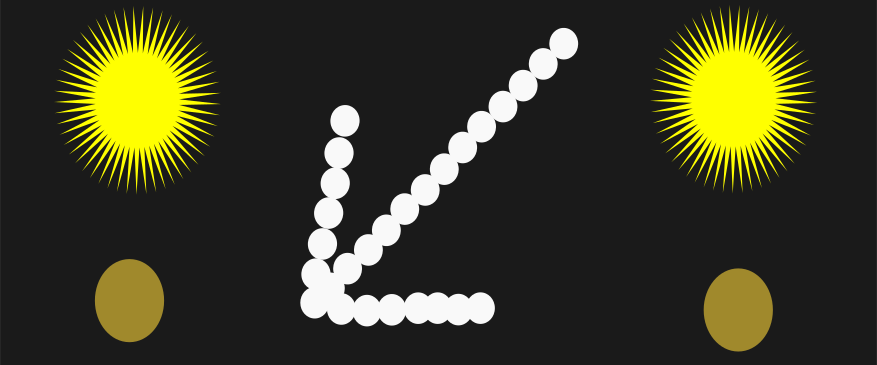
Explanation
On the motorway, signs sometimes show temporary warnings due to traffic or weather conditions. They may be used to indicate lane closures, temporary speed limits or hazards ahead.
Question 3 of 50
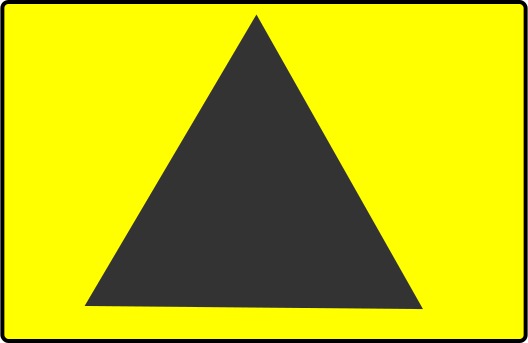
Explanation
When a diversion route has been put in place, drivers are advised to follow a symbol, which may be a black triangle, square, circle or diamond shape on a yellow background.
Question 4 of 50
Explanation
In some situations, you may feel your indicators can't be seen by other road users. If you think you need to make your intention more obvious, give the arm signal shown in The Highway Code.
Question 5 of 50
Explanation
Don't enforce the speed limit by blocking another vehicle's progress. This will only lead to the other driver becoming more frustrated. Allow the other vehicle to pass when you can do so safely.
Question 6 of 50
Explanation
Some modern batteries are maintenance-free. Check your vehicle handbook and, if necessary, make sure that the plates in each battery cell are covered with fluid.
Question 7 of 50
Explanation
If you want to turn left and there's a cyclist in front of you, hold back. Wait until the cyclist has passed the junction and then turn left behind them. Don't try to intimidate them by driving too closely.
Question 8 of 50
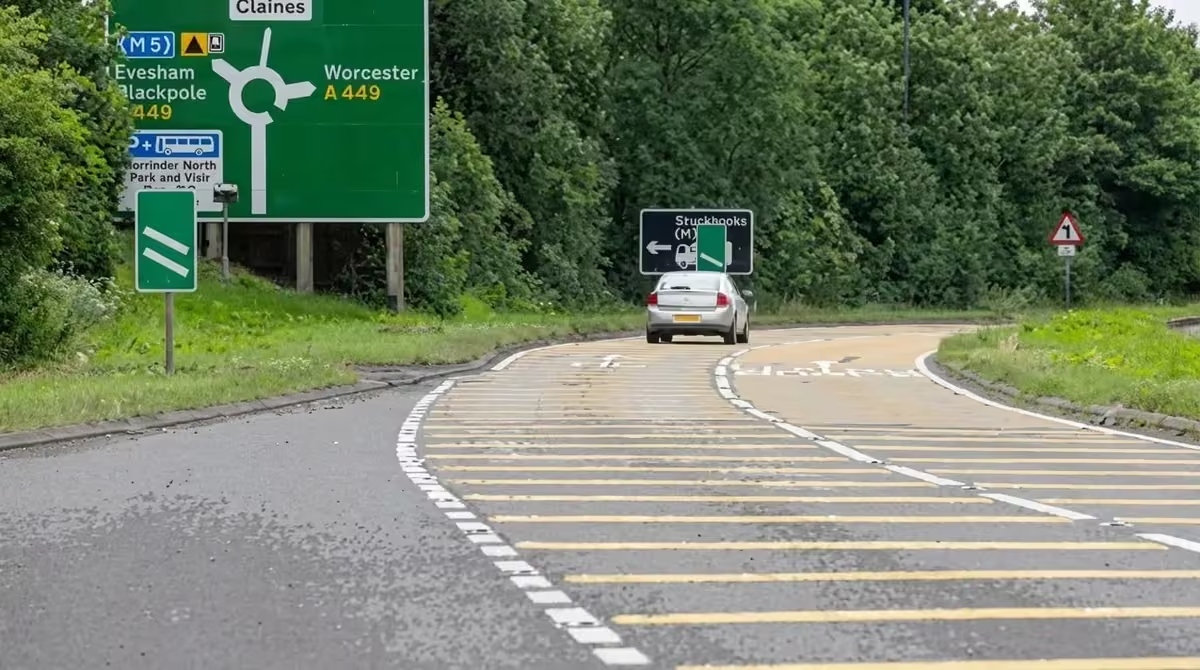
Explanation
These lines may be painted on the road on the approach to a roundabout, a village or a particular hazard. The lines are raised and painted yellow, and their purpose is to make you aware of your speed. Reduce your speed in good time so that you avoid having to brake harshly over the last few metres before reaching the junction.
Question 9 of 50
Explanation
If the driver behind is following too closely, there's a danger they'll collide with the back of your vehicle if you stop suddenly. You can reduce this risk by slowing down and increasing the safety margin in front of you. This reduces the chance that you'll have to stop suddenly and allows you to spread your braking over a greater distance. This is an example of defensive driving.
Question 10 of 50
Explanation
The names of towns and cities may be painted on the road at busy junctions and complex road systems. Their purpose is to let you move into the correct lane in good time, allowing traffic to flow more freely.
Question 11 of 50
Explanation
You should normally travel in the left-hand lane unless you're overtaking a slower-moving vehicle. When you've finished overtaking, move back into the left-hand lane, but don't cut across in front of the vehicle that you've overtaken.
Question 12 of 50
Explanation
You may be difficult to see when you're travelling at night, even on a well-lit road. If you use dipped headlights rather than sidelights, other road users should be able to see you more easily.
Question 13 of 50
Explanation
You must pull up on the left as soon as it's safe to do so and switch off your engine.
Question 14 of 50
Explanation
The effects of shock may not be immediately obvious. Warning signs are rapid pulse, sweating, pale grey skin and rapid shallow breathing.
Question 15 of 50
Explanation
Your vehicle must have valid insurance cover before you can tax it. If required, it will also need to have a valid MOT certificate. You can tax your vehicle online, by phone or at certain post offices.
Question 16 of 50
Explanation
Slow down and be ready to stop if you see animals in the road ahead. Animals are easily frightened by noise and vehicles passing too close to them. Stop if signalled to do so by the person in charge.
Question 17 of 50
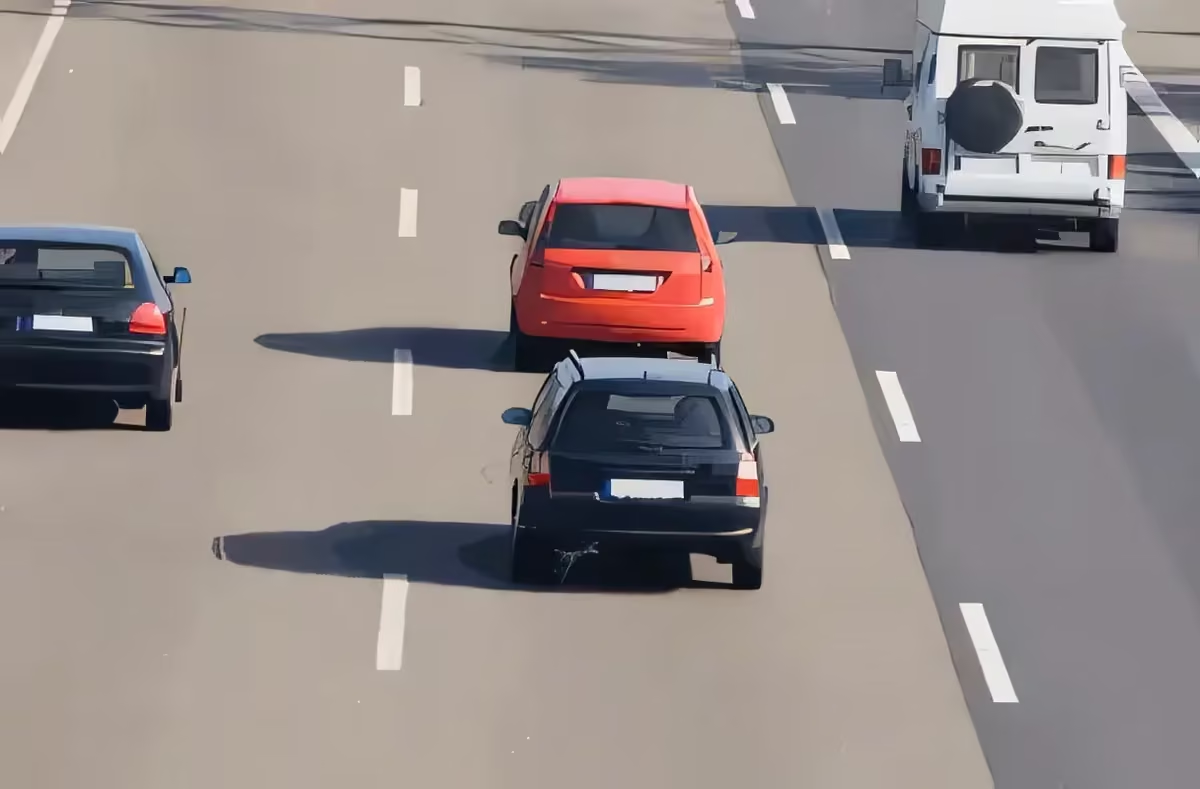
Explanation
On busy roads, traffic may still travel at high speeds despite being close together. Don't follow the vehicle in front too closely. If a driver behind seems to be 'pushing' you, gradually increase your distance from the vehicle in front by slowing down gently. This will give you more space in front if you have to brake, and will reduce the risk of a collision involving several vehicles.
Question 18 of 50
Explanation
When the area is safe and there's no danger from other traffic or fire, it's better not to move casualties. Moving them may cause further injury.
Question 19 of 50
Explanation
You must stop if you've been involved in a collision which results in injury or damage. The police may ask to see your driving licence and insurance details at the time or later at a police station.
Question 20 of 50
Explanation
You should carry out frequent checks on all fluid levels but particularly brake fluid. As the brake pads or shoes wear down, the brake fluid level will drop. If it drops below the minimum mark on the fluid reservoir, air could enter the hydraulic system and lead to a loss of braking efficiency or even complete brake failure.
Question 21 of 50
Explanation
Always wear your protective clothing, whatever the weather. In very hot weather it's tempting to ride in light summer clothes, but it isn't worth the risk. If you fall from your motorcycle, you'll have no protection from the hard road surface.
Question 22 of 50
Explanation
Before starting the engine, make sure the motorcycle is in neutral. Do this by checking that the neutral warning light is lit when you switch on the ignition. If no neutral light is fitted, push the motorcycle forward to check that the rear wheel turns freely.
Question 23 of 50
Explanation
When riding slowly, you must remember to look out for cyclists - they can travel quickly and fit through surprisingly narrow spaces. Before you turn left in slow-moving traffic, it's important to check that a cyclist isn't trying to filter past on your left.
Question 24 of 50
Explanation
Your blind spots are the areas behind and to either side of you that aren't covered by your mirrors. You should always check the relevant side when there's a risk of a hazard that isn't visible in your mirrors.
Question 25 of 50
Explanation
If a tyre bursts, close the throttle smoothly and slow gently to a stop, holding the handlebars firmly to help you keep a straight course.
Question 26 of 50
Explanation
Before changing direction, as well as using your mirrors, you may need to take a quick sideways glance to check for vehicles in your blind spots. These are the areas behind and to the side of you that aren't covered by your mirrors.
Question 27 of 50
Explanation
At a pelican crossing, the green light means you may proceed as long as the crossing is clear. If someone hasn't finished crossing, be patient and wait until the road is clear.
Question 28 of 50
Explanation
Briefly using your hazard warning lights will warn the traffic behind you that there's a hazard ahead. Turn them off again when following drivers have seen and responded to your signal.
Question 29 of 50
Explanation
Your motorcycle will be very unstable if a tyre bursts. Try to keep a straight course and stop as gently as possible.
Question 30 of 50
Explanation
You can cause your motorcycle to skid by heavy braking, as well as excessive acceleration, swerving or changing direction too sharply, and leaning over too far.
Question 31 of 50
Explanation
To tow a trailer behind a motorcycle, you must have a full motorcycle licence and a motorcycle with an engine larger than 125 cc. Motorcycle trailers mustn't exceed 1 metre (3 feet 3 inches) in width.
Question 32 of 50
Explanation
Hazard warning lights are an important safety feature and should be used if you've broken down and are causing an obstruction. Don't use them as an excuse to park illegally, even for a short time. You may also use them on motorways to warn following traffic of danger ahead.
Question 33 of 50
Explanation
The lifesaver glance makes you aware of what's happening behind and alongside you before you alter your course. This glance must be timed so that you still have time to react if it isn't safe to carry out your manoeuvre.
Question 34 of 50
Explanation
Towing a trailer requires special care. You must obey the restrictions that apply when towing - including the 125 cc minimum size of your motorcycle engine and the reduced national speed limits. Don't forget the trailer is there, especially when negotiating bends and junctions.
Question 35 of 50
Explanation
Before starting a motorway journey, make sure your motorcycle can cope with the demands of high-speed riding. Things you need to check include oil, water, tyres and fuel. When you're travelling a long way, it's a good idea to plan rest stops in advance.
Question 36 of 50
Explanation
All new learner motorcycle and moped riders must complete a CBT course before riding on the road. This can only be given by an approved training body (ATB). If you don't pass your practical test within two years, you'll need to retake and pass CBT to continue riding.
Question 37 of 50
Explanation
You aren't allowed to carry a pillion passenger until you hold a full motorcycle licence. This gives you time to gain riding experience. Even when you've passed your test, don't carry a passenger if you aren't confident that you can do so safely. You're responsible for their safety.
Question 38 of 50
Explanation
The narrow wheels of a bicycle can become stuck in the tram rails, causing the cyclist to stop suddenly, wobble or even lose balance altogether. The tram lines are also slippery, which could cause a cyclist to slide or fall off.
Question 39 of 50
Explanation
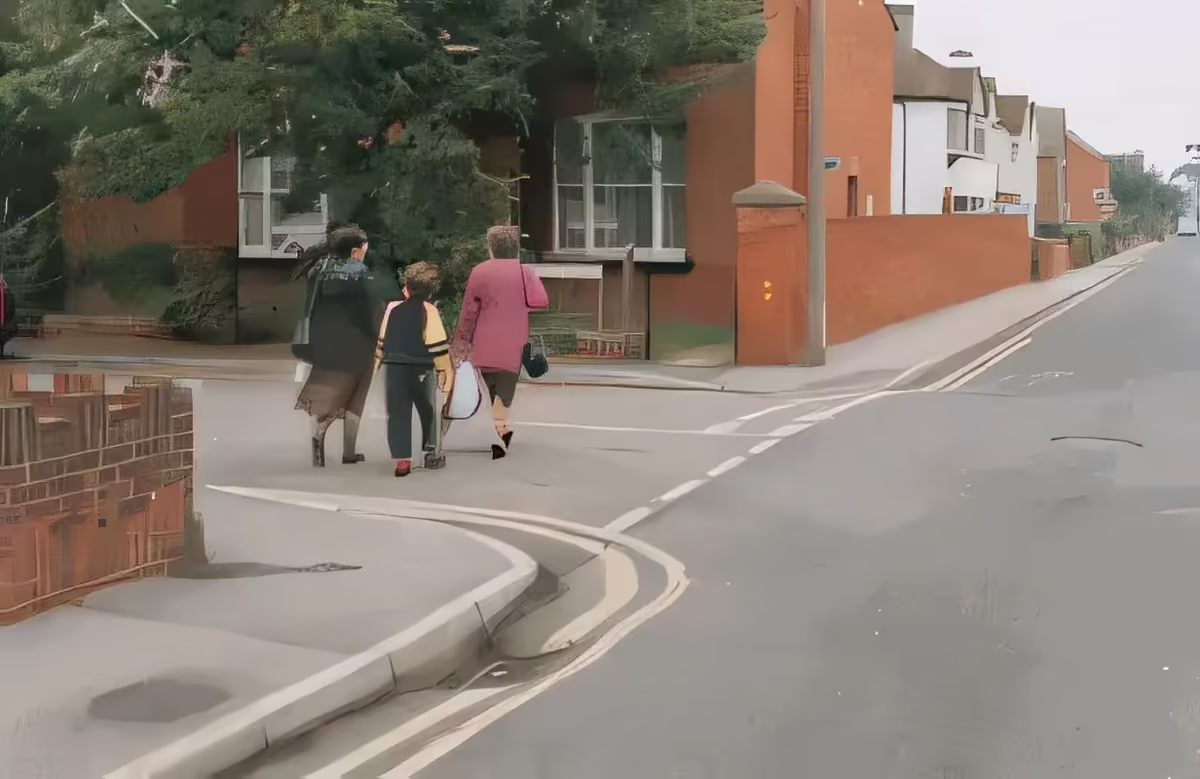
When you're turning into a side road, pedestrians who are crossing have priority. You should wait to allow them to finish crossing safely. Be patient if they're slow or unsteady. Don't try to rush them by sounding your horn, flashing your lights, revving your engine or giving any other inappropriate signal.
Question 40 of 50
Explanation
Cyclists and motorcyclists are smaller than other vehicles and so are more difficult to see. They can easily be hidden from your view by cars parked near a junction.
Question 41 of 50
Explanation
A motorcycle can be lost from sight behind another vehicle. The use of the headlights helps to make it more conspicuous and therefore more easily seen.
Question 42 of 50
Explanation
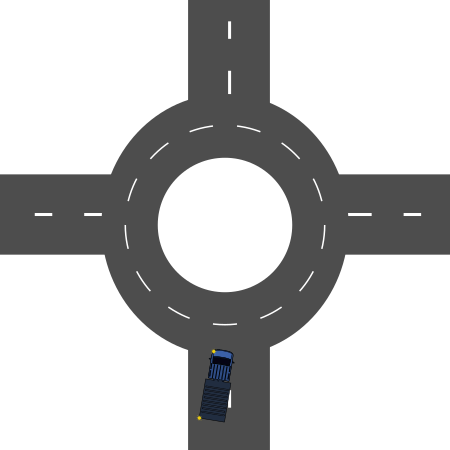
At mini-roundabouts, there isn't much room for a long vehicle to manoeuvre. It will have to swing out wide so that it can complete the turn safely. Keep well back and don't try to move up alongside it.
Question 43 of 50
Explanation
A vehicle with a trailer is restricted to 60 mph. For this reason, it isn't allowed in the right-hand lane, as it might hold up faster-moving traffic that wishes to overtake in that lane.
Question 44 of 50
Explanation
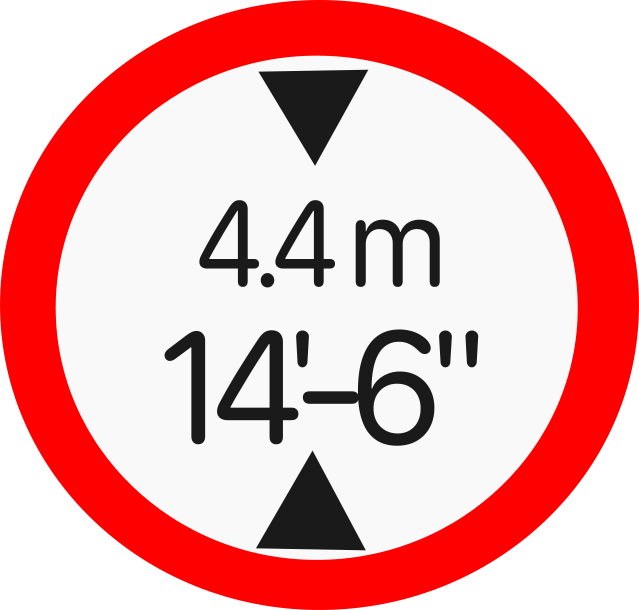
The triangular shapes above and below the dimensions indicate a height restriction that applies to the road ahead.
Question 45 of 50
Explanation
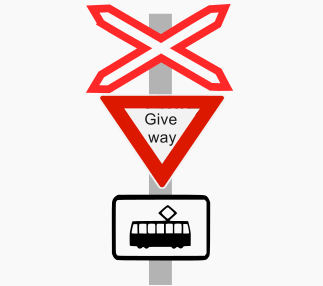
Obey the 'give way' signs. Trams are unable to steer around you if you misjudge when it's safe to enter the junction.
Question 46 of 50
Explanation
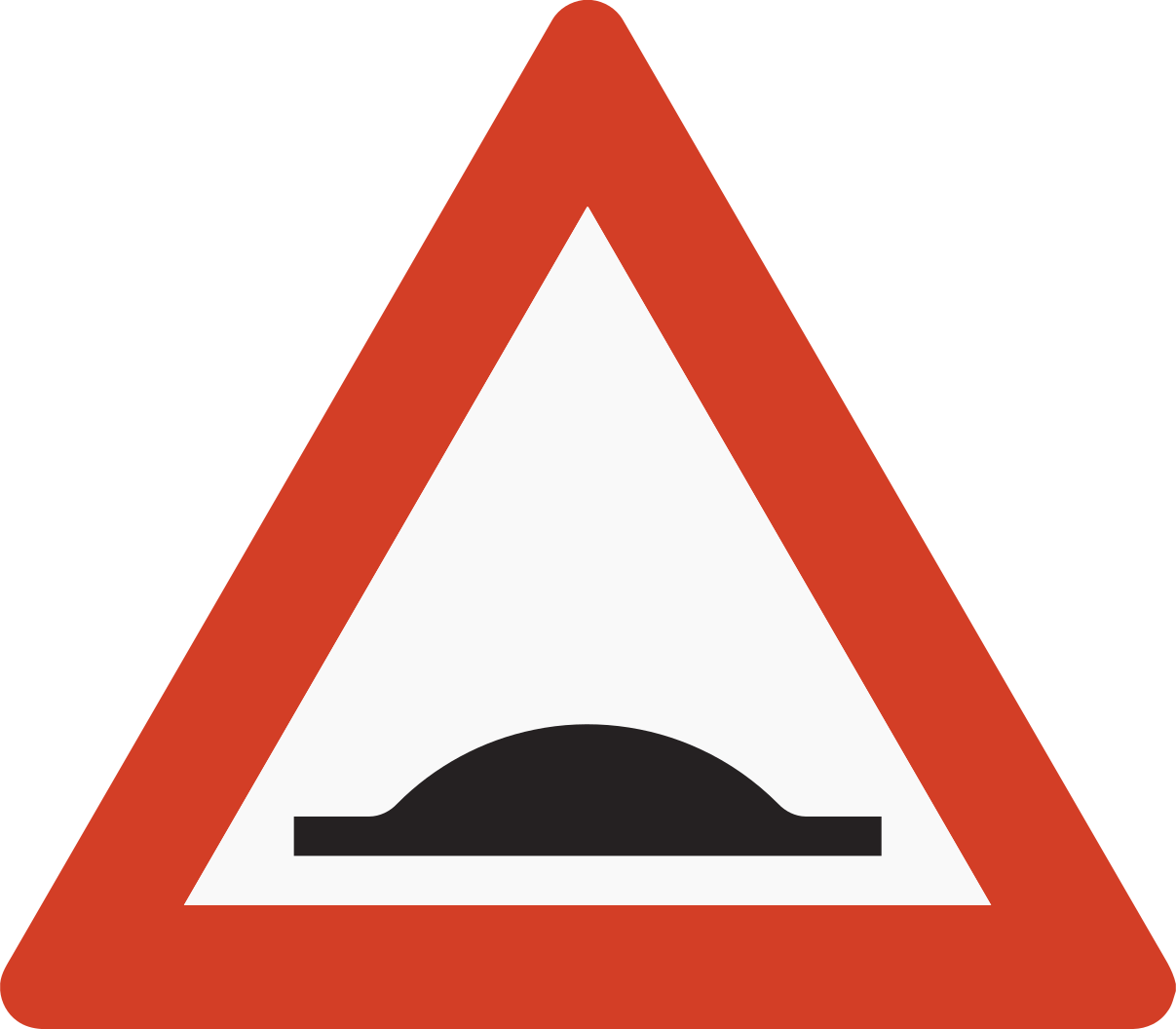
These humps have been put in place to slow the traffic down. They're usually found in residential areas. Slow down to an appropriate speed.
Question 47 of 50
Explanation
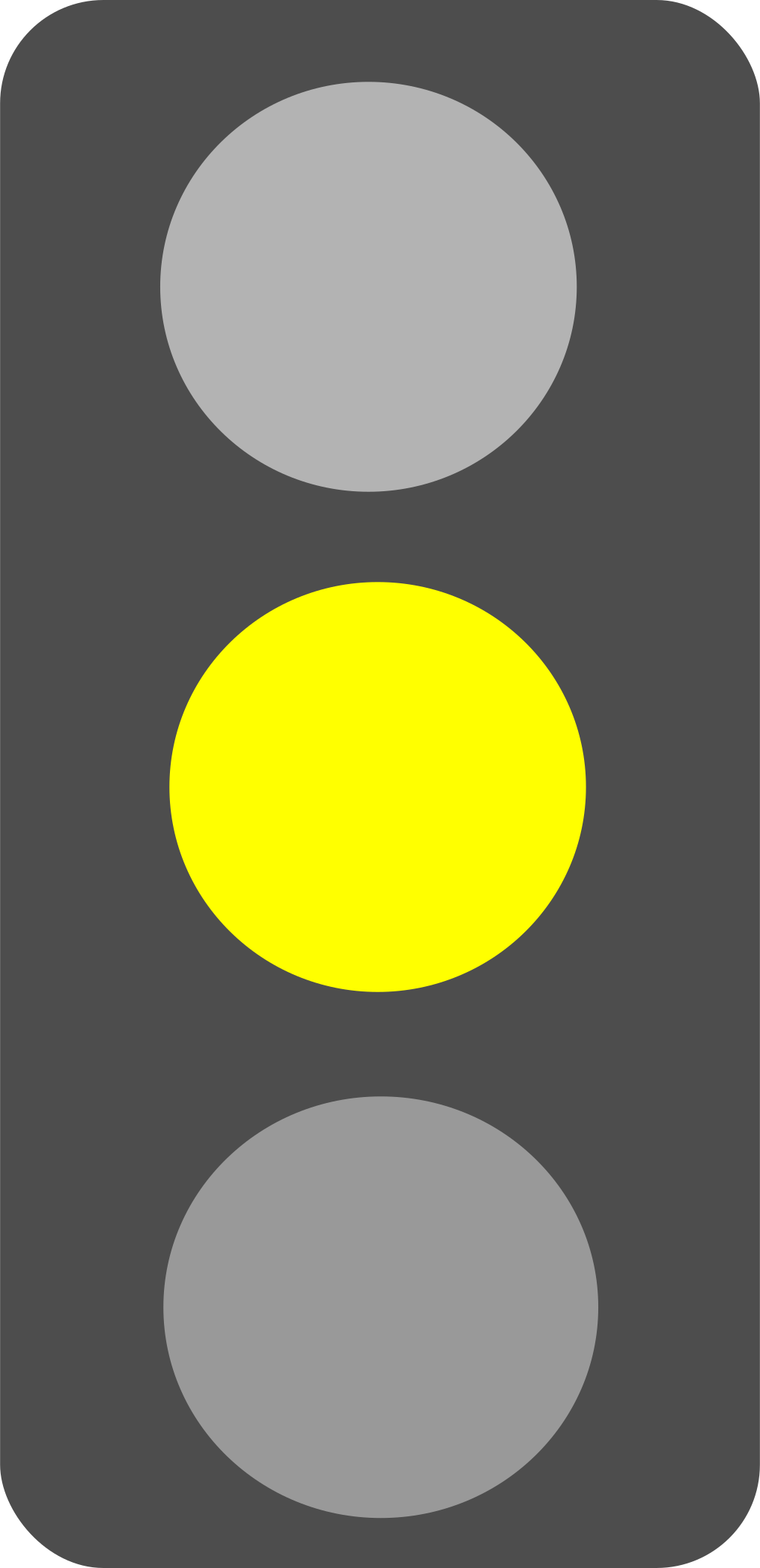
When the amber light is showing on its own, the red light will follow next. The amber light means stop, unless you've already crossed the stop line or you're so close to it that stopping may cause a collision.
Question 48 of 50
Explanation
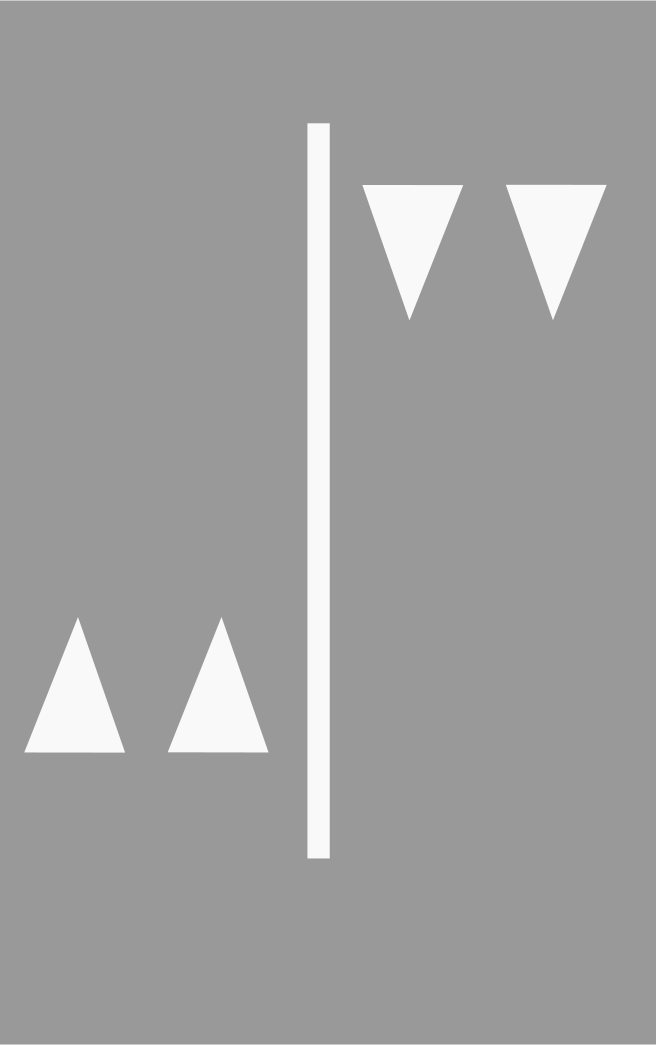
Because the road has a dark colour, changes in level aren't easily seen. White triangles painted on the road surface give you an indication of where there are road humps.
Question 49 of 50
Explanation
If you're travelling on a dual carriageway that becomes a single carriageway road, reduce your speed gradually so that you aren't exceeding the limit as you enter. There might not be a sign to remind you of the limit, so make sure you know the speed limits for different types of road and vehicle.
Question 50 of 50
Explanation
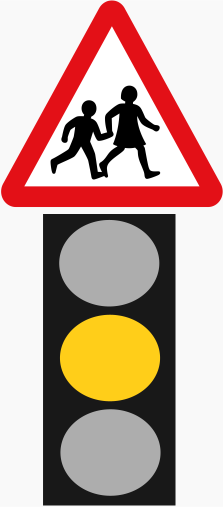
These lights warn that children may be crossing the road to a nearby school. Slow down so that you're ready to stop if necessary.
Practice test complete
This practice score is not an official DVSA theory-test result.