Answer 49 questions, check each correct answer and work through the explanations at your own pace.
Question 1 of 490 correct answers
Question 1 of 49
You're planning a long journey. Do you need to plan rest stops?
Explanation
Try to plan your journey so that you can take rest stops. It's recommended that you take a break of at least 15 minutes after every two hours of driving or riding. This should help to maintain your concentration.
Question 2 of 49
What should you do when you're following a learner driver who stalls at a junction?
Explanation
Learning to drive is a process of practice and experience. Try to understand this and tolerate those who make mistakes while they're learning.
Question 3 of 49
You're turning right at a crossroads. An oncoming driver is also turning right. How should you normally deal with this?
Explanation
At crossroads, traffic normally turns offside to offside. This is the safest way to turn, but sometimes the layout or road markings indicate drivers should pass nearside to nearside. Take extra care at these crossroads because, as you turn, your view ahead will be obscured by the oncoming vehicle crossing in front of you.
Question 4 of 49
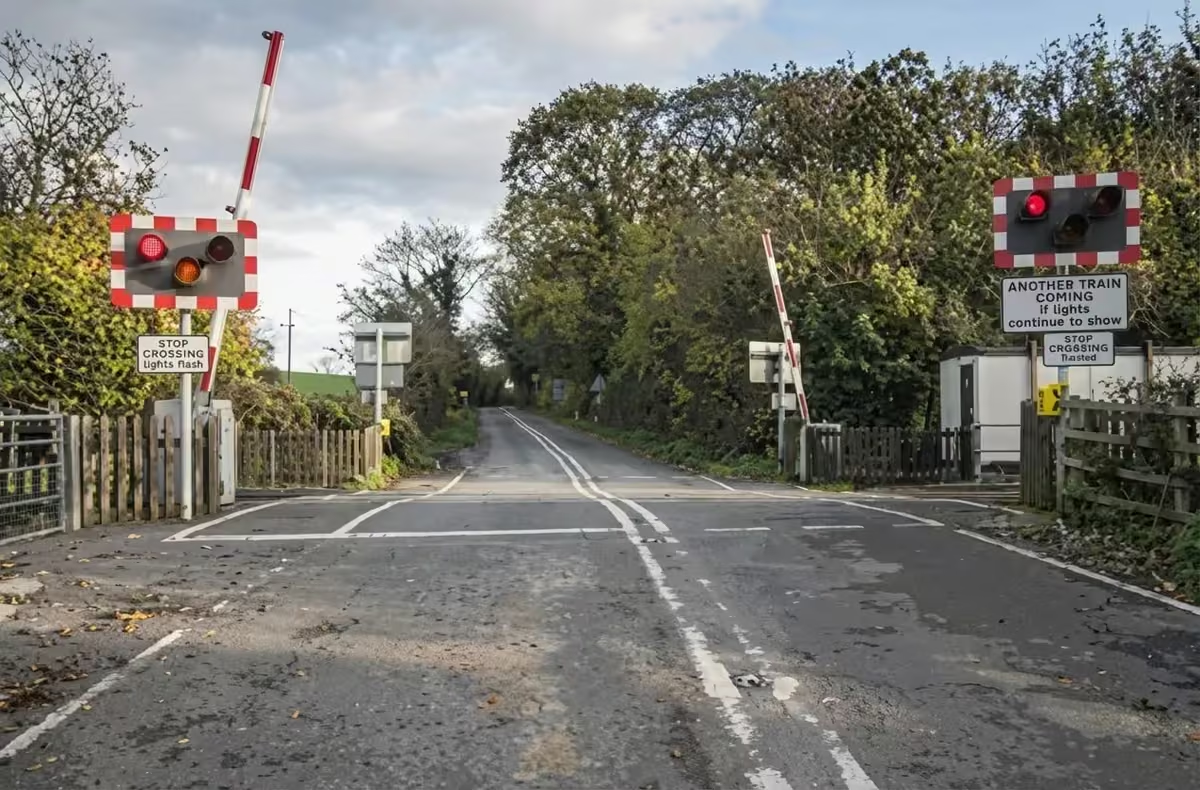
The red lights are flashing. What should you do when approaching this level crossing?
Explanation
At level crossings, the red lights flash before and while the barrier is down. At most crossings, an amber light will precede the red lights. You must stop behind the white line unless you've already crossed it when the amber light comes on. Never zigzag around half-barriers.
Question 5 of 49
What's the nearest you may park to a junction?
Explanation
Don't park within 10 metres (32 feet) of a junction (unless in an authorised parking place). This is to allow drivers emerging from, or turning into, the junction a clear view of the road they're joining. It also allows them to see hazards such as pedestrians or cyclists at the junction.
Question 6 of 49
How should you dispose of a used vehicle battery?
Explanation
Batteries contain acid, which is hazardous, and they must be disposed of safely. This means taking them to an appropriate disposal site.
Question 7 of 49
You're approaching a crossroads. The traffic lights have failed. What should you do?
Explanation
When approaching a junction where the traffic lights have failed, you should proceed with caution. Treat the situation as an unmarked junction and be prepared to stop.
Question 8 of 49
Why are mirrors often slightly curved (convex)?
Explanation
Although a convex mirror gives a wide view of the scene behind, you should be aware that it won't show you everything behind or to the side of your vehicle. Before you move off, you'll need to look over your shoulder to check for anything not visible in the mirrors.
Question 9 of 49
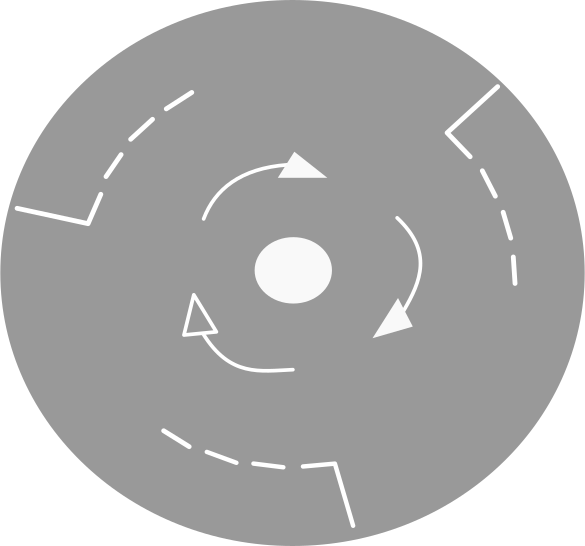
Where would you find these road markings?
Explanation
These markings show the direction in which the traffic should go at a mini-roundabout.
Question 10 of 49
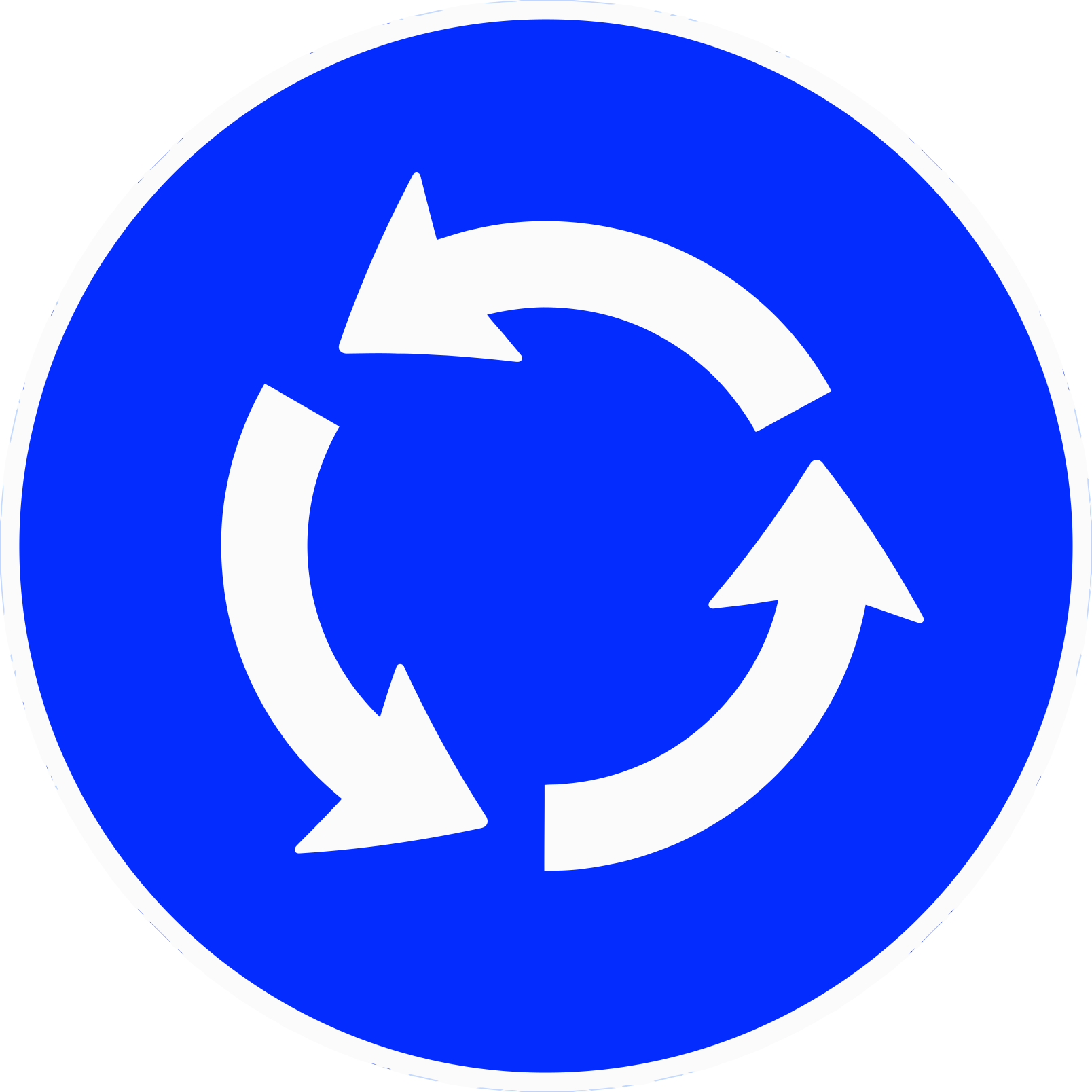
What does this sign mean?
Explanation
When you see this sign, look out for any direction signs and judge whether you need to signal your intentions. Do this in good time so that other road users approaching the roundabout know what you're planning to do.
Question 11 of 49
Traffic officers operate on motorways and some primary routes in England. What are they authorised to do?
Explanation
Traffic officers don't have enforcement powers but are able to stop and direct people on motorways and some 'A' class roads. They only operate in England and work in partnership with the police at incidents, providing a highly trained and visible service. They're recognised by an orange-and-yellow jacket and their vehicle has yellow-and-black markings.
Question 12 of 49
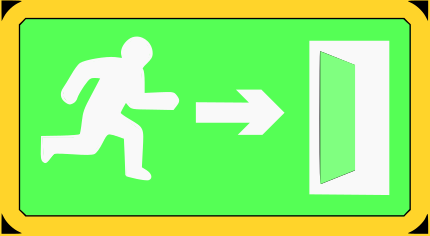
You're in a tunnel and you see this sign. What does it mean?
Explanation
If you have to leave your vehicle and get out of a tunnel by an emergency exit, do so as quickly as you can. Follow the signs directing you to the nearest exit point. If there are several people using the exit, don't panic but try to leave in a calm and orderly manner.
Question 13 of 49
At an incident, a casualty is unconscious. You need to check whether they're breathing. How long should you allow for this check?
Explanation
Once the casualty's airway is open, listen and feel for breath. Do this by placing your cheek over their mouth and nose, and look to see if their chest rises. This should be done for up to 10 seconds. If you cannot detect any breathing, you should begin compressions.
Question 14 of 49
Which of these is needed before you can legally use a vehicle on the road?
Explanation
Using a vehicle on the road illegally carries a heavy fine and can lead to penalty points on your driving licence. You must have valid insurance, MOT (if required) and vehicle tax.
Question 15 of 49
Overall stopping distance is made up of thinking distance and braking distance. You're on a good, dry road surface, with good brakes and tyres. What's the typical braking distance from 50 mph?
Explanation
Be aware that this is just the braking distance. You need to add the thinking distance to this to give the overall stopping distance. At 50 mph, the typical thinking distance will be 15 metres (50 feet), plus a braking distance of 38 metres (125 feet), giving an overall stopping distance of 53 metres (175 feet). The stopping distance could be greater than this, depending on your attention and response to any hazards. These figures are a general guide.
Question 16 of 49
You're about to turn right. What should you do just before you turn?
Explanation
When you're turning right, plan your approach to the junction. Signal and select the correct gear in good time. Just before you turn, take a lifesaver glance for a final check behind and to the side of you.
Question 17 of 49
What is the 'lifesaver' when riding a motorcycle?
Explanation
This action makes you aware of what's happening behind and alongside you. The lifesaver glance should be timed so that you still have time to react if it isn't safe to perform the manoeuvre.
Question 18 of 49
You see road signs showing a sharp bend ahead. What should you do?
Explanation
Always look for any advance warning of hazards, such as road signs and hazard warning lines. Use this information to plan ahead and to help you avoid the need for late, harsh braking. Your motorcycle should be upright and moving in a straight line when you brake. This will help you keep maximum control when dealing with the hazard ahead.
Question 19 of 49
You're riding at night and are dazzled by the headlights of an oncoming car. What should you do?
Explanation
If you're dazzled by the headlights of an approaching vehicle, slow down or stop until your eyes have adjusted. A dirty or scratched visor could make the dazzle worse and further impair your vision.
Question 20 of 49
When riding, your shoulders can obstruct the view in your mirrors. How can you overcome this?
Explanation
It's essential that you have a clear view all around. Adjust your mirrors to give you the best view of the road behind. If your body obscures the view, try fitting mirrors with longer stems.
Question 21 of 49
When may motorcyclists use a mobile phone?
Explanation
It's important that you're in full control at all times. Even using a hands-free phone kit can distract your attention from the road. If you need to use a mobile phone, stop in a safe and convenient place before making the call.
Question 22 of 49
You're riding at night. You have your headlights on main beam. Another vehicle is overtaking you. When should you dip your headlights?
Explanation
At night, you should dip your headlights to avoid dazzling oncoming drivers or those ahead of you. If you're being overtaken, dip your headlights as the other vehicle comes past. When you switch to dipped beam, your view of the road ahead will be reduced, so look ahead for hazards on your side of the road before you do so.
Question 23 of 49
How should you move off safely from a parked position?
Explanation
Before you move off from the side of the road, you should take a final look over your shoulder to check your blind spot. This will help you to see any road user who isn't visible in your mirrors.
Question 24 of 49
You become cold when riding your motorcycle. How will this affect you?
Explanation
It can be difficult to keep warm when riding a motorcycle. It's well worth buying good-quality motorcycle clothing, which will help to keep you warm and is essential for your safety. If you become very cold while riding, you'll find it difficult to concentrate on the road.
Question 25 of 49
You're riding at night and are dazzled by the lights of an approaching vehicle. What should you do?
Explanation
If your view of the road ahead is restricted because you're being dazzled by approaching headlights, slow down and, if you need to, pull over and stop.
Question 26 of 49
You should always check your blind spots before doing what?
Explanation
Your blind spots are the areas behind and to either side of you that aren't covered by your mirrors. You should always check the relevant side when there's a risk of a hazard that isn't visible in your mirrors.
Question 27 of 49
Blind spots should be checked before you do what?
Explanation
The areas that aren't covered by your mirrors are called blind spots. They should always be checked before changing direction. This check is so important that it's called the 'lifesaver'.
Question 28 of 49
When should you check the blind spots?
Explanation
The areas that aren't covered by your mirrors are called blind spots. Other vehicles may be hidden in these areas. Before changing lanes, you should make sure it's safe by checking the blind spot on the side you intend to move. This is called a lifesaver check.
Question 29 of 49
Why can it be helpful to have mirrors fitted on each side of your motorcycle?
Explanation
When riding on the road, you need to know as much about following traffic as you can. A mirror fitted on each side of your motorcycle will help give you the best view of the road behind.
Question 30 of 49
What does the term 'lifesaver' mean?
Explanation
There are areas behind and to either side of you that aren't visible in your mirrors. These are known as blind spots. Just before turning or changing direction, you should look around to check that there's nothing hazardous in the blind spot. This check is known as a 'lifesaver'.
Question 31 of 49
You're about to emerge from a junction. Your pillion passenger tells you it's clear. When should you rely on their judgement?
Explanation
Your passenger may be inexperienced in judging traffic situations, may have a poor view or may not have seen a potential hazard. You're responsible for your own safety and that of your passenger. Always make your own checks to be sure it's safe to pull out.
Question 32 of 49
What must you do before stopping normally?
Explanation
Check your mirrors before slowing down or stopping, as there could be vehicles close behind you. If necessary, turn and look behind before stopping.
Question 33 of 49
Why should you check over your shoulder before you change lanes in busy, moving traffic?
Explanation
Before changing lanes, make sure there's a safe gap to move into. Looking over your shoulder allows you to check the area not covered by your mirrors, where a vehicle could be hidden from view. It also warns following drivers that you want to change lanes.
Question 34 of 49
You've been waiting for some time to make a right turn into a side road. What should you do just before you make the turn?
Explanation
Remember your lifesaver glance before you start to turn. If you've been waiting for some time and a queue has built up behind you, a vehicle further back may try to overtake. In this situation, it's especially important to look out for other motorcycles, which may be approaching at speed.
Question 35 of 49
You're turning right onto a dual carriageway. What should you do before emerging?
Explanation
Before emerging right onto a dual carriageway, make sure that the central reservation is wide enough to protect your vehicle. If it isn't, you should treat it as one road and check that it's clear in both directions before pulling out.
Question 36 of 49
What should you do when riding a motorcycle you've never ridden before?
Explanation
While control layouts are generally similar, different makes and models have subtle differences in the position and operation of the switches. Before you ride any motorcycle, make sure you're familiar with the layout of all the controls and switches.
Question 37 of 49
You're riding a motorcycle that has an engine of less than 50 cc. What should you do if you see a queue of traffic building up behind?
Explanation
Try not to hold up a queue of traffic. This might lead to other road users becoming impatient and attempting dangerous manoeuvres. If you're riding a slow-moving scooter or small motorcycle and a queue of traffic has built up behind you, look for a safe place to pull in so they can pass safely.
Question 38 of 49
You're turning right at a large roundabout. What should you do before you cross a lane to reach your exit?
Explanation
On busy roundabouts, traffic may be moving very quickly and changing lanes suddenly. You need to be aware of what's happening all around you. Before crossing lanes to the left, make sure you take a lifesaver glance to the left. This gives you time to react if it isn't safe to make the manoeuvre.
Question 39 of 49
You're positioned to turn right on a multi-lane roundabout. What should you do before moving to a lane on your left?
Explanation
Before you change lane you need to know whether it's safe to do so. A lifesaver glance in the direction you want to move will allow you to check your mirrors' blind spots. Your life could depend on knowing where other vehicles are.
Question 40 of 49
You see an incident on the other side of the motorway. What should you do?
Explanation
Always concentrate on the road ahead. Try not to be distracted by an incident on the other side of the road. Many motorway collisions occur due to traffic slowing down because drivers are looking at something on the other side of the road.
Question 41 of 49
What should you do before making a U-turn?
Explanation
If you have to make a U-turn, slow down and ensure that the road is clear in both directions. Make sure that the road is wide enough for you to carry out the manoeuvre safely.
Question 42 of 49
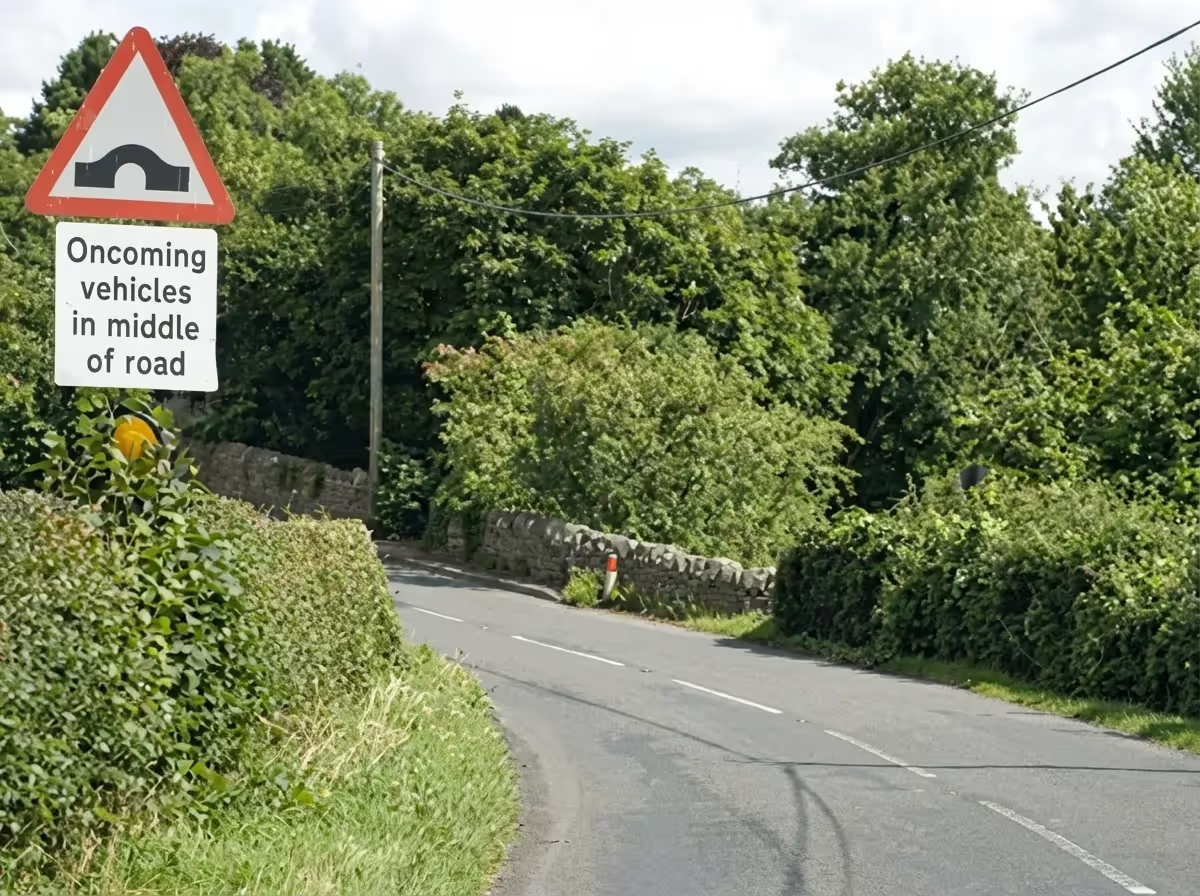
What should you do as you approach this bridge?
Explanation
You should slow down and be cautious. The bridge is narrow and there may not be enough room for you to pass an oncoming vehicle at this point. Also, there's no footpath, so be aware of pedestrians in the road.
Question 43 of 49
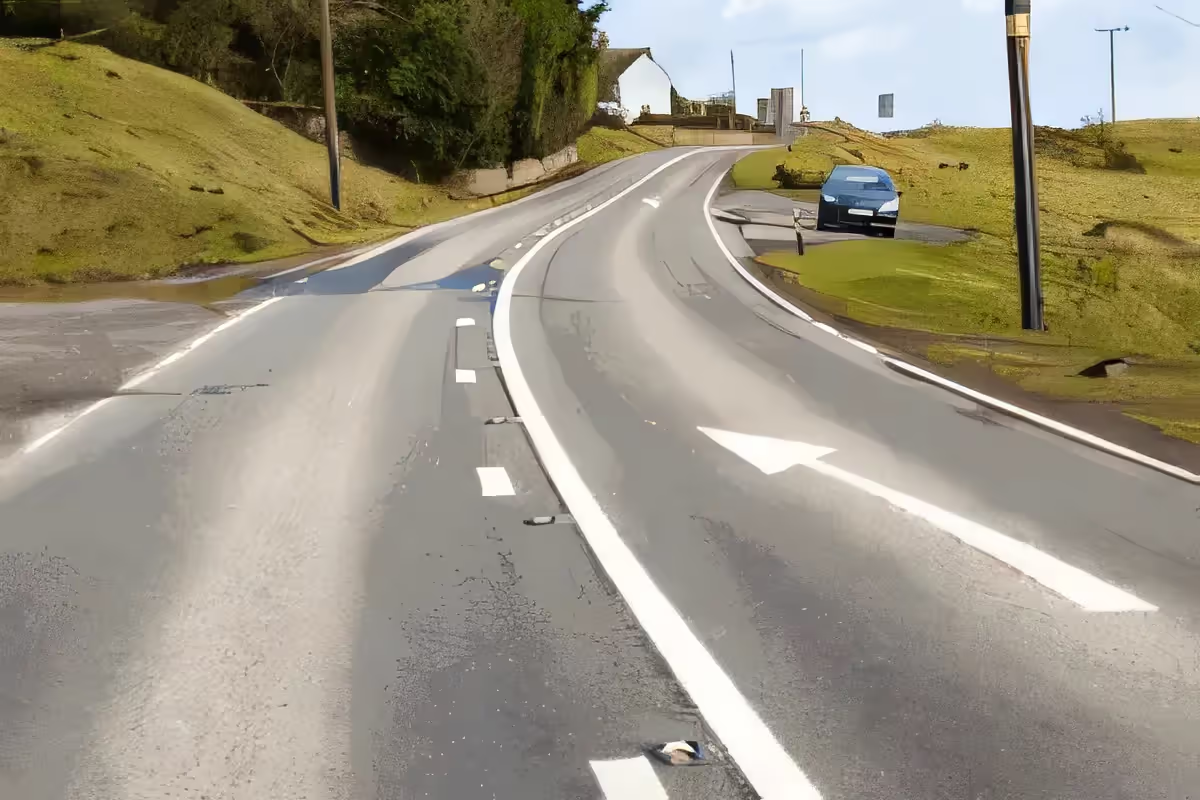
What does this road marking mean?
Explanation
In this picture, the road marking shows that overtaking drivers or riders need to return to the left before they reach the hatch markings ahead. The hatch markings are designed to separate opposing streams of traffic; for example, approaching some junctions or dual carriageways.
Question 44 of 49
Your mobile phone rings while you're travelling. What should you do?
Explanation
It's illegal to use a hand-held mobile or similar device when driving or riding, except in a genuine emergency. The safest option is to switch off your mobile phone before you set off, and use a message service. If you've forgotten to switch your phone off and it rings, you should ignore it. When you've stopped in a safe place, you can see who called and return the call if necessary.
Question 45 of 49
What should you do when you're approaching traffic lights that have been on green for some time?
Explanation
The longer traffic lights have been on green, the sooner they'll change. Allow for this as you approach traffic lights that you know have been on green for a while. They're likely to change soon, so you should be prepared to stop.
Question 46 of 49
What should you do before stopping?
Explanation
Before pulling up, check the mirrors to see what's happening behind you. Also assess what's ahead and make sure you give the correct signal if it will help other road users.
Question 47 of 49
You're following a large vehicle. Why should you stay a safe distance behind it?
Explanation
If you're following a large vehicle but are so close to it that you can't see its exterior mirrors, the driver won't be able to see you. Keeping well back will also allow you to see the road ahead by looking past on either side of the large vehicle.
Question 48 of 49
When you see a hazard ahead, you should use the mirrors. Why is this?
Explanation
You should be constantly scanning the road for clues about what's going to happen next. Check your mirrors regularly, particularly as soon as you spot a hazard. What's happening behind may affect your response to hazards ahead.
Question 49 of 49
You're waiting to turn right at the end of a road. Your view is obstructed by parked vehicles. What should you do?
Explanation
At junctions, your view is often restricted by buildings, trees or parked cars. You need to be able to see in order to judge a safe gap. Edge forward slowly and keep looking all the time. Don't cause other road users to change speed or direction as you emerge.