Answer 50 questions, check each correct answer and work through the explanations at your own pace.
Question 1 of 500 correct answers
Question 1 of 50
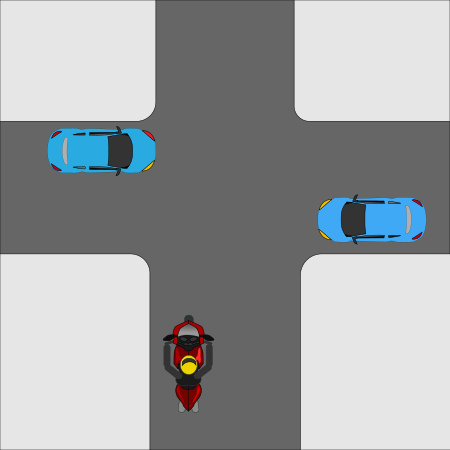
You're the motorcyclist approaching this junction. What should you do?
Explanation
Look out for road signs warning of side roads, even if you aren't turning off. A driver who's emerging may not be able to see you due to parked cars or heavy traffic. Slow down and be prepared to stop if necessary. Remember, no-one has priority at an unmarked crossroads.
Question 2 of 50
Your motorcycle is parked on a two-way road. How should you get on the machine?
Explanation
When you get onto a motorcycle, you should get on from the left side to avoid putting yourself in danger from passing traffic. You should also apply the front brake to prevent the motorcycle from rolling either forwards or backwards.
Question 3 of 50
You're riding in town at night. The roads are wet after rain. How will the reflections from wet surfaces affect you?
Explanation
After rain, the reflections from wet surfaces will make it hard to see unlit objects. Make sure that your visor or goggles are clean, so your vision is as clear as possible. Pedestrians will be difficult to see, especially if they're wearing dark clothing.
Question 4 of 50
You become cold when riding your motorcycle. How will this affect you?
Explanation
It can be difficult to keep warm when riding a motorcycle. It's well worth buying good-quality motorcycle clothing, which will help to keep you warm and is essential for your safety. If you become very cold while riding, you'll find it difficult to concentrate on the road.
Question 5 of 50
You're riding at night and are dazzled by the lights of an approaching vehicle. What should you do?
Explanation
If your view of the road ahead is restricted because you're being dazzled by approaching headlights, slow down and, if you need to, pull over and stop.
Question 6 of 50
Your motorcycle doesn't have linked brakes. In an emergency, what should you do to stop quickly?
Explanation
You should plan ahead to avoid the need to stop suddenly, but if an emergency arises, you must be able to stop safely. Applying the front brake just before the rear brake will help you to stop safely and quickly.
Question 7 of 50
Which of these may need to be adjusted when carrying a pillion passenger?
Explanation
Your headlights must be properly adjusted to avoid dazzling other road users. You'll probably need to do this when carrying a heavy load or the extra weight of a pillion passenger. You may also need to adjust the tyre pressures and the suspension.
Question 8 of 50
Which road surface is most likely to reduce the stability of your motorcycle?
Explanation
Some road surfaces can affect the stability of a motorcycle far more than they affect other vehicles. Look out for loose or slippery road surfaces and be aware of any traffic around you. You may need to take avoiding action and change direction quickly.
Question 9 of 50
When may you stop on the hard shoulder of a motorway?
Explanation
You mustn't stop on the hard shoulder, except in an emergency. Never use the hard shoulder to have a rest or a picnic, answer a mobile phone or check a road map. Also, you mustn't travel back along the hard shoulder if you've gone past your exit.
Question 10 of 50
Where should you take particular care to look out for other motorcyclists and cyclists?
Explanation
Other motorcyclists and cyclists may be difficult to see on the road, particularly at junctions. If your view is blocked by other traffic, you may not be able to see them approaching.
Question 11 of 50
What should you check after adjusting the final drive chain?
Explanation
Always check the rear wheel alignment after adjusting the final drive chain. Marks on the chain adjuster may be provided to make this easy. Incorrect alignment can cause instability and increased tyre wear.
Question 12 of 50
You've adjusted your drive chain. If this isn't done properly, what problem could it cause?
Explanation
After carrying out drive-chain adjustment, you should always check the rear wheel alignment. Many motorcycles have alignment guides stamped onto the frame to help you do this correctly.
Question 13 of 50
You need to put air into your tyres. How would you find out the correct pressure to use?
Explanation
Tyre pressures should be checked regularly. Look in your vehicle handbook for the correct pressures to use.
Question 14 of 50
You're carrying a pillion passenger. What should you adjust to allow for the extra weight?
Explanation
When carrying a passenger or other extra weight, you may need to make adjustments, particularly to the rear shock absorber(s), tyre pressures and headlight alignment. Check your vehicle handbook for details.
Question 15 of 50
Why should you check over your shoulder before turning right into a side road?
Explanation
Take a check over your shoulder before committing yourself to a manoeuvre. This is especially important when turning right, as other road users may not have seen your signal or may not understand your intentions.
Question 16 of 50
What safeguard could you take against fire risk to your motorcycle?
Explanation
The fuel in your motorcycle can be a dangerous fire hazard. Don't use a naked flame if you can smell fuel, and don't smoke when refuelling.
Question 17 of 50
You're turning right onto a dual carriageway. What should you do before emerging?
Explanation
Before emerging right onto a dual carriageway, make sure that the central reservation is wide enough to protect your vehicle. If it isn't, you should treat it as one road and check that it's clear in both directions before pulling out.
Question 18 of 50
What would make you more visible in daylight?
Explanation
Wearing bright or fluorescent clothes will help other road users to see you. Wearing a light or brightly coloured helmet can also make you more visible.
Question 19 of 50
What should you check after you've adjusted the tension on your drive chain?
Explanation
Drive chains wear and need frequent adjustment and lubrication. If the drive chain is worn or slack, it can jump off the sprocket and lock the rear wheel. When you've adjusted the chain tension, you need to check the rear wheel alignment. Marks by the chain adjusters may be provided to make this easier.
Question 20 of 50
You're riding at 70 mph on a three-lane motorway. There's no traffic ahead. Which lane should you use?
Explanation
Use the left-hand lane if it's free, regardless of the speed at which you're travelling.
Question 21 of 50
What's the national speed limit on a single carriageway?
Explanation
You don't have to ride at the speed limit. Use your own judgement and ride at a speed that suits the prevailing road, weather and traffic conditions.
Question 22 of 50
You're riding on a motorway. Unless signs show otherwise, what's the national speed limit?
Explanation
The national speed limit of 70 mph applies to cars and motorcycles on the motorway, unless they're towing a trailer. On smart motorways, this speed limit can be reduced and overhead signs will show the new limit in force.
Question 23 of 50
You're involved in a collision with another vehicle. Someone is injured and your motorcycle is damaged. What should you find out?
Explanation
If you're involved in a collision where someone is injured, your first priority is to warn other traffic and call the emergency services. Make sure you have all the information you need before you leave the scene, such as the other driver's name, phone number and insurance details. Don't ride your motorcycle if it's unroadworthy.
Question 24 of 50
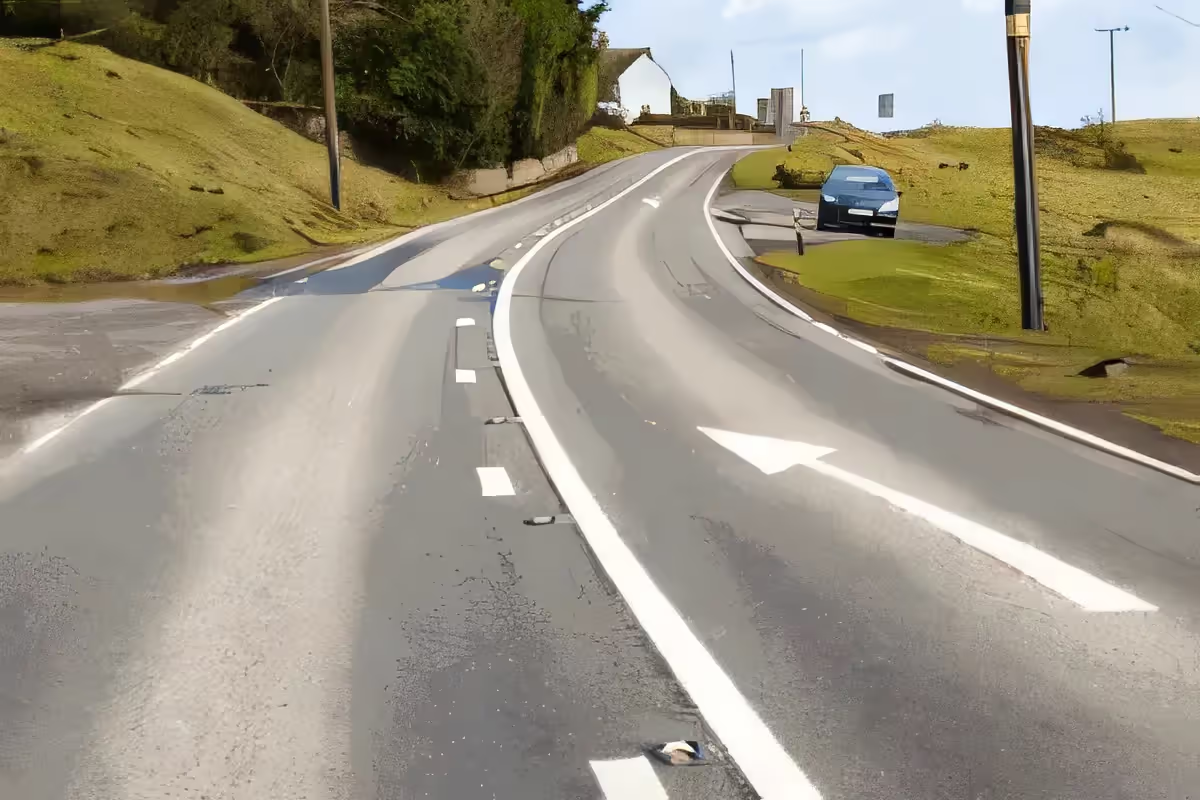
What does this road marking mean?
Explanation
In this picture, the road marking shows that overtaking drivers or riders need to return to the left before they reach the hatch markings ahead. The hatch markings are designed to separate opposing streams of traffic; for example, approaching some junctions or dual carriageways.
Question 25 of 50
What's the national speed limit on motorways for cars and motorcycles?
Explanation
Travelling at the national speed limit doesn't allow you to hog the right-hand lane. Always use the left-hand lane whenever possible. When leaving a motorway, get into the left-hand lane well before your exit. Reduce your speed on the slip road and look out for sharp bends or curves and traffic queuing at roundabouts.
Question 26 of 50
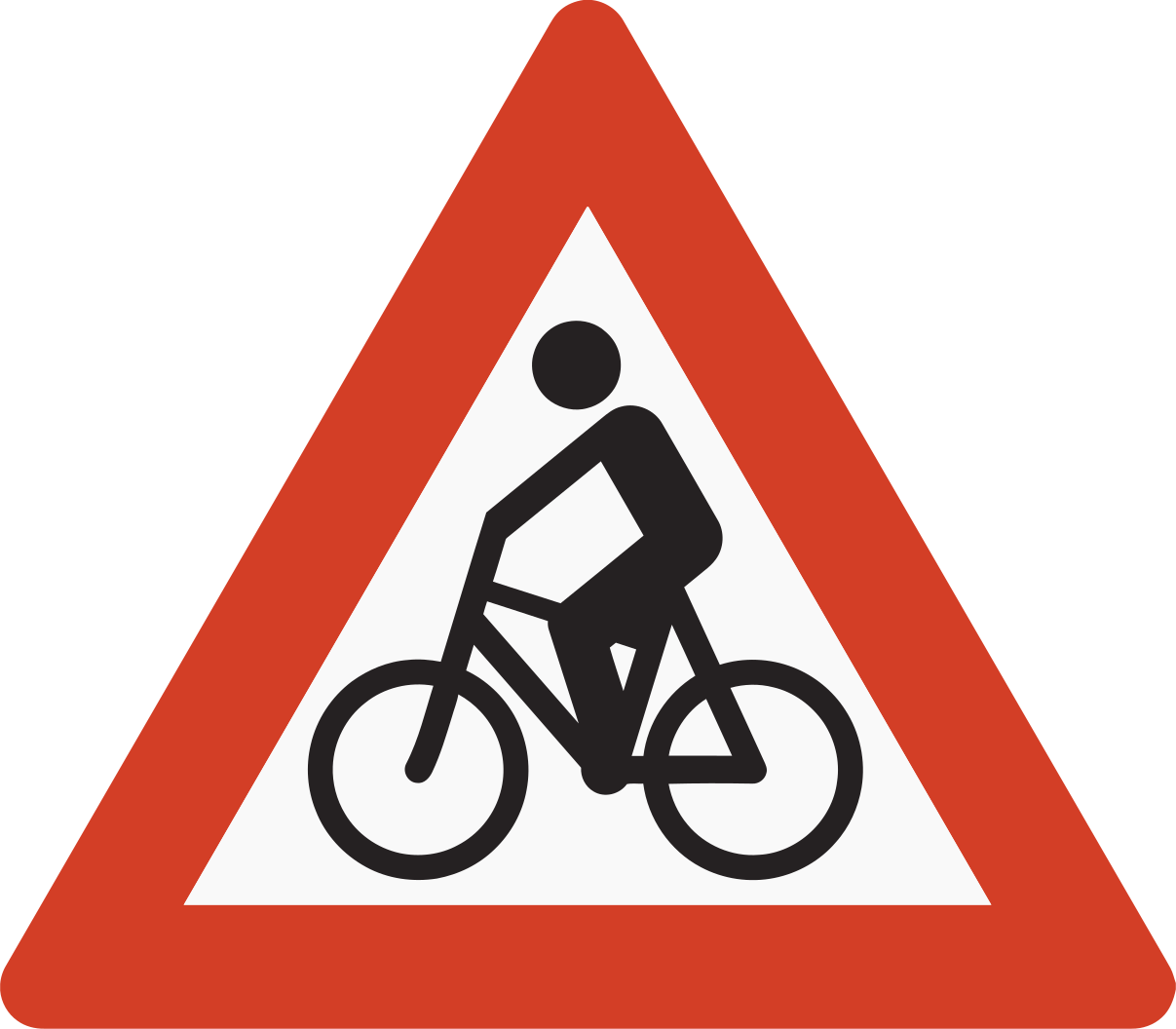
What does this sign mean?
Explanation
Where there's a cycle route ahead, a sign will show a bicycle in a red warning triangle. Watch out for children on bicycles and cyclists rejoining the main road.
Question 27 of 50
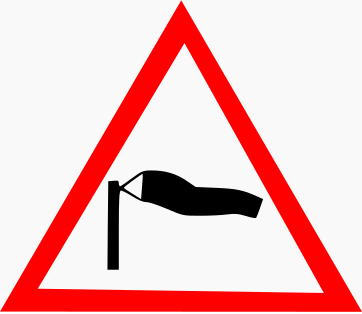
What does this sign mean?
Explanation
A warning sign with a picture of a windsock indicates that there may be strong side winds. This sign is often found on exposed roads.
Question 28 of 50
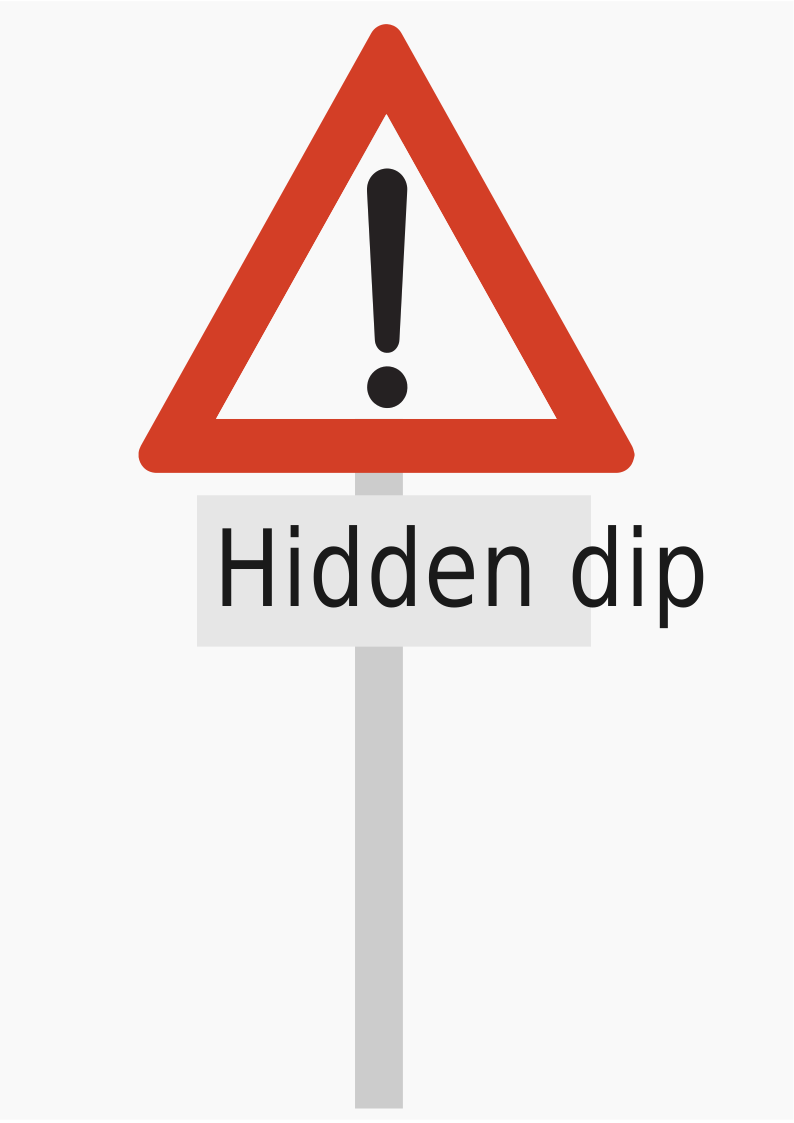
You're about to overtake. What should you do when you see this sign?
Explanation
You won't be able to see any hazards that might be hidden in the dip. As well as oncoming traffic, the dip may conceal pedestrians, cyclists or parked vehicles.
Question 29 of 50
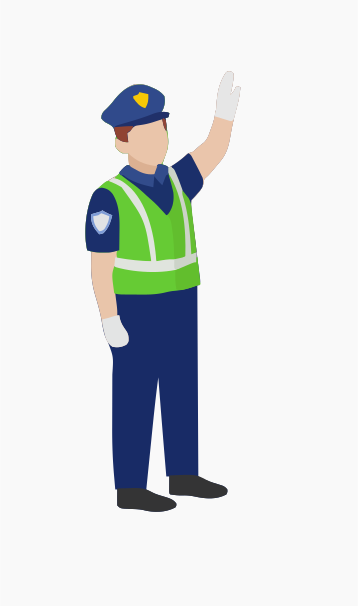
You're approaching a junction where the traffic lights aren't working. What should you do when a police officer gives this signal?
Explanation
When a police officer or traffic warden is directing traffic, you must obey them. They'll use the arm signals shown in The Highway Code. Learn what these signals mean and obey them.
Question 30 of 50
You're on a three-lane motorway. There are red reflective studs on your left and white ones to your right. Which lane are you in?
Explanation
On motorways, red reflective studs mark the left edge, white studs separate lanes, and amber studs mark the central reservation.
Question 31 of 50
What should you do when you meet an obstruction on your side of the road?
Explanation
Take care if you have to pass a parked vehicle on your side of the road. Give way to oncoming traffic if there isn't enough room for you both to continue safely.
Question 32 of 50
You've just gone through deep water. What should you do to make sure your brakes are working properly?
Explanation
Water on the brakes will act as a lubricant, causing them to work less efficiently. Using the brakes lightly as you go along will quickly dry them out.
Question 33 of 50
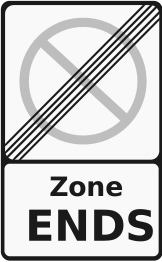
What does this sign tell you?
Explanation
The blue-and-red circular sign on its own means that waiting restrictions are in force. This sign shows that you're leaving the controlled zone and waiting restrictions no longer apply.
Question 34 of 50
Some two-way roads are divided into three lanes. Why are these particularly dangerous?
Explanation
If you intend to overtake, you must consider that approaching traffic could be planning the same manoeuvre. When you've considered the situation and decided it's safe, indicate your intentions early. This will show the approaching traffic that you intend to pull out.
Question 35 of 50
What is a Statutory Off-Road Notification (SORN)?
Explanation
If you want to keep a vehicle untaxed and off the public road, you must make a SORN. It's an offence not to do so. Your SORN is valid until your vehicle is taxed, sold or scrapped.
Question 36 of 50
What's the aim of a smart motorway?
Explanation
Smart motorway schemes are intended to reduce congestion and make journey times more reliable. In these areas, the hard shoulder may be used as a running lane to ease congestion at peak times or in the event of an incident. Variable speed limits are used to help keep the traffic moving and to avoid bunching.
Question 37 of 50
Before starting a journey, it's wise to plan your route. How can you do this?
Explanation
Planning your journey before you set out can help to make it much easier and more pleasant, and may help to ease traffic congestion. Look at a map to help you do this. You may need maps of different scales, depending on where and how far you're going. Printing or writing out the route can also help.
Question 38 of 50
What's the maximum fine for driving without insurance?
Explanation
Driving without insurance is a serious offence. As well as an unlimited fine, you may be disqualified or incur penalty points.
Question 39 of 50
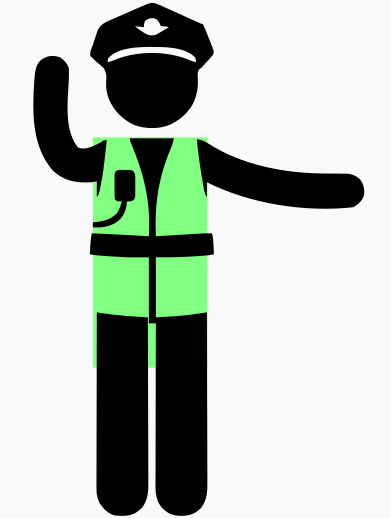
What does this signal from a police officer mean to oncoming traffic?
Explanation
Police officers may need to direct traffic; for example, at a junction where the traffic lights have broken down. Check your copy of The Highway Code for the signals that they use.
Question 40 of 50
You arrive at the scene of a crash. Someone is bleeding badly from an arm wound. Nothing is embedded in it. What should you do?
Explanation
If possible, lay the casualty down. Check for anything that may be in the wound. Apply firm pressure to the wound using clean material, without pressing on anything that might be in it. Raising the arm above the level of the heart will also help to stem the flow of blood.
Question 41 of 50
What must you have when you apply to renew your vehicle tax?
Explanation
You can renew your vehicle tax online, at post offices and vehicle registration offices, or by phone. When applying, make sure you have all the relevant valid documents, including a valid MOT test certificate where applicable.
Question 42 of 50
An adult casualty isn't breathing. To maintain circulation, compressions should be given. What's the correct depth to press for each compression?
Explanation
An adult casualty isn't breathing normally. To maintain circulation, place two hands on the centre of the chest. Then press down hard and fast - around 5-6 centimetres and about twice a second.
Question 43 of 50
At an incident, a small child isn't breathing. To restore normal breathing, how should you breathe into their mouth?
Explanation
If a young child has stopped breathing, first check that their airway is clear. Then give compressions to the chest using one hand (two fingers for an infant) and begin mouth-to-mouth resuscitation. Breathe very gently and continue the procedure until they can breathe without help.
Question 44 of 50
At an incident, a casualty isn't breathing. What should you do while helping them to start breathing again?
Explanation
It's important to ensure that the airways are clear before you start mouth-to-mouth resuscitation. Gently tilt their head back and use your finger to check for and remove any obvious obstruction in the mouth.
Question 45 of 50
There's been a collision. A motorcyclist is lying injured and unconscious. Unless it's essential, why should you not usually attempt to remove their helmet?
Explanation
When someone is injured, any movement that isn't absolutely necessary should be avoided, since it could make the injuries worse. Unless it's essential to remove a motorcyclist's helmet, it's generally safer to leave it in place.
Question 46 of 50
A learner driver begins to emerge into your path from a side road on the left. What should you do?
Explanation
You should always be looking for vehicles emerging from side roads as you approach them. If you see another vehicle begin to emerge into your path, be ready to slow down or stop if necessary.
Question 47 of 50
The vehicle ahead is being driven by a learner. What should you do?
Explanation
Learner drivers might take longer to react to traffic situations, so be patient and give them time. Don't unnerve them by riding close behind or showing signs of impatience.
Question 48 of 50
You're carrying a load on your motorcycle's luggage rack. What must you ensure?
Explanation
Don't risk losing any luggage while riding: it could fall into the path of following vehicles and cause danger. It's an offence to travel with an insecure load.
Question 49 of 50
You've just ridden through a flood. What should you test when you're clear of the water?
Explanation
Water can make your brakes less effective. If they've been affected, ride slowly while gently applying them until normal braking is restored.
Question 50 of 50
It rains after a long, dry, hot spell. How can this affect the road surface?
Explanation
Oil and rubber can build up on the road during long spells of dry weather. When it rains, this can make the road surface very slippery.