Answer 50 questions, check each correct answer and work through the explanations at your own pace.
Question 1 of 500 correct answers
Question 1 of 50
When you're going around a corner, what should your pillion passenger do?
Explanation
A pillion passenger shouldn't give signals or look around for you - that's your responsibility as the rider. If your passenger has never been on a motorcycle before, make sure they know that they need to lean with you when going around bends.
Question 2 of 50
What can a heavy load in a motorcycle top box cause?
Explanation
Carrying a heavy load in your top box could make your motorcycle unstable, because the weight is high up and at the very back of the machine.
Question 3 of 50
In normal riding conditions, how should you brake?
Explanation
A motorcycle is most stable when it's upright and moving in a straight line. This is the best time to brake. With independent front and rear brakes, both brakes should be used, with the front brake being applied just before the rear brake.
Question 4 of 50
Which of these is an effect of drinking alcohol?
Explanation
Even a small amount of alcohol will impair a person's judgement. It can increase confidence to a point where a person's behaviour may become 'out of character'. Someone who normally behaves sensibly may take risks and could endanger themselves and others. Don't drink and ride, or accept a lift from anyone who's been drinking.
Question 5 of 50
Your motorcycle has a catalytic converter. What does this reduce?
Explanation
Catalytic converters reduce the toxic and polluting gases given out by the engine. Never use leaded or lead-replacement petrol in a motorcycle with a catalytic converter; even one tankful can permanently damage the system.
Question 6 of 50
What do you need before you can take a practical motorcycle test?
Explanation
The purpose of a CBT course is to teach you basic theory and practical skills before you ride on the road, on your own, for the first time. CBT courses can only be given by approved training bodies (ATBs).
Question 7 of 50
You've been waiting for some time to make a right turn into a side road. What should you do just before you make the turn?
Explanation
Remember your lifesaver glance before you start to turn. If you've been waiting for some time and a queue has built up behind you, a vehicle further back may try to overtake. In this situation, it's especially important to look out for other motorcycles, which may be approaching at speed.
Question 8 of 50
When should you increase the tyre pressures on your motorcycle?
Explanation
The vehicle handbook will explain when it's recommended that you increase tyre pressures - for example, when you're carrying extra weight from a passenger or a heavy load.
Question 9 of 50
A friend offers you a second-hand safety helmet for you to use. Why may this be a bad idea?
Explanation
A second-hand helmet may look in good condition but it could have received damage that isn't visible externally. A damaged helmet could be unreliable in a crash. Don't take the risk.
Question 10 of 50
How should you maintain cable-operated brakes?
Explanation
Cables will stretch with use and need checking and adjusting regularly. They also need lubricating to prevent friction and wear of the cables and pivots. Don't over-adjust brake cables or the brakes will bind, causing increased fuel consumption, risk of skidding and risk of the brakes overheating.
Question 11 of 50
Your overall stopping distance comprises thinking distance and braking distance. You're on a good, dry road surface, with good brakes and tyres. What's the typical braking distance at 50 mph?
Explanation
Various factors - such as weather and road conditions, vehicle condition and loading - affect how long it takes you to stop. You also need to add reaction time to this. The overall stopping distance at 50 mph includes a thinking distance of 15 metres (the reaction time before braking starts) plus your braking distance of 38 metres, giving a typical overall stopping distance of 53 metres (175 feet) in good conditions.
Question 12 of 50
You aren't sure whether your cough medicine will affect your ability to ride safely. What should you do?
Explanation
If you're taking medicine or drugs prescribed by your doctor, check to make sure they won't make you drowsy. If you forget to ask when you're at the surgery, check with your pharmacist.
Question 13 of 50
Why are young motorcyclists more likely to be involved in crashes?
Explanation
Overconfidence, lack of experience and poor judgement can cause a motorcyclist to make poor decisions, which can lead to a collision. It's just as important to make sure you have the right attitude and self-awareness as a rider as it is to develop skilful riding techniques.
Question 14 of 50
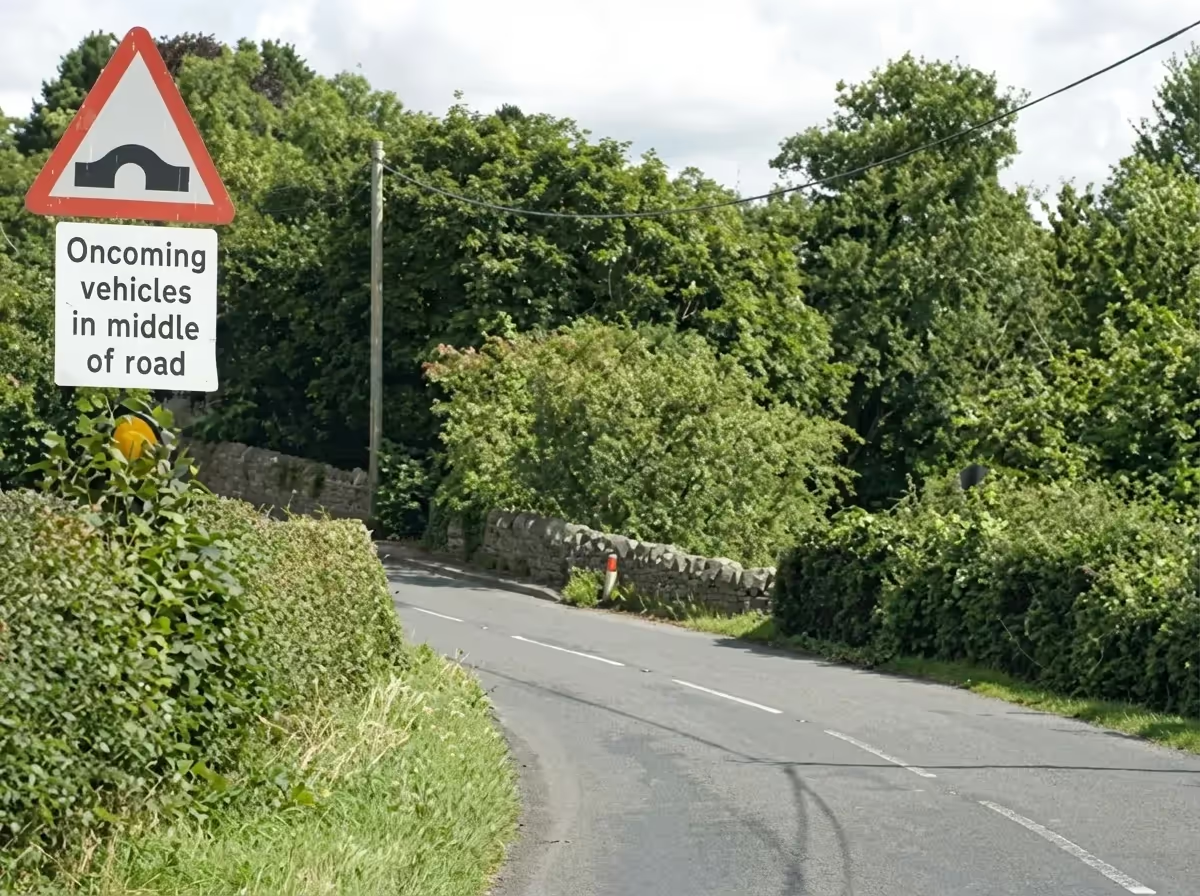
What should you do as you approach this bridge?
Explanation
You should slow down and be cautious. The bridge is narrow and there may not be enough room for you to pass an oncoming vehicle at this point. Also, there's no footpath, so be aware of pedestrians in the road.
Question 15 of 50
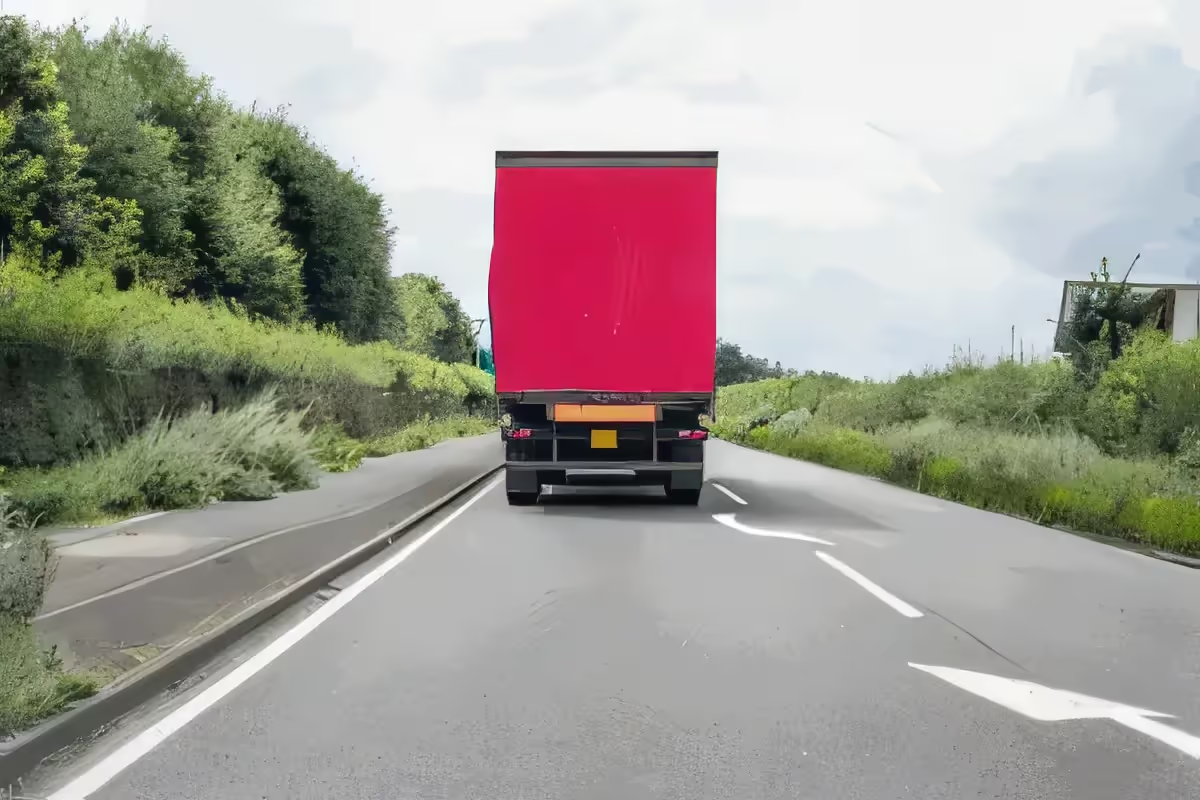
Why is it unwise to follow this vehicle too closely?
Explanation
Staying back will increase your view of the road ahead. This will help you to see any hazards that might occur and give you more time to react.
Question 16 of 50
You're in a one-way street and want to turn right. There are two lanes. Where should you position your vehicle?
Explanation
When you're in a one-way street and want to turn right, you should take up a position in the right-hand lane. This will allow other road users, not wishing to turn, to pass on the left. Indicate your intention and take up the correct position in good time.
Question 17 of 50
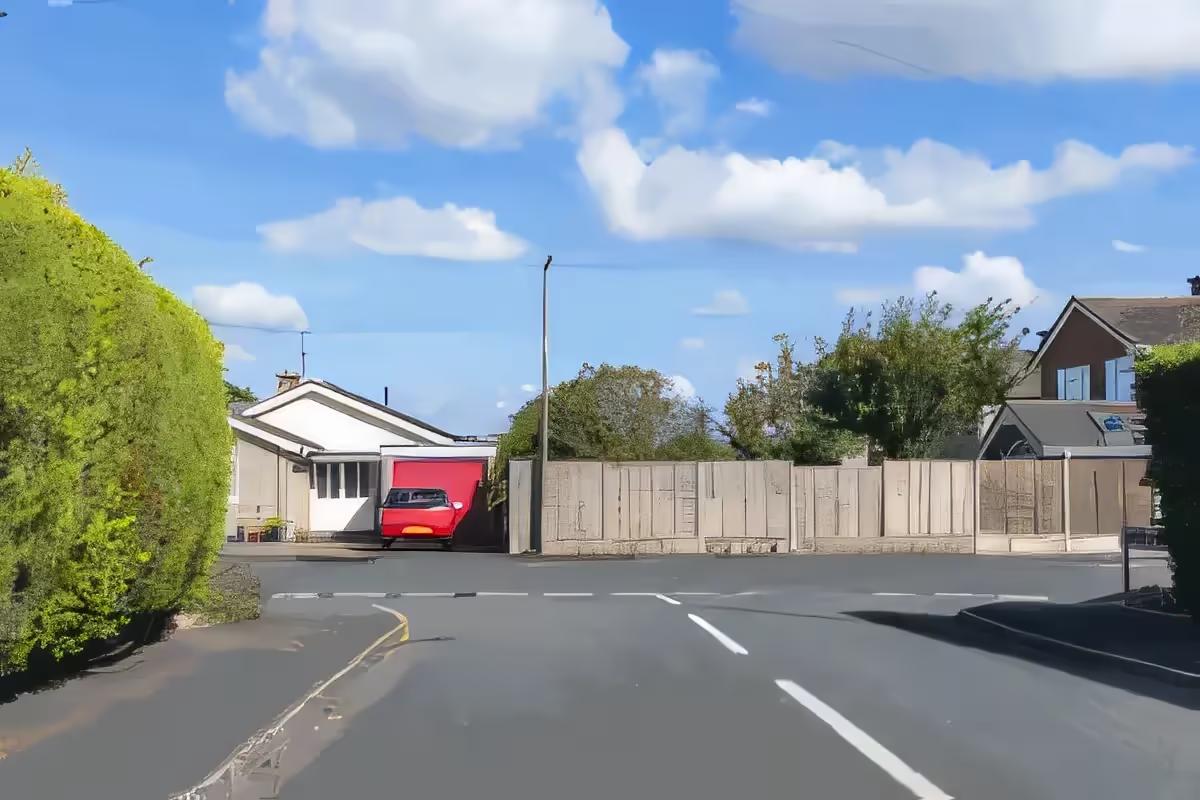
Why must you take extra care when turning right at this junction?
Explanation
You may have to pull forward slowly until you can see up and down the road. Be aware that the traffic approaching the junction can't see you either. If you don't know that it's clear, don't go.
Question 18 of 50
A driver pulls out of a side road in front of you, causing you to brake hard. What should you do?
Explanation
Be tolerant if a vehicle emerges and you have to brake quickly. Anyone can make a mistake, so don't react aggressively. Be alert where there are side roads and be especially careful where there are parked vehicles, because these can make it difficult for emerging drivers to see you.
Question 19 of 50
Why is a toucan crossing different from other crossings?
Explanation
Toucan crossings are shared by pedestrians and cyclists, who are permitted to cycle across. They're shown the green light together. The signals are push-button-operated and there's no flashing amber phase.
Question 20 of 50
What should you do when you see two elderly pedestrians about to cross the road ahead?
Explanation
Older people may have impaired hearing, vision, concentration and judgement. They may also walk slowly and so could take a long time to cross the road.
Question 21 of 50
Which is the most vulnerable road user at road junctions?
Explanation
Pedestrians and riders on two wheels can be harder to see than other road users. Make sure you look for them, especially at junctions. Effective observation, coupled with appropriate action, can save lives.
Question 22 of 50
You're approaching a roundabout. There are horses just ahead of you. What should you do?
Explanation
Horse riders often keep to the outside of the roundabout even if they're turning right. Give them plenty of room and remember that they may have to cross lanes of traffic.
Question 23 of 50
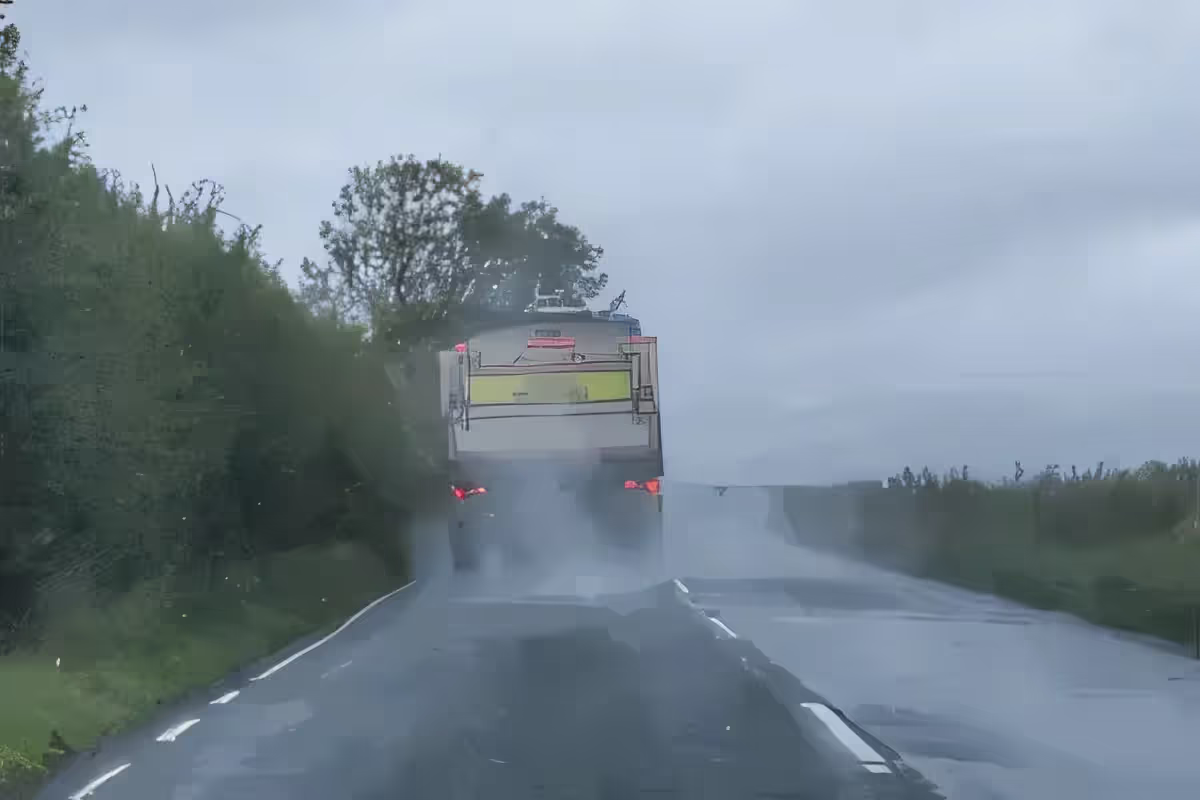
You're following a lorry on a wet road. What should you do when spray makes it difficult to see the road ahead?
Explanation
Large vehicles throw up a lot of spray when it's wet. This makes it difficult for following drivers to see the road ahead. You'll be able to see more by dropping back further, out of the spray. This will also increase your separation distance, giving you more room to stop if you have to.
Question 24 of 50
When mustn't you stop on a clearway?
Explanation
Clearways are in place so that traffic can flow without the obstruction of parked vehicles. Just one parked vehicle can cause an obstruction for all other traffic. You mustn't stop where a clearway is in force, not even to pick up or set down passengers.
Question 25 of 50
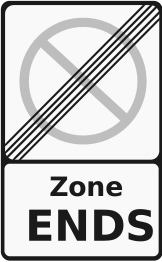
What does this sign mean?
Explanation
Even though you've left the restricted area, make sure that you park where you won't endanger other road users or cause an obstruction.
Question 26 of 50
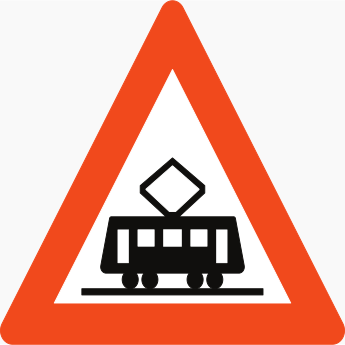
What does this sign mean?
Explanation
Take extra care when you encounter trams. Look out for road markings and signs that alert you to them. Modern trams are very quiet and you may not hear them approaching.
Question 27 of 50
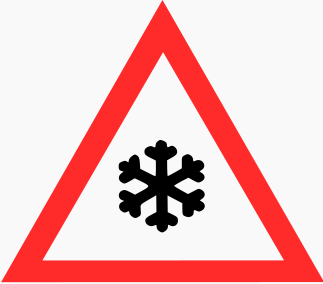
What does this sign mean?
Explanation
It will take up to ten times longer to stop when it's icy. Where there's a risk of icy conditions, you need to be aware of this and take extra care. If you think the road may be icy, don't brake or steer harshly, as your tyres could lose their grip on the road.
Question 28 of 50
When can you park on the left opposite these road markings?
Explanation
You mustn't park or stop on a road marked with double white lines (even where one of the lines is broken) except to pick up or set down passengers.
Question 29 of 50
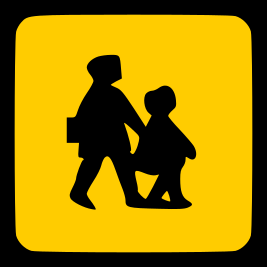
Where would you see this sign?
Explanation
Watch out for children crossing the road from the other side of the bus.
Question 30 of 50
You keep well back while waiting to overtake a large vehicle. What should you do if a car moves into the gap?
Explanation
Sometimes your separation distance is shortened by a driver moving into the gap you've allowed. When this happens, react positively, stay calm and drop further back to re-establish a safe following distance.
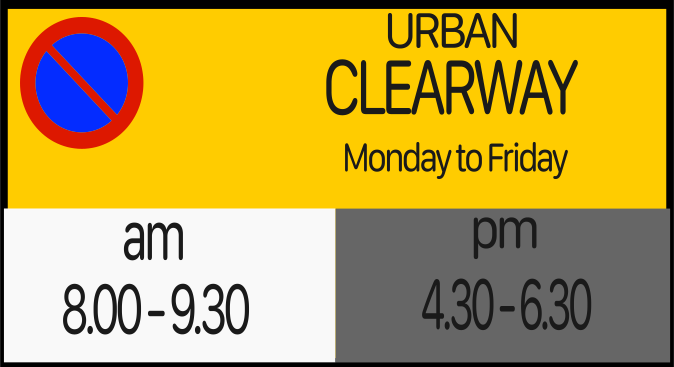
Question 31 of 50
What does this sign mean?
Explanation
Urban clearways are provided to keep traffic flowing at busy times. You may stop only briefly to set down or pick up passengers. Times of operation will vary from place to place, so always check the signs.
Question 32 of 50
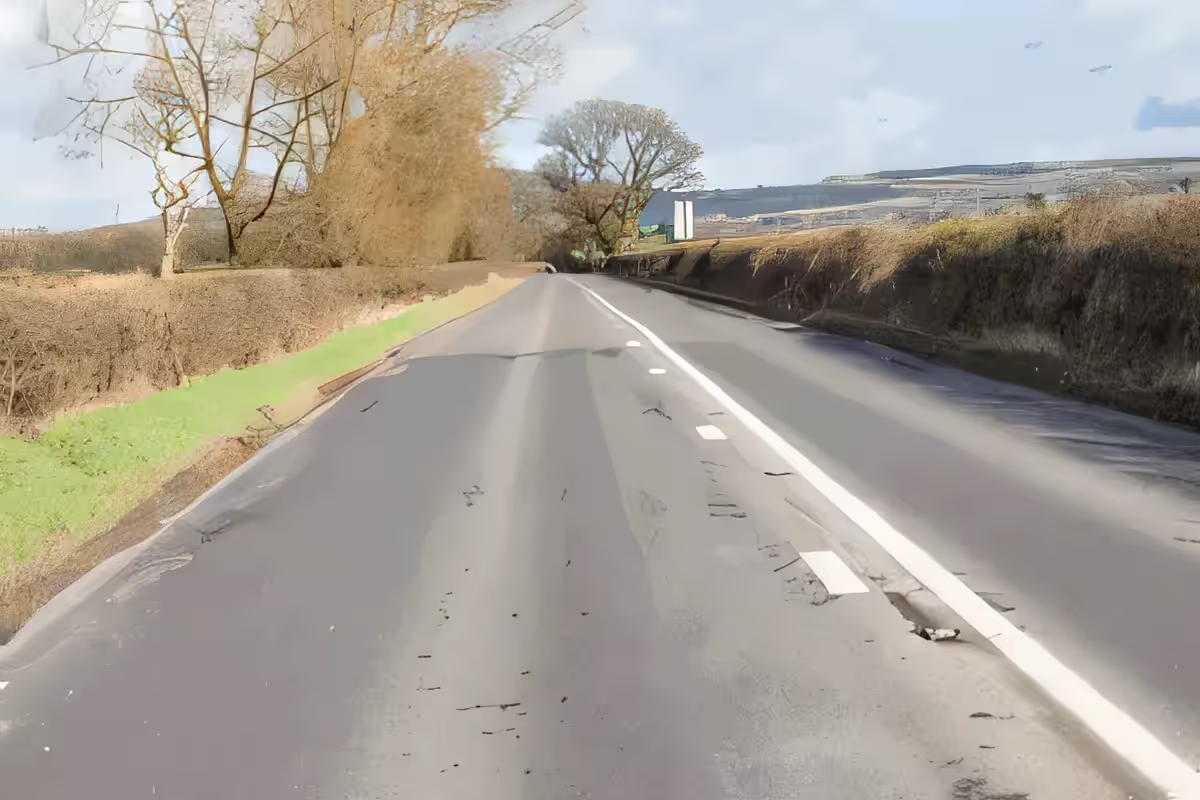
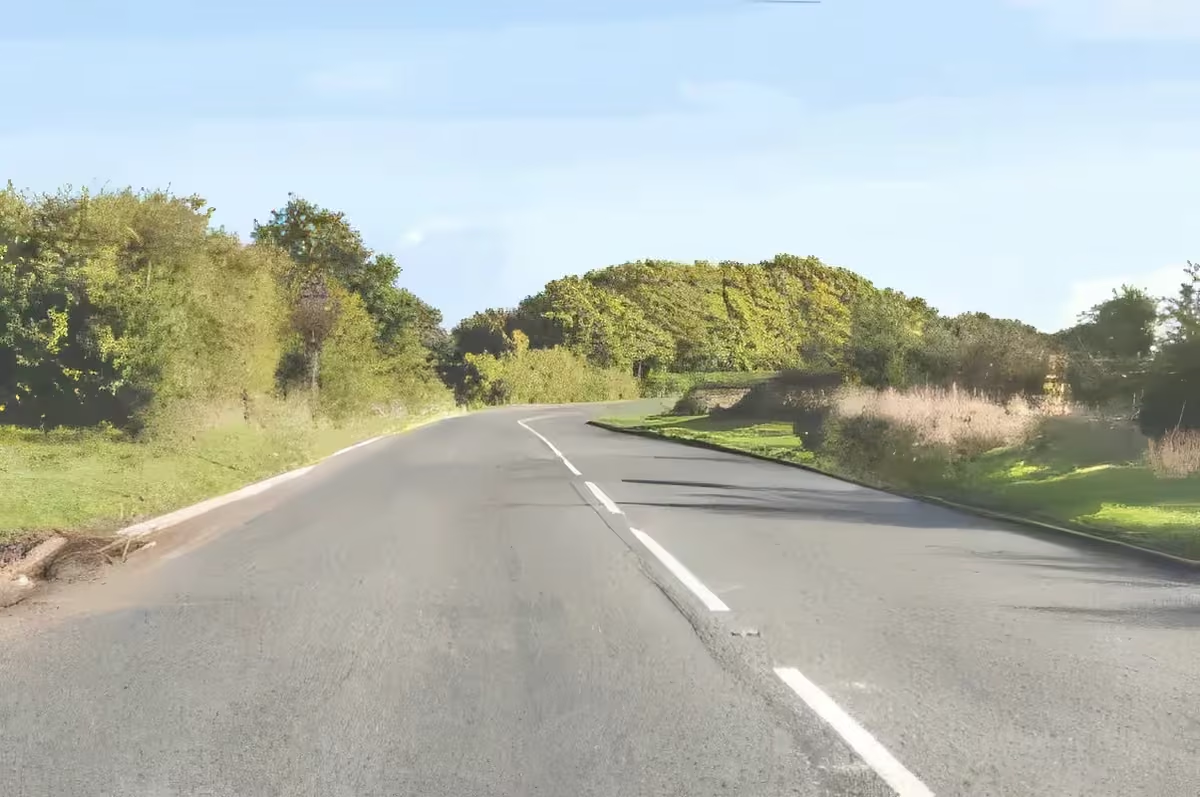
What does this white line along the centre of the road mean?
Explanation
The centre of the road is usually marked by a broken white line, with lines that are shorter than the gaps. When the lines become longer than the gaps, this is a hazard warning line. Look well ahead for these, especially when you're planning to overtake or turn off.
Question 33 of 50
Other drivers may sometimes flash their headlights at you. In which situation are they allowed to do this?
Explanation
If other drivers flash their headlights, this isn't a signal to show priority. The flashing of headlights has the same meaning as sounding the horn: it's a warning of their presence.
Question 34 of 50
You're following a large vehicle. Why should you stay a safe distance behind it?
Explanation
If you're following a large vehicle but are so close to it that you can't see its exterior mirrors, the driver won't be able to see you. Keeping well back will also allow you to see the road ahead by looking past on either side of the large vehicle.
Question 35 of 50
You think the driver of the vehicle in front has forgotten to cancel their right indicator. What should you do?
Explanation
Be cautious and don't attempt to overtake. The driver may be unsure of the location of a junction and may turn suddenly.
Question 36 of 50
What does this signal mean?
Explanation
The white light shows that trams must stop. The green light shows that other vehicles can go if the way is clear. Trams are being introduced into more cities, so you're likely to come across them and you should learn which signs apply to them.
Question 37 of 50
You're following a vehicle at a safe distance on a wet road. Another driver overtakes you and pulls into the gap you've left. What should you do?
Explanation
Wet weather will affect the time it takes for you to stop and can affect your control. Your speed should allow you to stop safely and in good time. If another vehicle pulls into the gap you've left, ease back until you've regained your stopping distance.
Question 38 of 50
Where does this marking normally appear on a road?
Explanation
This road marking means you should give way to traffic on the main road. It might not be used at junctions where there isn't much traffic. However, if there's a double broken line across the junction, the 'give way' rules still apply.
Question 39 of 50
What's used to reduce traffic bunching on a motorway?
Explanation
Congestion can be reduced by keeping traffic at a constant speed. At busy times, maximum speed limits are displayed on overhead gantries. These can be varied quickly, depending on the amount of traffic. By keeping to a constant speed on busy sections of motorway, overall journey times are normally improved.
Question 40 of 50
An injured person has been placed in the recovery position. They're unconscious but breathing normally. What else should be done?
Explanation
After a casualty has been placed in the recovery position, make sure their airway remains open and monitor their condition until medical help arrives. Where possible, don't move a casualty unless there's further danger.
Question 41 of 50
You're the first person to arrive at an incident where people are badly injured. You've switched on your hazard warning lights and checked all engines are stopped. What else should you do?
Explanation
If you're the first to arrive at a crash scene, the first concerns are the risk of further collision and fire. Ensuring that vehicle engines are switched off will reduce the risk of fire. Use hazard warning lights so that other traffic knows there's a need for caution. Make sure the emergency services are contacted; don't assume this has already been done.
Question 42 of 50
At an incident, someone is suffering from severe burns. What should you do to help them?
Explanation
Your priority is to cool the burns with a clean, cool, non-toxic liquid, preferably water. Its coolness will help take the heat out of the burns and relieve the pain. Keep the wound doused for at least 10 minutes. If blisters appear, don't attempt to burst them, as this could lead to infection.
Question 43 of 50
A collision has just happened. An injured person is lying in a busy road. What's the first thing you should do to help?
Explanation
The most immediate danger is further collisions and fire. You could warn other traffic by switching on hazard warning lights, displaying an advance warning triangle or sign (but not on a motorway), or by any other means that doesn't put you or others at risk.
Question 44 of 50
When will your overall stopping distance be longer?
Explanation
When you're carrying a passenger on a motorcycle, the overall weight will be much more than when you're riding alone. This additional weight will make it harder for you to stop quickly in an emergency, so you'll need to increase the distance between your motorcycle and the vehicle in front.
Question 45 of 50
Which lane mustn't you use when you're riding your motorcycle?
Explanation
Always plan ahead and be aware of lanes and areas designated for specific road users only. The restrictions are sometimes in force only at certain times of day, and signs will show when they apply. In some towns, motorcycles are permitted to use bus lanes - check the signs carefully.
Question 46 of 50
You're approaching a road with a surface of loose chippings. What should you do?
Explanation
The handling of your motorcycle will be greatly affected by the road surface. Look well ahead and be especially alert if the road looks uneven or has loose chippings. Slow down in good time, as braking harshly in these conditions will cause you to skid. For the same reason, avoid making sudden changes of direction.
Question 47 of 50
What will happen if you look down at the front wheel while riding?
Explanation
When riding, look ahead and around you. Don't look down at the front wheel, as this can severely upset your balance.
Question 48 of 50
What should you check after refitting your rear wheel?
Explanation
After refitting the rear wheel or adjusting the drive chain, you should check your wheel alignment. Incorrect alignment will result in excessive tyre wear and poor roadholding.
Question 49 of 50
How will riding a motorcycle and sidecar differ from riding a solo motorcycle?
Explanation
You'll need to adapt your riding technique when riding a motorcycle fitted with a sidecar. The extra weight will affect the handling and may increase your overall stopping distance.
Question 50 of 50
When would you use the engine cut-out switch?
Explanation
If you're involved in a collision, using the engine cut-out switch will help to reduce the risk of fire. When stopping the engine normally, use the ignition switch.