Answer 50 questions, check each correct answer and work through the explanations at your own pace.
Question 1 of 500 correct answers
Question 1 of 50
You're riding a motorcycle that has an engine of less than 50 cc. What should you do if you see a queue of traffic building up behind?
Explanation
Try not to hold up a queue of traffic. This might lead to other road users becoming impatient and attempting dangerous manoeuvres. If you're riding a slow-moving scooter or small motorcycle and a queue of traffic has built up behind you, look for a safe place to pull in so they can pass safely.
Question 2 of 50
For what purpose should you use the engine cut-out switch on your motorcycle?
Explanation
Only use the engine cut-out switch in an emergency. When stopping the engine normally, use the ignition switch. This will remind you to take your keys with you when parking. It could also prevent starting problems if you forget you've left the cut-out switch in the 'off' position.
Question 3 of 50
Why should you be careful when crossing tram lines?
Explanation
The smooth steel surface can be slippery and dangerous for motorcyclists, especially when it's wet. Try to cross tram lines at right angles.
Question 4 of 50
You see a rainbow-coloured pattern on the road. What will this warn you of?
Explanation
If fuel, especially diesel, is spilt on the road, it will make the surface very slippery. In wet weather, it can be seen as a rainbow-coloured pattern on the road.
Question 5 of 50
How is a learner motorcyclist's licence restricted?
Explanation
Learner motorcyclists aren't allowed to carry a pillion passenger until they pass the test and hold a full licence.
Question 6 of 50
Your motorcycle doesn't have linked brakes. What should you do when braking normally to a stop?
Explanation
In normal riding, you should always use both brakes. Braking when the motorcycle is upright and travelling in a straight line helps you to keep control. If your motorcycle has linked brakes, refer to the vehicle handbook.
Question 7 of 50
It's been raining after a long dry spell. How will this affect the road surface?
Explanation
During a long spell of hot, dry weather, the road surface will become coated with rubber and dust. When it rains after this, the road surface will be unusually slippery. Take extra care, particularly at junctions, bends and roundabouts, and allow double the usual stopping distance.
Question 8 of 50
What would make a young motorcyclist especially vulnerable?
Explanation
Young and inexperienced motorcyclists often have more confidence than ability. It takes time to gain experience and become a good rider. Make sure you have the right attitude and put safety first.
Question 9 of 50
Who should obey diamond-shaped traffic signs?
Explanation
These signs apply only to tram drivers, but you should know their meaning so that you're aware of the priorities and are able to anticipate the actions of the driver.
Question 10 of 50
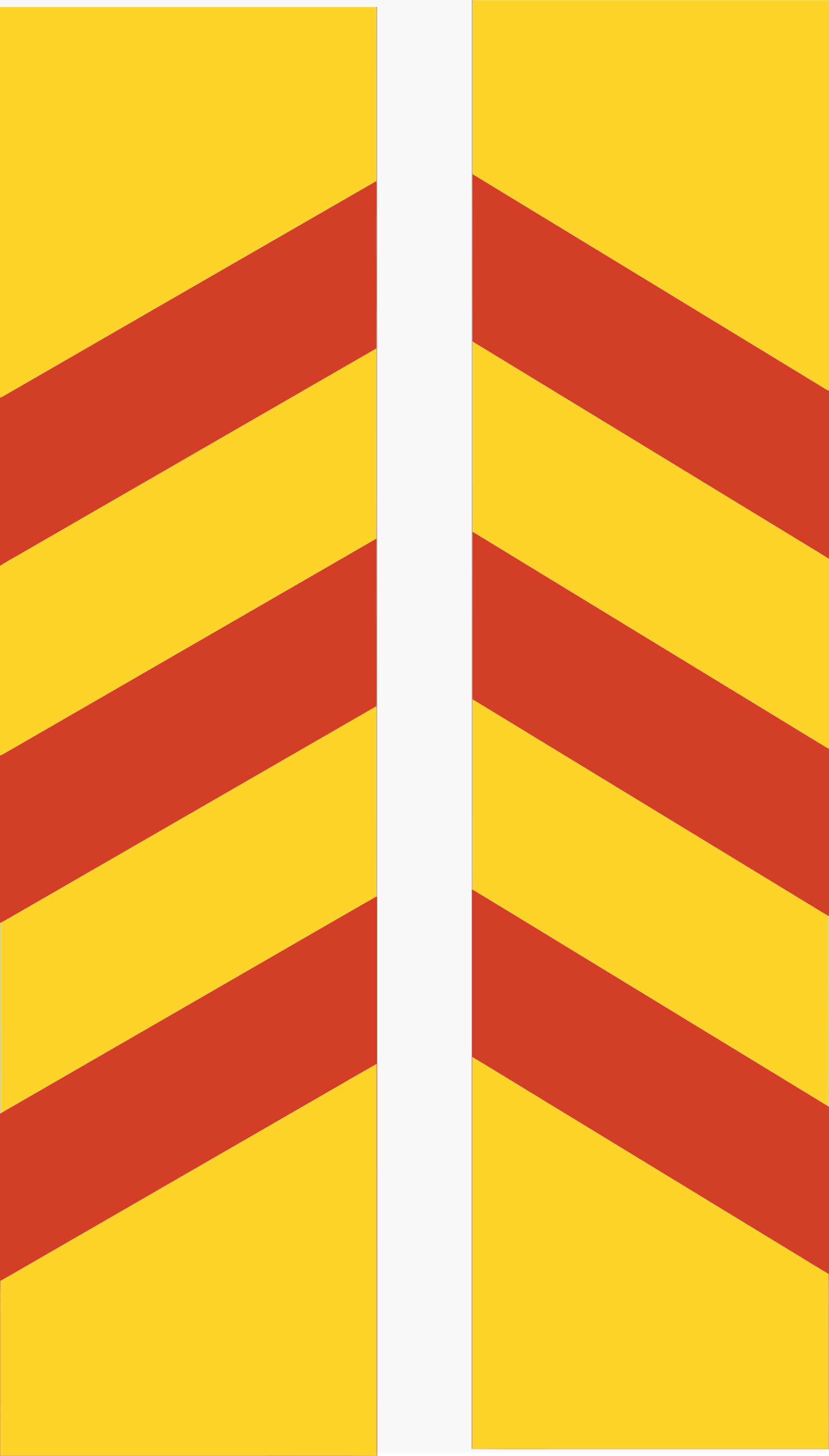
Where would you expect to see these markers?
Explanation
These markers must be fitted to vehicles over 13 metres long, large goods vehicles, and rubbish skips placed in the road. They're reflective to make them easier to see in the dark.
Question 11 of 50
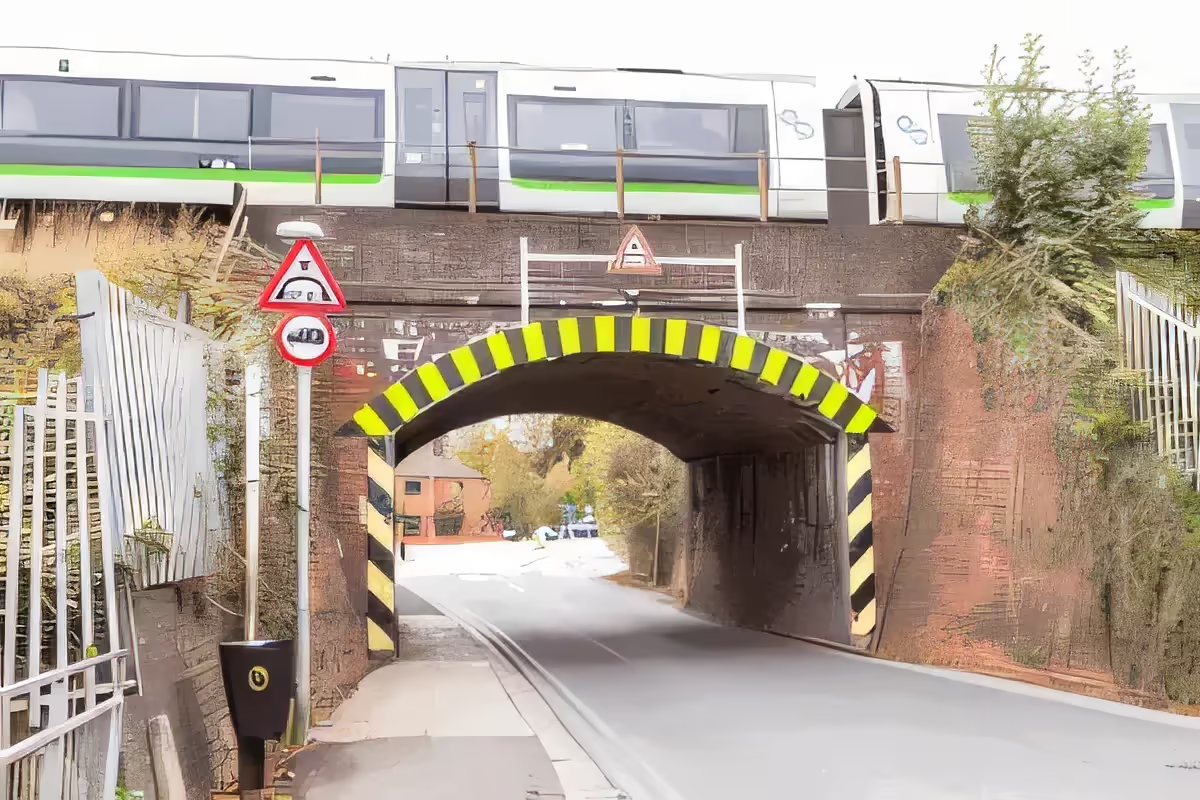
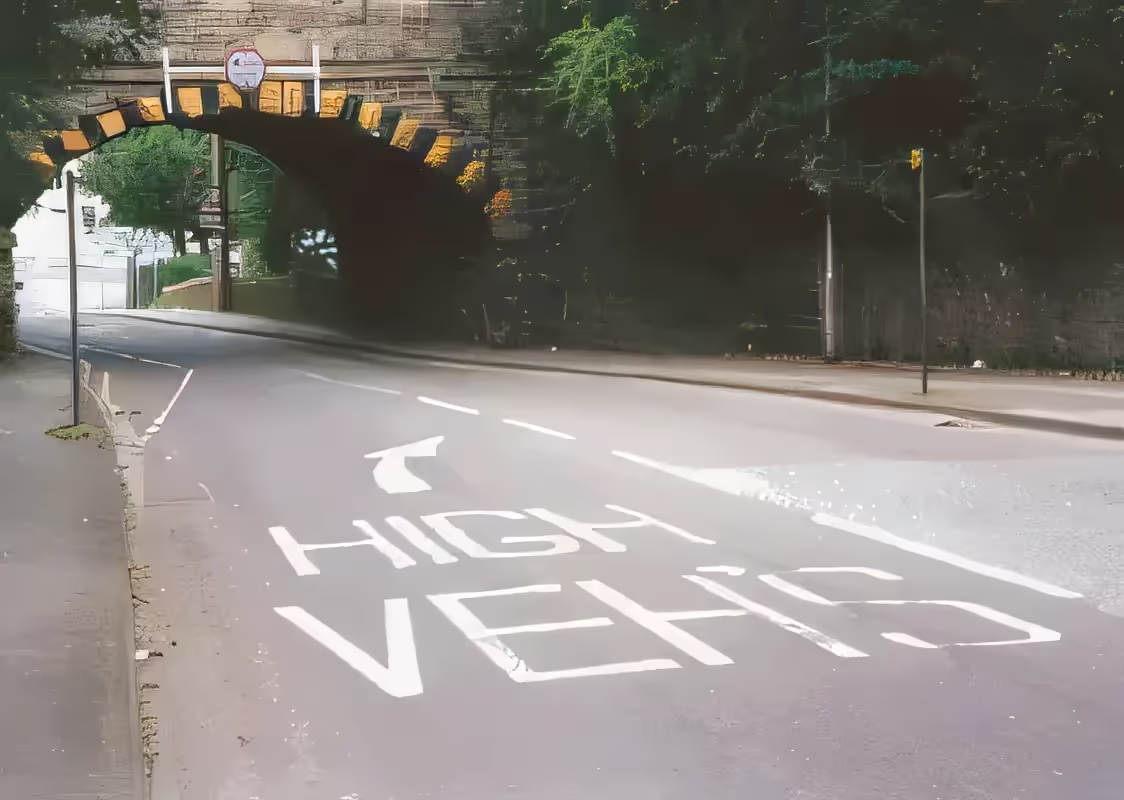
Which type of vehicle should you be ready to give way to as you approach this bridge?
Explanation
A double-deck bus or high-sided lorry will have to take a position in the centre of the road to clear the bridge. There's normally a sign to show this. Look well ahead, past the bridge and be ready to stop and give way to large oncoming vehicles.
Question 12 of 50
How would age affect an elderly person's driving ability?
Explanation
Be tolerant of older drivers. They may take longer to react to a hazard and they may be hesitant in some situations - for example, at a junction.
Question 13 of 50
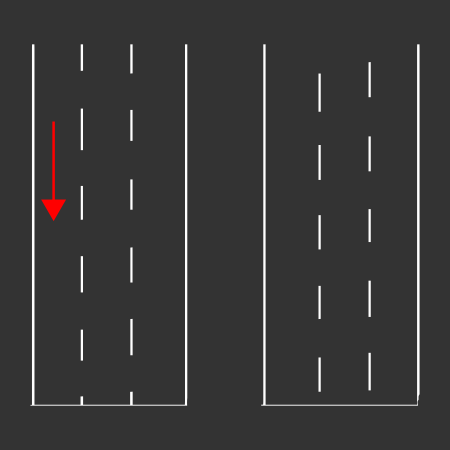
Which vehicles should use the left-hand lane on a three-lane motorway?
Explanation
On a motorway, all traffic should use the left-hand lane unless overtaking. When overtaking a number of slower vehicles, move back to the left-hand lane when you're safely past. Check your mirrors frequently and don't stay in the middle or right-hand lane if the left-hand lane is free.
Question 14 of 50
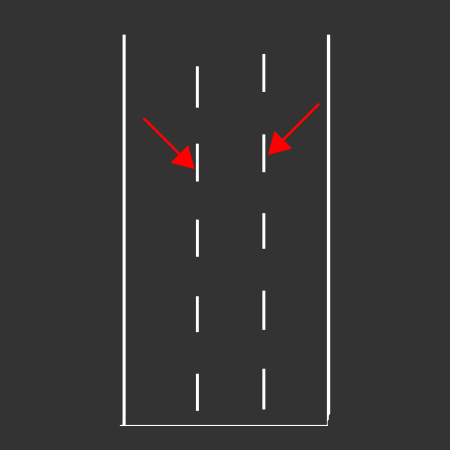
On which part of a motorway are amber reflective studs found?
Explanation
On motorways, reflective studs of various colours are fixed in the road between the lanes. These help you to identify which lane you're in when it's dark or in poor visibility. Amber-coloured studs are found on the right-hand edge of the main carriageway, next to the central reservation.
Question 15 of 50
What colour are the reflective studs between the lanes on a motorway?
Explanation
White studs are found between the lanes on motorways. They reflect back the light from your headlights. This is especially useful in bad weather, when visibility is restricted.
Question 16 of 50
There's a tractor ahead. You want to overtake but you aren't sure whether it's safe. What should you do?
Explanation
Following a tractor can be frustrating, but never overtake if you're unsure whether it's safe. Ask yourself: 'Can I see far enough down the road to ensure that I can complete the manoeuvre safely?' It's better to be delayed for a minute or two than to take a chance that may cause a collision.
Question 17 of 50
You're approaching a busy junction. What should you do when, at the last moment, you realise you're in the wrong lane?
Explanation
There are times when road markings are obscured by queuing traffic, or you're unsure which lane to use. If, at the last moment, you find you're in the wrong lane, don't cut across or bully other drivers to let you in. Follow the lane you're in and find somewhere safe to turn around and rejoin your route.
Question 18 of 50
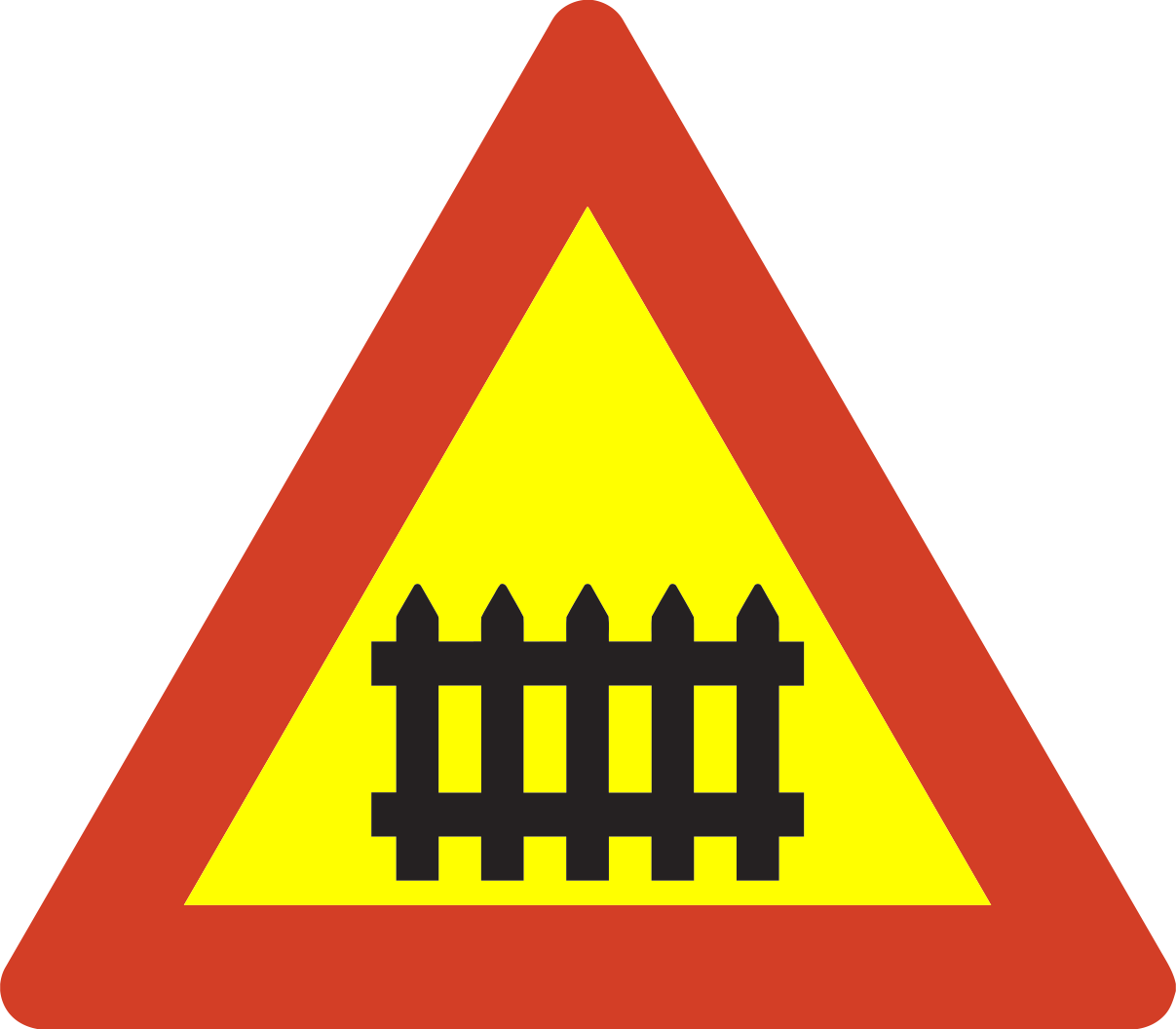
What does this sign mean?
Explanation
Some crossings have gates but no attendant or signals. You should stop, look both ways, listen and make sure that no train is approaching. If there's a telephone, contact the signal operator to make sure it's safe to cross.
Question 19 of 50
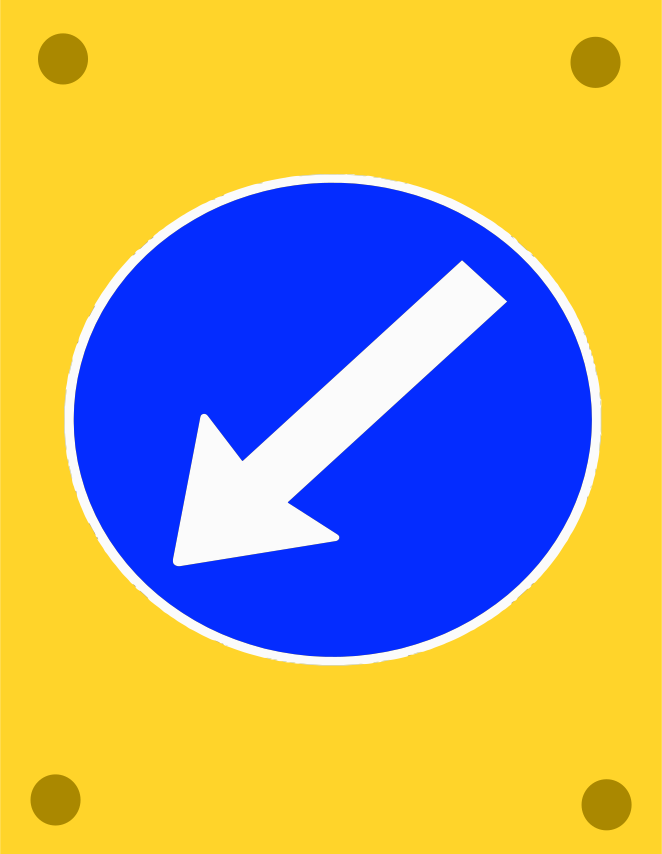
What should you do when you see this sign as you travel along a motorway?
Explanation
You'll see this sign if the motorway is closed ahead. Pull into the left-hand lane as soon as it's safe to do so. Don't wait until the last moment before you move across, because the lane may be busy and you'll have to rely on another driver making room for you.
Question 20 of 50
You see a car on the hard shoulder of a motorway with a 'help' pennant displayed. What does this mean?
Explanation
If a disabled driver's vehicle breaks down and they're unable to walk to an emergency phone, they're advised to stay in their car and switch on the hazard warning lights. They may also display a 'help' pennant in their vehicle.
Question 21 of 50
How would you react to drivers who appear to be inexperienced?
Explanation
Learners might not have confidence when they first start to drive. Allow them plenty of room and don't react adversely to their hesitation. We all learn from experience, but new drivers will have had less practice in dealing with all the situations that might occur.
Question 22 of 50
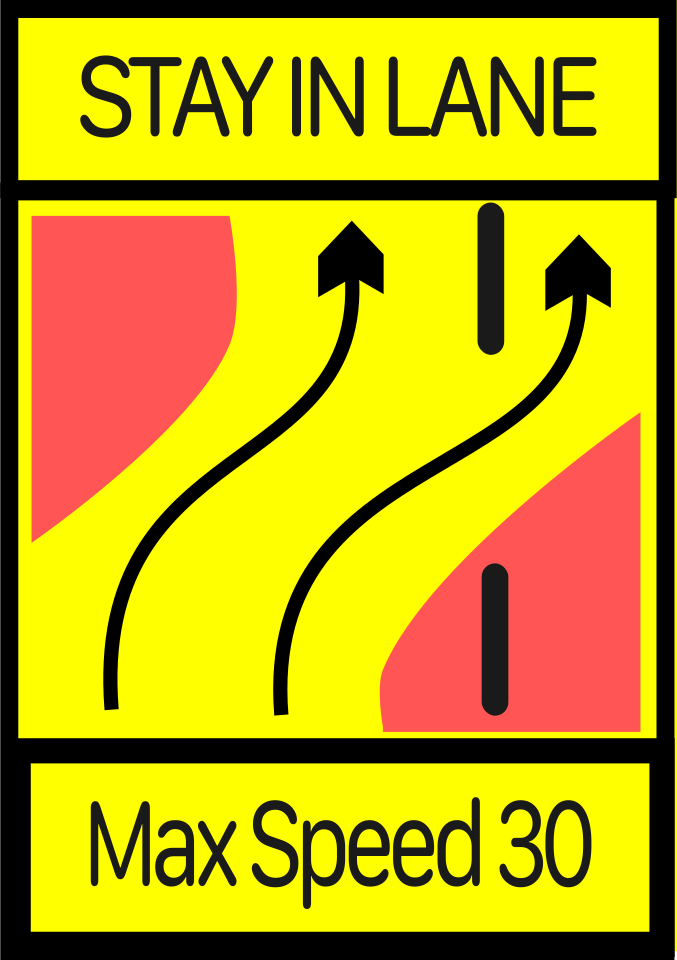
You're on a motorway. A lorry has stopped in the right-hand lane. What should you do when you see this sign on the lorry?
Explanation
Sometimes work is carried out on the motorway without closing the lanes. When this happens, signs are mounted on the back of lorries to warn other road users of the roadworks ahead.
Question 23 of 50
What should you do when making a journey in foggy conditions?
Explanation
If you're planning to make a journey when it's foggy, listen to the weather reports. If visibility is very poor, avoid making unnecessary journeys. If you do travel, leave plenty of time - and if someone is waiting for you to arrive, let them know that your journey will take longer than normal. This will also take off any pressure you may feel to rush.
Question 24 of 50
What should you do when going through a contraflow system on a motorway?
Explanation
At roadworks, and especially where a contraflow system is operating, a speed restriction is likely to be in place. Keep to the lower speed limit and don't change lanes or overtake where prohibited.
Question 25 of 50
When may you sound the horn?
Explanation
Never sound the horn aggressively. You mustn't sound it when driving in a built-up area between 11.30 pm and 7.00 am, or when you're stationary, unless another road user poses a danger. Don't scare animals by sounding your horn.
Question 26 of 50
What should you do as you approach this overhead bridge?
Explanation
Oncoming large vehicles may need to move to the middle of the road to pass safely under the bridge. There won't be enough room for you to continue, so you should be ready to stop and wait.
Question 27 of 50
You're parked on the road at night. Where must you use parking lights?
Explanation
When parking at night, park in the direction of the traffic. This will enable other road users to see the reflectors on the rear of your vehicle. Use your parking lights if the speed limit is over 30 mph.
Question 28 of 50
What can cause excessive or uneven tyre wear?
Explanation
If you see that parts of the tread on your tyres are wearing before others, it may indicate a brake, steering or suspension fault. Regular servicing will help to detect faults at an early stage and this will avoid the risk of minor faults becoming serious or even dangerous.
Question 29 of 50
What speed limit is often found in narrow residential streets?
Explanation
In some built-up areas, you may find the speed limit reduced to 20 mph. Driving at a slower speed will help give you the time and space to see and deal safely with hazards such as pedestrians and other vulnerable road users.
Question 30 of 50
In good conditions, what's the typical stopping distance at 70 mph?
Explanation
Note that this is the typical stopping distance. It will take at least this distance to think, brake and stop in good conditions. In poor conditions, it will take much longer.
Question 31 of 50
What's the shortest overall stopping distance on a dry road at 60 mph?
Explanation
This distance is the equivalent of 18 car lengths. Try pacing out 73 metres and then look back. It's probably further than you think.
Question 32 of 50
A driver's behaviour has upset you. What can you do to safely get over this incident?
Explanation
If you feel yourself becoming tense or upset, stop in a safe place and take a break. Tiredness can make things worse and may cause a different reaction to upsetting situations.
Question 33 of 50
How should you overtake a long, slow-moving vehicle on a busy road?
Explanation
When you're following a long vehicle, stay well back so that you can get a better view of the road ahead. The closer you get, the less you'll be able to see of the road. Be patient and don't take a gamble. Only overtake when you're certain that you can complete the manoeuvre safely.
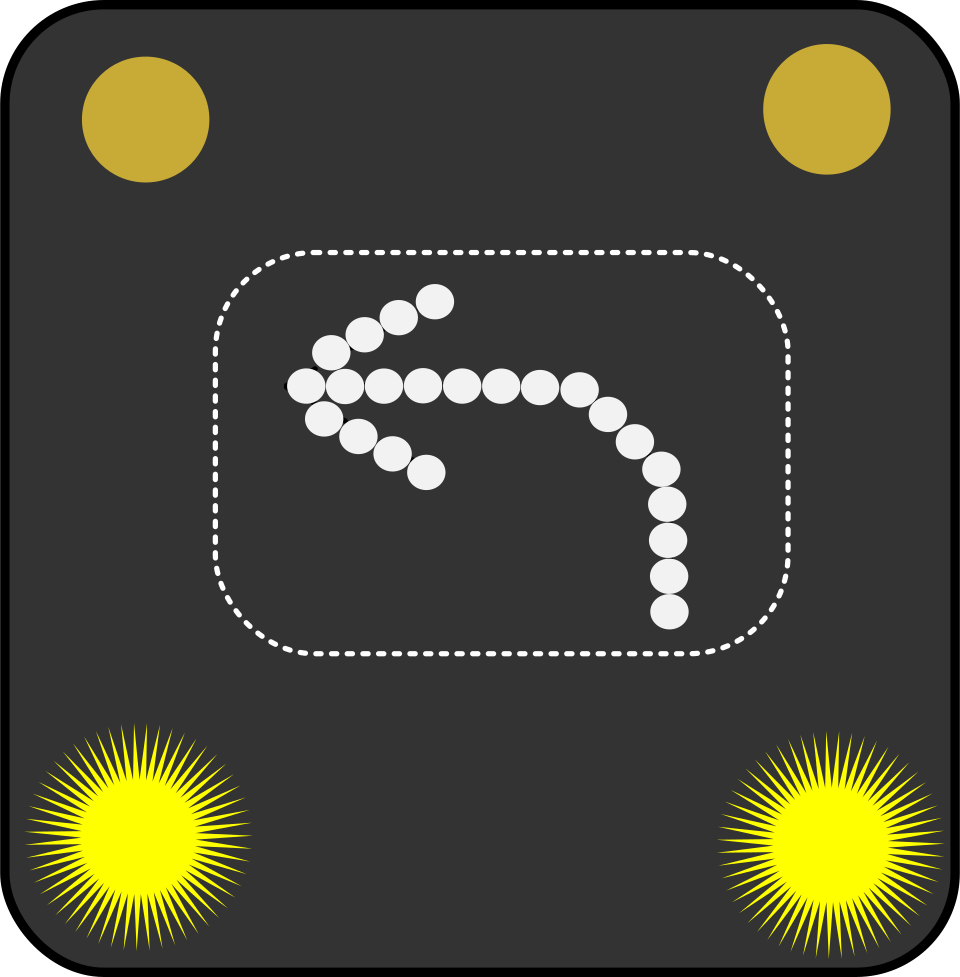
Question 34 of 50
You see this signal overhead on the motorway. What does it mean?
Explanation
You'll see this sign if there has been an incident ahead and the motorway is closed. You must obey the sign. Make sure that you prepare to leave in good time. Don't cause drivers to take avoiding action by cutting in at the last moment.
Question 35 of 50
When may you stop on a motorway?
Explanation
You shouldn't normally stop on a motorway, but there may be occasions when you need to do so. If you're unfortunate enough to break down, make every effort to pull up on the hard shoulder.
Question 36 of 50
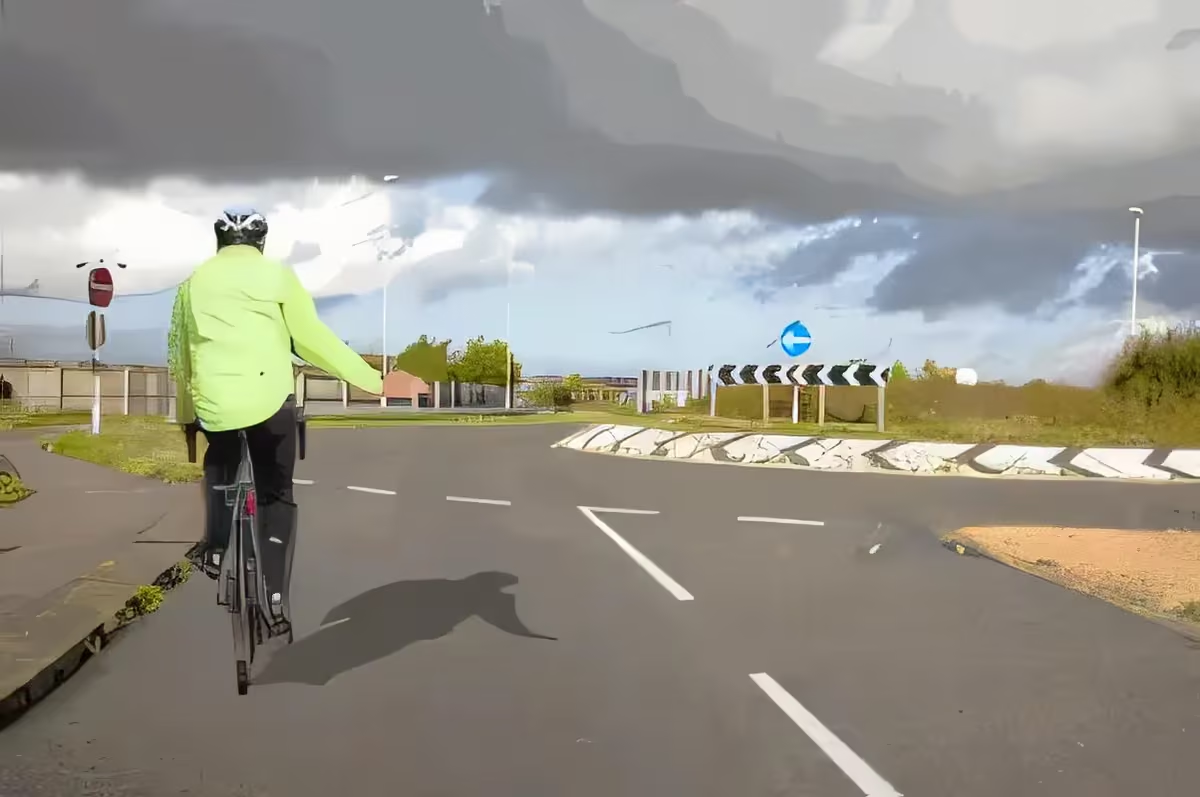
You're approaching this roundabout and see the cyclist signal right. Why is the cyclist keeping to the left?
Explanation
Cycling in today's heavy traffic can be hazardous. Some cyclists may not feel happy about crossing the path of traffic to take up a position in an outside lane. Be aware of this and understand that, although they're in the left-hand lane, the cyclist might be turning right.
Question 37 of 50
A casualty isn't breathing normally. Chest compressions should be given. At what rate?
Explanation
If a casualty isn't breathing normally, chest compressions may be needed to maintain circulation. Place two hands on the centre of the chest and press down hard and fast - around 5-6 centimetres and about twice a second.
Question 38 of 50
A police officer asks to see your documents. You don't have them with you. Within what time must you produce them at a police station?
Explanation
You don't have to carry around your vehicle's documents wherever you go. If a police officer asks to see them and you don't have them with you, you may be asked to produce them at a police station within 7 days.
Question 39 of 50
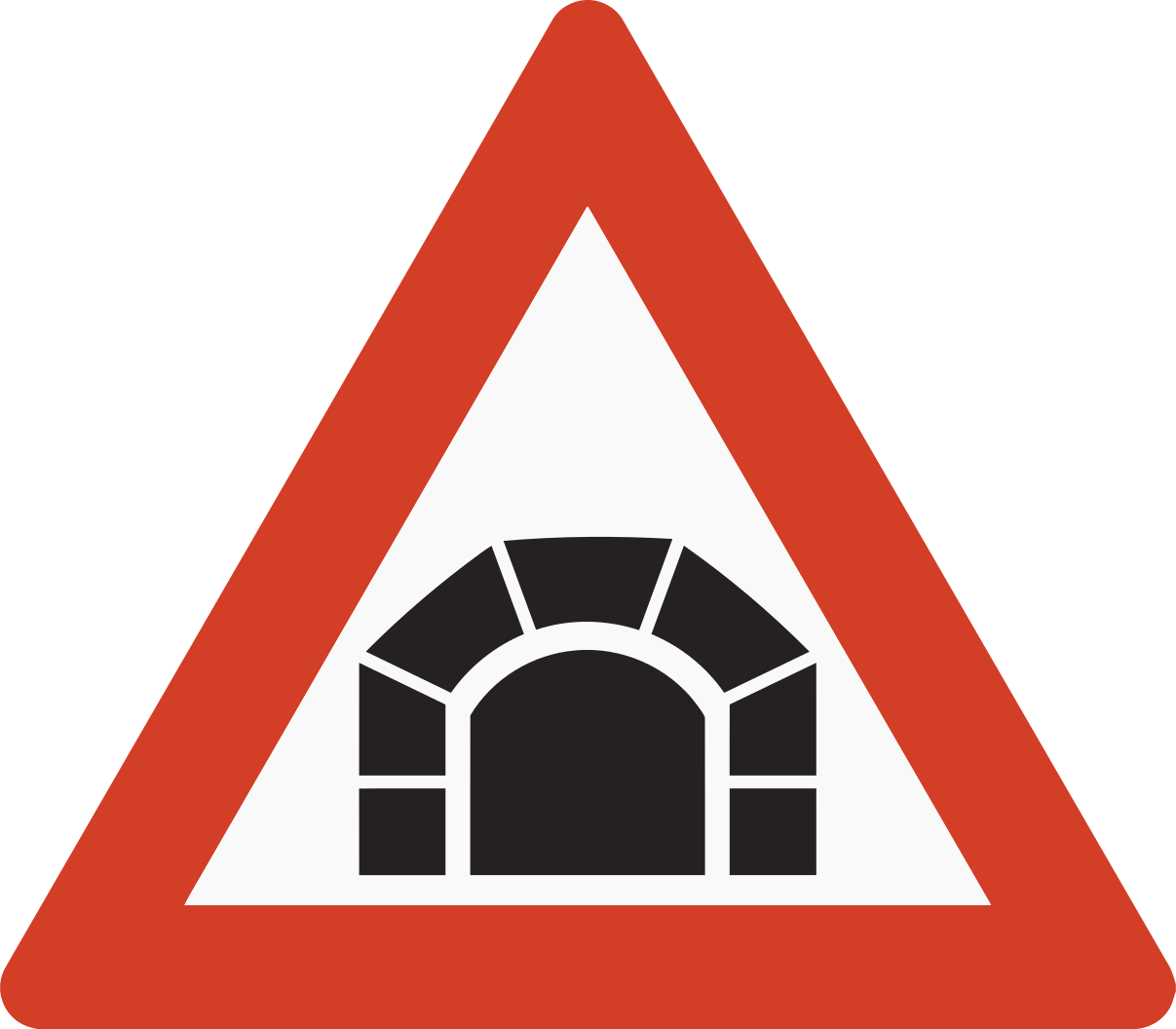
What does this sign mean?
Explanation
When approaching a tunnel, switch on your dipped headlights. Be aware that your eyes might need to adjust to the sudden darkness. You may need to reduce your speed.
Question 40 of 50
You arrive at an incident. A pedestrian is bleeding heavily from a leg wound. The leg isn't broken and there's nothing in the wound. What should you do?
Explanation
If there's nothing in the wound, applying a pad of clean cloth or bandage will help stem the bleeding. Raising the leg will also lessen the flow of blood. Don't tie anything tightly round the leg, as this will restrict circulation and could result in long-term injury.
Question 41 of 50
How should you ride a motorcycle when new tyres have just been fitted?
Explanation
New tyres have a shiny finish, which needs to wear off before the tyre will give the best grip. Take extra care if the road surface is wet or slippery.
Question 42 of 50
Why should you wear fluorescent clothing when riding in daylight?
Explanation
Motorcycles are smaller and therefore harder to see than most other vehicles on the road. You need to make yourself as visible as possible to other road users. Fluorescent and reflective clothing will help achieve this. You must be visible from all sides.
Question 43 of 50
Why should you ride with dipped headlights on in the daytime?
Explanation
Make yourself as visible as possible, from the side as well as from the front and rear. Having your headlights on, even in good daylight, can help make you more conspicuous.
Question 44 of 50
What must you check on both the front and rear motorcycle tyres?
Explanation
Your safety and that of others depends on the condition of your tyres. Before every trip, make sure they are correctly inflated and free from cuts or bulges.
Question 45 of 50
You're riding on a quiet road. Your visor fogs up. What should you do?
Explanation
In cold and wet weather, your visor may fog up. If this happens when you're riding, choose somewhere safe to stop, and wipe it clean with a damp cloth. Special anti-fog products are available at motorcycle dealers.
Question 46 of 50
You're about to ride home but you can't find the glasses you need to wear. What should you do?
Explanation
If you need glasses to bring your eyesight up to the legal standard for driving or riding, you must wear them whenever you ride. Don't be tempted to ride if you've lost or forgotten your glasses; you'll endanger yourself and other road users, and you'll be breaking the law.
Question 47 of 50
You have to park on the road in fog. What should you do?
Explanation
If you have to park on the road in foggy conditions, it's important that your motorcycle can be seen by other road users. Try to find a place to park off the road. If this isn't possible, leave your motorcycle facing in the same direction as the traffic. Make sure that your lights are clean and leave your parking lights on.
Question 48 of 50
What should you do when leaving your motorcycle parked?
Explanation
You should always use the steering lock when leaving your motorcycle. Also consider using additional locking devices, such as a U-lock, disc lock or chain. If possible, fasten the motorcycle to an immovable post or another machine.
Question 49 of 50
You're parking your motorcycle. How can you reduce the chances of it being stolen?
Explanation
Theft of motorcycles is a very common crime. If you can, secure your vehicle to a lamppost or other such object, to help reduce the chances of it being stolen.
Question 50 of 50
In which of these circumstances may you use hazard warning lights?
Explanation
Hazard warning lights are an important safety feature. Use them when riding on a motorway to warn following traffic of danger ahead. You should also use them if your motorcycle has broken down and is causing an obstruction.