Answer 50 questions, check each correct answer and work through the explanations at your own pace.
Question 1 of 500 correct answers
Question 1 of 50
When riding in heavy rain, a film of water can build up between your tyres and the road. This is known as aquaplaning. What should you do to keep control when aquaplaning occurs?
Explanation
If your motorcycle starts to aquaplane, ease off the throttle smoothly. Don't brake or turn the steering until tyre grip has been restored.
Question 2 of 50
What does a motorcycle registration document show?
Explanation
A motorcycle registration document contains a number of details that are unique to a particular vehicle. You must notify DVLA of any changes to, for example, the registered keeper or registration number. You must also tell them about any modifications made to the motorcycle.
Question 3 of 50
You're riding with a bulky tank bag. What could this affect?
Explanation
If your tank bag is too bulky, it could get in the way of your arms or restrict the movement of the handlebars.
Question 4 of 50
Why can it be helpful to have mirrors fitted on each side of your motorcycle?
Explanation
When riding on the road, you need to know as much about following traffic as you can. A mirror fitted on each side of your motorcycle will help give you the best view of the road behind.
Question 5 of 50
When is it illegal to ride with a helmet on?
Explanation
A helmet that's incorrectly fastened or not fastened at all is likely to come off in a crash and will provide little or no protection. By law, you must wear a helmet when riding on the road, and it must be correctly fastened. (Members of the Sikh religion who wear a turban are exempt.)
Question 6 of 50
A motorcyclist is riding a motorcycle that has an engine larger than 50 cc. When may they carry a pillion passenger?
Explanation
Before carrying a passenger on a motorcycle, the rider must hold a full licence for the category of motorcycle being ridden. They must also ensure that a proper passenger seat and footrests are fitted.
Question 7 of 50
You're on a motorway. Luggage falls from your motorcycle. What should you do?
Explanation
If any of your luggage falls onto the road, pull onto the hard shoulder near an emergency telephone and call for assistance. Don't stop on the carriageway or attempt to retrieve anything.
Question 8 of 50
Your vehicle tax is due to expire. To renew it, you'll need a renewal form, the fee and a valid MOT (if applicable). What else will you need?
Explanation
You'll normally be sent a reminder automatically by DVLA close to the time of renewal. Make sure that all your documentation is correct, up to date and valid. You can renew online, by phone or at certain post offices.
Question 9 of 50
Young and new motorcyclists are involved in more incidents than other motorcyclists. Why is this?
Explanation
Young and inexperienced motorcyclists are far more likely to be involved in incidents than more experienced riders. The reasons for this include natural exuberance, showing off, competitive behaviour and overconfidence. Don't overestimate your abilities and never ride too fast for the conditions.
Question 10 of 50
What's badly affected if the tyres are under-inflated?
Explanation
Your tyres are your only contact with the road. To prevent problems with braking and steering, keep your tyres free from defects; they must have sufficient tread depth and be correctly inflated. Correct tyre pressures help reduce the risk of skidding and provide a safer and more comfortable drive or ride.
Question 11 of 50
By how much can stopping distances increase in icy conditions?
Explanation
Tyre grip is greatly reduced in icy conditions. For this reason, you need to allow up to ten times the stopping distance you would allow on dry roads.
Question 12 of 50
You've had a breakdown on the hard shoulder of a motorway. When the problem has been fixed, how should you rejoin the main carriageway?
Explanation
Signal your intention and build up sufficient speed on the hard shoulder so that you can filter into a safe gap in the traffic. Don't push your way in, causing other traffic to alter speed or direction.
Question 13 of 50
At a junction, you see this sign partly covered by snow. What does it mean?
Explanation
The 'stop' sign is the only road sign that's octagonal. This is so that it can be recognised and obeyed even if it's obscured (for example, by snow).
Question 14 of 50
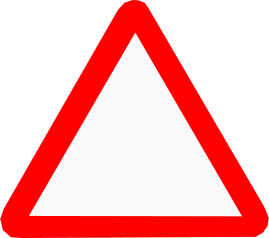
What are triangular signs for?
Explanation
This type of sign warns you of hazards ahead. Make sure you look at each sign that you pass on the road, so that you don't miss any vital instructions or information.
Question 15 of 50
What does this sign mean?
Explanation
This type of sign warns you of hazards ahead. Make sure you look at each sign and road marking that you pass, so that you don't miss any vital instructions or information. This particular sign shows there's a T-junction with priority over vehicles from the right.
Question 16 of 50
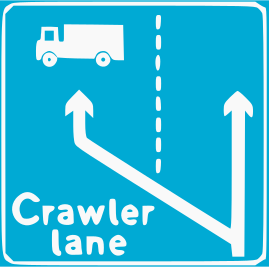
What does this sign mean?
Explanation
Where there's a long, steep, uphill gradient on a motorway, a crawler lane may be provided. This helps the traffic to flow by diverting the slower heavy vehicles into a dedicated lane on the left.
Question 17 of 50
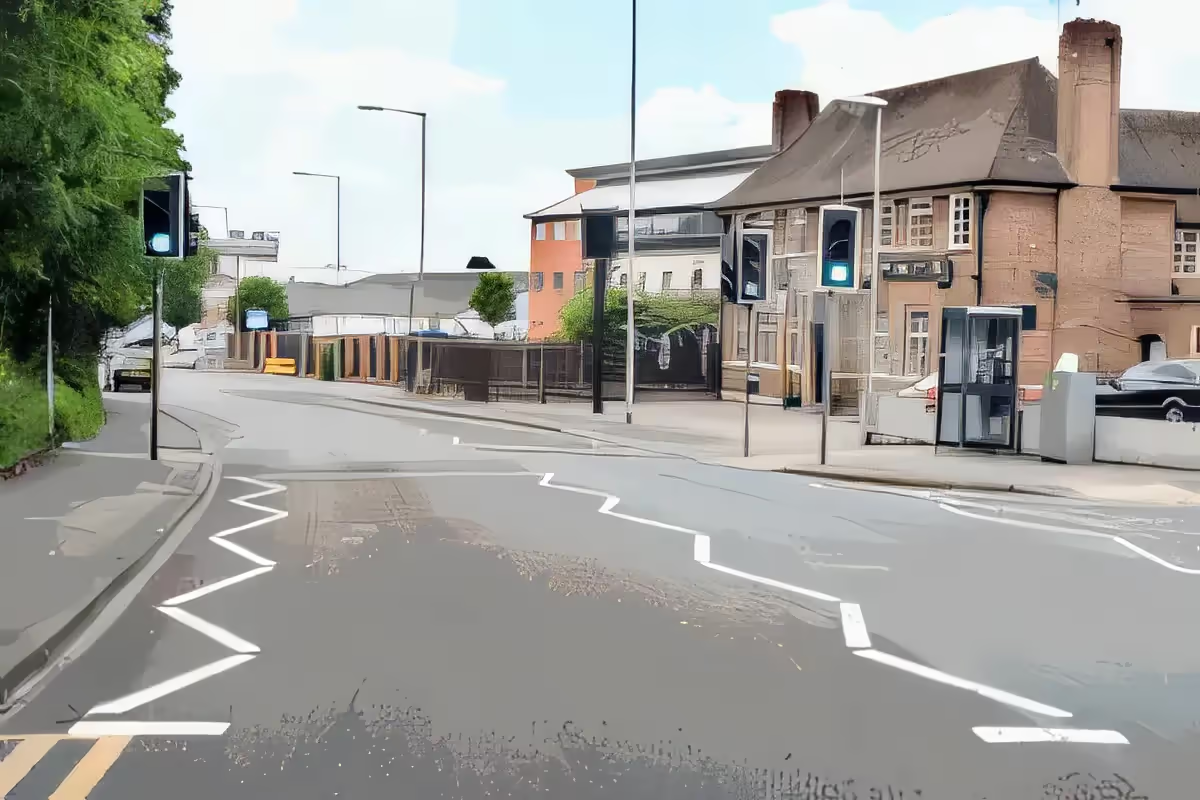
What do these zigzag lines at pedestrian crossings mean?
Explanation
The approach to, and exit from, a pedestrian crossing is marked with zigzag lines. You mustn't park on them or overtake the leading vehicle when approaching the crossing. Parking here would block the view for pedestrians and approaching traffic.
Question 18 of 50
How will a police officer in a patrol vehicle normally get you to stop?
Explanation
You must obey signals given by the police. If a police officer in a patrol vehicle wants you to pull over, they'll indicate this without causing danger to you or other traffic.
Question 19 of 50
Where on a motorway would you find green reflective studs?
Explanation
Knowing the colours of the reflective studs on the road will help you judge your position, especially at night, in foggy conditions or when visibility is poor.
Question 20 of 50
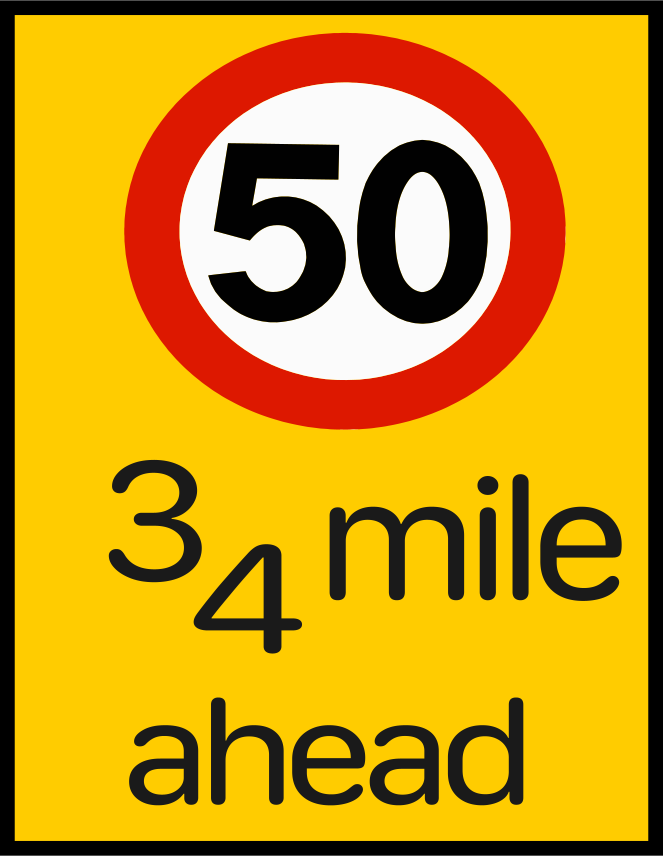
What does this temporary sign indicate?
Explanation
In the interests of road safety, temporary mandatory speed limits are imposed at all major roadworks. Signs like this, giving advance warning of the speed limit, are normally placed about three-quarters of a mile ahead of where the speed limit comes into force.
Question 21 of 50
Why must these road markings be kept clear?
Explanation
The markings are there to show that the area must be kept clear. This is to allow an unrestricted view for drivers emerging from the side road.
Question 22 of 50
You're on a motorway. What colour are the reflective studs on the left of the carriageway?
Explanation
Red studs are placed between the edge of the carriageway and the hard shoulder. Where slip roads leave or join the motorway, the studs are green.
Question 23 of 50
What should you do when following a car driven by an elderly driver?
Explanation
You must show consideration to other road users. The reactions of older drivers may be slower and they might need more time to deal with a situation. Be tolerant and don't lose patience or show annoyance.
Question 24 of 50
What should you do before stopping?
Explanation
Before pulling up, check the mirrors to see what's happening behind you. Also assess what's ahead and make sure you give the correct signal if it will help other road users.
Question 25 of 50
The conditions are good and dry. When should you use the 'two-second rule'?
Explanation
In good conditions, the 'two-second rule' can be used to check the distance between your vehicle and the one in front. This technique works on roads carrying faster traffic. Choose a fixed object, such as a bridge, sign or tree. When the vehicle ahead passes this object, say to yourself 'Only a fool breaks the two-second rule.' If you reach the object before you finish saying this, you're too close.
Question 26 of 50
The left-hand pavement is closed due to street repairs. What should you do?
Explanation
Where street repairs have closed off pavements, proceed carefully and slowly, as pedestrians might have to walk in the road.
Question 27 of 50
What should you do when you're following a motorcyclist along a road that has a poor surface?
Explanation
To avoid being unbalanced, a motorcyclist might swerve to avoid potholes and bumps in the road. Be prepared for this and allow them extra space.
Question 28 of 50
What should you do when driving or riding along a motorway?
Explanation
Traffic on motorways usually travels faster than on other roads. You need to be looking further ahead to give yourself more time to react to any hazard that may develop.
Question 29 of 50
What's the right-hand lane used for on a three-lane motorway?
Explanation
You should keep to the left and only use the right-hand lane if you're passing slower-moving traffic.
Question 30 of 50
When are you allowed to stop on a motorway?
Explanation
You must stop if overhead gantry signs show flashing red lights above every lane on the motorway. If any of the other lanes doesn't show flashing red lights or a red cross, you may move into that lane and continue if it's safe to do so.
Question 31 of 50
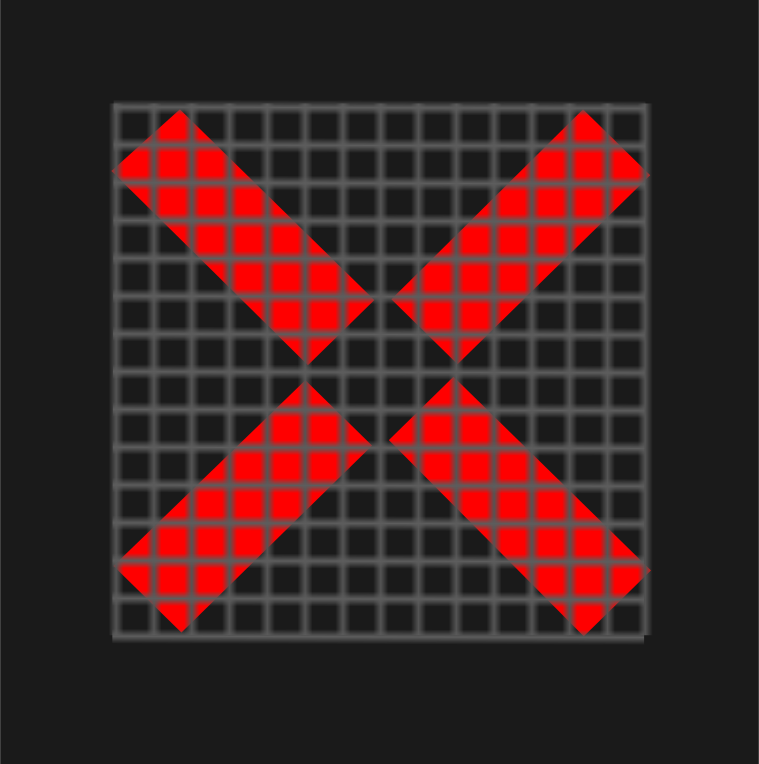
You're on a motorway. A red cross is displayed above the hard shoulder. What does this mean?
Explanation
Active traffic management operates on some motorways. Within these areas, at certain times, the hard shoulder will be used as a running lane. A red cross above the hard shoulder shows that this lane should only be used for emergencies and breakdowns.
Question 32 of 50
Why can it be an advantage for traffic speed to stay constant over a longer distance?
Explanation
When traffic travels at a constant speed over a longer distance, journey times normally improve. You may feel that you could travel faster for short periods, but this generally leads to bunching and increased overall journey time.
Question 33 of 50
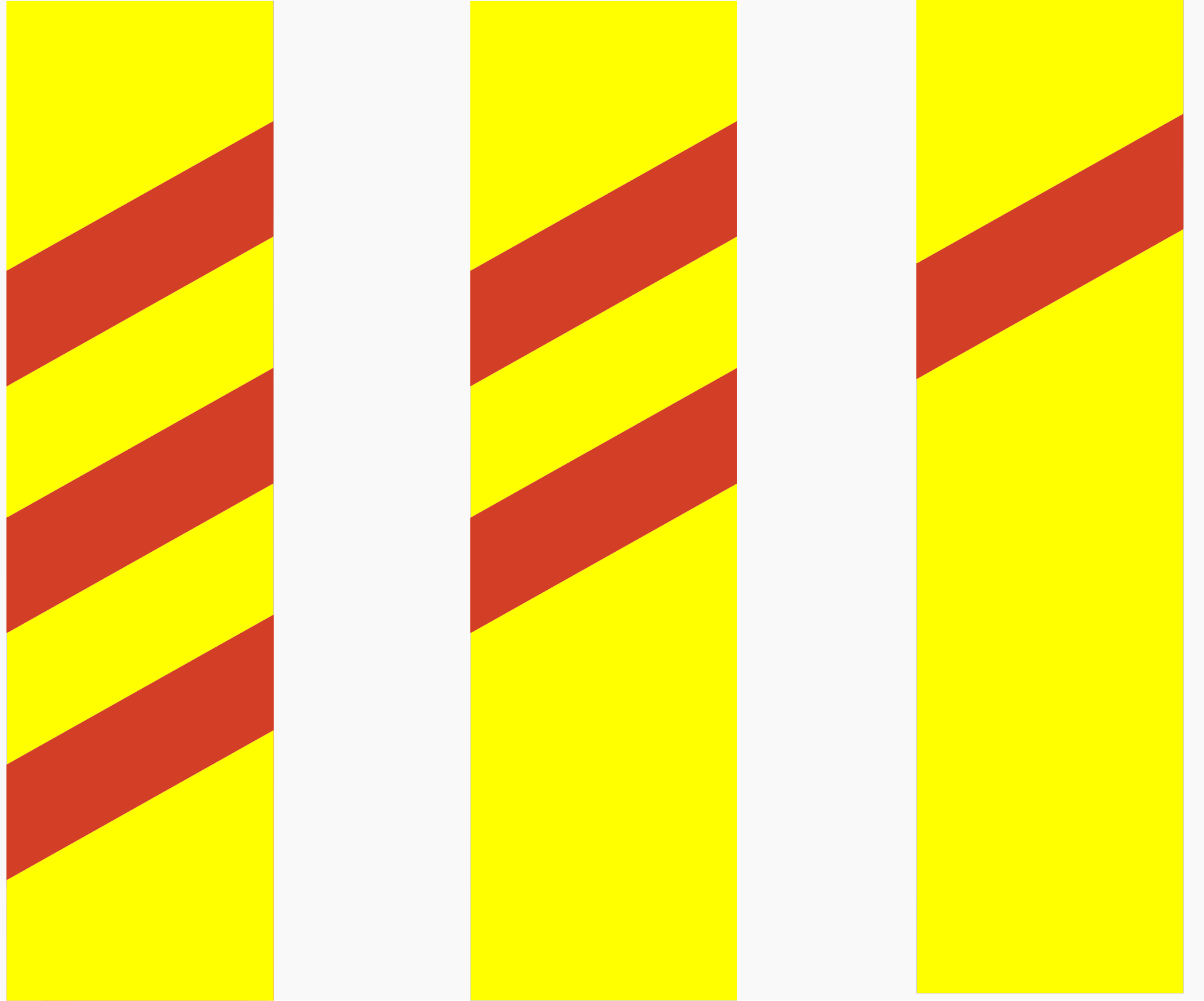
Where will you see these red and white markers?
Explanation
If there's a bend just before a level crossing, you may not be able to see the level-crossing barriers or waiting traffic. These signs give you an early warning that you may find these hazards just around the bend.
Question 34 of 50
You see a pedestrian with a dog wearing a yellow or burgundy coat. What does this indicate?
Explanation
Dogs trained to help deaf people have a yellow or burgundy coat. If you see one, you should take extra care, as the pedestrian may not be aware of vehicles approaching.
Question 35 of 50
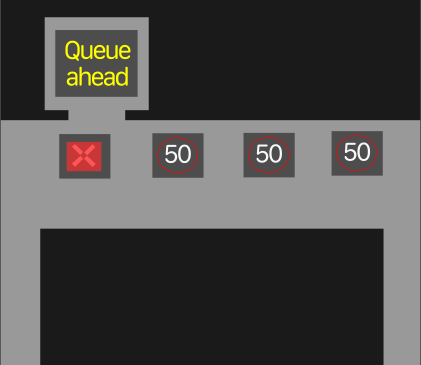
You're on a three-lane motorway. A red cross is showing above the hard shoulder and mandatory speed limits above all other lanes. What does this mean?
Explanation
A red cross above the hard shoulder shows that it's closed as a running lane and should only be used for emergencies or breakdowns. On a smart motorway, the hard shoulder may be used as a running lane at busy times. This will be shown by a mandatory speed limit on the gantry above the hard shoulder.
Question 36 of 50
When you're overtaking a cyclist, you should leave as much room as you would give to a car. What's the main reason for this?
Explanation
Before overtaking, assess the situation. Look well ahead to see whether the cyclist will need to change direction. Be especially aware of a cyclist approaching parked vehicles, as they'll need to alter course. Don't pass too closely or cut in sharply.
Question 37 of 50
You arrive at an incident. There's no danger from fire or further collisions. What's your first priority when attending to an unconscious motorcyclist?
Explanation
At the scene of an incident, always be aware of danger from further collisions or fire. The first priority when dealing with an unconscious person is to ensure they can breathe. This may involve clearing their airway if you can see an obstruction or if they're having difficulty breathing.
Question 38 of 50
What could happen if you ride your motorcycle when it has a very loose drive chain?
Explanation
Drive chains are subject to wear and need frequent adjustment to maintain the correct tension. Allowing the drive chain to run dry will greatly increase the rate of wear, so it's important to keep it lubricated. If the chain becomes worn or slack, it can jump off the sprocket and lock the rear wheel.
Question 39 of 50
What should you do when riding in windy conditions?
Explanation
Strong winds can blow a motorcycle off course, and even across the road. In windy conditions, you need to slow down and avoid riding on exposed roads. You should also watch for gaps in buildings and hedges, where you may be affected by a sudden gust of wind.
Question 40 of 50
When may motorcyclists use a mobile phone?
Explanation
It's important that you're in full control at all times. Even using a hands-free phone kit can distract your attention from the road. If you need to use a mobile phone, stop in a safe and convenient place before making the call.
Question 41 of 50
You're riding at night. You have your headlights on main beam. Another vehicle is overtaking you. When should you dip your headlights?
Explanation
At night, you should dip your headlights to avoid dazzling oncoming drivers or those ahead of you. If you're being overtaken, dip your headlights as the other vehicle comes past. When you switch to dipped beam, your view of the road ahead will be reduced, so look ahead for hazards on your side of the road before you do so.
Question 42 of 50
What's the speed limit on a single carriageway road for a motorcycle towing a trailer?
Explanation
When you tow a trailer, remember that you must obey the reduced speed limits of 50 mph on a single carriageway and 60 mph on a dual carriageway or motorway. Make sure that the trailer is hitched correctly and that any load in the trailer is secure. You should also bear in mind that your stopping distance may increase.
Question 43 of 50
Blind spots should be checked before you do what?
Explanation
The areas that aren't covered by your mirrors are called blind spots. They should always be checked before changing direction. This check is so important that it's called the 'lifesaver'.
Question 44 of 50
You're looking for somewhere to park your motorcycle. The area is full except for spaces marked 'disabled use'. What can you do?
Explanation
It's illegal to park in a space reserved for disabled users unless you're permitted to do so. These spaces are provided for people with limited mobility, who may need extra space to get into and out of their vehicle.
Question 45 of 50
Which type of glasses shouldn't be worn when riding at night?
Explanation
If you're riding at night or in poor visibility, tinted lenses or a tinted visor will reduce the amount of available light reaching your eyes, making you less able to see clearly.
Question 46 of 50
Oil is leaking from your forks. Why shouldn't you ride a motorcycle in this condition?
Explanation
If an oil seal on your forks or shock absorbers fails, fork oil will leak out, making the suspension ineffective and the motorcycle difficult to control. It can also be very dangerous if the oil gets onto brakes or tyres. Replace faulty oil seals without delay.
Question 47 of 50
You're riding past queuing traffic. Why should you be more cautious when approaching this road marking?
Explanation
When riding past queuing traffic, look out for 'keep clear' road markings, which will indicate a side road or entrance on the left. Vehicles may emerge or turn between gaps in the traffic.
Question 48 of 50
You're going to a social event and alcohol will be available. You'll be riding your motorcycle shortly afterwards. What's the safest thing to do?
Explanation
Drinking even the smallest amount of alcohol can affect your judgement and reactions. The safest and best option is to avoid any alcohol at all when riding or driving.
Question 49 of 50
You're carrying a pillion passenger. What should you do when you're following other traffic?
Explanation
The extra weight of a passenger may increase your stopping distance. Allow for this when following another vehicle by increasing the separation distance.
Question 50 of 50
When must you notify the licensing authority?
Explanation
The licensing authorities hold the records of all vehicles, drivers and riders in Great Britain and Northern Ireland. They need to keep their records up to date and you must notify them if any aspect of your health affects your ability to ride your motorcycle.