Answer 50 questions, check each correct answer and work through the explanations at your own pace.
Question 1 of 500 correct answers
Question 1 of 50
You're joining a motorway from a slip road. What should you do?
Explanation
Give way to vehicles that are already on the motorway, and join the left-hand lane when there's a suitable gap in the traffic. Don't expect traffic on the motorway to give way to you, but try to avoid stopping at the end of the slip road.
Question 2 of 50
You service your own motorcycle. How should you get rid of the old engine oil?
Explanation
Never pour the oil down any drain. The oil is highly polluting and could harm wildlife. Put it in a container and dispose of it properly at an authorised site.
Question 3 of 50
You have to brake sharply and your motorcycle starts to skid. What should you do?
Explanation
If you skid as a result of braking harshly, you need to ease off the brakes to stop the skid. You should then reapply them progressively to stop.
Question 4 of 50
Your motorcycle insurance policy has an excess of £100. What does this mean?
Explanation
This is a method used by insurance companies to keep annual premiums down. Generally, the higher the excess you choose to pay, the lower the annual premium you'll be charged.
Question 5 of 50
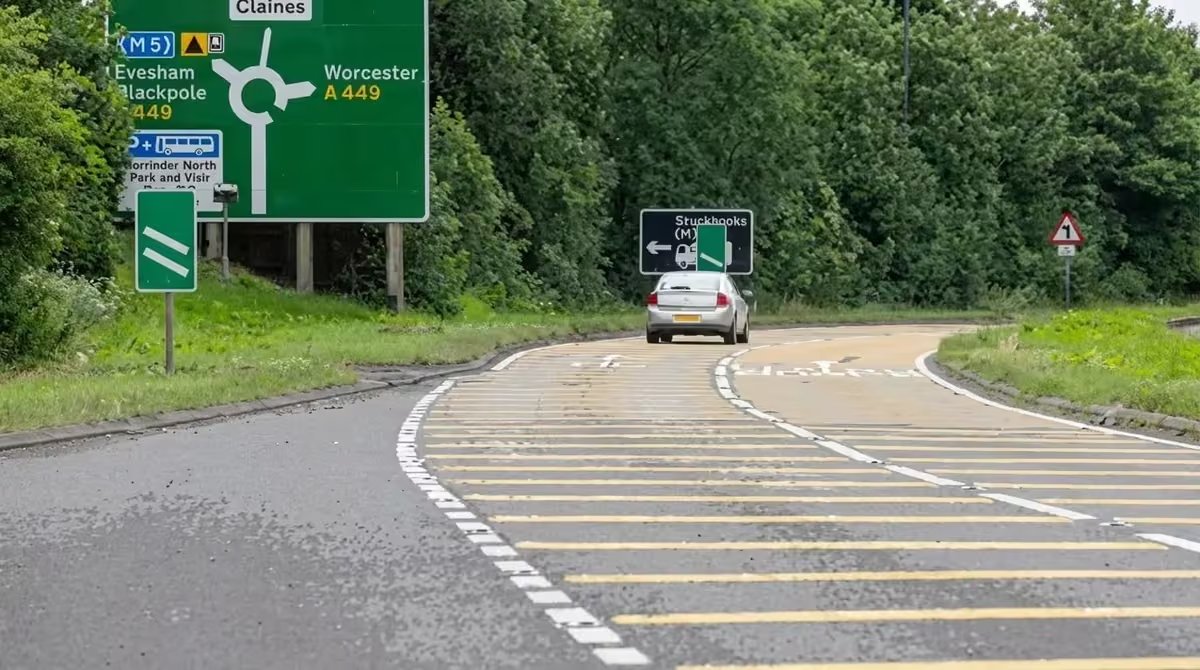
Why are these yellow lines painted across the road?
Explanation
These lines are often found on the approach to a roundabout or a dangerous junction. They give you extra warning to adjust your speed. Look well ahead and do this in good time.
Question 6 of 50
What's the purpose of road humps, chicanes and narrowings?
Explanation
Traffic-calming measures help to keep vehicle speeds low in congested areas where there are pedestrians and children. A pedestrian is much more likely to survive a collision with a vehicle travelling at 20 mph than they are with a vehicle travelling at 40 mph.
Question 7 of 50
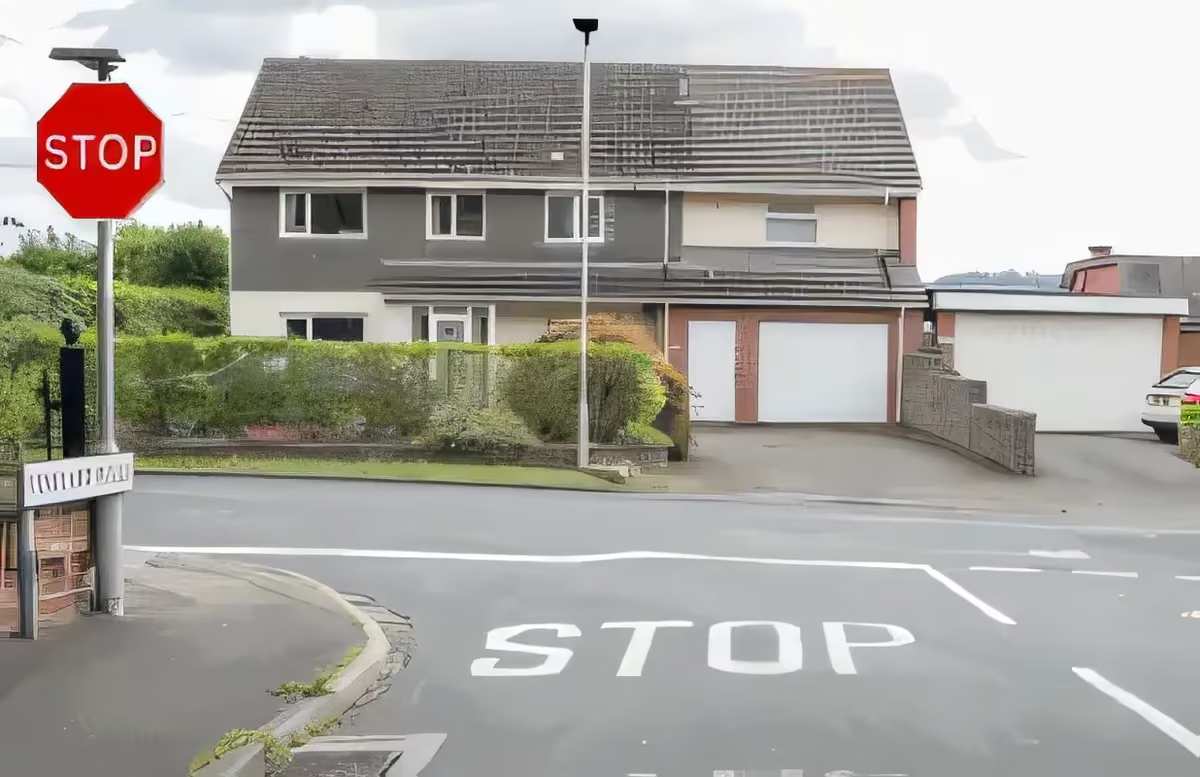
What must you do at this junction?
Explanation
The 'stop' sign has been put here because the view into the main road is poor. You must stop because it won't be possible to take proper observation while you're moving.
Question 8 of 50
You're coming up to a roundabout. A cyclist is signalling to turn right. What should you do?
Explanation
If you're following a cyclist who's signalling to turn right at a roundabout, leave plenty of room. Give them space and time to get into the correct lane.
Question 9 of 50
You're waiting to come out of a side road. Why should you look carefully for motorcycles?
Explanation
If you're waiting to emerge from a side road, look carefully for motorcycles: they can be difficult to see. Be especially careful if there are parked vehicles or other obstructions restricting your view.
Question 10 of 50
You're unsure what a slow-moving motorcyclist ahead of you is going to do. What should you do?
Explanation
When a motorcyclist is travelling slowly, it's likely that they're looking for a turning or entrance. Be patient and stay behind them in case they stop or change direction suddenly.
Question 11 of 50
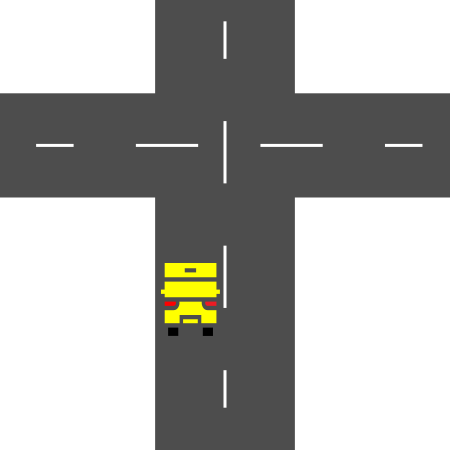
You're following a long vehicle approaching a crossroads. The driver signals right but moves close to the left-hand kerb. What should you do?
Explanation
When a long vehicle is going to turn right, it may need to keep close to the left-hand kerb. This is to prevent the rear end of the trailer cutting the corner. You need to be aware of how long vehicles behave in such situations. Don't overtake the lorry, because it could turn as you're alongside. Stay behind and wait for it to turn.
Question 12 of 50
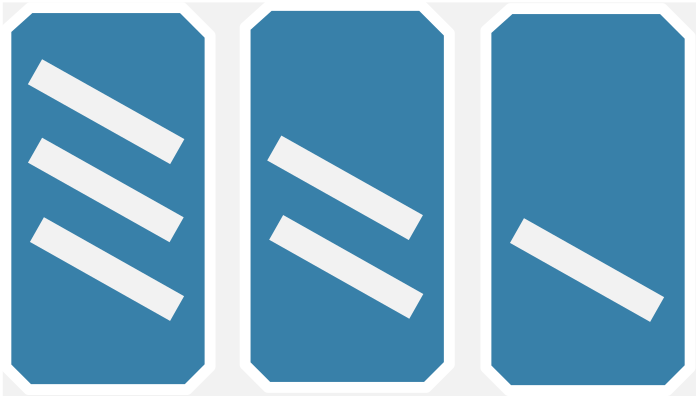
What do these motorway signs show?
Explanation
The exit from a motorway is indicated by countdown markers. These are positioned 90 metres (100 yards) apart, the first being 270 metres (300 yards) from the start of the slip road. Move into the left-hand lane well before you reach the start of the slip road.
Question 13 of 50
What does this sign mean?
Explanation
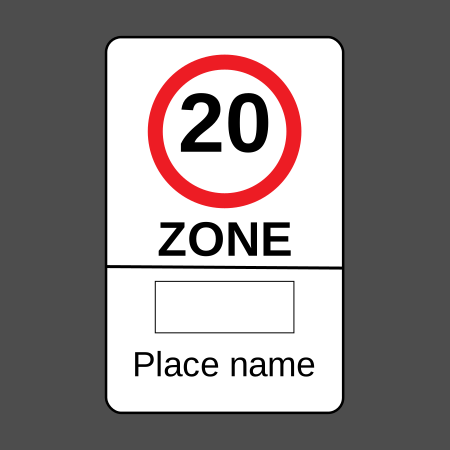
If you're in a place where there are likely to be pedestrians (for example, outside a school, near a park, in a residential area or in a shopping area), you should be cautious and keep your speed down. Many local authorities have taken steps to slow traffic down by creating traffic-calming measures such as speed humps. They're there for a reason; slow down.
Question 14 of 50
What does this sign mean?
Explanation
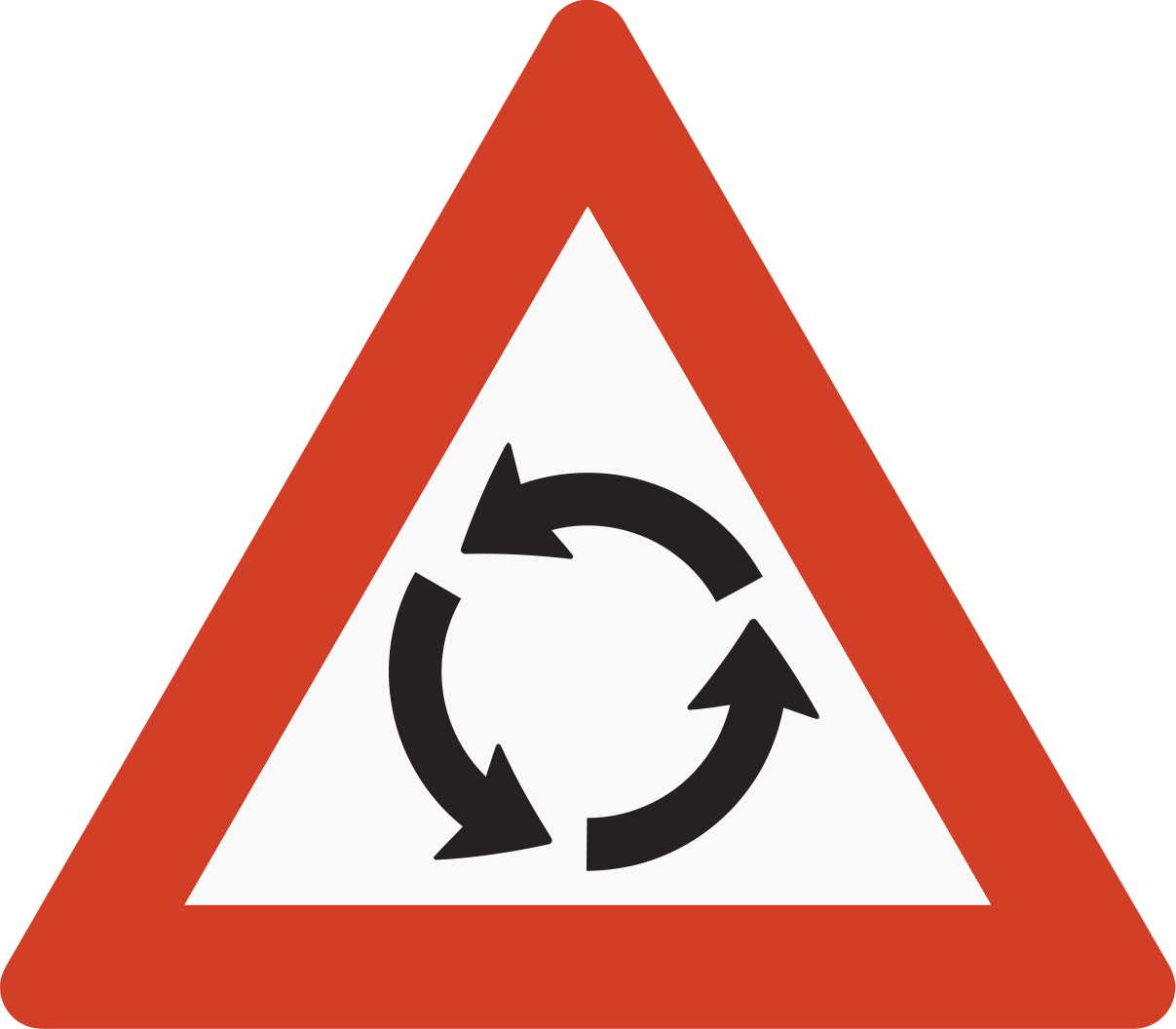
As you approach a roundabout, look well ahead and check all signs. Decide which exit you wish to take and move into the correct position as you approach the roundabout, signalling as required.
Question 15 of 50
What does this sign mean?
Explanation
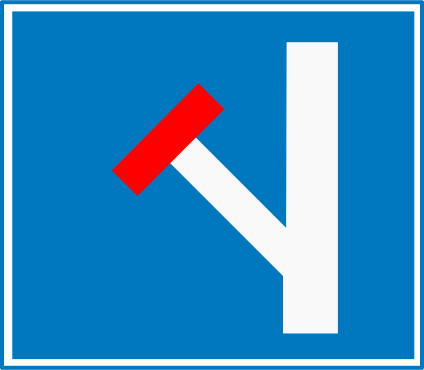
This sign shows you that you can't get through to another route by turning left at the junction ahead.
Question 16 of 50
What does this sign mean?
Explanation
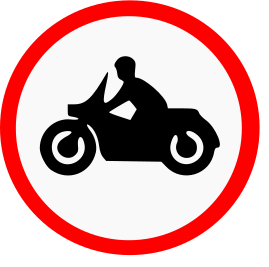
You must comply with all traffic signs and be especially aware of those signs that apply specifically to the type of vehicle you're using.
Question 17 of 50
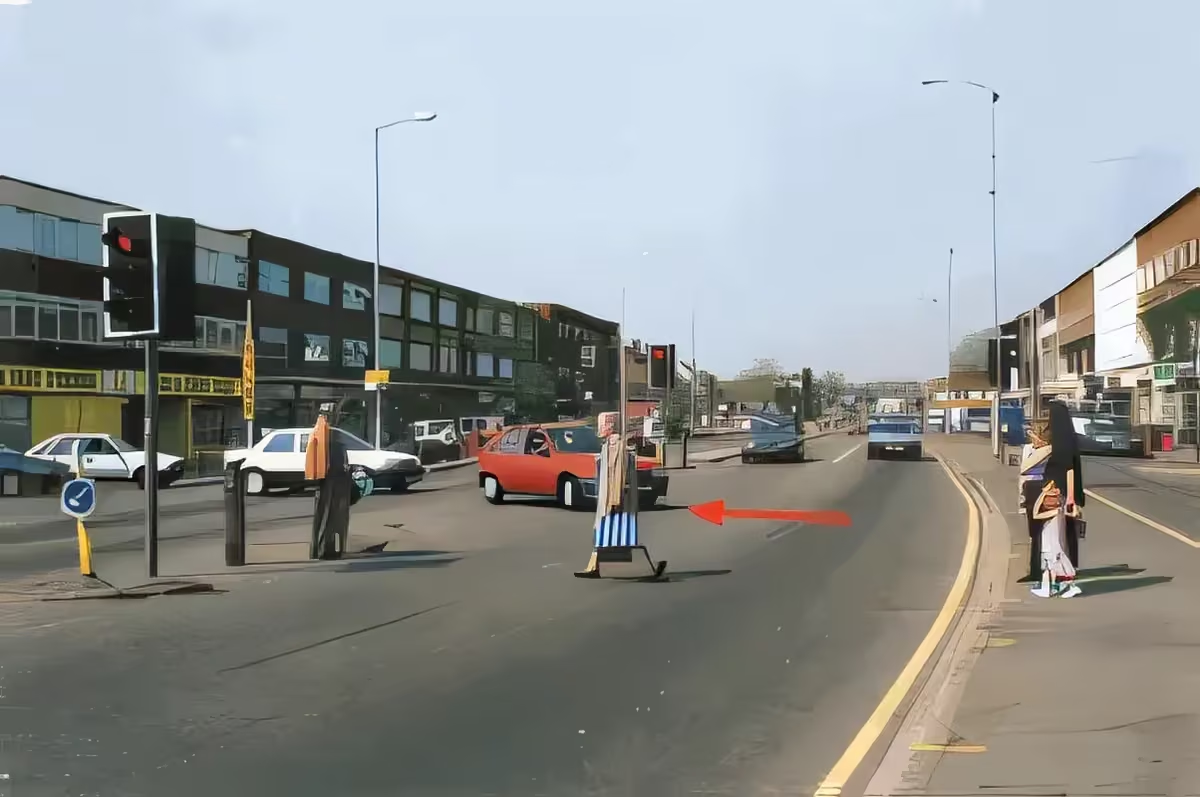
What should the driver of the red car (arrowed) do?
Explanation
Some people might take a long time to cross the road. They may be older or have a disability. Be patient and don't hurry them by showing your impatience. If pedestrians are standing at the side of the road, don't signal or wave them to cross. Other road users might not have seen your signal and this could lead the pedestrians into a hazardous situation.
Question 18 of 50
What must you do when entering roadworks where a temporary speed limit is displayed?
Explanation
Where there are extra hazards, such as at roadworks, it's often necessary to slow traffic down by imposing a lower speed limit. These speed limits aren't advisory; they must be obeyed.
Question 19 of 50
Where are you most likely to be affected by side winds?
Explanation
In windy conditions, care must be taken on exposed roads. A strong gust of wind can blow you off course. Watch out for other road users who are particularly likely to be affected, such as cyclists, motorcyclists, high-sided lorries and vehicles towing trailers.
Question 20 of 50
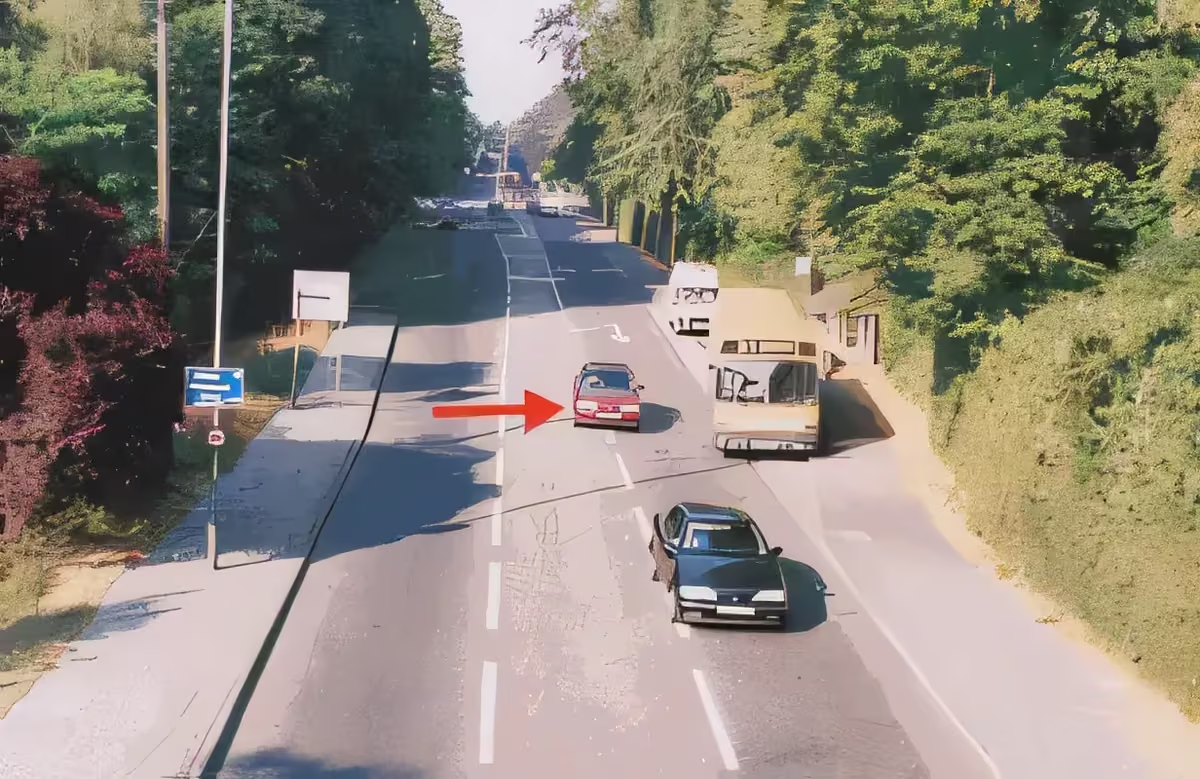
What's the main hazard the driver of the red car (arrowed) should be aware of?
Explanation
If you can do so safely, give way to buses signalling to move off at bus stops. Try to anticipate the actions of other road users around you. The driver of the red car should be prepared for the bus pulling out. As you approach a bus stop, look to see how many passengers are waiting to board. If the last one has just got on, the bus is likely to move off.
Question 21 of 50
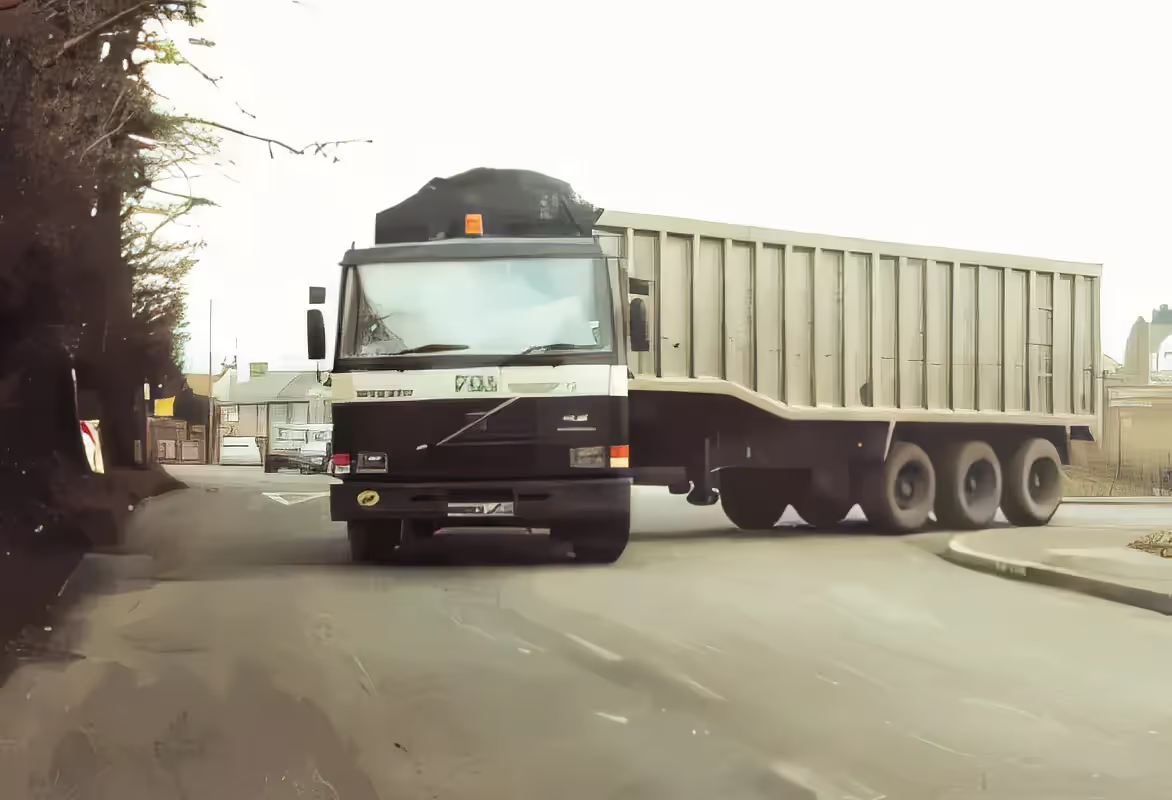
What should you do as you approach this lorry?
Explanation
When turning, long vehicles need much more room on the road than other vehicles. At junctions, they may take up the whole of the road space, so be patient and allow them the room they need.
Question 22 of 50
You're following a large vehicle approaching a crossroads. The driver signals to turn left. What should you do?
Explanation
Hold back and wait until the vehicle has turned before proceeding. Don't overtake, because the vehicle turning left could hide a vehicle emerging from the same junction.
Question 23 of 50
Which of these mustn't use motorways?
Explanation
Motorways mustn't be used by pedestrians, cyclists, motorcycles under 50 cc, certain slow-moving vehicles without permission, and invalid carriages weighing less than 254 kg (560 lbs).
Question 24 of 50
The dual carriageway you're turning right onto has a very narrow central reservation. What should you do?
Explanation
When the central reservation is narrow, you should treat a dual carriageway as one road. Wait until the road is clear in both directions before emerging to turn right. If you try to treat it as two separate roads and wait in the middle, you're likely to cause an obstruction and possibly a collision.
Question 25 of 50
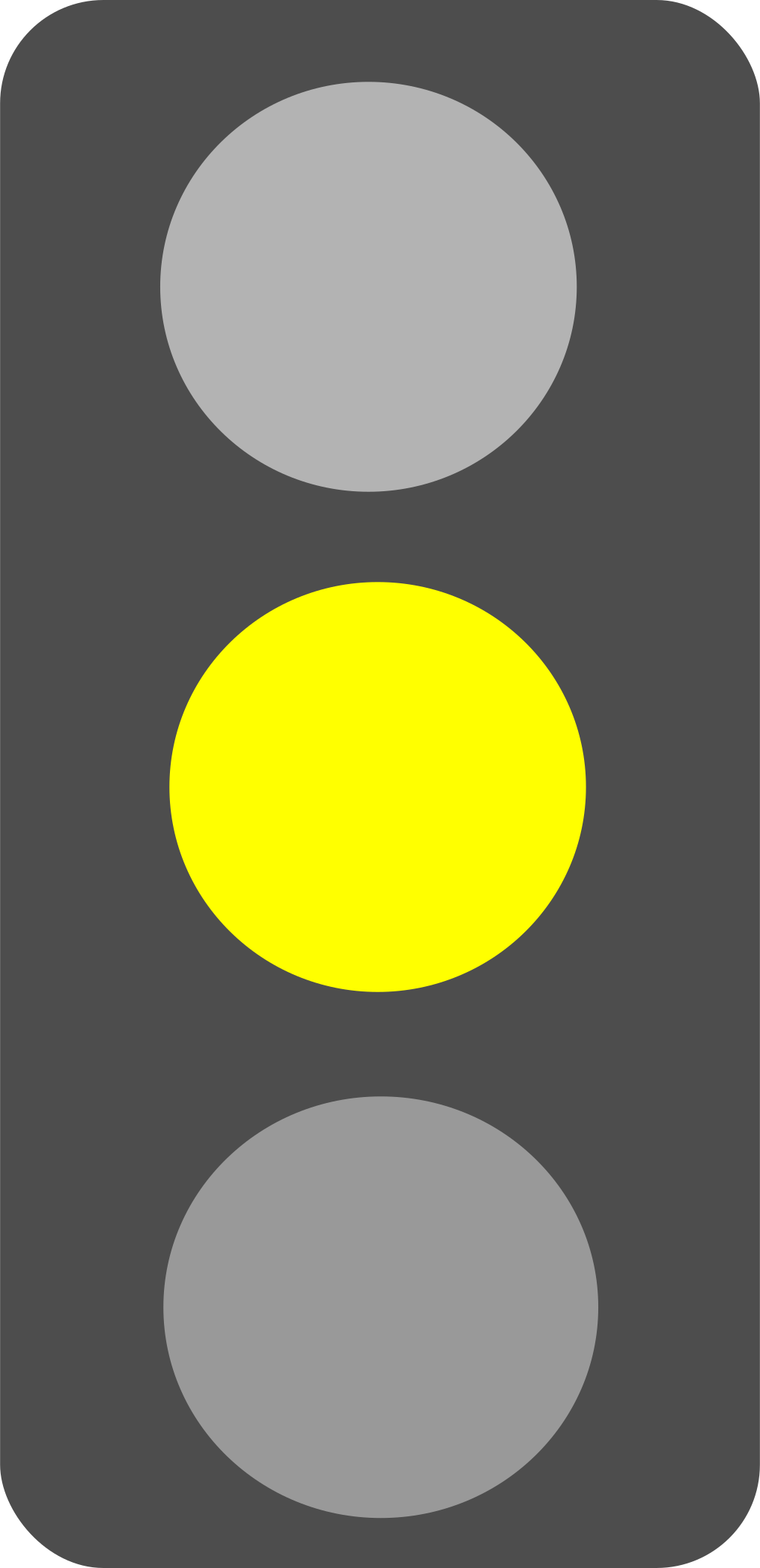
You see this amber traffic light ahead. Which light, or lights, will come on next?
Explanation
At junctions controlled by traffic lights, you must stop behind the white line until the lights change to green. A red light, an amber light, and red and amber lights showing together all mean stop. You may proceed when the light is green unless your exit road is blocked or pedestrians are crossing in front of you. If you're approaching traffic lights that are visible from a distance and the light has been green for some time, be ready to slow down and stop, because the lights are likely to change.
Question 26 of 50
What does this sign mean?
Explanation
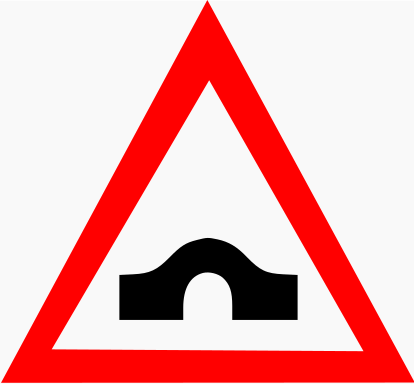
You'll need to slow down. At hump bridges, your view ahead will be restricted and the road will often be narrow. If the bridge is very steep, sound your horn to warn others of your approach. Going over the bridge too fast is highly dangerous to other road users and could even cause your wheels to leave the road, with a resulting loss of control.
Question 27 of 50
On a motorway, what's an emergency refuge area used for?
Explanation
Emergency refuge areas are built at the side of the hard shoulder. If you break down, try to get your vehicle into the refuge, where there's an emergency telephone. The phone connects directly to a control centre. Remember to take care when rejoining the motorway, especially if the hard shoulder is being used as a running lane.
Question 28 of 50
Planning your route before setting out can be helpful. How can you do this?
Explanation
Print or write down your route before setting out. Some places aren't well signed, so including both place names and road numbers in your directions may help you avoid problems en route. Try to get an idea of how far you're going before you leave. You can also recheck the next stage at each rest stop.
Question 29 of 50
Why is it a good idea to plan your journey to avoid busy times?
Explanation
No-one likes to spend time in traffic queues. Try to avoid busy times related to school or work travel.
Question 30 of 50
Who's legally responsible for ensuring that a vehicle registration certificate (V5C) is updated?
Explanation
It's your legal responsibility to keep the details on your vehicle registration certificate (V5C) up to date. You should tell the licensing authority about any changes. These include your name, address or vehicle details. If you don't do this, you may have problems when you try to sell your vehicle.
Question 31 of 50
Where shouldn't you overtake?
Explanation
You should overtake only when it's really necessary and you can see it's clear ahead. Look out for road signs and markings that show it's illegal or would be unsafe to overtake; for example, approaching junctions or bends. In many cases, overtaking is unlikely to significantly improve your journey time.
Question 32 of 50
In which of these circumstances must you show your insurance certificate?
Explanation
You must produce a valid insurance certificate when requested by a police officer. If you can't do this immediately, you may be asked to take it to a police station. Other documents you may be asked to produce are your driving licence and the vehicle's MOT certificate.
Question 33 of 50
You're travelling along a motorway and feel tired. Where should you stop to rest?
Explanation
If you feel tired, stop at the nearest service area. If that's too far away, leave the motorway at the next exit and find a safe place to stop. You mustn't stop on the carriageway or hard shoulder of a motorway except in an emergency, when in a traffic queue, or when signalled to do so by a police officer, a traffic officer or traffic signals. Plan your journey so that you have regular rest stops.
Question 34 of 50
At an incident, someone is unconscious. What would your priority be?
Explanation
Remember this procedure by saying DR ABC. This stands for Danger, Response, Airway, Breathing, Compressions. Give whatever first aid you can and stay with the injured person until the emergency services arrive.
Question 35 of 50
You've stopped at an incident to give help. What should you do?
Explanation
There are a number of things you can do to help, even without expert training. Be aware of further danger from other traffic and fire; make sure the area is safe. People may be in shock. Don't give them anything to eat or drink. Keep them warm and comfortable and reassure them. Don't move injured people unless there's a risk of further danger.
Question 36 of 50
What is the 'lifesaver' when riding a motorcycle?
Explanation
This action makes you aware of what's happening behind and alongside you. The lifesaver glance should be timed so that you still have time to react if it isn't safe to perform the manoeuvre.
Question 37 of 50
Where's the best place to park your motorcycle?
Explanation
Parking your motorcycle on soft ground might cause the stand to sink in, and the machine could fall over. The ground should be level, as well as firm, to keep the motorcycle stable. Use off-road parking or motorcycle parking areas when they're available.
Question 38 of 50
What should you do if a trailer you're towing swerves or snakes?
Explanation
Don't be tempted to use harsh braking to stop swerving or snaking, as this could make things worse. You should reduce your speed gradually by easing off the throttle.
Question 39 of 50
What are the minimum test vehicle requirements for a motorcycle used to obtain a full category 'A' licence?
Explanation
To obtain the full category 'A' on your driving licence, the motorcycle you use for your practical test must be a solo machine with a cylinder capacity of at least 595 cc and a power output of at least 40 kW (53.6 bhp).
Question 40 of 50
What's likely to happen if you get cold and wet when riding a motorcycle?
Explanation
When riding, make sure you wear suitable clothing for the conditions. Getting cold and wet will make you uncomfortable. This can cause you to lose concentration and considerably slow down your reaction time. Stop in a safe place to have a hot drink and warm up before this happens.
Question 41 of 50
When riding, your shoulders can obstruct the view in your mirrors. How can you overcome this?
Explanation
It's essential that you have a clear view all around. Adjust your mirrors to give you the best view of the road behind. If your body obscures the view, try fitting mirrors with longer stems.
Question 42 of 50
What does a person need to do when they ride as a pillion passenger?
Explanation
Pillion passengers must sit astride the motorcycle, on a proper passenger seat, and passenger footrests must be fitted. They must also wear a correctly fastened motorcycle helmet.
Question 43 of 50
What does this sign mean?
Explanation
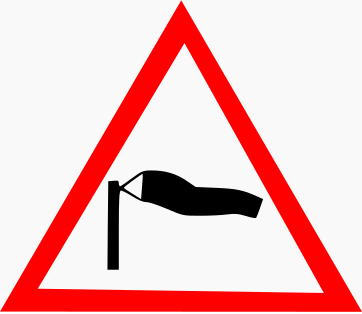
Strong side winds can suddenly blow you off course. Keep your speed down when it's very windy, especially on exposed roads.
Question 44 of 50
What should you clean visors and goggles with?
Explanation
It's very important to keep your visor or goggles clean. Clean them using warm soapy water. Don't use solvents or petrol.
Question 45 of 50
You're riding in fast-flowing traffic. The vehicle behind is following too closely. What should you do?
Explanation
By increasing the separation distance between you and the vehicle in front, you have a greater safety margin. If the vehicle in front of you brakes suddenly to avoid a hazard, you'll have time to reduce speed gradually. This will reduce the risk of the close-following vehicle running into you.
Question 46 of 50
You're on a motorway at night. In which situation may you have your headlights switched off?
Explanation
Always use your headlights at night on a motorway, unless you've had to stop on the hard shoulder. If you have to use the hard shoulder, switch off your headlights but leave your parking lights on, so that your motorcycle can be seen by other road users.
Question 47 of 50
What's the legal minimum insurance cover you must have to ride on public roads?
Explanation
The minimum insurance cover required by law is third-party only. This covers the other people and vehicles involved in a collision, but not you or your vehicle. Also, basic third-party insurance won't cover you for theft or fire damage. Make sure you read your policy carefully and understand what it covers.
Question 48 of 50
Why should you wear specialist motorcycle clothing when riding?
Explanation
If you become cold and wet when riding, this can have a serious effect on your concentration and control of your motorcycle. Proper riding gear can help shield you from the weather, as well as giving protection in the event of a crash.
Question 49 of 50
You're parking your motorcycle and sidecar on a hill. What's the best way to stop it rolling away?
Explanation
To make sure a sidecar outfit doesn't roll away after you've parked it, you should leave it in a low gear and wedge it against the kerb or place a block behind the wheel.
Question 50 of 50
What requirement must you meet if you want to carry a pillion passenger on your motorcycle?
Explanation
Before you can carry a pillion passenger, the law requires you to have a full licence for the category of motorcycle you're using.