Answer 50 questions, check each correct answer and work through the explanations at your own pace.
Question 1 of 500 correct answers
Question 1 of 50
When can you carry a child as a pillion passenger?
Explanation
Any passenger you carry - no matter how old they are - must be able to reach the footrests and handholds properly to remain safe on your machine. Also make sure they're wearing protective weatherproof clothing and a properly fitting helmet.
Question 2 of 50
Which type of road surface increases the risk of skidding for motorcyclists?
Explanation
When riding, it's important to look for changes in road surface that reduce grip, such as tar banding, painted lines and metal covers.
Question 3 of 50
You're about to emerge from a junction. Your pillion passenger tells you it's clear. When should you rely on their judgement?
Explanation
Your passenger may be inexperienced in judging traffic situations, may have a poor view or may not have seen a potential hazard. You're responsible for your own safety and that of your passenger. Always make your own checks to be sure it's safe to pull out.
Question 4 of 50
Do you need to display L plates when learning to ride a motorcycle under the direct access scheme?
Explanation
When training under the direct access scheme, you must be accompanied by an instructor on another motorcycle, who must be in radio contact with you. You must display red L plates to the front and rear of your motorcycle and follow all normal learner restrictions.
Question 5 of 50
What may be seriously affected if you overload your motorcycle?
Explanation
Any load will affect the handling of your motorcycle by changing its centre of gravity. When using panniers, spread the weight evenly on each side. Avoid carrying heavy items in a top box, as this could make your steering dangerously light.
Question 6 of 50
A long, heavily laden lorry is taking a long time to overtake you. What should you do?
Explanation
A long lorry with a heavy load will need more time to pass you than a car, especially on an uphill stretch of road. Slow down and allow the lorry to pass.
Question 7 of 50
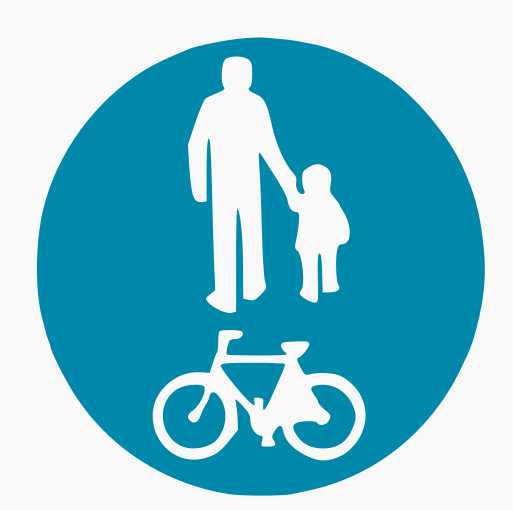
What does this sign mean?
Explanation
This sign shows a shared route for pedestrians and cyclists: when it ends, the cyclists will be rejoining the main road.
Question 8 of 50
Why should motorcyclists wear bright clothing?
Explanation
Motorcycles and scooters are generally smaller than other vehicles and can be difficult to see. Wearing bright clothing makes it easier for other road users to see a motorcyclist approaching, especially at junctions.
Question 9 of 50
You're following a long vehicle. As it approaches a crossroads, it signals left but moves out to the right. What should you do?
Explanation
A long vehicle may need to swing out in the opposite direction as it approaches a turn, to allow the rear wheels to clear the kerb. Don't try to filter through if you see a gap; as the lorry turns, the gap will close.
Question 10 of 50
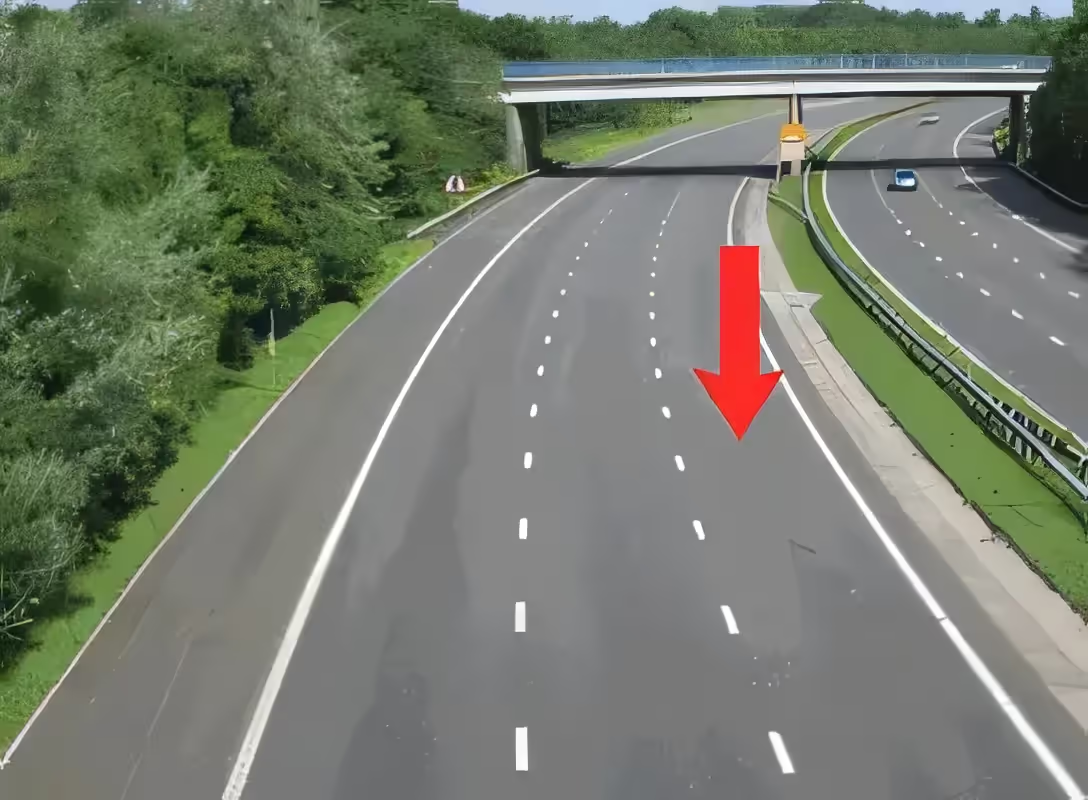
On a three-lane dual carriageway, what can the right-hand lane be used for?
Explanation
You should normally use the left-hand lane on any dual carriageway unless you're overtaking or turning right. When overtaking on a dual carriageway, look for vehicles ahead that are turning right. They may be slowing or stopped. You need to see them in good time so that you can take appropriate action.
Question 11 of 50
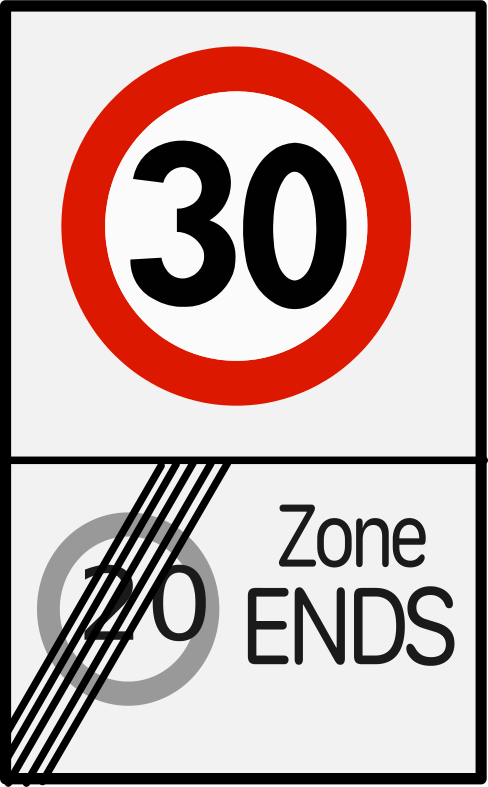
What does this sign mean?
Explanation
Where you see this sign, the 20 mph restriction ends. Check all around for possible hazards and only increase your speed if it's safe to do so.
Question 12 of 50
What does this sign mean?
Explanation
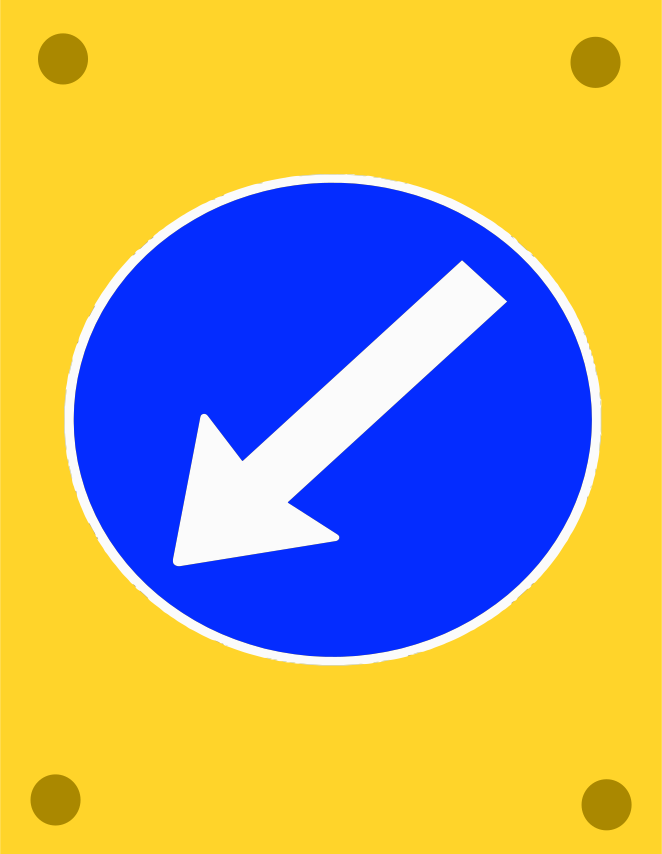
These signs are often seen in one-way streets that have more than one lane. When you see this sign, use the route that's the most convenient and doesn't require a late change of direction.
Question 13 of 50
What does a sign with a brown background show?
Explanation
Signs with a brown background give directions to places of interest. They're often seen on a motorway, directing you along the easiest route to the attraction.
Question 14 of 50
What does this sign mean?
Explanation
You should change lanes as directed by the sign. Here, the right-hand lane is closed but the left-hand and centre lanes are available. Merging in turn is recommended when it's safe and traffic is going slowly; for example, at roadworks or a road traffic incident. When vehicles are travelling at speed, this isn't advisable and you should move into the appropriate lane in good time.
Question 15 of 50
Where can you find reflective amber studs on a motorway?
Explanation
At night or in poor visibility, reflective studs on the road help you to judge your position on the carriageway.
Question 16 of 50
You've broken down on a motorway. In which direction should you walk to find the nearest emergency telephone?
Explanation
Along the hard shoulder there are marker posts at 100-metre intervals. These will direct you to the nearest emergency telephone.
Question 17 of 50
How should you use the emergency telephone on a motorway?
Explanation
Traffic is passing you at speed. If the draught from a large lorry catches you by surprise, it could blow you off balance and even onto the carriageway. By facing the oncoming traffic, you can see approaching lorries and so be prepared for their draught. You'll also be in a position to see other hazards approaching.
Question 18 of 50
A horse rider is in the left-hand lane approaching a roundabout. Where should you expect the rider to go?
Explanation
Horses and their riders move more slowly than other road users. They might not have time to cut across heavy traffic to take up a position in the right-hand lane. For this reason, a horse and rider may approach a roundabout in the left-hand lane even though they're turning right.
Question 19 of 50
What must you do when overtaking a car at night?
Explanation
To prevent your lights from dazzling the driver of the car in front, wait until you've passed them before switching to full beam.
Question 20 of 50
You're waiting at a level crossing. A train passes but the lights keep flashing. What must you do?
Explanation
If the lights at a level crossing keep flashing after a train has passed, you should continue to wait, because another train might be coming. Time seems to pass slowly when you're held up in a queue. Be patient and wait until the lights stop flashing.
Question 21 of 50
What's most likely to cause high fuel consumption?
Explanation
Accelerating and braking gently and smoothly will help to save fuel and reduce wear on your vehicle. This makes it better for the environment too.
Question 22 of 50
When should you flash your headlights at other road users?
Explanation
You should only flash your headlights to warn others of your presence. Don't use them to greet others, show impatience or give priority to other road users, because they could misunderstand your signal.
Question 23 of 50
A slow-moving lorry showing this sign is travelling in the middle lane of a three-lane motorway. How should you pass it?
Explanation
This sign is found on slow-moving or stationary works vehicles. If you wish to overtake, do so on the left, as indicated. Be aware that there might be workmen in the area.
Question 24 of 50
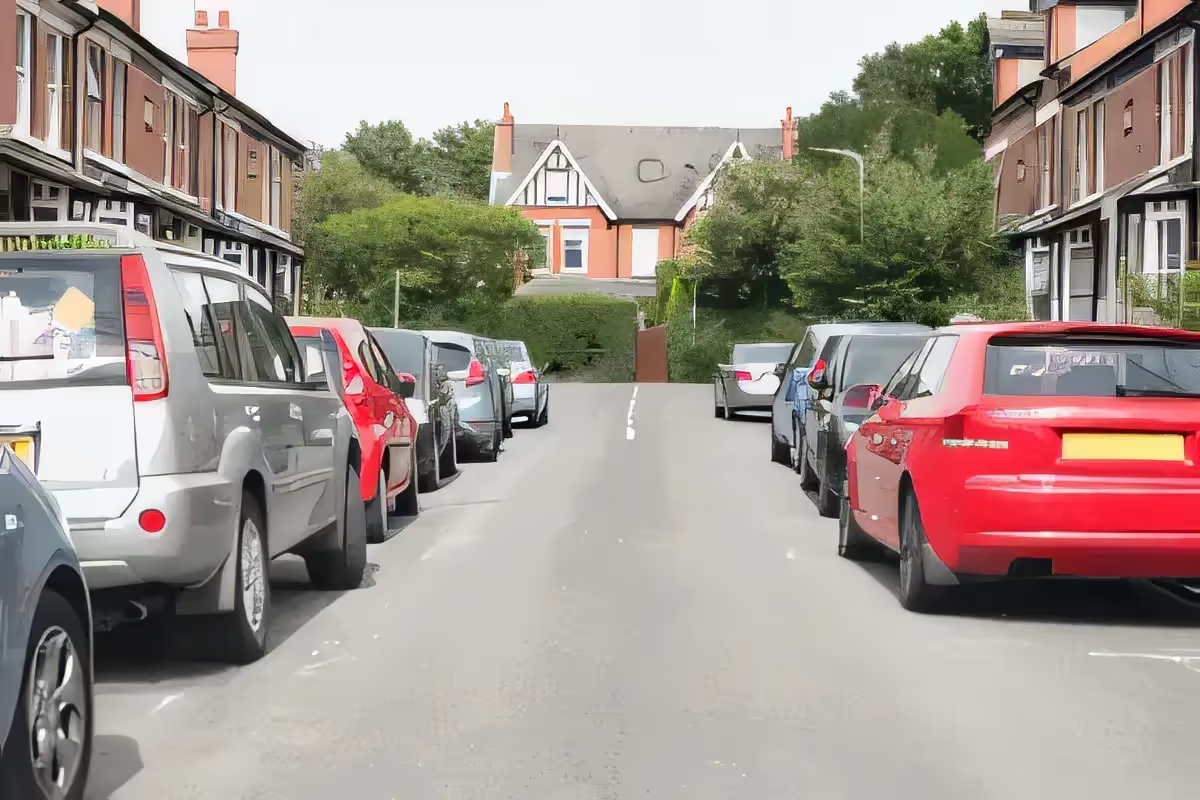
What hazard should you be aware of when travelling along this street?
Explanation
On roads where there are many parked vehicles, you might not be able to see children between parked cars and they may run out into the road without looking.
Question 25 of 50
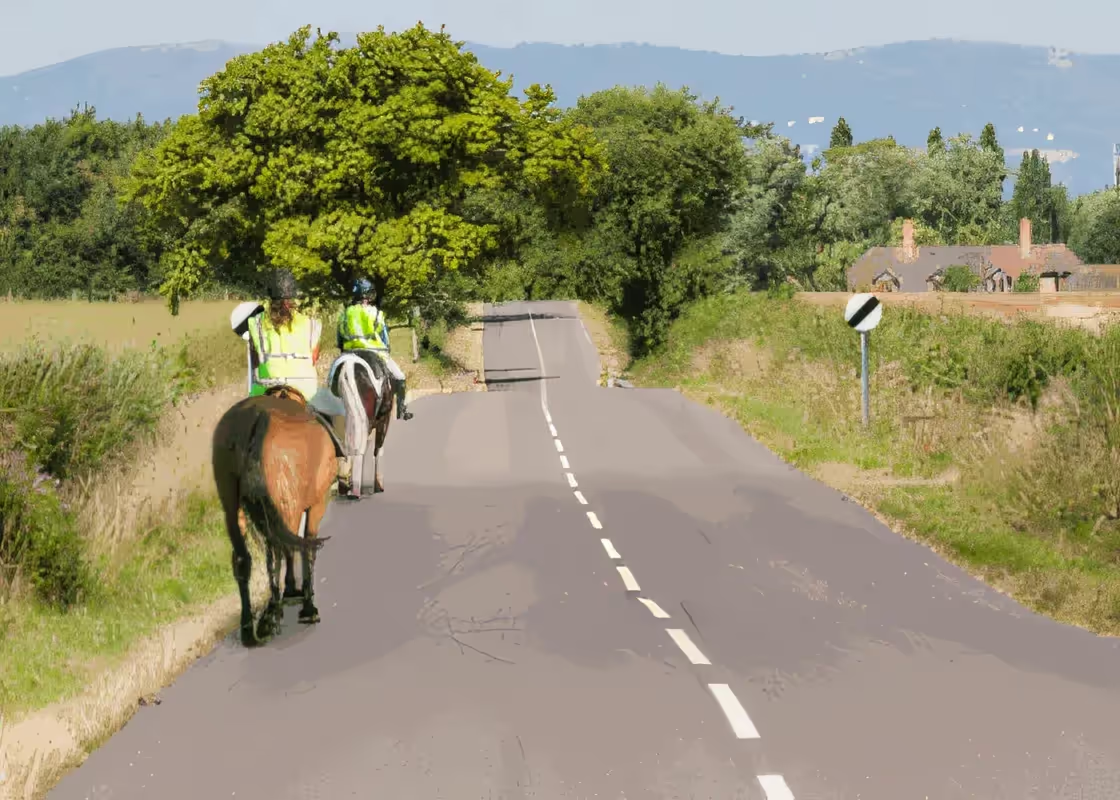
You notice horse riders in front. What should you do first?
Explanation
Be particularly careful when approaching horse riders - slow down and be prepared to stop. Always pass wide and slowly, and look out for signals given by the riders. Horses are unpredictable: always treat them as potential hazards and take great care when passing them.
Question 26 of 50
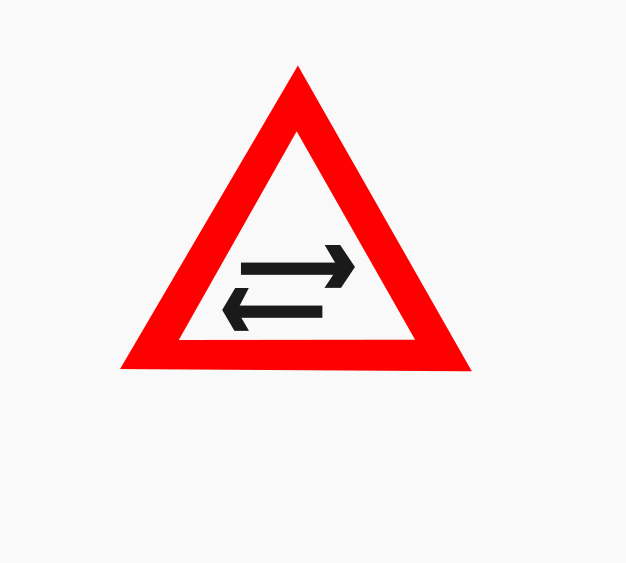
What does this sign mean?
Explanation
Be prepared for traffic approaching from junctions on either side of you. Try to avoid unnecessary changing of lanes just before the junction.
Question 27 of 50
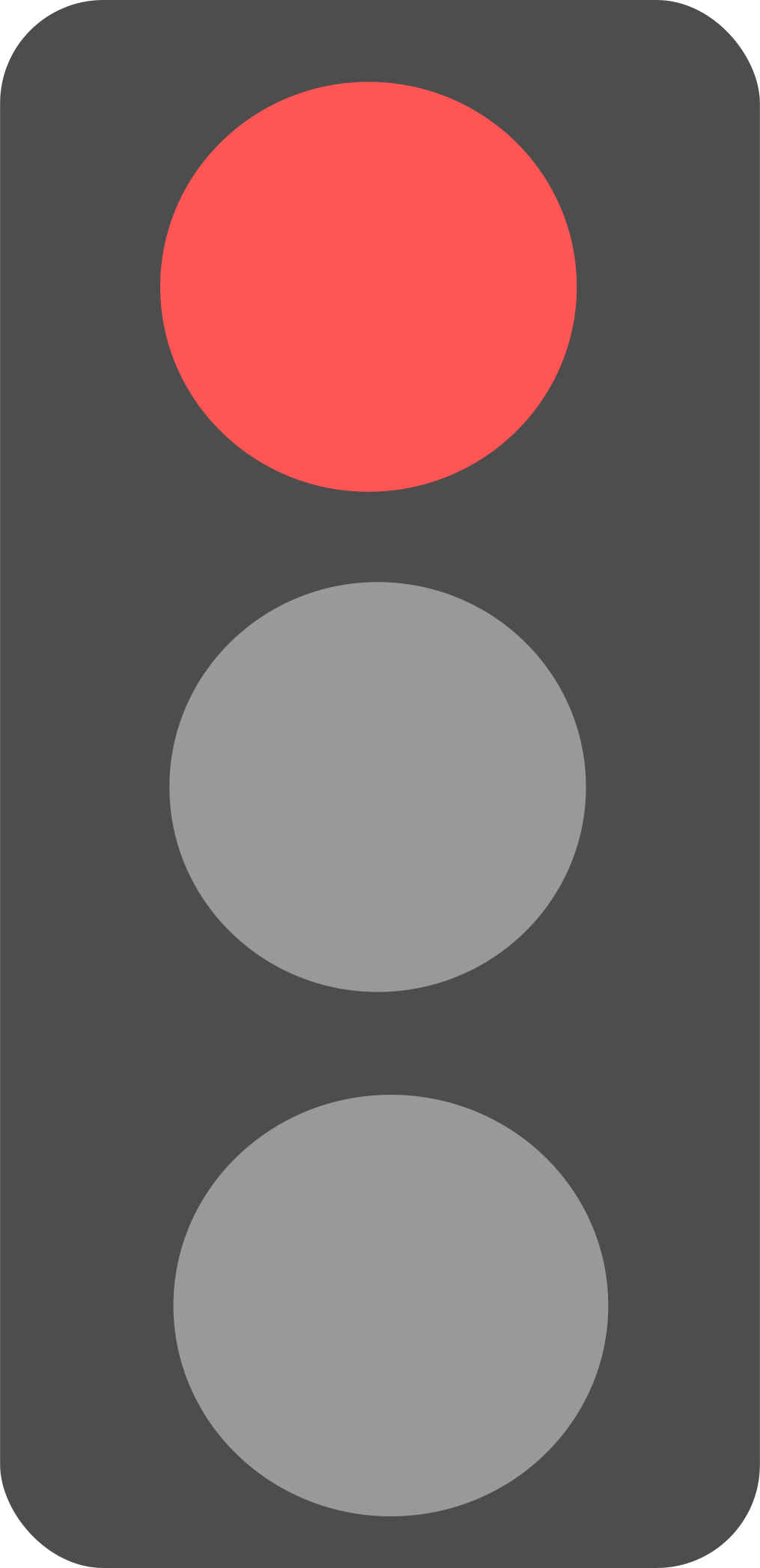
What should you do when approaching traffic lights where red and amber are showing together?
Explanation
Be aware that other traffic might still be clearing the junction as you approach. A green light means you may go on, but only if the way is clear.
Question 28 of 50
For how long is a Statutory Off-Road Notification (SORN) valid?
Explanation
A SORN allows you to keep a vehicle off-road and untaxed. SORN will end when the vehicle is taxed, sold or scrapped.
Question 29 of 50
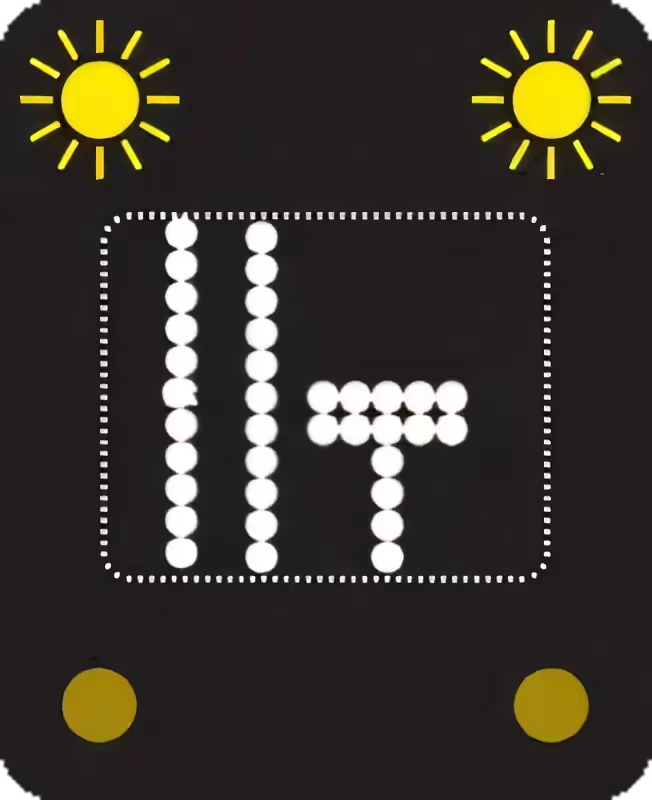
You're on a smart motorway. A mandatory speed limit is displayed above the hard shoulder. What does this mean?
Explanation
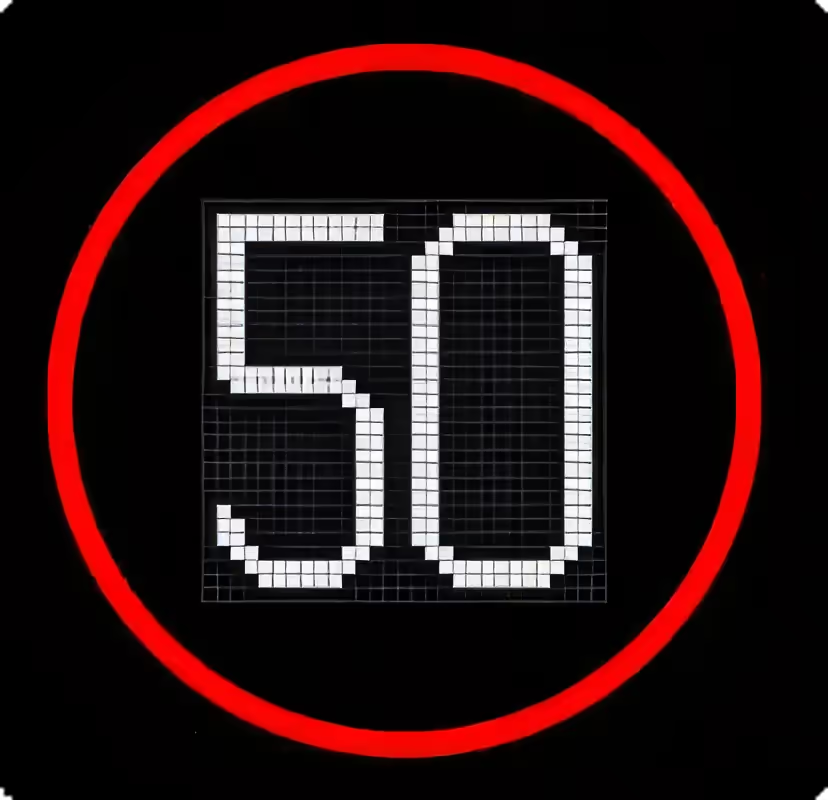
A mandatory speed-limit sign above the hard shoulder shows that this part of the road can be used as a running lane between junctions. You must stay within the speed limit. Look out for vehicles that may have broken down and could be blocking the hard shoulder.
Question 30 of 50
You shouldn't normally travel on the hard shoulder of a motorway. When can you use it?
Explanation
Normally, you should only use the hard shoulder for emergencies and breakdowns, and at roadworks when signs direct you to do so. Smart motorways use active traffic management to ease congestion. In these areas, the hard shoulder may be used as a running lane when speed-limit signs are shown directly above.
Question 31 of 50
You're on a dual carriageway. Ahead, you see a vehicle with an amber flashing light. What could this be?
Explanation
An amber flashing light on a vehicle indicates that it's slow-moving. Battery-powered vehicles used by disabled people are limited to 8 mph. It isn't advisable for them to be used on dual carriageways where the speed limit exceeds 50 mph. If they are, then an amber flashing light must be used.
Question 32 of 50
What's an effect of drinking alcohol?
Explanation
Alcohol will severely reduce your ability to drive or ride safely and there are serious consequences if you're caught over the drink-drive limit. It's known that alcohol can slow reactions, impair judgement and increase risk.
Question 33 of 50
You're approaching a red traffic light. What will the signal show next?
Explanation
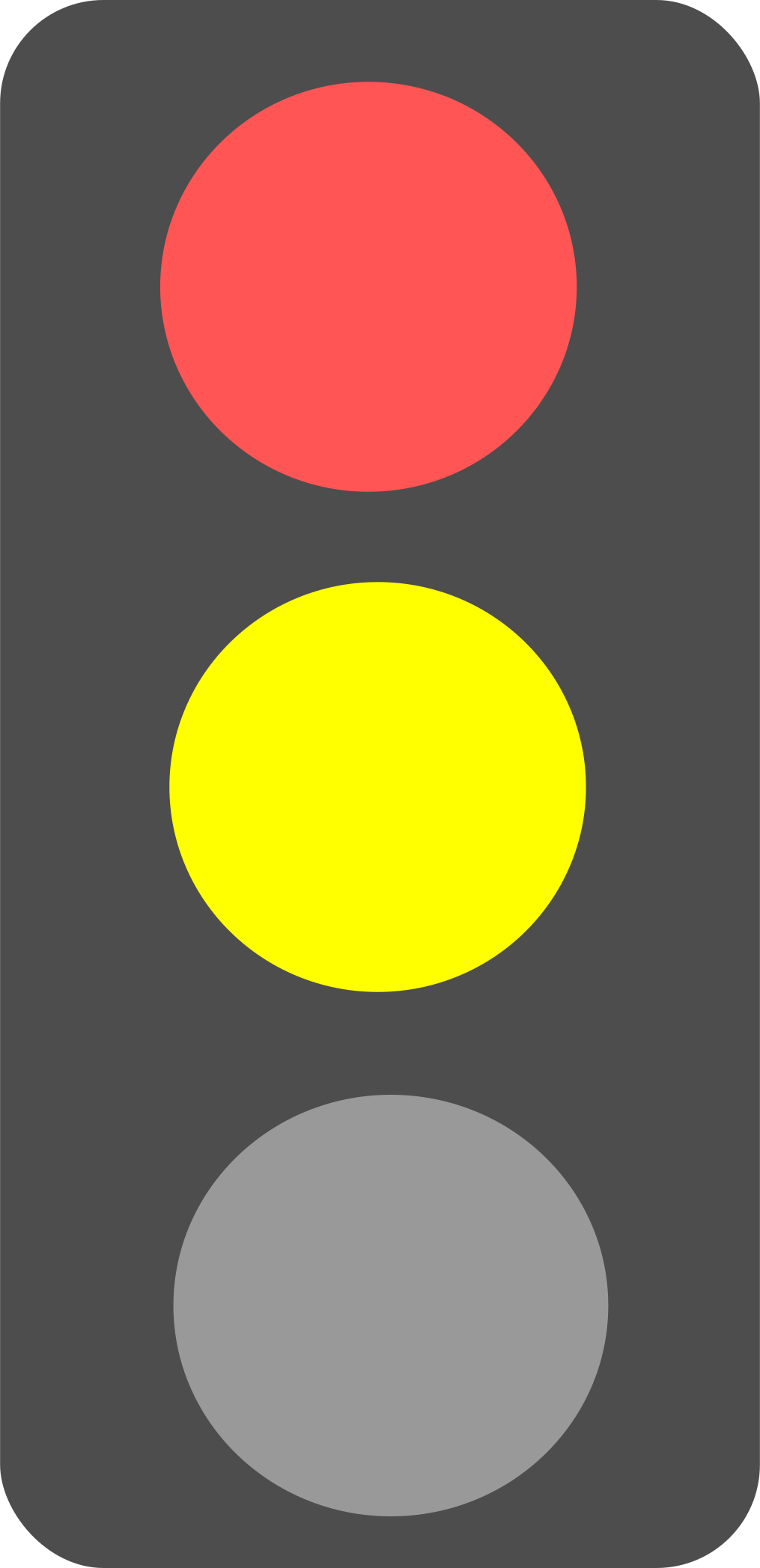
If you know which light is going to show next, you can plan your approach accordingly. This can help prevent excessive braking or hesitation at the junction.
Question 34 of 50
What's the safest way to stop on a wet road?
Explanation
Motorcyclists need to take extra care when stopping on wet road surfaces. Plan well ahead so that you're able to brake in good time. For maximum stability, you should use both brakes, and brake when your motorcycle is upright and travelling in a straight line.
Question 35 of 50
When are motorcyclists allowed to use high-intensity rear fog lights?
Explanation
If your motorcycle is fitted with high-intensity rear fog lights, you must only use them when visibility is seriously reduced. That's when you can see no further than 100 metres (328 feet). This rule about high-intensity rear fog lights applies to all motor vehicles.
Question 36 of 50
What can motorcyclists do to improve their safety on the road?
Explanation
Always ride defensively. This means looking and planning ahead, as well as anticipating the actions of other road users.
Question 37 of 50
It's very cold and the road looks wet. What should you do if you can't hear any road noise as you ride?
Explanation
Frozen rain on the road is called black ice. It can be hard to see, but it can be indicated by a lack of road noise and your steering may also feel very light. Reduce your speed and avoid harsh braking or steering. Riding in as high a gear as possible can help reduce the risk of wheelspin.
Question 38 of 50
What's the legal minimum depth of tread for motorcycle tyres?
Explanation
The law says that the entire original tread must be visible, with a depth of at least 1 mm in a continuous band across at least three-quarters of the breadth of the tread. However, your tyres are your only contact with the road, so it's recommended that you replace them before they get to this level.
Question 39 of 50
What will happen if you ride with your clutch lever pulled in for longer than is necessary?
Explanation
Riding with the clutch lever pulled in is known as coasting. If you coast, you lose the benefits of engine braking and you'll have reduced control of your motorcycle.
Question 40 of 50
What could happen if you ride your motorcycle with a slack or worn drive chain?
Explanation
Check your drive chain regularly; adjust and lubricate it if necessary. It needs to be adjusted until the 'free play' is as it says in the vehicle handbook. If the chain is too loose, it can jump off its sprocket and lock your rear wheel while you're riding.
Question 41 of 50
How should you ride through flood water?
Explanation
If you have to ride through a flood, ride slowly in a low gear. Keep the engine running fast enough to keep water out of the exhaust. You may need to slip the clutch to do this.
Question 42 of 50
Which of these will affect the stopping distance of your motorcycle?
Explanation
Tyres are a major factor in the handling, stability and stopping distance of a motorcycle. Make sure they're in a safe and legal condition. The weather and road surface also play a part. Always anticipate well ahead and take account of the conditions when you're braking.
Question 43 of 50
How long after first registration must a motorcycle have its first MOT test?
Explanation
Any motorcycle you ride must be in good condition and roadworthy. If it's over three years old, it must have a valid MOT test certificate (unless it was made before 1960, in which case it will be exempt from the MOT test).
Question 44 of 50
What can you do to prevent a cable-operated clutch from becoming stiff?
Explanation
Keeping the clutch cable oiled will help it to move smoothly through its outer casing. This will extend the life of the cable and help prevent the clutch's operation from becoming stiff.
Question 45 of 50
What can incorrect wheel alignment cause?
Explanation
If a motorcycle's wheels are incorrectly aligned, tyres may wear unevenly and the motorcycle can become unstable, especially when cornering.
Question 46 of 50
Spilt fuel on the road can be very dangerous for a motorcyclist. How can this hazard be seen?
Explanation
This rainbow-coloured pattern can be seen much more easily on a wet road. You should avoid riding over spilt fuel if possible. If you have to go over it, do so with extreme caution, knowing the surface will be slippery.
Question 47 of 50
You're using throwover saddlebags. Why is it important to make sure they're evenly loaded?
Explanation
Panniers or saddlebags should be loaded so that you carry about the same weight in each bag. Uneven loading could make the motorcycle unstable, especially when cornering.
Question 48 of 50
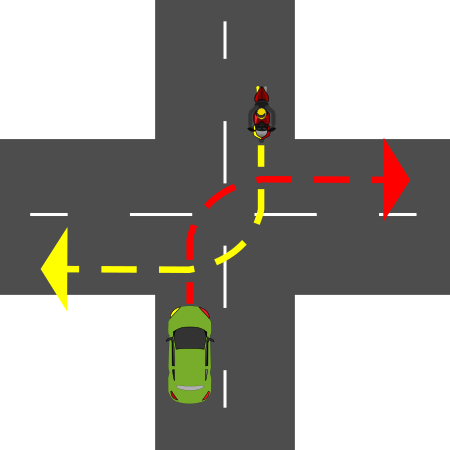
You're both turning right at this crossroads. Why is it safer to keep the car to your right?
Explanation
When turning right at this crossroads, you should keep the oncoming car to your right. This will give you a clear view of the road ahead and any oncoming traffic.
Question 49 of 50
What should you do when riding a motorcycle you've never ridden before?
Explanation
While control layouts are generally similar, different makes and models have subtle differences in the position and operation of the switches. Before you ride any motorcycle, make sure you're familiar with the layout of all the controls and switches.
Question 50 of 50
When you're riding a motorcycle, what should your normal road position allow?
Explanation
Aim to ride in the middle of your lane. Avoid riding in the gutter or in the centre of the road, where you might encounter debris or metal covers.