Answer 50 questions, check each correct answer and work through the explanations at your own pace.
Question 1 of 500 correct answers
Question 1 of 50
You're riding a motorcycle with an engine larger than 50 cc. What would make a tyre illegal?
Explanation
When checking tyres, make sure there are no bulges or cuts in the sidewalls. Keeping your tyres correctly inflated and in good condition is a vital part of maintaining your motorcycle.
Question 2 of 50
Only a fool breaks the two-second rule.' What does this refer to?
Explanation
It's very important that you always leave a safe gap between your motorcycle and any vehicle you're following. In good conditions, you need to leave at least one metre for every mile per hour of your speed, or a two-second time interval.
Question 3 of 50
You intend to go abroad and will be riding on the right-hand side of the road. What should you fit to your motorcycle?
Explanation
When abroad and riding on the right, deflectors are usually required to prevent your headlights from dazzling approaching drivers.
Question 4 of 50
What could a loose drive chain cause?
Explanation
A motorcycle chain will stretch as it wears. It may need frequent checking and adjustment to keep the tension correct. In extreme cases, a loose chain can jump off the sprocket and become wedged in the rear wheel. This could cause serious loss of control and result in a crash.
Question 5 of 50
When should you consider increasing your tyre pressures?
Explanation
Sometimes, manufacturers advise you to increase your tyre pressures for high-speed riding and when carrying extra weight, such as a pillion passenger. This information can be found in the vehicle handbook.
Question 6 of 50
You have too much oil in your engine. What could this cause?
Explanation
Too much oil in the engine will create excess crankcase pressure. This could damage engine seals and cause oil leaks. Any excess oil should be drained off.
Question 7 of 50
When must you stop your motorcycle?
Explanation
Don't stop or hold up traffic unnecessarily. However, there are occasions when you must stop by law. These include red traffic lights and when signalled by police or traffic officers.
Question 8 of 50
At a pelican crossing, what must you do when the amber light is flashing?
Explanation
Pelican crossings are signal-controlled crossings operated by pedestrians. Push-button controls change the signals. Pelican crossings have no red-and-amber stage before green; instead, they have a flashing amber light. This means you must give way to pedestrians who are already on the crossing. If the crossing is clear, however, you can continue.
Question 9 of 50
What's the minimum time gap you should leave when following a vehicle on a wet road?
Explanation
Water will reduce your tyres' grip on the road. The safe separation gap of at least two seconds in dry conditions should be doubled, to at least four seconds, in wet weather.
Question 10 of 50
What type of emergency vehicle is fitted with a green flashing beacon?
Explanation
A green flashing beacon on a vehicle means the driver or passenger is a doctor on an emergency call. Give way to them if it's safe to do so. Be aware that the vehicle may be travelling quickly or may stop in a hurry.
Question 11 of 50
There are no speed-limit signs on the road. How is a 30 mph limit indicated?
Explanation
There's a 30 mph speed limit where there are street lights unless signs show another limit.
Question 12 of 50
How should you signal when going straight ahead at a roundabout?
Explanation
When going straight ahead at a roundabout, don't signal as you approach it. Indicate left just after passing the exit before the one you wish to take.
Question 13 of 50
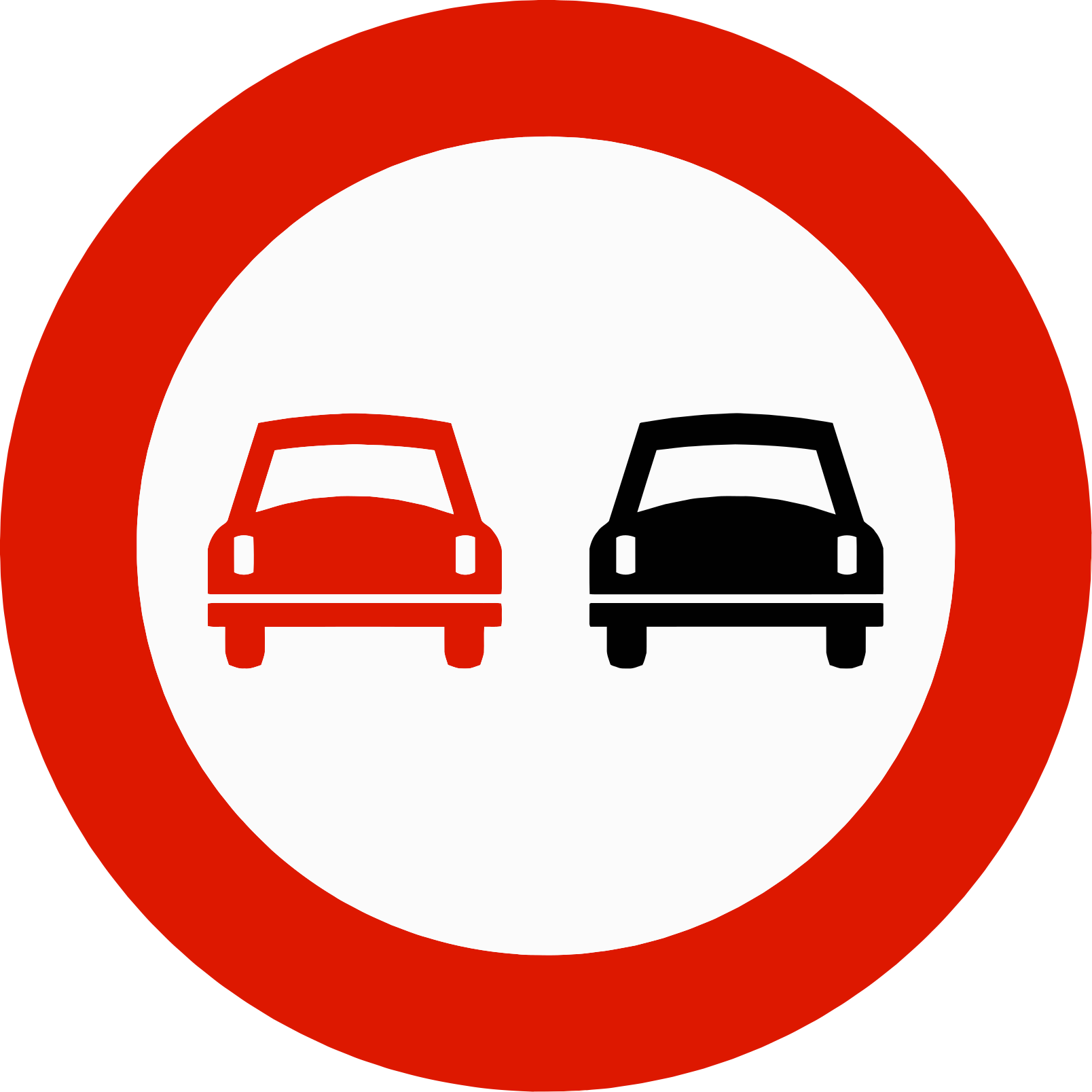
What does this sign mean?
Explanation
Road signs that prohibit overtaking are placed in locations where passing the vehicle in front is dangerous. If you see this sign, don't attempt to overtake. The sign is there for a reason; you must obey it.
Question 14 of 50
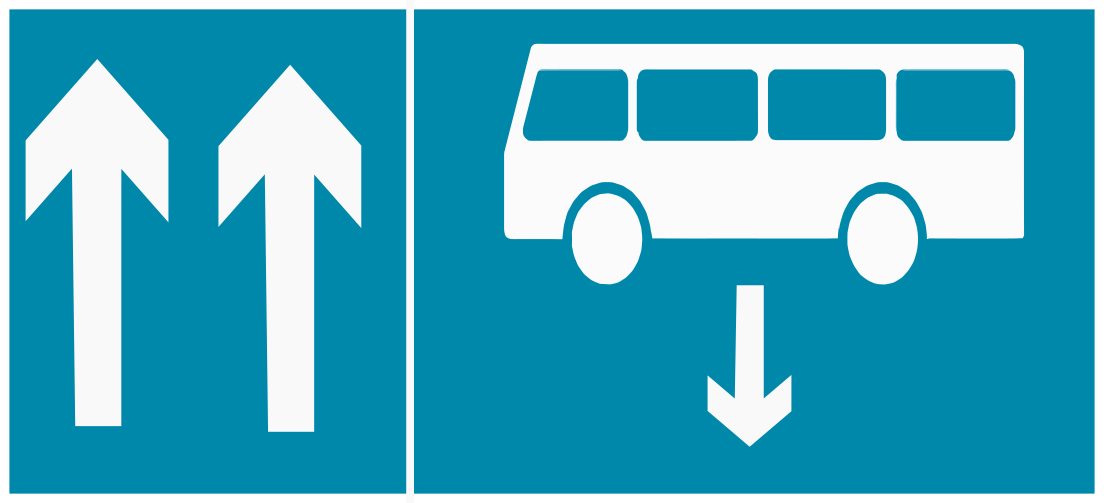
What does this sign mean?
Explanation
There will also be markings on the road surface to indicate the bus lane. You mustn't use this lane for parking or overtaking.
Question 15 of 50
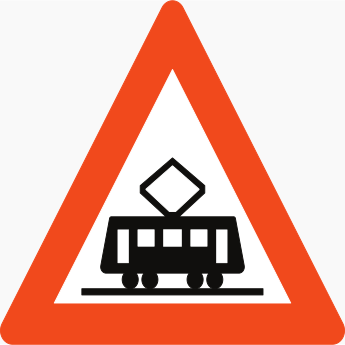
What does this sign mean?
Explanation
This sign tells you to beware of trams. If you don't usually drive in a town where there are trams, remember to look out for them at junctions and look for tram rails, signs and signals.
Question 16 of 50
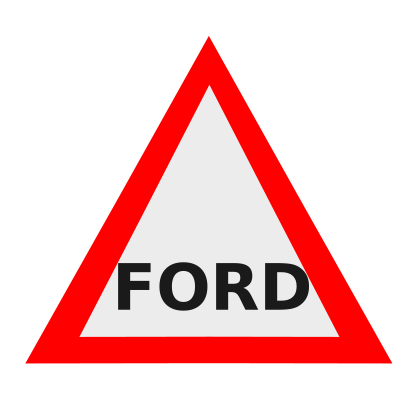
What does this sign mean?
Explanation
This sign is found where a shallow stream crosses the road. Heavy rainfall could increase the flow of water. If the water looks too deep or the stream has spread over a large distance, stop and find another route.
Question 17 of 50
When traffic lights are out of order, who has priority?
Explanation
When traffic lights are out of order, you should treat the junction as an unmarked crossroads. Be cautious, as you may need to give way or stop. Look for traffic attempting to cross the junction, unaware that it doesn't have priority.
Question 18 of 50
When may you cross a double solid white line in the middle of the road?
Explanation
You may cross the solid white line to pass a stationary vehicle or to pass a pedal cycle, horse or road maintenance vehicle if it's travelling at 10 mph or less. You may also cross the solid white line to enter a side road or access a property.
Question 19 of 50
Where would you see these road markings?
Explanation
When driving on a motorway or slip road, you mustn't enter an area marked with chevrons and bordered by a solid white line for any reason, except in an emergency.
Question 20 of 50
As you approach a pelican crossing, the lights change to green. What should you do if elderly people are halfway across?
Explanation
If the lights turn to green, wait for any pedestrians to clear the crossing. Allow them to finish crossing the road in their own time, and don't try to hurry them by revving your engine.
Question 21 of 50
At which type of crossing are cyclists allowed to ride across with pedestrians?
Explanation
A toucan crossing is designed to allow pedestrians and cyclists to cross at the same time. Look out for cyclists approaching the crossing at speed.
Question 22 of 50
What do traffic-calming measures do?
Explanation
Traffic-calming measures make the roads safer for vulnerable road users, such as cyclists, pedestrians and children. These can be designed as chicanes, road humps or other obstacles that encourage drivers and riders to slow down.
Question 23 of 50
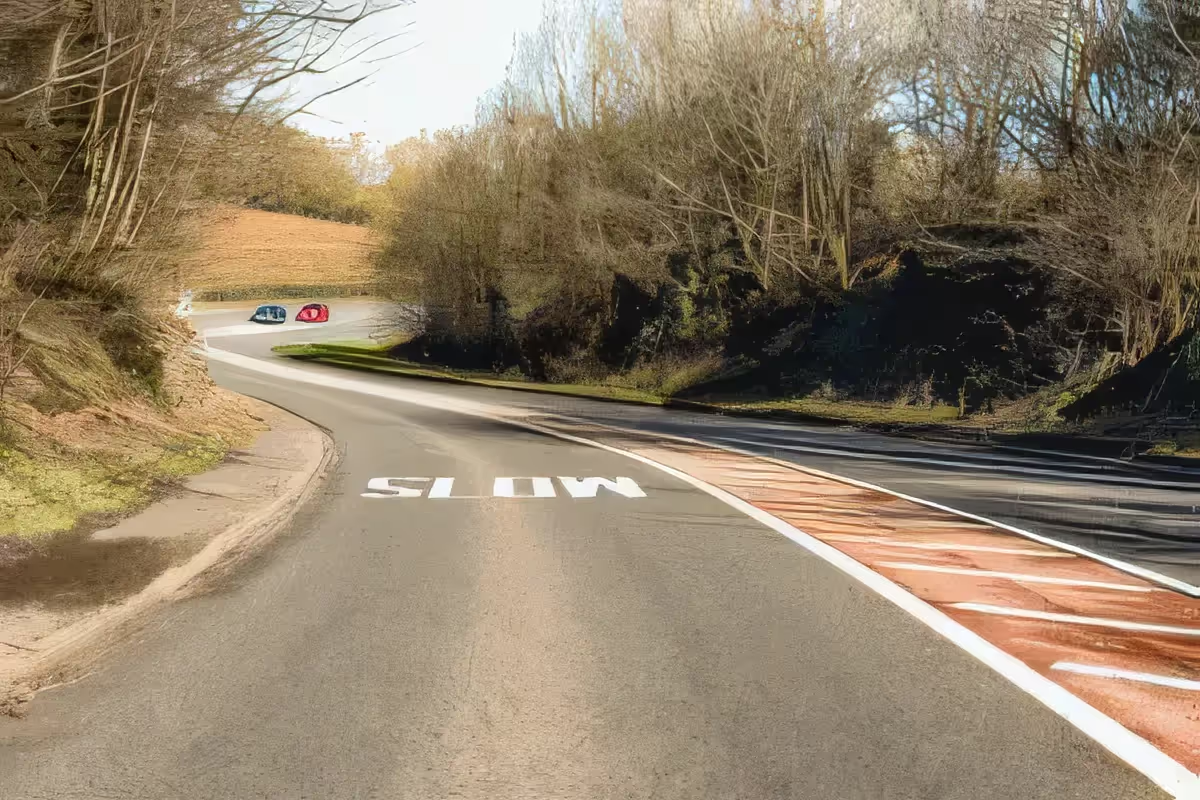
What's the reason for the area marked in red and white along the centre of this road?
Explanation
Areas of 'hatched markings' such as these separate traffic streams that could be a danger to each other. They're often seen on bends or where the road becomes narrow. If the area is bordered by a solid white line, you mustn't enter it except in an emergency.
Question 24 of 50
You need to top up your battery. What level should you fill it to?
Explanation
Top up the battery with distilled water and make sure each cell plate is covered.
Question 25 of 50
What's the purpose of these road markings?
Explanation
These markings are found on the road outside schools. Don't stop or park on them, even to set down or pick up children. The markings are there to ensure that drivers, riders, children and other pedestrians have a clear view of the road in all directions.
Question 26 of 50
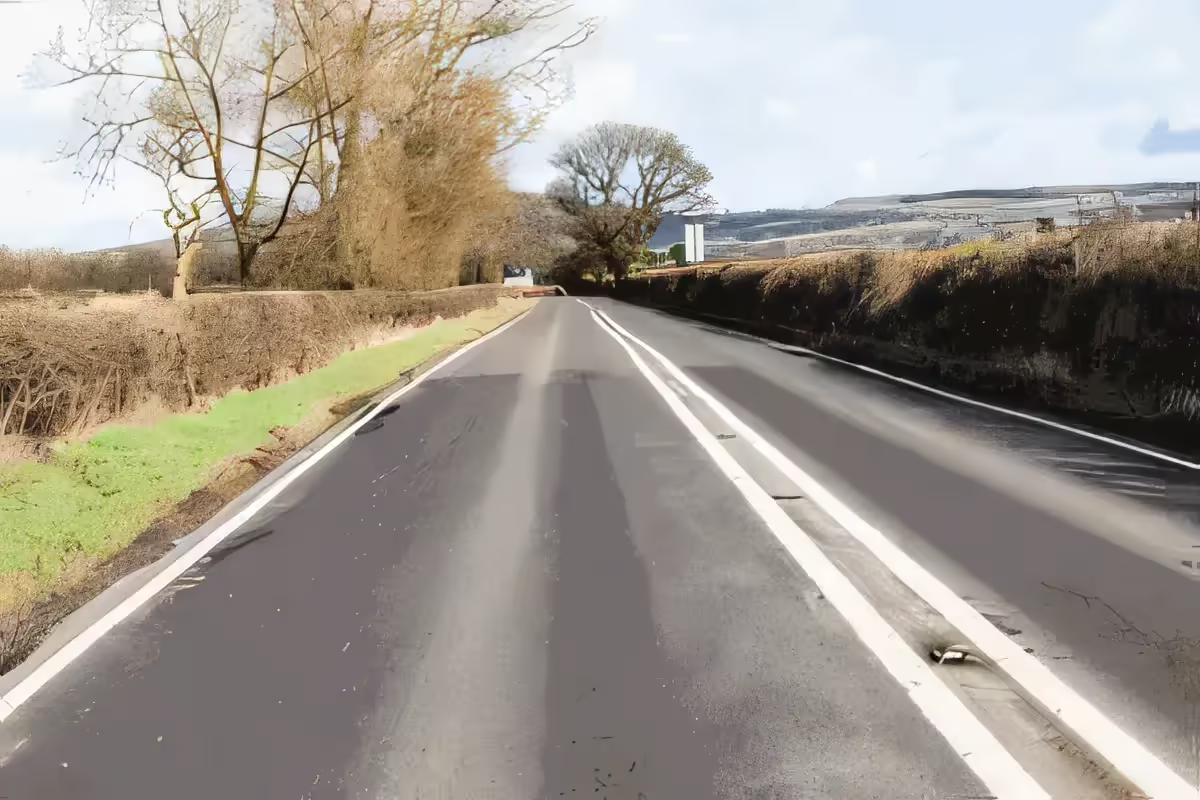
What should you do when you meet an oncoming vehicle on a single-track road?
Explanation
Take care when using single-track roads. It can be difficult to see around bends, because of hedges or fences, so expect to meet oncoming vehicles. Drive carefully and be ready to pull into or stop opposite a passing place, where you can pass each other safely.
Question 27 of 50
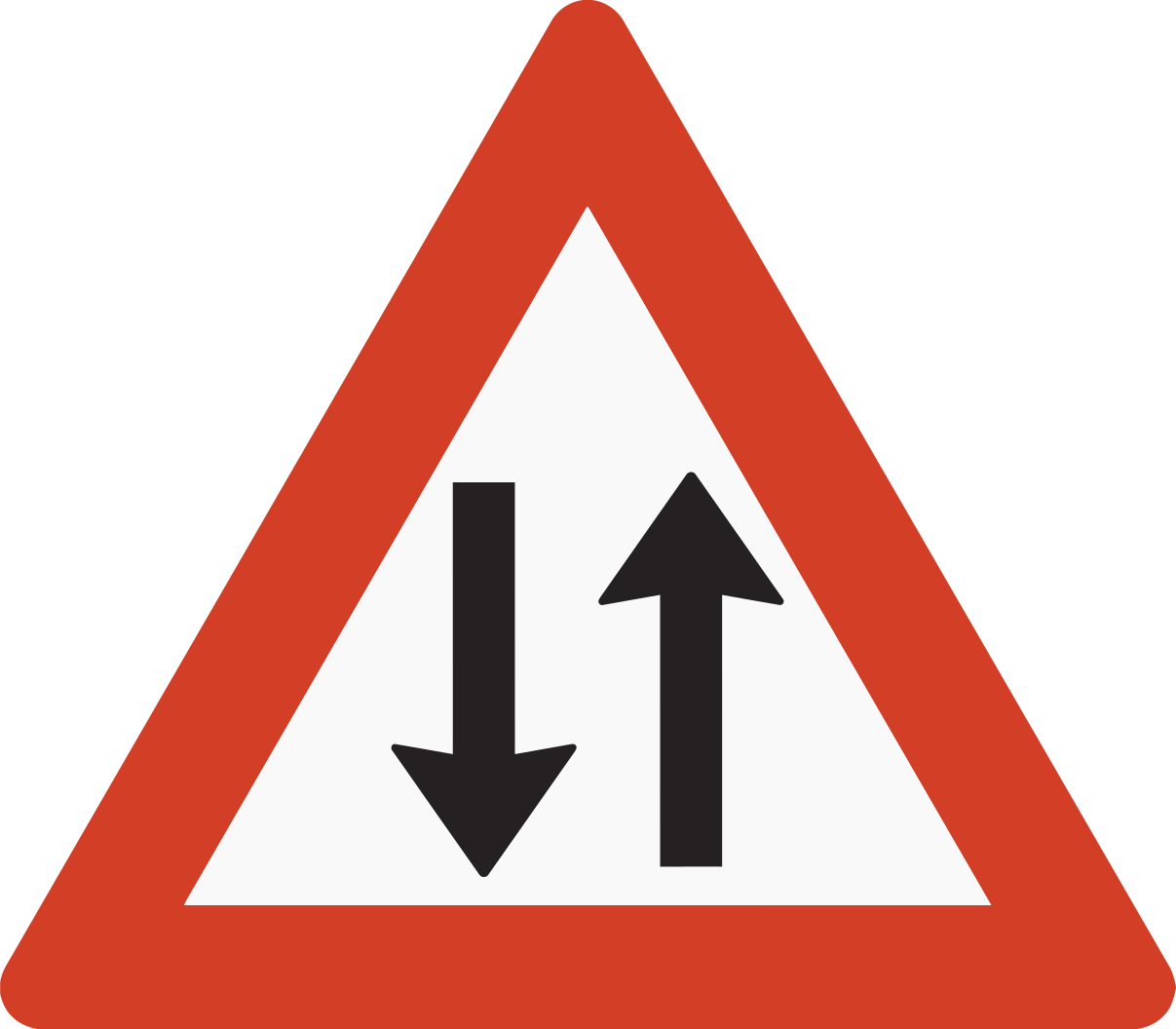
What does this sign mean?
Explanation
This sign may be at the end of a dual carriageway or a one-way street. It's there to warn you of oncoming traffic.
Question 28 of 50
Following a collision, someone has suffered a burn. The burn needs to be cooled. What's the shortest time it should be cooled for?
Explanation
Check the casualty for shock and, if possible, try to cool the burn for at least 20 minutes. Use a clean, cool, non-toxic liquid, preferably water.
Question 29 of 50
You're travelling at 50 mph on a good, dry road. What's your typical overall stopping distance?
Explanation
Even in good conditions, it will usually take you further than you think to stop. Don't just learn the figures; make sure you understand how far the distance is.
Question 30 of 50
You're using a contraflow system. What should you do?
Explanation
In a contraflow system, you'll be travelling close to oncoming traffic and sometimes in narrow lanes. You should get into the correct lane in good time, obey any temporary speed-limit signs and keep a safe separation distance from the vehicle ahead.
Question 31 of 50
You're following a large vehicle travelling at 40 mph. Where should you position your motorcycle?
Explanation
You need to be able to see well down the road and be ready for any hazards. Staying too close to the vehicle will reduce your view of the road ahead and the driver of the vehicle in front may not be able to see you either. Without a safe separation gap, you don't have the time and space you need to react to any hazards.
Question 32 of 50
Why should riders wear reflective clothing?
Explanation
Fluorescent clothing will help others to see you during the day. At night, however, you should wear clothing that reflects the light. This allows other road users to see you more easily in their headlights. Ask your local motorcycle dealer about fluorescent and reflective clothing.
Question 33 of 50
When should you wear full protective clothing while riding a motorcycle?
Explanation
Protective clothing is designed to protect you from the cold and wet. It also gives you some protection from injury, so it's important that you always wear protective clothing when you ride.
Question 34 of 50
What should you do to help stay safe when you're riding in fog?
Explanation
You must use your dipped headlights when visibility is seriously reduced. In fog, a film of mist can form over the outside of your visor or goggles. This can further reduce your ability to see. Be aware of this hazard and keep your visor or goggles clear; anti-mist sprays can help.
Question 35 of 50
Why should you be careful when riding on roads where electric trams operate?
Explanation
Electric trams run on rails and can't deviate from the tracks. Keep a lookout for trams, as they move very quietly and can appear suddenly. Be particularly careful when crossing the rails - they can be very slippery, especially when wet.
Question 36 of 50
Why should you allow extra room when overtaking another motorcyclist on a windy day?
Explanation
On a windy day, be aware that the blustery conditions might blow you or other motorcyclists out of position. Think about this before deciding to overtake.
Question 37 of 50
Your steering feels wobbly. Which of these is a likely cause?
Explanation
Worn bearings in the steering head can make your motorcycle very difficult to control. They should be checked for wear or correct adjustment and replaced if necessary.
Question 38 of 50
You're riding through a tunnel. What should you do if your motorcycle breaks down?
Explanation
If your motorcycle breaks down in a tunnel, it could present a danger to other traffic. First switch on your hazard warning lights and then call for help from an emergency telephone point. Don't rely on being found by the police or being seen by a CCTV camera.
Question 39 of 50
Which of these items must be kept clean?
Explanation
Maintenance is a vital part of road safety. Lights, indicators, reflectors and number plates must be kept clean and clear.
Question 40 of 50
What should a motorcyclist avoid at a mini-roundabout?
Explanation
Avoid riding over the painted area of a mini-roundabout, as this can become very slippery - especially when wet. At any given moment, only a small part of a motorcycle tyre makes contact with the road, so any reduction in grip can seriously affect stability.
Question 41 of 50
It's a very hot day. What would you expect to find?
Explanation
In very hot weather, the road surface can become soft and may melt. Take care when braking and cornering on soft tarmac, as this can lead to reduced grip and cause skidding.
Question 42 of 50
What should you do when filtering through slow-moving or stationary traffic?
Explanation
Other road users may not expect or look for motorcycles filtering through slow-moving or stationary traffic. Your view will be reduced by the vehicles around you. Watch out for pedestrians walking between the vehicles, vehicles suddenly changing direction and vehicles turning into or out of side roads.
Question 43 of 50
What should you do if you want to tow a trailer behind your motorcycle?
Explanation
You may not ride a motorcycle towing a trailer if you only hold a provisional motorcycle licence. When you tow a trailer, you need to be aware that lower speed limits apply and the trailer must be no more than 1 metre wide. The trailer's laden weight should be no more than 150 kg or two-thirds of the kerbside weight of the motorcycle - whichever is less.
Question 44 of 50
You're leaving your motorcycle unattended on a road. When may you leave the engine running?
Explanation
When you leave your motorcycle parked and unattended on a road, switch off the engine, use the steering lock and remove the ignition key. Also take any tank bags, panniers or loose luggage with you, set the alarm if the motorcycle has one, and use an additional lock and chain, or cable lock.
Question 45 of 50
You're positioned to turn right on a multi-lane roundabout. What should you do before moving to a lane on your left?
Explanation
Before you change lane you need to know whether it's safe to do so. A lifesaver glance in the direction you want to move will allow you to check your mirrors' blind spots. Your life could depend on knowing where other vehicles are.
Question 46 of 50
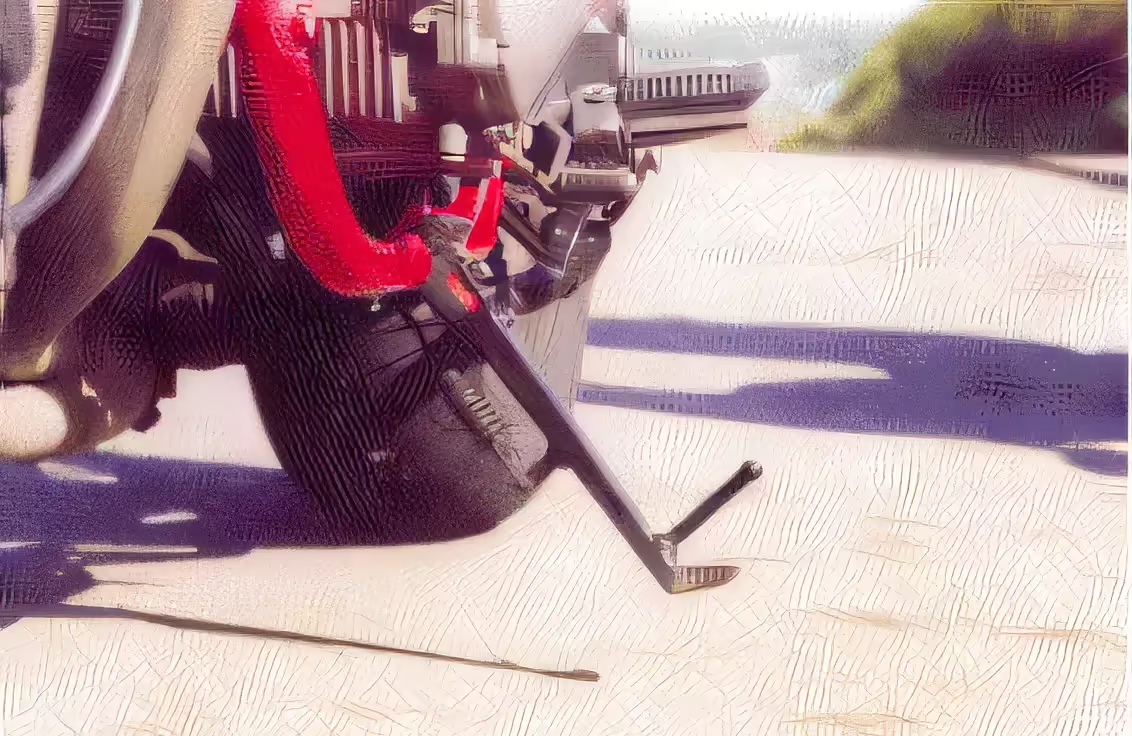
Riding with the side stand down could cause you to crash. When is this most likely to happen?
Explanation
Cornering with the side stand down could lead to a serious crash. Many motorcycles have a device that stops the engine if you try to ride off with the side stand down, but don't rely on this.
Question 47 of 50
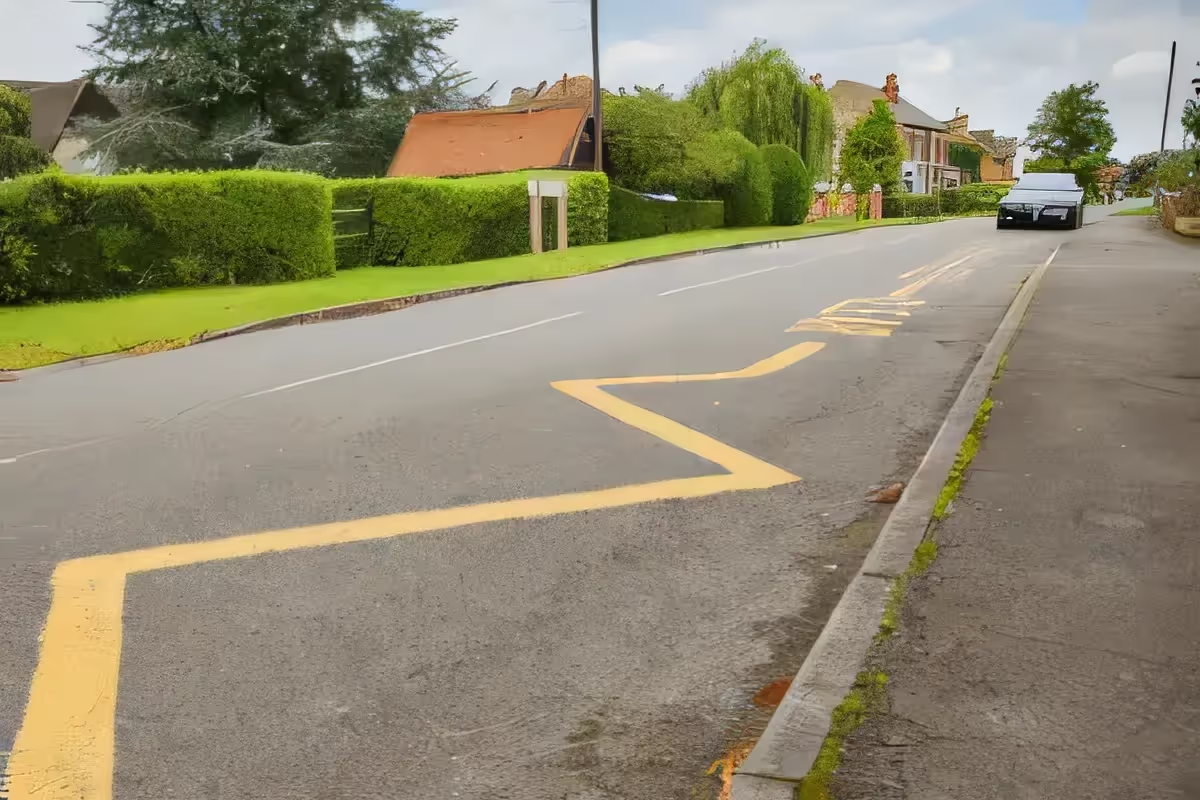
The road outside this school is marked with yellow zigzag lines. What do these lines mean?
Explanation
Parking here will block the view of the road, endangering the lives of children crossing the road on their way to and from school.
Question 48 of 50
Your mobile phone rings while you're travelling. What should you do?
Explanation
It's illegal to use a hand-held mobile or similar device when driving or riding, except in a genuine emergency. The safest option is to switch off your mobile phone before you set off, and use a message service. If you've forgotten to switch your phone off and it rings, you should ignore it. When you've stopped in a safe place, you can see who called and return the call if necessary.
Question 49 of 50
In windy conditions, which activity requires extra care?
Explanation
Always give cyclists plenty of room when overtaking them. You need to give them even more room when it's windy. A sudden gust could easily blow them off course and into your path.
Question 50 of 50
You're turning left into a side road. What hazard should you be especially aware of?
Explanation
Make sure that you've reduced your speed and are in the correct gear for the turn. Look into the road before you turn and always give way to any pedestrians who are crossing.