Answer 50 questions, check each correct answer and work through the explanations at your own pace.
Question 1 of 500 correct answers
Question 1 of 50
You intend to turn right into a side road. Why should you check for motorcyclists just before turning?
Explanation
Never attempt to change direction to the right without first checking your right-hand mirror and blind spot. A motorcyclist might not have seen your signal and could be hidden by other traffic. This observation should become a matter of routine.
Question 2 of 50
Which of these should you allow extra room when overtaking?
Explanation
Don't pass cyclists too closely, as they may need to swerve to avoid hazards; always leave plenty of room.
Question 3 of 50
What colour are the reflective studs between a motorway and its slip road?
Explanation
The studs between the carriageway and the hard shoulder are normally red. These change to green where there's a slip road, helping you to identify slip roads when visibility is poor or when it's dark.
Question 4 of 50
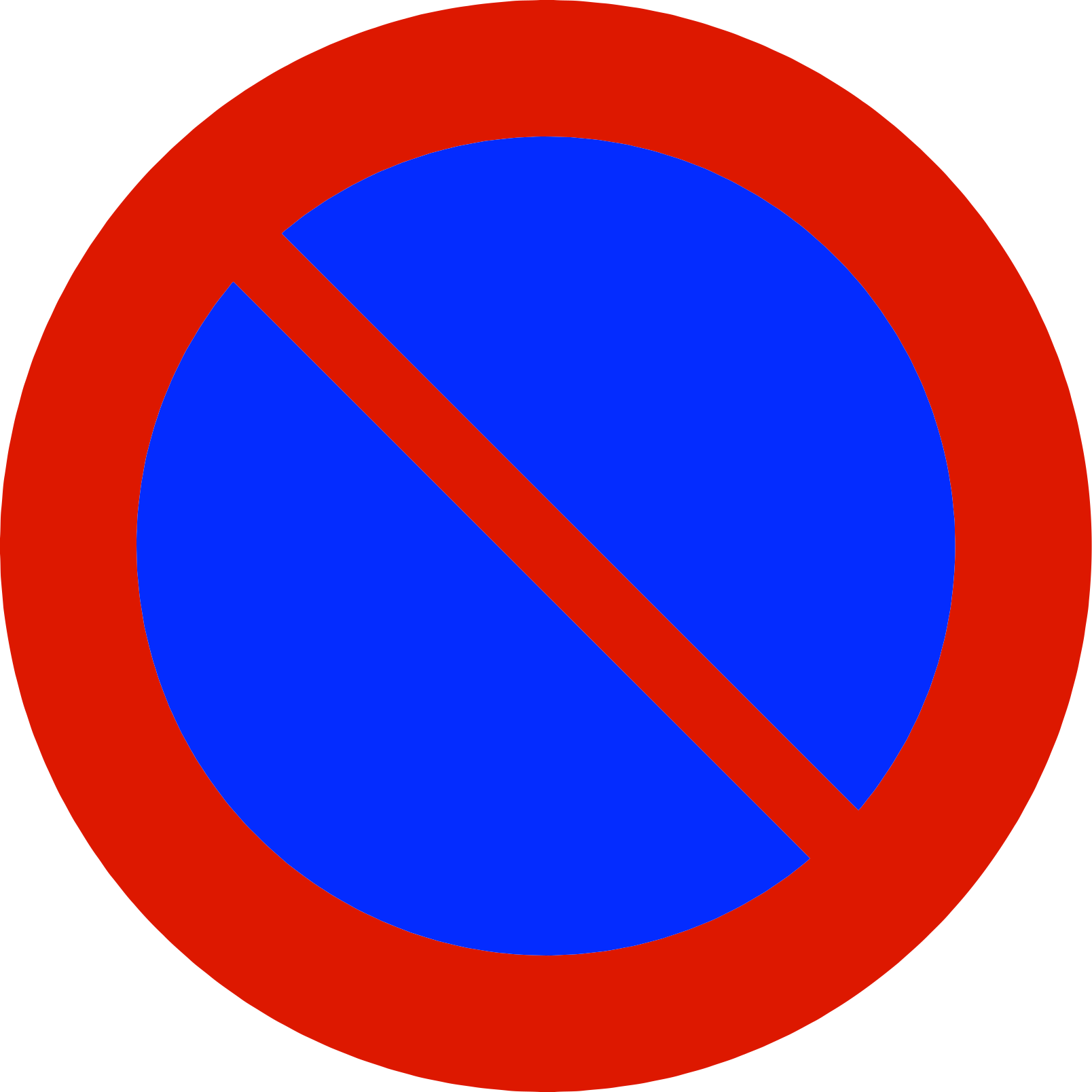
What's the meaning of this sign?
Explanation
This sign indicates that there are waiting restrictions. It's normally accompanied by details of when the restrictions are in force. Details of most signs in common use are shown in The Highway Code. For more comprehensive coverage, see Know Your Traffic Signs.
Question 5 of 50
What does this sign mean?
Explanation
There'll be a plate or additional sign to tell you when the restrictions apply.
Question 6 of 50
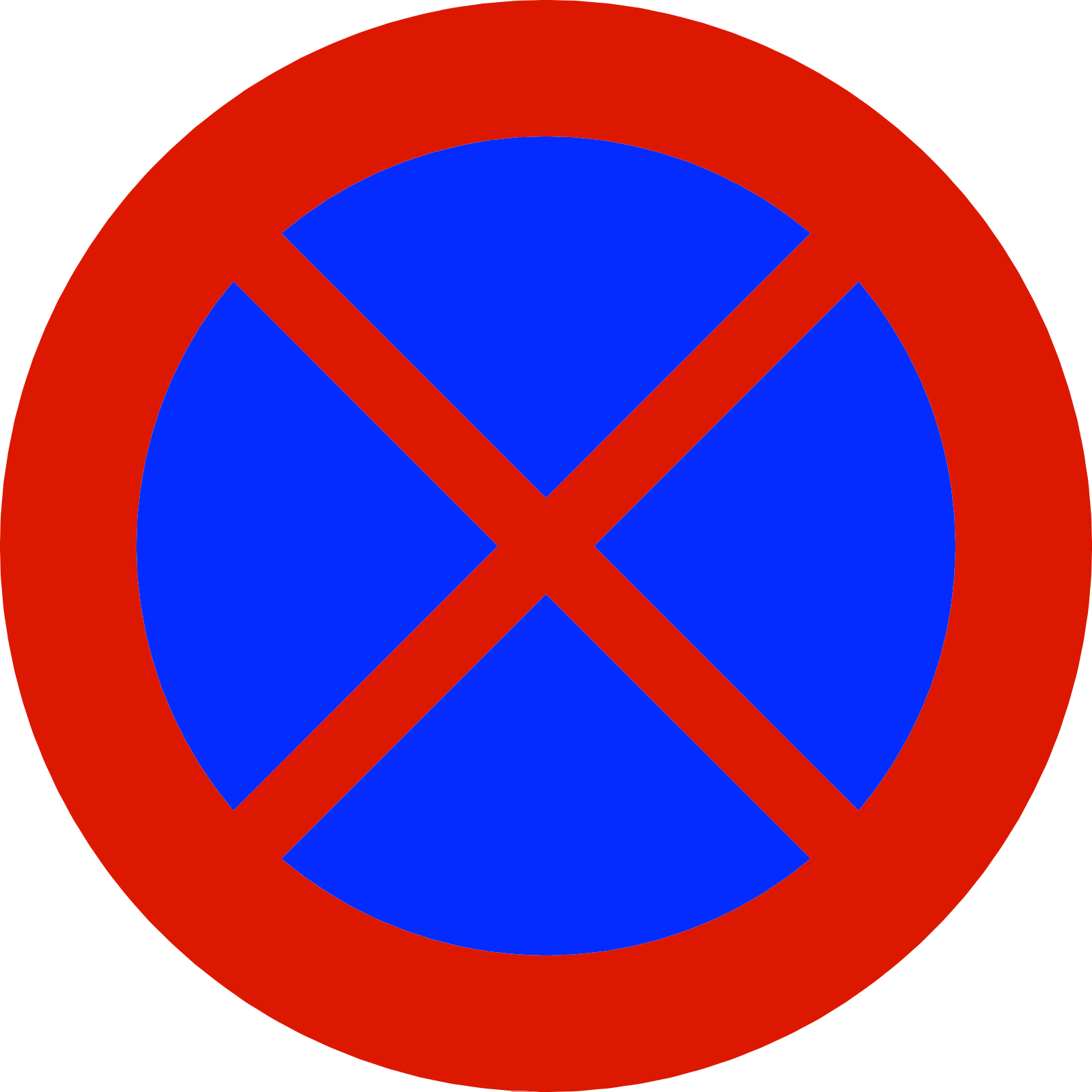
You see this sign ahead. What does it mean?
Explanation
Clearways are stretches of road where you aren't allowed to stop unless it's an emergency. Stopping where these restrictions apply may be dangerous and is likely to cause an obstruction. Restrictions might apply for several miles and this may be indicated on the sign.
Question 7 of 50
Where would you see a contraflow bus and cycle lane?
Explanation
The traffic permitted to use a contraflow lane travels in the opposite direction to traffic in the other lanes on the road.
Question 8 of 50
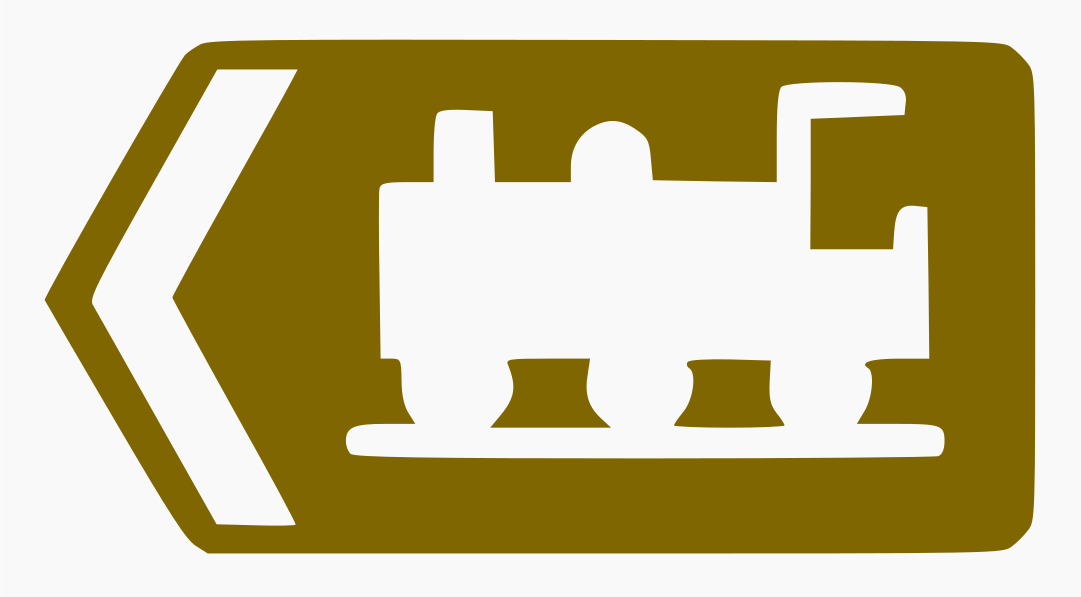
What does this sign mean?
Explanation
These signs indicate places of interest and are designed to guide you by the easiest route. They're particularly useful when you're unfamiliar with the area.
Question 9 of 50
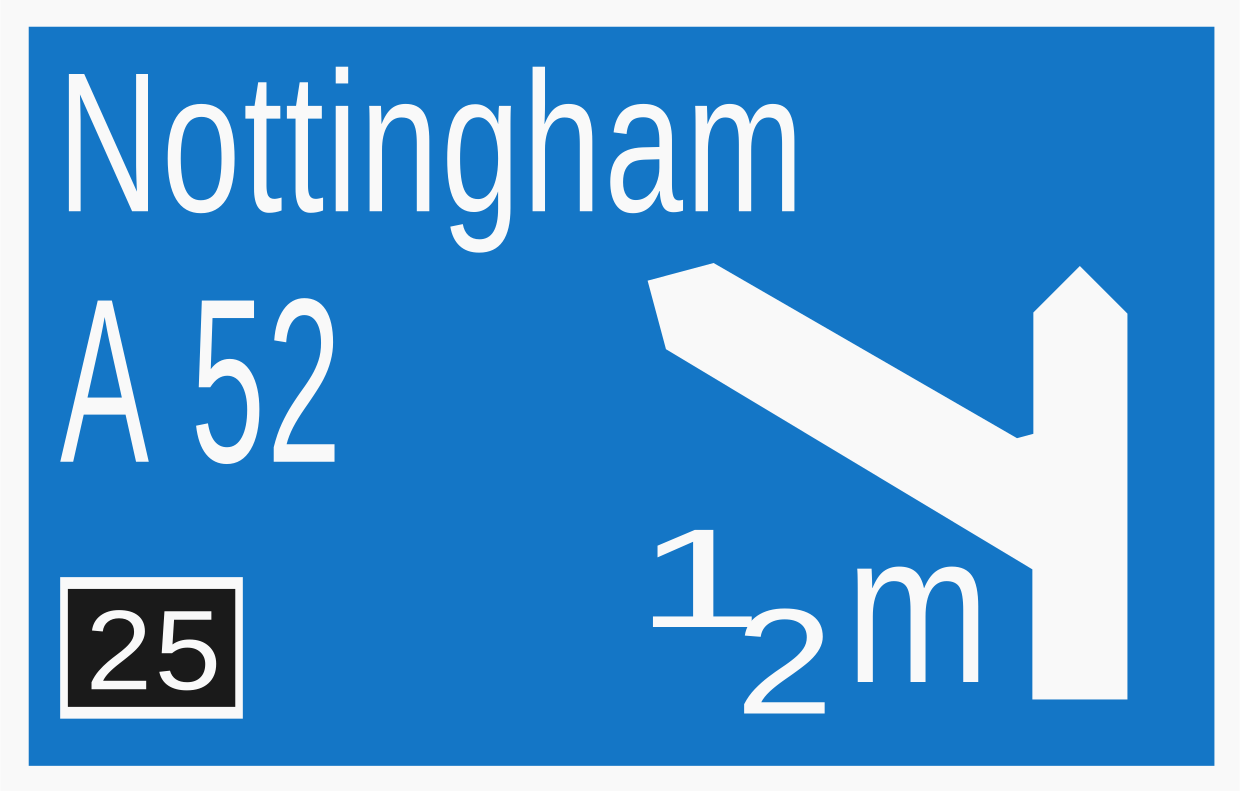
What does '25' mean on this motorway sign?
Explanation
Before you set out on your journey, use a road map to plan your route. When you see an advance warning of your junction, make sure you get into the correct lane in plenty of time. Last-minute harsh braking and cutting across lanes at speed is extremely hazardous.
Question 10 of 50
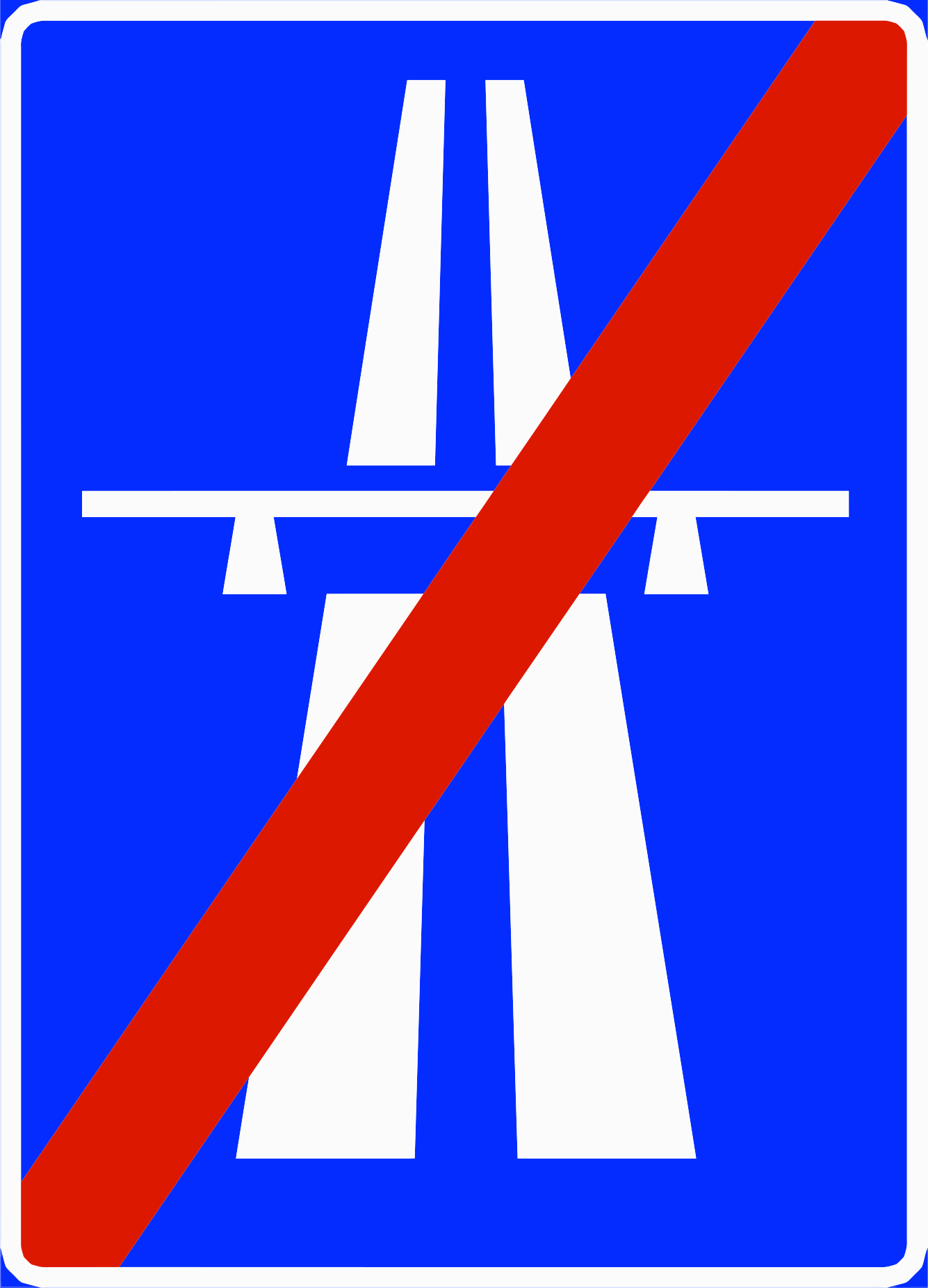
What does this sign mean?
Explanation
When you leave the motorway, make sure that you check your speedometer. You may be going faster than you realise. Slow down and look for speed-limit signs.
Question 11 of 50
What is a cover note?
Explanation
Sometimes an insurance company will issue a temporary insurance certificate called a cover note. It gives you the same insurance cover as your certificate but lasts for a limited period, usually one month.
Question 12 of 50
You're travelling behind a moped. What should you do when you want to turn left just ahead?
Explanation
Passing the moped and turning into the junction could mean that you cut across the front of the rider. This might force them to slow down, stop or even lose control. Stay behind the moped until it has passed the junction and then you can turn without affecting the rider.
Question 13 of 50
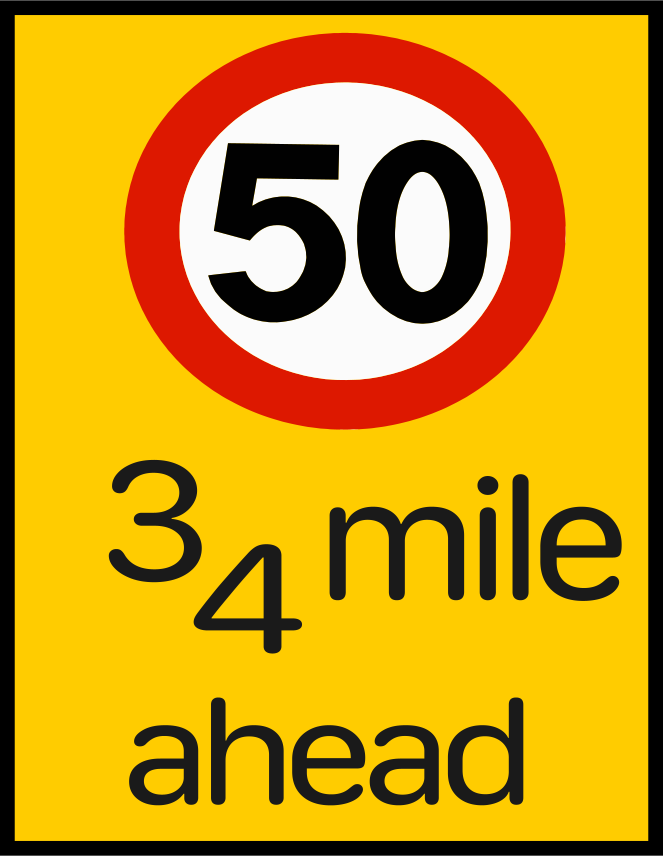
What does this traffic sign mean?
Explanation
The sign gives you an early warning of a speed restriction. If you're travelling at a higher speed, slow down in good time. You could come across queuing traffic due to roadworks or a temporary obstruction.
Question 14 of 50
You're travelling along a street with parked vehicles on the left-hand side. Why should you keep your speed down?
Explanation
Travel slowly and carefully near parked vehicles. Beware of doors opening, pedestrians stepping out and vehicles pulling away.
Question 15 of 50
When approaching a right-hand bend, you should keep well to the left. Why is this?
Explanation
Doing this will give you an earlier view around the bend and enable you to see any hazards sooner. It also reduces the risk of collision with an oncoming vehicle that may have drifted over the centre line while taking the bend.
Question 16 of 50
What does a flashing amber beacon mean when it's on a moving vehicle?
Explanation
Different coloured beacons warn of different types of vehicle needing special attention. Blue beacons are used on emergency vehicles that need priority. Green beacons are found on doctors' cars. Amber beacons generally denote slower moving vehicles, which are often large. These vehicles are usually involved in road maintenance or local amenities and make frequent stops.
Question 17 of 50
In very hot weather the road surface can become soft. What will this affect?
Explanation
If the road surface becomes very hot, it can soften. Tyres are unable to grip a soft surface as well as they can a firm dry one. Take care when cornering and braking.
Question 18 of 50
How should you drive in areas with traffic-calming measures?
Explanation
Traffic-calming measures such as road humps, chicanes and narrowings are intended to slow drivers down to protect vulnerable road users. Don't speed up until you reach the end of the traffic-calmed zone.
Question 19 of 50
How would you identify a section of road used by trams?
Explanation
Trams may run on roads used by other vehicles and pedestrians. The section of road used by trams is known as the reserved area and should be kept clear. It usually has a different surface, edged with white lane markings.
Question 20 of 50
What should you do immediately after joining a motorway?
Explanation
Stay in the left-hand lane long enough to get used to the higher speeds of motorway traffic before considering overtaking.
Question 21 of 50
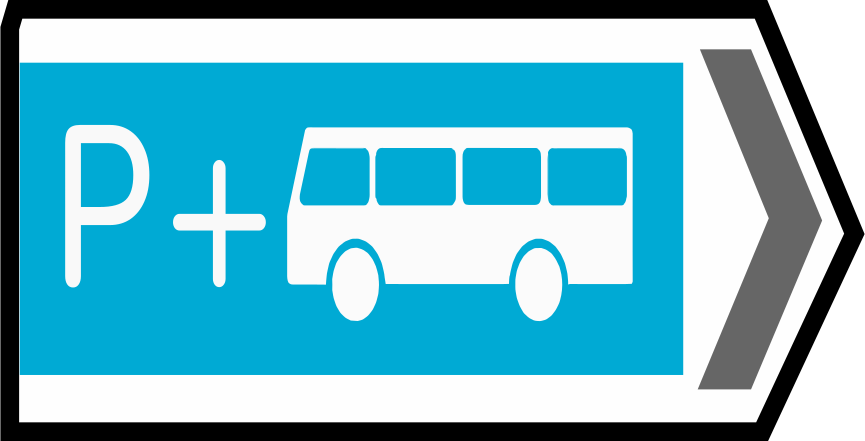
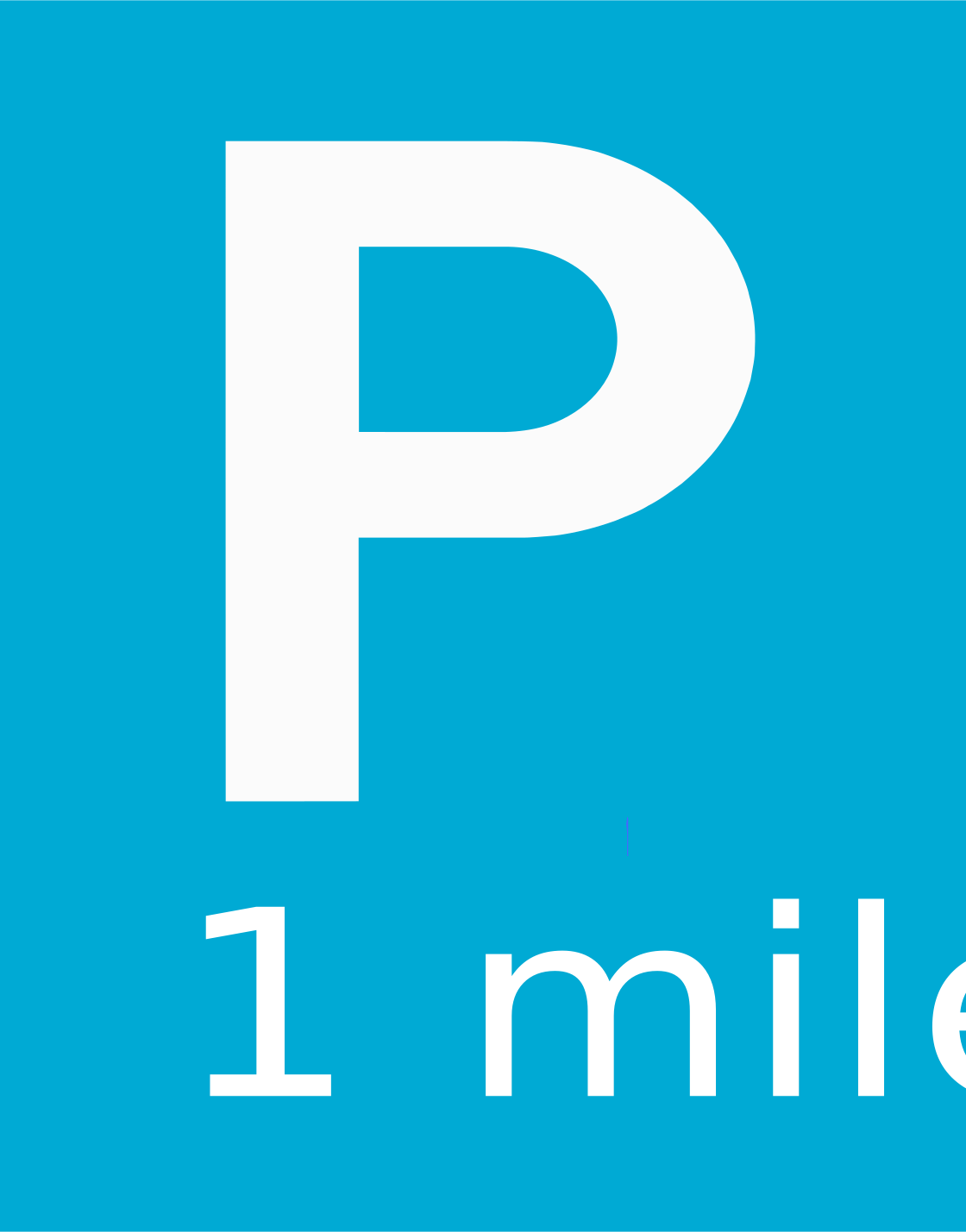
What does this sign mean?
Explanation
To ease the congestion in town centres, some cities and towns provide park-and-ride schemes. These allow you to park in a designated area and ride by bus into the centre. Park-and-ride schemes are usually cheaper and easier than car parking in the town centre.
Question 22 of 50
What's the national speed limit on a single carriageway road for cars and motorcycles?
Explanation
Exceeding the speed limit is dangerous and can result in you receiving penalty points on your licence. It isn't worth it. You should know the speed limit for the road that you're on by observing the road signs. Different speed limits apply if you're towing a trailer.
Question 23 of 50
You park at night on a road with a 40 mph speed limit. What should you do?
Explanation
You must use parking lights when parking at night on a road or in a lay-by on a road with a speed limit greater than 30 mph. You must also park in the direction of the traffic flow and not close to a junction.
Question 24 of 50
What does this sign tell you?
Explanation
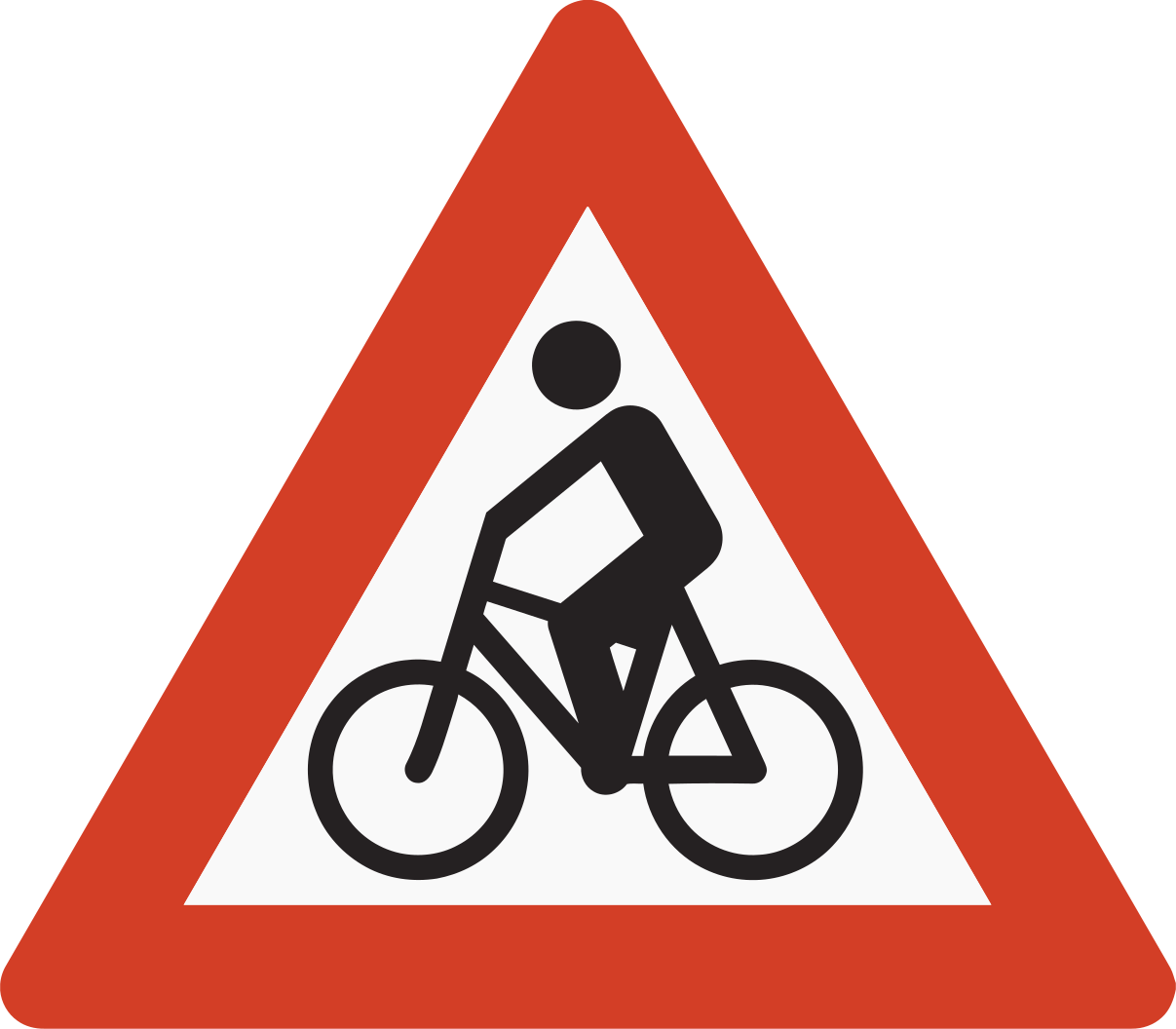
With people's concern today for the environment, cycle routes are being extended in our towns and cities. Respect the presence of cyclists on the road and give them plenty of room if you need to pass.
Question 25 of 50
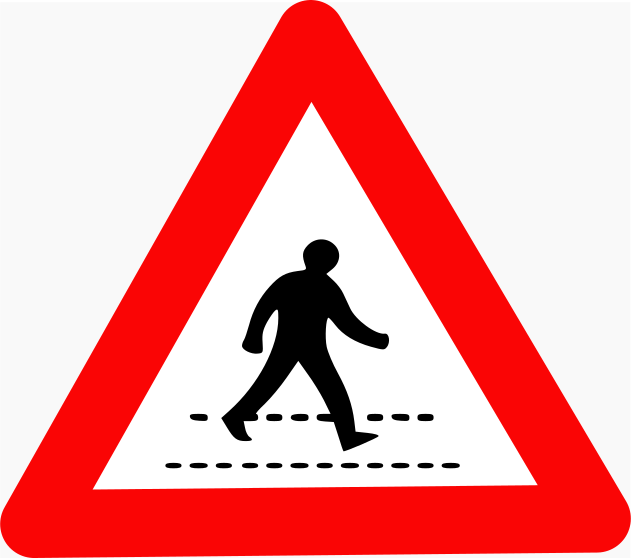
What does this sign mean?
Explanation
Look well ahead and be ready to stop for any pedestrians crossing, or about to cross, the road. Also check the pavements for anyone who looks like they might step or run into the road.
Question 26 of 50
You're going through a long tunnel. What will warn you of congestion or an incident ahead?
Explanation
Follow the instructions given by the signs or by tunnel officials. In congested tunnels, a minor incident can soon turn into a major one, with serious or even fatal results.
Question 27 of 50
A casualty has an injured arm. They can move it freely but it's bleeding. Why should you get them to keep it in a raised position?
Explanation
If a casualty is bleeding heavily, raise the limb to a higher position. This will help to reduce the blood flow. Before raising the limb, you should make sure that it isn't broken.
Question 28 of 50
You've just passed your test. How can you reduce your risk of being involved in a collision?
Explanation
New drivers and riders are often involved in a collision or incident early in their driving career. Due to a lack of experience, they may not react to hazards appropriately. Approved training courses are offered by driver and rider training schools for people who have passed their test but want extra training.
Question 29 of 50
At an incident, what should you do with a casualty who has stopped breathing?
Explanation
Unblocking the casualty's airway and gently tilting their head back will help them to breathe. They'll then be in the correct position if mouth-to-mouth resuscitation is required. Don't move a casualty unless there's further danger.
Question 30 of 50
What should you do if your visor becomes badly scratched?
Explanation
Your visor protects your eyes from wind, rain, insects and road dirt. It's important to keep it clean and in good repair. A badly scratched visor can obscure your view and cause dazzle from the lights of oncoming vehicles.
Question 31 of 50
You're riding behind a long vehicle. There's a mini-roundabout ahead. The vehicle is signalling left, but it's positioned to the right. What should you do?
Explanation
Long vehicles need more room than other vehicles to turn at junctions. The driver may take up a position that seems strange, but they have to do this to ensure their rear wheels don't mount the kerb as they turn. Don't overtake on the left - the driver won't expect you to be there and may not see you. Staying well back will also give you a better view ahead.
Question 32 of 50
How should you gain basic skills in motorcycle riding?
Explanation
All new motorcyclists must complete a course of basic training with an approved training body before going on the road. This training is given on a site that's been authorised by the Driver and Vehicle Standards Agency as being suitable for off-road training.
Question 33 of 50
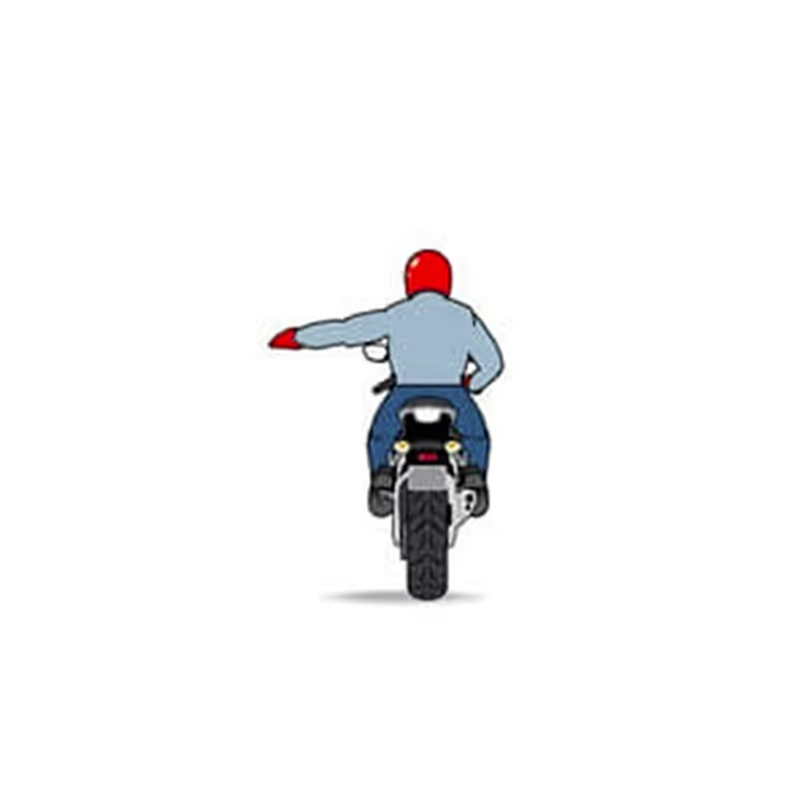
You're giving an arm signal, ready to turn left. Why shouldn't you continue with the arm signal while you turn?
Explanation
Consider giving an arm signal if it will help other road users; for example, in bright sunshine, when your indicators may be difficult to see. Don't maintain an arm signal when turning, but return your hand to the handlebars to help you steer through the turn.
Question 34 of 50
When riding in extremely cold conditions, what can you do to keep warm?
Explanation
Motorcyclists are exposed to the elements and can become very cold when riding in wintry conditions. It's important to keep warm or your concentration could be affected. The only way to stay warm is to wear suitable clothing. If you do find yourself getting cold, then stop at a suitable place to warm up.
Question 35 of 50
What can you do to be seen more easily when you're riding at night?
Explanation
It's vital to make yourself as visible as you can. Use the correct lights on your motorcycle. Wear reflective clothing and a light or brightly coloured helmet. Fluorescent clothing is effective in daytime but won't show up as well at night. Most high-visibility clothing will have a combination of fluorescent and reflective materials.
Question 36 of 50
You find that you need glasses to read vehicle number plates at the required distance. When must you wear them?
Explanation
Have your eyesight tested before you start your practical training. Then have checks periodically throughout your riding life, as your vision may change.
Question 37 of 50
Why should you wear ear plugs when riding a motorcycle?
Explanation
The use of ear plugs is recommended to protect your hearing from being damaged by the noise of air turbulence around your helmet. Staying within the national speed limit, a rider may experience noise levels in excess of 100 decibels.
Question 38 of 50
What should you do when you ride along a road where there are road humps?
Explanation
The humps are there to reduce the speed of the traffic. Don't accelerate harshly between them, as you'll then have to brake sharply to negotiate the next hump. Harsh braking and acceleration uses more fuel, as well as causing wear and tear to your vehicle.
Question 39 of 50
Why should you check over your shoulder before you change lanes in busy, moving traffic?
Explanation
Before changing lanes, make sure there's a safe gap to move into. Looking over your shoulder allows you to check the area not covered by your mirrors, where a vehicle could be hidden from view. It also warns following drivers that you want to change lanes.
Question 40 of 50
What benefit will you see if you have your motorcycle serviced regularly?
Explanation
Your motorcycle will run much better and its fuel consumption will be lower if you have it serviced regularly. Check at what intervals you should have your motorcycle serviced - this can vary by model or manufacturer. Keep the service record up to date.
Question 41 of 50
Traction control systems (TCS) are fitted to some motorcycles. What do they help to prevent?
Explanation
TCS helps to prevent the rear wheel from spinning, especially when accelerating on a slippery surface.
Question 42 of 50
You're riding towards roadworks. The temporary traffic lights are on red. The road ahead is clear. What should you do?
Explanation
You must obey all traffic signs and signals. Just because the lights are temporary, it doesn't mean that you can disregard them.
Question 43 of 50
You hold a provisional motorcycle licence. What does this licence restrict you from doing?
Explanation
Provisional entitlement means that restrictions apply to your use of motorcycles. For example, you may not ride on a motorway or carry a passenger. The requirements are there to protect you and other road users. Make sure you're aware of all the restrictions that apply before you ride your motorcycle on the road.
Question 44 of 50
Your motorcycle isn't fitted with daytime running lights. When must you use dipped headlights during the day?
Explanation
It's important that other road users can see you clearly at all times. It will help other road users to see you if you use dipped headlights during the day. You must use dipped headlights during the day if visibility is seriously reduced; that is, when you can't see for more than 100 metres (328 feet).
Question 45 of 50
You're involved in a crash. What should you do to reduce the risk of fire?
Explanation
The engine cut-out switch is used to stop the engine in an emergency. In the event of a crash, this may help to reduce any fire risk.
Question 46 of 50
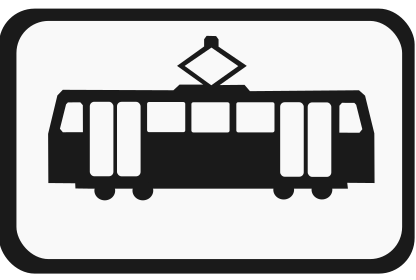
What makes the vehicle in the picture 'environmentally friendly'?
Explanation
Trams are powered by electricity and therefore don't emit exhaust fumes. They ease traffic congestion by offering drivers an alternative to using their car, particularly in busy cities and towns.
Question 47 of 50
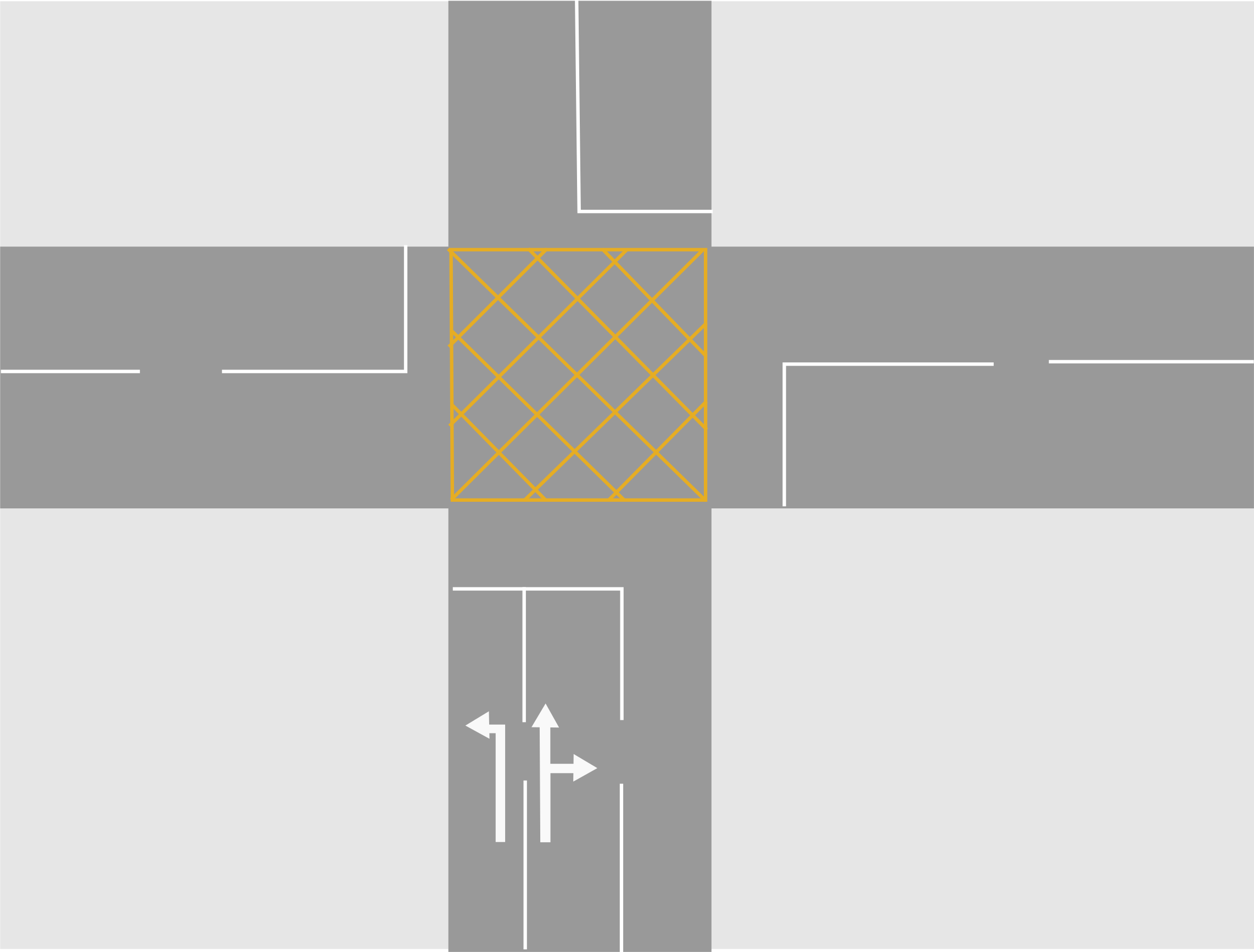
When may you wait in a box junction?
Explanation
The purpose of a box junction is to keep the junction clear by preventing vehicles from stopping in the path of crossing traffic. You mustn't enter a box junction unless your exit is clear. However, you may enter the box and wait if you want to turn right and are only prevented from doing so by oncoming traffic.
Question 48 of 50
How can you identify traffic signs that give orders?
Explanation
There are three basic types of traffic sign: those that warn, those that inform and those that give orders. Generally, triangular signs warn, rectangular signs give information or directions, and circular signs give orders. An exception is the eight-sided 'stop' sign.
Question 49 of 50
What does this sign mean?
Explanation
If you intend to stop and rest, this sign allows you time to reduce speed and pull over safely.
Question 50 of 50
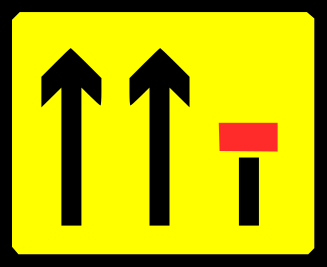
What does this sign mean?
Explanation
Yellow-and-black temporary signs may be used to inform you about roadworks or lane restrictions. Look well ahead. If you have to change lanes, do so in good time.