Answer 47 questions, check each correct answer and work through the explanations at your own pace.
Question 1 of 470 correct answers
Question 1 of 47
When must you take extra care if you're driving a vehicle more than 3.0 metres (10 feet) high?
Explanation
You must take care when approaching any hazard where height is limited. Know the height of your vehicle and what you can drive under safely. If you aren't sure that it's safe, take another route.
Question 2 of 47
What should you do if you notice that two wheel nuts are missing from one of the wheels on your vehicle?
Explanation
If you notice any missing wheel nuts, park and phone for assistance. It's essential that all wheel fixings are in place and tightened to the torque specified by the manufacturer. Checks should be made before you start any journey, but make a visual check every time you start up again after a rest stop.
Question 3 of 47
You're driving along a motorway. What should you do if the air-pressure warning device starts to operate?
Explanation
If the air-pressure warning activates, you should have enough air to allow you to stop safely on the hard shoulder. Don't delay stopping, as further loss of air may cause the brakes to lock on. Switch on the hazard warning lights. Use the nearest emergency telephone to call for assistance.
Question 4 of 47
What should you do if your power-assisted steering fails suddenly?
Explanation
Faulty power steering will make your steering wheel very difficult or almost impossible to turn. Continuing to drive could cause danger to you and other road users. You should park safely and get help.
Question 5 of 47
What proportion of the width of a tyre must have at least the legal minimum depth of tread?
Explanation
Keeping your vehicle's tyres in good condition will give them a good grip on the road and will improve the vehicle's overall stability. Each tyre must have at least the minimum legal depth of tread across three-quarters of its width. Renew tyres well before they wear to less than that.
Question 6 of 47
What must you do to ensure good all-round vision when driving?
Explanation
You must make sure that you adjust the seat so that you're able to reach all the controls and see in all the mirrors before you start to drive any vehicle. You should also be able to lean out of the window and check your offside blind spots.
Question 7 of 47
How can you help to reduce the impact of road transport on the environment?
Explanation
Good forward planning will reduce fuel consumption and engine emissions. This will cause less wear on the vehicle and its tyres, as well as reducing environmental pollution.
Question 8 of 47
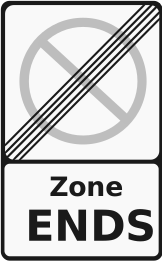
What does this sign mean?
Explanation
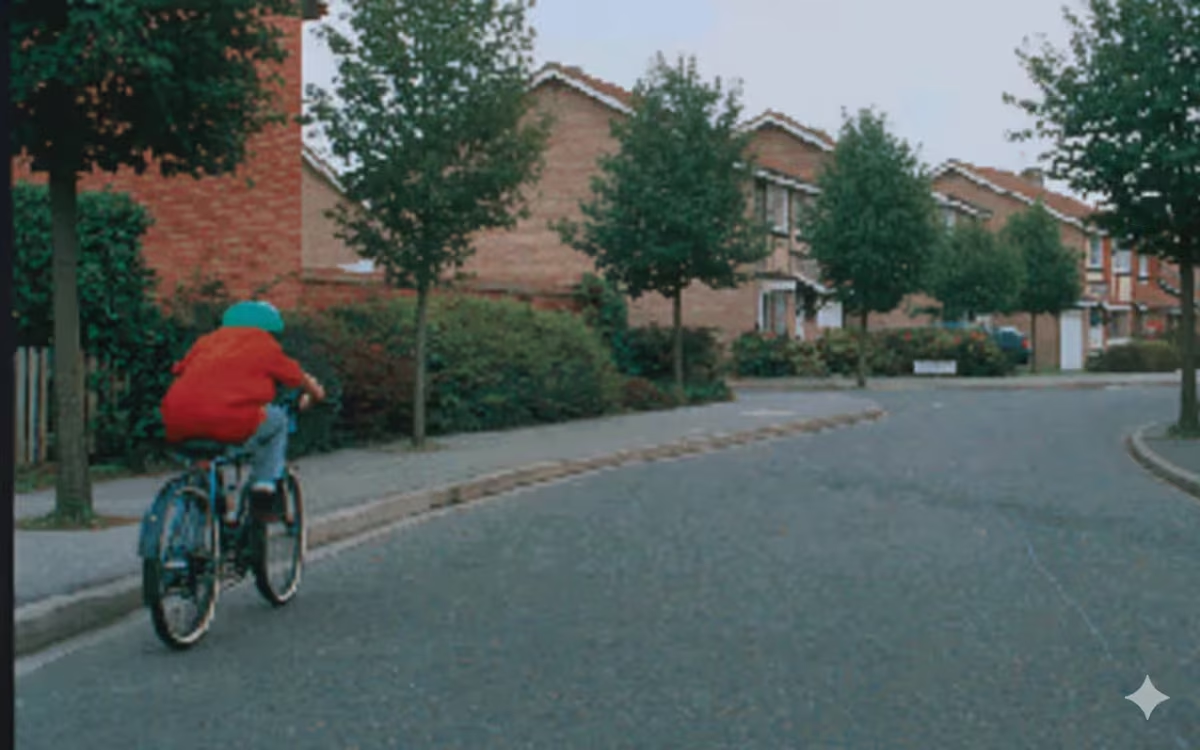
Even though there are no restrictions, make sure that you park where you won't cause an obstruction or endanger other road users.
Question 9 of 47
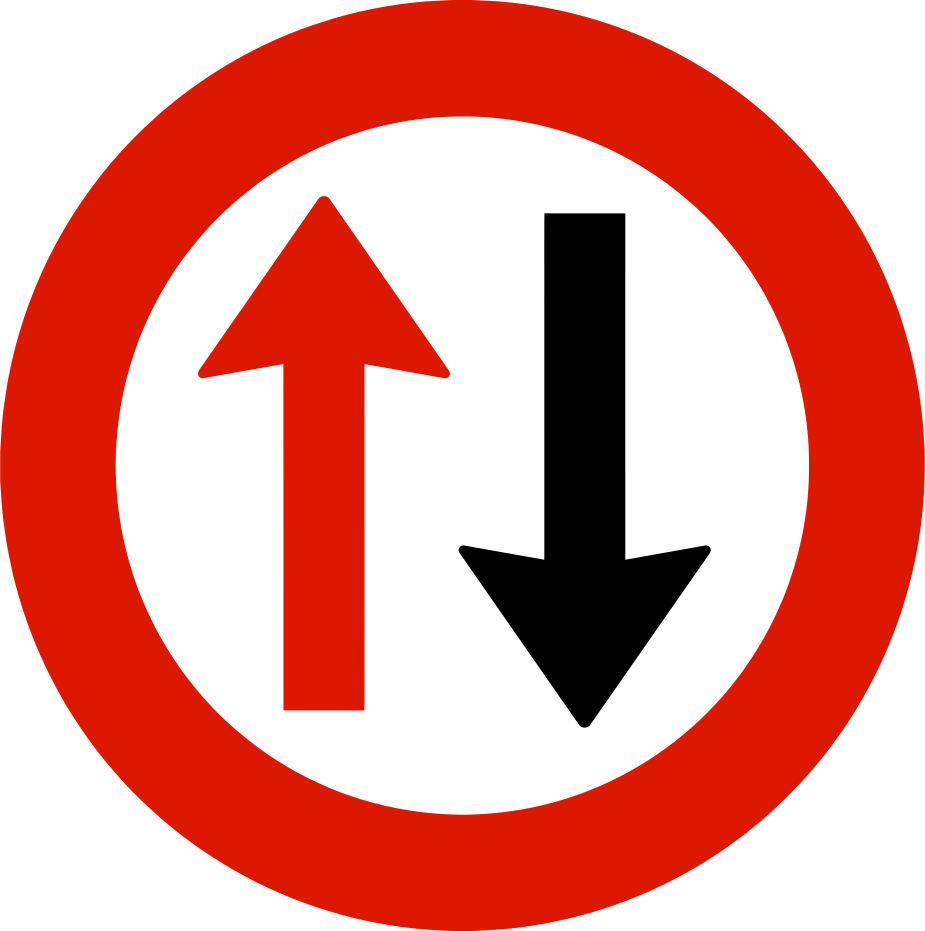
Who has priority when you're approaching this sign?
Explanation
When you see this sign, you must give way to traffic from the opposite direction, regardless of the size of your vehicle.
Question 10 of 47
Which type of fire extinguisher shouldn't be used on flammable liquids?
Explanation
It's very important to know the correct fire extinguisher to use. They'll carry a coloured label or badge telling you their contents. Make sure you learn which extinguisher is which, as using the wrong one could be dangerous and may spread the fire further. For example, you should never use a water extinguisher on burning oil.
Question 11 of 47
What do you need to be aware of when you drive over an exposed suspension bridge?
Explanation
On exposed bridges, the wind can be particularly strong. If the bridge has two lanes, one may be closed in windy conditions to act as a buffer lane. In severe conditions, these bridges are often closed to high-sided vehicles, caravans and motorcycles.
Question 12 of 47
Where does a high-pressure fuel injector deliver fuel?
Explanation
Most diesel engines use a high-pressure fuel-injector system that will deliver pressurised fuel directly into the combustion chamber of the engine. This system is known as a direct-injection engine.
Question 13 of 47
Where are you most likely to find pedestrians stepping into the road?
Explanation
In shopping areas, pedestrians frequently want to cross the road. They may be hidden by parked vehicles before stepping out into your path. Keep your speed down and be aware of the risk of pedestrians suddenly walking into the road.
Question 14 of 47
What's most likely to cause danger to a group of horse riders?
Explanation
The hiss of air-assisted mechanisms, as well as engine noise, can easily startle horses. Keep the noise to a minimum by gentle use of the brakes and, if necessary, stopping and turning your engine off.
Question 15 of 47
You're driving a high-sided vehicle on a motorway. You should anticipate the effects of side wind. When is this most likely to happen?
Explanation
Motorways often have exposed sections of road, placing high-sided vehicles at risk in side wind. When there are extremes of weather, listen to and watch out for weather forecasts. That way, you can plan your journey for the safest time, or make a decision on whether you should travel at all.
Question 16 of 47
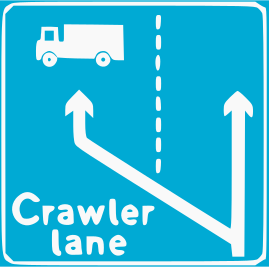
You're driving along a motorway and see this sign. What does it mean?
Explanation
Where a motorway has a long or steep gradient, slow-moving large vehicles might get in the way of other traffic. To help the traffic flow, an extra lane - called a crawler lane - is sometimes found on these gradients. This helps the traffic to flow by providing the slower heavy vehicles with a dedicated lane on the left.
Question 17 of 47
What will happen if you follow a regular vehicle maintenance schedule?
Explanation
You can reduce the chance of a breakdown with routine maintenance and regular checks on your vehicle.
Question 18 of 47
How can vehicle breakdowns be reduced?
Explanation
Following the vehicle manufacturer's guidelines for service intervals will enable worn components to be replaced before they fail. This will help prevent costly breakdowns.
Question 19 of 47
When may you drive without wearing your seat belt?
Explanation
You can legally remove your seat belt when carrying out a manoeuvre that involves reversing. Don't forget to put it back on again when you've finished.
Question 20 of 47
Which road users are most at danger from the turbulence from your vehicle?
Explanation
Remember that the buffeting caused by large vehicles can affect other road users, including motorcyclists, cyclists and drivers towing caravans.
Question 21 of 47
Which vehicles are most likely to be affected by high winds?
Explanation
In very windy conditions, certain types of vehicle can be blown off course. These include box vans, curtain-siders, caravans and motorcycles. Make allowances for how the wind might affect these vehicles, especially if you're overtaking.
Question 22 of 47
It's raining. Why would a motorcyclist steer around drain covers on a bend?
Explanation
Drain covers usually have a metal surface. When wet, these covers are slippery and can cause a motorcycle to skid; be prepared for riders to avoid them.
Question 23 of 47
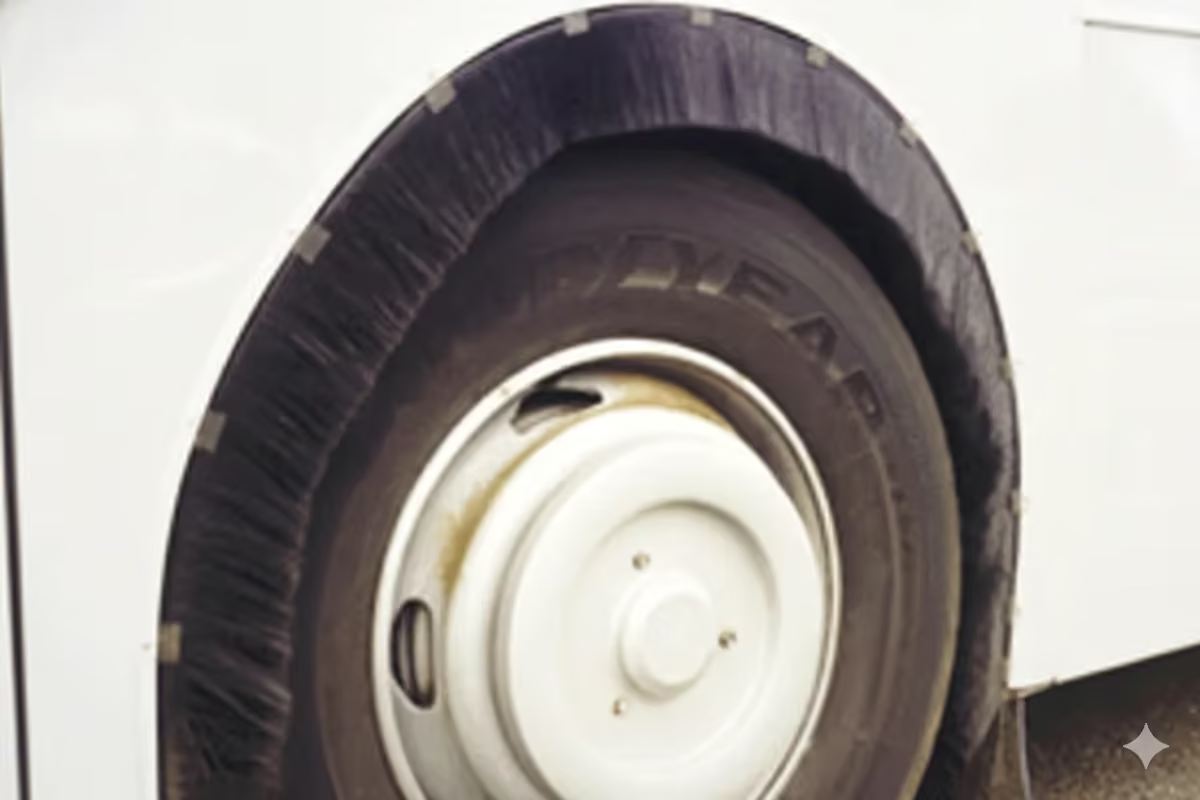
Why are brushes fitted to this vehicle's wheel arch?
Explanation
The brushes are part of a spray-suppression system. They reduce the amount of water thrown up at the sides and rear of the vehicle. Check them regularly for security. If they become worn, make sure they're replaced.
Question 24 of 47
What's 'brake fade'?
Explanation
Continually using the brakes could cause them to overheat. When that happens, they become less effective. This is called brake fade, and it occurs most often when the driver has to control the vehicle's speed on a long downhill gradient. To help prevent brake fade, use the endurance brake (retarder) and a lower gear to keep the vehicle's speed in check, rather than the wheel-mounted brakes.
Question 25 of 47
Your vehicle has anti-lock brakes. How does this affect you when you're braking normally?
Explanation
Plan well ahead to enable you to brake normally. Don't rely on anti-lock brakes to compensate for deficiencies in your driving.
Question 26 of 47
When should an endurance brake (retarder) be used?
Explanation
An endurance brake can help to control your speed on long downhill slopes without using the service brake. Reducing the use of the service brake helps to prevent the brakes from overheating and reduces the risk of brake fade.
Question 27 of 47
What should you do if you're taking medication that could affect your driving?
Explanation
Check all medicines for their side-effects, such as drowsiness. If you're unsure, ask your doctor or pharmacist to explain how you might be affected by the medication.
Question 28 of 47
What should you do if you feel tired while driving on a motorway?
Explanation
Don't continue to drive if you feel the onset of tiredness. Find a safe place to stop for a rest. Walking around in the fresh air during your break will help but it's no substitute for adequate rest.
Question 29 of 47
You're driving along a motorway in thick fog at night. The reflective studs are red on your left and white on your right. Which lane are you in?
Explanation
The red studs on your left indicate the edge of the hard shoulder, while the white studs are used between the lanes. Using more than one reference point will help you to be certain of your position.
Question 30 of 47
What's a crawler lane for?
Explanation
On a motorway where there's a long uphill gradient, there may be a crawler lane. This helps the traffic to flow by making an extra lane available on the left for slower, heavy vehicles.
Question 31 of 47
What should you do before overtaking on a single carriageway road?
Explanation
Before overtaking, you need to make sure it's safe to carry out the manoeuvre. As part of your check, look well ahead for road junctions. You shouldn't overtake as you approach a road junction, because if a vehicle emerges, or has to wait to turn, you could risk a collision.
Question 32 of 47
When shouldn't you overtake?
Explanation
Never commit yourself to overtaking unless you're absolutely certain that you have the time and space to complete the manoeuvre safely. Don't take any risks that will endanger other road users.
Question 33 of 47
What should you do before you start to overtake a lorry?
Explanation
Plan your overtaking carefully. The weight of your vehicle, combined with the restrictions imposed by a speed limiter, is likely to make your vehicle lose speed on uphill gradients. You should take this into consideration before attempting to overtake another moving vehicle.
Question 34 of 47
Why is a toucan crossing different from other crossings?
Explanation
Pedestrians and cyclists are shown the green light together. The signals are push-button-operated and there's no flashing amber phase.
Question 35 of 47
What does this sign mean?
Explanation
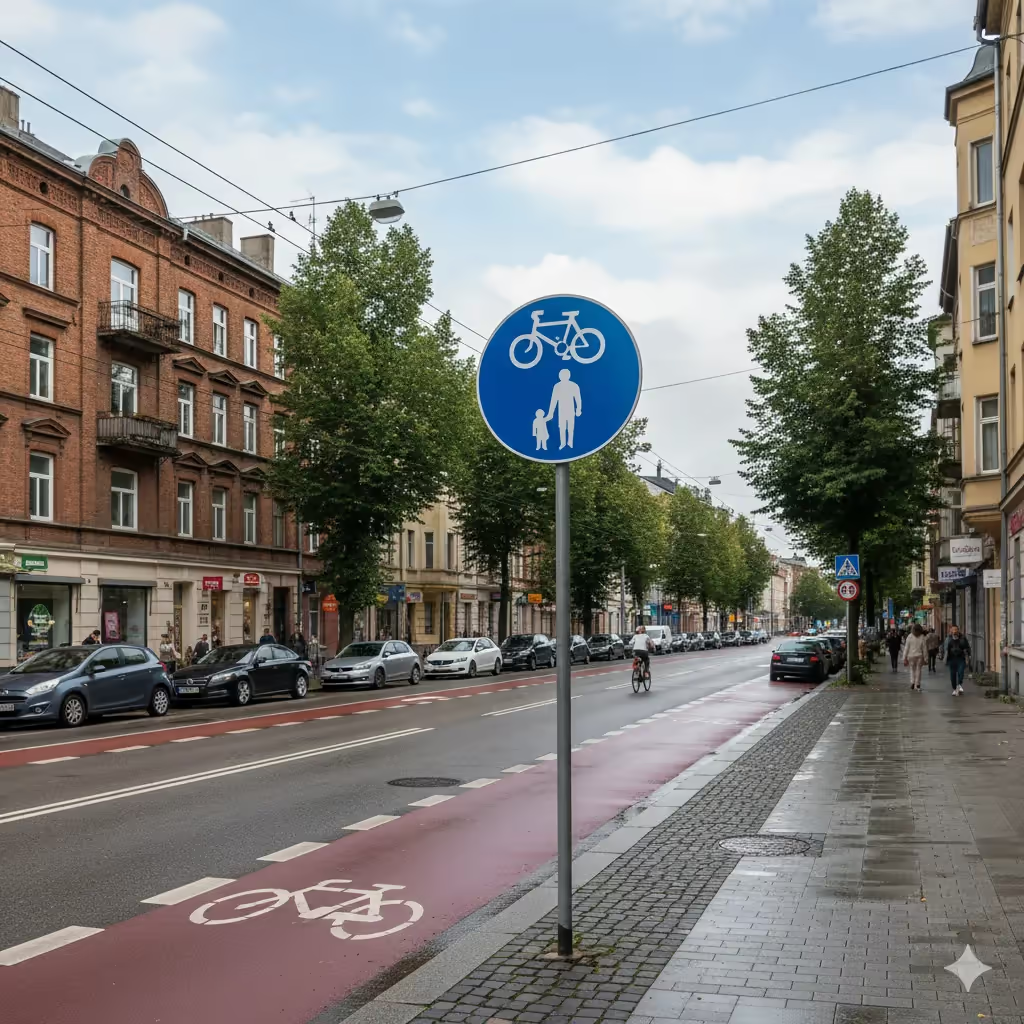
This shared route is for pedestrians and cyclists only. Be aware that, when it ends, the cyclists will be rejoining the main road.
Question 36 of 47
You're following a cyclist. What should you do if you wish to turn left a short distance ahead?
Explanation
Make allowances for cyclists. Allow them plenty of room, and be aware that they also have to deal with hazards. They might swerve or change direction suddenly to avoid uneven road surfaces.
Question 37 of 47
You're at the front of a queue of traffic waiting to turn right into a side road. Why should you check your right-hand mirror just before turning?
Explanation
Always check your right-hand mirror and blind spot just before you make a right turn, as another vehicle could be overtaking you. Motorcyclists often filter along the outside of traffic queues. Keep checking all your mirrors while you're waiting to turn, because situations behind you can change quickly.
Question 38 of 47
You're driving past a line of parked cars. What should you do if you notice a ball bouncing out into the road ahead?
Explanation
Beware of children playing in the street and running out into the road. If a ball bounces out from the pavement, slow down and stop if necessary. Don't encourage anyone to fetch the ball from the road. Other road users might not see your signal and you might lead a child into danger.
Question 39 of 47
Where in particular should you look out for motorcyclists?
Explanation
Motorcyclists and cyclists are smaller and usually more difficult to see than other vehicles. Look out for them at junctions; failing to see them can lead to a collision.
Question 40 of 47
What should you do if you want to make a business call on your mobile phone while you're driving?
Explanation
It's illegal to use a hand-held mobile phone while you're driving, other than to call 999 or 112 in a genuine emergency. Switch it off before you start driving and use the messaging facility. You can pick up messages when you stop for a rest break. If you must make a call, stop in a safe place before using the phone.
Question 41 of 47
What effect will using a mobile phone have on your driving?
Explanation
Driving today requires all of your attention, all of the time. Any distraction, however brief, is dangerous. This is why it's illegal to use a hand-held mobile phone while you're driving.
Question 42 of 47
How is using a hands-free phone likely to affect your driving?
Explanation
While you're using a phone, your attention will be divided between the call and the road. This means you're unable to take in all that's happening around your vehicle. You need to be concentrating on your driving all of the time, and especially when dealing with a hazard.
Question 43 of 47
Under EU rules, you can drive for a maximum of nine hours a day. On how many days each week can this be extended to 10 hours?
Explanation
Under EU rules, your normal daily driving time mustn't exceed nine hours. This nine-hour period is defined as the time between the start of one working day and the start of the next after a daily or weekly rest period.
Question 44 of 47
What's most likely to cause a burst tyre?
Explanation
Tyres can become very hot during sustained high-speed driving. If they're under-inflated or damaged, there's a risk they'll burst or disintegrate. Check for excessive heat when you stop for a break.
Question 45 of 47
You're driving on a road with an uneven surface. What should you do if you're following a motorcyclist along this road?
Explanation
Never follow any road user too closely. This is particularly important when you're following scooter or motorcycle riders, or cyclists. They might brake or swerve suddenly; for example, to avoid a pothole on a road with a poor surface.
Question 46 of 47
A vehicle has rolled over and caught fire. The driver's hands and arms have been burned. How could you help the driver?
Explanation
Don't remove anything sticking to a burn. You may cause further damage and introduce infection into the wound. If you can, douse the burn with clean cold water or other non-toxic liquid for at least 10 minutes.
Question 47 of 47
What does this sign mean?
Explanation
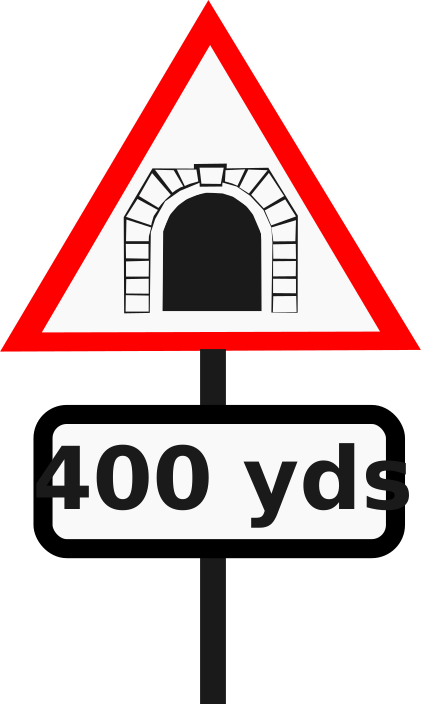
As well as a height restriction, the tunnel may have a restriction on the available width of headroom for high vehicles. The advance warning gives you the opportunity to find another route if your vehicle is too high or wide to drive through the tunnel.