Answer 47 questions, check each correct answer and work through the explanations at your own pace.
Question 1 of 470 correct answers
Question 1 of 47
Who must you tell when your vehicle collides with a bridge?
Explanation
Hitting a bridge with your vehicle can have serious consequences for road and rail traffic. You must tell the police about the incident immediately. If the bridge is a railway bridge, call the railway authority as well as the police to report the incident.
Question 2 of 47
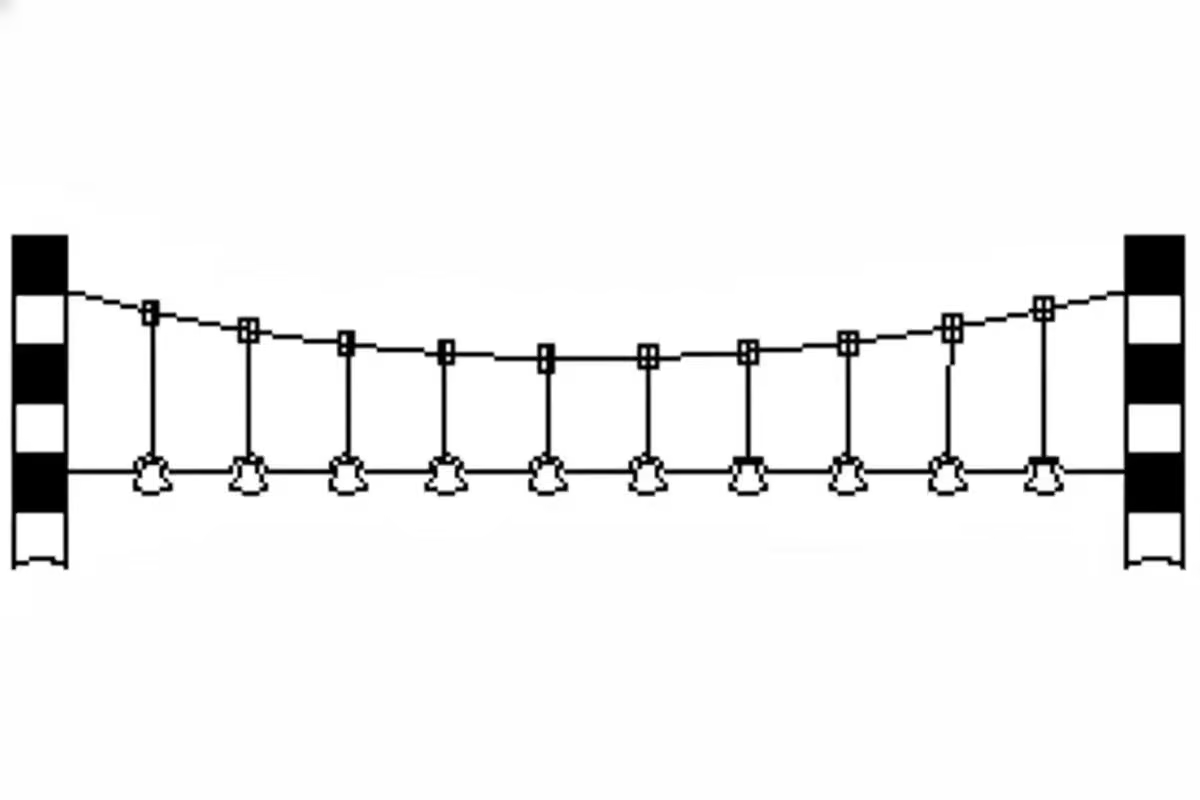
What do bells hanging across the road warn drivers of?
Explanation
If your vehicle touches bells suspended over the road, they'll obviously ring. This will warn you that your vehicle exceeds the safe travelling height beneath electrified overhead cables ahead. You must stop immediately and either find another route or take advice.
Question 3 of 47
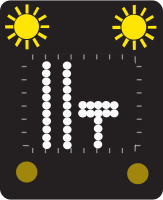
What does this motorway sign mean?
Explanation
Warning lights show when there's danger ahead, including lane closures, speed limits and other restrictions.
Question 4 of 47
You're driving on a motorway and you see this sign. What does it mean?
Explanation
Look out for variable-message warning signs that give information about lane closures, speed limits and hazards ahead.
Question 5 of 47
Under EU rules, what's the maximum daily driving time allowed?
Explanation
You're allowed to extend your daily driving time twice a week, to 10 hours a day. A 'day' is generally any 24-hour period that starts when you begin driving (or other work) again, after the last daily or weekly rest period.
Question 6 of 47
What does a tachograph record?
Explanation
The tachograph is a tool designed to help you be a safe and responsible driver. The tachograph records details of your journey, including time driven, speed and rest periods.
Question 7 of 47
You're waiting for the emergency services to arrive at the scene of an incident. A pedestrian's leg is bleeding heavily, but there's nothing embedded in the wound. What should you do to help?
Explanation
If there's nothing embedded in the wound, you can control the blood loss by applying pressure to the wound and raising the leg if possible.
Question 8 of 47
At the scene of an incident, an injured person is lying in a busy road. What's the first thing you should do to help?
Explanation
You should warn other road users that there has been a incident. You can do this by displaying an advance warning triangle or by switching on hazard warning lights or other lights. However you choose to warn people of the incident, make sure it doesn't put you or others at risk.
Question 9 of 47
You discover that one of your rear brake-light bulbs has failed. How soon should it be replaced?
Explanation
Bulbs should be replaced as soon as you're aware that they've failed. Carry a stock of all the various bulbs used on your vehicle, so you can repair a fault without delay.
Question 10 of 47
What should you do before leaving your vehicle parked on a public road?
Explanation
It's an offence to leave a vehicle unattended on a public road with the engine running. Take care if you have to open the cab door directly into the road. Look for passing traffic - especially cyclists or motorcyclists - that may not be visible in your mirrors.
Question 11 of 47
When should you use hazard warning lights?
Explanation
The only time you may use hazard warning lights while driving is when you're on an unrestricted dual carriageway or motorway and you want to warn other drivers of a hazard or obstruction ahead. Only use them for long enough to make sure your warning is seen.
Question 12 of 47
What should you do before moving off?
Explanation
To make sure it's safe, you must use the mirrors well before you make any manoeuvre. For example, you need to use them before moving off, turning, overtaking, slowing or stopping, opening a door, or changing direction, lanes or speed.
Question 13 of 47
When would you need to check your nearside mirror?
Explanation
As you pass pedestrians or vehicles on your left, you should use your nearside mirror and check that you've passed them safely. You need to allow a good safety margin before you move back to the left.
Question 14 of 47
Why might it be difficult to see motorcyclists at junctions?
Explanation
When driving large vehicles, windscreen pillars and large mirrors can easily create blind spots as you look left and right at junctions. Altering your body position slightly while looking into the new road can give you an improved view of the traffic. If in doubt, look again and reassess the situation. Don't take chances.
Question 15 of 47
What would be affected by a vehicle with faulty suspension?
Explanation
If your suspension is damaged, all the weight of the vehicle compresses the road and anything located below it. The vibrations travel through the ground and can also damage surrounding buildings.
Question 16 of 47
What should you do to prevent fuel spillage?
Explanation
Fuel spilled on the road is a serious danger to other road users, especially motorcyclists. To prevent this from happening, make sure the filler cap is secure after refuelling.
Question 17 of 47
At a junction, you see this sign partly covered by snow. What does it mean?
Explanation
The 'Stop' sign is the only sign in the shape of a hexagon. This helps you to recognise it even when the wording can't be seen.
Question 18 of 47
At the scene of an incident, a person has become hysterical. How should you calm them down?
Explanation
Someone who has been involved in or witnessed a crash will be in no mood for humour. The best way to calm them is by remaining calm yourself, and talking quietly and firmly to them.
Question 19 of 47
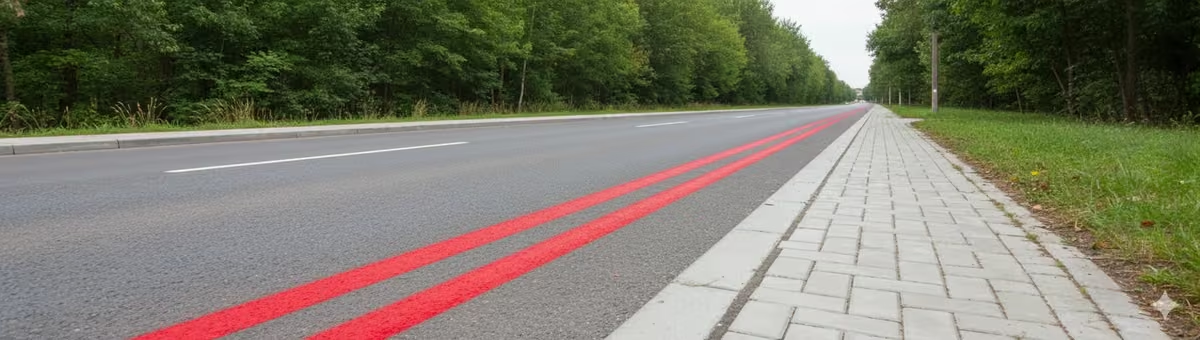
What does it mean when there are double red lines running along the edge of a road?
Explanation
Double red lines indicate that you're on a Red Route and in a no-stopping area. Red Routes also have single red lines, with signs showing the times that restrictions are in force. There are also parking and loading boxes, which have signs explaining the restrictions that apply.
Question 20 of 47
Before starting a journey, you want to check your brake-system warning lights. What can you do when these aren't operated by the ignition switch?
Explanation
A warning-lights check is sometimes performed automatically when the ignition is switched on. However, you may need to do this manually by operating a separate check switch. Never start a journey without carrying out this check. If there's a problem, have it repaired before you set off.
Question 21 of 47
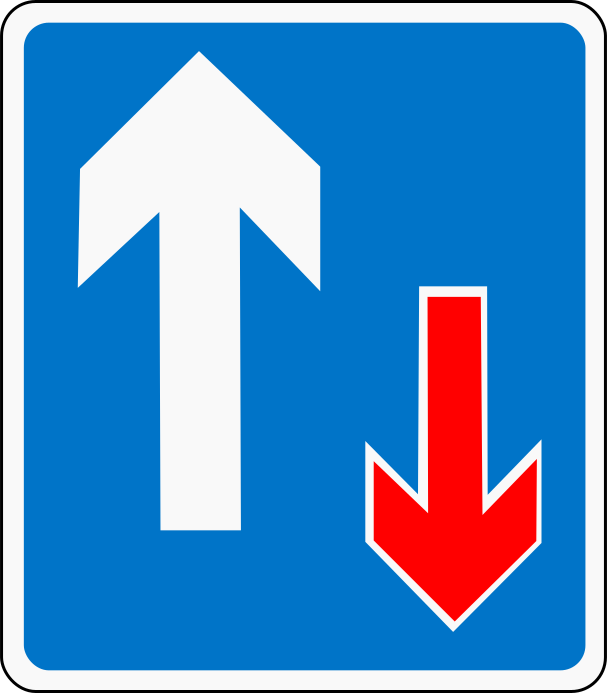
What should you do when you see this sign ahead?
Explanation
When the road narrows, there'll be less room than normal and others may not obey the rules, so slow down and approach with caution. Even when you have priority, you should still be ready to stop.
Question 22 of 47
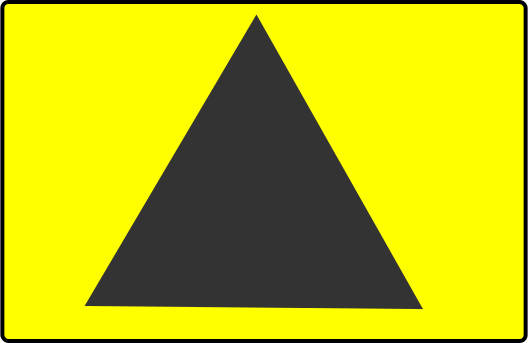
What does this sign mean?
Explanation
Major roadworks often cause complicated diversions for large vehicles. Drivers may be advised to follow a special symbol until the original road can be rejoined. Look for the yellow-and-black symbols in these shapes: triangle, square, circle and diamond.
Question 23 of 47
Where can you park large vehicles at night without needing to use parking lights?
Explanation
Off-road lorry and coach parks are often well lit and patrolled by police or security firms. Never leave your vehicle unlit on a public road or in a lay-by after dark.
Question 24 of 47
Why is it important to adjust your head restraint properly?
Explanation
Your head restraint should be adjusted so that, in the event of a collision, it protects your neck from whiplash injury.
Question 25 of 47
Where would you expect to find buffer lanes?
Explanation
Buffer lanes are often found in places that are frequently subjected to high winds. Examples include high-level bridges, high-level roads, exposed viaducts and exposed stretches of motorway. Listen to the weather forecast, which should tell you of any need to re-plan your route.
Question 26 of 47
When should you check your vehicle's spray-suppression equipment?
Explanation
You should always check all your spray-suppression equipment before a journey. Don't ignore it just because it's dry when you set out. The weather can change on the way.
Question 27 of 47
You're driving in heavy rain. Why do you need to increase your distance from the vehicle in front?
Explanation
Extra care is needed when driving in heavy rain. Reduce your speed and switch on dipped headlights. Tyres will have less grip on a wet road and it will take up to twice the distance to stop when compared with good dry conditions.
Question 28 of 47
What could prevent air pressure from building up in an air-brake system in frosty weather?
Explanation
When air is compressed, moisture condenses and collects in the air tanks. This can find its way along the network of pipes connected to the brakes. In frosty weather, the moisture can freeze in the pipes, blocking them completely. On modern vehicles, the air is dried before it's compressed and the air tanks drain automatically to shed any moisture. On older vehicles, the air tanks need draining manually.
Question 29 of 47
You've just started the engine. What must you do if the brake air-pressure warning light is showing?
Explanation
Even though the warning light is showing, there may be sufficient pressure to release the parking brake. However, you mustn't do this, because there may not be enough air pressure to operate the service brake.
Question 30 of 47
What should you do if you're signalled to stop by a police officer in a patrol car?
Explanation
If a police officer signals for you to stop, stop as soon as possible in a safe place on the left.
Question 31 of 47
A mobile telephone is fitted to your vehicle. When should it be used?
Explanation
It's illegal to use a hand-held phone while driving. When you've stopped in a safe place, you can concentrate on your call or message. Using a phone while driving means you won't have full control of your vehicle. This could result in a collision, with serious or even fatal consequences.
Question 32 of 47
What should you do when you're being followed by an ambulance showing a flashing blue light?
Explanation
When an ambulance is displaying a flashing blue light, try to stop in a safe place to allow it to pass. Make sure you don't endanger any other road users or commit an offence; for example, by driving past a red traffic light.
Question 33 of 47
What type of emergency vehicle has a green flashing beacon?
Explanation
A green flashing light on a vehicle means the driver or passenger is a doctor on an emergency call. Give way to them if it's safe to do so. Be aware that the vehicle may be travelling quickly or may stop suddenly.
Question 34 of 47
It's been eight hours since you last had an alcoholic drink. What effect could the alcohol have on your driving?
Explanation
Alcohol can take a long time to leave the body. You may feel all right to drive, but its effect will last for many hours.
Question 35 of 47
You're driving downhill. How will this affect your vehicle?
Explanation
When driving downhill, gravity will cause the vehicle to increase speed. More braking effort will be required, and stopping distances will increase.
Question 36 of 47
You've driven a long distance and feel tired. Your tachograph shows that you haven't exceeded your driving hours. What should you do in these circumstances?
Explanation
The smallest lapse in concentration can result in loss of control. Even when your tachograph would allow you to drive for longer, stop somewhere safe and rest if you feel your driving may be affected by your tiredness.
Question 37 of 47
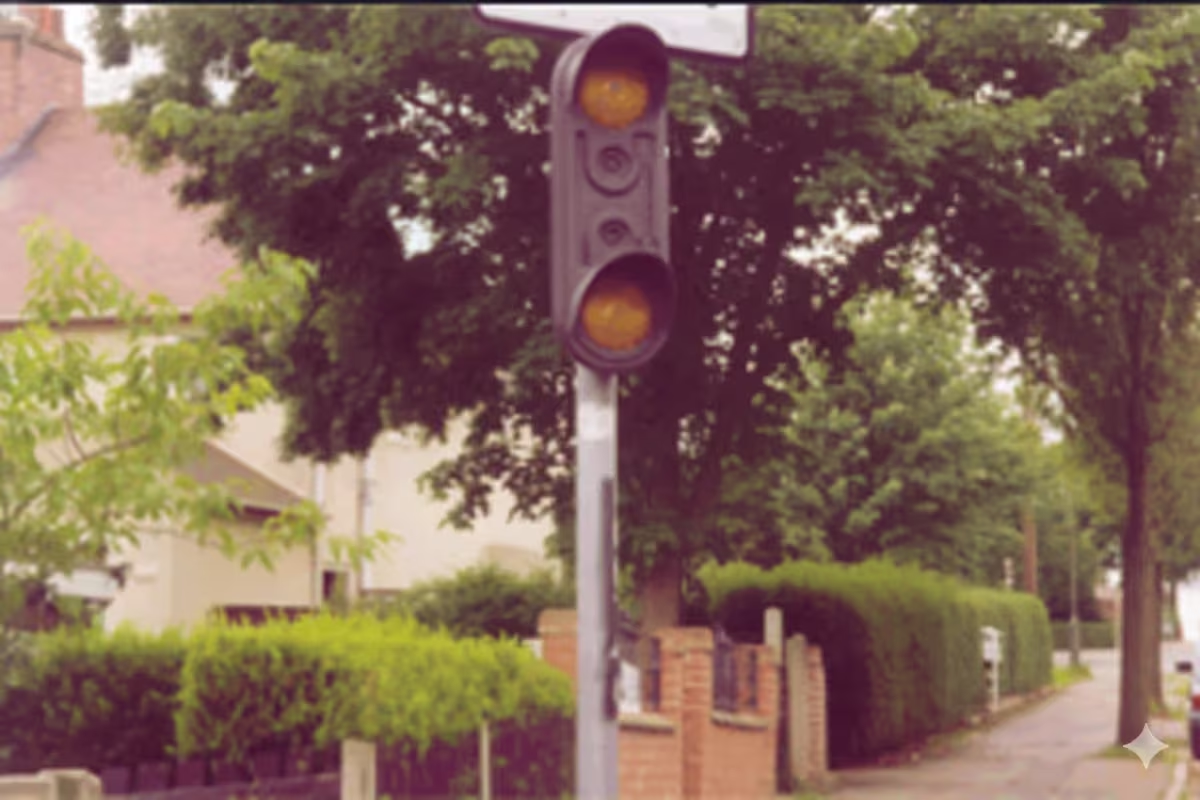
Where are these lights found?
Explanation
Flashing amber lights are found near schools. They warn you that children are likely to be crossing the road on their way to and from school. Drive slowly until you're clear of the area.
Question 38 of 47
Why should you take care before moving into the centre lane of a three-lane motorway?
Explanation
Always indicate your intentions in good time; this will allow others time to alter their speed and course if necessary. Always check your blind spots before changing lanes.
Question 39 of 47
You're turning left from a main road into a side road. What should you do if people are already crossing the road into which you're turning?
Explanation
Approaching a junction at the correct speed will allow you enough time to observe and react. Pedestrians crossing here have priority and you must give way to them.
Question 40 of 47
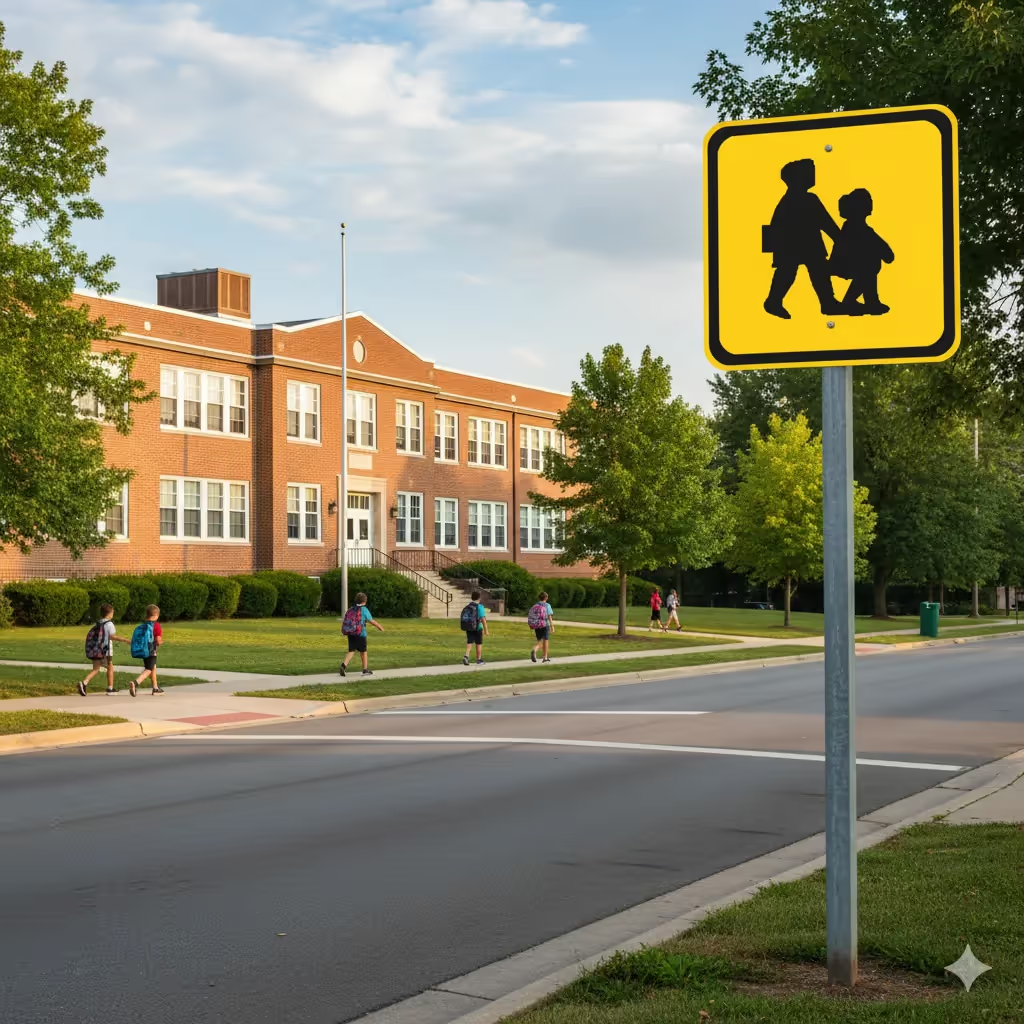
Where would you see this sign?
Explanation
Vehicles that are used to carry children to and from school will be travelling at busy times of the day. Be prepared for a vehicle with this sign to make frequent stops. It might pick up or set down passengers in places other than normal bus stops.
Question 41 of 47
What should you do when passing sheep on a road?
Explanation
Slow down and be ready to stop if you see animals in the road ahead. Animals are easily frightened by noise and by vehicles passing too close to them. Stop if signalled to do so by the person in charge of the animals.
Question 42 of 47
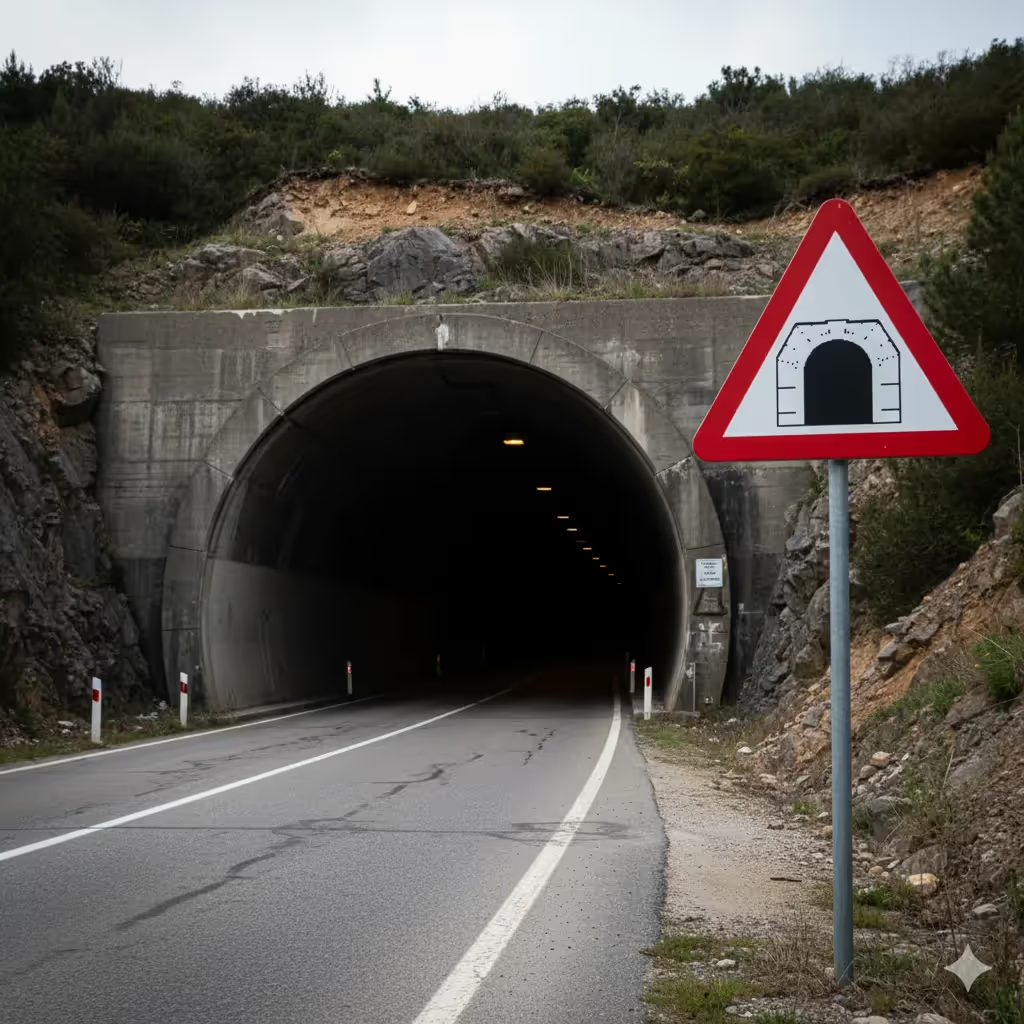
What does this sign warn of?
Explanation
If you're driving a high vehicle, make sure that there's enough headroom available for you to go through the tunnel. There may be additional signs showing height and width restrictions.
Question 43 of 47
What's the maximum speed allowed for a vehicle towing a trailer on a motorway?
Explanation
Vehicles towing caravans or trailers on motorways are limited in two ways: they must not exceed 60 mph and they must not use the right-hand lane of a motorway with three or more lanes.
Question 44 of 47
An enforcement officer keeps one of your tachograph charts. Who should sign the back of the replacement chart?
Explanation
When an enforcement officer keeps a record chart, the driver should ask the officer to sign the back of the replacement chart. They'll need to give their name, telephone number and the number of charts they've kept. The replacement chart must be used to continue the journey. You should always carry more blank charts than you think you'll need.
Question 45 of 47
Under EU rules, your minimum daily rest is 11 hours. On three days of the week this may be reduced to what length of time?
Explanation
Under EU rules, you must have a minimum daily rest of 11 consecutive hours. A reduced daily rest period is any period of rest of at least 9 hours, but less than 11 hours.
Question 46 of 47
What is the 'mode' switch on a tachograph used to record?
Explanation
As you change activities during the day, you should change the mode switch on the tachograph to record each activity. Failure to operate the mode switch could get you into trouble with your employer or the authorities.
Question 47 of 47
What's most likely to cause tiredness?
Explanation
Tiredness will affect your concentration. Don't allow yourself to become tired through not taking proper breaks or rest periods. As a professional driver, you have a responsibility either for goods or for passengers, as well as for overall road safety. Make sure your vehicle is well ventilated, so you don't become drowsy between rest periods.