Answer 47 questions, check each correct answer and work through the explanations at your own pace.
Question 1 of 470 correct answers
Question 1 of 47
What should you do first to help someone who's unconscious at the scene of an incident?
Explanation
Gently tilt the unconscious person's head to clear their airway. Check for at least 10 seconds that the casualty is breathing by looking for movement in the chest, listening for sounds and feeling for breath on your cheek. Get someone to call the emergency services.
Question 2 of 47
You arrive at the scene of an incident where a motorcyclist is lying in the middle of the road and unconscious. What's the first thing you should do?
Explanation
At the scene of an incident, the first priority is to prevent any further collisions by warning traffic. You can warn other traffic by switching on hazard warning lights or displaying an advance warning triangle, or by any other appropriate means.
Question 3 of 47
At an incident, you suspect a casualty has back injuries. What's the best way to help them?
Explanation
If you attempt to move a casualty who has a spinal injury, it could cause further damage. Make sure an ambulance has been called for and talk to the casualty to keep them calm.
Question 4 of 47
Why do air tanks on brake systems need to be drained?
Explanation
Moisture in the air condenses as the air pressure increases. This moisture can be transmitted around the braking system and is especially dangerous in cold weather. It can lead to ice forming and blocking the valves and pipes.
Question 5 of 47
When may an audible warning device for reversing be used in areas with a 30 mph speed limit?
Explanation
Some vehicles are fitted with an audible warning device that sounds when the vehicle is being reversed. As these devices make a loud noise, they shouldn't be used between 11.30 pm and 7.00 am in a built-up area. Audible warning devices are an effective safety feature, but they don't take away the need to use effective observation around the vehicle before and while reversing.
Question 6 of 47
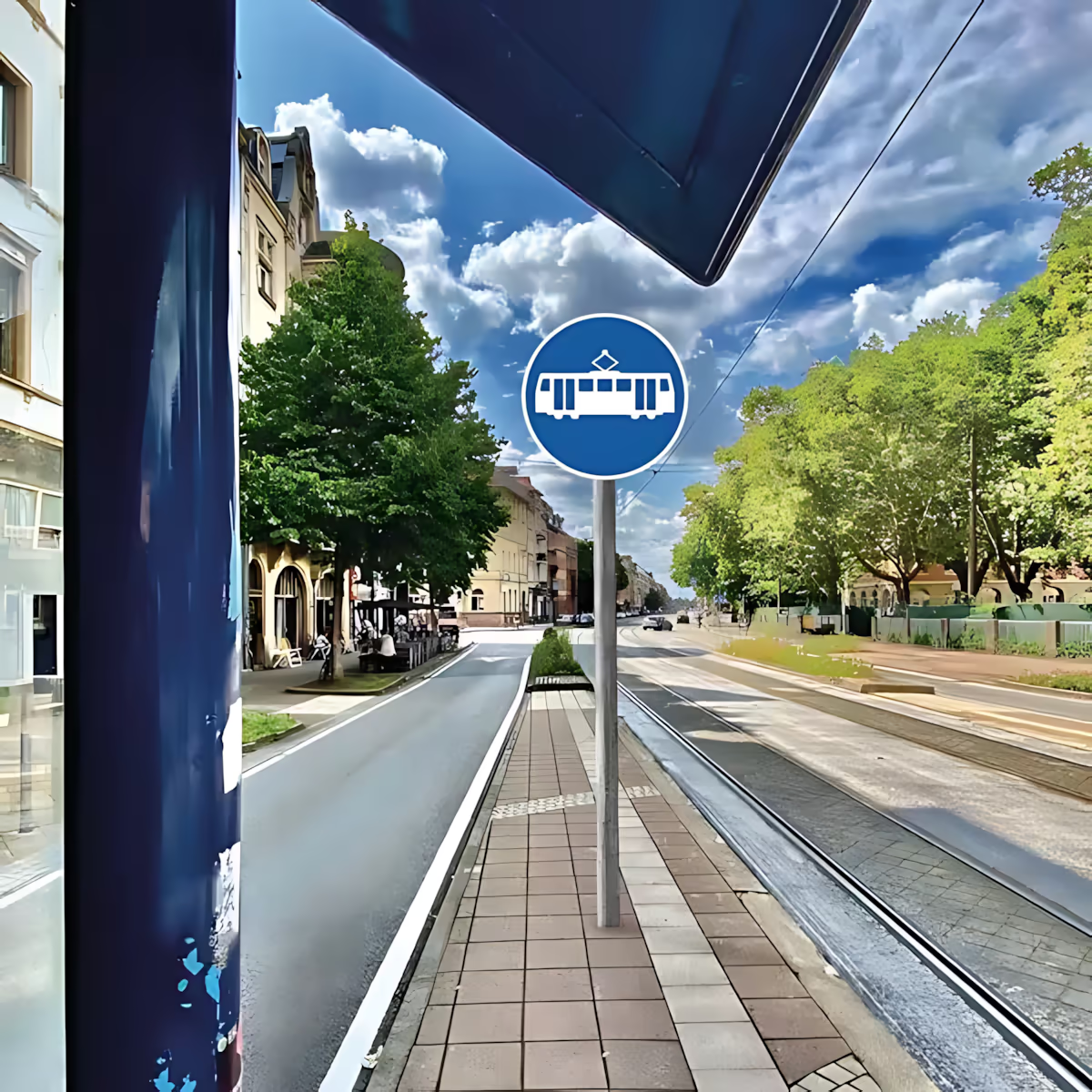
What makes the pictured vehicle environmentally friendly?
Explanation
This is the sign for a tram. These vehicles are powered by electricity and reduce the emissions released into the environment. As they can carry many people, they can help to reduce the number of other vehicles on the road.
Question 7 of 47
What does this sign mean?
Explanation
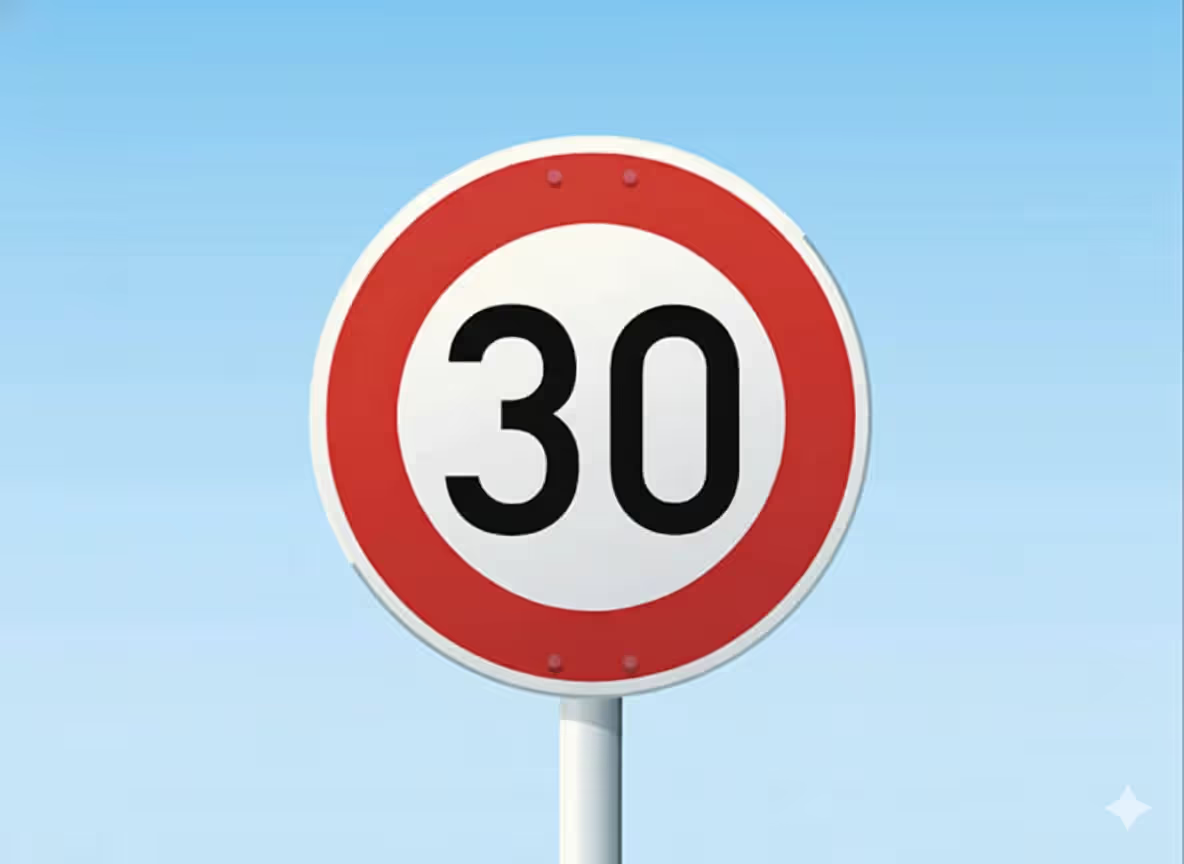
This sign is shown where slow-moving vehicles would block the flow of traffic. However, if you need to slow down to avoid an incident, you should do so.
Question 8 of 47
What does this sign mean?
Explanation
Take extra care when you're driving on roads where trams operate. Look out for road markings and signs that tell you to expect them. Modern trams are very quiet and you might not hear them approaching.
Question 9 of 47
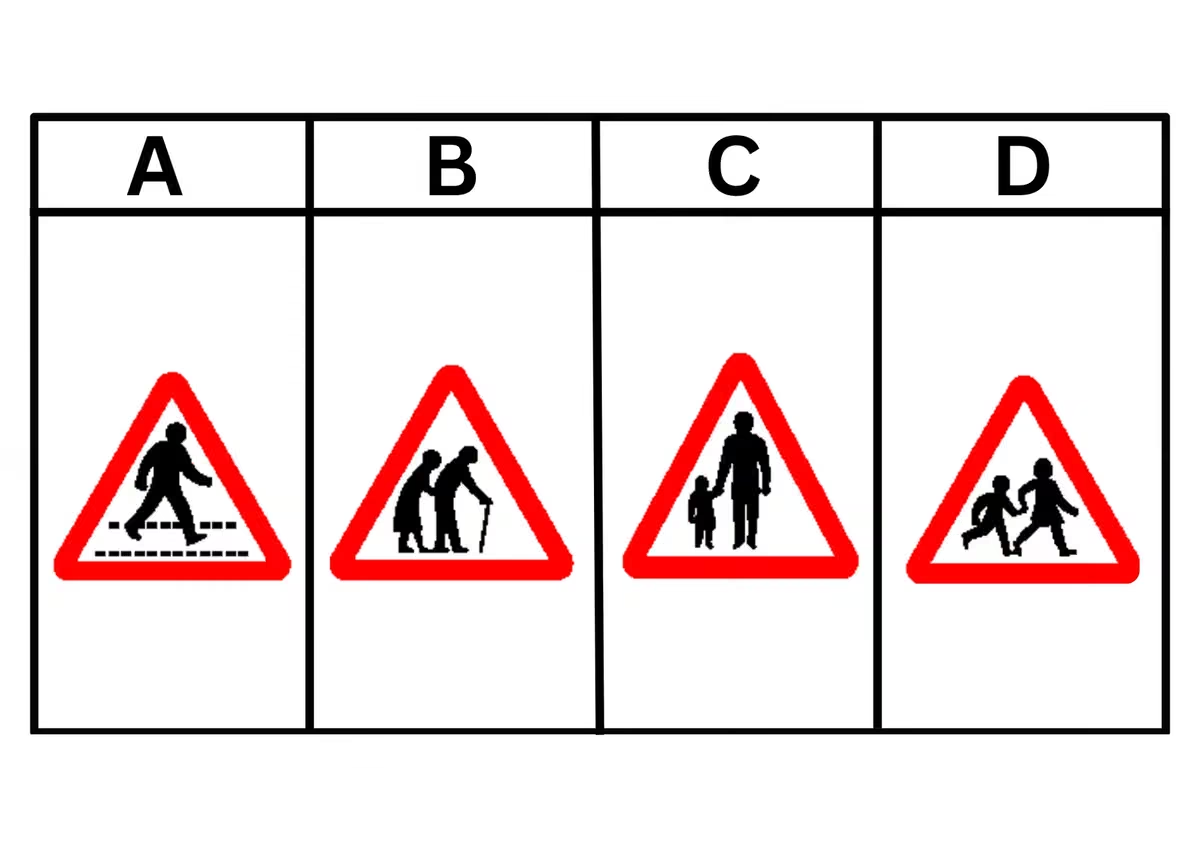
Which sign means that pedestrians may be walking along the road?
Explanation
Be cautious, especially if there's a bend in the road and you're unable to see well ahead. If you have to pass pedestrians, leave them plenty of room. You might have to use the right-hand side of the road, so look well ahead and in your mirrors before you pull out.
Question 10 of 47
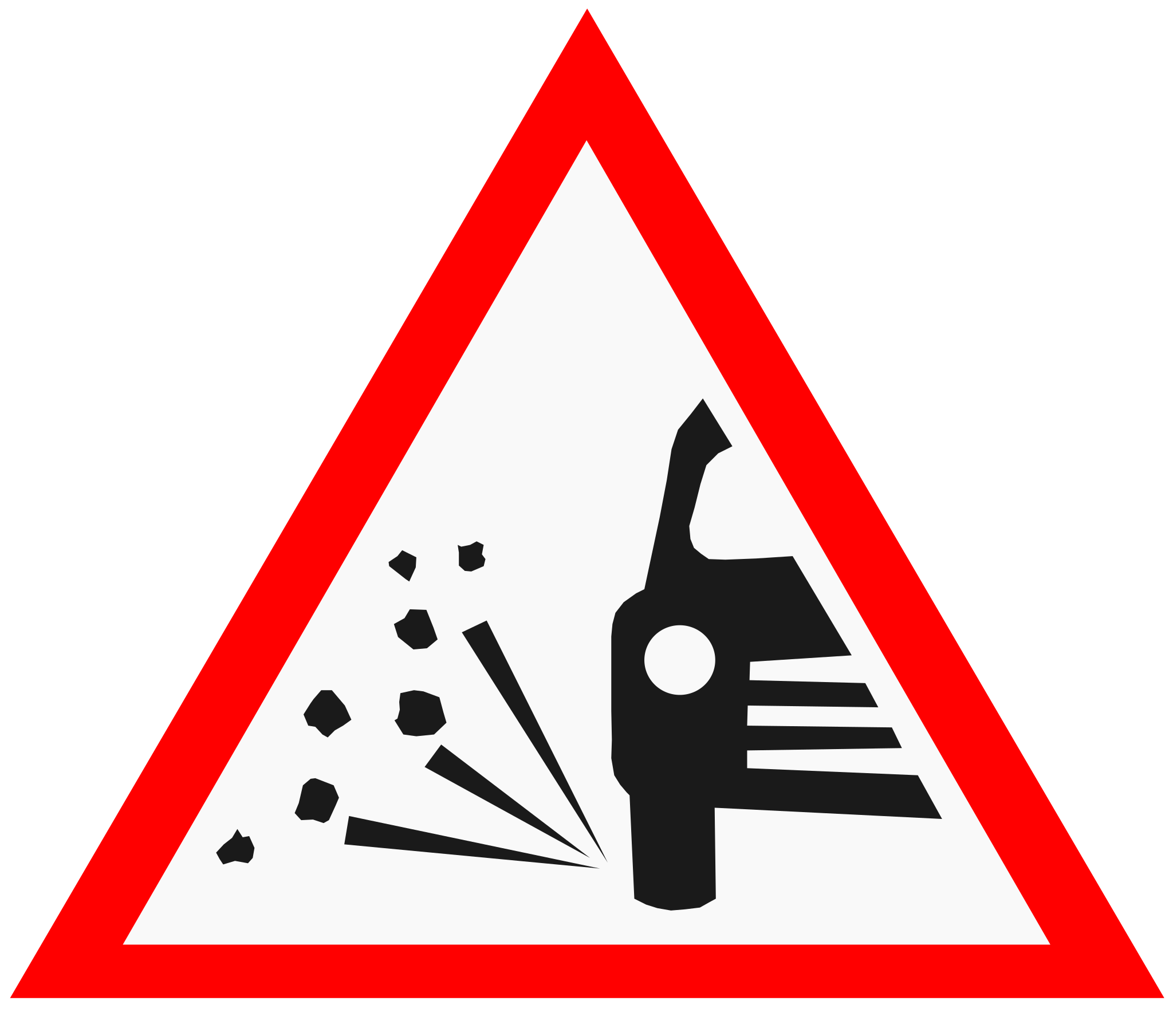
What does this sign mean?
Explanation
This is a warning sign to indicate loose chippings ahead. The sign is usually accompanied by an advisory speed limit. Vehicles travelling too fast for the conditions can throw up chippings or stones. Avoid causing damage to paintwork and windscreens by keeping your speed down.
Question 11 of 47
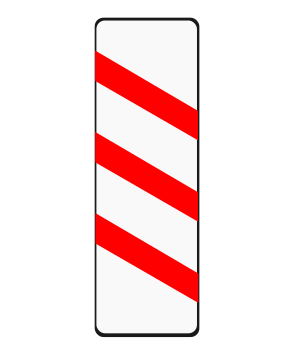
What does this marker count down to?
Explanation
When you see this sign, reduce your speed. You may well have to stop at the level crossing, or there may already be traffic queuing ahead.
Question 12 of 47
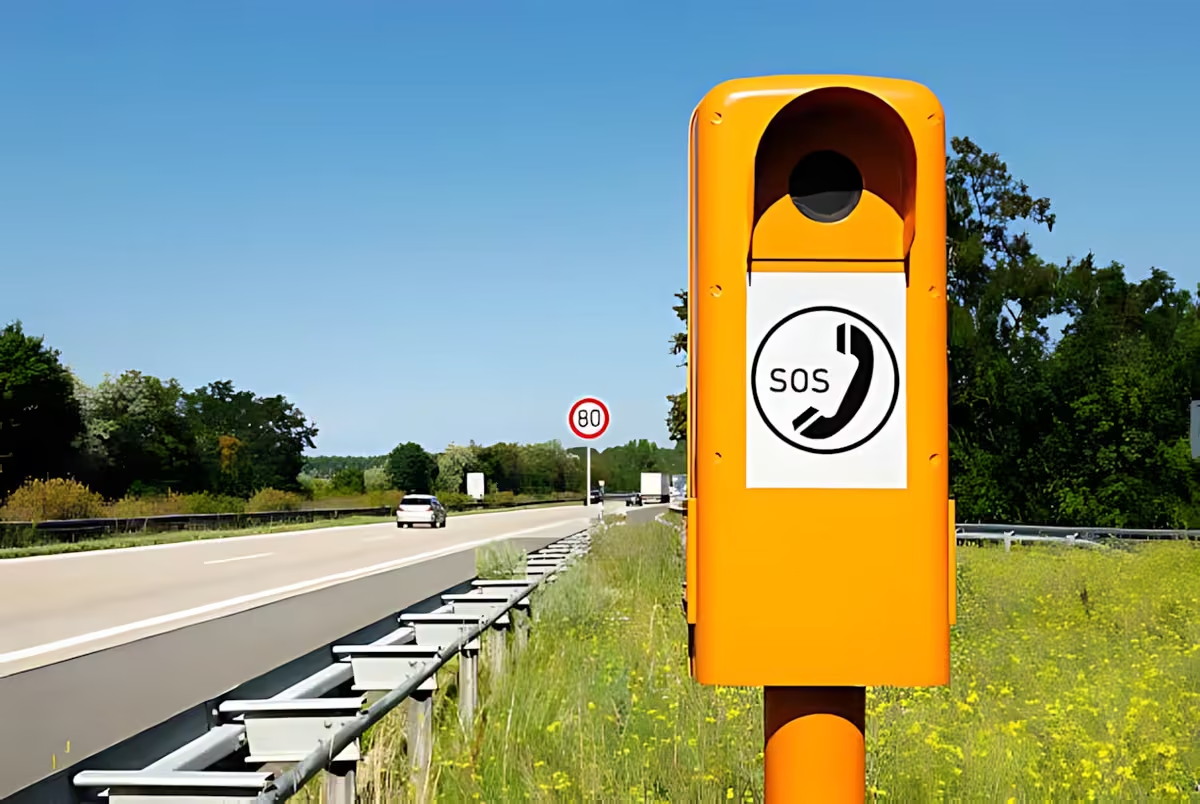
Where should you stand when using a motorway emergency telephone?
Explanation
Motorway phones are free and easily located. You should face the oncoming traffic while using them, so that you can see approaching vehicles.
Question 13 of 47
Under EU rules, you may drive for up to nine hours a day. What maximum may this be increased to on two days of the week?
Explanation
You're permitted to extend the daily limit of nine hours to 10 hours twice a week. Don't drive for more than the maximum hours allowed, as you risk a heavy fine and may lose your licence.
Question 14 of 47
What can prevent you from holding a bus or lorry driving licence?
Explanation
An illness that could affect you while you're driving, such as a heart condition, may make it unsafe for you to drive. You must tell DVLA if you develop any serious illness or disability that's likely to last more than three months and that could affect your driving. Partial blindness and mental disorders can also prevent you from getting a driving licence for large vehicles.
Question 15 of 47
What condition could prevent you from holding a lorry or bus licence?
Explanation
Any medical condition that could affect your ability to drive a lorry or a bus safely may prevent you from holding a licence. These conditions include serious visual impairment, heart disease and some mental disorders. For more information about medical standards, you should contact the Drivers Medical Branch, DVLA, Swansea.
Question 16 of 47
What will cause your fuel consumption to increase?
Explanation
Use your air conditioning only when it's absolutely necessary. Running it continuously increases overall fuel consumption by up to 15%.
Question 17 of 47
Where should you park your vehicle before checking the engine oil level?
Explanation
If you check the engine oil level when your vehicle is standing on a slope, the reading on the dipstick won't be accurate. Park it on flat ground, so the dipstick shows the true level.
Question 18 of 47
Your engine catches fire. What should you do before attempting to put the fire out?
Explanation
An engine fire is serious. If the fire breaches the fuel lines, it can easily spread to the fuel tank. If that happens, both the vehicle and its cargo will probably be lost. Therefore, your priority is to shut off the fuel supply.
Question 19 of 47
It's very windy and you're overtaking a motorcyclist on a motorway. What should you be aware of that may cause them problems?
Explanation
Give them plenty of room. Watch carefully in your nearside mirror, as the high winds and the buffeting effect from your vehicle may blow them off course.
Question 20 of 47
What's the minimum distance you should allow for braking when it's raining heavily?
Explanation
If you're travelling in heavy rain, you should be aware that it could take twice as long for you to stop as it would in dry weather. Increase your distance from the vehicle in front to allow for the longer stopping distance.
Question 21 of 47
You're driving on a motorway in heavy rain. What could cause your steering to become unresponsive?
Explanation
If a build-up of water prevents the tyres from gripping the road, the steering can become unresponsive. If this happens, ease off the accelerator and slow down gradually.
Question 22 of 47
Your vehicle is fitted with an anti-lock braking system. What's it designed to allow you to do?
Explanation
Anti-lock braking systems sense when the wheels are about to lock. The sensor control releases the brakes and immediately applies them again. It will do this many times per second. This both prevents skidding and enables the driver to steer - something that's impossible when the steering wheels are skidding.
Question 23 of 47
What will 'pumping' the brake pedal in a vehicle fitted with anti-lock brakes cause?
Explanation
Before driving a vehicle fitted with anti-lock brakes, refer to the handbook. This will give you details of the manufacturer's recommended method of use. Remember, anti-lock brakes will enhance your skills, but they can't replace them.
Question 24 of 47
You're driving a slow-moving vehicle on a narrow, winding road. What should you do to let other vehicles overtake you?
Explanation
Don't frustrate other road users by driving for long distances with a queue of traffic behind you. This could cause them to lose concentration and overtake in an unsafe way. Stop where it's safe and let them pass.
Question 25 of 47
You're following a car being driven slowly by a learner driver. What should you do if it isn't safe to overtake it?
Explanation
Learner drivers are often nervous. If you stay well back, this will reduce the risk of incidents occurring if they make a mistake, and you won't intimidate them. Remember, you were once in that situation yourself.
Question 26 of 47
You stop for pedestrians at a zebra crossing. What should you do if they don't start to cross immediately?
Explanation
If you stop for pedestrians and they don't start to cross, be patient. Don't wave them across or sound your horn. This could be dangerous if the driver of an approaching vehicle isn't aware of them. The driver may not have seen or heard your signal, making it very dangerous for the pedestrians to start to cross.
Question 27 of 47
Why could it be dangerous to wave people across at pedestrian crossings?
Explanation
You should always try to stop, if it's safe, for people waiting at pedestrian crossings. However, avoid waving them to cross. Another driver may not have seen them, may not have seen your signal or may not be able to stop safely.
Question 28 of 47
A group of schoolchildren are standing close to the left-hand kerb. What should you do as you drive past?
Explanation
As you approach the children, consider whether you need to sound the horn as a warning. Always check your nearside mirror as you pass any hazards on the left, so that you know when your vehicle is clear of the hazard.
Question 29 of 47
What should you do when a vehicle pulls out in front of you at a junction?
Explanation
Plan ahead and learn to anticipate hazards. Give yourself more time to react to any problems that might occur - such as a vehicle pulling out unexpectedly. Be tolerant of other road users who don't behave correctly. Don't react by flashing your lights, sounding your horn or making gestures, as any show of aggression on the road can quickly lead to a serious incident.
Question 30 of 47
How is drinking alcohol likely to affect your driving?
Explanation
Alcohol can increase confidence to a point where a driver's behaviour might become 'out of character': someone who normally behaves sensibly suddenly takes risks and enjoys it. Never let yourself or your friends get into this situation.
Question 31 of 47
What can seriously affect your concentration while driving?
Explanation
Tiredness can seriously affect your concentration - even to the point of falling asleep. You always need to be alert so that you can safely deal with the constantly changing environment around your vehicle.
Question 32 of 47
What should you do if you aren't sure whether your cough medicine will affect your driving?
Explanation
If you're taking medicine or drugs prescribed by your doctor, check that they won't affect your driving. If you forget to ask when you visit the surgery, check with your pharmacist.
Question 33 of 47
You take some cough medicine given to you by a friend. What must you do before driving?
Explanation
Never drive after taking drugs you don't know about. They might affect your judgement and perception - and, therefore, endanger lives.
Question 34 of 47
Why is tailgating dangerous?
Explanation
Tailgating is very dangerous because there isn't enough room to stop if an emergency arises. It's also intimidating for the driver that you're following.
Question 35 of 47
You're driving a long vehicle and want to turn right at a roundabout ahead. How should you signal if you need to occupy the left-hand lane?
Explanation
There are times when, due to the size of your vehicle, you'll have to take up part of another lane. If you need to do this, make sure that you use effective observation all around. Be aware that other road users might not understand the reasons for your position on the road. You should signal your intentions and take up your position in good time.
Question 36 of 47
You're driving behind two cyclists. They're approaching a roundabout in the left-hand lane. What should you expect them to do?
Explanation
When following cyclists onto a roundabout, be aware that they might not take the exit you expect them to. Cyclists approaching in the left-hand lane may be turning right. They may not have been able to get into the correct lane due to heavy traffic, so give them room.
Question 37 of 47
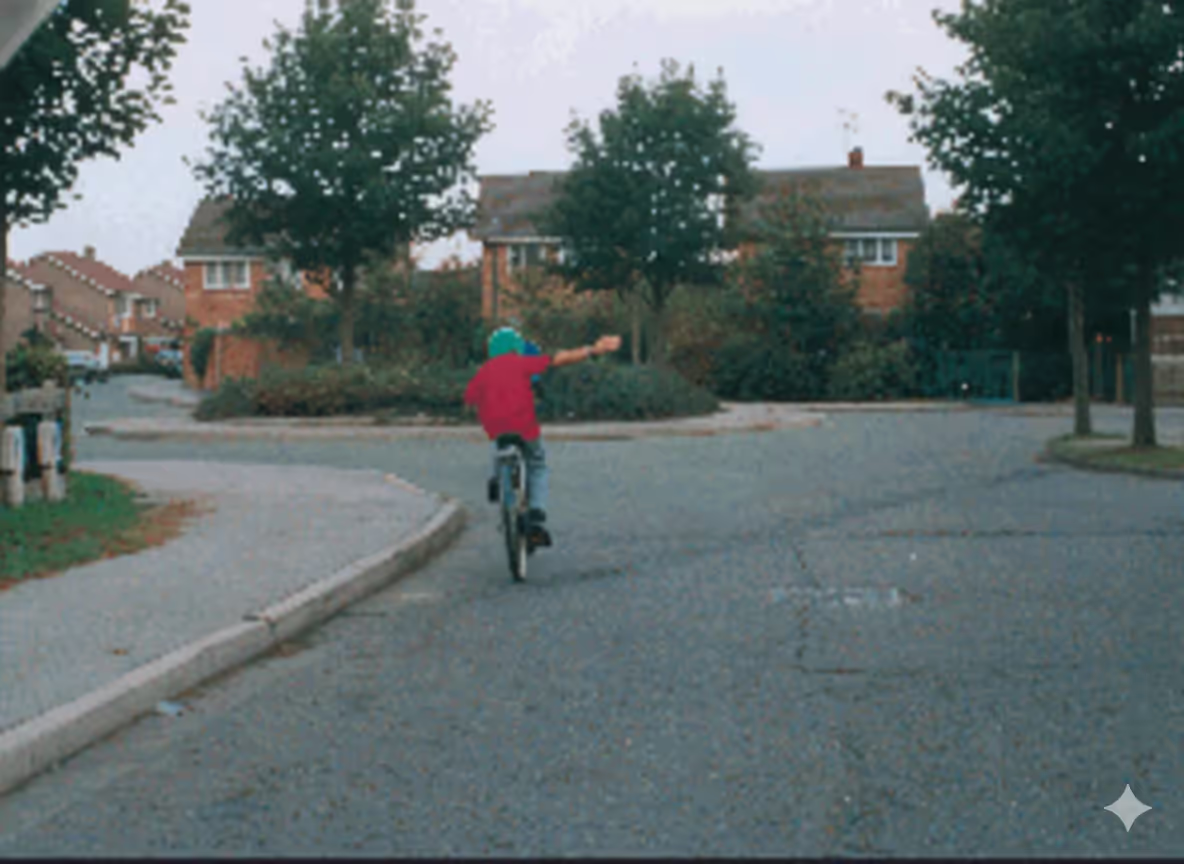
You're approaching this roundabout and see the cyclist signal right. Why is the cyclist keeping to the left?
Explanation
Cycling in today's heavy traffic can be hazardous. Some cyclists might not feel happy about crossing the path of traffic to take up a position in an outside lane. Be aware of this and understand that, although they're in the left-hand lane, the cyclist might be turning right.
Question 38 of 47
You're waiting to come out of a side road. Why should you look carefully for motorcycles?
Explanation
If you're waiting to emerge from a side road, remember to look for motorcycles. Their small size makes them easy to overlook. Be especially careful if parked vehicles are restricting your view. If you can't see, don't go.
Question 39 of 47
Why are motorcyclists advised to wear bright clothing?
Explanation
Although they're advised to wear clothing that's bright or reflective, motorcyclists often wear clothing that's mainly black. This can make them difficult to see, so you must look carefully for them.
Question 40 of 47
How should you overtake horse riders?
Explanation
Horses are easily frightened, so pass them slowly and carefully, giving them as much room as possible. On country roads, expect farm animals, horses, pedestrians and farm vehicles. Always be prepared to slow down or stop.
Question 41 of 47
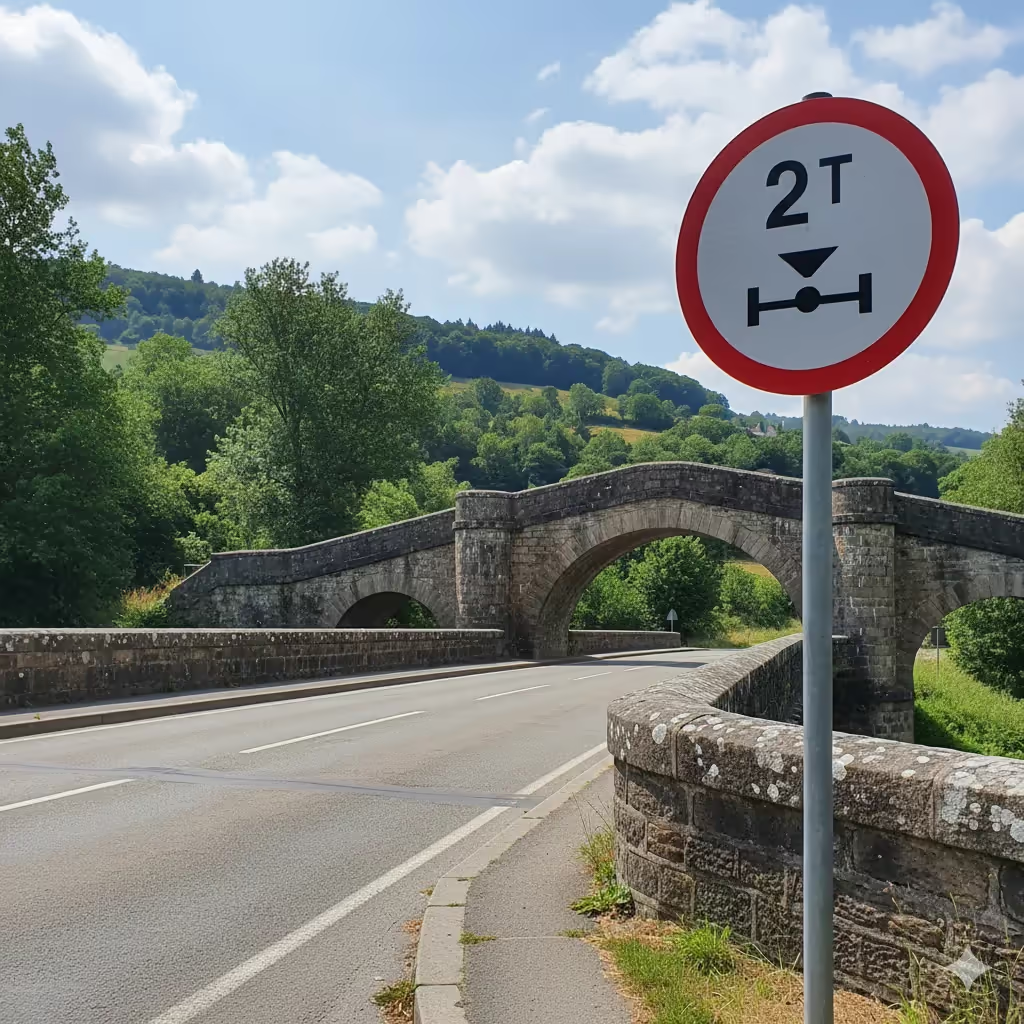
What does this sign mean?
Explanation
Always look out for road signs, but be especially aware of those that refer to large or heavy vehicles. Get into the habit of checking for signs at junctions. There might be an indication on the junction layout sign. Before you turn, make sure that the road you're using doesn't have any restrictions for the vehicle you're driving.
Question 42 of 47
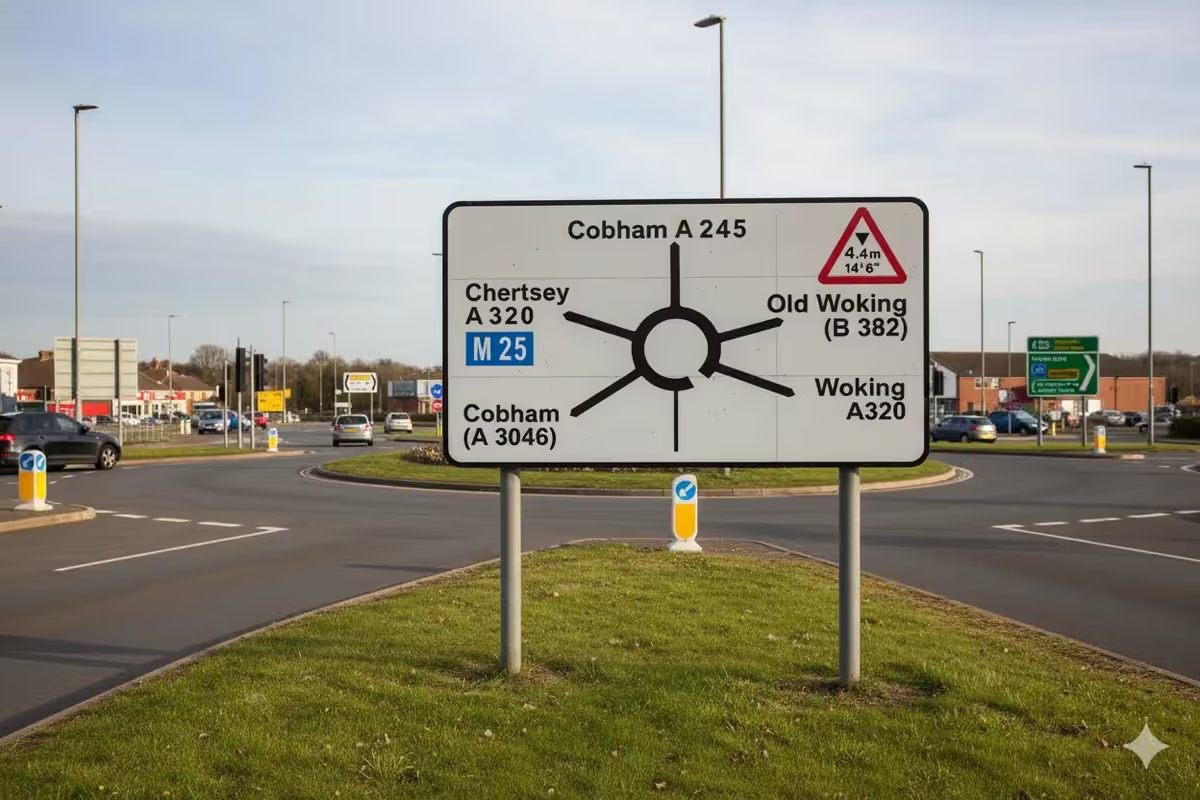
At this roundabout, you want to take the fourth exit. What limit is in force on this road?
Explanation
Look out for signs giving you advance warning of height restrictions. As a professional driver, you should always know the height of your vehicle or load. If you aren't sure of the safe height, stop and check.
Question 43 of 47
What must you do when using a vehicle fitted with an analogue tachograph?
Explanation
Make sure you carry enough approved tachograph charts for your journey. Store your spare charts in a plastic wallet to keep them clean and undamaged.
Question 44 of 47
Under EU rules, a driver must take regular breaks from driving. What maximum period of continuous driving is allowed?
Explanation
It's essential that you don't become drowsy through driving for excessively long periods. EU rules are in place to prevent this. You must take a break after a maximum of 4.5 hours of continuous driving. Your work details must be available for inspection by enforcement staff. Make sure that you know the rules for the journey and the type of vehicle you're driving.
Question 45 of 47
What should you do if you feel tired after driving for two-and-a-half hours?
Explanation
Most incidents happen as a result of a lapse in concentration. Don't let this happen to you. If you start to feel tired, you won't perform as well as you should. Your reactions will slow down, and your anticipation and judgement of hazards will become flawed. If you feel tired, stop and rest as soon as it's safe to do so.
Question 46 of 47
What should you do if you have to leave your vehicle unattended for a very short time?
Explanation
Take all the precautions you can to remove opportunities for theft. Lock your vehicle, especially when making deliveries and leaving the vehicle unattended.
Question 47 of 47
You arrive at the scene of an incident where someone is injured. What should be given urgent priority?
Explanation
Whenever possible, call the emergency services first. If you're able to give first aid, remember DR ABC. Check for Danger, then check the casualty for a Response. Check the Airway, and try to establish Breathing by gently lifting the chin up and forward. Give Compressions if necessary. Try to stop any severe bleeding. If you feel you aren't capable of carrying out first aid, consider taking some training. It could save a life.