Answer 47 questions, check each correct answer and work through the explanations at your own pace.
Question 1 of 470 correct answers
Question 1 of 47
When should you stop trying to resuscitate a casualty?
Explanation
If you're trying to resuscitate a casualty, don't give up until medical help arrives. Never assume that someone's dead. People who aren't breathing can survive longer than you may imagine when given chest compressions and mouth-to-mouth resuscitation.
Question 2 of 47
A loud buzzer sounds in your vehicle. What's this most likely to indicate?
Explanation
Warning buzzers are linked to many systems on modern vehicles, including the air brakes. A warning light on the dashboard may help you identify the system that's caused the problem. Stop in a safe place until the fault has been identified and put right. Get professional help if necessary.
Question 3 of 47
What should you be aware of before opening your cab door?
Explanation
It can be dangerous for vehicles passing close by if you open the door carelessly. Always look properly to make sure that it's safe - checking the blind spots as well as using the mirrors - before you get out of the cab.
Question 4 of 47
What does air suspension help to protect?
Explanation
Air suspension reduces the pounding of the vehicle on an uneven road surface. This, in turn, reduces the vibrations transmitted to buildings and underground services along the route.
Question 5 of 47
You're following a lorry that's leaking fuel. What should you be especially aware of?
Explanation
Leaking fuel can make the road extremely slippery. Look out for this, particularly on roundabouts.
Question 6 of 47
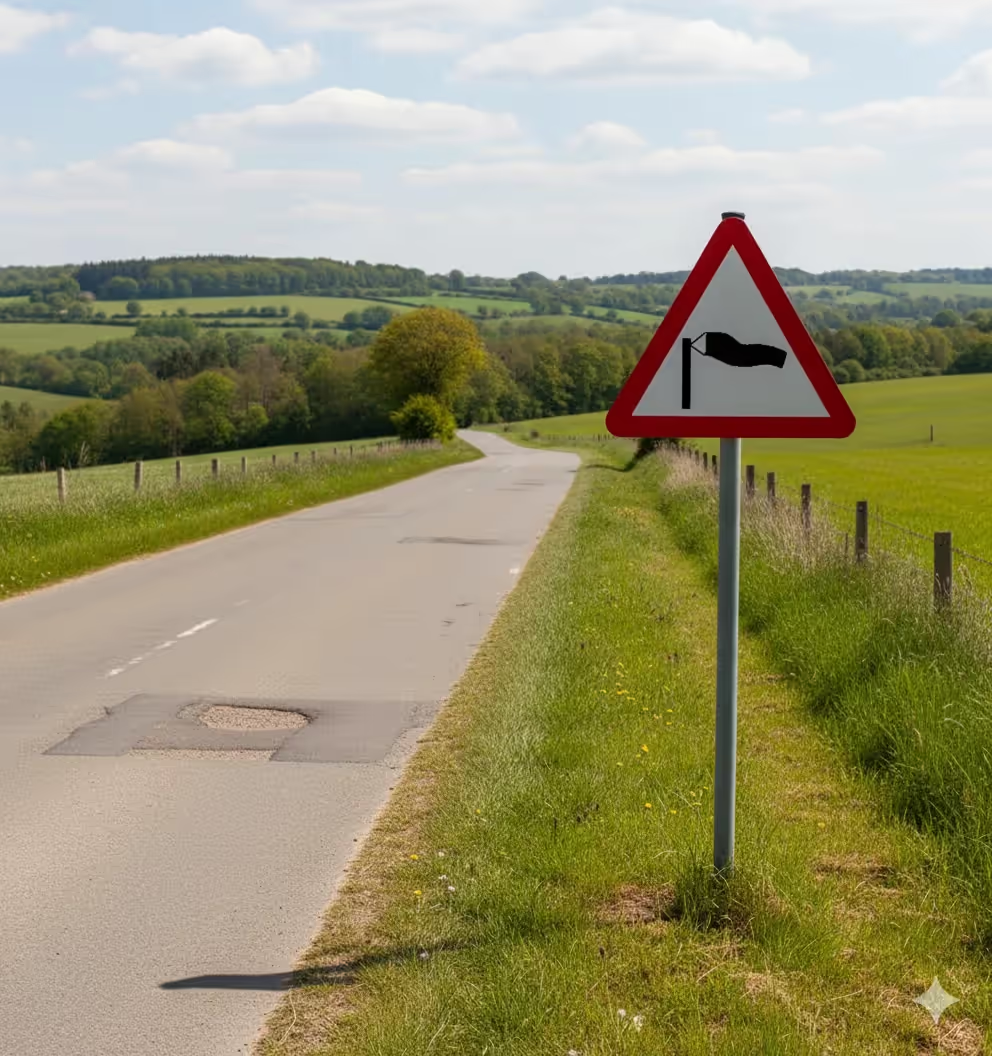
What does this sign mean?
Explanation
Side-wind warning signs are often found on roads that are frequently affected by strong wind. High-sided vehicles, caravans and motorcycles are more susceptible to windy weather, and you should be aware of the difficulties they may be having.
Question 7 of 47
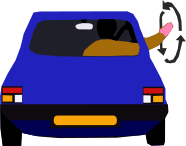
What does this arm signal mean?
Explanation
Sometimes, drivers or riders use arm signals as well as direction indicators and brake lights; for example, in bright sunshine or when approaching a zebra crossing. Using the arm signals shown in The Highway Code can help other road users to understand your intentions.
Question 8 of 47
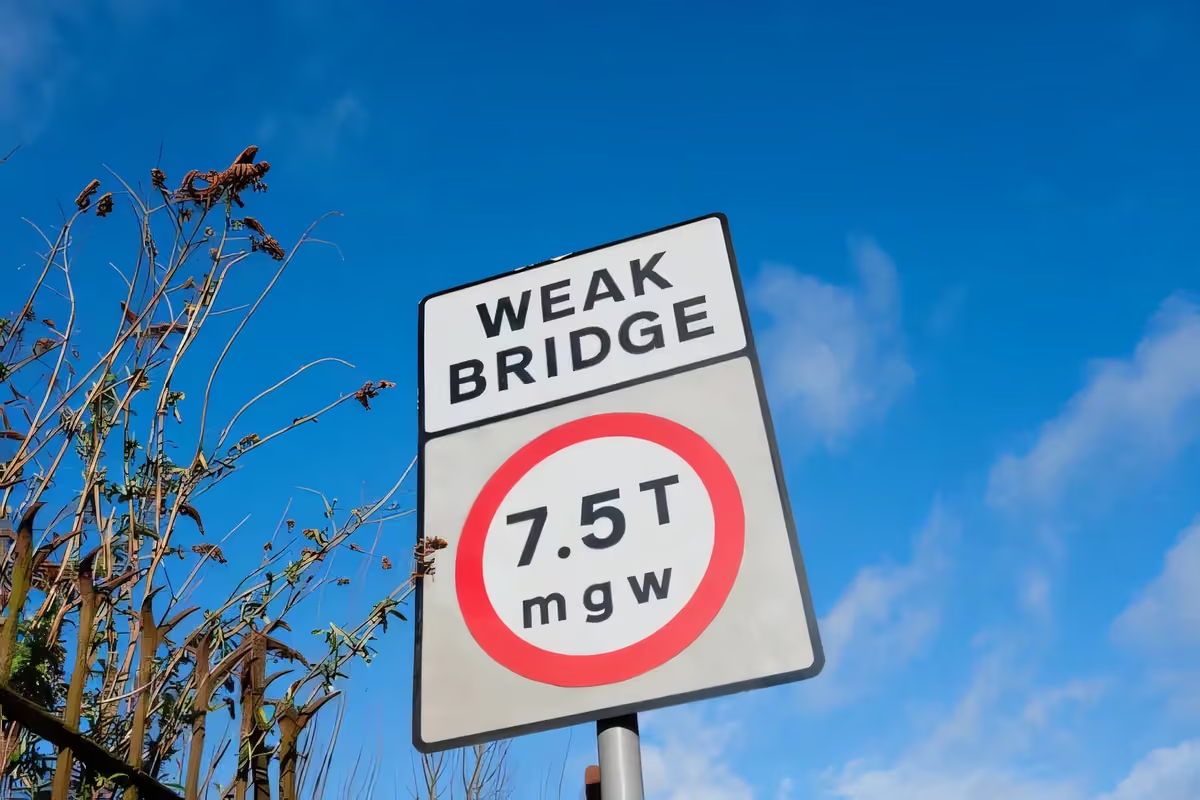
What does this sign mean?
Explanation
Vehicles over the weight shown on the sign may not use the bridge ahead. You must know the weight of your vehicle, including any load. With this knowledge you should plan your route in advance, so that you don't come to a bridge you can't cross. That way, you'll avoid delays and save time and fuel.
Question 9 of 47
What can you add to diesel fuel to prevent it from becoming less effective at low temperatures?
Explanation
In extremely cold weather, you'll have to use diesel fuel with anti-waxing additives to stop the fuel lines from freezing up. During the winter months, these additives are usually put in by the fuel companies.
Question 10 of 47
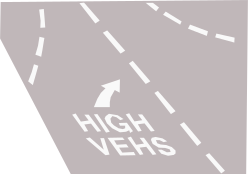
Where would you expect to see these road markings?
Explanation
High vehicles are often directed to the centre of the road to go under an arched bridge. Check that your vehicle doesn't exceed the height restriction indicated. Plan your route in advance to avoid any bridges that your vehicle won't be able to clear.
Question 11 of 47
You want to turn right at a roundabout marked with two right-turn lanes. What should you do if there's ample room for your vehicle in either lane?
Explanation
Using the left-hand lane will make it easier for you to leave the roundabout. If you use the right-hand lane, there could be traffic on your left and in your blind spot when you reach your exit and try to move back to the left.
Question 12 of 47
You need to stop and get out of your vehicle. When should you use the parking brake?
Explanation
It's an offence to leave your vehicle unattended at any time without applying the parking brake.
Question 13 of 47
You notice that one of your tyres has a bulge in the side wall. What will happen if you drive the vehicle?
Explanation
It's a legal requirement that your tyres have at least the minimum permitted depth of tread and are in good condition before you start any journey. Make sure that you inspect them before setting off, and at regular intervals.
Question 14 of 47
Why should you use an approved coolant solution in your engine's cooling system?
Explanation
Coolant solution is also known as anti-freeze. It provides protection from freezing and also contains a corrosion inhibitor that prolongs the life of the cooling system. Remember to check the coolant level regularly.
Question 15 of 47
When should you check the oil level in your engine?
Explanation
Oil is vital for lubrication of the engine. It should be checked regularly and topped up as necessary. You should always check your engine's oil level when the engine is cold and your vehicle is parked on the level.
Question 16 of 47
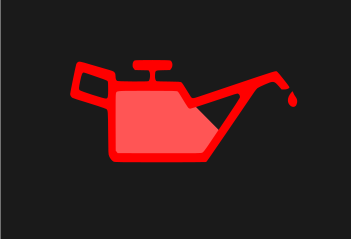
What does this warning light on the instrument panel mean?
Explanation
You should be familiar with all the warning lights fitted to your vehicle. The oil warning light indicates low oil pressure or lack of oil. If it lights up, report the fault and don't continue until it's been corrected.
Question 17 of 47
You've stopped on a firm, level surface. What's the first thing you must do before you uncouple the trailer?
Explanation
Before leaving the cab, it's very important to secure the vehicle by applying the parking brake. After leaving the cab, apply the trailer parking brake.
Question 18 of 47
When do long vehicles sometimes need to straddle lanes?
Explanation
When driving a long vehicle around corners, it's sometimes necessary to adopt a different road position to avoid mounting the kerb or colliding with street furniture such as lampposts or traffic signs. Other road users may not understand what you intend to do next. Watch them carefully and always signal in good time.
Question 19 of 47
When should you consider the effect a speed limiter will have on your vehicle?
Explanation
Plan well ahead before overtaking. Be aware that a speed limiter may cause you difficulties when overtaking another vehicle, particularly when climbing a hill.
Question 20 of 47
Which road users are most likely to be affected by the turbulence created by large vehicles travelling at speed?
Explanation
Caravans are relatively light but have a large surface area. This makes them vulnerable to the turbulence created by large vehicles travelling at speed. The blast of air can destabilise the caravan, causing it to snake, and in extreme cases they can be blown over.
Question 21 of 47
You're driving a high-sided vehicle on a motorway. Where should you be especially aware of the effects of side wind?
Explanation
On motorways, be especially careful when driving over bridges and viaducts. The road here is exposed and in windy weather there's a risk of strong side wind, which may blow you off course or even blow your vehicle over. In severe windy weather, these routes are often closed to drivers of high-sided vehicles.
Question 22 of 47
What component fitted to your vehicle will help following drivers in wet weather?
Explanation
Spray reducers or spray-suppression equipment are attachments fitted around the wheel arches of large vehicles. They effectively trap spray thrown up from the wheels, which would otherwise reduce visibility for other road users.
Question 23 of 47
How should you drive through flood water?
Explanation
It's important to use a low gear and keep the engine speed high to prevent water from entering the engine through the exhaust system. In these circumstances, it may be necessary to slip the clutch to keep the road speed as low as possible.
Question 24 of 47
You're driving a large vehicle in heavy rain on a motorway. You slow down to reduce the risk of aquaplaning. For what other reason should you slow down?
Explanation
Driving at high speed on a wet motorway can throw up dense spray, making it very difficult for other drivers to see ahead. Driving more slowly reduces the amount of spray and this makes it safer for other drivers.
Question 25 of 47
What should you do if you're feeling tired but there's nowhere to stop safely?
Explanation
If you're travelling on a long journey, plan your route before you leave. This will help you to avoid delays, reduce stress and save fuel.
Question 26 of 47
Why should you take extra care when overtaking at night?
Explanation
In the darkness, it will be difficult to assess the road ahead - especially if there are bends or hills, which may prevent you from seeing oncoming vehicles.
Question 27 of 47
You're driving in the left-hand lane on a three-lane motorway. What should you check for before moving into the middle lane to overtake a slower vehicle?
Explanation
Traffic behind that's returning from the right-hand lane is a hazard to be aware of before you move into the middle lane to overtake. Checking your blind spot can help you see these vehicles before you commit to changing lanes.
Question 28 of 47
You're driving in the left-hand lane of a motorway. What should you do when you see a large vehicle merging from a slip road ahead?
Explanation
It's not always possible for drivers in the left-hand lane to change lanes to let joining traffic merge. However, you should be ready to adjust your speed to help the joining driver merge safely.
Question 29 of 47
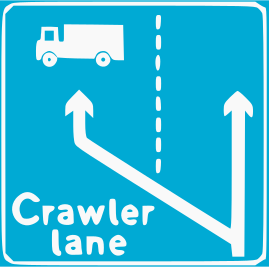
What does this motorway sign mean?
Explanation
The term 'crawler lane' doesn't mean the lane is only for extremely slow vehicles. It's advising you of an extra lane on the left. Crawler lanes are usually built on sections of road where the length of the gradient is such that some large vehicles will be slowed to the point where they become a hazard for other road users.
Question 30 of 47
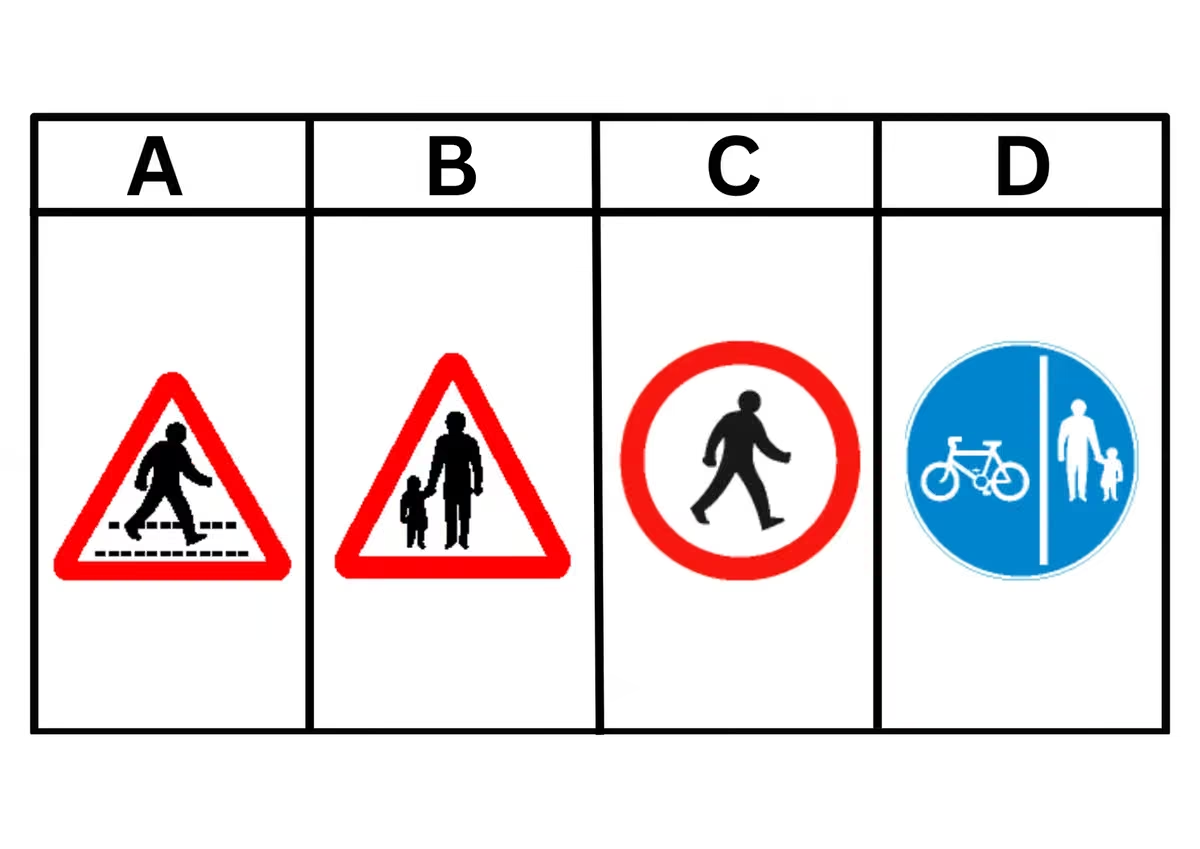
Which sign means that there may be people walking along the road?
Explanation
Always check the road signs. They'll inform you of hazards ahead so you know what problems to expect. A number of different signs show pedestrians in different situations. Learn them all so you'll understand the hazards you're likely to meet.
Question 31 of 47
What action would you take when elderly people are crossing the road?
Explanation
Don't hurry elderly people across the road by getting too close to them or revving the engine. Be aware that they might take longer to cross. They might also have hearing difficulties and not hear you approaching.
Question 32 of 47
What should you do if you see two elderly pedestrians about to cross the road ahead?
Explanation
Elderly pedestrians may have impaired judgement, hearing and/or vision. Be aware that, if they do start to cross, they could take more time to do so.
Question 33 of 47
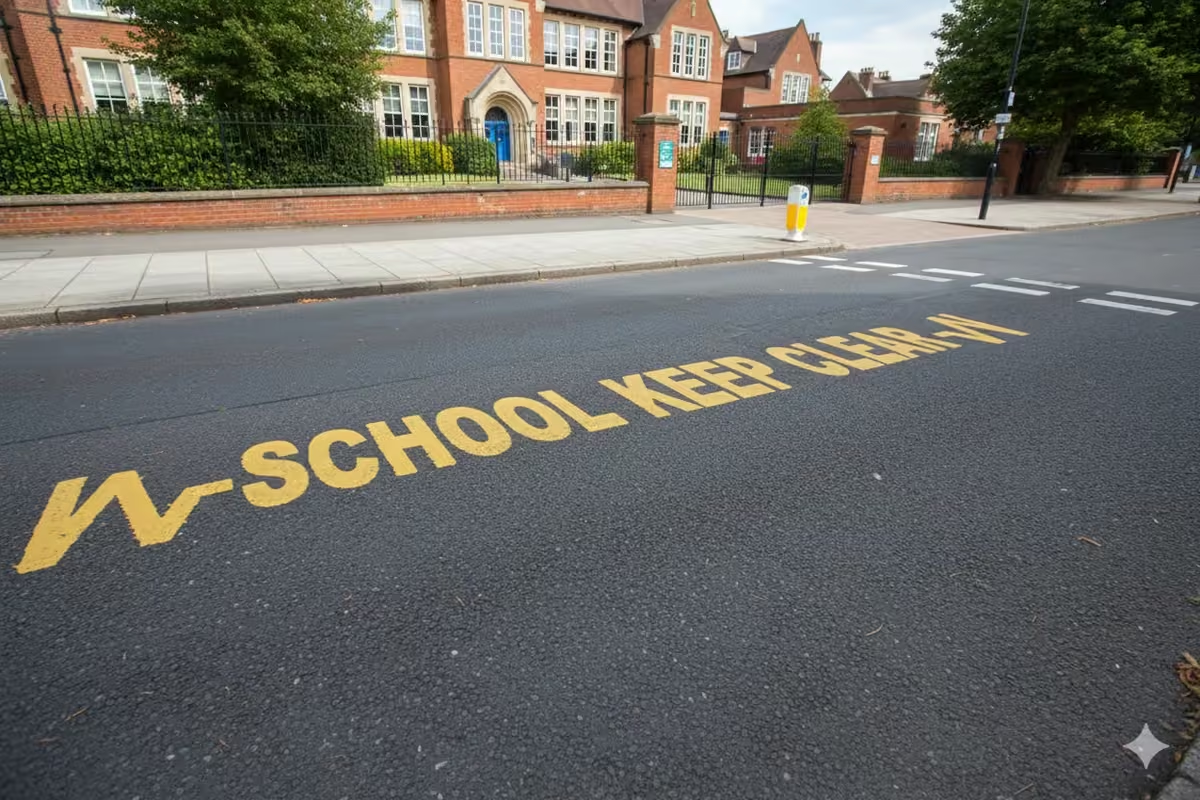
Why mustn't you stop on these road markings?
Explanation
These markings are found on the road outside schools. Don't stop or park on them, even to set down or pick up children. The markings are to make sure that drivers, riders and children have a clear view.
Question 34 of 47
You're travelling behind a moped. What should you do if you want to turn left a short distance ahead?
Explanation
Passing the moped and then turning into the junction could mean that you cut across in front of the rider. This might cause them to slow down, stop or even lose control.
Question 35 of 47
What should you do if you're following a learner driver who stalls at a junction?
Explanation
Learning is a process of practice and experience. Try to understand this and tolerate others who are at the beginning of this process.
Question 36 of 47
What should you do before driving into a tunnel?
Explanation
Before driving into a tunnel, you should take off your sunglasses. If you don't, you'll find that your vision is restricted - even in a tunnel that appears to be well lit.
Question 37 of 47
What should you do when you drive into a tunnel?
Explanation
Before entering a tunnel, you should switch on your dipped headlights; these help you to see and be seen. In many tunnels, using headlights is a legal requirement. You should also remove your sunglasses before you drive into a tunnel.
Question 38 of 47
You're driving through a tunnel. What should you do if your vehicle breaks down?
Explanation
If your vehicle breaks down in a tunnel, it could present a danger to other traffic. First, switch on your hazard warning lights. If there are passengers in your vehicle, take them to the nearest exit point. You should then call for help from an emergency telephone. Don't rely on being found by the police or being seen by a CCTV camera. The longer a vehicle stays in an exposed position, the more danger it poses to other traffic.
Question 39 of 47
An enforcement officer keeps your analogue tachograph records. How should they endorse the replacement charts?
Explanation
If your records are kept by an enforcement officer, you should ask the officer to endorse the replacement charts with their name and telephone number. The enforcement officer should also record the number of charts they keep. Alternatively, they can give you a receipt for the charts.
Question 40 of 47
Why should you carry spare tachograph charts?
Explanation
Your employer should supply enough approved charts for your journey. They should include spares in case any get damaged or are taken by an authorised inspecting officer.
Question 41 of 47
You've been driving non-stop since 5.00 am. The time is now 9.30 am. Under EU rules, what length of break must you take?
Explanation
You must take an uninterrupted break of 45 minutes after four-and-a-half hours of driving. This break may be replaced by two shorter breaks of at least 15 and 30 minutes, taken in that order, during the four-and-a-half hours. During any break, you mustn't drive or do any other work.
Question 42 of 47
You're making a journey with a co-driver. When the other person is driving, how should you show this time?
Explanation
You may only record a break when you're not doing any other type of work. You're allowed to take a break on a double-manned vehicle while the other crew member is driving, but any break must be a minimum of 15 minutes.
Question 43 of 47
At the end of your working week, you've driven a total of 56 hours. Under EU rules, what's the maximum number of hours you can drive in the following week?
Explanation
If you've driven a total of 56 hours in any one week, you can only drive for 34 hours in the following week. Keep your own record to make sure that you don't exceed these hours.
Question 44 of 47
You're the first person to arrive at an incident where people are badly injured. What's the first thing you should do?
Explanation
If you're the first to arrive at an incident, further collisions and fire are the immediate concerns. Switch on your hazard warning lights to warn other traffic. Stop any running vehicle engines to reduce the risk of fire. Don't assume that someone else has called the emergency services - do it yourself. Don't move casualties trapped in vehicles unless they're in danger.
Question 45 of 47
The area around an incident is safe. What's the best way to help an injured person?
Explanation
Don't move a casualty who's in a safe place, as this could worsen any injury they may have. Only move a casualty if they're in danger - for example, from passing traffic. You may also need to move them if you need to give lifesaving first aid, such as clearing their airway.
Question 46 of 47
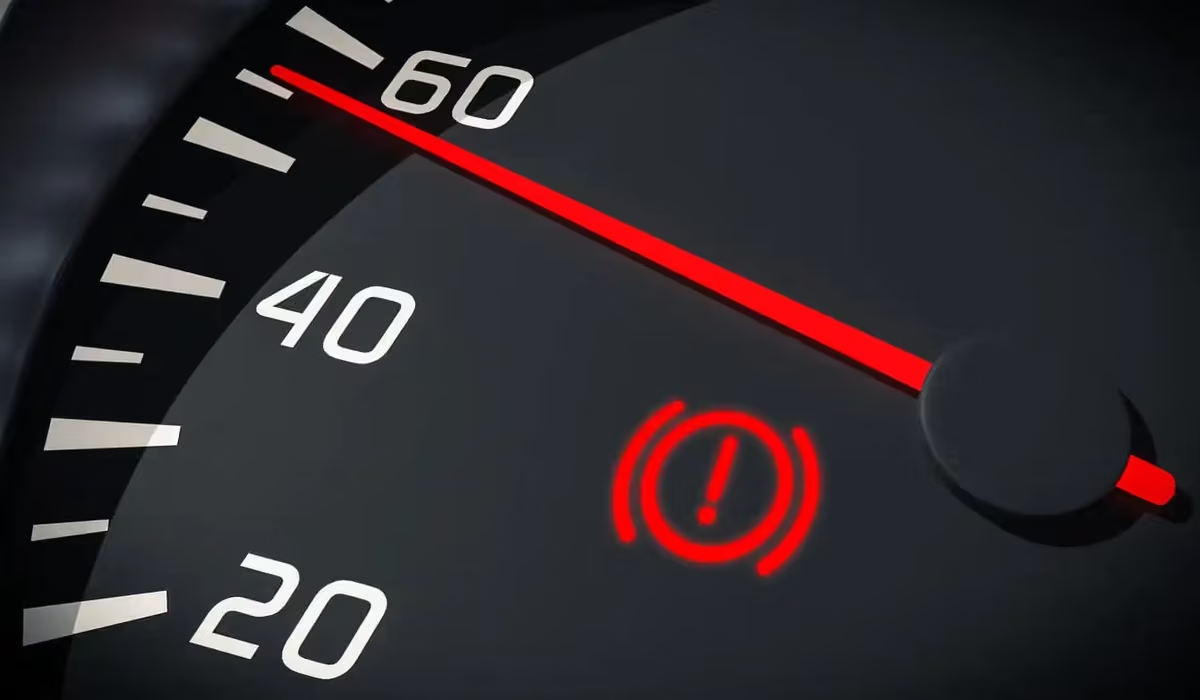
What does this warning light on the instrument panel mean?
Explanation
You should be familiar with all warning lights and buzzers fitted to your vehicle. If you're driving the vehicle for the first time, make sure that you know the function of each. If the brake warning light shows a fault in the system, stop as soon as it's safe to do so. Report the fault, and don't continue until it's been corrected.
Question 47 of 47
The MSM routine should be used when you negotiate a hazard. What do the initials MSM stand for?
Explanation
Always use the MSM routine when you're approaching a hazard: Mirrors – check the position of traffic behind you; Signal – indicate your intention in good time; Manoeuvre – change position safely.