Answer 47 questions, check each correct answer and work through the explanations at your own pace.
Question 1 of 470 correct answers
Question 1 of 47
What will happen if you drive too close to the vehicle in front?
Explanation
The closer you are to the vehicle in front, the less you'll be able to see of the road ahead. You must be aware at all times that you won't be able to see all around your vehicle. This is why you must have an excellent mirror routine and constantly update yourself on what's going on around you.
Question 2 of 47
Which vehicles are most likely to cause severe damage to road surfaces?
Explanation
Lorries and buses are much heavier than cars and will have a greater impact on the road surface.
Question 3 of 47
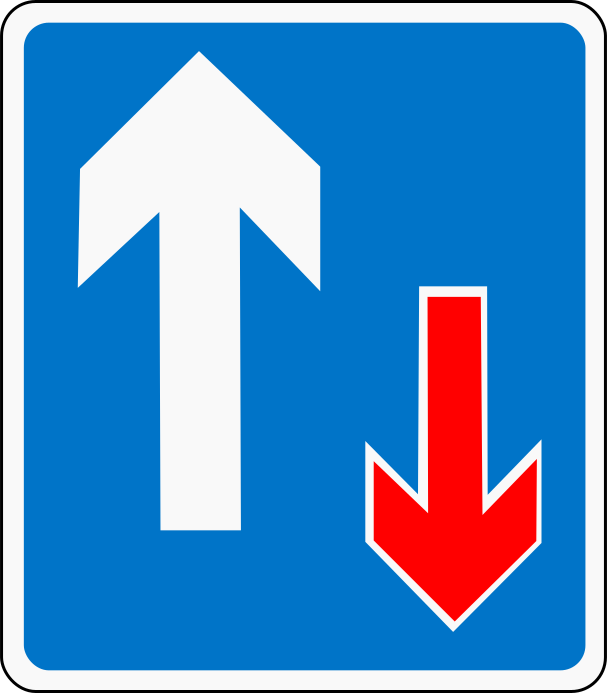
What does this sign mean?
Explanation
You have priority over vehicles from the opposite direction. However, if a vehicle approaching from the opposite direction isn't going to stop, you should slow down and give way to avoid confrontation or an incident.
Question 4 of 47
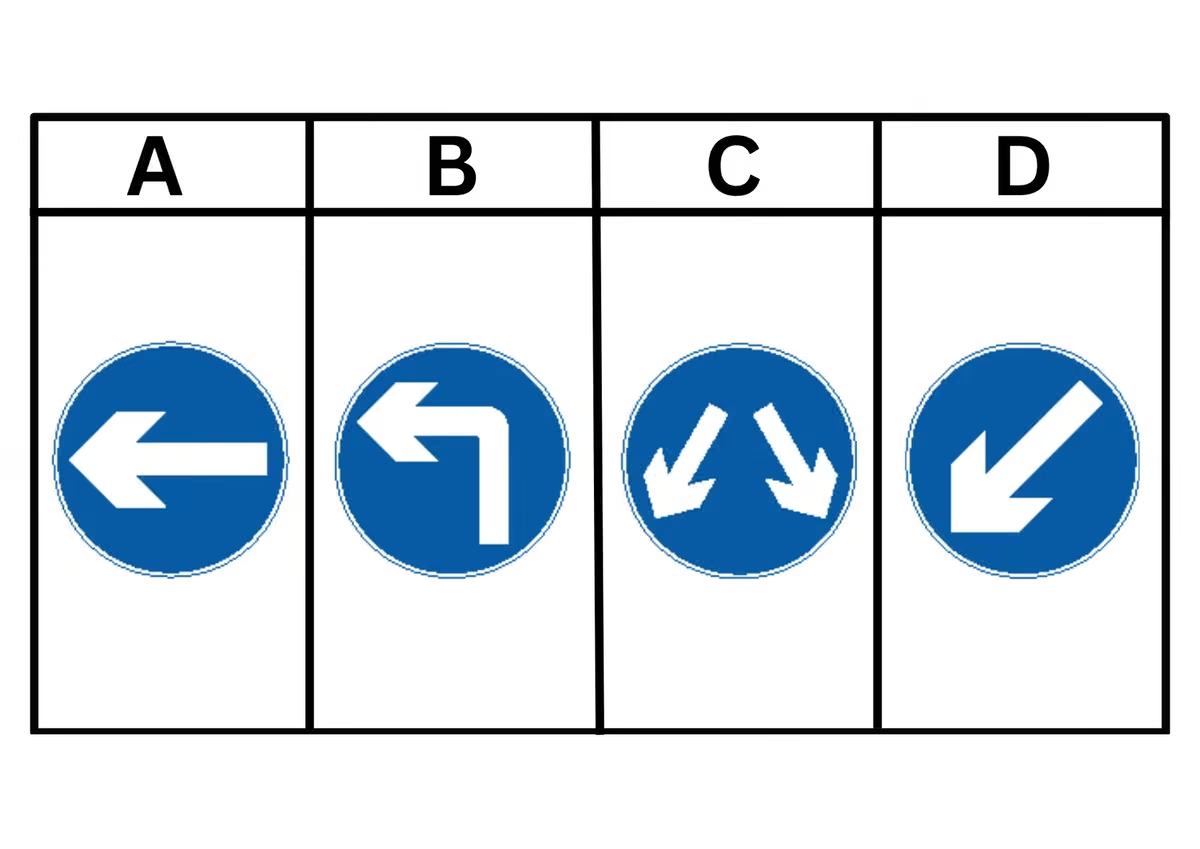
Which of these signs means turn left ahead?
Explanation
This sign gives a clear instruction. You should prepare to negotiate a left-hand turn.
Question 5 of 47
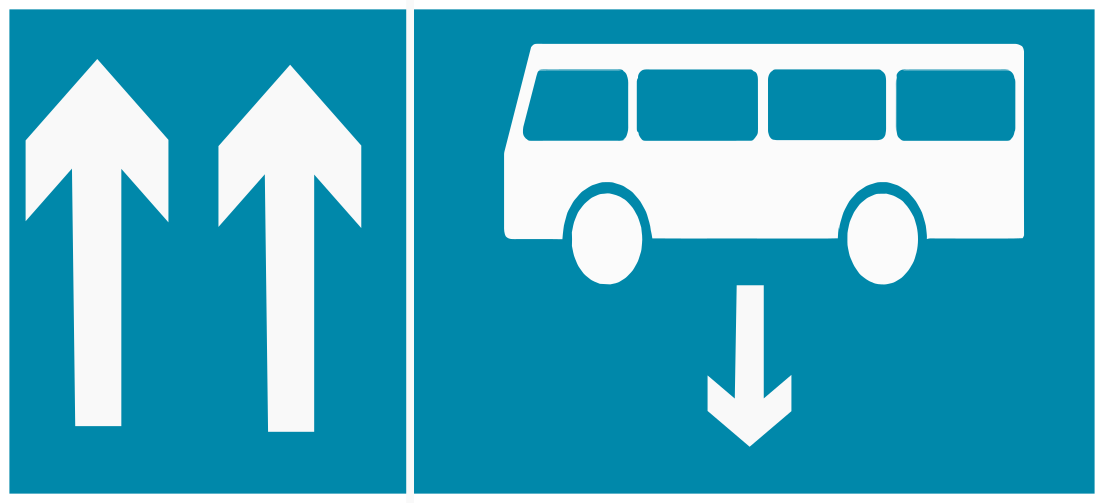
What does this sign mean?
Explanation
If you see a contraflow sign, there'll also be markings on the road to indicate the bus lane. Don't use this lane for parking or overtaking.
Question 6 of 47
How could you save fuel?
Explanation
You should always plan your route. This will ensure you always drive on roads that are suitable for the size and weight of your vehicle. By planning to avoid peak travel times, you can also avoid congestion. This can save you fuel, as well as reducing your journey times.
Question 7 of 47
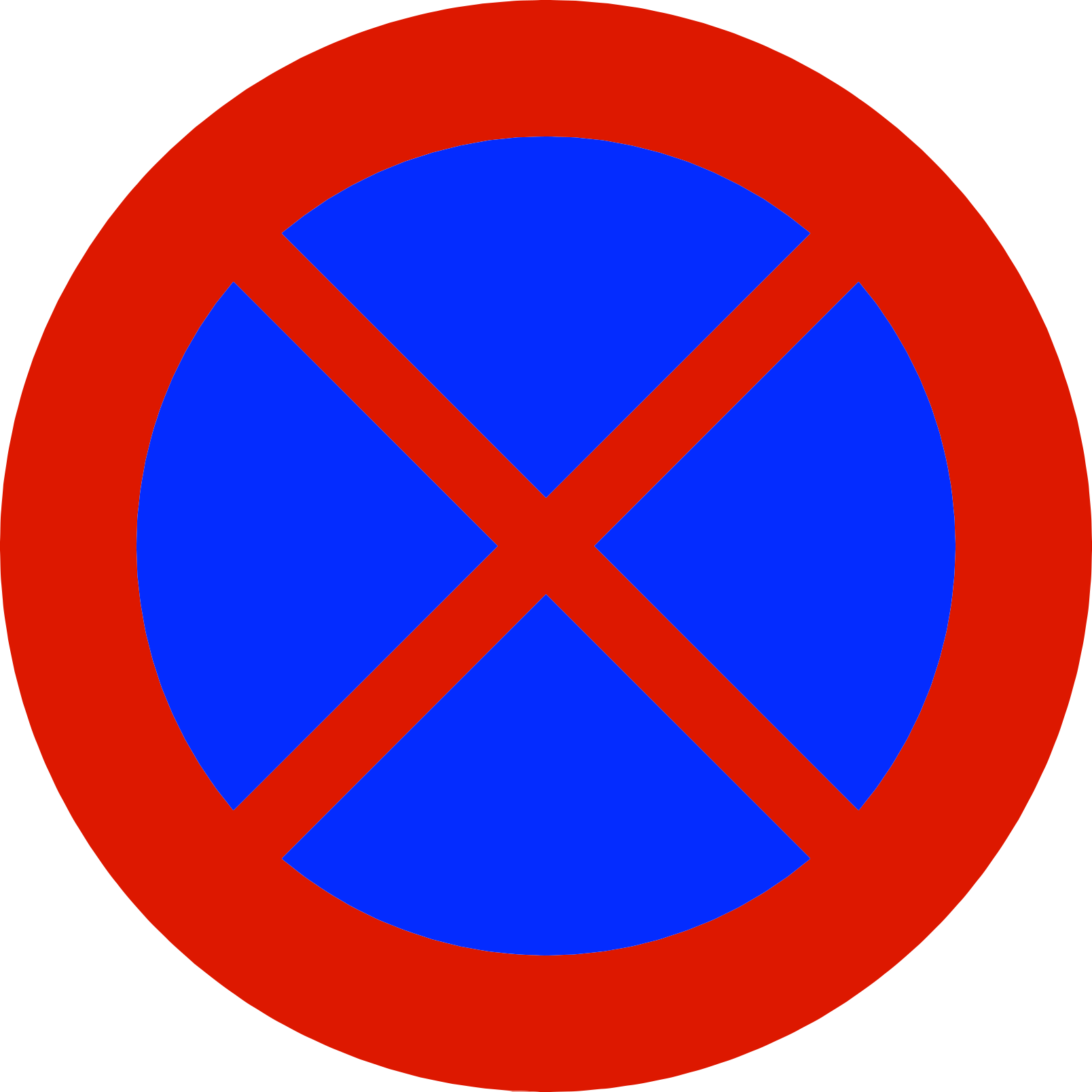
What does this sign mean?
Explanation
This traffic sign means no stopping on the main carriageway at any time, not even to set down passengers. However, you may stop in a lay-by.
Question 8 of 47
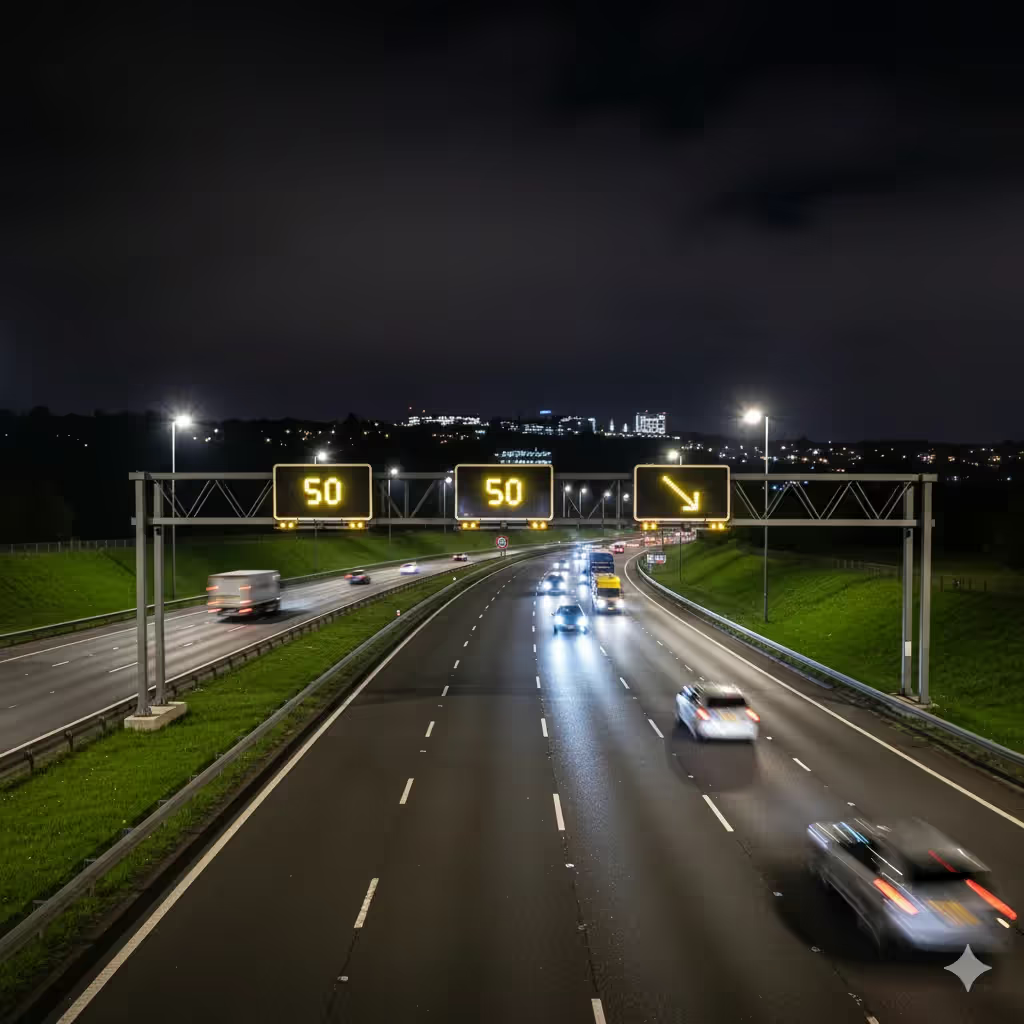
You're driving on a motorway and there's no traffic ahead. You see this sign. Which lane should you use?
Explanation
When there's no traffic ahead of you, you should always drive in the left-hand lane.
Question 9 of 47
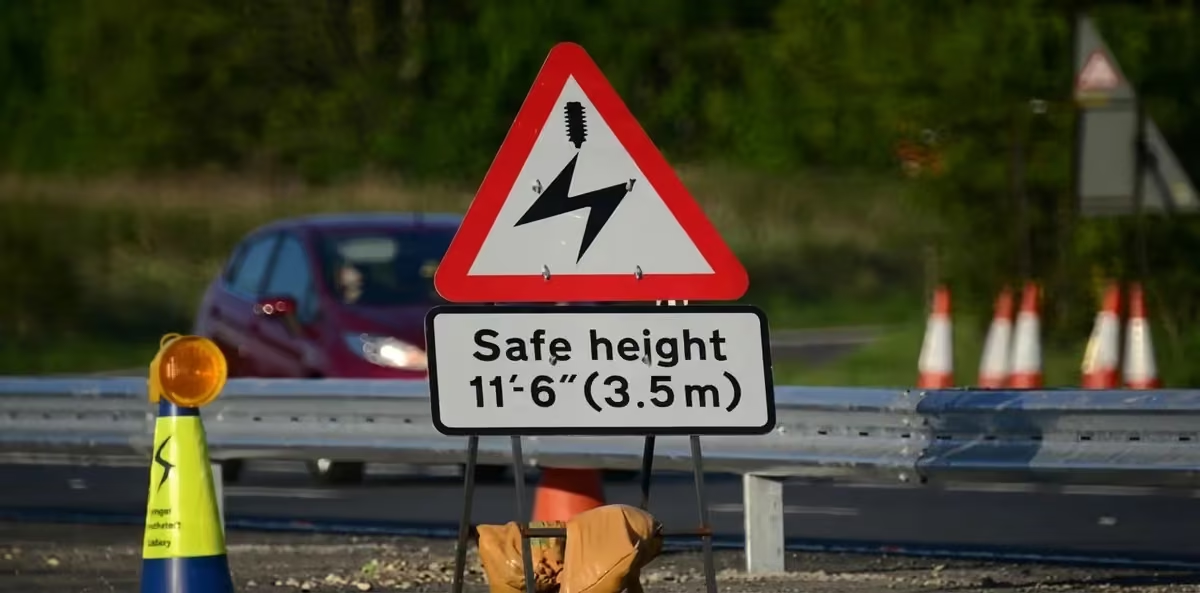
What does this sign warn of?
Explanation
This sign is used to warn of overhead electrified cables and is usually accompanied by a plate indicating the safe height limit.
Question 10 of 47
Which fuel is better for the environment?
Explanation
Sulphur produces acidic gases. Diesel fuels with lower sulphur content have been produced to reduce exhaust emissions that harm both people and the environment.
Question 11 of 47
Your vehicle is more than 3 metres (9 feet 10 inches) high. Where is this information displayed?
Explanation
It's a legal requirement that information about a vehicle's height can be seen by the driver from their seat. It's important to know the height of your vehicle so that you can avoid any height restrictions on your route.
Question 12 of 47
When is your nearside mirror most likely to endanger pedestrians?
Explanation
When you drive too close to the kerb, there's a risk that your nearside mirror could strike the head of a pedestrian. Be aware of this hazard and, if you see pedestrians close to the road, make sure you leave them enough room.
Question 13 of 47
Why should your engine oil be changed at the recommended intervals?
Explanation
The oil and filter will get dirty in normal use. If you follow the service-interval guidance, your engine will remain protected and properly lubricated, making it less likely to break down.
Question 14 of 47
You're on a motorway and the surface is still wet after rain. Why should you take care when you're overtaking?
Explanation
Rain, combined with oil, rubber particles, dirt and debris on the road surface, reduces the tyres' grip on the road. It can be especially slippery when it rains after a long dry spell.
Question 15 of 47
What should you be aware of when you're overtaking on a motorway while it's raining heavily?
Explanation
Other road users can be affected by the spray from large vehicles, severely reducing their vision. Always take care when you need to change lanes: signal in good time and watch your mirrors carefully before pulling out in these conditions.
Question 16 of 47
Why can visibility be worse when driving at high speed in wet weather?
Explanation
Higher speeds will cause more spray to be thrown up by vehicles' tyres - particularly the tyres of larger vehicles and trailers. Always use dipped headlights in poor visibility caused by rain and spray.
Question 17 of 47
What should you do if the brake air-pressure warning light comes on while you're driving?
Explanation
When a warning light or device indicating a loss of brake pressure comes on, you must stop safely and get the fault put right immediately. The safety of you, your load, your passengers and all other road users is at risk.
Question 18 of 47
Brake fade' is a loss of effectiveness of the brakes when they overheat. When would 'brake fade' be most likely to happen?
Explanation
Continuous use of the brakes will cause them to overheat, and in extreme cases they'll become ineffective. When you're going downhill, the momentum of your vehicle will cause you to gather speed very quickly. Use the endurance brake (retarder) and stay in a low gear to reduce the need to use the brakes.
Question 19 of 47
What should you do after driving through a flood?
Explanation
If you have to drive through a flood, do so with caution. Once out of the flood, you need to test your brakes to make sure they're working properly. To do this, check what's behind you, then drive in a low gear with the brakes gently applied.
Question 20 of 47
What should you do if a long, heavily laden lorry is taking a long time to overtake you?
Explanation
A long lorry with a heavy load will need more time to pass you than a car. It won't be able to accelerate enough to pass you quickly, especially on an uphill stretch of road. Be considerate to the lorry driver - ease off the accelerator and allow the lorry to pass.
Question 21 of 47
You're being followed by a marked police car. As well as flashing the headlights, what will the police officer do to signal you to stop?
Explanation
When a police officer is following you and wants you to stop, they'll flash the vehicle's headlights and signal with the left indicator. You should stop in a safe place as soon as possible.
Question 22 of 47
Your vehicle is fitted with a hand-held telephone. What should you do before taking or making a call?
Explanation
Telephone calls can distract you, meaning that you're not in proper control of your vehicle. If you need to use a telephone when driving, find a safe place to stop first. Better still, use a phone answering service and listen to your messages at the end of your journey.
Question 23 of 47
You approach a pelican crossing that goes straight across the road. How must you treat it if it has a central island?
Explanation
A pelican crossing that goes straight across the road must be treated as one continuous crossing even if it has a central island. The lights controlling the crossing show to both directions of traffic. You must give way to pedestrians who are still crossing when the amber light is flashing.
Question 24 of 47
What does the flashing amber light mean at a pelican crossing?
Explanation
Pedestrians use push-button controls to activate the signals. Pelican crossings have no red-and-amber stage before green. Instead, they have a flashing amber light. This means you must give way to pedestrians on the crossing, but you may proceed if the crossing is clear.
Question 25 of 47
What should you do at a zebra crossing?
Explanation
When traffic is heavy, plan well ahead so that you don't block crossings. Leave them clear so that pedestrians can cross safely.
Question 26 of 47
Should you give way to a car showing a flashing green beacon?
Explanation
If you see a vehicle with a green flashing light, it will be a doctor on an emergency call, so give way by pulling over and letting the vehicle pass. But don't just stop suddenly - choose a safe place as soon as you can to let the doctor's car pass safely.
Question 27 of 47
When will your reactions be slower?
Explanation
Try to avoid becoming tired by taking plenty of rest stops and allowing fresh air into your vehicle.
Question 28 of 47
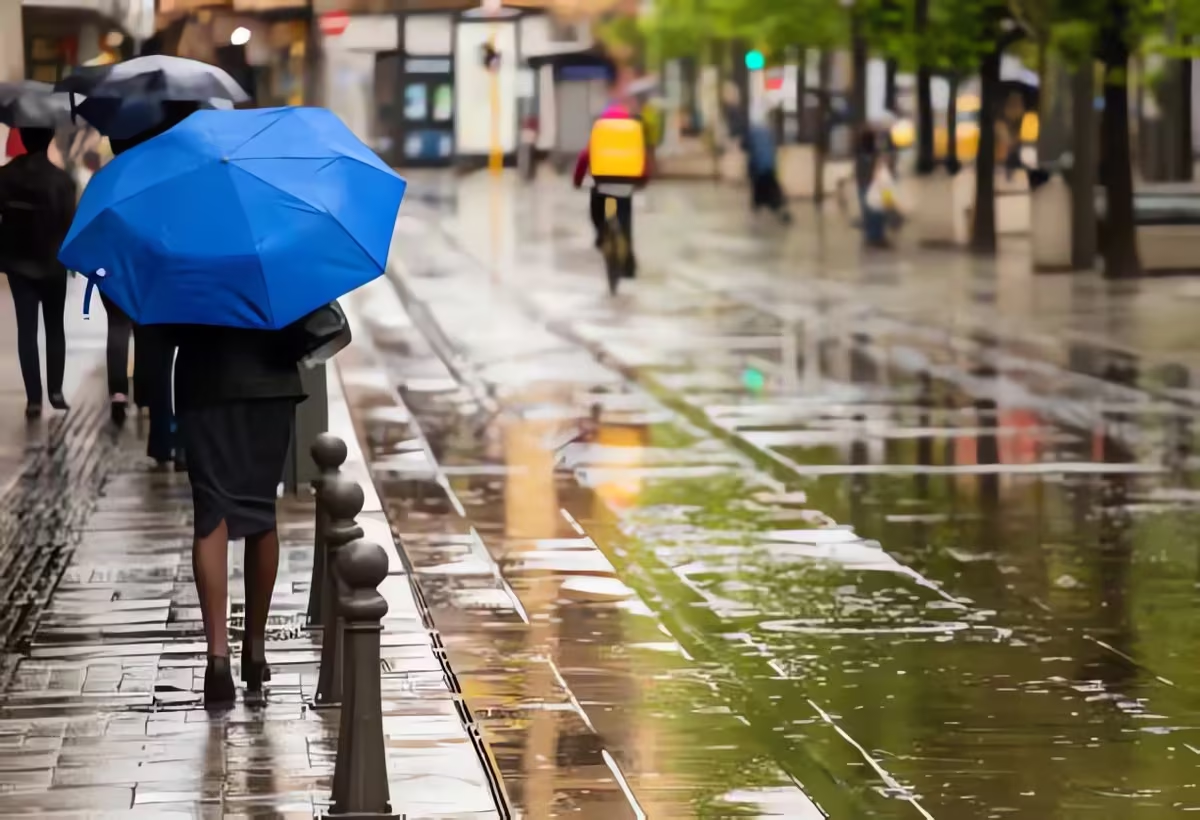
The road is wet. Why should you slow down as you approach this pedestrian?
Explanation
When the roads are wet, have consideration for pedestrians walking or standing near the kerb.
Question 29 of 47
What problem may you have when driving at night?
Explanation
You must be able to stop safely in the distance that you can see to be clear ahead. This will be the distance illuminated by your headlights or by street lights and will generally be less than you can see in daylight.
Question 30 of 47
Which lane should you use when you're driving on a clear motorway, at the speed limit for your vehicle?
Explanation
You should remain in the left-hand lane unless you're overtaking other vehicles. Don't be inconsiderate and stay in the centre lane or other overtaking lanes when you've finished overtaking.
Question 31 of 47
When do drivers of long vehicles need to straddle lanes?
Explanation
When you have to straddle the lanes at small roundabouts or junctions, always signal in good time. Be alert for inexperienced road users who may, without realising, put themselves into a dangerous position.
Question 32 of 47
Why do motorcyclists use dipped headlights in the daytime?
Explanation
A motorcycle can be lost out of sight behind another vehicle. The use of the headlights helps to make the motorcycle more easily seen.
Question 33 of 47
Your vehicle catches fire while you're driving through a tunnel. What should you do if the vehicle can still be driven?
Explanation
If it's possible, and you can do so without causing further danger, it's safer to drive a vehicle that's on fire out of a tunnel. The greatest danger in a tunnel fire is smoke and suffocation.
Question 34 of 47
What should you do if a front tyre bursts while you're driving on a motorway?
Explanation
A front tyre bursting will seriously reduce your control of the vehicle. Keep calm and resist the temptation to brake hard or swerve. Hold the steering wheel firmly and try to get the vehicle onto the hard shoulder while allowing it to slow down gradually. Stop as far to the left as possible and switch on your hazard warning lights.
Question 35 of 47
Your vehicle breaks down on the hard shoulder of a motorway. What should you do if you decide to use your mobile phone to call for help?
Explanation
In an emergency, time can be of the essence. The emergency services need to know your exact location. Before you phone, get the post number from the nearest marker post on the edge of the hard shoulder. Give this to the emergency services, as it will help them to locate you.
Question 36 of 47
You've been convicted of a drink-drive offence and banned from driving. Which entitlement will this ban affect?
Explanation
The dangers of drink-driving are well publicised. Anyone convicted of this offence will lose their entitlement to drive any motor vehicle on the road.
Question 37 of 47
You're driving in fog on a three-lane motorway. Which lane are you in when you can see red reflective studs on your left and white reflective studs on your right?
Explanation
White reflective studs separate each of the lanes. Red studs mark the left-hand edge of the carriageway, where the hard shoulder begins.
Question 38 of 47
What causes 'brake fade'?
Explanation
Continuous use of the brakes on a long downhill gradient can cause them to overheat and become ineffective. This is called brake fade. You should use a low gear to enable the engine's braking effect to help control your speed. Also use the vehicle's retarder, if fitted. As well as reducing the likelihood of brake fade, this helps to keep air pressure in the tanks.
Question 39 of 47
You're about to overtake a motorcyclist when they look around over their right shoulder. What's the most likely reason for them doing this?
Explanation
Understanding other road users' behaviour can help you anticipate their next action. On this occasion it could prevent a serious incident. This type of assessment is part of the forward planning of a professional driver.
Question 40 of 47
What's the minimum height of an unmarked bridge?
Explanation
If a height isn't shown on the bridge, the headroom [in the UK] will be at least 5 metres [16 feet 6 inches].
Question 41 of 47
You're driving a large vehicle on a narrow road with passing places. What will you need to be most aware of?
Explanation
If your vehicle is too long to fit into a passing place, you may need to wait opposite one. This will allow a following or approaching driver to pass. When you use this type of road, you need to plan and look well ahead to avoid meeting another road user at an inappropriate place.
Question 42 of 47
What must you do if you're involved in a traffic incident?
Explanation
If your vehicle is involved in a traffic incident, you must stop. Follow the guidance set out in The Highway Code if there's injury or damage to any other person, vehicle or property.
Question 43 of 47
You're at the scene of an incident. What does it mean if there's a plain orange rectangle displayed on one of the vehicles?
Explanation
Vehicles that carry dangerous goods have badges displayed on the side and rear. The badges are orange and show the type of material that's being carried. Make a note of this and report it to the emergency services when you contact them.
Question 44 of 47
You're trying to resuscitate a casualty who isn't breathing. For how long should you continue?
Explanation
If you're trying to resuscitate someone, it's important that you don't give up on them. Make sure that someone has called the emergency services and continue trying to resuscitate the casualty until medical help arrives.
Question 45 of 47
You arrive at the scene of an incident. A casualty has an injured arm that's bleeding heavily. What should you do while waiting for the emergency services to arrive?
Explanation
If possible, lay the casualty down. Raising the arm above the level of the heart will reduce the flow of blood. Check that the limb isn't broken and that there's nothing in the wound before applying pressure over it.
Question 46 of 47
At an incident, a casualty is unconscious but still breathing. Why would you move them?
Explanation
Moving a casualty could cause further injury, so it's important that this is only done if there's danger to them where they are.
Question 47 of 47
What would be illegal?
Explanation
You should check your tyres as part of your routine check of the vehicle. A damaged tyre - such as one with exposed ply - can have a major effect on your vehicle's handling and will make it a danger to you and other road users.