Answer 47 questions, check each correct answer and work through the explanations at your own pace.
Question 1 of 470 correct answers
Question 1 of 47
In very cold weather, moisture can freeze in your vehicle's air storage tanks. What can you do to help prevent this from happening?
Explanation
In very cold weather, moisture in the storage tanks can freeze. Ice can form in the pipes and this will result in loss of pressure, which could cause brake failure. Make sure that you drain the tanks daily as part of a routine. Most modern vehicles are fitted with automatic bleed valves. Check that they're working properly and that air-drying systems are effective.
Question 2 of 47
Your steering suddenly becomes heavy to turn. What could make this happen?
Explanation
If the steering becomes heavy, the power-assisted steering may have failed. It's also possible that your vehicle has a puncture or the load might have shifted. You should stop safely, investigate the cause and call for help if necessary.
Question 3 of 47
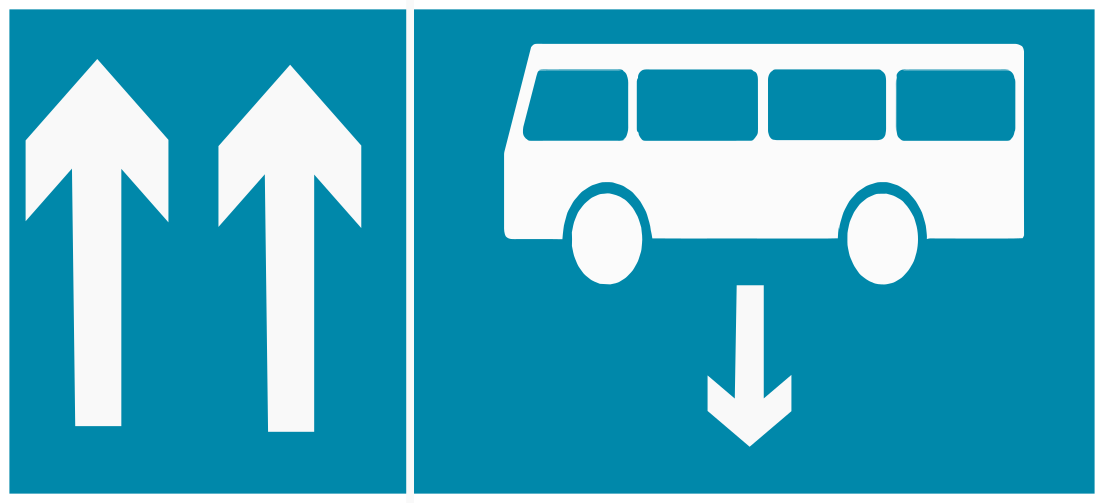
What does this sign mean?
Explanation
Some lanes are set aside for certain types of vehicle. Signs and road markings show the authorised vehicles in words or pictures. There's usually also a sign showing the times that the lane is in operation. Some lanes might only be in operation for a short time. Check the sign and only use the lane if you're allowed to do so.
Question 4 of 47
Why should you check your right-hand mirror just before turning right from a main road into a side road?
Explanation
Driving a large vehicle will sometimes require you to position your vehicle well to the left before making a tight right turn. Inexperienced drivers or riders may not realise your intentions and may try to overtake you. Make sure you signal in good time and make a final mirror check before committing yourself to the turn.
Question 5 of 47
How could a professional driver improve their efficiency?
Explanation
If you plan your journey to avoid busy times, you can avoid congestion. That way, your overall journey time may be reduced, so cutting costs and making you a more efficient driver.
Question 6 of 47
You've just refilled your fuel tank. What must you check before driving away from the fuel pump?
Explanation
Leaving the filler cap off, or not properly securing it, could result in a spillage of diesel onto the road. Because diesel is slippery, this would be a major hazard, so make sure to correctly secure the filler cap after use.
Question 7 of 47
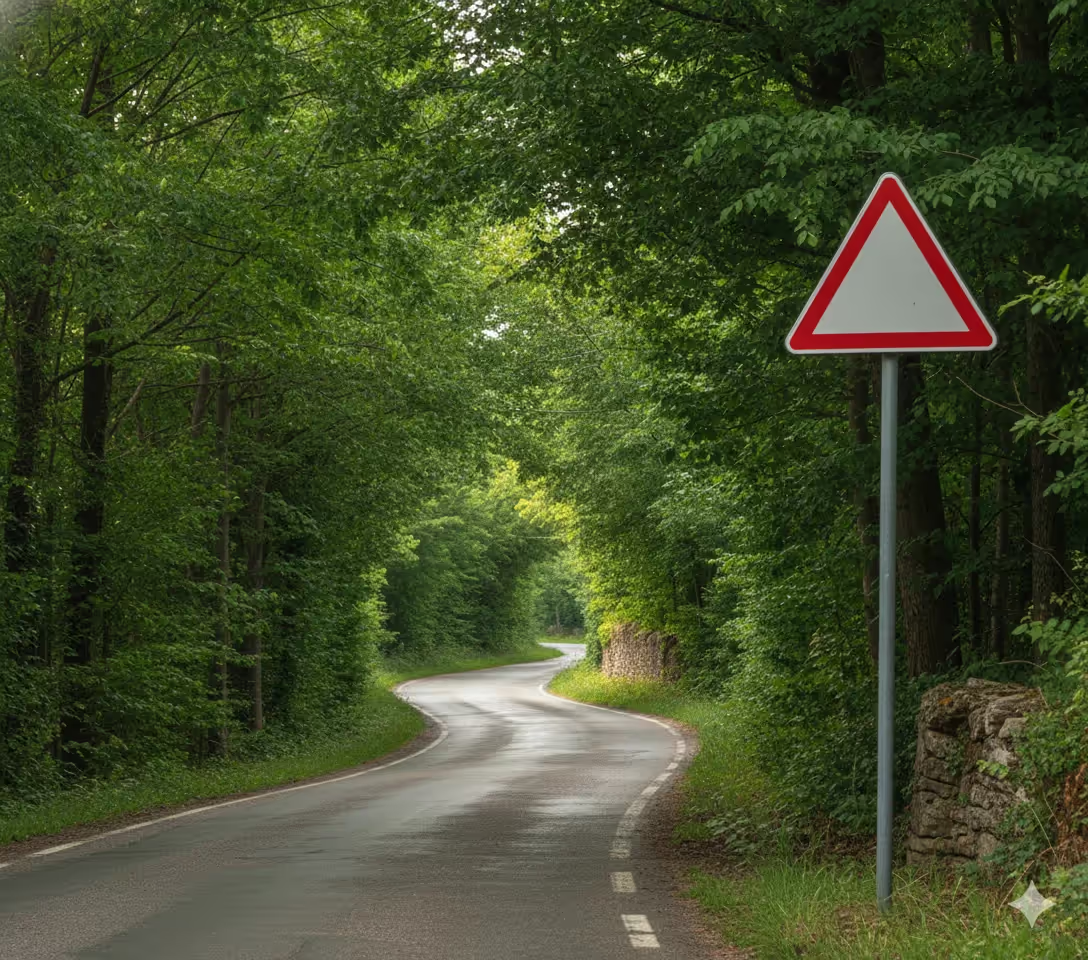
Which hazard would be shown in a triangular road sign?
Explanation
A triangular sign is a warning sign. Knowing this, you can prepare for the hazard ahead.
Question 8 of 47
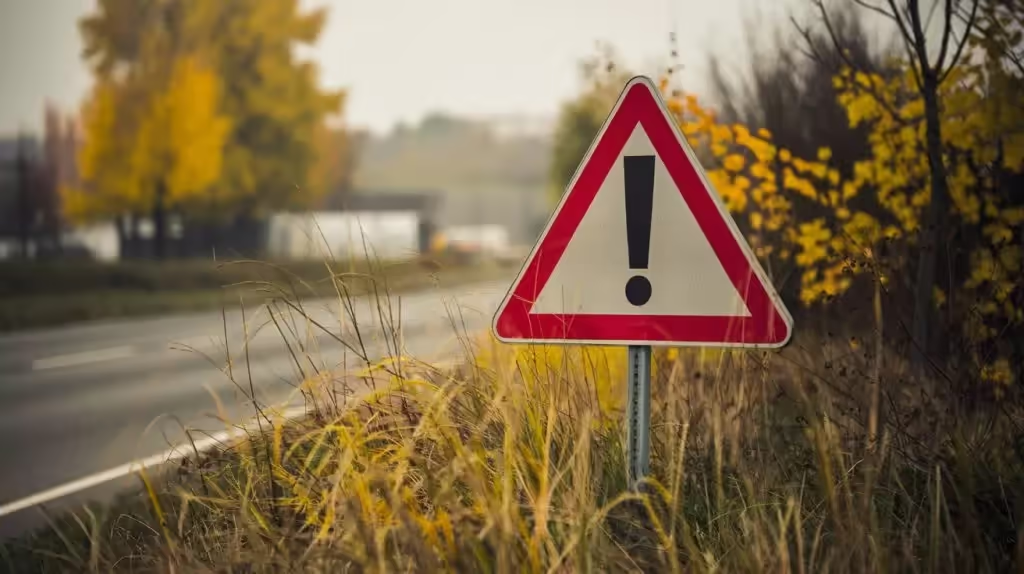
What does this traffic sign mean?
Explanation
A sign showing an exclamation mark (!) tells you that there may be danger ahead. Be ready to slow down for whatever that may be.
Question 9 of 47
Which large vehicles are more likely to damage the road surface?
Explanation
Suspension faults may result in road damage. Road-friendly suspension reduces the impact on the environment, the road surface and under-road services.
Question 10 of 47
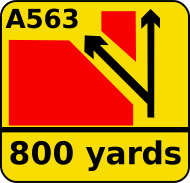
You're driving through roadworks. What information does this sign give you?
Explanation
This sign gives you advance warning of a junction where the permanent sign is obscured by roadworks.
Question 11 of 47
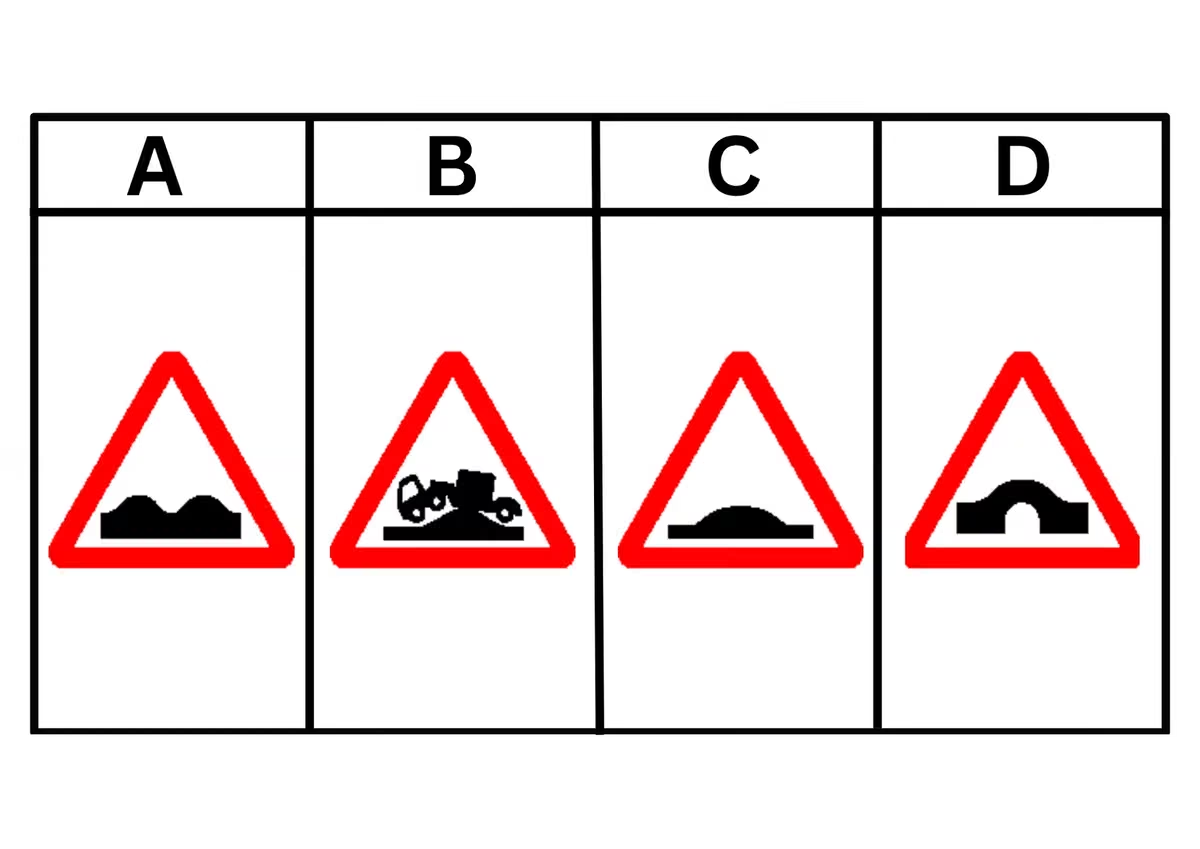
Which of these signs means 'uneven road'?
Explanation
Some signs can look similar to others but each one has a different meaning. For example, this one looks a little like the sign for a hump bridge. Learn the meaning of every sign to prepare yourself for how to react to them.
Question 12 of 47
What might happen if using the brakes continuously causes them to overheat?
Explanation
Whenever you brake, the brakes convert the moving energy of your vehicle into heat. Continuous use of the brakes, particularly from high speed or on long steep descents, can cause the shoes and drums to overheat. This will make them less effective and, in some cases, they may not work at all.
Question 13 of 47
What should you do if you lose your way in heavy traffic?
Explanation
Driving in heavy traffic needs 100% concentration. If you become lost, find a safe place to stop before checking a map or asking for directions. Don't risk losing concentration by glancing at a map while driving, even if you're in traffic that keeps stopping.
Question 14 of 47
On motorways, you're usually driving at higher speeds for long distances. What effect can this have on your tyres?
Explanation
Driving at higher speeds and for longer periods, such as on motorways, can cause your tyres to overheat and disintegrate. You should make a point of checking them when you stop for a break.
Question 15 of 47
Unless otherwise shown, what's the minimum headroom under bridges in the UK?
Explanation
Every year, there are hundreds of incidents in the UK where vehicles hit railway or motorway bridges. Most involve buses, coaches and lorries. Make sure your route doesn't take you under a bridge that's too low for your vehicle. If you hit a bridge, you'll be putting yourself and any passengers at risk, and you could cause a major disruption to road and rail transport.
Question 16 of 47
What should you do as you approach a zebra crossing?
Explanation
Always keep your speed down as you approach a zebra crossing. This will allow you to stop safely if necessary. Look well ahead for anyone about to reach the crossing or waiting to cross.
Question 17 of 47
What do the codes shown on the side walls of bus and lorry tyres refer to?
Explanation
Tyres have codes shown on the wall of the tyre. These refer to the maximum load and speed capability of the tyre.
Question 18 of 47
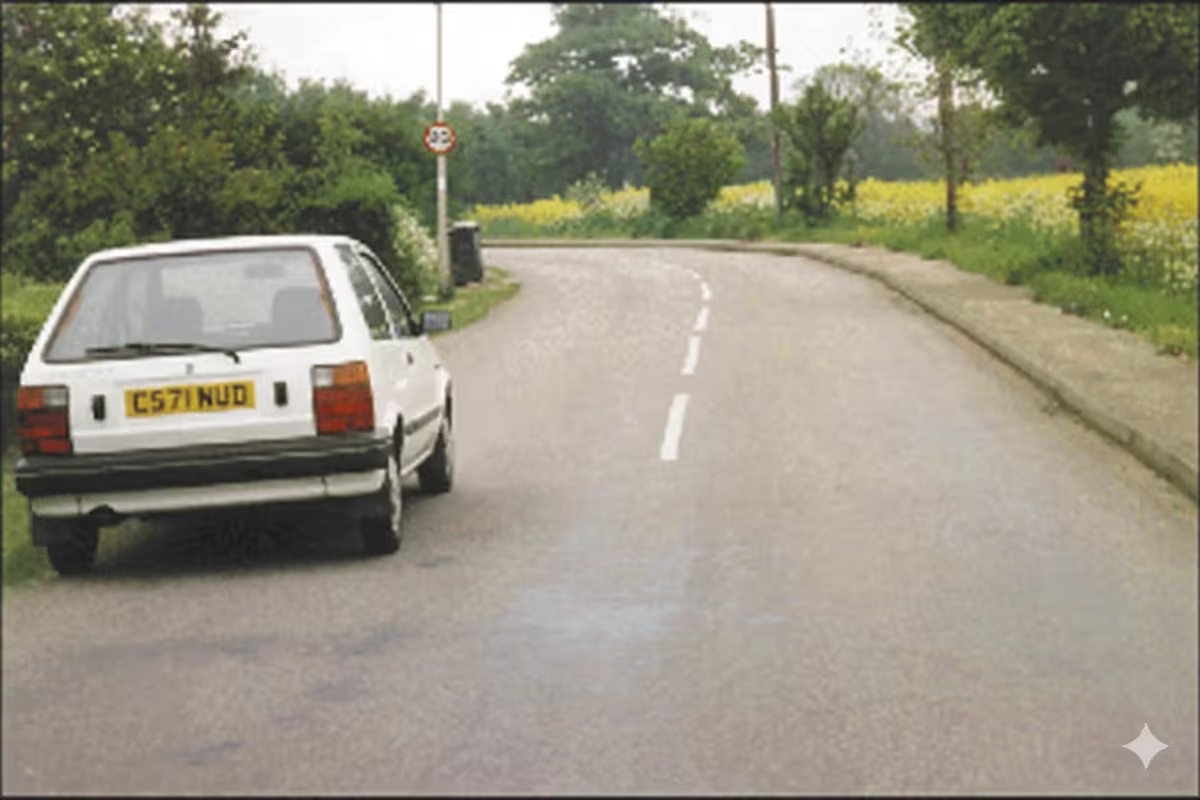
You're about to pass this car. What's the main hazard you should be aware of?
Explanation
You don't know what the driver of this car will do. Be prepared for any hazard. The driver may not have seen you. Planning ahead will allow you to be in the correct gear and at the correct speed to cope if this hazard develops.
Question 19 of 47
What should you do before changing a wheel on your vehicle?
Explanation
Always make sure your vehicle is secure and level before a wheel is changed. Apply the parking brake and use chocks if they're available. When the replacement wheel is fitted, all wheel nuts/studs should be retightened to the correct torque. On a motorway, never attempt to change a wheel yourself. Use the emergency telephones to call for assistance.
Question 20 of 47
You've had to change a wheel on your vehicle. When should the wheel nuts be checked again?
Explanation
When refitting a wheel, the nuts should be tightened to the correct torque. They should be rechecked after about 30 minutes if the vehicle hasn't moved, or after 40 to 80 km (25 to 50 miles) of driving.
Question 21 of 47
What could happen if you overfill your engine with oil?
Explanation
If you overfill the engine with oil, you could cause the engine to build up too much pressure when it's running. This could cause damage to oil seals and gaskets.
Question 22 of 47
Which vehicles are most likely to be affected by side wind?
Explanation
You should be aware that motorcyclists are likely to be affected by side wind and can be blown into your path. Adjust your speed so that you can stop or take avoiding action safely if necessary.
Question 23 of 47
You're about to drive a vehicle you've never driven before. What should you consider when adjusting your seat?
Explanation
Being seated properly is very important when driving long distances. A poor driving position can quickly cause fatigue. You should make sure that you can reach all the controls comfortably.
Question 24 of 47
What's the best way to control your vehicle when driving on snow?
Explanation
Driving slowly will give you better control of your vehicle. By using a high gear, you reduce the chance of your wheels spinning and skidding on the snow.
Question 25 of 47
You're driving on a motorway. What should you do if your view ahead is restricted by heavy spray?
Explanation
If you're travelling on a motorway and your view ahead is poor, then you should reduce your speed. Leave at least four seconds between your vehicle and the one in front, and make sure that others can see you by using your dipped headlights.
Question 26 of 47
You're on a motorway, approaching a working snow plough. Why should you stay behind it?
Explanation
There's no way of knowing how deep the snow could be ahead. If you overtake and then become stuck in the snow, you may cause problems for the snow plough, particularly if you block the road.
Question 27 of 47
What should you do when driving a large vehicle down a steep hill?
Explanation
When approaching a long hill, you should take note of any early warning signs. Reduce your speed and select the appropriate gear in good time. Using an endurance brake (retarder), if fitted, will help control your speed.
Question 28 of 47
What should anti-lock brakes let you do when you have to stop in an emergency?
Explanation
Anti-lock brakes are a driver aid, and can help you maintain steering control while braking. However, you mustn't rely on them to get you out of trouble or expect to be able to make sudden direction changes if you're going too fast.
Question 29 of 47
You're driving down a long hill. What should you use to prevent the brakes from overheating?
Explanation
Endurance brakes or 'retarders' help to control a vehicle's speed. They operate by applying resistance to slow the vehicle without using the wheel brakes, so avoiding brake fade. The methods used include: increased engine braking, exhaust braking and transmission-mounted devices.
Question 30 of 47
A lorry is overtaking you on a two-lane motorway. What should you do if it doesn't have the speed to get past?
Explanation
Always be prepared to give way to overtaking lorries or buses. Maintaining your speed will only block the motorway to other traffic unnecessarily. You may find yourself in a similar situation if the limiter on your vehicle doesn't allow you enough speed to successfully overtake another vehicle.
Question 31 of 47
When should you use your vehicle's horn?
Explanation
Only use your horn to warn people of your presence when they may not have seen you. Don't use it to greet others, to show impatience, or to give or claim priority. Your horn mustn't be used between 11.30 pm and 7.00 am in a built-up area, or when your vehicle is stationary, unless another vehicle poses a danger.
Question 32 of 47
Your doctor has given you a course of medicine. Why should you ask whether it's safe to drive?
Explanation
Some medicines can have side-effects that affect your driving. Ask your doctor whether you'll be safe to drive while taking the medicine that's been prescribed.
Question 33 of 47
You've just overtaken another vehicle on a motorway. What should you avoid when moving back to the left?
Explanation
After overtaking, check your nearside mirror carefully before moving back to the left. Don't rely on the other driver flashing their headlights, because only you can make the decision that it's safe.
Question 34 of 47
You're driving on a dual carriageway and intend to overtake the vehicle ahead. What should you do if there's a car approaching quickly behind you in the right-hand lane?
Explanation
You should allow the faster-moving vehicle to overtake safely. If you pull out to overtake at this time, you'll cause the car behind to brake sharply. Don't use the size of your vehicle to intimidate. Be professional and show consideration to other road users.
Question 35 of 47
You're approaching a roundabout. What should you do if there are horses being ridden ahead of you?
Explanation
Horse riders often keep to the outside of the roundabout even if they're turning right. Give them room in case they have to cross lanes of traffic.
Question 36 of 47
How would you react to drivers who appear to be inexperienced?
Explanation
Many learners aren't confident when they first start to drive. Allow them plenty of room and don't react impatiently when they take their time. Remember that new drivers are inexperienced in dealing with traffic situations, so be patient.
Question 37 of 47
You're driving past a bus that's waiting at a bus stop on the other side of the road. Why should you be careful?
Explanation
Watch out for pedestrians if you see a bus ahead. They may not be able to see you if they're crossing behind the bus.
Question 38 of 47
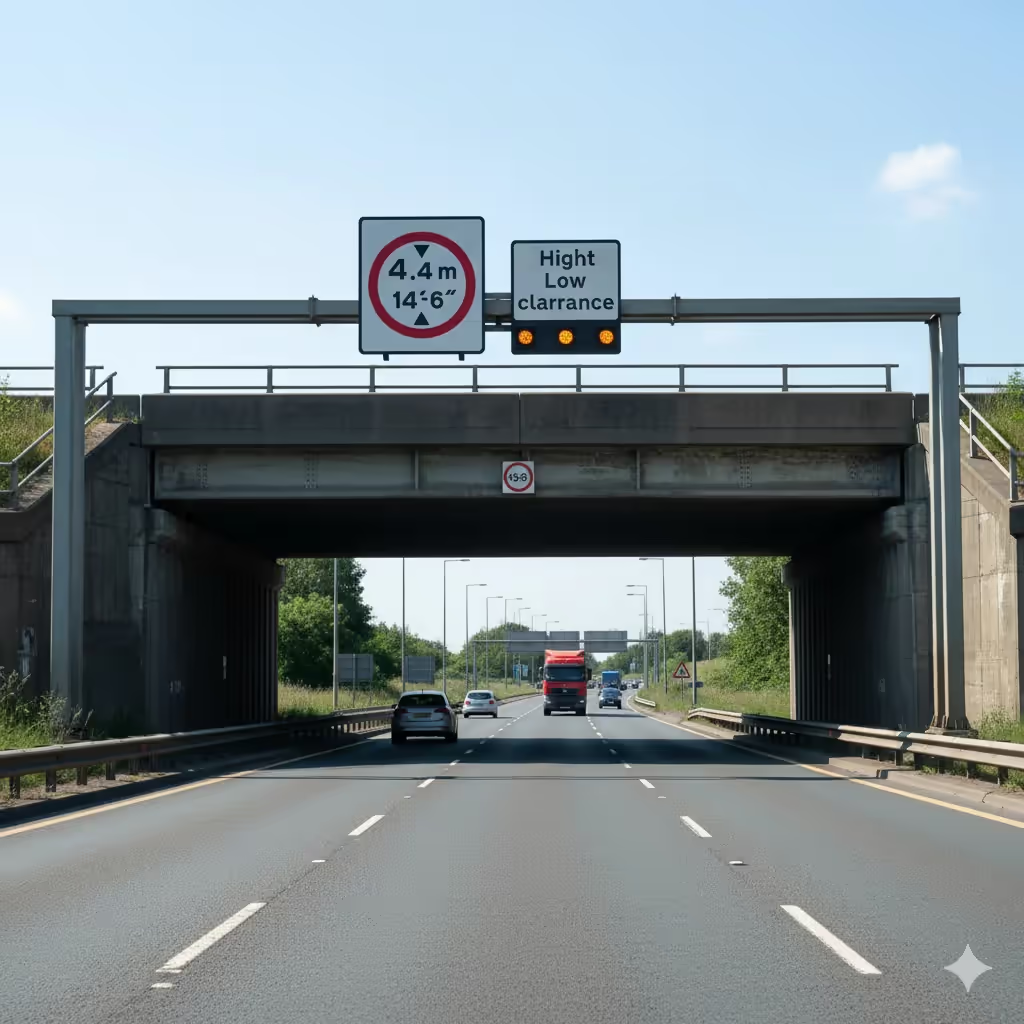
What does this sign mean?
Explanation
Always be aware of the height of the vehicle you're driving, particularly if you drive different vehicles. If you use a sat-nav, it may show you the height and weight limits on UK roads.
Question 39 of 47
What type of road surface will increase your stopping distance by up to ten times?
Explanation
To prevent your wheels from locking, you'll need to brake very gently on ice. Give yourself as much room and time as possible to stop. If your front wheels lock, you can't steer, and that will mean you can't avoid any obstacle in your path.
Question 40 of 47
A vehicle fitted with an analogue tachograph has two drivers. How should they use the tachograph?
Explanation
Your tachograph chart is your personal work record and should only reflect the hours that you drive or do other work. The law says that these charts should be held on file by your employer for at least one year. Enforcement officers can ask for charts to be handed over for inspection.
Question 41 of 47
What should you do if you suddenly become tired while you're driving on a motorway?
Explanation
If you're driving for long distances on a motorway, have plenty of rest stops. Many incidents have been caused by drivers falling asleep at the wheel. If you feel yourself becoming tired, you need to leave the motorway and find a safe place to stop; usually this would be the next service area.
Question 42 of 47
You're approaching a bridge that has no height restriction on it. What's the minimum height under the bridge?
Explanation
The headroom under bridges in the UK is at least 5 metres [16 feet 6 inches], unless otherwise stated. Where the overhead clearance is arched, this headroom is normally only between the limits marked.
Question 43 of 47
You arrive at an incident where someone is suffering from severe burns. What should you do to help?
Explanation
Cold water will cool the burning tissue and help prevent further damage. It will also reduce swelling, minimise shock and alleviate pain. Use water, or any other liquid, that's clean and non-toxic.
Question 44 of 47
You arrive at an incident involving a motorcyclist. The motorcyclist is unconscious and bleeding. What should be your priority?
Explanation
At a traffic incident, the danger of further collisions and fire needs to be dealt with first. Then you should deal with injuries in this order: airway, breathing, compressions and bleeding. Don't remove a motorcyclist's helmet unless it's essential to do so.
Question 45 of 47
You're checking your vehicle's tyres before starting a long motorway journey. What check should be made on each tyre?
Explanation
All tyres must be properly inflated and in good condition. Tyre failure on a motorway can have serious consequences. This can be avoided by checking your tyres at the start of each journey.
Question 46 of 47
What must you do before you leave your vehicle?
Explanation
The parking brake must always be set whenever you leave the vehicle. It's an offence not to leave your vehicle properly secured.
Question 47 of 47
What's the first thing you should check before moving to the left?
Explanation
Before you make a turn or a change of direction, however slight, you should always check the mirrors. If you intend to turn left, check your left-hand (nearside) mirror first.