Answer 47 questions, check each correct answer and work through the explanations at your own pace.
Question 1 of 470 correct answers
Question 1 of 47
What should you check just before you turn left?
Explanation
When making a left turn with a long vehicle, you may have to adopt an unusual position, well over to the centre of the road. Always signal your intentions in good time, and make good use of the mirrors, especially the left-hand one. Be alert for less experienced road users putting themselves in danger by coming up on your nearside.
Question 2 of 47
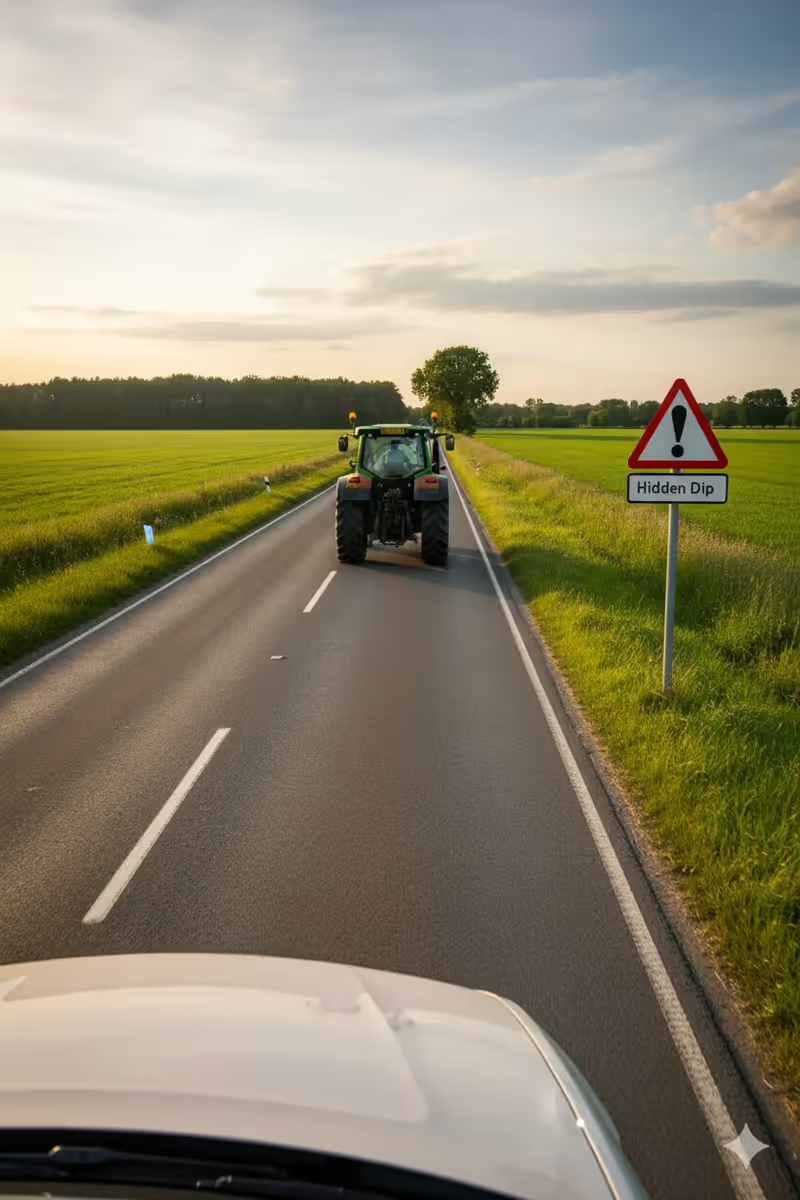
What should you do if you see this sign when you're about to overtake?
Explanation
You won't be able to see any hazards that might be out of sight in the dip. As well as oncoming traffic, there may be cyclists, horse riders, parked vehicles or pedestrians hidden from view. Only start to overtake when you can see the road ahead is clear, giving you enough time to overtake safely.
Question 3 of 47
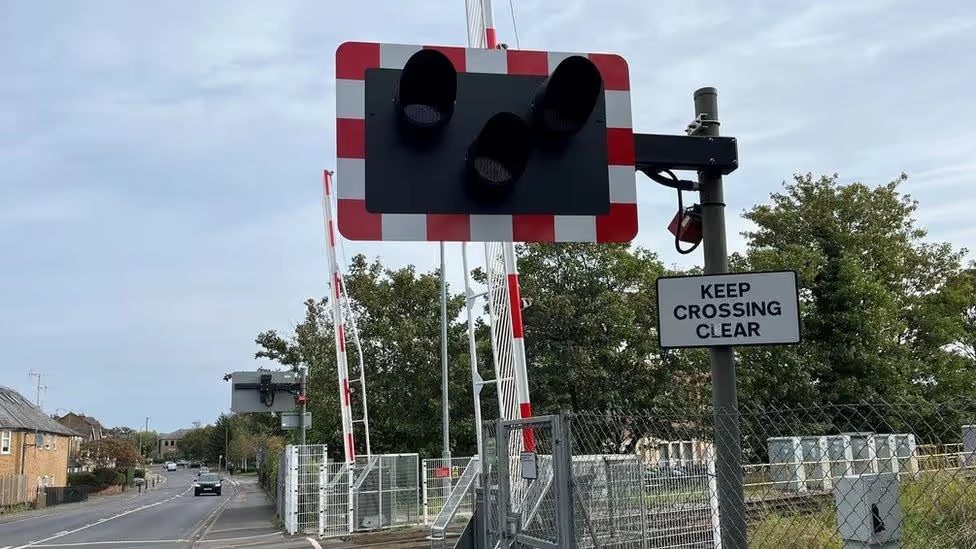
Where would you find these flashing red lights?
Explanation
These signals can be found at level crossings, some airfields, bridges and emergency access sites. You must stop if the red lights are flashing. At level crossings, if the lights continue to flash after a train has passed, continue to wait because another train is coming.
Question 4 of 47
You're at an incident. Why may it be harmful to move a casualty?
Explanation
Be especially careful about moving casualties at the scene of an incident. Inexperienced handling of a casualty could cause more injury, or even prove to be fatal. Only move casualties if they're in danger; for example, from fire.
Question 5 of 47
At the scene of a crash, a casualty is in contact with live electrical cables. What should you use to break the electrical connection?
Explanation
At the scene of an incident, if there are any casualties who are in contact with live electricity, don't touch them with your hands - even if you're wearing gloves. You should use a dry, non-conducting item, such as a wooden sweeping brush or plastic spade. You mustn't give first aid until you're sure the electrical contact has been broken, otherwise you'll be putting yourself in danger.
Question 6 of 47
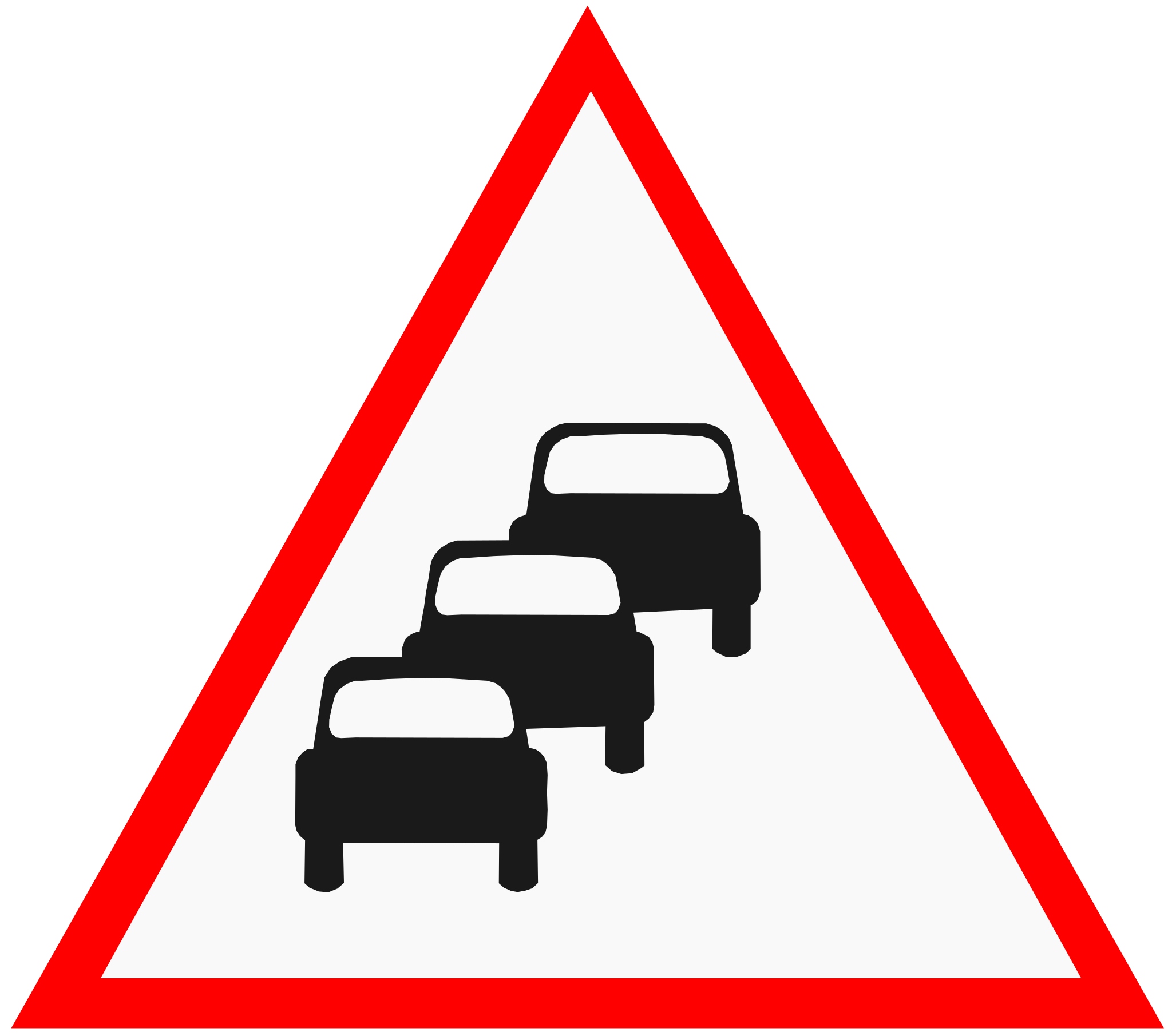
What does this sign mean?
Explanation
When you see this sign, beware of traffic queues ahead. Check your mirrors and reduce your speed. Research shows that you make poor decisions when you're angry, so you're less likely to spot and respond safely to hazards. Be patient when you're delayed and reduce the possibility of being involved in an incident.
Question 7 of 47
Which fuel provides a reduction in exhaust emissions harmful to human health?
Explanation
Low-sulphur diesel reduces the levels of sulphur-dioxide particles in exhaust emissions. It's widely available and makes a contribution to reducing emissions that are harmful to human health.
Question 8 of 47
You're approaching traffic lights. Only the red light is showing. Which series of lights will show next?
Explanation
If you know which light is going to show next, you can plan your approach. This will help prevent excessive braking or hesitation at the junction.
Question 9 of 47
What do you need to be careful of when you're driving in high winds?
Explanation
In severe weather conditions, you should be aware of the dangers of fallen trees or damaged branches that may fall on your vehicle. Be prepared in case a fallen tree is lying across the road just around a bend.
Question 10 of 47
You're driving on a motorway. What does it mean when a lorry ahead of you switches on its hazard warning lights?
Explanation
When someone ahead of you switches on their hazard warning lights, it means that they've spotted a hazard that you may not be able to see yet. Slow down and be ready to stop if necessary.
Question 11 of 47
You're driving through the night. What could it mean if your steering feels lighter than normal?
Explanation
When you're in a warm cab, you may not notice the drop in outside temperature. One of the first signs of an icy road is a lack of 'feel' in the steering. If this happens, slow down and increase the distance between your vehicle and the one in front.
Question 12 of 47
Your vehicle breaks down on a motorway. What should you do if you can't get it fully onto the hard shoulder?
Explanation
Standing on or near the edge of the carriageway is very dangerous. Your priority is to alert the emergency services by using an emergency roadside telephone. This connects to an operator, who'll get help out to you as soon as possible. In most cases, this is preferable to using a mobile phone, as it will show the operator your precise location.
Question 13 of 47
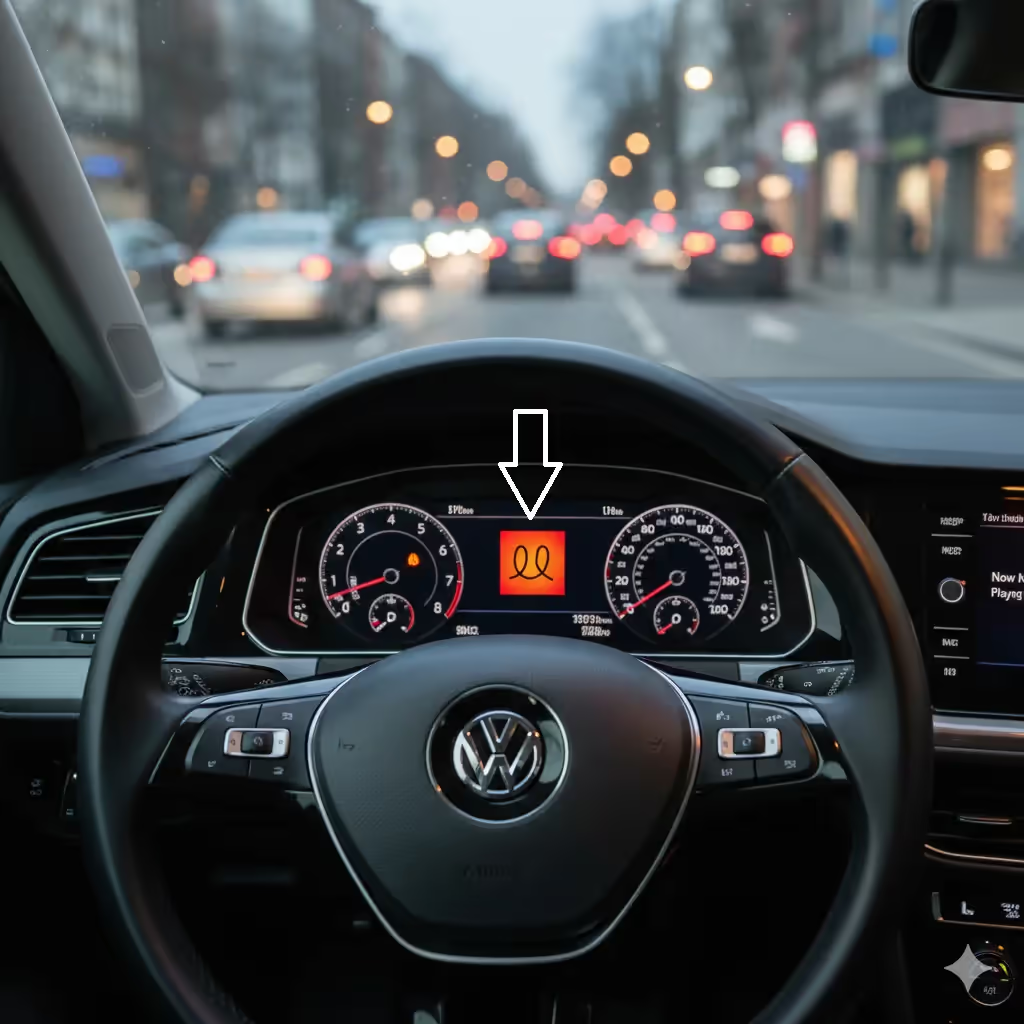
What's the purpose of a preheating device?
Explanation
Most diesel engines have glow plugs to preheat the combustion chambers, so helping the engine to start when it's cold. When the ignition is switched on, the preheat warning lamp will show and the glow-plugs will rapidly heat up. In cold weather, the starter should only be operated when the glow plugs reach operating temperature and the warning light goes out.
Question 14 of 47
What's it advisable to do when you replace a tubeless tyre?
Explanation
Always get expert advice when dealing with tyres. It's good practice to have a new valve fitted when replacing a tubeless tyre. Good garages and specialist tyre services know the regulations.
Question 15 of 47
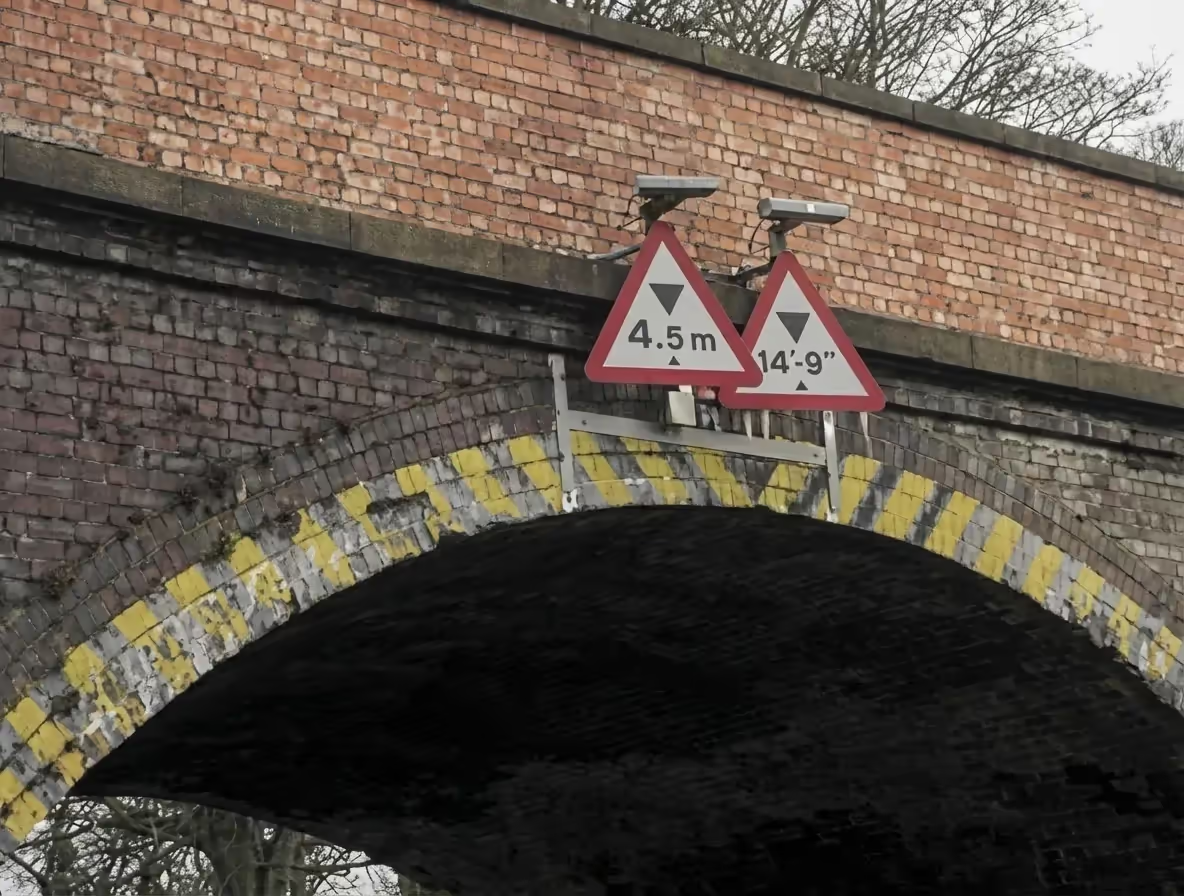
The height of your vehicle is 4.2 metres (14 feet). What should you do as you approach this bridge?
Explanation
The headroom under bridges in the UK is at least 5 metres (16 feet 6 inches) unless marked otherwise. However, this might refer only to the highest point of an arch. If your vehicle hits a bridge, you must report the incident to the police. If a railway bridge is involved, you must also report it to the railway authority.
Question 16 of 47
What should you do when passing sheep on a road?
Explanation
Animals can be very unpredictable. You should give them as much room as you can, keep your speed and noise to a minimum to avoid panicking them, and always be ready to stop if necessary.
Question 17 of 47
Why should you be especially aware of parked cars when you're driving at night?
Explanation
Vehicles below 2500 kg laden weight may park without lights on roads with a speed limit no greater than 30 mph. In dark streets, you may not be able to see them clearly.
Question 18 of 47
Your vehicle is fitted with a reverse warning bleeper. How will this affect you when you're reversing?
Explanation
The reverse warning bleeper is fitted to your vehicle to warn others near the vehicle that it's reversing. However, it's no substitute for good all-round observation. Get someone to guide you if you can't see clearly where you're reversing.
Question 19 of 47
What should you do when you park your vehicle on a two-way road at night?
Explanation
Large vehicles are required by law to use parking lights when parked at night, unless in a designated off-road parking area. Also, unless you're in a one-way street, you must only park on the left-hand side. It's generally much better to park off-road if you can, particularly if you're going to be stationary for a long period of time.
Question 20 of 47
When should you allow for the effects of a speed limiter?
Explanation
Forward planning is important whenever you consider overtaking another road user. You should carefully assess the speed of the vehicle you intend to overtake. Remember that your vehicle's speed is limited and this could considerably increase the distance and time needed to complete the manoeuvre safely.
Question 21 of 47
What should you do when you drive in windy weather?
Explanation
Cyclists, motorcyclists, caravans and high-sided vehicles can be very vulnerable in high winds. Plan well ahead and consider the difficulties they may be having. Remember, some routes may be closed to certain vehicles and you may need to use an alternative route.
Question 22 of 47
Where would you anticipate problems when you're driving a high-sided vehicle on a windy day?
Explanation
Listen to the weather forecast and plan your route to avoid exposed or high-level roads if windy weather is expected.
Question 23 of 47
Why should you be aware of motorcyclists on a motorway when there are gusty winds?
Explanation
On motorways, there are often exposed stretches of road where vulnerable vehicles can be affected by side wind. A gust of wind can even blow a motorcyclist out of their lane. Try to anticipate how the wind may affect others and give them plenty of room.
Question 24 of 47
What's the greatest risk to your safety when you're overtaking on a motorway in very wet weather?
Explanation
In very wet conditions, tyres may be unable to clear all the water from their path. This can result in a layer of water building up between the road and the tyre - a situation known as aquaplaning. To regain control, ease off the accelerator and, as the vehicle slows, the tyres should regain their grip. It's safer to reduce the risk of aquaplaning occurring by driving more slowly in very wet weather.
Question 25 of 47
What should you do if you intend to overtake a lorry that's throwing up spray?
Explanation
If you wish to overtake a vehicle that's throwing up spray, move out earlier than normal. This will help to limit the reduction in vision that the rear spray will cause before you pass.
Question 26 of 47
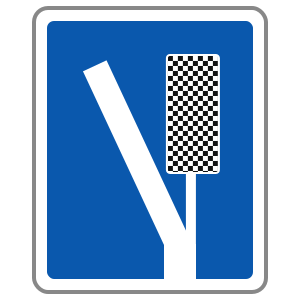
Where would you see an escape lane?
Explanation
An escape lane is for use in emergencies, usually when brakes have become hot and faded or failed completely while descending a long, steep hill. A sign will show you the direction of the road, and a chequered area, usually straight ahead, defines the escape route.
Question 27 of 47
What system is used to control a vehicle's speed without using the footbrake?
Explanation
Large vehicles can be fitted with various types of endurance brake (retarder). Make sure you're familiar with how the system operates on the vehicle you're using. Don't risk a crash or collision through ignorance.
Question 28 of 47
When should you check the wheel nuts on your vehicle?
Explanation
Always have a walk round your vehicle and visually check the wheel nuts whenever you take a break. When a wheel is replaced, it's important to have the wheel nuts rechecked shortly after their initial tightening. Wheel nuts must always be tightened to the torque specified by the manufacturer.
Question 29 of 47
Which of these is an unsafe place to park your vehicle or trailer?
Explanation
Don't park where you would endanger or inconvenience others. If your choice of parking place obstructs drivers, riders or pedestrians, move to a more suitable area.
Question 30 of 47
You've been convicted of driving while unfit through drink or drugs. What will increase in cost when you start driving again?
Explanation
If you've been convicted of drink- or drug-driving, statistically you're a risk to yourself and others on the road. For this reason, when you're able to drive again, insurance companies may charge you a high premium to insure your vehicle.
Question 31 of 47
What might misuse of drugs or alcohol lead to?
Explanation
Misuse of drugs and/or alcohol may lead to the withdrawal of your driving licence. Future insurance premiums will probably increase as well.
Question 32 of 47
When may vehicles over 7.5 tonnes maximum authorised mass (MAM) use the right-hand lane of a motorway to overtake?
Explanation
Goods and passenger vehicles with a MAM of more than 7.5 tonnes, those required to be fitted with a speed limiter, and vehicles towing trailers must not use the right-hand lane on a motorway with more than two lanes, unless there are exceptional circumstances.
Question 33 of 47
When should you use a crawler lane?
Explanation
Many vehicles are very powerful and can maintain speed even when climbing a gradient. Even if your vehicle is capable of maintaining speed, you can still use the crawler lane to make it easier for other road users to overtake safely.
Question 34 of 47
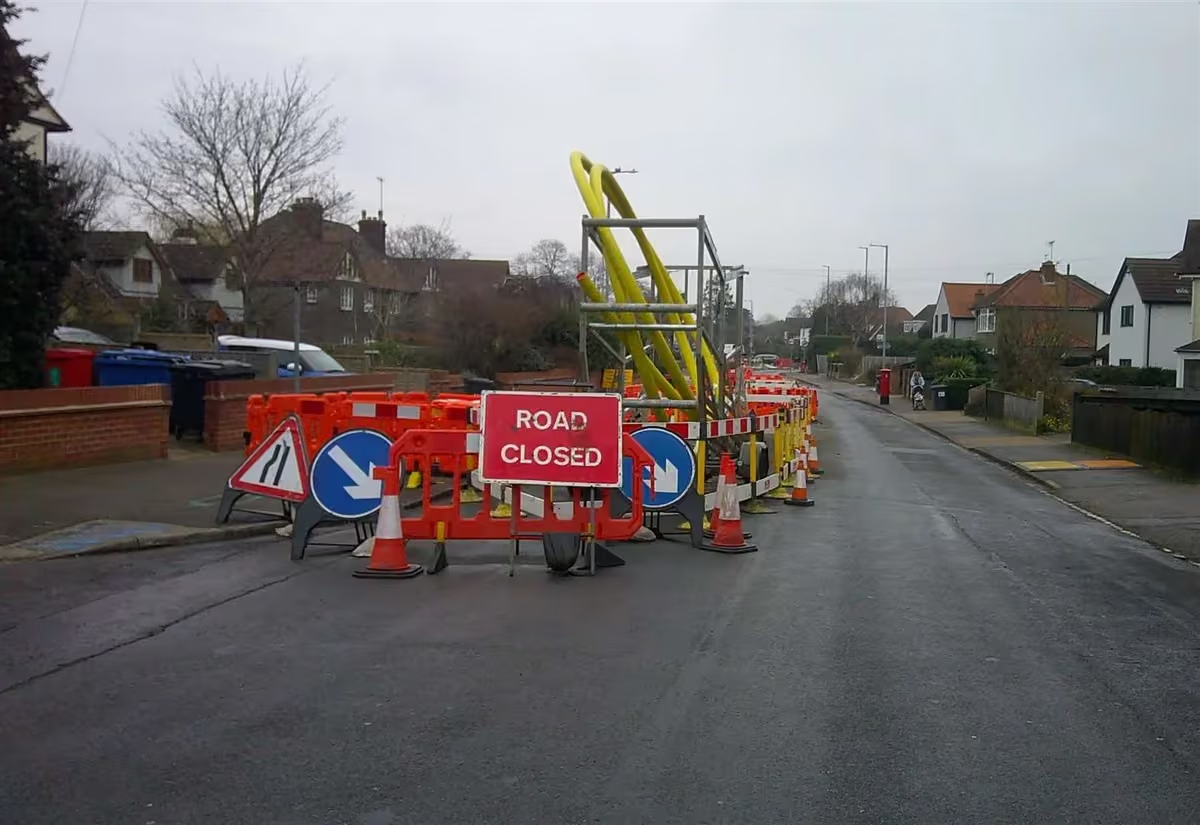
What should you do as you approach these roadworks?
Explanation
Before changing direction, you should check your mirrors for any vehicles that may be overtaking. An overtaking driver or rider might not have seen the narrowing road ahead. You should let them get past before you move across to the right.
Question 35 of 47
What should you do when you're overtaking a motorcyclist in very windy conditions?
Explanation
Cyclists and motorcyclists may become unbalanced by your vehicle passing too close. Plan ahead and give them plenty of room. Remember that your large vehicle can cause a vacuum, which will suck the rider towards it. The noise and close proximity of your vehicle can also startle them, and could cause them to swerve suddenly.
Question 36 of 47
You've stopped at a pelican crossing. What should you do if the lights have changed to green but a disabled person is still crossing?
Explanation
At a pelican crossing, the green light means you may go, but you must give way to anyone still crossing. If someone hasn't finished crossing, be patient. People with mobility difficulties can struggle to cross in the time allowed by the lights.
Question 37 of 47
You're at a road junction, turning into a minor road. What should you do if there are pedestrians crossing the minor road?
Explanation
Always look into the road you're entering. If pedestrians are already crossing, be considerate and give way to them. Don't wave or signal them to hurry; they have priority here.
Question 38 of 47
Your vehicle has collided with a railway bridge. What information must you give the railway authority when you telephone them?
Explanation
The railway authority needs to know immediately if one of their bridges has been hit. You'll need to tell them the number of the bridge so they can identify it. The railway authority will then take action to prevent railway passengers from being put at risk.
Question 39 of 47
By how much can your stopping distance increase in icy weather?
Explanation
It's vital that you give yourself enough separation distance when driving on icy roads - ten times as much as in normal conditions. You should brake gently to reduce the risk of losing control.
Question 40 of 47
You're driving a large vehicle in a straight line. When is it most stable?
Explanation
A vehicle is most stable when travelling in a straight line under gentle acceleration. Sudden acceleration, steering or braking can cause severe loss of control. For maximum control, keep your driving as smooth as possible.
Question 41 of 47
Under EU rules, your daily rest can be reduced to 9 hours. For how many days per week is this allowed?
Explanation
Under EU rules, you must have a minimum daily rest of 11 consecutive hours. However you may reduce this to 9 hours for up to three days in any one week.
Question 42 of 47
What should you do if you start to feel tired or unable to concentrate while you're driving?
Explanation
If you start to feel tired, you should stop as soon as it's safe to do so, even if you aren't due a break. Make sure that you get enough sleep before you're due to work, especially if you're on an early shift.
Question 43 of 47
You're stopped by a police officer for a suspected motoring offence. Which document will you be asked to produce?
Explanation
If you can't produce your driving licence when asked to do so by a police officer, you may be asked to produce it at a police station within a certain time.
Question 44 of 47
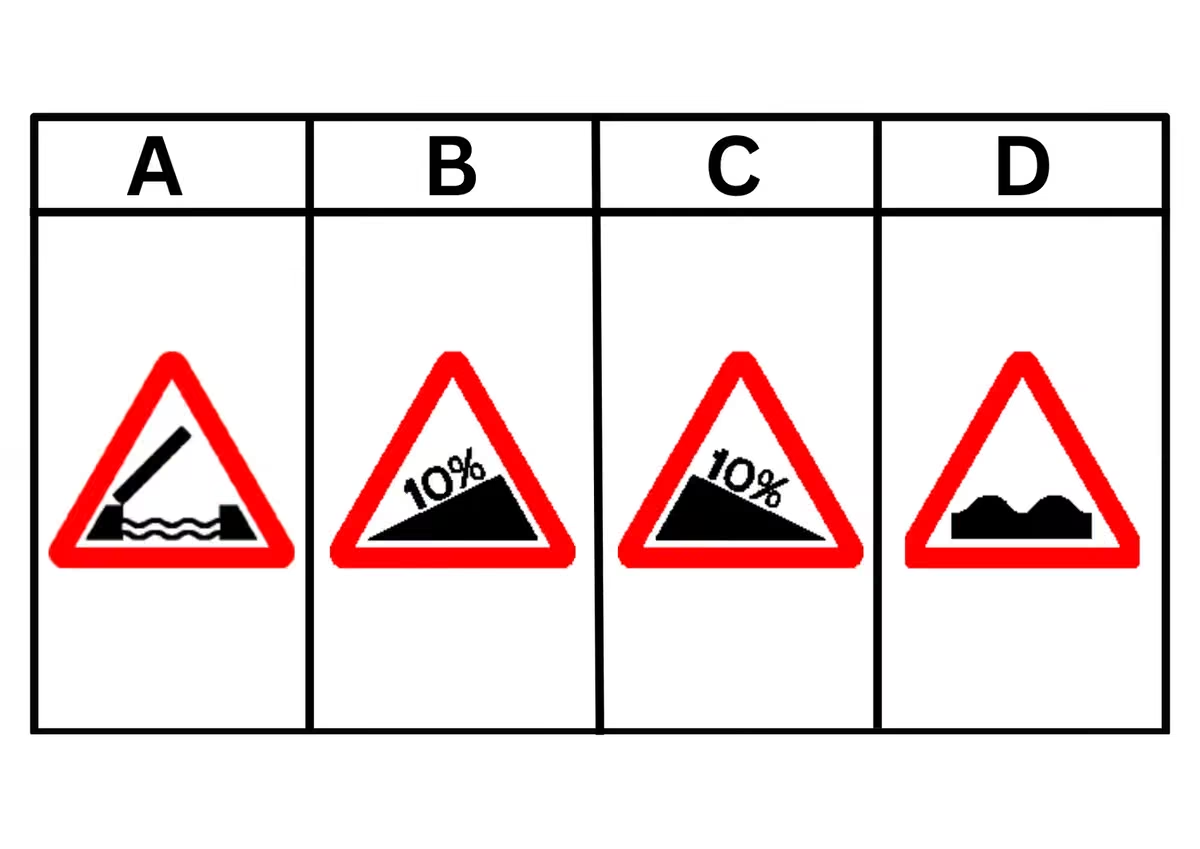
Which of these signs shows an uphill gradient?
Explanation
You'll need to identify the sign in time, so that you can select an appropriate gear.
Question 45 of 47
What must you do after filling your fuel tanks?
Explanation
Make certain that your filler caps are properly closed, so that you don't spill fuel as you drive along the road.
Question 46 of 47
You're about to start a long journey midway through the day. What should you do if you notice that the sidelights work but the headlights are faulty?
Explanation
To comply with the law, all lights must be in good working order, even in daylight when they're not being used. Before you set out, make sure that everything is working and get any faulty lights fixed. You may need to use your headlights or other lights if you're delayed or find yourself driving in conditions of reduced visibility.
Question 47 of 47
You're in the centre lane of a motorway, overtaking another vehicle. What should you do before returning to the left-hand lane?
Explanation
Never return to the left-hand lane until you're sure that you're well clear of the vehicle you've just overtaken. Don't cut in too soon and don't rely on the other driver flashing you in. Make your own judgement about when it's safe to move into the left-hand lane.