Answer 47 questions, check each correct answer and work through the explanations at your own pace.
Question 1 of 470 correct answers
Question 1 of 47
Why is it important to avoid overfilling the engine with oil?
Explanation
Too much oil in an engine can be just as bad as too little. Overfilling an engine can create excess pressure, cause oil leakage through seals and result in expensive damage.
Question 2 of 47
When should anti-freeze be used in the cooling system?
Explanation
Today, all water-cooled engines use a mixture of water and anti-freeze to make up the coolant. As well as helping to keep the engine at its correct operating temperature, the anti-freeze acts as a corrosion inhibitor to prolong the life of the cooling system.
Question 3 of 47
You'll be driving your vehicle in Europe. Which of these documents must you carry?
Explanation
As well as your driving licence, you'll need to carry the insurance certificate and vehicle registration document. Other documentation may also be needed for some countries. Check this before starting your journey.
Question 4 of 47
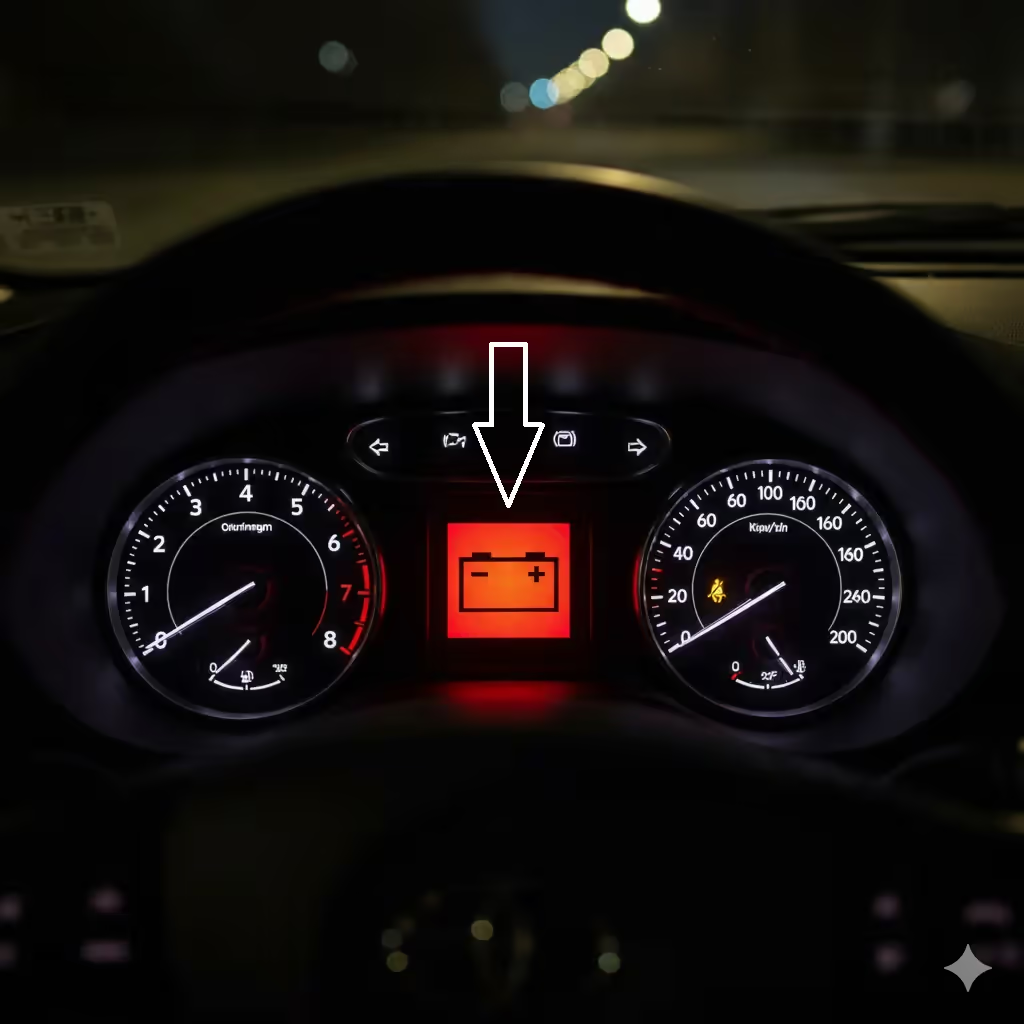
What does it mean if the ignition warning light comes on while you're driving?
Explanation
The ignition light should go out when the engine has started. If it fails to go out or comes on while you're driving, it means that there's an electrical fault of some kind.
Question 5 of 47
You're driving a high-sided vehicle in very windy conditions. Where should you avoid travelling?
Explanation
In windy weather, try to avoid routes where you would have to drive across suspension bridges and other exposed stretches of road. Plan a route that takes you across lower ground and where you'll be less exposed.
Question 6 of 47
How will anti-lock brakes improve your vehicle's safety?
Explanation
When your steering wheels are locked - as can happen in a skid - you can't steer the vehicle. Anti-lock brakes help you to keep steering control while you're braking heavily, but they aren't a substitute for good forward planning. Anticipation and planning ahead will minimise the risk of skidding more effectively than relying on your braking system.
Question 7 of 47
Why are vehicles fitted with air suspension?
Explanation
Air suspension provides a smoother journey than traditional suspension and transmits less vibration to the road surface, under-road services and nearby structures, such as bridges. It's considered to be environmentally friendly because it reduces damage to the road network.
Question 8 of 47
When is a buffer lane most likely to be in use?
Explanation
A buffer lane is used when the wind begins to cause a risk to high-sided vehicles. At other times, it will be a normal lane. Don't use the buffer lane unless your vehicle has been blown off course into the lane, or you need to use it to avoid an incident or collision.
Question 9 of 47
You're driving a large vehicle in gusty conditions. Which vehicle is most likely to be affected by buffeting when you overtake it?
Explanation
The lighter the vehicle, the more likely it is to be affected by the buffeting from your vehicle in windy weather. Give motorcyclists and cyclists extra room when you overtake them, as your vehicle's draught can easily upset their control and balance.
Question 10 of 47
You're driving in wet weather. What effect will faulty spray-suppression equipment have on other drivers?
Explanation
Spray-suppression equipment reduces the amount of spray thrown up to other road users. Check the equipment regularly to make sure it's secure and undamaged.
Question 11 of 47
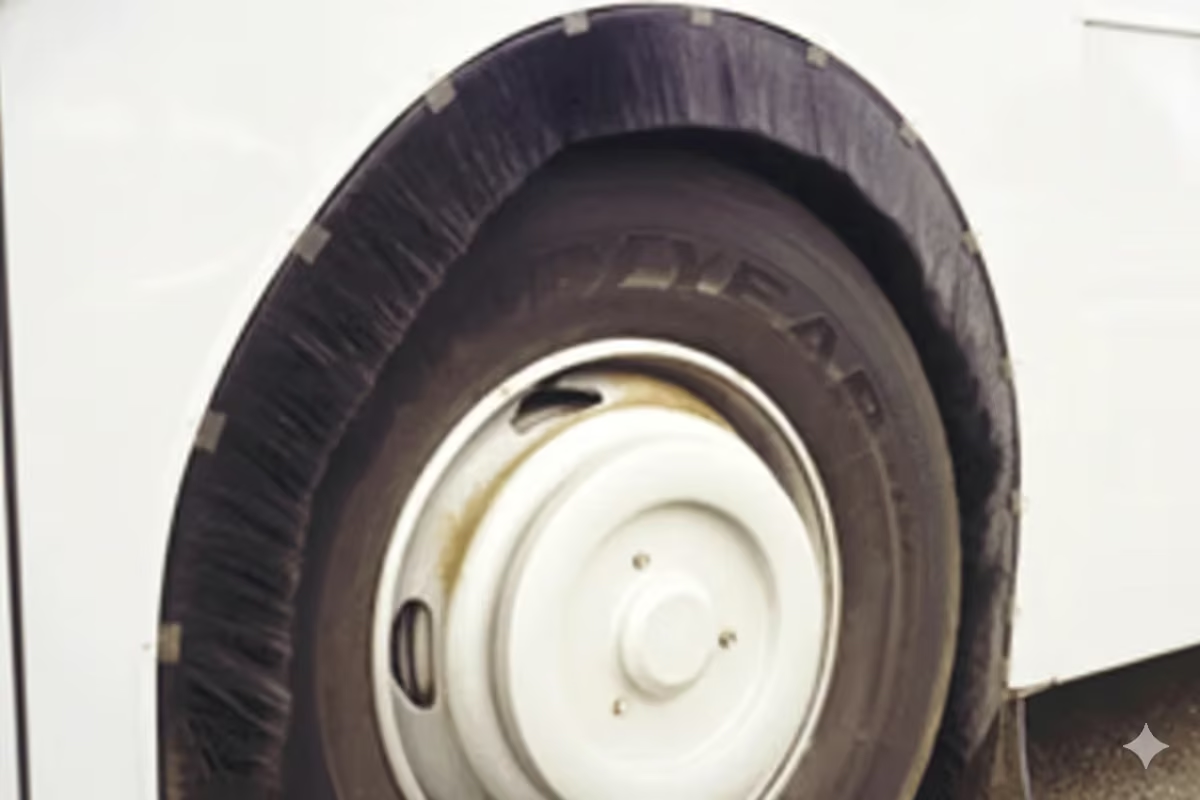
This vehicle is fitted with spray-suppression equipment. In what weather conditions will it be most useful?
Explanation
The spray-suppression equipment helps to prevent water from being thrown up and causing reduced visibility, for you and other drivers. Driving at a reduced speed in wet conditions will also help to reduce the amount of water thrown up by your vehicle's tyres.
Question 12 of 47
You're driving on a motorway in heavy rain. When are you allowed to use high-intensity rear fog lights?
Explanation
Heavy rain and the resulting spray from large vehicles travelling at speed can seriously affect visibility on the motorway. Reduce your speed and use your headlights. Don't use high-intensity rear lights unless visibility is reduced to 100 metres (328 feet) or less.
Question 13 of 47
You're driving a vehicle fitted with anti-lock brakes. What should you do when braking in an emergency?
Explanation
Applying a firm, continuous brake pressure will enable the anti-lock braking system (ABS) to function properly. However, ABS is becoming increasingly sophisticated, so you should read the vehicle manufacturer's handbook for its advice about using the system.
Question 14 of 47
When can an endurance brake (retarder) be especially useful?
Explanation
Plan ahead and use your endurance brake (retarder) to help keep your speed in check on long downhill gradients. This can help to prevent your brakes from overheating and fading.
Question 15 of 47
Your vehicle is fully loaded. Where should you be braking when dealing with bends?
Explanation
When a vehicle changes direction, forces are applied to the vehicle and its load. Braking at the same time can result in additional forces being introduced, and this can lead to a loss of control. For this reason, braking should be carried out while driving in a straight line, so preventing these forces from acting together.
Question 16 of 47
What must you check before setting out on a journey?
Explanation
It's important to know what's happening behind as well as ahead. Your mirrors must always be clean and properly adjusted.
Question 17 of 47
You're driving at the legal speed limit. What should you do if a vehicle comes up quickly behind, flashing its headlights?
Explanation
Don't try to enforce the speed limit by blocking another vehicle's progress. This is likely to cause the other driver to become more frustrated. Slow down or move over when it's safe and allow the other vehicle to pass.
Question 18 of 47
How does alcohol affect your driving?
Explanation
Concentration and good judgement are needed to be a good, safe driver. You're strongly advised not to drink any alcohol before driving. Alcohol can stay in your system for 24-48 hours, so you should also consider your intake the day and night before driving.
Question 19 of 47
What should you do if you've had a few alcoholic drinks at a party?
Explanation
Drinking black coffee or waiting a few hours won't make any difference. Alcohol takes time to leave the body, so you should find a way to get home without using your vehicle; for example, by public transport. Depending on how much you've had to drink, you may even be unfit to drive the following morning.
Question 20 of 47
As a driver, what should you do when you attend a social event?
Explanation
Avoiding alcohol will always be the safest option. There are many factors that influence how alcohol will affect you, such as height, weight and gender. It's better not to risk a single alcoholic drink before you drive.
Question 21 of 47
What should you do if you're driving along a motorway and become tired?
Explanation
If you feel the onset of tiredness, you need to take a break. This might be at a motorway service station, but if there isn't one nearby you'll need to leave at the next exit and find a safe place to stop and rest.
Question 22 of 47
You're about to drive home. What should you do if you feel very tired and have a severe headache?
Explanation
All your concentration should be on your driving; any pain you feel will distract you. Be safe and wait until you're fit before starting your journey.
Question 23 of 47
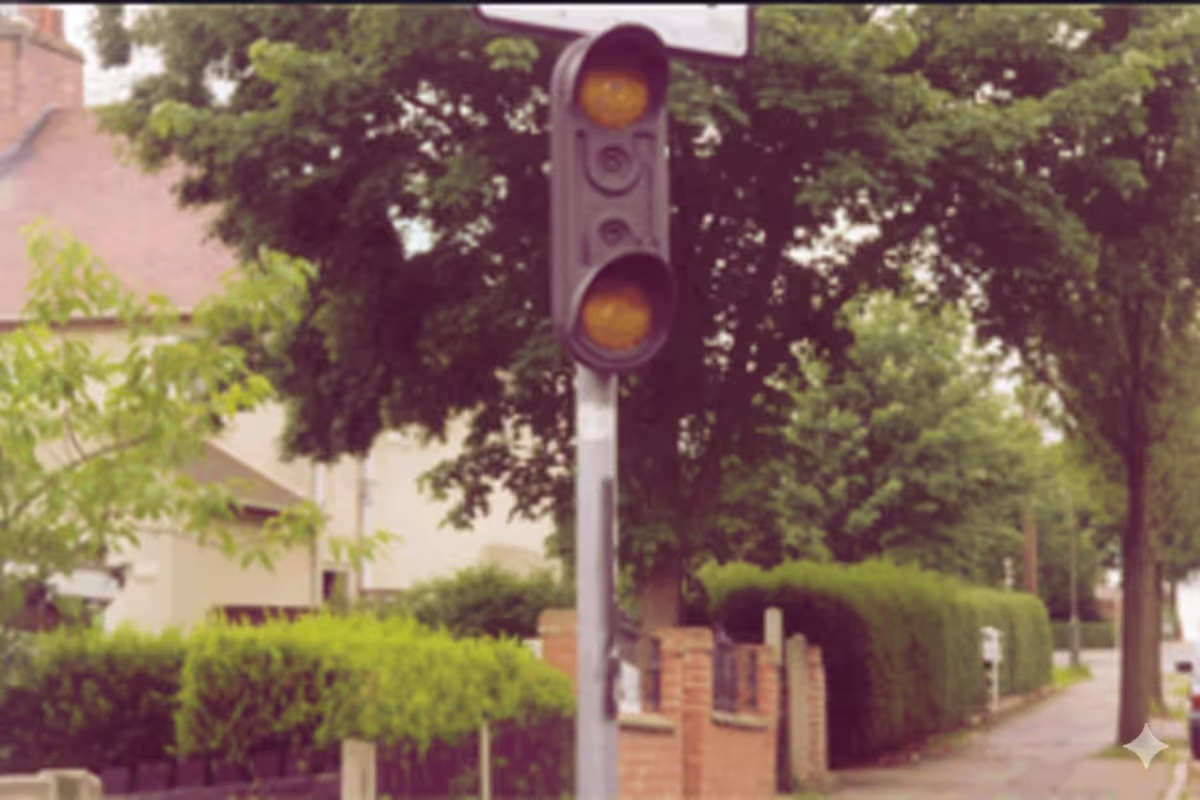
You're driving in town and see these lights flashing. What would you expect to see ahead?
Explanation
These lights warn that children are likely to be crossing the road on their way to and from school. Slow down and watch out for them.
Question 24 of 47
What should you do after overtaking on a dual carriageway?
Explanation
Signal if necessary and move back to the left as soon as it's safe to do so. Don't drive for long distances in the centre or right-hand lane unnecessarily.
Question 25 of 47
You're about to overtake horse riders. What could scare the horses?
Explanation
When passing horses, allow plenty of space, slow down and stop if you need to. Animals are easily frightened by sudden or loud noises and can quickly become uncontrollable, so don't sound your horn or rev the engine.
Question 26 of 47
You're approaching a roundabout. What should you do if you see a cyclist signalling to turn right?
Explanation
Leave plenty of room if you're following a cyclist who's signalling to turn right at a roundabout. Give them space and time to get into the correct lane.
Question 27 of 47
What should you do just before turning right from a main road into a side road?
Explanation
Motorcyclists can often pass slow or stationary traffic because of the relatively small size of their vehicle. Take a last look in your right-hand mirror to check for motorcyclists and so avoid turning across their path.
Question 28 of 47
You're driving on a single carriageway. When may you use your mobile phone?
Explanation
It's illegal to use a hand-held mobile phone while you're driving. Park in a suitable place before receiving or making a call or text.
Question 29 of 47
How should you answer a mobile phone call while you're driving?
Explanation
No phone call is important enough to endanger someone's life. If you must be contactable when driving, plan your route to include breaks where you can catch up on telephone messages in safety. Always choose a safe place to take a break.
Question 30 of 47
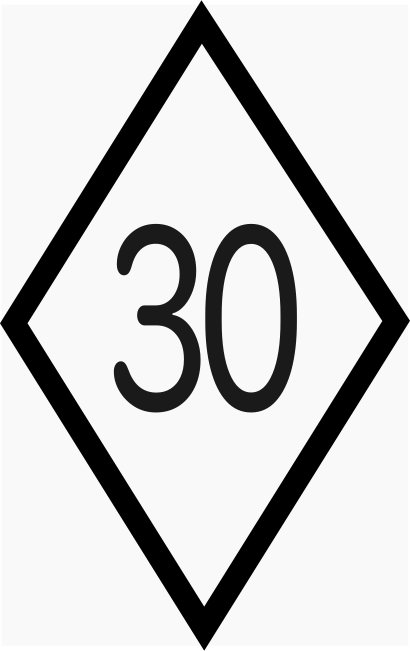
Which drivers are given instructions by diamond-shaped signs?
Explanation
You need to show caution when driving in areas where trams operate. You might not hear their approach and they can't change direction to avoid you. There may also be crossing points where you'll need to give way to them, or areas specifically reserved for trams, which you aren't allowed to enter.
Question 31 of 47
Where must the repair of a speed limiter be carried out?
Explanation
Speed limiters may only be repaired by authorised speed-limiter centres. They'll ensure that all the connections are sealed and that the system is tamperproof.
Question 32 of 47
How can you help to prevent 'brake fade'?
Explanation
Brake fade occurs when the brakes overheat. Good forward planning and correct use of the gears when descending hills, together with proper use of the endurance brake (retarder), can help to prevent brake fade.
Question 33 of 47
What should you do if thick black smoke is coming from the exhaust of your vehicle?
Explanation
Causing excessive smoke is an offence and could contribute to causing an incident or collision. You could also end up creating serious traffic problems if your vehicle breaks down in a difficult location.
Question 34 of 47
Which vehicles are most at risk from spilt diesel fuel?
Explanation
Where the road surface has been made slippery (for example, by spilt diesel fuel), motorcyclists are particularly vulnerable to skidding.
Question 35 of 47
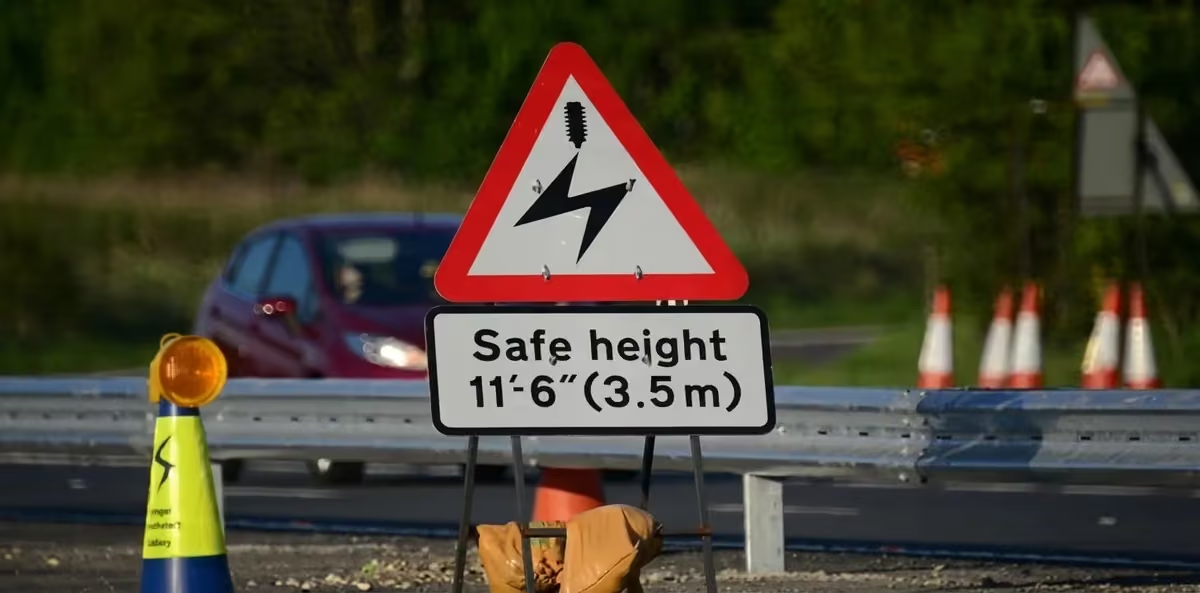
What does this sign mean?
Explanation
It's essential to know the height of your vehicle before setting off. This should be clearly marked, usually in the cab, and visible from the driving position. Look out for restrictions that you may not have seen on a map - they may be temporary.
Question 36 of 47
In which of these places might there be a restriction on vehicles over a certain length?
Explanation
Look out for restrictions on long vehicles. Length restrictions are found where there isn't much room to turn (for example, in a tunnel) or where there's a risk of grounding.
Question 37 of 47
What should you check when you've just overtaken a motorcyclist on a motorway?
Explanation
When overtaking with a long vehicle, it's very important to be aware of the position of the road user you're passing. Check the nearside mirror to make sure you've passed safely before returning to the left. Be especially careful when overtaking motorcyclists, as they may be affected by the draught from your vehicle.
Question 38 of 47
The analogue tachograph on your vehicle becomes faulty. How long do you have before you must have it repaired?
Explanation
If the tachograph on your vehicle becomes faulty, you should take it to an approved tachograph repairer as soon as possible. If you can't return to your base within a week of finding the fault, it must be repaired while you're away. While the tachograph is faulty or broken, you must keep a manual record of your activities.
Question 39 of 47
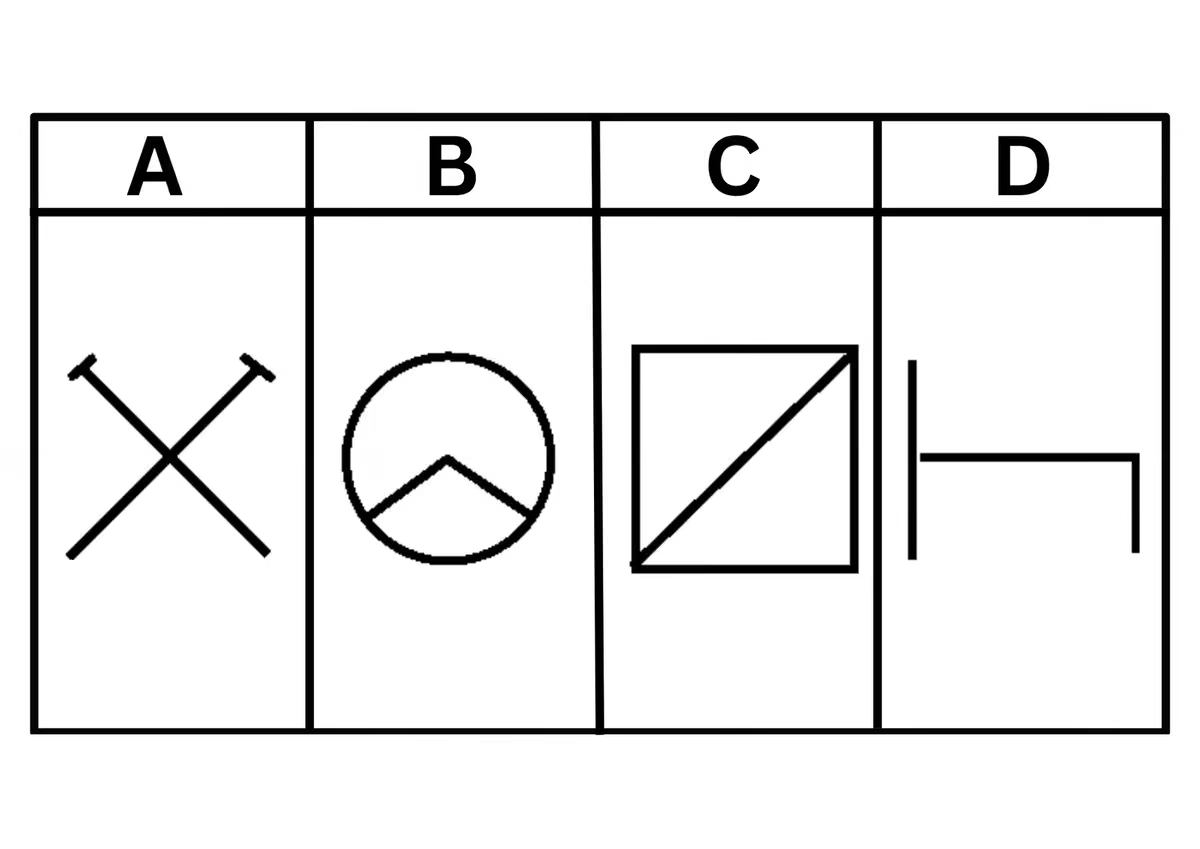
Which symbol on your tachograph shows your break/rest period?
Explanation
A tachograph allows you to select the mode or task that you're undertaking. Time spent on that task is then recorded automatically. Each task has a different symbol. You need to know the meaning of each, so that your records are correct. The modes are: driving, doing other work, on duty and available for work, and taking a break or rest.
Question 40 of 47
What does this tachograph chart symbol mean?
Explanation
Each activity has a different symbol. You should know what they mean, so that you can select the correct one. You're responsible for recording all your activities correctly. Some tachographs don't have a 'driving' mode switch. These tachographs will automatically record driving time whenever the vehicle is moved, whatever mode the switch is set to.
Question 41 of 47
Your vehicle is fitted with an analogue tachograph. What should you do if you need to exceed the normal drivers' hours due to an emergency?
Explanation
In an emergency, you may exceed the drivers' hours rules. As long as road safety isn't put at risk, you can drive for longer to deliver your passengers, your vehicle or its load to safety. In these circumstances, you should note all the reasons on the back of your tachograph chart.
Question 42 of 47
Where can you stop if you feel tired while you're driving on a motorway?
Explanation
Travelling long distances on a motorway can be boring. Looking at the same thing for a long period of time can make you feel tired and affect your concentration. If you start to feel tired, leave the motorway by the next exit and stop in a safe place to rest. Ideally you should use a service area, where you can rest and take some refreshment before you restart your journey.
Question 43 of 47
You arrive at the scene of an incident and someone is unconscious. What's the first thing you should do to help them?
Explanation
The priority when dealing with an unconscious person is to make sure they have a clear airway and can breathe. Stay with the casualty and make sure someone rings for an ambulance.
Question 44 of 47
You've stopped at the scene of an incident where there are casualties. What should you do to help?
Explanation
If you stop to give help at an incident and there are casualties, don't move injured people unless there's further danger. Keep them warm, comfortable and calm. Don't give them anything to drink.
Question 45 of 47
You're at the scene of an incident. How can you help someone suffering from shock?
Explanation
Immediate treatment can help to reduce the effects of shock. Reassure the casualty and try to keep them warm and comfortable. Only move a casualty if it's necessary for their safety.
Question 46 of 47
There's been an incident. What can you do to help a driver who's suffering from shock?
Explanation
You can help someone suffering from shock by talking to them and reassuring them confidently. Don't leave them alone or give them anything to eat or drink.
Question 47 of 47
Your vehicle has broken down at night on a two-way road. How should you try to leave the vehicle?
Explanation
If your vehicle breaks down, try to stop on the left, facing in the same direction as the flow of traffic. This will help other drivers to see you, as your red reflectors will show to the rear. Don't stop on the pavement, as the weight of the vehicle may damage paving stones and underground services.