Answer 47 questions, check each correct answer and work through the explanations at your own pace.
Question 1 of 470 correct answers
Question 1 of 47
You're checking your vehicle. What should you do if you discover an air leak in the braking system?
Explanation
Under no circumstances should you attempt to move or drive a vehicle with an air leak in the braking system. Report the fault immediately, or arrange to have it repaired. Place a warning sign in the cab, telling other drivers not to drive the vehicle and why.
Question 2 of 47
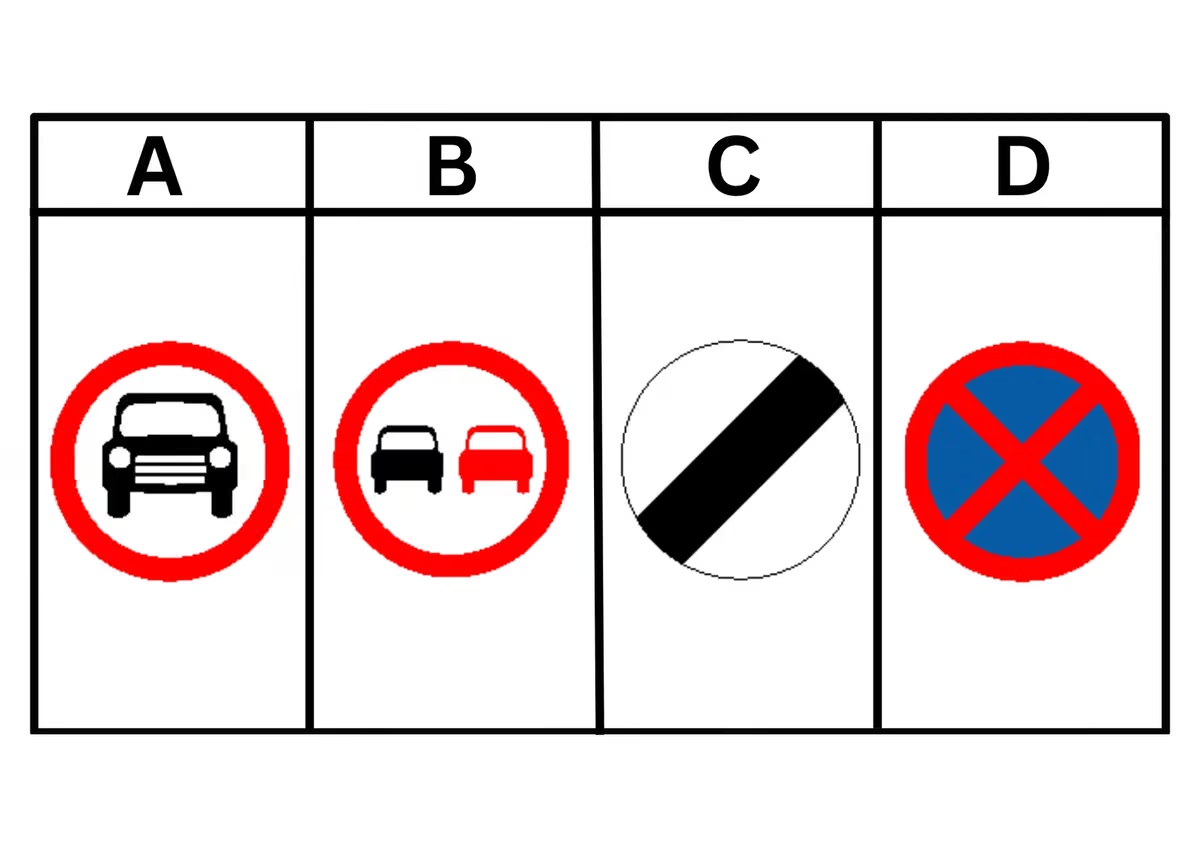
Which sign means 'No stopping'?
Explanation
Stopping where you see this sign is likely to cause an obstruction, which could lead to traffic delays. Obeying the sign will help keep the traffic flowing.
Question 3 of 47
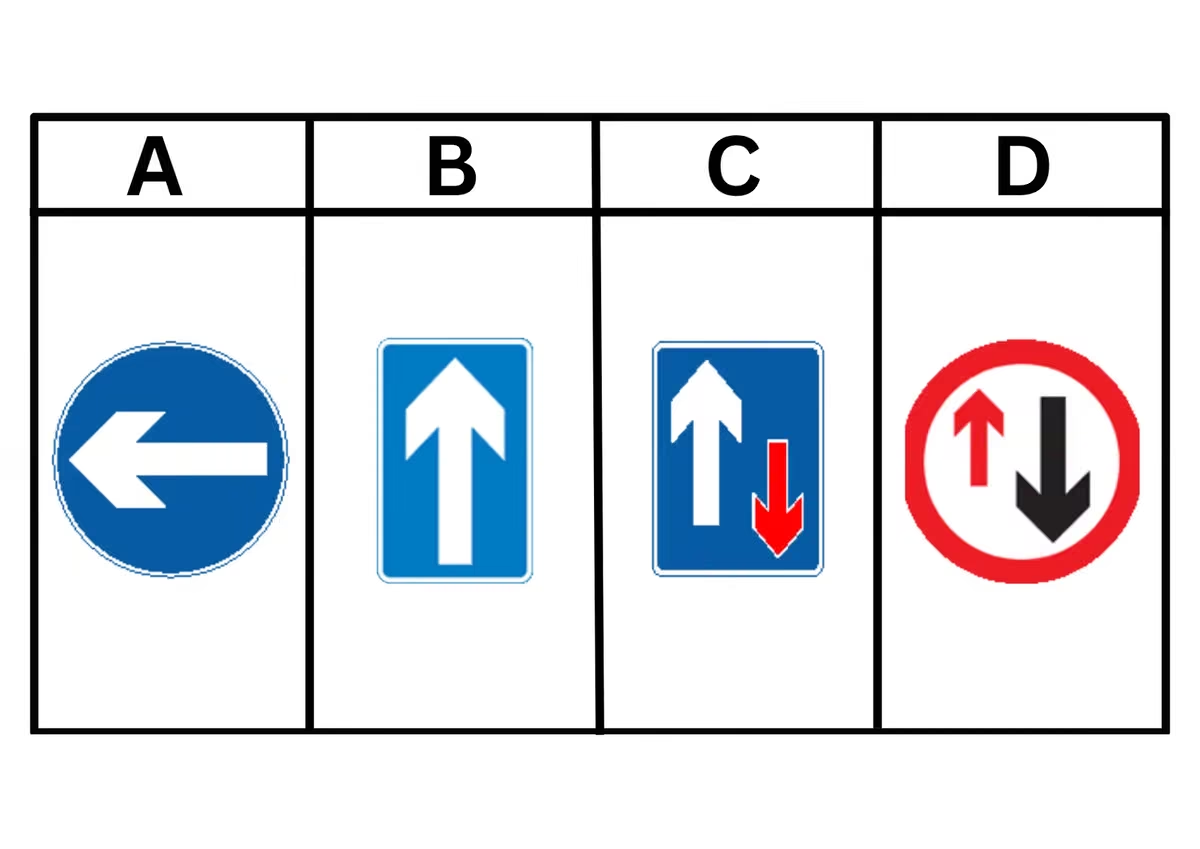
Which of these signs means that you're entering a one-way street?
Explanation
If a one-way street has two lanes, you can use either lane and overtake on either side. Use the lane that's more convenient for your destination unless directed by road signs or markings.
Question 4 of 47
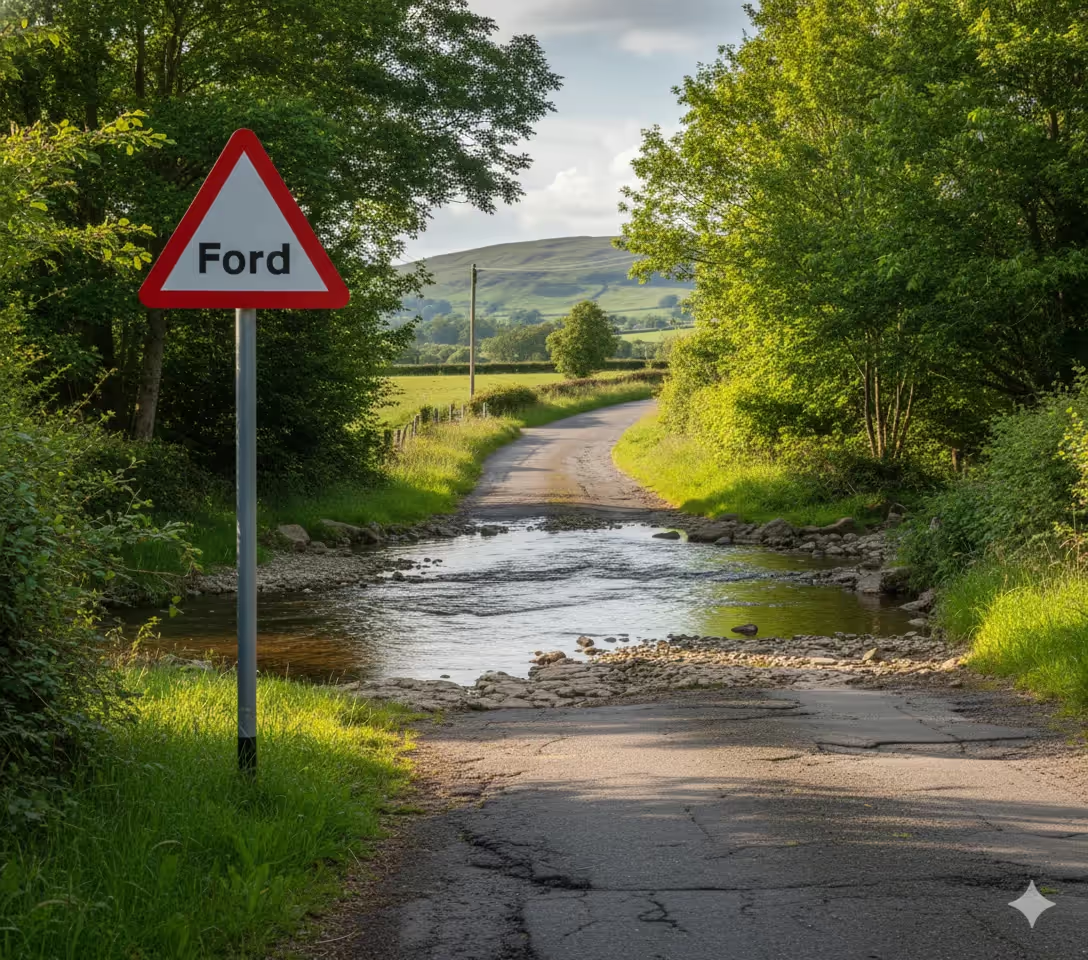
What does this sign mean?
Explanation
This sign is found where a shallow stream crosses the road. Heavy rainfall could increase the flow of water. If the water looks too deep or the stream has swelled over a large distance, stop and find another route.
Question 5 of 47
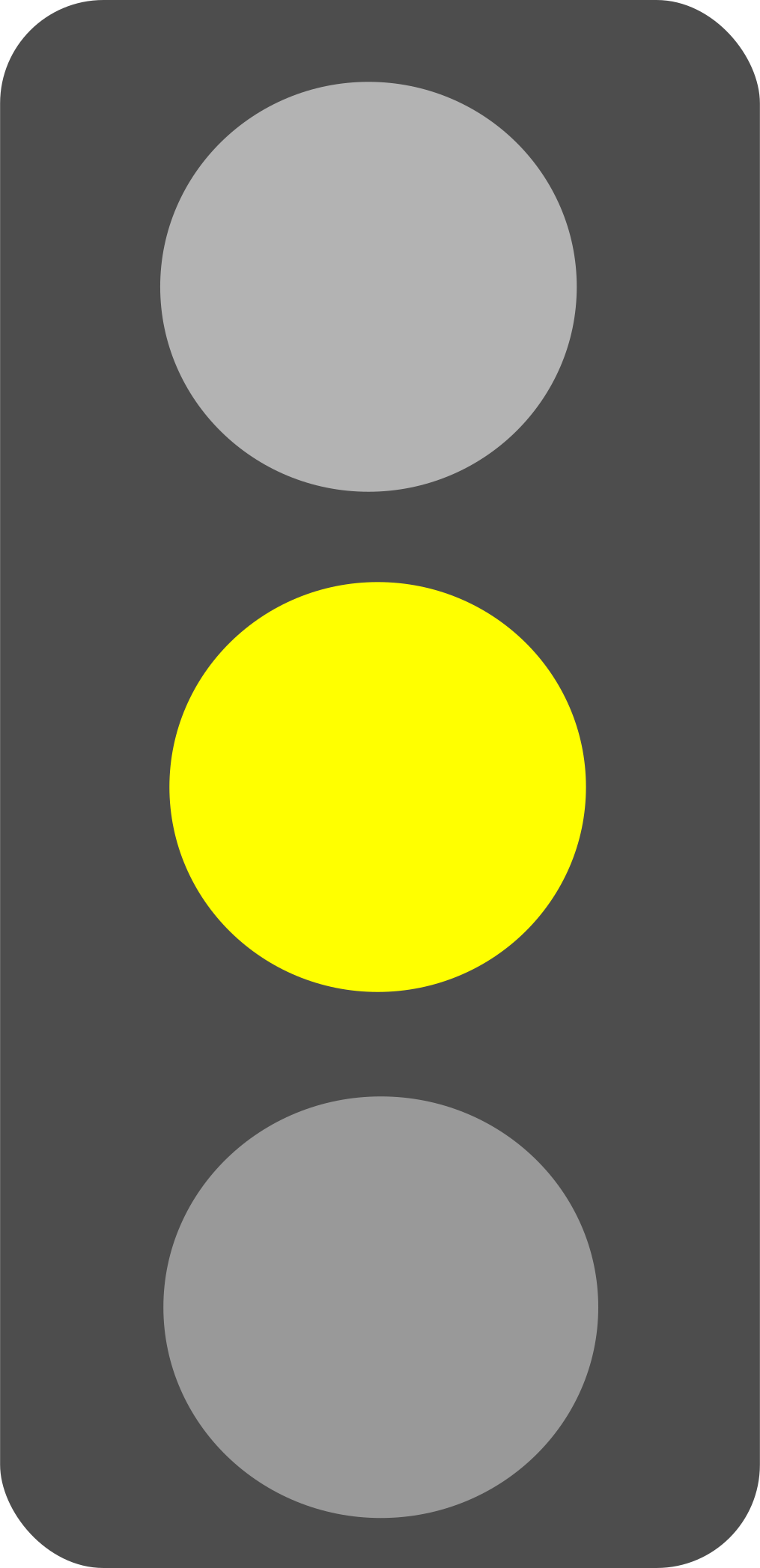
You see this traffic light ahead. Which light or lights will come on next?
Explanation
The amber light means stop. You may only go on if the light changes to amber after you've crossed the stop line or when you're so close to the line that stopping might cause a collision. The amber light is followed by the red light. You must wait behind the stop line until the green light shows.
Question 6 of 47
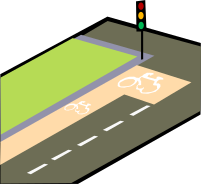
What are these advanced stop lines for?
Explanation
Advanced stop lines allow cyclists to take a position ahead of other traffic. When the green signal shows, they then have the time and space to move off in front of the following traffic.
Question 7 of 47
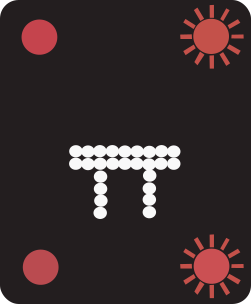
What does this motorway sign mean?
Explanation
When the red lights are flashing, don't go beyond this signal. This sign shows that all lanes ahead are closed and you mustn't enter the motorway. Motorway signals are located on the central reservation, to the left of the hard shoulder, on overhead gantries and at the entrance to the motorway.
Question 8 of 47
You're driving a long vehicle. What should you be especially careful of before turning left onto a main road?
Explanation
You should always check your nearside mirror before any change of direction. Be alert for cyclists and motorcyclists who don't realise the potential danger involved in trying to squeeze through on your nearside when you're waiting at a junction.
Question 9 of 47
The time is 10.00 am. You've been driving non-stop since 6.00 am. Under EU rules, what's the longest you may now drive without a break?
Explanation
The maximum driving period under EU rules is 4 hours 30 minutes. After this, you must take a break of at least 45 minutes. Planning your route will allow you to take your statutory rest periods in a safe place, such as a service area, where you can get food, drink and a rest.
Question 10 of 47
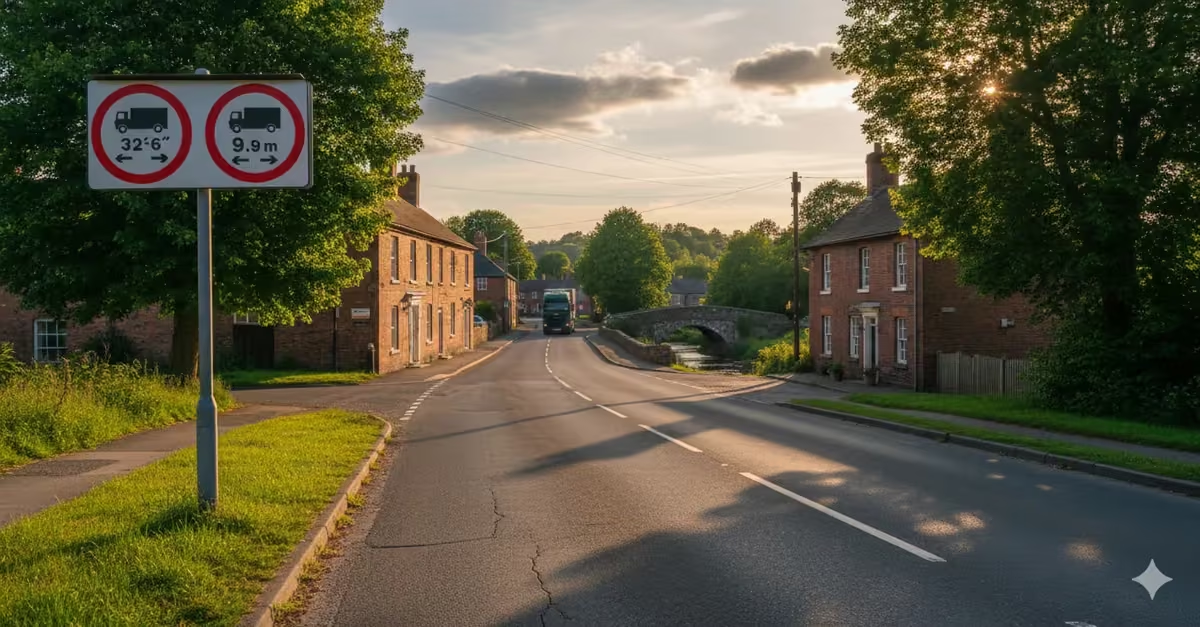
What does this sign mean?
Explanation
You need to know the length of your vehicle as well as its weight, height and width. Places where the length of your vehicle may be relevant are level crossings, ferries, bridges and tight junctions.
Question 11 of 47
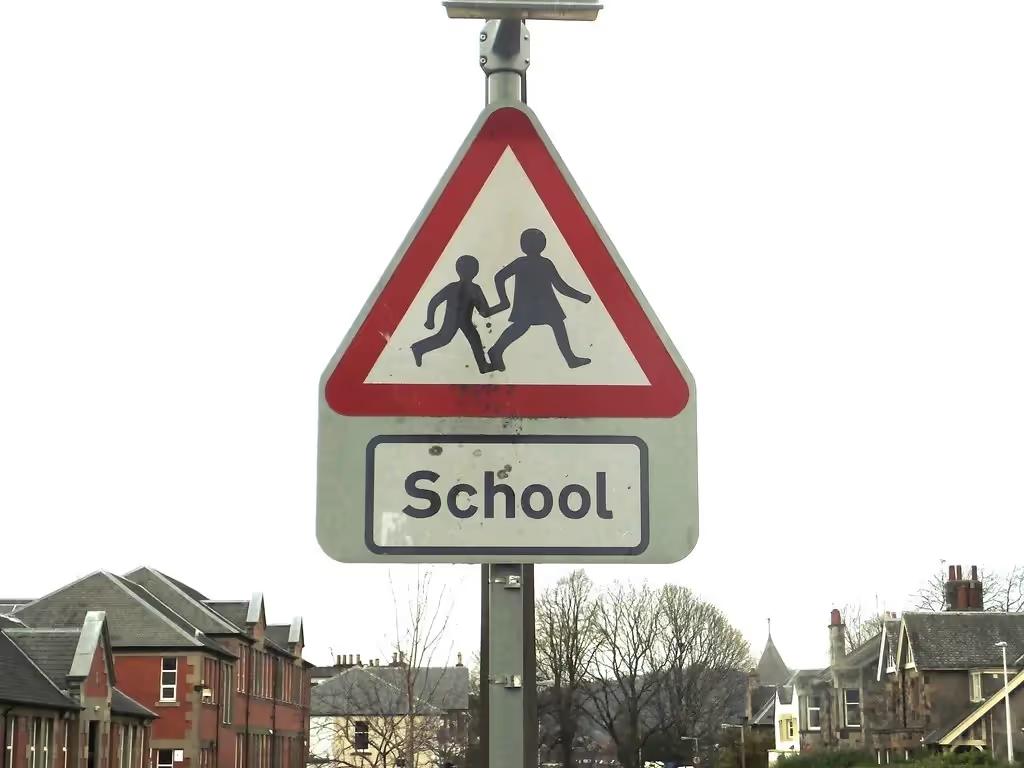
Why should you slow down when you see this sign?
Explanation
Whenever you see this sign, take extra care with these very vulnerable road users.
Question 12 of 47
You're driving a long vehicle. What should you do when you want to turn right at a painted mini-roundabout?
Explanation
When turning at a mini-roundabout, it's unlikely that you'll be able to avoid going over the marked area. You should, however, avoid going over the roundabout where possible.
Question 13 of 47
You're driving in heavy rain. What should you do if your steering suddenly feels very light?
Explanation
In wet conditions, water can build up between your tyres and the road surface. This is known as aquaplaning and it will cause your vehicle to slide. Try to regain control by easing off the accelerator to gradually lose speed. Don't brake or steer until your tyres are gripping the road again.
Question 14 of 47
You're waiting at a T-junction. What should you do if you see a vehicle is coming from the right, with its left indicator flashing?
Explanation
Try to anticipate the actions of other road users. When you're waiting at a junction, don't emerge until you're sure of their intentions; their signals might be misleading.
Question 15 of 47
You're driving between the hours of 11.30 pm and 7.00 am. When must you switch off your vehicle's reverse warning bleeper?
Explanation
Your vehicle will make more noise than a car, so you should try to avoid making unnecessary noise at any time of the day or night. This is especially important when you're in a residential area at a time when people are likely to be sleeping.
Question 16 of 47
When would weight transference be most likely to occur?
Explanation
You must take extra care when your vehicle is carrying a load. When cornering, weight will be transferred away from the direction in which you're turning. Also, when you're braking, weight can be transferred in several different directions.
Question 17 of 47
How will gravity affect a laden vehicle going downhill?
Explanation
Always plan ahead and take note of gradient warning signs. On downhill gradients, you can help control your vehicle's speed and avoid brake fade by selecting a lower gear in good time.
Question 18 of 47
High-sided vehicles can be affected by side wind. On which type of road is this most likely?
Explanation
You should take account of the weather forecast when you plan your route. You're most likely to be subjected to side wind on exposed routes; for example, on long bridges, open roads and exposed stretches of motorway.
Question 19 of 47
Your vehicle is fitted with an anti-lock braking system. When should you check that it's working properly?
Explanation
Modern anti-lock braking systems rely on electronics for their operation. A warning light on the dashboard shows that the system is operating. This light will usually go out when the vehicle reaches about 6 mph (10 km/h).
Question 20 of 47
When would you use an escape lane?
Explanation
Escape lanes are found on steep downhill sections of road. They're designed to give a 'run-off' area, usually straight ahead, to allow vehicles to stop in an emergency. This is usually when brakes have faded or failed on large vehicles.
Question 21 of 47
What can coasting downhill seriously affect?
Explanation
Air-brake systems rely on an engine-driven compressor to keep the reservoir tanks at their operating pressure. Coasting downhill and relying on the brakes to control your speed could result in the loss of sufficient air pressure to operate the brakes effectively.
Question 22 of 47
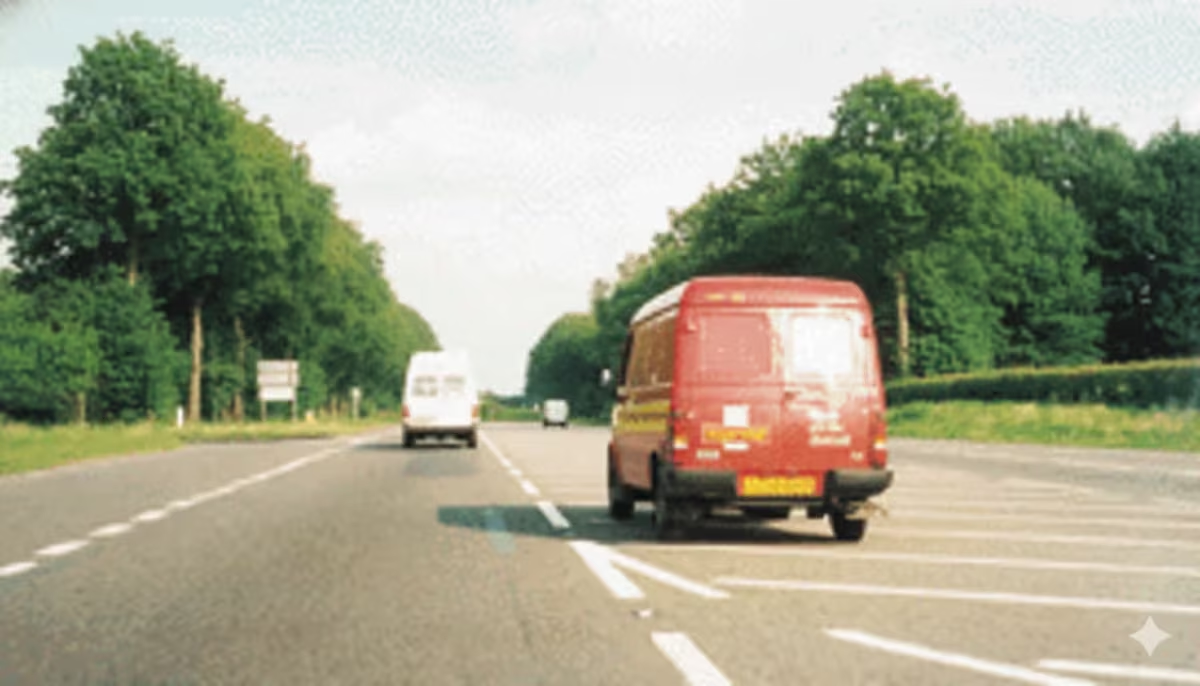
You're driving along this road. What should you do if the red van cuts in close in front of you?
Explanation
There are times when other road users make incorrect or ill-judged decisions. Try to stay calm and don't retaliate or react aggressively, especially as your vehicle is likely to be larger and more intimidating than the other person's. Always put safety first.
Question 23 of 47
You're approaching a large puddle near the left-hand kerb. What should you do if pedestrians are close to the water?
Explanation
The effect of your vehicle driving through a puddle will be to throw water onto the pavement. If there are pedestrians close by, they could be splashed with the water. Be considerate and, if it's safe to do so, avoid driving through the puddle.
Question 24 of 47
A coach is overtaking you. What should you do when it's safe for the coach to move back to the left?
Explanation
When you're being overtaken, the other driver has to decide when it's safe to complete the manoeuvre. Don't give an unofficial signal, however well intended. There may be a hazard you're unable to see from your position.
Question 25 of 47
When may you use your vehicle's hazard warning lights while it's moving?
Explanation
While moving, hazard warning lights may only be used on a motorway or unrestricted dual carriageway to warn drivers behind of a need to slow down, due to a hazard ahead.
Question 26 of 47
What should you do before changing lanes to overtake on a motorway?
Explanation
Check your mirrors to make sure that it's safe to overtake. Remember that traffic coming up behind will be travelling at a faster speed.
Question 27 of 47
You're driving at the speed limit in the left-hand lane of a motorway. What should you do if you see lorries merging from a slip road ahead?
Explanation
Only change lanes if doing so won't inconvenience another road user. Merging drivers have a responsibility to give way, if necessary, and not force their way onto the main carriageway. Planning ahead will ensure you're prepared to deal with these situations.
Question 28 of 47
You've just overtaken another large vehicle. How do you know when it's safe to move back to the nearside lane?
Explanation
While overtaking, you'll need to judge carefully when to return to the nearside lane. Check your left-hand (nearside) mirror to make sure the rear of your vehicle is well clear. You should allow for the length of both vehicles and take into account the speed difference. Don't cut in too soon on the vehicle you've overtaken, and don't rely on signals from other drivers; they may be signalling to someone else.
Question 29 of 47
You're in the left-hand lane on a three-lane motorway. Why should you check for any vehicles in the right-hand lane before you overtake?
Explanation
Vehicles overtaking in the right-hand lane may return to the centre lane when they've finished their manoeuvre. You should look for this before starting to pull out. Don't rely on the size of your vehicle to claim right of way.
Question 30 of 47
Why should you check for motorcyclists just before turning right into a side road?
Explanation
Never attempt to change direction to the right without checking your right-hand mirror. A motorcyclist might not have seen your signal and could have decided to overtake. This action should be a matter of routine.
Question 31 of 47
What happens at toucan crossings?
Explanation
Toucan crossings can be used by cyclists and pedestrians. Some cycle routes lead cyclists to these crossings. Always look out for cyclists, as they're likely to be approaching much faster than pedestrians.
Question 32 of 47
You're driving at night. What does it mean if you see a pedestrian wearing reflective clothing and carrying a red light?
Explanation
At night, a pedestrian carrying a red light should be at the back of an organised walk. The walkers should keep to the left, but this won't always be the case. Pass them very slowly. Be aware that the pedestrians may have their backs to you and might not know you're approaching.
Question 33 of 47
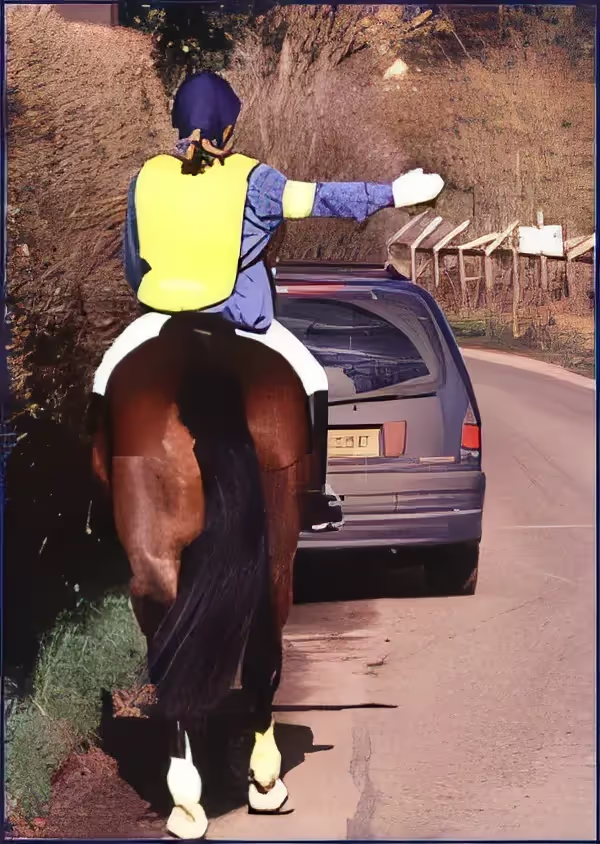
You see a horse rider as you approach a roundabout. What should you do if they're signalling right but keeping well to the left?
Explanation
Allow horse riders to enter and exit the roundabout in their own time. Don't drive up close behind or alongside them; this could disturb the horse.
Question 34 of 47
A horse rider is in the left-hand lane approaching a roundabout. What should you expect the rider to do?
Explanation
Horses and their riders will move more slowly than other road users. They might not have time to cut across heavy traffic to take up a position in the offside lane when they're turning right; it could also be hazardous for them to do so. Therefore, a horse and rider may approach a roundabout in the left-hand lane, even though they're turning right.
Question 35 of 47
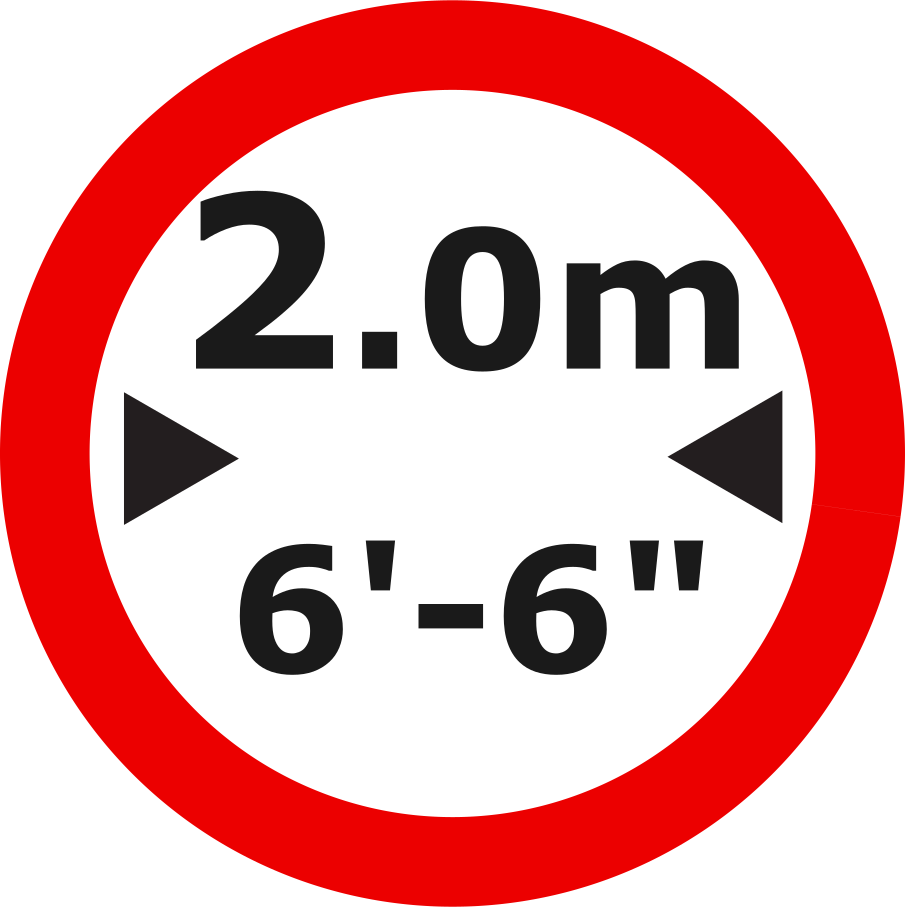
What does this sign mean?
Explanation
You must always be aware of the size of your vehicle. Look out for road signs that show a width restriction. There should be an indication of this at the entrance to the road. Don't get into a situation where you have to reverse out of a narrow road because you haven't seen a sign.
Question 36 of 47
Under EU rules, how long should your normal daily rest period be?
Explanation
Drivers' hours and rest periods are controlled in the interests of road safety. A driver's daily rest period should normally be 11 hours, but this may be reduced to 9 hours for three days in one week. It's a serious offence to break these rules and anyone doing so is liable to a heavy fine and even imprisonment.
Question 37 of 47
Your vehicle is involved in an incident where someone is injured. You don't produce your insurance certificate at the time. How soon must you report the incident to the police?
Explanation
If you don't give your name and address at the time of an incident, report it to the police as soon as you can, or in any case within 24 hours. If any other person is injured and you don't produce your insurance certificate to the police at the time of the incident, or to any other person who has reasonable grounds to request it, you must also produce it at a police station within seven days.
Question 38 of 47
You're the first person to arrive at an incident where a motorcyclist is unconscious. After you've checked the area for immediate danger, what's the first check you should make on the casualty?
Explanation
At the scene of an incident, first make sure there's no danger of further collisions or fire before dealing with any casualties. The priority when dealing with an unconscious person is to make sure they can breathe. This may involve clearing their airway if they're having difficulty or there's an obvious obstruction. Don't remove a motorcyclist's helmet unless it's essential, as you could cause them serious injury.
Question 39 of 47
What should you do if you're the first person to arrive at the scene of an incident?
Explanation
Warn other traffic of the incident, without putting yourself or others at risk. Once the danger of further collisions is dealt with, call the emergency services. While you're waiting for them to arrive, keeping casualties or witnesses calm is important, but never offer a cigarette because of the risk of fire.
Question 40 of 47
What should you do if the brake pedal becomes hard to press?
Explanation
As soon as you detect a fault on your vehicle, you must take action. Where faulty brakes are concerned, you need to seek help immediately. Always report minor faults as soon as you detect them. Minor faults can become major ones if they aren't repaired quickly.
Question 41 of 47
What's the first thing you should check before moving to the right?
Explanation
If you intend to turn right, check your right-hand (offside) mirror first. All of your mirrors should be properly adjusted to give a clear view around and behind your vehicle. They should be kept clean at all times and shouldn't be cracked or broken.
Question 42 of 47
How can you help to protect the environment?
Explanation
By using a bypass, rather than joining the stop/start traffic in a town centre, you're less likely to be held up and can travel at a constant speed. Keeping to a constant speed will reduce the amount of pollution produced by your vehicle.
Question 43 of 47
The double white line along the centre of the road is unbroken on your side. When may you cross the line?
Explanation
Solid white lines are used where it would be dangerous to overtake. If the solid line is on your side of the road, you may cross it to pass a stationary vehicle, or to overtake a pedal cycle, horse or road-maintenance vehicle that's travelling at 10 mph or less. You may also cross the solid line to enter premises or a side road.
Question 44 of 47
What should you consider when planning a route for your journey?
Explanation
You should plan your route to avoid vehicle width, height and weight restrictions that would affect your vehicle and load. Planning to avoid busy times can also reduce journey times and fuel costs.
Question 45 of 47
Your vehicle leaks diesel fuel on a roundabout. Who will this affect most?
Explanation
When diesel fuel spills onto the road, it makes the road surface extremely slippery. This can cause danger for all types of vehicle, but particularly for those with two wheels, which rely on their tyres' grip to remain upright.
Question 46 of 47
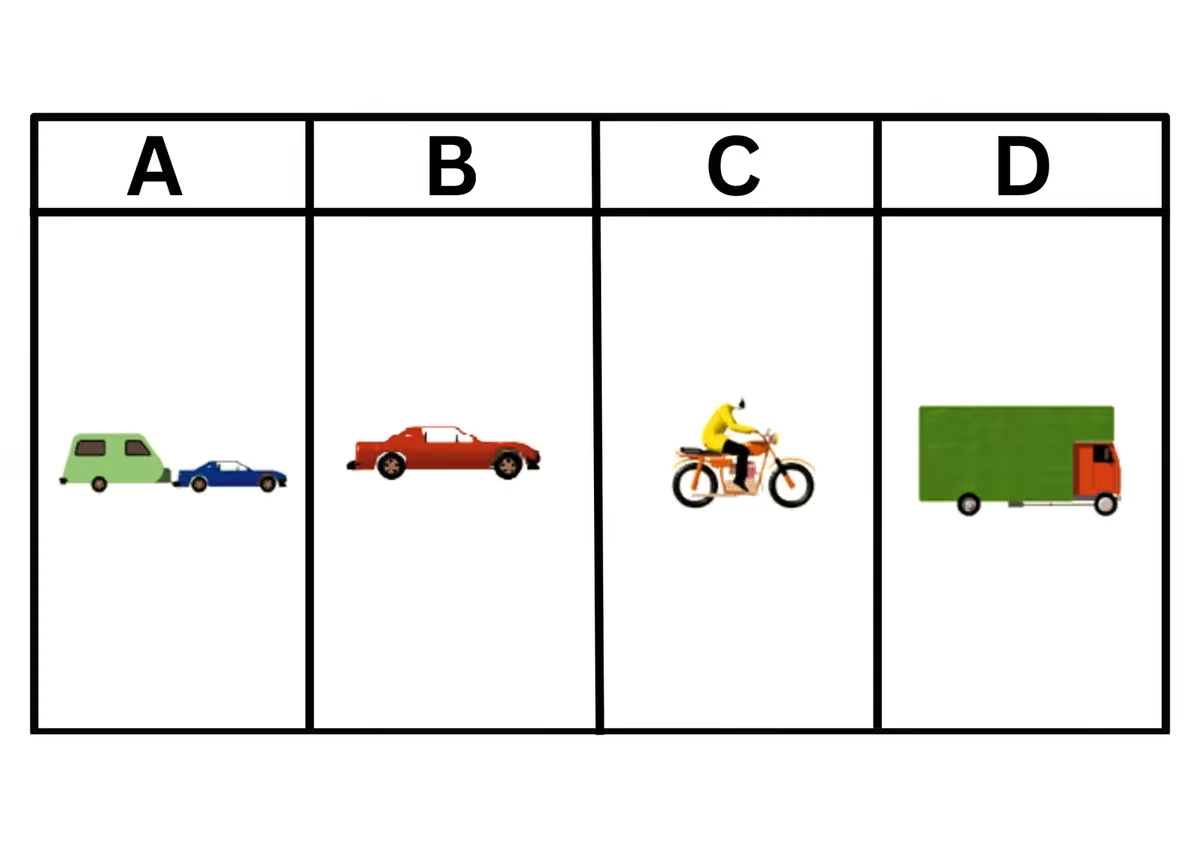
Which vehicle is least likely to be affected by high wind?
Explanation
The car is the most stable of the vehicles shown. However, all vehicles are affected by side wind and buffeting from larger vehicles. Be aware that your speed and road position could cause unnecessary turbulence when passing smaller vehicles.
Question 47 of 47
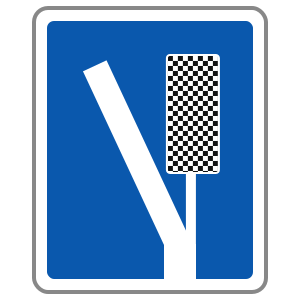
What's a buffer lane?
Explanation
During high winds, one of the lanes on a high bridge might be closed to traffic to create a buffer lane. The buffer lane is kept free to prevent vehicles from being blown into the path of other road users in the next lane. The closure of this lane may cause traffic congestion and delay.