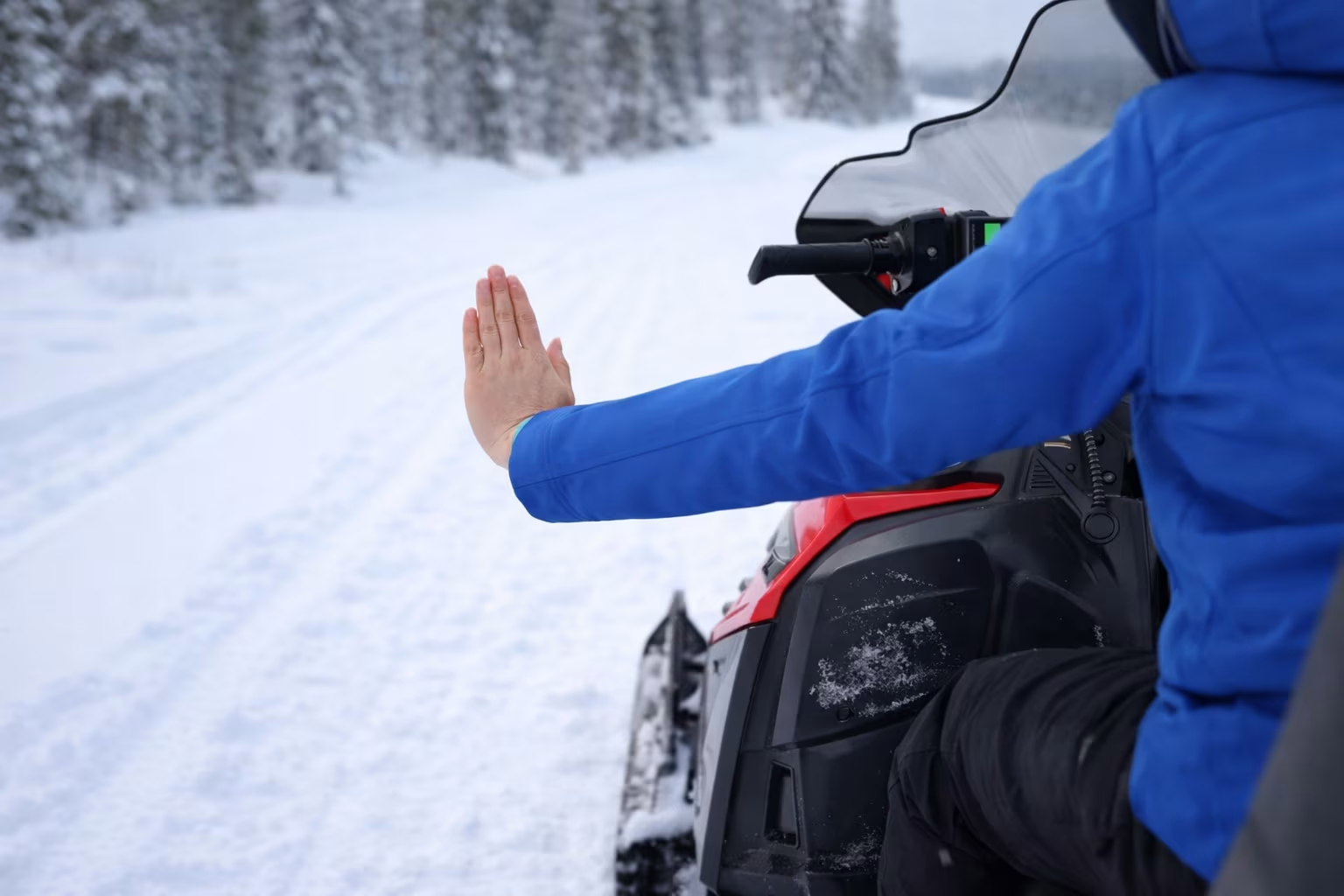
What is the driver in front signaling with the hand signal?
Explanation
An outstretched arm with the palm up is a hand signal indicating that the driver intends to stop or make a clear deceleration. If the driver wanted to signal a turn, the arm would be stretched straight out at a 90-degree angle in the direction of the intended turn. The hand signal says nothing about turning after a crest, so that cannot be inferred from the situation. In normal driving, turn signals are used, but hand signals can be used in case of light failure or when riding a bicycle/moped. Therefore, the correct answer is that the driver intends to stop.
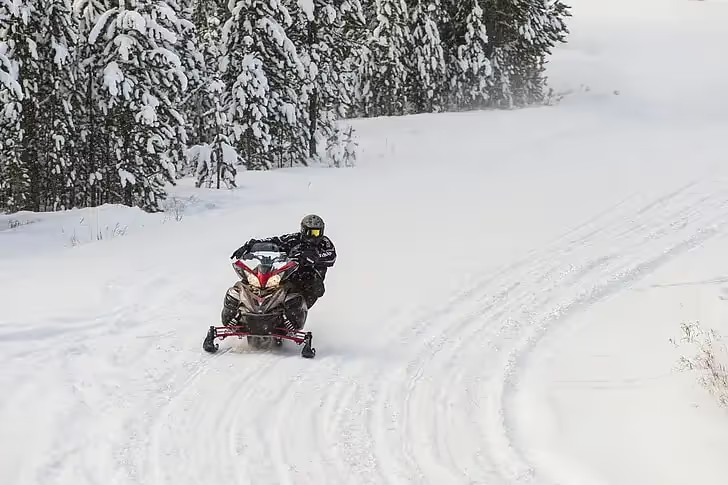
Why is it most important to stay on marked snowmobile trails?
Explanation
The correct answer is that driving on designated snowmobile trails reduces the impact on nature, wildlife, and other outdoor users. Wildlife such as reindeer, ptarmigan, and other species are vulnerable to noise and disturbance, especially during grazing, calving, and nesting seasons. When traffic is concentrated on established trails, the area affected by disturbance is reduced, and the impact is not spread out. Driving off-trail can also damage vegetation, especially in spring when the snow is rotten; compacted snow and ice burn can lead to deeper frost and kill plant roots. In addition, fixed trails create predictability and fewer conflicts with skiers, hikers, and other users. It is wrong to say that trails are always the shortest route; they are planned with regard to nature and safety, not just distance. It is also not correct that you can drive freely off-trail; this is generally prohibited. Avoiding fines may be a consequence of staying on the trail, but it is not the main justification.
What is this sign called?
Explanation
The correct answer is “Crossing ski trail.” The sign is a warning sign indicating that a ski trail crosses the road just ahead. You should reduce your speed, be extra attentive, and be prepared for skiers to enter the roadway, especially in the winter season and in poor visibility. There may be a supplementary sign indicating the distance to the crossing or how long the stretch lasts. “Ski facility” is a service sign that points to an amenity, not a hazard. “No skiers” would be a prohibition sign (red ring), and “Mandatory ski route” would be a mandatory sign (blue), neither of which is relevant as a warning for motorists.
When should you, as a snowmobile driver, use a visor or goggles?
Explanation
You should wear a visor or goggles at all times when riding a snowmobile. Eye protection shields you from cold, wind, flying snow and ice, gravel, and branches, and helps prevent watery or dry eyes that impair vision. A double visor or well-ventilated goggles reduces fogging, especially in cold weather. Clear vision is crucial for spotting obstacles in time, regardless of speed. It’s not sufficient to use eye protection only in the forest or only when carrying a passenger, and the need applies even at speeds below 50 km/h. Use a clear visor in the dark and a tinted one on bright days if needed, but always keep your eyes protected.
Is it permitted to drive a snowmobile where this sign is posted?
Explanation
The sign means no entry for all vehicles. It closes the road to both motor vehicles and non-motorized vehicles, such as snowmobile, moped, motorcycle, car, and bicycle. Pedestrians may pass, but driving is not permitted. A snowmobile is considered a vehicle (and a motor vehicle), and is therefore covered by the prohibition. Exceptions must be explicitly stated on an additional sign, for example “Does not apply to snowmobiles.” The absence of a separate snowmobile prohibition does not make it legal; the general prohibition already applies. The sign “No motor vehicles” is another variant that would allow bicycles, but not snowmobiles. The correct answer is therefore: No, the sign prohibits all vehicles.
Get more free questions in seconds
You are already in the flow. Create a free account and continue with more questions, explanations, and steadier progress toward the real test.
It only takes a moment to continue.
What do our users say?
We recommend all students to use eteo, a superb tool to pass the theory!
Practiced every day for about a week and passed the theory today with only two errors. The questions were very similar to what I got. Recommended to everyone taking the theory!
eteo is the only site that offers free theory tests that are enough to pass, so we recommend the site to everyone taking a driver's license. Most others only offer 10 questions or similar.
Eteo.no really helped me prepare for the Norwegian driving theory test. The questions felt like the real exam, the explanations were clear, and I passed on my first try.
Great tool for anyone serious about passing the driving theory exam. I liked tracking my progress and taking realistic mock exams. It works smoothly on mobile and desktop and made studying more effective.
Eteo.no was extremely helpful in preparing me for the theory test. The mock exams helped me get used to the question format and time pressure. I felt calm and well prepared on exam day thanks to all the practice.
Everything you need to know about the snowmobile theory test
About the theory test for class S
The snowmobile theory test (class S) focuses on safe driving in winter landscapes and environmental considerations. The test consists of 30 questions, and you must answer at least 25 correctly (83%) to pass. You have 30 minutes to complete it.
Curriculum and topics
The test covers traffic rules for snowmobiles, nature conservation and environmental considerations, driving in winter conditions, avalanche hazards, ice conditions, safety equipment, first aid knowledge, and laws and regulations for snowmobile driving in wilderness areas.
Pass easily with Eteo
Eteo offers complete snowmobile tests with focus on safety and environmental considerations. Practice with realistic questions and gain good understanding of all rules and safety measures.